How Many Hiroshima Survivors Are Still Alive?
How many Hiroshima survivors are still alive today, what the health handbook figures say, and who now carries the survivors' stories forward in Hiroshima.
According to Ministry of Health, Labour and Welfare data reported by Hiroshima City, there were 91,105 handbook holders nationwide as of the end of March 2026, with an average age of 86.66 years. Hiroshima City itself had 33,232 holders on the same date. The city's own statistics show the count falling year after year as the survivors grow older, which is why Hiroshima now also commissions a second generation of storytellers to carry the testimony forward.
As of the end of March 2026, there were 91,105 atomic bomb survivor health handbook holders across Japan, with an average age of 86.66 years, according to Ministry of Health, Labour and Welfare data reported by Hiroshima City. Of those, 33,232 holders lived in Hiroshima City itself. The year before, the city counted 35,730 holders at the end of fiscal 2024, down from 37,818 at the end of fiscal 2023.
The handbook is the practical measure of who is recognised as a survivor, because it is the document that unlocks medical relief, and the city publishes the holder count each fiscal year. The trend in those published figures is unambiguous. Hiroshima City's statistics show the number of holders declining due to the aging of the survivor generation, and the average age reported for March 2026, 86.66 years, explains the shape of the curve on its own.
It helps to keep two different populations separate. The handbook holders are the living survivors. The register of names kept in the stone chamber beneath the cenotaph in Peace Memorial Park is a record of the dead: as of 6 August 2026 it held 353,639 names across 132 volumes, reported by Hiroshima City. One number counts people still carrying the experience; the other counts the lives the city commemorates each year.
| Date | Measure | Figure |
|---|---|---|
| End of March 2026 | Handbook holders nationwide | 91,105 |
| End of March 2026 | Handbook holders in Hiroshima City | 33,232 |
| End of fiscal 2024 | Handbook holders in Hiroshima City | 35,730 |
| End of fiscal 2023 | Handbook holders in Hiroshima City | 37,818 |
| 6 August 2026 | Names in the cenotaph victim register | 353,639 |
Who Counts As A Hiroshima Survivor?
A Hiroshima survivor is officially anyone holding the atomic bomb survivor health handbook issued under the 1994 Act on Relief for Atomic Bomb Survivors. The law defines eligibility and the handbook records it, and holder counts are published by Hiroshima City and the national ministry. Separately, 3,096 people held atomic bomb disease certification in fiscal 2024, down from 3,278 in fiscal 2023, a medical determination distinct from handbook possession.
The law defines eligibility, and the handbook records it. The average age of 86.66 years reported for March 2026 tells the other half of the story: the recognised population is not only shrinking but aging quickly.
A separate, smaller count sits alongside the handbook figures. Hiroshima City's statistics record persons certified with atomic bomb disease, 3,096 in fiscal 2024, down from 3,278 in fiscal 2023. That certification is a medical determination, distinct from handbook possession, and the city lists it separately in the same statistical series.
For visitors, the numbers translate directly into what happens at Peace Memorial Park. The flexible walking tour of Hiroshima Peace Memorial Park covers the same ground with a local guide in a window of 2 to 4 hours, and Check availability before committing to a time slot.
How Quickly Is The Hiroshima Survivor Count Falling?
Hiroshima City's published figures show the holder count falling every year: from 37,818 at the end of fiscal 2023 to 35,730 at the end of fiscal 2024, and on to 33,232 by the end of March 2026. The city attributes the decreasing trend directly to the aging of survivors, whose average age nationwide is reported at 86.66 years.
Two consecutive annual drops in the city figures give a fair sense of the pace. Between the end of fiscal 2023 and the end of fiscal 2024 the city's count fell by about two thousand holders, and the step down to 33,232 by March 2026 continues the same movement. Nothing in the series suggests a plateau, and the city's own commentary states the cause plainly: aging.
What Is The Victim Register In The Hiroshima Cenotaph?
The stone chamber beneath the cenotaph in Hiroshima Peace Memorial Park houses the atomic bomb victim register, which Hiroshima City updates once a year on 6 August during the memorial ceremony; as of 6 August 2026 it contained 353,639 names across 132 volumes, after 4,393 names were added that morning.
The register is not a count of survivors but of lives lost, and the city manages it deliberately. It records names, dates of death and ages at death of those who died from the bombing or related causes, regardless of whether the person held a health handbook and regardless of nationality.
The yearly additions are why the register and the handbook counts move in opposite directions. One shrinks as survivors pass away; the other grows as those deaths are entered into the record. Reading the two series side by side is, in effect, reading the same generation from both ends.
| 6 August | Names in the register before the ceremony | Names added that day |
|---|---|---|
| 2025 | 344,306 | 4,940 |
| 2026 | 349,246 | 4,393 |
The register's annual update is a public act, folded into the Peace Memorial Ceremony that runs from 8:00 to 8:50 on the morning of 6 August in Peace Memorial Park, where the city prepares about 7,000 seats plus about 2,200 indoor seats at the adjacent International Conference Center.
Who Tells The Survivors' Stories In Hiroshima Now?
Hiroshima commissions two groups to carry survivor testimony forward: as of 1 July 2026 the city had 265 atomic bomb experience inheritors and 50 family inheritors active, and in fiscal 2025 those inheritors delivered 2,492 lectures attended by 143,518 people, according to figures reported by Hiroshima City.
The inheritor programme is the city's structural answer to the shrinking handbook count. Experience inheritors, hibakusha taiken denshōsha, are trained and commissioned by the Hiroshima Peace Culture Foundation to speak on behalf of survivors who can no longer do so themselves; family inheritors, kazoku denshōsha, carry the testimony of their own relatives. The counts themselves are dated facts, 265 and 50 as of 1 July 2026, and a slightly different snapshot, 264, was recorded as of 1 April 2026.
The lecture numbers show the scale of the handover. Two thousand four hundred and ninety-two lectures in a single fiscal year, reaching 143,518 listeners, means the testimony now reaches more people per year through inheritors than through the shrinking pool of survivors alone could physically manage. For a visitor, this is why hearing a testimony in Hiroshima remains possible even as the average age climbs past the mid-eighties: the speaking roster has been rebuilt for a generation that was not there.
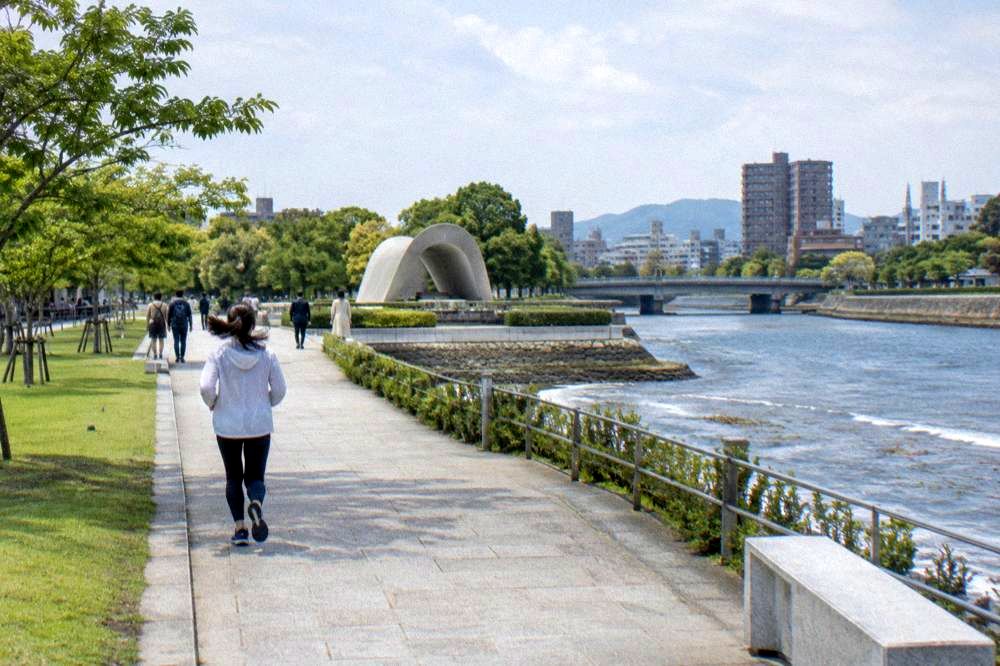
Guided formats also carry the history. The peace and history walking tour of Hiroshima spends two and a half hours on the questions around the bombing with a guide, and the site's longer Hiroshima Peace Memorial Park walking tour guide covers the same ground for independent walkers. Related questions on the site, such as whether Hiroshima is still radioactive and why Hiroshima is not radioactive but Chernobyl is, sit close to this one for readers planning a visit. This page sits alongside the wider Hiroshima Travel Guide coverage of the city and Miyajima.
The same questions return every August, and the answers shift with each register update. The surviving generation is measured, recorded and reported down to the individual, and the inheritors now speaking in Hiroshima mean the record will outlast the count.
The Peace Memorial Museum keeps long hours: 7:30 to 19:00 from March through July and from September through November, 7:30 to 20:00 in August, with a 21:00 close on 5 and 6 August, and 7:30 to 18:00 from December through February. It closes on 30 and 31 December and again in mid-February for an exhibit change. Admission is 200 yen for visitors college age and older, 100 yen for high school students, and free for junior high school students and younger, while visitors 65 and older pay 100 yen with a passport. Extended visiting slots from 7:30 to 8:30 and certain evening hours require an online reservation.
Attendance points to record interest. The museum drew a reported 2,580,926 visitors in fiscal 2025, its third straight record year, including 945,618 foreign visitors. A May 2026 report said entry would be by reservation only from 8 to 16 August 2026, so summer visitors should confirm current rules before traveling. The Peace Memorial Ceremony on 6 August 2026 ran from 8:00 to 8:50 in Peace Memorial Park, which offered about 7,000 seats plus about 2,200 indoor seats at the International Conference Center. The A-Bomb Dome can be viewed from outside the fence with no fee.
Common Questions About Hiroshima Survivors Today
How Many Hiroshima Survivors Are Still Alive?
According to Ministry of Health, Labour and Welfare data reported by Hiroshima City, there were 91,105 atomic bomb survivor health handbook holders nationwide as of the end of March 2026, of whom 33,232 lived in Hiroshima City. Their average age was 86.66 years.
What Is The Atomic Bomb Survivor Health Handbook?
It is the document issued under the 1994 Act on Relief for Atomic Bomb Survivors to people recognised as survivors. Possession unlocks medical relief, and the annual holder counts published by Hiroshima City are the standard measure of how many survivors are still alive.
Why Does The Hiroshima Figure Keep Falling?
Hiroshima City states that the number of handbook holders shows a decreasing trend due to the aging of survivors. The city count went from 37,818 at the end of fiscal 2023 to 35,730 at the end of fiscal 2024, and stood at 33,232 at the end of March 2026.
What Is The Register In The Hiroshima Cenotaph?
It is the atomic bomb victim register, kept in a stone chamber beneath the cenotaph in Peace Memorial Park, recording names, dates of death and ages at death regardless of handbook possession or nationality. As of 6 August 2026 it held 353,639 names across 132 volumes, after 4,393 names were added that morning.
Can Visitors Still Hear Survivor Testimony In Hiroshima?
Yes. Hiroshima City reported 265 atomic bomb experience inheritors and 50 family inheritors commissioned as of 1 July 2026, and in fiscal 2025 inheritors gave 2,492 lectures attended by 143,518 people, so testimony continues through trained successors.