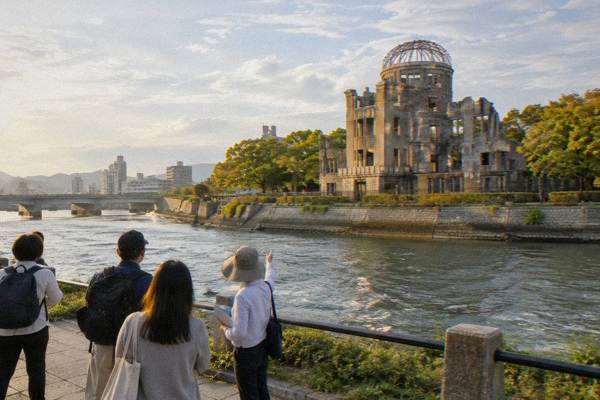
Why Is Hiroshima Not Radioactive But Chernobyl Is?
Hiroshima today has background-level radiation because the 1945 bomb released most of its energy as blast and heat, and its residual radiation faded within days, while Chernobyl's reactor fire scattered long-lived fallout for days on end.
The City of Hiroshima addresses it directly on its own English-language pages: the radiation in Hiroshima and Nagasaki today is on a par with the extremely low levels of background radiation present anywhere on Earth, and it has no effect on human bodies. The reason lies in the physics of the two events, which were fundamentally different in kind, not just in scale.
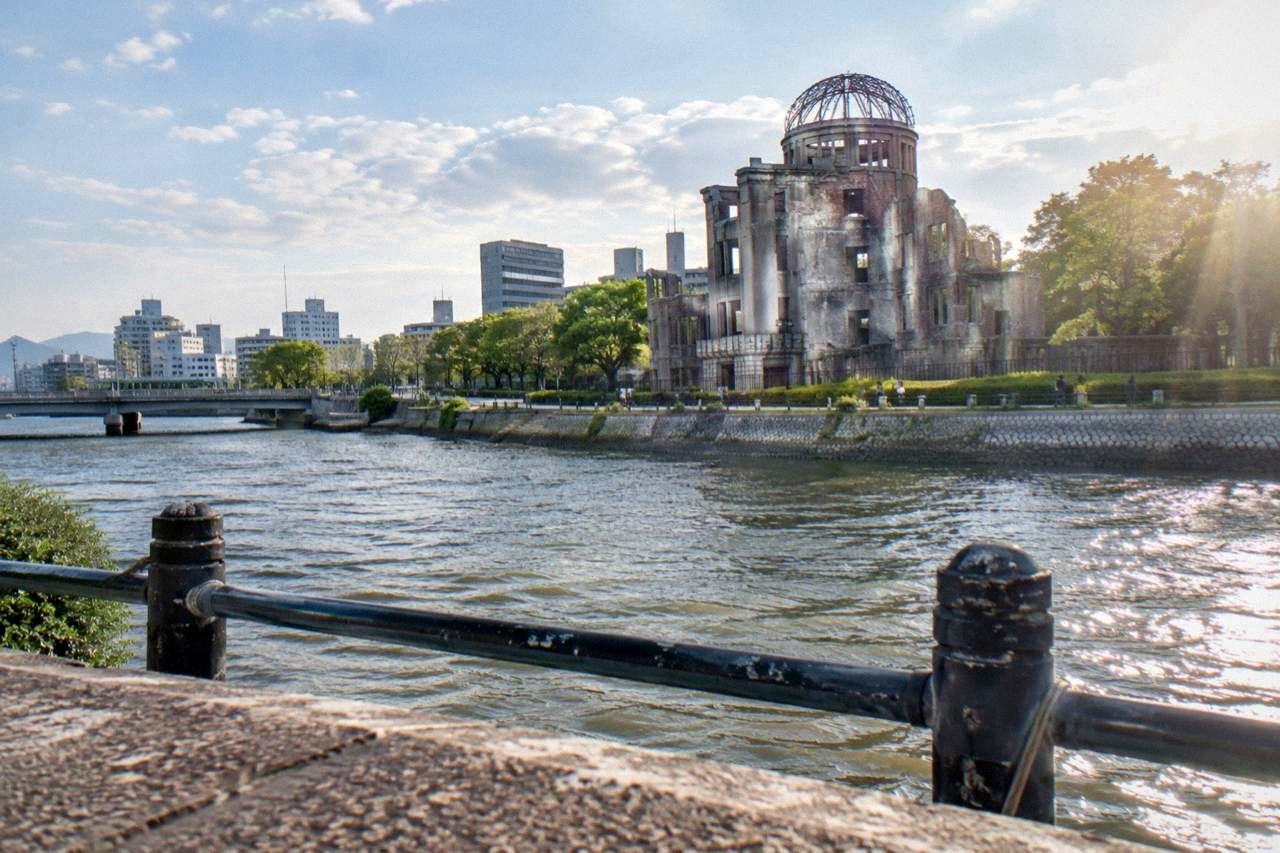
The 1945 atomic bomb released only about 10 percent of its energy as residual radiation, roughly 80 percent of that promptly, and the levels at the hypocenter fell to a thousandth of their initial value within a day, while Chernobyl's reactor core burned and released fresh radioactive material continuously for days, coating the ground with long-lived fallout that decays over decades. The City of Hiroshima's own pages carry these figures.
The comparison confuses two different physical events. Of the bomb's emitted energy, the City of Hiroshima states that 5 percent was initial radiation, released at the instant of the explosion, and 10 percent was residual radiation, the part that lingered afterwards in the environment.
What The City Of Hiroshima Says About Radiation Levels Today
The City of Hiroshima states that radiation in Hiroshima today is on a par with the extremely low levels of background radiation, meaning natural radioactivity, present anywhere on Earth, and that it has no effect on human bodies. Residual radiation declined rapidly after the bombing, and no special precaution, screening or equipment applies in the Peace Memorial Park or on Miyajima. The city's English-language radiation FAQ repeats the point in almost the same words, answering a question visitors and residents have asked for decades. No special precaution, screening or equipment applies to being in Hiroshima, in the Peace Memorial Park or on Miyajima.
The same city pages explain why. The initial radiation, released the instant the bomb exploded, inflicted severe harm on people exposed at the time, and most of those exposed to direct radiation within a one-kilometre radius of the hypocenter died. That radiation was gone within moments of the detonation. What remained was residual radiation, and the city's figures show how fast it fell.
| Energy or time point | Figure | Source wording |
|---|---|---|
| Share of the bomb's energy released as initial radiation | 5 percent | City of Hiroshima |
| Share released as residual radiation | 10 percent | City of Hiroshima |
| Residual radiation emitted within 24 hours | Roughly 80 percent | City of Hiroshima |
| Level at the hypocenter 24 hours after the bombing | 1/1000th of the immediate level | City of Hiroshima |
| Level at the hypocenter one week after | 1/1,000,000th of the immediate level | City of Hiroshima |
Those two decline figures are the heart of the answer. Within one day, standing at the hypocenter itself delivered a thousandth of the residual radiation a person would have received immediately after the explosion. Within a week, it was a millionth. Residual radiation declined rapidly, as the city states, and within the span of a human lifetime it faded into the ordinary background that every city on Earth sits on.
How An Air Burst Differs From Chernobyl's Ground-Level Fire
The Hiroshima blast was an air burst that pushed its radioactive residue upward into the atmosphere with the rising fireball, so the small residue that settled decayed within hours and days, while the Chernobyl reactor burned at ground level and kept producing and venting contamination for days, which is why the two sites behaved so differently.
The contrast matters for fallout chemistry as well. The initial radiation, the 5 percent released at the instant of detonation, was the deadliest component for people exposed that morning, and it existed only for that instant. The rest of the planning pages sit on Hiroshima Travel Guide.
Nature also intervened at Hiroshima. Reported sources note that the Makurazaki Typhoon struck the region on 17 September 1945, roughly six weeks after the bombing, and its flooding washed away the fallout-contaminated layer of topsoil. A second typhoon followed in October 1945. Subsequent measurements reflected a significant drop after both storms, suggesting they functioned as a large-scale decontaminator, alongside the natural radioactive decay that had already cut levels by orders of magnitude in the first days.
Visitors who want the history explained in place, rather than read from a page, can join a guided walk through the Peace Memorial Park. The Hiroshima and Miyajima UNESCO Sites 1-Day Tour pairs the park with Miyajima in one day, and Check availability shows the operator's live dates. For a shorter city visit, the two-day itinerary for Hiroshima gives a workable pace.
Was Hiroshima Radioactive For Long After The Bombing?
By the city's figures, effectively not: 80 percent of all residual radiation was emitted within the first 24 hours, the hypocenter level fell to a thousandth within a day and a millionth within a week, and today's level matches natural background anywhere on Earth.
| Period after 6 August 1945 | Residual radiation level at the hypocenter |
|---|---|
| Immediately after the explosion | Reference level |
| 24 hours later | 1/1000th of the reference level |
| One week later | 1/1,000,000th of the reference level |
| Today | On a par with natural background radiation |
The longer story is covered on the site's dedicated page about how long Hiroshima was radioactive, and the follow-up question, is Hiroshima still radioactive, answers itself in the city's own statement: radiation in Hiroshima today has no effect on human bodies. Research into the health effects on survivors continued long after the environmental risk had gone; the Atomic Bomb Casualty Commission began medical and biological research on the effects of radiation in Hiroshima in 1947, and as of 31 March 2026, 91,105 hibakusha were still alive, mostly in Japan, according to Japanese government recognition.
Is Hiroshima Safe To Visit Today?
Yes, in the sense the question is usually asked: Hiroshima is an ordinary rebuilt city where radiation levels match natural background, and millions of people live, work and travel there, including a Peace Memorial Museum that recorded 2,580,926 visitors in FY2025. The museum figure, reported with attribution, includes 945,618 foreign visitors, which reflects the scale of ordinary tourism to a city that functions normally in every respect.
The site's broader page on whether Hiroshima is worth visiting covers what the city offers beyond its history, and what Hiroshima is famous for lists the food, the island of Miyajima and the castle district alongside the Peace Memorial Park. Visitors planning a respectful first visit may also want the page on etiquette and conduct for Americans visiting Hiroshima, which addresses a question many travellers from the United States ask before booking.
None of this minimises what happened on 6 August 1945. The bombing killed most of those exposed to direct radiation within a kilometre of the hypocenter, and the annual Peace Memorial Ceremony, held from 8:00 to 8:50 on 6 August in Peace Memorial Park, commemorates the dead. The radiation question and the historical question are separate, and the city's own materials treat them separately.
How The Peace Memorial Museum Presents The Science
The museum and the city present the radiation figures with sources and without speculation: 5 percent initial radiation, 10 percent residual, an 80 percent emission within 24 hours, and a rapid decline thereafter, all framed around what happened to people in 1945 rather than around the present city. Admission is 200 yen for adults, 100 yen for high school students, free for junior high school and younger, and the hours run from 7:30 in the morning, with seasonal closing times published by the museum.
For visitors arriving by rail, the practical route from the station to the park is described on the page how to get from Hiroshima Station to the Peace Memorial Park. The Hiroden tram runs on a flat fare of 240 yen for adults and 120 yen for children, on all lines including the Miyajima line, since 1 February 2025.
Why Chernobyl's Exclusion Zone Persists
An exclusion zone remains in force around the Chernobyl plant. Hiroshima had a single instant of release, a small residual fraction, storm-driven cleanup and rapid decay, with its environmental radiation problem effectively over within weeks; the two places are different events with different materials, not two data points on one curve. Hiroshima had a single instant of release, a small residual fraction, storm-driven cleanup and rapid decay. The two places are not two data points on one curve; they are different events with different materials.
The comparison is sometimes framed as if Hiroshima "recovered" from equivalent contamination through resilience or rebuilding. The physics says otherwise. The city's own figures show the environmental radiation problem was effectively over within weeks, and the rebuilding that followed, including the Peace Memorial Park itself, took place on ground that the city states carries background-level radiation. What persisted was the human cost, the memory and the testimony, which is what the museum exists to record.
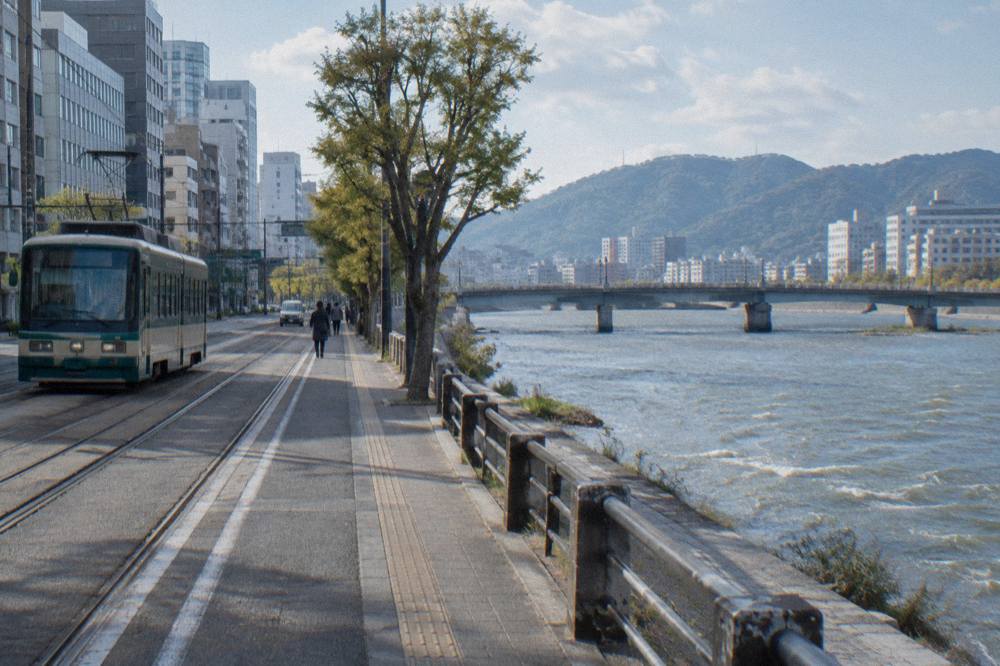
For a full picture of how the city presents its own history, the Hiroshima Travel Guide covers the Peace Memorial Park, the A-Bomb Dome and Miyajima in depth, and the question of why Hiroshima was chosen as a target carries the historical side of this story with the same neutrality.
Common Questions About Hiroshima Radiation
Why Is Hiroshima Not Radioactive But Chernobyl Is?
Because the Hiroshima bomb released only about 10 percent of its energy as residual radiation, roughly 80 percent of it within 24 hours, while Chernobyl's reactor fire released long-lived fallout at ground level over days. Hiroshima's levels fell to a thousandth within a day and now match natural background.
Is Hiroshima Still Radioactive?
The City of Hiroshima states that radiation in Hiroshima today is on a par with the extremely low levels of background radiation present anywhere on Earth and has no effect on human bodies.
How Long Was Hiroshima Radioactive?
Roughly 80 percent of residual radiation was emitted within 24 hours. At the hypocenter, the residual level was 1/1000th of the immediate level after one day and 1/1,000,000th after one week.
Was The Hiroshima Bomb More Radioactive Than Chernobyl?
No, and the physics explains why: the Hiroshima blast was an air burst that pushed its radioactive residue upward into the atmosphere with the rising fireball, while the Chernobyl reactor burned at ground level and kept producing and venting contamination for days. The City of Hiroshima states that radiation in Hiroshima today is on a par with the extremely low levels of background radiation present anywhere on Earth, and that it has no effect on human bodies.
Is It Safe To Walk Around The Peace Memorial Park?
Yes. The park sits on ground the City of Hiroshima describes as carrying background-level radiation, and it recorded 2,580,926 visitors to the Peace Memorial Museum in FY2025. Visitors are asked to keep behaviour quiet and respectful.
Do Visitors Need Any Radiation Protection In Hiroshima?
No. The city states current radiation levels match natural background anywhere on Earth and have no effect on human bodies. No screening, dosimeter or precaution applies to visiting.