Is Hiroshima Still Radioactive?
No, Hiroshima is not still radioactive in any harmful sense: the City of Hiroshima states radiation there today matches natural background levels found anywhere on Earth and has no effect on human bodies.
No, Hiroshima is not still radioactive in any way that affects residents or visitors. The City of Hiroshima states on its own English-language radiation page that radiation in Hiroshima and Nagasaki today is on a par with the extremely low levels of background radiation, meaning natural radioactivity, present anywhere on Earth, and that it has no effect on human bodies.
This page gathers what the city's published answer actually says, why the physics of an airburst weapon made the aftermath different from a reactor accident, and what that means for a visit today. For the deeper comparison with Chernobyl, see Why Hiroshima Is Not Radioactive But Chernobyl Is, and for the timeline, How Long Hiroshima Was Radioactive.
No. The City of Hiroshima's own English page states that radiation in Hiroshima and Nagasaki today is on a par with the extremely low levels of background radiation present anywhere on Earth, and that it has no effect on human bodies. The question is asked often enough that the city maintains a dedicated frequently-asked-questions entry restating it: current radiation levels match natural background radiation found anywhere on the planet.
Encyclopedia Britannica, asked the same question, gives the same conclusion, noting that residual radiation declined quickly after the bombing as a result of radioactive decay. The practical consequence is straightforward. A person standing at the hypocenter, at the A-Bomb Dome, on Miyajima, or anywhere in between receives no meaningful radiation dose beyond what they would receive in any other city. Nothing about the city's soil, water or air requires precaution today, and no official page asks visitors to take any.
What Happened On 6 August 1945?
The atomic bomb was dropped on Hiroshima at 8:15 a.m. on 6 August 1945 and detonated approximately 600 meters above the city, 43 seconds after release. Surface temperatures near the hypocenter rose to 3,000 to 4,000 degrees Celsius, the fireball reached a radius of over 200 meters in one second, and the city estimates approximately 140,000 people had died by the end of December 1945.
The bomb was an airburst, exploding in the sky rather than on the ground, and that single fact shapes everything about the radiation question that follows. Of the energy the bomb emitted, the city's materials state that 5% was initial radiation, released at the instant of detonation, and 10% was residual radiation, emitted later. Initial radiation inflicted severe damage to human bodies, and most of those exposed to direct radiation within a one-kilometer radius died. A city survey recorded that 51,787 of 76,327 buildings were completely destroyed or burnt.
The remaining energy was blast and heat, on an entirely different order of magnitude from a conventional bomb, as the city's own comparison page puts it. The rest of this article is about the 10% that was residual radiation, because that is the part a "still radioactive" question is really asking about. The historical record is preserved at the museum in Peace Memorial Park, covered in detail in the Hiroshima Peace Memorial Museum guide.
| Quantity | Figure | Notes |
|---|---|---|
| Detonation time | 8:15 a.m., 6 August 1945 | City of Hiroshima page |
| Detonation altitude | approx. 600 meters | Airburst, not ground burst |
| Bomb-to-blast interval | 43 seconds | City of Hiroshima page |
| Energy as initial radiation | 5% | Released at detonation |
| Energy as residual radiation | 10% | Emitted later |
| Hypocenter surface temperature | 3,000 to 4,000 °C | Near the hypocenter |
Why Did Residual Radiation In Hiroshima Fall So Fast?
Roughly 80% of all residual radiation was emitted within 24 hours of the bombing, and research cited by the City of Hiroshima indicates that 24 hours afterwards the quantity of residual radiation a person would receive at the hypocenter was one thousandth of the quantity received immediately after the explosion, falling to one millionth within a week.
Two mechanisms drove the collapse. The first was ordinary radioactive decay: the shortest-lived isotopes created by the explosion burned themselves out within days, which is what the thousandth and millionth figures describe. The second, reported by Encyclopedia Britannica, was the weather. The Makurazaki Typhoon struck the region on 17 September 1945, killing hundreds of bombing survivors, and its extensive flooding washed away the fallout-contaminated layer of topsoil. A second typhoon in October 1945 did further work. Subsequent measurements reflected a significant drop after both storms, suggesting, as Britannica reports, that they effectively functioned as a large-scale decontaminator.
The contrast with a reactor accident is the reason the two names get compared so often. A nuclear reactor contains tonnes of fuel that keeps releasing long-lived isotopes for years when its core is breached, and the contamination sits in the ground. The Hiroshima bomb converted a comparatively small mass of material into energy in a fraction of a second, high in the air, and left little long-lived fuel behind. The full comparison is laid out in Why Hiroshima Is Not Radioactive But Chernobyl Is.
Is It Safe To Visit Hiroshima Today?
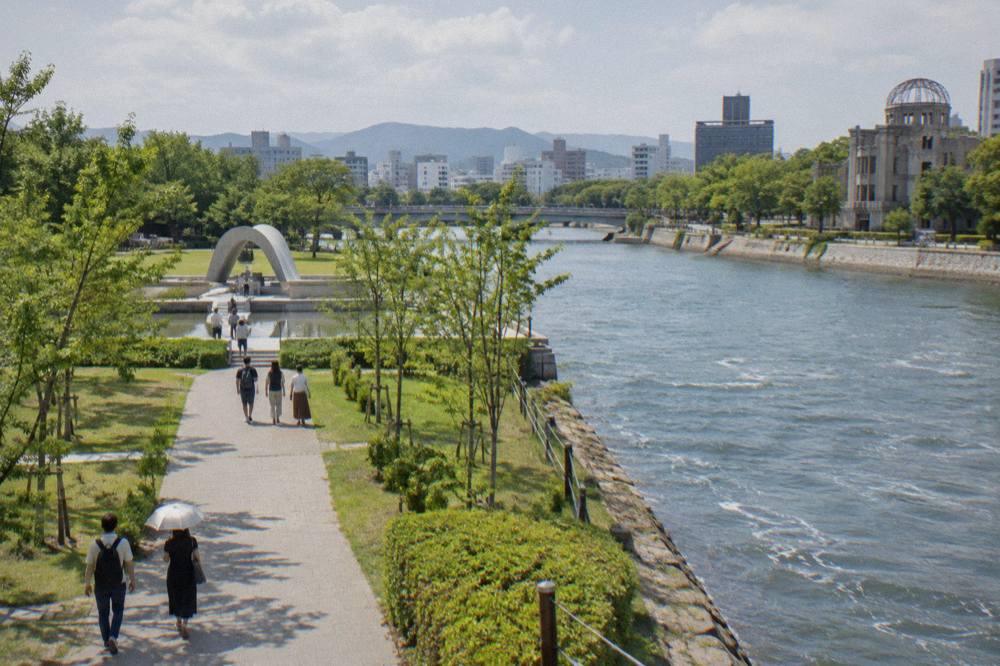
Yes. There is no radiation hazard in visiting Hiroshima, because the City of Hiroshima states that radiation levels today match natural background radiation anywhere on Earth and have no effect on human bodies. Visitors walk the Peace Memorial Park, the castle grounds and the island of Miyajima under exactly the background-radiation conditions of any other city on the planet.
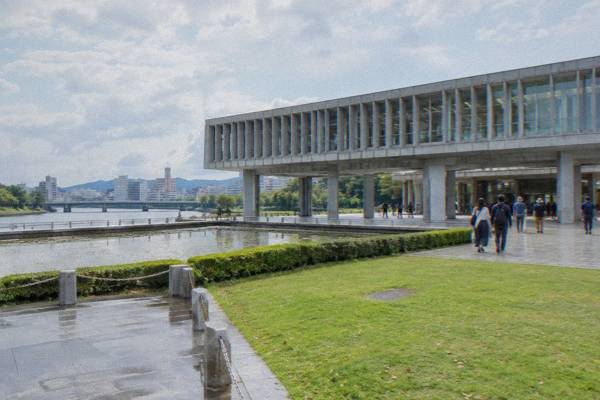
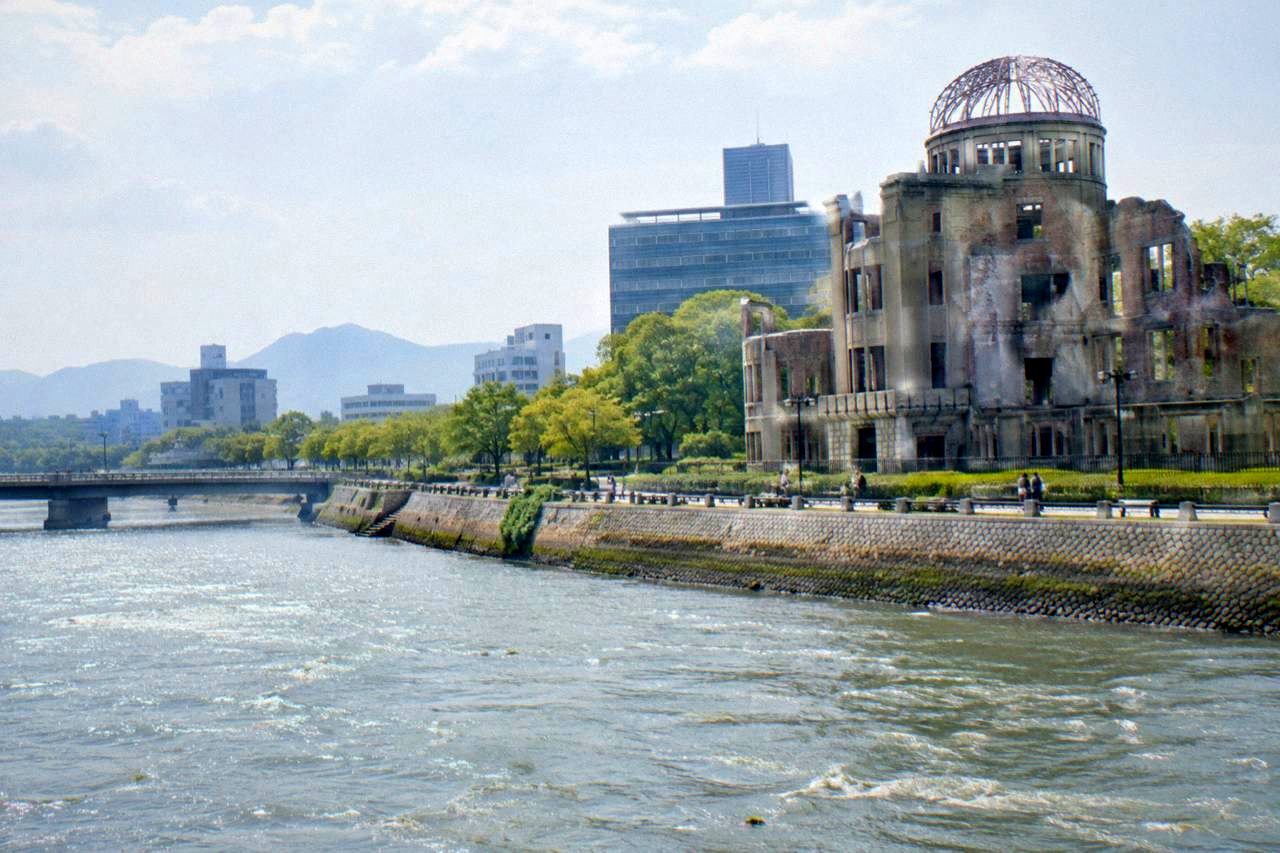
The visitor experience reflects that reality. Peace Memorial Park, the A-Bomb Dome viewed from outside its fence, and the museum, at 200 yen adult admission, are ordinary paid and free civic sites. The A-Bomb Dome guide and the Miyajima tour guide cover the practicalities.
Is It Safe To Swim Or Boat In The Seto Inland Sea Around Hiroshima?
Yes. It is safe to swim or boat in the Seto Inland Sea around Hiroshima. The City of Hiroshima states that radiation today matches natural background levels found anywhere on Earth and has no effect on human bodies, and nothing about the city's water requires precaution today. Roughly 80% of residual radiation was emitted within 24 hours of the bombing, and typhoons later washed away the contaminated topsoil, so swimming and boating are simply normal activities here.
What Radiation Effects Did Survivors Experience?
The harm from radiation in Hiroshima was concentrated in 1945 and the decades after, not in the present. The city estimates approximately 140,000 people had died by the end of December 1945 from injuries and radiation effects, and the Peace Memorial Museum's materials record that five to ten years after the bombing, survivors began contracting thyroid, breast, lung and other cancers at higher than normal rates.
The health legacy is therefore historical and medical, not environmental. The Atomic Bomb Casualty Commission began medical and biological research on the effects of radiation in Hiroshima in 1947, and the Hiroshima Atomic-bomb Survivors Hospital was built in 1956 to offer examinations, treatment and health management services to survivors. As of 31 March 2026, 91,105 hibakusha were still alive, mostly in Japan, according to Japanese government recognition, and the government recognizes about 1% of hibakusha as having illnesses caused by radiation.
Visitors encounter this history at the Peace Memorial Museum, where practical details reward a little planning. Opening hours shift with the seasons: 7:30 to 19:00 from March through July and again from September through November, 7:30 to 20:00 in August, extended to 21:00 on 5 and 6 August, and 7:30 to 18:00 from December through February. The museum closes on 30 and 31 December and again in mid-February for an exhibit change. Admission is 200 yen for visitors of college age and up, 100 yen for high school students, and free for those in junior high school and younger, while travelers aged 65 and over pay 100 yen with a passport. The earliest 7:30 to 8:30 entry slot and certain evening slots require an online reservation, and entry was reported to be reservation-only from 8 to 16 August 2026, so it pays to check ahead in summer.
The museum drew a reported 2,580,926 visitors in fiscal 2025, its third consecutive record year, and 945,618 of them came from outside Japan. Nearby, the A-Bomb Dome can be viewed from outside the fence, with no fee. On 6 August 2026, the Peace Memorial Ceremony runs from 8:00 to 8:50 in Peace Memorial Park, where about 7,000 seats are set out, along with about 2,200 indoor seats at the International Conference Center.
Getting to the area is easy and inexpensive on the Hiroden tram network, which has used a flat fare of 240 yen for adults and 120 yen for children on all lines, including the Miyajima line, since 1 February 2025. Trams now connect directly with Hiroshima Station, entering the station building at the second floor, a link that reportedly opened on 3 August 2025 after the new station building opened in March of that year.
What Can Visitors Still See From 1945 In Hiroshima?
The Peace Memorial Museum in Peace Memorial Park holds the material record of the bombing, with adult admission of 200 yen and free entry for junior high students and younger. The question of the shadows specifically, what they were and whether any survive, is answered in Can You Still See The Hiroshima Shadows, and the wider context for first-time visitors is in Is Hiroshima Worth Visiting.
Common Questions About Radiation In Hiroshima
Is Hiroshima Still Radioactive?
No. The City of Hiroshima states that radiation in the city today is on a par with the extremely low levels of background radiation present anywhere on Earth and has no effect on human bodies.
How Long Did Radiation Stay Dangerous In Hiroshima?
Roughly 80% of residual radiation was emitted within 24 hours, and research cited by the city indicates the dose rate at the hypocenter fell to one thousandth of the immediate level after a day and one millionth after a week. See How Long Hiroshima Was Radioactive.
Why Is Hiroshima Safe But Chernobyl Is Not?
An airburst weapon left little long-lived material, while a breached reactor core keeps releasing contamination into the ground. The comparison is explained in Why Hiroshima Is Not Radioactive But Chernobyl Is.
Do I Need To Take Any Radiation Precautions When Visiting?
No official source asks visitors to take any precaution. Background radiation in Hiroshima is comparable to any other city.
Does The Water Or Food In Hiroshima Carry Radiation?
No radiation caution is attached to either. Tap water questions are answered separately in Can You Drink Tap Water In Hiroshima.
For planning beyond this question, the Hiroshima Travel Guide covers the Peace Memorial Park and museum, the castle grounds, Shukkeien, Miyajima and the Seto Inland Sea day trips, all under the same ordinary background-radiation conditions the city's own statement describes. The short answer to the question itself stands: no, and the city says so itself, plainly, on its official page.