Miyajima Tours From Hiroshima
A Miyajima tour from Hiroshima bundles the shrine, the Great Torii and Mount Misen into one planned day. This page compares the guided options against doing the island on your own, with the fares, hours and admission prices that shape the decision.
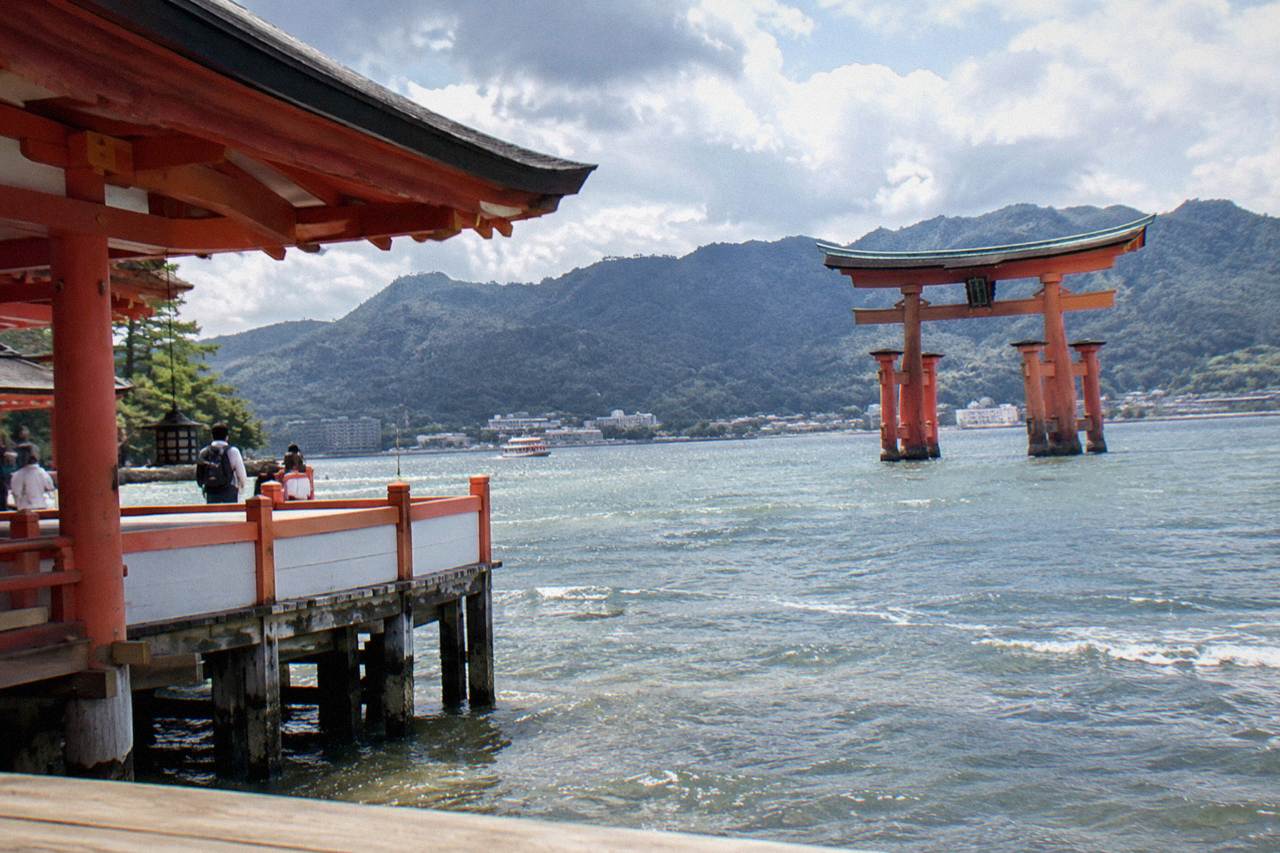
A Miyajima tour from Hiroshima is worth it if you want the island explained rather than just seen: guided days cover Itsukushima Shrine, the Great Torii viewpoint and often Mount Misen, while the independent route is a 28-30 minute JR train and a ten-minute ferry. Either way budget the 100 yen visitor tax, the 300 yen shrine admission and the tide, which decides whether you walk to the torii or watch it float.
The island is close, a JR Sanyo Line ride of about 28-30 minutes from Hiroshima Station to Miyajimaguchi at 420 yen, then a ferry crossing of about ten minutes, so a Miyajima tour buys interpretation and logistics rather than access. The question comes down to what the guided options cover, what the island costs on your own, and where a tour genuinely changes the day.
What Does A Miyajima Tour From Hiroshima Actually Include?
A Miyajima tour from Hiroshima typically pairs the island with either the Peace Memorial Park or a transport pass, covering Itsukushima Shrine, the Omotesando approach and the Great Torii, with Mount Misen added on longer days. The shrine and its surroundings were registered as a UNESCO World Heritage Site in 1996, which is why so many tours frame the island as one half of a two-site day. What varies is the mode: walking tour, coach bus, bullet train, or a rail pass used independently.
The roster of bookable options splits into a few shapes. Small-group island tours start from Hiroshima Station and spend the day on Miyajima itself. Combined bus days cover both the Peace Memorial Park in the city and Miyajima in one itinerary, which suits a visitor with a single full day in the region. Bullet-train day trips run the same pairing for travellers based in Osaka or Kyoto. Private guided days let a licensed guide set the pace and the content.
Then there is the pass route. A regional rail pass covers the JR Sanyo Line to Miyajimaguchi and is valid on the JR West Miyajima Ferry, with only the 100 yen Miyajima visitor tax charged separately, so a pass holder reaches the island with almost no extra cost. That route is laid out step by step in the Hiroshima to Miyajima transport guide, which covers trains, trams and both ferry operators.
What no tour can control is the tide. The Great Torii can be walked to when the tide is below about 100 cm and appears to float above about 250 cm, per guide figures, so the sequence of a day matters more than its contents. The question of when low tide falls at Miyajima is the one to answer before booking anything.
How Do You Reach Miyajima From Hiroshima Without A Tour?
Getting to Miyajima independently from Hiroshima takes a JR Sanyo Line train of about 28-30 minutes from Hiroshima Station to Miyajimaguchi at 420 yen, then a ferry of about ten minutes, with a 100 yen Miyajima visitor tax charged separately on entering the island and preschool children exempt. The Hiroden streetcar also runs to Miyajimaguchi on a flat fare of 240 yen for adults on every line, including the Miyajima line.
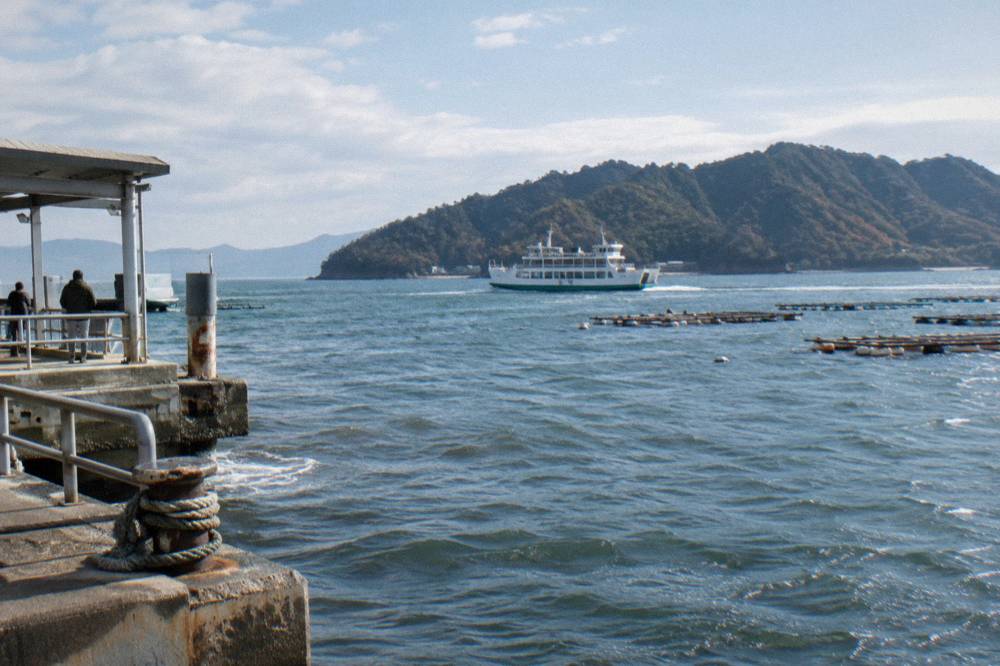
Two ferry operators cross from Miyajimaguchi. The JR West Miyajima Ferry runs roughly every 15 minutes from 8:00 into the evening, with the first departure about 6:25 and the last about 22:00, and its Great Torii route, which passes close to the gate, operates on departures from Miyajimaguchi between 9:10 and 16:10. Matsudai Kisen runs its own timetable, about every 15 minutes from 7:00 into the evening. The Japan Rail Pass and JR-West rail passes are valid on the JR ferry, not on Matsudai.
| Route Or Item | Figure | Notes |
|---|---|---|
| JR Sanyo Line, Hiroshima Station to Miyajimaguchi | 420 yen | About 28-30 minutes |
| Hiroden streetcar, flat fare, adult | 240 yen | All lines, including Miyajima line, since 1 February 2025 |
| Hiroden streetcar, child | 120 yen | Flat fare on all lines |
| JR ferry crossing | About 10 minutes | Roughly every 15 minutes from 8:00 |
| JR ferry first departure from Miyajimaguchi | About 6:25 | Last departure about 22:00 |
| Matsudai Kisen service | About every 15 minutes | From 7:00 into the evening |
| Miyajima visitor tax | 100 yen | Charged on entering the island, preschool children exempt |
The two-ferry detail matters at night. The JR boat runs later than Matsudai Kisen, whose last weekday departure from Miyajima is 20:15 (the JR boat's last is 22:14), so anyone staying for the illumination after dusk should check the sailing they will actually use to get back. The logistics of an evening on the island, including the nightly illumination of the torii and shrine, are covered in the Miyajima overnight itinerary.
Which Guided Formats Fit A Miyajima Day?
The guided formats for Miyajima are a half-day small-group island tour from Hiroshima Station, a full-day bus tour pairing the Peace Memorial Park with Miyajima, a bullet-train day trip for travellers based in Osaka or Kyoto, and private guided days with a licensed guide, while a regional rail pass serves visitors who would rather walk the island alone. Each format reaches the same island; what changes is how much of Hiroshima itself fits in the same day.
For a first visit to the region, the combined format answers a real constraint: the Peace Memorial Museum and Miyajima are the two sights a one-day visitor is least willing to drop, and a guided day that chains them removes the transfer risk between them. The trade is pace. A guided day moves on a schedule the visitor does not set, and the tide may or may not cooperate with the hour the group reaches the shore.
A different structure splits the day in two: a guided walk through the Peace Memorial Park and the history of the bombing in the morning, then the afternoon free on Miyajima. The Hiroshima Historical Walking Tour, Why A-Bomb Was Dropped is that first half, a short guided walk rather than a full-day commitment, and it can be booked directly: Check availability. The morning walk plus an independent afternoon ferry gives a visitor both the interpretation and the freedom to wait for the tide.
Is A Miyajima Tour Worth It Compared With Going Alone?
A Miyajima tour is worth it for the interpretation and the fixed logistics, because the island's headline sights carry history a guide can unpack, Itsukushima Shrine was established in 593 and rebuilt in its present form in 1168 by Taira no Kiyomori, and going alone is cheap and simple, with 420 yen each way by train, the ferry, and 300 yen shrine admission. The honest answer is that access is easy and context is the product.
The independent route has no meaningful barrier. The train is frequent, the ferry leaves roughly every 15 minutes through the day, IC cards such as ICOCA and Suica are accepted on the Hiroden, and the shrine's own admission page lists everything a visitor needs in English. What a self-guided visitor gives up is the layer a guide adds at the shrine corridors, the Mount Misen forest and the Omotesando shopping street, and the safety margin of a driver or guide who already knows the last boats.
Visitors weighing the trip's two destinations, the city of Hiroshima and the island of Miyajima, against each other can start from which is better to visit, Hiroshima or Miyajima, since the answer shapes whether a full guided day or a half-day format fits better.
What Does Itsukushima Shrine Cost And When Is It Open?
Itsukushima Shrine charges 300 yen for adults, 200 yen for high school students and 100 yen for elementary and junior high students, with a combined ticket including the Treasure Hall at 500 yen for adults, and it opens at 6:30 except on 1 January (open from midnight to 18:30), closing at 18:00 from 1 March to 14 October, 17:30 from 15 October to 30 November, and 17:00 in December, per the shrine's admission page.
Those hours reward an early start. The shrine's page also notes a practical detail many guides skip: the corridor floorboards have deliberate gaps that let high-tide pressure through, and it advises comfortable shoes.
| Period | Opening | Closing |
|---|---|---|
| 1 January | 0:00 | 18:30 |
| 2 to 3 January | 6:30 | 18:30 |
| 4 January to end of February | 6:30 | 17:30 |
| 1 March to 14 October | 6:30 | 18:00 |
| 15 October to 30 November | 6:30 | 17:30 |
| December | 6:30 | 17:00 |
Repair work is under way on parts of the complex, with the East Corridor reinforcement reported to run to December 2026 and five-storey pagoda repair to 2027, while the Great Torii's own restoration finished in December 2022 and the shrine remains open. The current state of the works is tracked in whether the Miyajima torii gate is still under renovation. Why the gate stands in the water at all is answered in why the Miyajima torii gate is in the water.
When Can You Walk Out To The Great Torii?
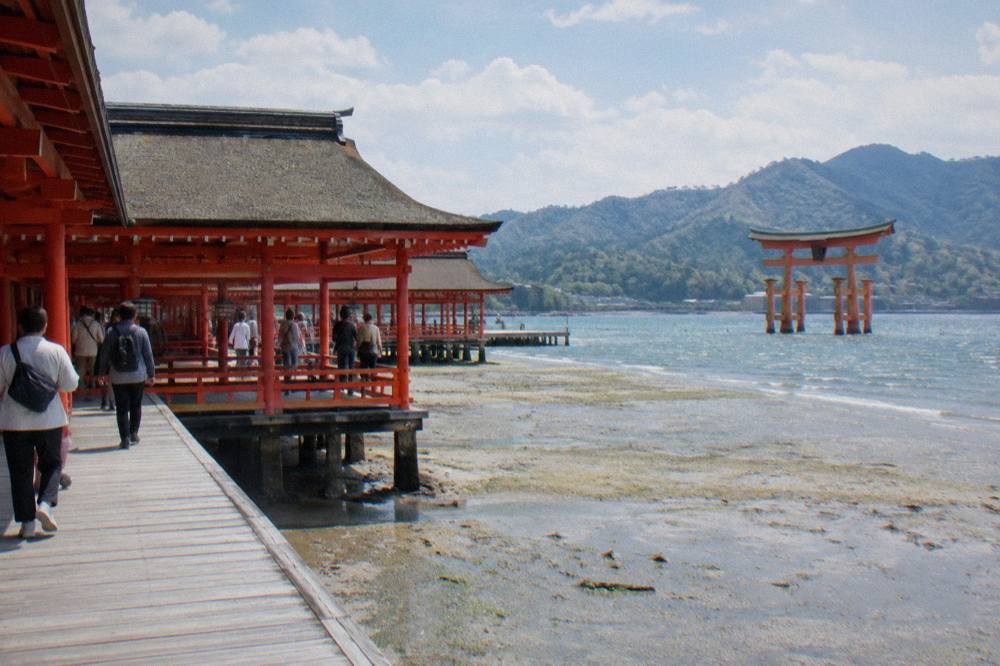
The Great Torii can be walked to when the tide falls below about 100 cm, and it appears to float when the tide rises above about 250 cm, per guide figures, so the same gate is two different sights on the same day, and neither state lasts. No tour schedule and no itinerary page can promise either view, because the tide, not the operator, sets the timetable for the walk out.
This is the single fact that should drive the timing of any Miyajima day, guided or not. A visitor who arrives at a fixed hour with a tour may meet the floating gate or the exposed seabed, and both are worth seeing. An independent visitor, or a visitor on a half-day tour with free time, can wait for the swing.
Is The Mount Misen Ropeway Part Of A Miyajima Tour?
The Mount Misen ropeway costs 2,000 yen return or 1,100 yen one way for adults and 1,000 yen return or 550 yen one way for children, runs from 9:00 to 16:00 with the last descent at 16:30, and sits inside the same UNESCO registration as the shrine, the island and the mountain having been inscribed together in 1996. It is a separate ticket from any shrine admission and is not bundled into every tour.
A visitor planning the ropeway into a day needs the 9:00 opening and the 16:30 last descent more than anything else: both ends of the window sit inside typical tour hours, so a guided day that arrives at the island mid-morning and leaves in the late afternoon can include it only if the schedule allows. The summit area adds walking time beyond the ropeway stations. The natural surroundings of the mountain, and the hiking alternative to the cable car, are covered in the full Miyajima island day trip guide.
| Ropeway Fare | Adult | Child |
|---|---|---|
| Return | 2,000 yen | 1,000 yen |
| One way | 1,100 yen | 550 yen |
The ropeway's operating window, 9:00 to 16:00 with the last descent at 16:30, means the summit is a morning-or-midday decision, never an evening one.
What Should You Pack For A Miyajima Tour Day?
Pack for tide, steps and season: shoes that can handle wet sand and the gapped shrine floorboards, cash or an IC card for the ferry, train and 100 yen visitor tax, and layers matched to the season, because Japan Meteorological Agency station normals for Hiroshima show July averaging a high of about 30.9 °C and January a high of about 9.9 °C with a low of about 2.0 C. The island is walked, not driven, and the walk adds up.
The clothing question has its own detailed answer in what to wear to Miyajima island, and the seasonal extremes are worth knowing in advance.
| Month | Mean High °C | Mean Low °C | Rain Mm |
|---|---|---|---|
| January | 9.9 | 2.0 | 46.2 |
| April | 19.8 | 10.1 | 141.0 |
| July | 30.9 | 24.1 | 279.8 |
| October | 23.7 | 14.9 | 109.2 |
Seasonal pages go deeper: the Miyajima autumn leaves guide covers the island in its colour season, and the Hiroshima cherry blossom guide covers the spring display across the region. Summer visitors should note that August in Hiroshima averages a high of about 32.8 °C but far less rain than July, about 131.4 mm, while the Hiroshima in winter guide covers the mild off-season.
Can You Stay On Miyajima Instead Of Day-Tripping?
You can stay overnight on Miyajima, and the case for it is the hours a day trip cannot reach: the Great Torii and Itsukushima Shrine are illuminated every night from about 30 minutes after sunset until 23:00, viewable free from the shore, per the Miyajima Tourist Association, and ryokan check-in on the island is typically 15:00 with check-out at 10:00 or 11:00. The last ferries back end the day-trip version of the island.
Staying overnight does not lock in both tide states in daylight, but it gives a guest on the island more chances to catch the Great Torii at different tide states and again in the evening illumination, without watching a clock. The JR ferry's last departure from Miyajima is 22:14 (last sailing from Miyajimaguchi 22:42), and Matsudai Kisen's last weekday departure is earlier, in the early evening, so an illumination viewed from the shore belongs to those already on the island or willing to catch the final sailing. The Miyajima overnight itinerary lays out the full evening sequence.
How Does A Miyajima Day Fit Into A Longer Hiroshima Trip?
A Miyajima day fits a longer Hiroshima trip as either the second half of day one or the whole of day two, because the island pairs naturally with the Peace Memorial Park and Museum in a single very full day, or splits cleanly across two days at a calmer pace, and the ready-made sequences are a one-day combined itinerary, a two-day plan and a three-day plan, each of which already balances the city and the island.
The one-day version, Hiroshima and Miyajima in one day, is the tightest and depends on the museum's hours, which run from 7:30 with evening closing, 19:00 from March to July and 20:00 in August. The museum's adult admission is 200 yen, high school students pay 100 yen, and junior high school students and younger enter free. The two-day and three-day versions, at Hiroshima in 2 days and Hiroshima in 3 days, give the island its own daylight and the city its own evening.
Common Questions About Miyajima Tours
How Much Does A Miyajima Tour From Hiroshima Cost?
Tour prices vary by format and are shown on each operator's live listing rather than quoted here. The fixed independent costs are 420 yen each way by JR train, the ferry fare, the 100 yen visitor tax, 300 yen shrine admission and 2,000 yen for an adult ropeway return.
How Long Is A Miyajima Tour?
Durations vary by product and are shown with each listing. The transport itself is fixed: about 28-30 minutes by JR train from Hiroshima Station to Miyajimaguchi and about 10 minutes by ferry.
Do I Need A Tour For Miyajima?
No. The island is reached by frequent trains and ferries, IC cards are accepted on the Hiroden, and the shrine's admission page lists hours and prices in English. A tour adds interpretation and fixed logistics.
Is The Japan Rail Pass Valid On The Miyajima Ferry?
The Japan Rail Pass and JR-West rail passes are valid on the JR West Miyajima Ferry, with the 100 yen Miyajima visitor tax charged separately. They are not valid on Matsudai Kisen.
What Is The Miyajima Visitor Tax?
It is 100 yen per person, charged when entering the island, with preschool children exempt. Details are at how much the Miyajima visitor tax is.
Can You Swim At Miyajima?
Yes. The island has a swimming beach at Tsutsumigaura Nature Park on the northeast coast in Hatsukaichi City, a sandy beach with a roped swimming area open in summer. The Maple Liner minibus runs there from the pier for 300 yen. Details are at can you swim at Miyajima.
The short version: pick the format by how much Hiroshima city belongs in the same day, check the tide before anything else, and treat the Omotesando approach and the shrine corridors as the parts worth lingering on. A Miyajima tour from Hiroshima, in any of its formats, delivers the same island the independent traveller reaches for a few hundred yen; what it adds is a plan that already accounts for the ferries, the hours and the walk to the gate, which is why the format question, not the destination, is the one that deserves the deciding time. More on the whole region, from the Hiroshima Travel Guide homepage, begins with things to do in Hiroshima.