What To Wear To Miyajima Island?
Clothing and footwear guidance for Miyajima, the island in Hiroshima Bay, by season and activity: shrine corridors, the Great Torii tide flats and the Mount Misen trails.
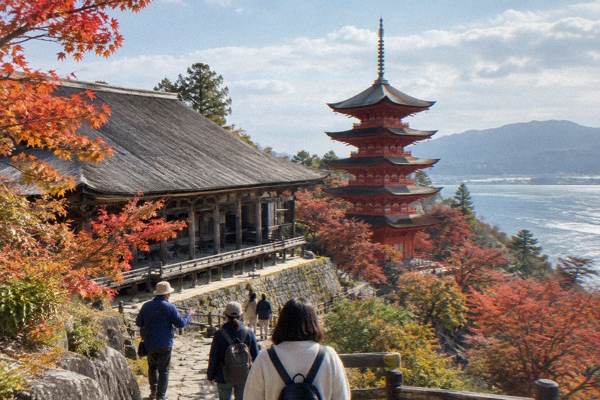
Miyajima, the island in Hiroshima Bay reached by a 10-minute JR ferry from Miyajimaguchi outside the city of Hiroshima, is a walking destination first and a sightseeing one second. Itsukushima Shrine admits visitors onto corridors built over the tide, the Great Torii stands in the sea and can be walked to when the water drops far enough, and the Mount Misen trails climb 494 to 524 metres of elevation on steep stone steps. What to wear there is not a style question.
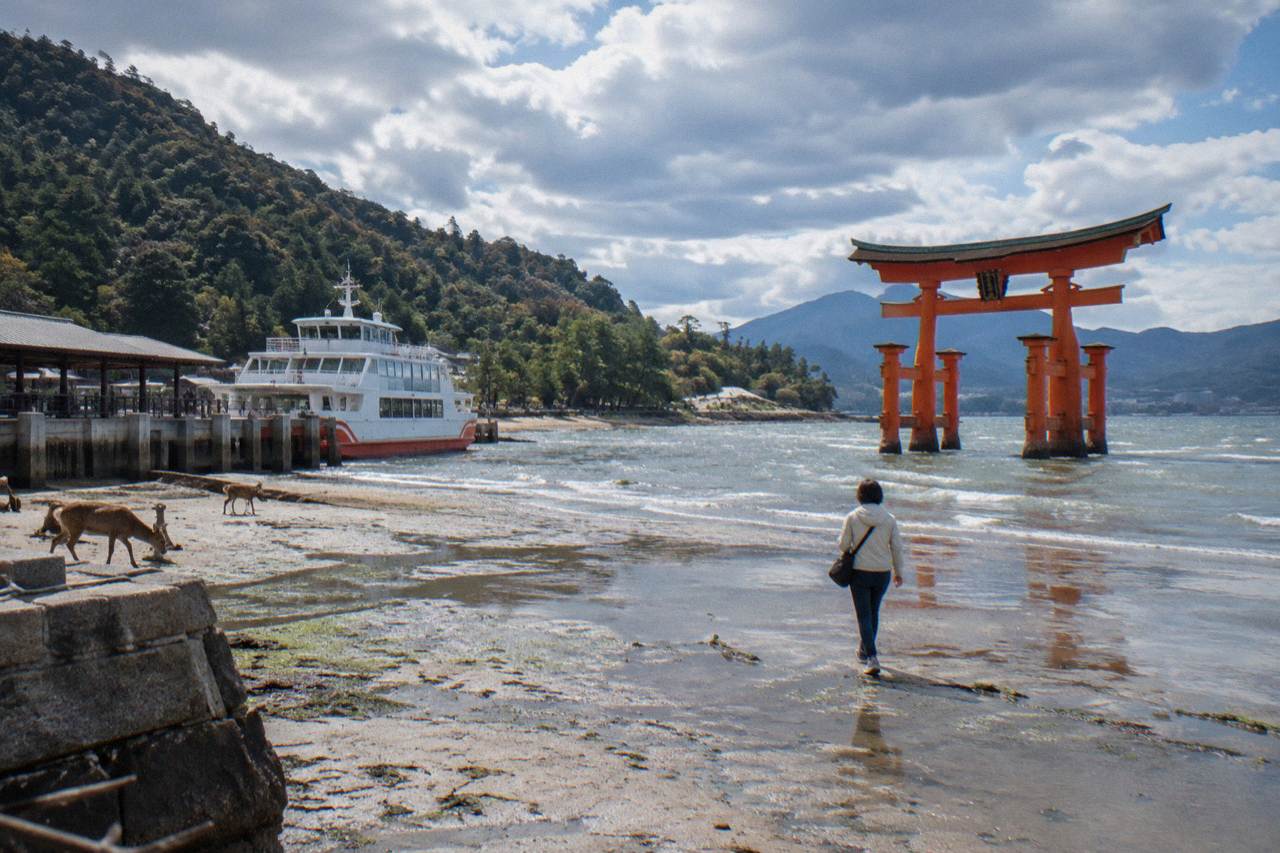
The shrine's admission page tells visitors to wear comfortable shoes because the corridor floorboards have gaps, designed that way to let high-tide water pressure through, and those gaps catch heels. The island guides say the walk to the torii is over wet sand, mud and seaweed. The Japan Meteorological Agency (JMA) 1991-2020 station normals for Hiroshima, the nearest station, show summers that reach an average daily high of about 32.8 °C in August and winters that fall to an average low of about 2.0 °C in January. One outfit does not cover that range, so this page breaks the answer down by shoe, by season and by activity.
For a day on Miyajima, wear flat, closed walking shoes with grip, clothing in breathable layers you can add and remove, a sun hat and a light rain layer in the warm months, and a warm insulated jacket, scarf and gloves in winter, plus a windproof outer layer for the ferry deck and the waterfront. Flat shoes matter most of all: the shrine corridors have gapped floorboards that catch heels, and the tide flats around the Great Torii are wet sand and mud.
That is the short version drawn from two kinds of source. The shrine's own admission guidance is about footwear and nothing else, which says a great deal about priorities. The Japan Meteorological Agency (JMA) 1991-2020 normals for Hiroshima supply the temperature and rainfall frame.
Two features of the island push clothing choices harder than the calendar. First, the waterfront and the open ferry deck carry wind that lowers the perceived temperature in winter, so a windproof outer layer earns its place even on a mild day in Hiroshima itself. Second, the same day can involve tide flats, shrine corridors and a 535-metre summit: the Mount Misen summit is 535 m high and colder than sea level, so what suits the shore is thin clothing by the top. Layers solve this. A base layer, a warm mid layer and a shell cover all three environments without requiring a change of clothes.
Practical clothing that covers shoulders and knees is a reasonable default for a working shrine, but nothing in the shrine's own guidance asks for it.
What Shoes Work Best On Miyajima?
Flat shoes with a real sole are the answer for Miyajima: the Itsukushima Shrine admission page warns that corridor floorboards have gaps that catch heels, and the walk out to the Great Torii at low tide crosses wet sand, mud and seaweed. For the Mount Misen trails, the guides call for proper shoes and water, because all three hiking courses are steep stone steps with 494 to 524 metres of climbing.
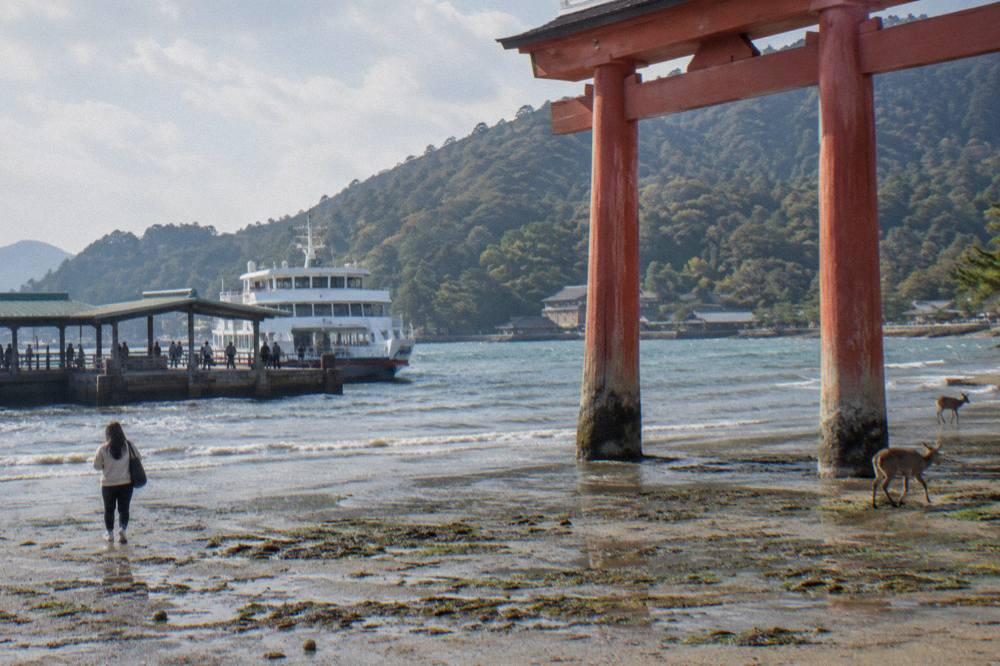
The gaps in the shrine floorboards are an engineering feature, not wear and tear: they exist to relieve water pressure at high tide, and a heel that drops into one can twist an ankle or snap. The tide flats are the other hazard: the walkable window around the torii arrives when the tide level falls below about 100 cm referenced to Hiroshima Port, and the surface between the shore and the gate is sand, mud and seaweed, not a beach. Shoes you do not mind getting wet and salty, with grip, are the practical call.
If the day includes the ropeway rather than a hike, the footing question mostly disappears, but not entirely. The Miyajima Ropeway runs to 16:00 with a last descent at 16:30, and the summit area still involves walking. If the day includes hiking, the guides are blunt: the three main trails, Daisho-in, Momijidani and Omoto, each require proper shoes and water, there are no toilets on the trails, and climbs should start before 15:00.
What Should You Wear For The Mount Misen Hike?
Wear proper hiking shoes or trail shoes with grip, carry more water than feels necessary, and add a warm layer even in summer, because the Mount Misen summit is 535 metres high and colder than sea level on Miyajima. The Daisho-in course takes 1.5 to 2 hours with many stone steps, the Momijidani course about 1.5 hours and the Omoto course about 2 hours, all on steep stone steps with 494 to 524 metres of elevation gain.
Those figures come from the island's trail guides, and they change what the mountain demands. This is not a stroll to a viewpoint. It is a sustained stone staircase in a forest, and the guides' two consistent warnings are footwear and water. There are no toilets on the trails, which also argues for starting the climb before 15:00 rather than pushing a late ascent.
The temperature drop matters more than the modest 535 m summit height suggests, because the trails start at sea level and end in open summit air. On a January day, when the Hiroshima average high is about 9.9 °C and the average low about 2.0 °C, a summit afternoon in wind can sit at the bottom of that range or below it. On an August day, when the average high is about 32.8 °C, the summit is relief rather than risk, but the climb itself is hot work: a hat, sunscreen and water are the summer kit on the mountain, not the shore.
The ropeway offers a middle path. An adult return ticket is 2,000 yen, one way 1,100 yen, with child fares of 1,000 and 550 yen, operating 9:00 to 16:00 with a last descent at 16:30. Footwear standards drop from "hiking" to "comfortable walking" on that plan, though the summit paths still deserve flat shoes rather than heels.
For a half-day guided walk on the island without the full mountain ascent, the Miyajima Half-Day Small Group Tour from Hiroshima Station covers the island's core sights on foot, and the same flat-shoe rule applies. Check availability
What Should You Wear In Each Season On Miyajima?
In spring and autumn on Miyajima, wear layers with a light jacket, when average lows run from about 5.1 to 15.1 °C and average highs from about 14.5 to 24.4 C. In summer, from June through August, wear light, breathable clothing with a sun hat and a rain layer for summer rain.
In winter, from December through February, wear an insulated coat, warm layers, scarf and gloves, because average lows run 2.0 to 4.0 °C and the waterfront wind lowers the felt temperature further.
The Japan Meteorological Agency (JMA) station normals for Hiroshima, 1991-2020, give the full frame:
| Month | Average High °C | Average Low °C | Average Rain mm |
|---|---|---|---|
| Jan | 9.9 | 2.0 | 46.2 |
| Feb | 10.9 | 2.4 | 64.0 |
| Mar | 14.5 | 5.1 | 118.3 |
| Apr | 19.8 | 10.1 | 141.0 |
| May | 24.4 | 15.1 | 169.8 |
| Jun | 27.2 | 19.8 | 226.5 |
| Jul | 30.9 | 24.1 | 279.8 |
| Aug | 32.8 | 25.1 | 131.4 |
| Sep | 29.1 | 21.1 | 162.7 |
| Oct | 23.7 | 14.9 | 109.2 |
| Nov | 17.7 | 8.9 | 69.3 |
| Dec | 12.1 | 4.0 | 54.0 |
Read that table through the island's two modifiers. The Miyajima rainy season runs from mid-June to late July, and July averages about 279.8 mm of rain in the normals, so a compact rain layer is summer clothing here, not winter clothing. August brings an average daily high of about 32.8 °C on the Hiroshima station record, while the island's own guides put the Miyajima August average daytime around 31 to 32 °C: light, loose clothing, a hat and serious water intake are the practical answer.
Winter is where visitors from warmer latitudes get caught. A January average high of about 9.9 °C sounds manageable, but the average low is about 2.0 °C, the days are short, and the wind on the Miyajima waterfront and the open ferry deck affects perceived temperature, as the island's winter guide notes. A warm coat, a scarf and gloves are not overkill for standing on the shore waiting for a ferry at 8:00 in January.
Spring and autumn are the seasons where layers do the work. April swings from an average low of about 10.1 °C to a high of about 19.8 °C; November from about 8.9 °C to about 17.7 C. A t-shirt, a warm mid layer and a light shell, adjusted through the day, covers both months on the shore and both ends of the Momijidani trail.
A seasonal summary in clothing terms:
| Season | Base | Mid Layer | Outer Layer | Footwear |
|---|---|---|---|---|
| Dec to Feb | Warm base layer | Fleece or wool | Insulated coat, scarf, gloves | Flat closed shoes, warm socks |
| Mar to May | T-shirt or long sleeve | Light fleece | Packable rain jacket | Flat shoes with grip |
| Jun to Aug | Light breathable shirt | None needed | Rain layer for rainy season | Flat sandals with straps or water-friendly shoes for tide flats |
| Sep to Nov | T-shirt or long sleeve | Fleece for autumn evenings | Light jacket | Flat shoes with grip |
For visitors planning the day around the tide, which changes what there is to see and how wet the ground is, the companion page on when low tide falls at Miyajima carries the detail. The tide shifts later each day, and the walkable window around the torii arrives only when the level drops below about 100 cm.
Do You Need Different Clothes For The Ferry And The Shrine?
For the ferry to Miyajima you need a windproof outer layer more than anything else, because the crossing takes about 10 minutes on open water in Hiroshima Bay and the deck wind lowers the felt temperature, especially from December through February. For the shrine you need no special clothing at all beyond flat shoes: the corridors let visitors keep outdoor shoes on, a deliberate feature of the tidal design over the water.
That second point surprises visitors who have prepared for a shoe-removing ritual. Itsukushima Shrine's corridors are built over the tide, and the design allows outdoor shoes to stay on. The one thing the shrine's page flags instead is the floorboard gaps, already covered above. So the shrine adds no dress rule, but it does add a footwear warning, and flat shoes satisfy it.
The ferry is the opposite case: no dress rule, real weather. The JR ferry from Miyajimaguchi takes about 10 minutes and runs roughly every 15 minutes through the day, and the Miyajima Visitor Tax of 100 yen is charged separately on entering the island, with preschool children exempt. None of that changes clothing, but the open crossing in winter wind does.
One combination worth naming: an evening visit. The torii and shrine are illuminated from about 30 minutes after sunset until around 23:00, and standing still on the shore watching a lit gate at 20:00 in November is a standing appointment with the cold. The November average low is about 8.9 °C and dropping; the illumination layer should be the warm one.
For the planning that surrounds the clothing question, the Hiroshima to Miyajima transport guide and the timed Hiroshima and Miyajima in one day itinerary both assume a lot of walking, and the same footwear logic carries through them. If a longer island visit with an overnight stay is on the cards, the Miyajima overnight guide changes the packing calculus again, since tide windows at dawn and the illumination at night both sit at the cold ends of the day.
What Should Children Wear On Miyajima?
Children on Miyajima need the same footwear rule as adults, flat shoes with grip, applied more strictly: the shrine's gapped floorboards, the seaweed on the tide flats and the stone steps all punish unsupportive shoes. In summer add sun protection and water, and on the mountain trails remember the guides' warnings that there are no toilets on the trails and climbs should start before 15:00, which applies to families most of all.
A child in flip-flops on the tide flats is a wet, cut foot waiting to happen; the seaweed is slippery and the sand holds water.
The companion page on whether you can touch the deer on Miyajima covers the behaviour rules; for clothing, secure pockets beat dangled bags.
Seasonal kit for children follows the adult table above with two adjustments. Winter: children feel the waterfront wind on the ferry queue faster than adults do, so gloves and a hat are morning essentials from December through February, when average lows sit between about 2.0 and 4.0 C. Summer: the June to August stretch brings average highs from about 27.2 °C to 32.8 °C and the mid-June to late-July rainy season, so a hat, sunscreen and a rain layer go in the child's daypack along with the adult's.
Common Questions About Miyajima Island Clothing
What To Wear To Miyajima Island?
Flat, closed walking shoes with grip, clothing in layers, a sun hat and rain layer in the warm months, and a warm coat, scarf and gloves in winter. The shrine corridors have gapped floorboards that catch heels, the tide flats at the Great Torii are wet sand and seaweed, and winter average lows fall to about 2.0 °C on the Hiroshima station normals.
Can You Wear Heels Or Sandals At Itsukushima Shrine?
Heels are a poor idea and the shrine's own admission page warns about it: the corridor floorboards have gaps, designed to relieve high-tide water pressure, and the gaps catch heels. Flat shoes are the stated recommendation. Outdoor shoes stay on, so no footwear change is needed.
Do You Need Hiking Boots For Mount Misen?
Proper shoes with grip, yes, on the trail guides' advice: all three courses, Daisho-in at 1.5 to 2 hours, Momijidani at about 1.5 hours and Omoto at about 2 hours, climb 494 to 524 metres of steep stone steps. Heavy boots are not required; the ropeway, 2,000 yen adult return, avoids the climb with a last descent at 16:30.
How Cold Does Miyajima Get In Winter?
The Japan Meteorological Agency (JMA) 1991-2020 station normals for Hiroshima show average highs of about 9.9 °C in January, 10.9 °C in February and 12.1 °C in December, with average lows of 2.0, 2.4 and 4.0 °C respectively. The Mount Misen summit at 535 m is colder than sea level, and the waterfront and ferry-deck wind lowers the felt temperature further.
What Do You Wear To Walk To The Great Torii?
Shoes you do not mind getting wet, with grip. The walk out becomes possible when the tide level falls below about 100 cm referenced to Hiroshima Port, and the surface is wet sand, mud and seaweed. At levels above about 250 cm the shrine appears to float and there is no walk at all.
Do You Need A Rain Jacket In Summer On Miyajima?
Yes. The Miyajima rainy season runs from mid-June to late July, and July averages about 279.8 mm of rain on the Hiroshima station normals. June averages about 226.5 mm. A compact rain layer is standard summer kit here, alongside the sun hat the average high of about 32.8 °C in August makes necessary.
The short packing list that survives every season on Miyajima: flat shoes with grip, layers, a rain layer, and a warm outer layer from November through March. For more on what the island holds beyond the wardrobe, the Hiroshima Travel Guide covers the shrines, trails and tide from the city side of the bay.