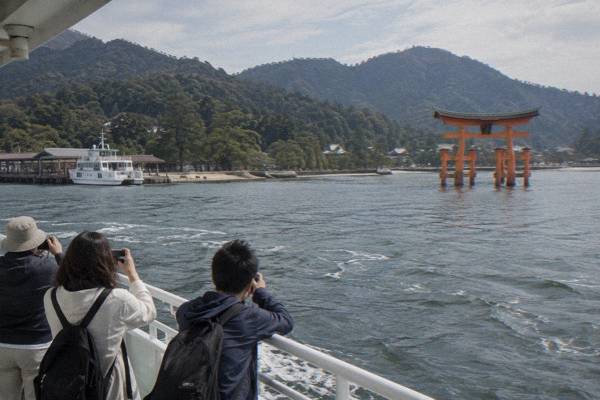
Hiroshima In 3 Days: City, Miyajima And One Further Trip
Three days is enough for the Peace Memorial Park, a full Miyajima day and one further trip to Iwakuni, Kure or Onomichi, using only trams, local trains and a ten-minute ferry.
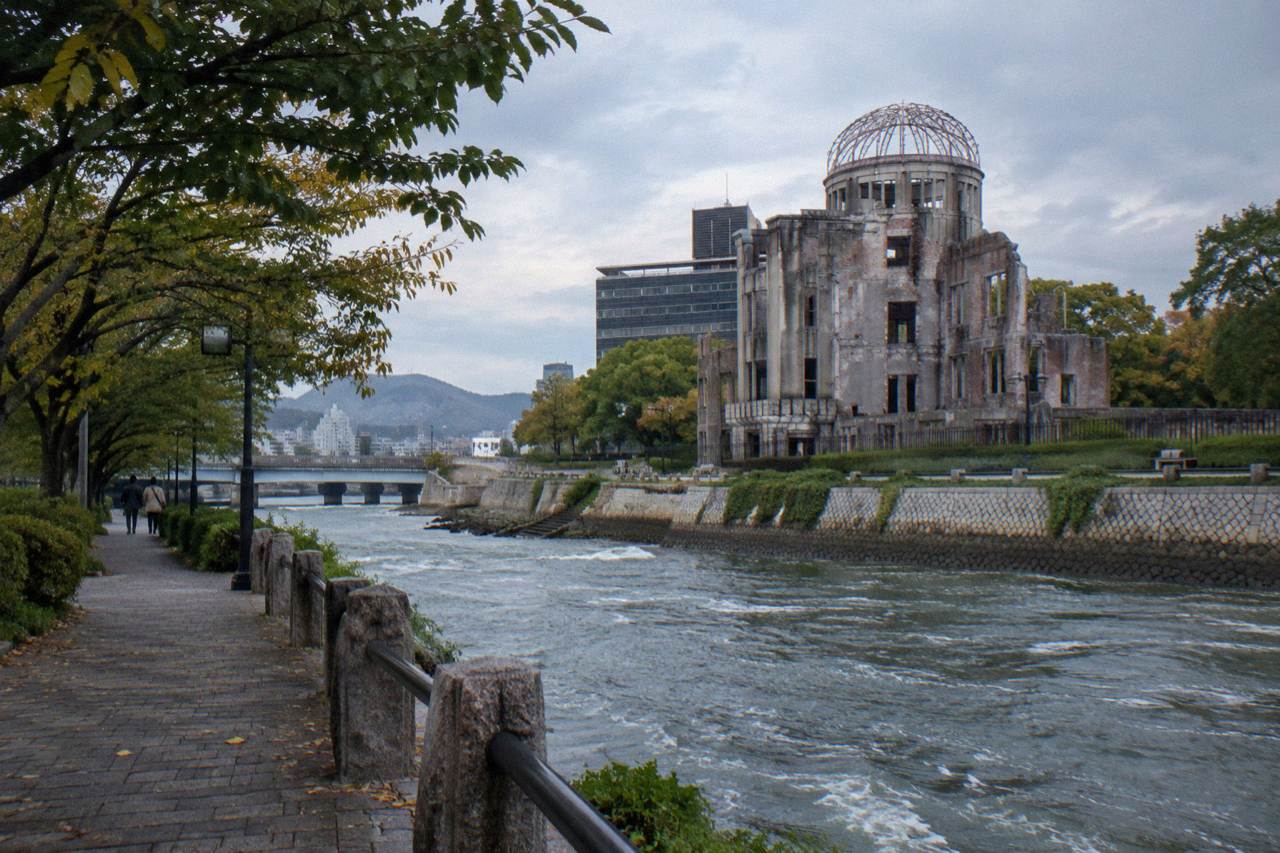
Day 1 covers the Peace Memorial Park, the museum and the castle area in central Hiroshima. Day 2 goes to Miyajima by JR ferry for Itsukushima Shrine and Mount Misen. Day 3 takes one further trip: Iwakuni, Kure or Onomichi, all under 75 minutes by local JR line.
The figures below come from the operators' own pages: the museum's information page, the Hiroden fare pages, the JR Miyajima Ferry fare table and the shrine's admission page.
The city itself deserves a full day, because the Peace Memorial Park, the museum, Hiroshima Castle and Shukkeien garden sit along one streetcar corridor and each has its own hours and admission rules. The third day is the flexible one, and this itinerary lays out Iwakuni, Kure and Onomichi as the three candidates, each reachable by a local JR line.
What Does Day 1 In Hiroshima Look Like?
Day 1 stays in central Hiroshima and walks the peace memorials, the castle district and Shukkeien in one line along the streetcar network: the Peace Memorial Museum costs 200 yen for adults, the park and the A-Bomb Dome viewing fence are free, Shukkeien charges 350 yen for adults, and the Hiroden streetcar connects all of it at a flat 240 yen fare per adult ride.
Start at the museum end. The Hiroshima Peace Memorial Museum opens at 7:30 every morning and closes at 19:00 from March to July and from September to November, at 20:00 in August (21:00 on 5 and 6 August), and at 18:00 from December to February. Admission is 200 yen for adults, meaning college students and up, 100 yen for high school students, free for junior high school students and younger, and 100 yen for visitors 65 and older who show a passport. The museum closes on 30 and 31 December and in mid-February for an exhibit change. Photography without flash is allowed for personal use; tripods and selfie sticks are not.
The Peace Memorial Park grounds and the outdoor monuments, including the Atomic Bomb Dome viewing fence, are free and open around the clock. The museum's page notes that the park has no public parking, so arriving by streetcar is the practical choice. Hiroden Lines 2 and 6 reach the Genbaku Dome-mae stop from Hiroshima Station, and the flat adult fare is 240 yen on every line in the network, a fare that has applied since 1 February 2025. The etiquette at the park is quiet visiting: this is a memorial site, and the guide to walking the Peace Memorial Park covers the layout stop by stop.
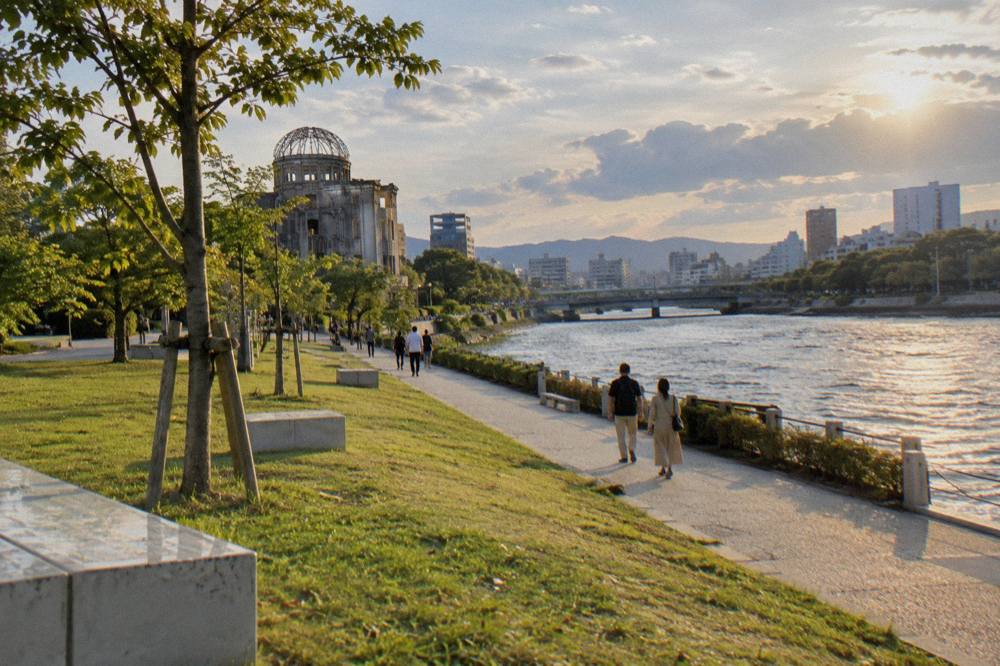
In the afternoon, move north to the castle area. One fact matters before you plan: the Hiroshima Castle keep has been closed to visitors since 22 March 2026 because of concrete deterioration and aging equipment, and only exterior viewing is possible. The reconstructed Ni-no-maru buildings are open, reported as 9:00 to 17:30 from April to September and 9:00 to 16:30 from October to March, with free admission, and closed on 8 December and 29 to 31 December. A Sannomaru history museum is planned for 1 June 2027, and until then the castle is an exterior and grounds visit.
Shukkeien garden closes the day. Admission is 350 yen for adults, 150 yen for university students and free for school students, a price set on 14 April 2025. Hours are 9:00 to 18:00 from 16 March to 15 September and 9:00 to 17:00 from 16 September to 15 March, with last entry 30 minutes before closing. Allow time rather than a fixed slot for each stop.
What Does Day 2 On Miyajima Look Like?
Day 2 crosses to Miyajima by JR ferry from Miyajimaguchi, about 10 minutes each way, pays the 100 yen Miyajima visitor tax on entry, visits Itsukushima Shrine for 300 yen adult admission, and can add the Mount Misen ropeway at 2,000 yen return per adult with last descent at 16:30.
The route out is two legs. The JR Sanyo Line runs from Hiroshima Station to Miyajimaguchi in about 28 to 30 minutes for 420 yen one way. The alternative is Hiroden Line 2 direct from Hiroshima Station to Hiroden-miyajima-guchi, which takes 66 minutes and runs every 10 minutes at the same flat 240 yen adult fare. The train is the faster leg; the streetcar is the one that needs no transfer thinking. The getting from Hiroshima to Miyajima guide compares the two in detail.
At Miyajimaguchi, the JR West Miyajima Ferry crossing takes about 10 minutes, with departures roughly every 15 minutes through the daytime, the first around 6:25 and the last around 22:00. The Great Torii route, which passes in front of the gate, runs on selected sailings between 9:10 and 16:10. The Miyajima visitor tax is 100 yen per person, charged separately on entering the island, with preschool children exempt. Japan Rail Pass and JR-West Rail Pass holders can ride the JR ferry, and IC cards are accepted.
On the island, Itsukushima Shrine opens at 6:30 and closes at 18:00 from 1 March to 14 October, 17:30 from 15 October to 30 November, and 17:00 in December. Admission is 300 yen for adults, 200 yen for high school students and 100 yen for elementary and junior high students, with a combined ticket covering the Treasure Hall at 500, 300 and 150 yen. The shrine's page notes that the corridor floorboards have gaps that let high-tide pressure through, so comfortable shoes are the practical choice. The Great Torii itself can be walked out to when the tide is below about 100 cm and appears to float above about 250 cm, per guide figures; the low-tide question at Miyajima explains how to read the tide.
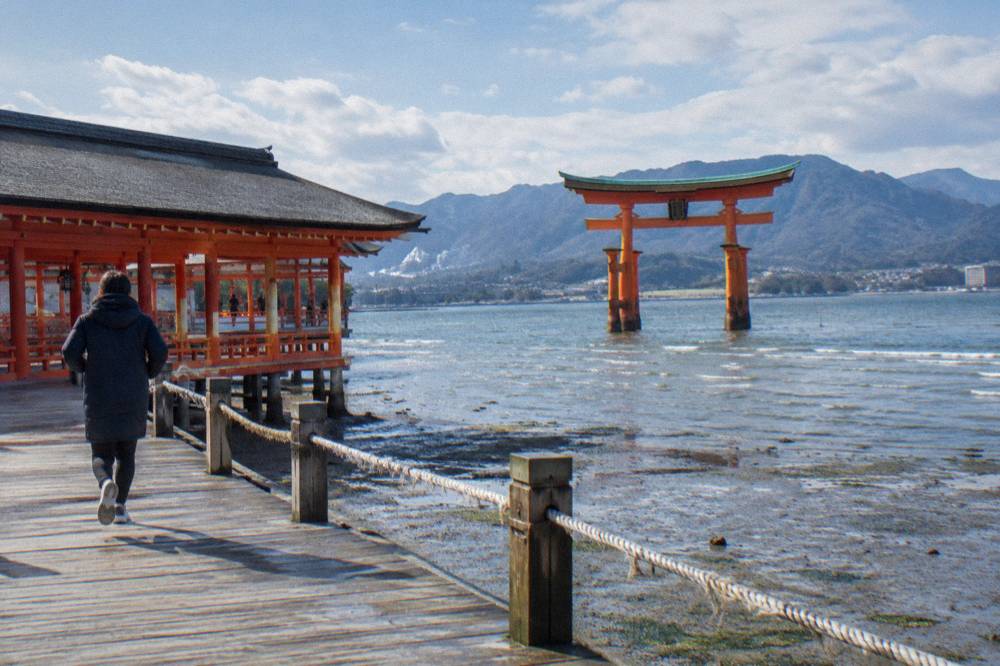
If the legs are willing, the Mount Misen ropeway runs 9:00 to 16:00 with last descent at 16:30, at 2,000 yen return or 1,100 one way for adults and 1,000 return or 550 one way for children. The ropeway round trip takes about 1 hour including sightseeing, and the summit walk adds about 1 more hour. Senjokaku hall charges 100 yen admission and opens 8:30 to 16:30. The tide and the ropeway between them set the day's shape: check the tide block in the morning, then decide whether the shrine corridor or the summit comes first.
Should Day 2 Be Guided Instead?
A guided day is a real alternative for Miyajima, and the site's featured option is the Peaceful Hiroshima And Miyajima UNESCO 1 Day Bus Tour, which pairs the city's peace sites with the island in one 8-hour day; it carries a 5 rating from 9,417 reviews and runs from $126.29 per person.
That tour is the one this Hiroshima Travel Guide features for travellers who want both UNESCO-listed sides of the destination, the Peace Memorial and Miyajima, without managing trams, trains and ferries alone. For a day already dedicated to Miyajima, the island-specific alternatives include a half-day Miyajima tour with a guide or the ferry-inclusive guided day listed below. The trade is simple: a guided day fixes the order and the pace, while the independent plan above lets the tide table decide when the torii is walkable. Booking is available through Check availability.
What Does Day 3 From Hiroshima Look Like?
Day 3 takes one further trip on a local JR line: Iwakuni is about 50 minutes and 770 yen one way with the Kintaikyo Bridge crossing at 310 yen round trip, Kure is about 35 minutes and 510 yen one way, and Onomichi is 65 to 75 minutes at roughly 1,490 to 1,520 yen one way.
Iwakuni, covered in the site's day trips from Hiroshima overview, is the bridge-and-castle town: the Kintaikyo crossing fee is 310 yen adult round trip, and the JR Sanyo Line covers the run from Hiroshima Station in about 50 minutes for 770 yen one way. Kure, on the JR Kure Line, is about 35 minutes and 510 yen one way, and the Kure guide covers what waits there.
| Day 3 option | JR line | About time one way | Fare one way | Key paid sight |
|---|---|---|---|---|
| Iwakuni | Sanyo Line | 50 minutes | 770 yen | Kintaikyo Bridge, 310 yen round trip |
| Kure | Kure Line | 35 minutes | 510 yen | Museums priced separately |
| Onomichi | Sanyo Line | 65 to 75 minutes | approx. 1,490 to 1,520 yen | Temple walk, priced per site |
The choice between them is a matter of leg length and interest. Kure is the shortest ride and the least walking. Onomichi is the fullest day out but the longest train. Whichever you pick, the pattern holds: out on a morning train, the town through the middle of the day, and back on an evening local, with the Hiroden streetcar at 240 yen covering the city end at both ends.
To see Onomichi from the water, book an Onomichi boat cruise here.
What Does The Whole 3-Day Budget Look Like?
The fixed costs of this plan are itemised below, every one from an operator's own page: the 200 yen museum, the 350 yen Shukkeien garden, the 300 yen shrine, the 2,000 yen ropeway return, the 420 yen JR ride to Miyajimaguchi, the 100 yen visitor tax and the 240 yen flat streetcar fare, plus the day-3 train fare for whichever town you choose.
The table lists every fixed yen cost in the plan, so the total can be checked line by line against the sources. Summing it is a two-minute job once the day-3 town is chosen, and the biggest single line, the ropeway at 2,000 yen, is also the most optional one. The rest of the planning pages sit on Hiroshima Travel Guide.
| Cost item | Adult price | Source page |
|---|---|---|
| Peace Memorial Museum | 200 yen | Museum information page |
| Peace Memorial Park and Dome fence | Free | City park page |
| Hiroshima Castle Ni-no-maru | Free | Castle site |
| Shukkeien garden | 350 yen | Shukkeien site |
| Hiroden streetcar ride | 240 yen | Hiroden fare page |
| Hiroden 1-Day Streetcar Pass | 700 yen | Hiroden pass page |
| JR Hiroshima to Miyajimaguchi | 420 yen | JR fare |
| Miyajima visitor tax | 100 yen | JR ferry fare page |
| Itsukushima Shrine | 300 yen | Shrine admission page |
| Mount Misen ropeway | 2,000 yen return | Ropeway fare page |
| Senjokaku | 100 yen | Island guide figures |
| JR to Iwakuni | 770 yen one way | JR fare |
| Kintaikyo Bridge | 310 yen round trip | Iwakuni figures |
One pass changes the arithmetic. The Hiroden 1-Day Streetcar Pass costs 700 yen for adults, so it pays for itself at three streetcar rides, and the 1,000 yen Streetcar and Ferry Pass adds the Miyajima Matsudai Kisen ferry plus the visitor tax. On a day that uses the streetcar twice in the city and again to or from Miyajimaguchi, the pass is the cheaper route; on a one-ride day the flat fare wins. The Hiroshima trip cost guide carries the fuller budget breakdown, including food and lodging thinking.
When Is The Best Time Of Year For 3 Days In Hiroshima?
The Japan Meteorological Agency 1991-2020 station normals for Hiroshima show July bringing 279.8 mm of rain and January receiving 46.2 mm, with August the warmest at an average daily high of 32.8 °C and January the coolest at an average nightly low of 2.0 °C, so the plan's outdoor days bend around summer heat and the June-July rain.
The monthly picture, stated as averages from the normals table:
| Month | Average high °C | Average low °C | Rain mm |
|---|---|---|---|
| Jan | 9.9 | 2.0 | 46.2 |
| Feb | 10.9 | 2.4 | 64.0 |
| Mar | 14.5 | 5.1 | 118.3 |
| Apr | 19.8 | 10.1 | 141.0 |
| May | 24.4 | 15.1 | 169.8 |
| Jun | 27.2 | 19.8 | 226.5 |
| Jul | 30.9 | 24.1 | 279.8 |
| Aug | 32.8 | 25.1 | 131.4 |
| Sep | 29.1 | 21.1 | 162.7 |
| Oct | 23.7 | 14.9 | 109.2 |
| Nov | 17.7 | 8.9 | 69.3 |
| Dec | 12.1 | 4.0 | 54.0 |
What the numbers mean for this itinerary: the Miyajima day is the most weather-exposed, with a ferry crossing, a ropeway and a summit walk, and the July average of 279.8 mm of rain plus the June 226.5 mm make a wet-weather fallback worth holding. The museum, at 200 yen and open from 7:30, is the natural swap, and the rainy day guide lists the rest. August holds the 6 August Peace Memorial Ceremony from 8:00 to 8:50 in the Peace Memorial Park, with about 7,000 seats plus about 2,200 indoor seats at the International Conference Center, and the museum stays open to 20:00 that month, 21:00 on 5 and 6 August.
Seasonal timing can also bend the plan deliberately. The cherry blossom guide and the Miyajima autumn leaves guide cover the two colour seasons, and both reward swapping a day-3 train trip for more time among the trees.
How Do The Trams, Trains And Ferries Fit Together?
The Hiroden streetcar runs a flat 240 yen adult fare on every line including the Miyajima line, the JR Sanyo Line reaches Miyajimaguchi in about 28 to 30 minutes for 420 yen, the JR ferry crosses in about 10 minutes roughly every 15 minutes, and the day-3 towns all leave from Hiroshima Station on JR lines, so the whole plan uses two networks and one ferry.
The practical detail is where the streetcar meets the trains. Since 3 August 2025, reported, the Hiroden tram enters the Hiroshima Station building directly, on the 2nd floor of the new station building that opened in March 2025, so the transfer from a Lines 2 or 6 ride to a JR Sanyo Line train is indoors. Line 2 runs every 10 minutes toward Hiroden-miyajima-guchi. Airport arrivals land on the same network: the limousine bus runs to Hiroshima Station in about 50 minutes and to the Hiroshima Bus Center in about 55 minutes, at 1,500 yen per adult, IC cards accepted.
| Leg | Operator | About time | Adult fare |
|---|---|---|---|
| Hiroshima Station to Genbaku Dome-mae | Hiroden Lines 2 or 6 | 15 to 20 minutes | 240 yen |
| Hiroshima Station to Miyajimaguchi | JR Sanyo Line | 28 to 30 minutes | 420 yen |
| Hiroshima Station to Hiroden-miyajima-guchi | Hiroden Line 2 | 66 minutes | 240 yen |
| Miyajimaguchi to Miyajima | JR West Miyajima Ferry | 10 minutes | fare plus 100 yen tax |
| Hiroshima to Kure | JR Kure Line | 35 minutes | 510 yen |
| Hiroshima to Iwakuni | JR Sanyo Line | 50 minutes | 770 yen |
| Hiroshima Airport to Station | Limousine bus | 50 to 55 minutes | 1,500 yen |
The last ferry back from Miyajima is around 22:00 on the JR side, and the Matsudai Kisen fleet runs its own timetable at about 15-minute intervals from 7:00 into the evening. The streetcar network's evening service and the station-building transfer mean a late return from Miyajima still connects into the city without a taxi.
What If You Have Two Days, Or Four?
Two days drops day 3 and compresses the city into the arrival day, following the site's Hiroshima in 2 days plan; four days adds an overnight on Miyajima or a second coastal trip, and the how-many-days question turns on whether the further trip matters to you.
The honest cut points: one day is the Peace Park plus a rushed Miyajima, covered in the one-day Hiroshima itinerary and the Hiroshima and Miyajima in one day plan. Two days is this plan minus day 3, laid out in the Hiroshima in 2 days itinerary. Three days is the first length at which the city, the island and one coastal town each get a full day, which is why it is the comfortable default. Beyond three, the Miyajima overnight guide explains the case for staying on the island after the last day-visitor ferry leaves, and the Hiroshima in a week plan stretches the coast out further. The how many days in Hiroshima is enough answer weighs the same trade.
What Should You Not Miss In Hiroshima In 3 Days?
The four stops the sources single out are the Peace Memorial Museum at 200 yen, the A-Bomb Dome viewing fence for free, Itsukushima Shrine at 300 yen with the tide read before arrival, and the Miyajima ropeway at 2,000 yen return, with the Kintaikyo Bridge at Iwakuni as the strongest day-3 addition at 310 yen round trip.
That list is not a ranking; it is the set of sights the official pages price and describe most fully, which happens to map one-to-one onto this itinerary's three days. The what not to miss in Hiroshima answer carries the fuller list.
Common Questions About 3 Days In Hiroshima
Is 3 Days In Hiroshima Enough?
Yes for the city, Miyajima and one further trip. The Peace Memorial Park, the museum, the castle area and Shukkeien fill day 1; Miyajima fills day 2; and day 3 covers Iwakuni, Kure or Onomichi, each under 75 minutes away by JR line. A fourth day is only needed for a second coastal trip or a Miyajima overnight.
How Much Does 3 Days In Hiroshima Cost In Admission And Transport?
The fixed items are the 200 yen museum, the 350 yen Shukkeien, the 300 yen shrine, the 2,000 yen ropeway return, the 420 yen JR ride to Miyajimaguchi, the 100 yen visitor tax, 240 yen streetcar rides and the day-3 train fare for whichever town you pick. The budget table above lists every line so you can total it for your own choice of day 3.
Can You Do Hiroshima And Miyajima In One Day?
Yes, and the site's Hiroshima and Miyajima in one day plan gives the timed version. It is tight: the museum alone opens at 7:30 and the last JR ferry back from Miyajima is around 22:00, with a 28 to 30 minute train leg and a 10 minute crossing each way. Three days spreads the same sights without the compression.
Do You Need The Ropeway On Miyajima?
The Mount Misen ropeway costs 2,000 yen return per adult, runs 9:00 to 16:00 with last descent at 16:30, and the round trip takes about 1 hour, plus about 1 hour more for the summit walk. Skipping it saves the fare and the summit, not the shrine or the torii, both of which are at sea level.
Is The Hiroden 1-Day Pass Worth It For 3 Days?
The 700 yen streetcar pass pays for itself at three rides, since each single is a flat 240 yen. The 1,000 yen Streetcar and Ferry Pass adds the Matsudai Kisen ferry and the visitor tax. On the Miyajima day, day 3 and the airport bus day, the pass or the flat fare each win somewhere; the arithmetic is in the budget section above.
What Is The Best Day 3 Trip From Hiroshima?
Three options stand out: Iwakuni at about 50 minutes and 770 yen one way with the Kintaikyo Bridge crossing at 500 yen for adults, Kure at about 35 minutes and 510 yen, and Onomichi at 65 to 75 minutes and roughly 1,490 to 1,520 yen. The shortest ride is Kure, the single famous sight is Iwakuni, and the fullest walking day is Onomichi.
The itinerary is stitched together by a flat-fare streetcar, three local JR lines and a ten-minute ferry, with every admission in the plan at or under 2,000 yen.