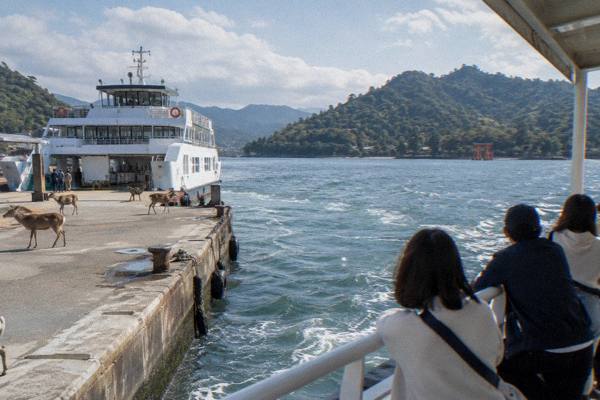
Hiroshima Station Area: Ekimae, Minami-Ku And The Shinkansen Side
Hiroshima Station anchors the Minami-ku side of Hiroshima, where the Shinkansen, the Hiroden tram network, the minamoa retail building and the airport bus all meet within a few minutes of each other.
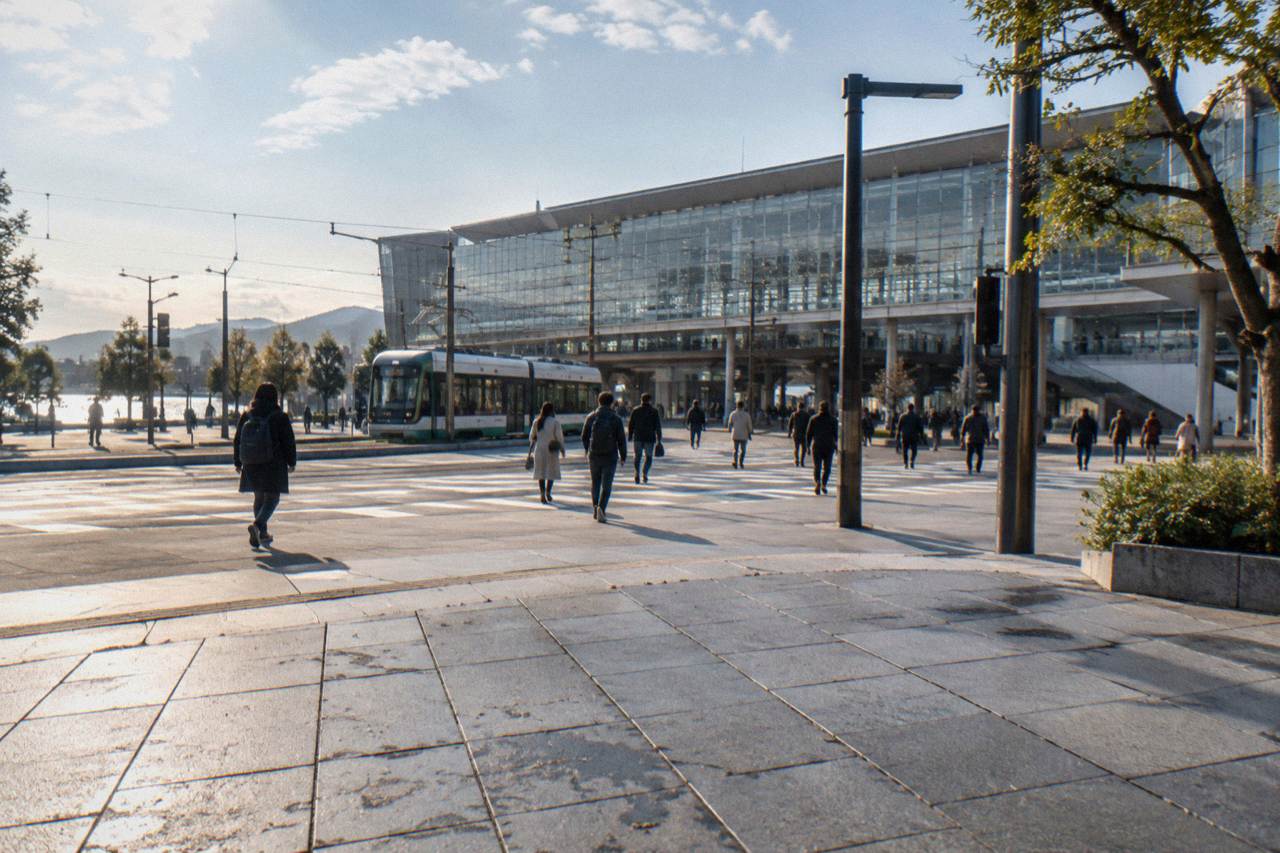
The Hiroshima Station area is the transport and commercial hub of Minami-ku in Hiroshima, joining the Shinkansen platforms (11 to 14), the Hiroden tram terminal, the minamoa and ekie shopping complexes, a tourist information point open 6:00 to 24:00 and the airport limousine bus, all in one redeveloped station city.
The new minamoa station building opened on March 24, 2025, and the Hiroden tram now serves the station directly from an elevated terminal. For most travellers arriving in Hiroshima, whether by Shinkansen from Osaka or by airport limousine bus, this is the first piece of the city they meet, and it works as a base for reaching the Peace Memorial Park, the castle grounds and the ferry pier at Miyajimaguchi. This page covers the platforms, the ticket offices, the shopping floors, the tram connections and the practical services that make the ekimae, or station-front, district function.
What Is The Hiroshima Station Area?
The Hiroshima Station area, which includes the Shinkansen and local JR platforms, the Hiroden tram terminal, the minamoa and ekie retail complexes and the Fukuya department store side of Matsubara-cho, functions as the city's main interchange for trains, trams, buses and the airport limousine. The station building itself opened its new minamoa section on March 24, 2025.
The district divides into a Shinkansen side and a city side. The Shinkansen exits open toward the north-south axis of the station complex, where the tourist information center sits on the 2nd floor of the Shinkansen Exit premises and the ticket offices cluster around the transfer gates. The south side, facing the streetcar terminal, is where the ekie dining floor and the minamoa shopping floors hold most of the retail. The layout means a visitor changing from a bullet train to a tram crosses the commercial spine of the building on the way, which is convenient but worth knowing before travelling with heavy bags.
A fuller neighbourhood-by-neighbourhood picture of the city is in the Hiroshima neighbourhoods overview, and the station itself has its own practical page at Hiroshima Station.
How Do You Get From Hiroshima Station To The Peace Park?
From JR Hiroshima Station to the Peace Memorial Park, take Hiroden streetcar Line 2 bound for Hiroden-miyajima-guchi or Line 6 bound for Eba and get off at Genbaku Dome-mae, about 20 minutes, or take Line 1 to Hondori and walk west about 400 meters to the museum. The flat streetcar fare is 240 yen for adults and 120 yen for children, paid on exit by IC card or cash.
The streetcars depart from the elevated terminal on the 2nd floor of the south exit, a level the trams have used since August 2025, when the Hiroden line was reported to have entered the station building itself. Lines 2 and 6 run to Genbaku Dome-mae beside the Atomic Bomb Dome, at the north edge of the park, and the journey from the station is about 15 to 20 minutes depending on traffic. Line 1 serves Hondori and Fukuro-machi, which sit closer to the museum entrance on the park's east side, with a walk of roughly 400 meters west.
| Option from Hiroshima Station | Route | Time | Adult fare |
|---|---|---|---|
| Hiroden streetcar | Line 2 or 6 to Genbaku Dome-mae | about 15 to 20 minutes | 240 yen |
| Hiroden streetcar | Line 1 to Hondori, then walk west about 400 m | about 15 minutes plus walk | 240 yen |
| Meipuru-pu loop bus | Orange Route to Genbaku Dome-mae | about 15 minutes | fare set by operator |
| Hiroshima Bus No. 25 | Kusatsu Line to Peace Memorial Park stop | stop at the park | fare set by operator |
The Meipuru-pu Orange Route city loop bus is the other scheduled public option, reaching Genbaku Dome-mae in about 15 minutes and Peace Park Mae in about 16 from the station. Hiroshima Bus No. 25 on the Kusatsu Line stops directly at the Peace Memorial Park. The full question of routes, stops and walking distances is answered in detail at how to get from Hiroshima Station to the Peace Park, and the park itself, 122,100 square meters in Nakajima-cho and open 24 hours with free entry, is covered at Hiroshima Peace Memorial Park.
What Is The Minamoa Station Building?
The new station building that opened on the station's south side on March 24, 2025, minamoa now holds five levels of fashion, lifestyle goods and specialty retail, a 6F restaurant floor open until 22:00 while shops close at 20:00, and the rooftop Soramoa plaza on the 9th floor, keeping food, shopping and the tram terminal inside one continuous complex.
The shopping floors carry fashion, lifestyle goods and specialty retail across five levels, and the restaurant floor on 6F collects the dining options that stay open two hours past the shops. The rooftop Soramoa plaza on the 9th floor is part of the same redevelopment and gives the building a public upper level. For arriving travellers, the practical effect is that food, shopping and the tram terminal now sit inside one continuous complex rather than across separate buildings and street crossings.
The older ekie complex on the station side remains in place alongside minamoa, and the two divide the retail between them: ekie concentrates on souvenirs and quick dining near the gates, while minamoa holds the larger shopping run. Neither closes early by Japanese station standards, but the 20:00 shop close against the 22:00 restaurant close means an evening arrival lands in a building where dinner is easier than shopping.
Where Do The Shinkansen Platforms And Ticket Offices Sit?
The Shinkansen platforms at Hiroshima Station are numbered 11 to 14, and the ticket services around them are the Midori no Madoguchi (Green Ticket Office) operating 5:30 to 22:00, the Shinkansen Transfer Gate Midori no Madoguchi operating 5:30 to 23:15, and the Midori no Ticket Machine at the Central Gate operating 5:30 to 23:40, with the tourist information center on the 2nd floor of the Shinkansen Exit open 6:00 to 24:00 daily.
Those hours cover everything from the first morning connections to the last late-evening departures. The Green Ticket Office handles staffed ticket purchases and changes, the transfer-gate office serves passengers moving between the Shinkansen and local lines, and the central ticket machines run a longer window for standalone purchases.
| Facility at Hiroshima Station | Location | Hours |
|---|---|---|
| Midori no Madoguchi (Green Ticket Office) | station building | 5:30 to 22:00 |
| Shinkansen Transfer Gate Midori no Madoguchi | transfer gate | 5:30 to 23:15 |
| Midori no Ticket Machine | Central Gate | 5:30 to 23:40 |
| Tourist Information Center | 2nd floor, Shinkansen Exit | 6:00 to 24:00 daily |
| minamoa shopping floors | B1F, 2F east and north, 3F to 5F | 10:00 to 20:00 |
| minamoa restaurant floor | 6F | 11:00 to 22:00 |
| ekie souvenir floor | 2F | 8:00 to 21:00 |
| ekie dining floor | 1F | 11:00 to 22:00, some outlets to 23:00 |
The route from the capital is covered at Tokyo to Hiroshima, the Kansai routes at Osaka to Hiroshima and Kyoto to Hiroshima, and the Shinkansen platforms' 11 to 14 numbering is listed on the JR West station premises page.
Where Can You Eat And Shop At Hiroshima Station?
Eating and shopping at Hiroshima Station split between the ekie complex directly connected to the station and the minamoa building: ekie runs a souvenir floor on 2F from 8:00 to 21:00 and a dining floor on 1F from 11:00 to 22:00 with some outlets to 23:00, while minamoa runs shopping from 10:00 to 20:00 and its 6F restaurants from 11:00 to 22:00, giving the district continuous food service from morning souvenirs to late dinner.
The question of what to actually eat around the station, from ekimae ramen counters to the department store basements, has its own dedicated answer at what to eat around Hiroshima Station.
For a fuller evening out, the streetcar reaches the entertainment districts within the flat 240 yen fare. Nagarekawa and Yagenbori hold much of the city's late dining and bar scene, and the district is described at Nagarekawa and Yagenbori. Hacchobori and Kamiyacho, the central business and shopping quarters, are covered at Hacchobori and Kamiyacho.
How Do You Store Luggage And Find Services At The Station?
Coin lockers are available at Hiroshima Station on the 1st and 2nd floors, the Tourist Information Center on the 2nd floor of the Shinkansen Exit operates 6:00 to 24:00 daily with free Hiroshima Free Wi-Fi, and the station's ticket offices and machines run from 5:30 in the morning until between 22:00 and 23:40 at night, so the building covers luggage storage, information and ticketing across nearly the whole day.
The information center's midnight closing means late arrivals can still get maps and orientation help. The free Wi-Fi at the center is a practical stop for travellers whose data plans have not yet activated.
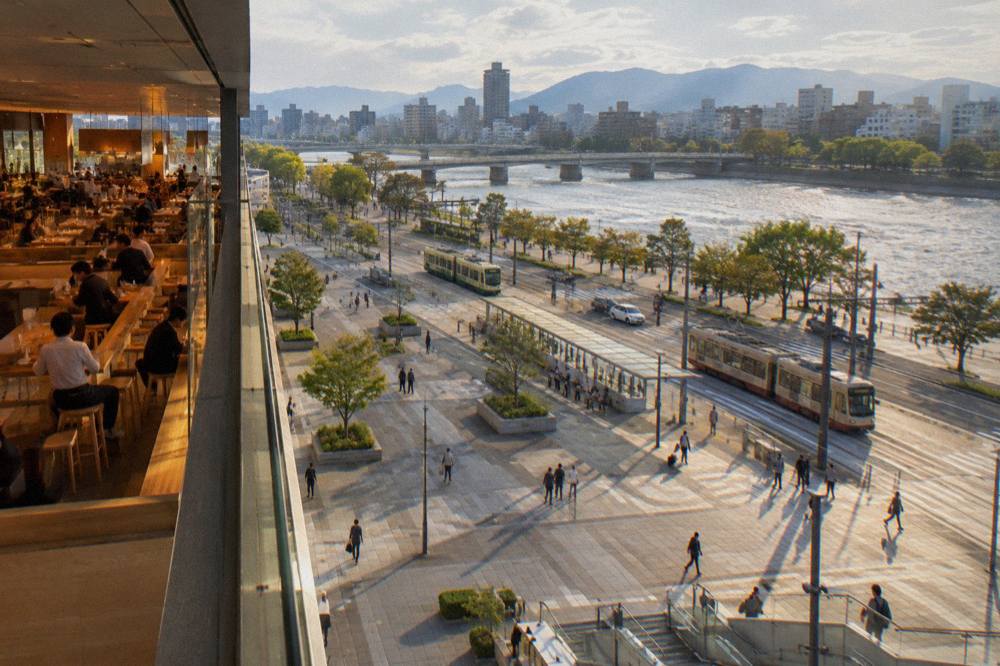
Beyond the station itself, the ekimae district's services extend outward through the redevelopment. The Soramoa rooftop plaza on minamoa's 9th floor is a public space rather than a retail one, part of the station building's design as a place to spend time in rather than pass through. The redeveloped complex, in other words, now handles the full arrival sequence: ticketing, luggage, information, food and a place to wait, all inside one address.
How Do You Get From Hiroshima Airport To Hiroshima Station?
The airport limousine bus runs from Hiroshima Airport to the Hiroshima Station Shinkansen exit in about 50 minutes for 1,500 yen adult and 750 yen child from Bus Stop 2, and to the Hiroshima Bus Center in about 55 minutes for the same fares from Stop 1, and IC cards are accepted on the service.
The station-side stop places an airport arrival directly at the Shinkansen exit, next to the information center and the transfer gates, which suits anyone connecting onward by rail. The Bus Center stop sits on the opposite side of the city core, closer to the Peace Memorial Park, and the Atomic Bomb Dome page describes the roughly 5 minute walk southwest from the Bus Center along Aioi Street to the park edge.
| Limousine bus route from Hiroshima Airport | Stop | Time | Adult fare | Child fare |
|---|---|---|---|---|
| To Hiroshima Station Shinkansen exit | Bus Stop 2 | about 50 minutes | 1,500 yen | 750 yen |
| To Hiroshima Bus Center | Bus Stop 1 | about 55 minutes | 1,500 yen | 750 yen |
IC card acceptance on the limousine service removes the need for exact cash on arrival. From the Shinkansen exit, onward movement into the city is by Hiroden streetcar from the 2nd floor terminal, by the Meipuru-pu loop bus, or on foot through the ekimae district toward the city centre.
Which Hiroden Trams Run From Hiroshima Station?
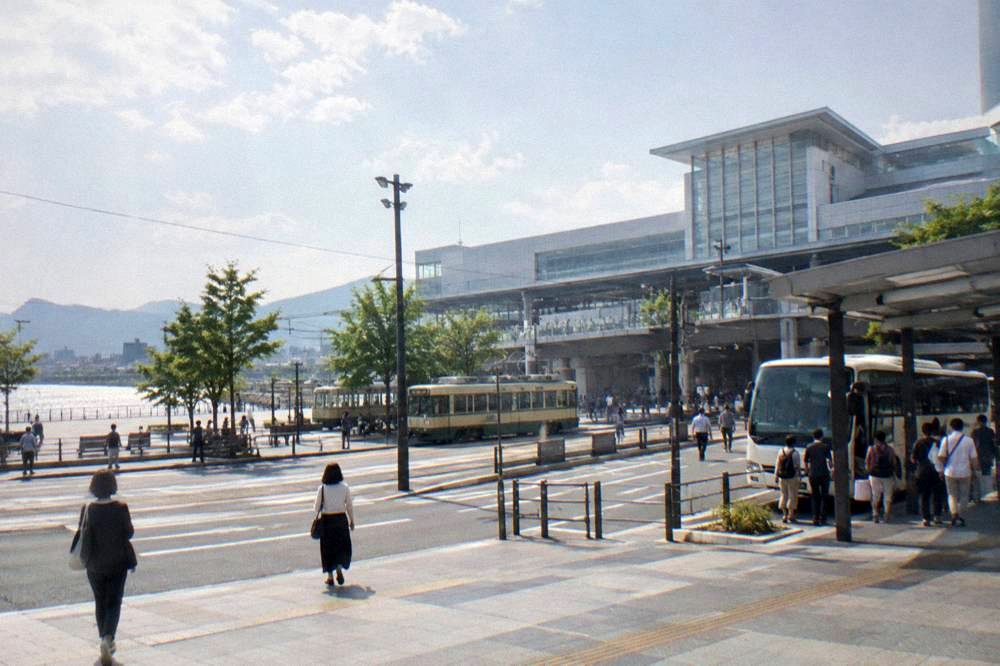
The Hiroden streetcars run from the elevated terminal on the 2nd floor of Hiroshima Station's south exit on a flat fare of 240 yen for adults and 120 yen for children on all lines, including the Miyajima line, since February 1, 2025, with fares paid on exit by tapping an IC card or depositing cash in the fare box.
The flat fare simplifies every journey out of the station: the same 240 yen covers the ride to Genbaku Dome-mae at the Peace Park, the ride down Hondori toward the shopping arcades, and the long Miyajima line run out to Miyajimaguchi, the mainland pier for the ten-minute JR ferry to Miyajima. The fare change to the current flat rates took effect on 1 February 2025 and applies across the whole network.
| Hiroden line from Hiroshima Station | Terminus direction | Serves |
|---|---|---|
| Line 1 | Hiroshima Port | Hondori, Fukuro-machi |
| Line 2 | Hiroden-miyajima-guchi | Genbaku Dome-mae, Miyajimaguchi |
| Line 6 | Eba | Genbaku Dome-mae |
The Miyajimaguchi end of Line 2 is the mainland ferry hub for Miyajima, where the JR ferry crosses in about ten minutes and the Miyajima Visitor Tax of 100 yen is charged separately on entering the island. The pier district is described at Miyajimaguchi, and the island's own approach street at Miyajima Omotesando.
What Is The Weather Like Around Hiroshima Station?
The Japan Meteorological Agency (JMA) 1991-2020 station normals for Hiroshima show average daily highs rising from 9.9 °C in January to 32.8 °C in August, average lows from 2.0 °C in January to 25.1 °C in August, and monthly rainfall from 46.2 mm in January to 279.8 mm in July, with an annual total of 1,572.2 mm.
July carries the highest monthly rain total at 279.8 mm and August the highest mean daily high at 32.8 °C, while January has both the lowest rainfall at 46.2 mm and the lowest mean low at 2.0 C. Summers are hot and humid, and winters are mild by northern-honshu standards.
| Month | Mean high °C | Mean low °C | Rain mm |
|---|---|---|---|
| Jan | 9.9 | 2.0 | 46.2 |
| Feb | 10.9 | 2.4 | 64.0 |
| Mar | 14.5 | 5.1 | 118.3 |
| Apr | 19.8 | 10.1 | 141.0 |
| May | 24.4 | 15.1 | 169.8 |
| Jun | 27.2 | 19.8 | 226.5 |
| Jul | 30.9 | 24.1 | 279.8 |
| Aug | 32.8 | 25.1 | 131.4 |
| Sep | 29.1 | 21.1 | 162.7 |
| Oct | 23.7 | 14.9 | 109.2 |
| Nov | 17.7 | 8.9 | 69.3 |
| Dec | 12.1 | 4.0 | 54.0 |
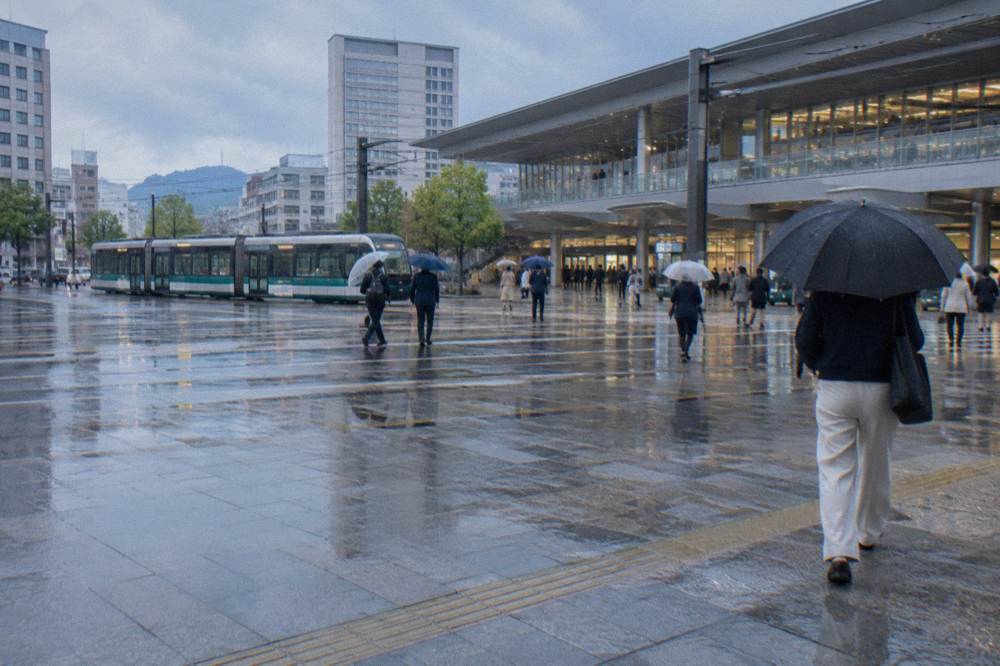
For planning purposes the seasonal shape matters more than any single month: the June and July normals carry the heaviest rain, the August normal the strongest heat with a sharp rainfall drop to 131.4 mm, and the winter months the least rain. A fuller reading of the climate, month by month with sun hours included, sits at best time to visit Hiroshima, and the rainy-day options around the station building and the museums are gathered at Hiroshima on a rainy day.
Where Should You Stay Near Hiroshima Station?
Staying near Hiroshima Station puts a visitor within the flat 240 yen streetcar zone of every major sight, beside the 6:00-to-24:00 tourist information center, inside a building whose restaurants serve until 22:00 or 23:00, and on the direct airport bus and Shinkansen lines, and the district's hotels sit on the Minami-ku side of the city rather than the Peace Park side, which suits rail-first travellers over park-side ones.
The choice between the station area and the city centre is a real one, and it is laid out with the districts compared at where to stay in Hiroshima. The station side wins on transport: the Shinkansen platforms, the tram terminal, the limousine bus stop and the locker banks are all in one complex. The Peace Park and Nakajima side, covered at Peace Park and Nakajima, wins on walking access to the museum and the riverside park, reached from the station in about 20 minutes by Line 2 or 6.
What Can You Do Within The Station District Itself?
Within the station district itself are the 6F restaurant floor to 22:00, the Soramoa rooftop plaza on the 9th floor, the ekie souvenir and dining floors, and the streetcar terminal and ticket halls as working pieces of transport architecture, and from the station the Peace Park, the castle grounds and the Miyajimaguchi ferry pier all sit on direct tram lines at the flat 240 yen fare.
The castle grounds deserve a specific note. The keep, or tenshu, has been closed to visitors since 22 March 2026, and visits are now exterior and grounds only, with a Sannomaru history museum planned for 1 June 2027. The castle site is covered at Hiroshima Castle, and the archery experience held at the castle is one of the bookable activities that starts from the city side rather than the island side.
The Peace Park side of town holds the museum, the dome and the national memorial hall, and a small-group guided visit to the park, museum and dome can be booked before travel: Check availability. The guided walk meets the needs of visitors who want the history explained in context rather than read from panels, and it pairs naturally with a station-area base because the tram ride out is the same either way.
Which Day Trips Run Out Of Hiroshima Station?
Day trips out of Hiroshima Station run on the Shinkansen to the east, on Hiroden Line 2 to Miyajimaguchi for the Miyajima ferry, and on the local and highway bus network from the ekimae stops, with the reported Shinkansen times being about 80 to 85 minutes to Shin-Osaka and about 3 hours 45 minutes to 4 hours to Tokyo, and the Miyajima ferry crossing itself about 10 minutes from Miyajimaguchi.
Miyajima is the classic station-linked day trip: Line 2 runs to Hiroden-miyajima-guchi, the JR ferry crosses in about ten minutes with departures roughly every 15 minutes from 8:00 into the evening, and the island's 100 yen visitor tax is charged separately on arrival. The island's shrine, ropeway and temple sites are covered at Itsukushima Shrine, Mount Misen and Daisho-in Temple.
| Day trip from Hiroshima Station | Connection | Time | Notes |
|---|---|---|---|
| Miyajima | Hiroden Line 2 plus JR ferry | ferry about 10 minutes | 100 yen island tax on arrival |
| Shin-Osaka | Shinkansen Nozomi, reported | about 80 to 85 minutes | platforms 11 to 14 |
| Tokyo | Shinkansen, reported | about 3 h 45 to 4 h | platforms 11 to 14 |
| Peace Memorial Park | Hiroden Line 2 or 6 | about 15 to 20 minutes | 240 yen flat fare |
Is The Hiroshima Station Area Good For First-Time Visitors?
The Hiroshima Station area is a strong first base for visitors who arrive by Shinkansen or plane, because it concentrates ticketing from 5:30, information until 24:00, lockers on two floors, meals to 23:00 and a flat-fare tram terminal that reaches the Peace Park, the shopping arcades and the Miyajima ferry pier, though first-timers whose priority is the Peace Memorial Museum may prefer the Nakajima side for walking access.
The first-visit itinerary question is answered across the site, from first time in Hiroshima to the one-day and multi-day plans, and the station area features in all of them as the arrival and departure point even when the sleeping is done elsewhere. What the district does not offer is the park itself: the museum, the hall of remembrance and the dome are a tram ride away, and the atomic bomb history pages, including the Atomic Bomb Dome and Hiroshima Peace Memorial Museum, treat that side of the city in full.
For a visitor weighing the station district against the port side or the entertainment quarters, the honest framing is transport density against atmosphere. The station side is the practical one. Nagarekawa keeps the late hours, the Nakajima side keeps the quiet, and the Hiroshima Travel Guide homepage holds the full picture of what the city and island offer beyond the ekimae blocks.
Common Questions About The Hiroshima Station Area
What Are The Shinkansen Platform Numbers At Hiroshima Station?
The Shinkansen platforms at Hiroshima Station are numbered 11 to 14, listed on the JR West station premises page for the station.
How Much Is The Streetcar From Hiroshima Station?
The Hiroden flat fare is 240 yen for adults and 120 yen for children on all lines, including the Miyajima line, since 1 February 2025, paid on exit by IC card or cash in the fare box.
Where Is The Tourist Information Center At Hiroshima Station?
The Hiroshima Station Tourist Information Center is on the 2nd floor of the Shinkansen Exit premises and operates 6:00 to 24:00 daily, with free Hiroshima Free Wi-Fi available.
What Time Do The Shops And Restaurants At Hiroshima Station Close?
The minamoa shopping floors run 10:00 to 20:00 and its 6F restaurant floor 11:00 to 22:00, while the ekie souvenir floor runs 8:00 to 21:00 and the ekie dining floor 11:00 to 22:00 with some outlets until 23:00.
How Much Is The Airport Bus To Hiroshima Station?
The airport limousine bus costs 1,500 yen for adults and 750 yen for children, about 50 minutes to the Hiroshima Station Shinkansen exit from Bus Stop 2, with IC cards accepted.
Does The Tram Go Into Hiroshima Station Itself?
The Hiroden tram terminal sits on the 2nd floor of the south exit, and the line has been reported as entering the station building since 3 August 2025, after the new station building opened in March 2025.
The Hiroshima Station area rewards a little orientation before arrival: knowing that the trams leave from the 2nd floor, that ekie opens two hours before minamoa, and that the airport bus stops at the Shinkansen exit turns a large redeveloped complex into a straightforward one, and from its platforms the whole city sits within a flat 240 yen ride.