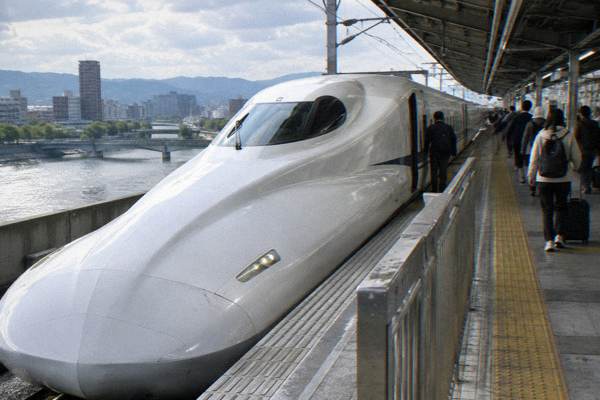
Kyoto To Hiroshima By Shinkansen
The Kyoto to Hiroshima run is one of the easiest long-distance rail trips in Japan: a direct Nozomi covers the 380 km in about 1 hour 40 minutes, with a reserved seat costing 11,940 yen in the regular season.
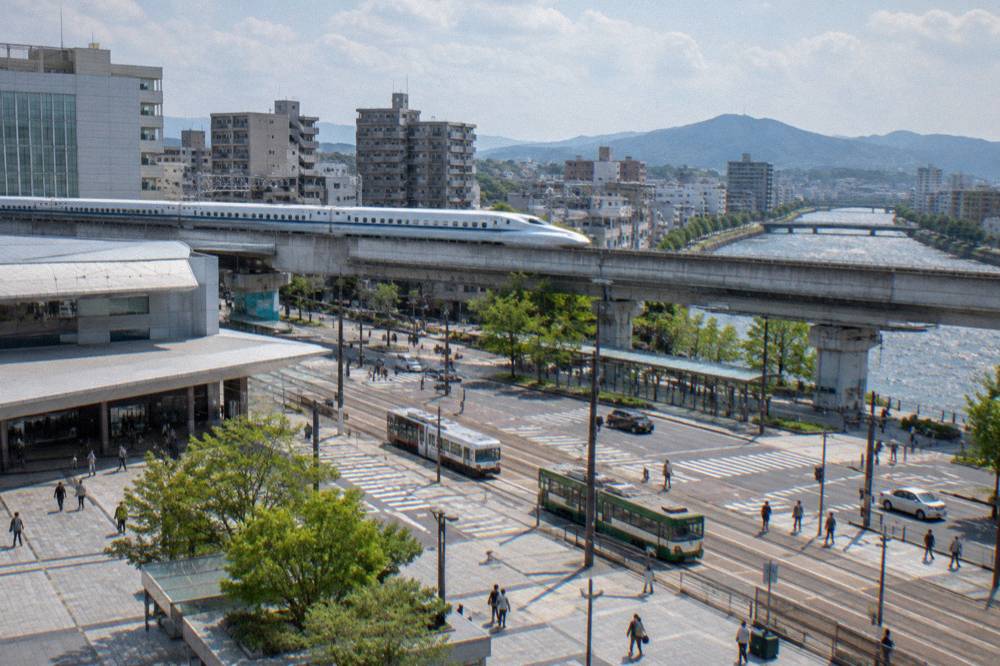
Direct Nozomi Shinkansen trains run from Kyoto Station to Hiroshima Station without a change; the fastest takes about 1 hour 40 minutes, and a reserved seat costs 11,940 yen regular season.
The Nozomi Shinkansen covers the 380 km between Kyoto Station and Hiroshima Station in roughly 1 hour 40 minutes, without a single change of train, and that single fact reshapes how a west Japan itinerary works. Hiroshima, the prefectural capital on the Seto Inland Sea, stops being a distant detour and becomes a morning's ride from Kyoto, close enough that the Peace Memorial Park, the A-Bomb Dome and the ferry to Miyajima can all sit inside one well-planned day. This page sets out the fares, the timetable pattern, the rail pass arithmetic and the connections on arrival, so the ride itself takes ten minutes of planning instead of an evening of tab-comparing.
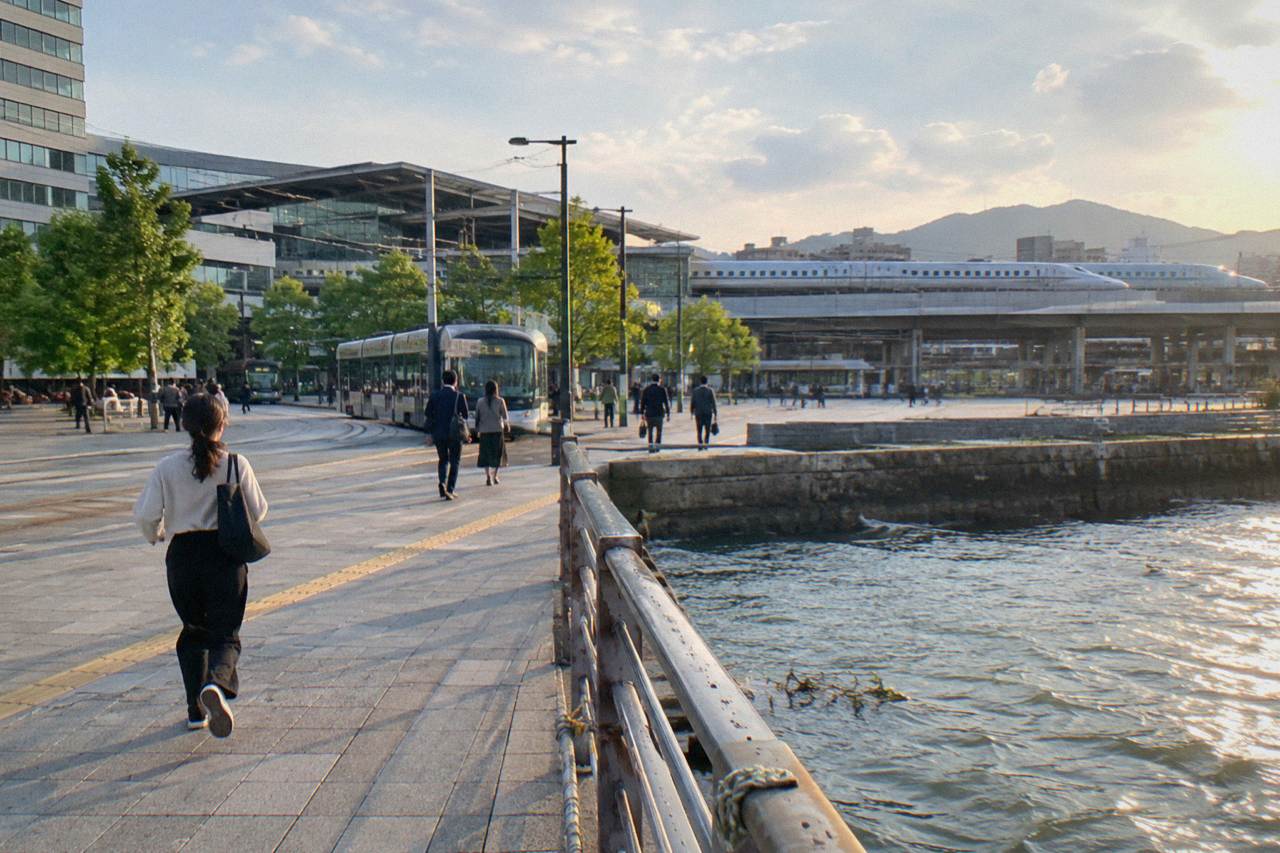
How Long Is The Shinkansen From Kyoto To Hiroshima?
The fastest Nozomi Shinkansen service from Kyoto to Hiroshima takes approximately 1 hour 40 minutes over the 380 km Tokaido and Sanyo Shinkansen route, and direct Nozomi trains run the whole way without requiring a change at Shin-Osaka. Daytime frequency is generous, with departures roughly every 20 to 30 minutes, so a missed train rarely disrupts a same-day plan. That makes Hiroshima about as close to Kyoto by rail as many slower journeys inside a single prefecture, and it is the reason the city pairs so naturally with a Kansai base.
The distance figure, 380 km, comes from the Tokaido and Sanyo Shinkansen route tables, and the 1 hour 40 minute fastest-run figure is the scheduled time of the quickest Nozomi services on the corridor.
Daytime frequency is generous. Nozomi trains from Kyoto toward Hiroshima depart approximately every 20 to 30 minutes through the day, so a missed train is rarely a plan-breaking event. The first westbound services of the day leave Kyoto around 06:15, and the last direct trains toward Hiroshima depart around 21:45, which sets the outer limits of any same-day plan built around the rail link.
For context on the wider map, Kyoto sits east of Hiroshima on the same Sanyo corridor that carries trains onward from Osaka; the Osaka to Hiroshima guide covers that parallel route in detail, and the Tokyo to Hiroshima guide covers the full run from the capital.
What Does A Kyoto To Hiroshima Shinkansen Ticket Cost?
A one-way Nozomi fare from Kyoto to Hiroshima in the regular season is 10,770 yen for an unreserved seat, 11,940 yen for a reserved seat in a regular car, and 15,600 yen for a Green car, all figures being base fare plus express ticket for the full journey. Peak-season fares run typically 200 to 400 yen higher than these regular-season prices.
The three-tier fare structure matters for planning. The unreserved seat is the cheapest way onto a Nozomi, but it means taking whatever car has space when the train arrives. The reserved seat adds a modest premium for a guaranteed place and a car number in advance. The Green car roughly doubles the comfort premium and carries its own discounted bracket: a Green car fare of 14,280 yen exists in the regular season under the EX 65+ discount for eligible senior travellers.
| Seat Type | Regular-Season One-Way Fare | Notes |
|---|---|---|
| Unreserved seat | 10,770 yen | Base fare plus express ticket, full journey |
| Reserved seat, regular car | 11,940 yen | Seat number issued in advance |
| Green car | 15,600 yen | Higher-grade car, full journey |
| Green car, EX 65+ | 14,280 yen | Discounted senior Green car fare |
Peak-season pricing is worth checking against the calendar before booking, because the 200 to 400 yen uplift applies to the regular-season figures above and applies differently across the three seat classes. Tickets for Nozomi services can be purchased via the Smart EX app or the Express Reservation service, which also handles seat selection for reserved and Green car travel.
For travellers who prefer to hand the whole Kyoto, Hiroshima and Miyajima circuit to a single operator, a guided Shinkansen and bus combination exists as a bookable product: Check availability for the Osaka/Kyoto to Hiroshima and Miyajima bus tour, which covers both anchor sights in one guided day.
Which Trains Run Direct From Kyoto To Hiroshima?
Direct Nozomi Shinkansen trains run from Kyoto Station to Hiroshima Station with no change of train required, with Nozomi services departing roughly every 20 to 30 minutes through daytime hours, the first westbound departures around 06:15 and the last direct departures around 21:45.
The practical effect of that frequency is flexibility. A traveller holding an unreserved ticket can arrive at Kyoto Station and take the next westbound Nozomi; a traveller with a reserved ticket has a specific train, and the 20 to 30 minute daytime pattern means an early arrival at the platform is a short wait rather than a long one. The 06:15 first-departure window matters most for day-trip plans, because it puts a Kyoto departure and a Hiroshima morning within the same half-day.
| Journey Detail | Figure |
|---|---|
| Route distance | 380 km |
| Fastest Nozomi run | About 1 hour 40 minutes |
| Daytime Nozomi frequency | About every 20 to 30 minutes |
| First westbound departures | Around 06:15 |
| Last direct departures | Around 21:45 |
| Direct services | Nozomi, no change needed |
One planning note on the return leg: the last direct Nozomi of the day from Hiroshima back to Kyoto departs at 21:03 and arrives at 22:45, and the same corridor's timings are laid out in the last bullet train from Hiroshima to Kyoto answer page.
Does A Rail Pass Cover The Kyoto To Hiroshima Route?
The JR West Kansai-Hiroshima Area Pass costs 17,000 yen for five days and covers reserved seats on Sanyo Shinkansen services between Shin-Osaka and Hiroshima, while a Japan Rail Pass holder must pay a special ticket of 4,170 yen to use Nozomi or Mizuho trains on the Kyoto to Hiroshima run. The pass arithmetic therefore turns on how many Shinkansen legs the itinerary stacks into the five-day window.
The Kansai-Hiroshima Area Pass is the natural comparator for a Kyoto-and-Hiroshima trip, because a round trip at the reserved-seat fare of 11,940 yen each way already runs to more than the 17,000 yen pass price before any other rail travel is counted. The pass cannot be used on expressway buses or on the Tokaido Shinkansen east of Shin-Osaka, so the pass suits an itinerary whose rail miles sit on the Sanyo side of the map. The wider JR West Sanyo-San'in Pass, at 23,000 yen for seven days, covers the same Sanyo Shinkansen corridor with a longer validity window for travellers adding Okayama or further west.
Weighing the region's rail pass options. Book a JR Hiroshima Yamaguchi Area Pass here.
| Pass Or Ticket | Price | Coverage Relevant To Kyoto To Hiroshima |
|---|---|---|
| Single reserved seat | 11,940 yen | One journey, one seat |
| Kansai-Hiroshima Area Pass | 17,000 yen, 5 days | Reserved seats, Shin-Osaka to Hiroshima |
| Sanyo-San'in Pass | 23,000 yen, 7 days | Sanyo Shinkansen from Shin-Osaka to Hiroshima |
| Japan Rail Pass + Nozomi supplement | Pass plus 4,170 yen | Nozomi or Mizuho use on this run |
The Japan Rail Pass route also works, with the supplement charged on top, and the JR ferry to Miyajima accepts the Japan Rail Pass and JR West rail passes for the crossing, which quietly extends the pass value past Hiroshima Station itself. The full regional comparison, including which passes suit which wider itinerary, is set out in the JR pass for Hiroshima guide, and the running costs of a whole trip are tallied in the Hiroshima trip cost guide.
How Do You Arrive In Hiroshima And Get To The Peace Memorial Park?
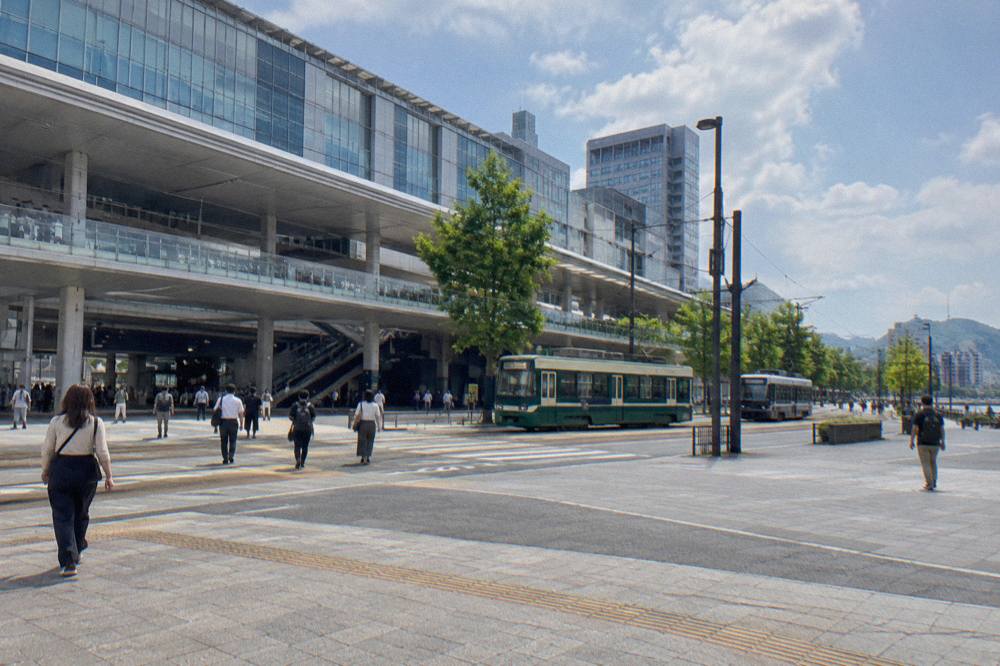
Hiroshima Station's Hiroden tram terminal sits on the second floor of the south side of the station building, reported as open since 3 August 2025, and Hiroden Lines 2 and 6 both run from the station through central Hiroshima to the Genbaku Dome-mae stop beside the Peace Memorial Park, at a flat fare of 240 yen for adults and 120 yen for children on all lines. The flat fare has applied since 1 February 2025 and includes the Miyajima line out toward Miyajimaguchi.
The tram layer under the Shinkansen layer is what makes a Kyoto day trip work on the ground. Line 2, the red line, runs from Hiroshima Station through the centre to Hiroden Miyajimaguchi, and Line 6 shares the central stretch to Genbaku Dome-mae. A one-day streetcar pass costs 700 yen for adults and covers unlimited tram travel across the network for a day, which suits any plan that strings together the Peace Memorial Park, the castle district and the western tram lines.
| Leg | Fare Or Figure | Operator |
|---|---|---|
| Hiroden tram, any line, adult | 240 yen flat | Hiroden |
| Hiroden tram, child | 120 yen flat | Hiroden |
| Hiroden one-day pass, adult | 700 yen | Hiroden |
| JR Sanyo Line, Hiroshima to Miyajimaguchi | 420 yen one way, about 27 to 30 minutes | JR West |
| JR ferry, Miyajimaguchi to Miyajima | About 10 minutes, every 15 minutes through the day | JR West Miyajima Ferry |
| Miyajima visitor tax | 100 yen, charged on entering the island | Miyajima |
The tram network, the day pass and the full station layout are covered in the getting around Hiroshima guide and the Hiroshima Station guide, and the wider station district is described in the Hiroshima station area page.
Can You Add Miyajima To A Kyoto To Hiroshima Day Trip?
The JR Sanyo Line reaches Miyajimaguchi from Hiroshima Station in about 27 to 30 minutes for 420 yen one way, and the JR ferry then crosses to Miyajima in about 10 minutes, running roughly every 15 minutes through the day, so the island leg adds well under an hour of transit to a Shinkansen day trip. A 100 yen Miyajima visitor tax is charged separately on entering the island, with preschool children exempt.
The ferry timetable gives a Kyoto-based day real structure. The first departure from Miyajimaguchi is at about 6:25 and the last sailing back from Miyajima is at about 22:14, while Great Torii-viewing sailings, which pass close to the floating gate on the water, run from 9:10 to 16:10. The Matsudai Kisen company runs its own parallel ferry service on a similar every-15-minute daytime pattern from 7:00 into the evening, so the crossing effectively runs as a two-operator shuttle.
On the island itself, the entry costs are fixed and small. Itsukushima Shrine charges 300 yen for adults, 200 yen for high school students and 100 yen for elementary and junior high students, with a combined ticket covering the Treasure Hall at 500, 300 and 150 yen respectively. The Mount Misen ropeway, for travellers with more than a half-day, is 2,000 yen return for adults, running 9:00 to 16:00 with a last descent at 16:30. The shrine's hours shift with the seasons, from 6:30 openings to closings between 17:00 and 18:00 depending on the month.
| Island Item | Price | Notes |
|---|---|---|
| Itsukushima Shrine, adult | 300 yen | High school 200 yen, elementary and junior high 100 yen |
| Combined ticket, adult | 500 yen | Shrine plus Treasure Hall |
| Mount Misen ropeway, adult return | 2,000 yen | 9:00 to 16:00, last descent 16:30 |
| Miyajima visitor tax | 100 yen | Charged on entering the island |
The tide matters more than any timetable at the Great Torii: the gate is walked to at low tide and appears to float at high tide, so the live tide block on the Miyajima guide is worth a glance before fixing a ferry time. The full island plan, including the crossing and the shrine, is laid out in the Hiroshima to Miyajima guide, and a ready-made day plan from Kyoto sits in the Hiroshima day trip from Kyoto itinerary.
What Are The Peace Memorial Park Opening Details On Arrival?
The Hiroshima Peace Memorial Museum is open from 7:30 in the morning, closing at 19:00 from March to July and September to November, at 20:00 in August with 21:00 closings on 5 and 6 August, and at 18:00 from December to February, with adult admission at 200 yen, high school students at 100 yen and junior high and younger free. The museum closes on 30 and 31 December and for a mid-February exhibit changeover.
The 7:30 opening is the quiet structural advantage of a Shinkansen arrival: even a late-morning Nozomi from Kyoto lands visitors with a full afternoon of museum hours in every season. The 65-and-over rate is 100 yen with a passport shown, and extended early-morning and evening entry slots require an online reservation. The A-Bomb Dome itself stands within sight of the park and is viewed from outside the fence with no fee.
The park's layout, the monuments and a walking route through them are covered in the Peace Memorial Park guide and the deeper museum visit in the Peace Memorial Museum guide, with etiquette for the site set out separately on the etiquette page.
Where Should You Stay After The Train Ride?
Travellers who break the journey in Hiroshima rather than returning to Kyoto the same night will find the city's practical accommodation geography clustered around Hiroshima Station and the downtown core, and the tram's flat 240 yen fare ties any district to the station cheaply, which weakens the case for paying a premium to sit directly on top of the tracks. An overnight on Miyajima itself is a second option worth weighing against a city base.
The full neighbourhood-by-neighbourhood breakdown sits in the where to stay in Hiroshima guide, and an overnight on Miyajima is covered in the Miyajima overnight guide. An overnight also unlocks the timings that a day trip cannot reach: the last ferry back from Miyajima at about 22:14, the museum's 7:30 opening, and the August evening hours. For anyone weighing the seasons against the calendar, the best time to visit Hiroshima guide and the month-by-month figures in the Hiroshima weather guide carry the Japan Meteorological Agency station normals: about 32.8 °C average daily highs in August against about 9.9 °C in January, with average rainfall of 279.8 mm in July and 46.2 mm in January.
Seasonal anchors sit on the same calendar. The cherry blossom window is covered in the Hiroshima cherry blossom guide, the autumn colour on Miyajima in the Miyajima autumn leaves guide, and the 6 August Peace Memorial Ceremony, held 8:00 to 8:50 in Peace Memorial Park, in the August 6 ceremony guide.
What About Food Once You Are Off The Train?
Hiroshima's signature dish is okonomiyaki, a layered savoury pancake cooked on a griddle, and the city's dedicated food buildings and restaurant landscape are mapped in dedicated guides, so the meal after the train ride is a planning question rather than a search. The main directory of everything worth booking around the city, tours included, sits on the things-to-do page.
The dish itself, its layered construction and where to eat it are covered in the Hiroshima okonomiyaki guide and the what to eat in Hiroshima guide, with the full sight and booking directory on the things to do in Hiroshima page. For travellers who want the city's food culture explained rather than just located, guided food and drink walks are among the site's bookable products, and the cooking-class route, where the griddle work happens under instruction, has its own okonomiyaki cooking class page. The practical difference is simple: a walk finds the kitchens, a class books one.
Is The Kyoto To Hiroshima Day Trip Realistic In One Day?
A same-day return is realistic: the fastest 1 hour 40 minute Nozomi run, the roughly 30 minute Sanyo Line connection to Miyajimaguchi, the 10 minute ferry and the 240 yen tram from the station together leave most of a daylight day for the Peace Memorial Park, the museum and a Miyajima crossing, with the last direct Nozomi back to Kyoto departing Hiroshima at 21:03 and arriving at 22:45. The constraint is not distance but opening hours, above all the museum's seasonal closings at 18:00 or 19:00.
Two anchors fix the shape of the day. The first is the 06:15 westbound departure window from Kyoto, which puts a traveller in Hiroshima shortly before 8:00 and at the museum soon after its 7:30 opening hour. The second is the last-ferry and last-train pairing: the ferry back from Miyajima runs until about 22:14, but the last Nozomi to Kyoto leaves well before that, so the island leg has to end by early evening for a same-day return to work.
Travellers who would rather not run the connections themselves can hand the day to a guided product instead. The Osaka/Kyoto to Hiroshima and Miyajima bus tour covers both anchor sights in a single guided day from a Kansai start, and the trio below pairs it with the two transport passes that suit a wider west-Japan itinerary.
Common Questions About Kyoto To Hiroshima
How Long Is The Shinkansen From Kyoto To Hiroshima?
The fastest Nozomi service takes approximately 1 hour 40 minutes over the 380 km route, and direct Nozomi trains run the whole way without a change at Shin-Osaka.
What Does A Kyoto To Hiroshima Shinkansen Ticket Cost?
In the regular season, an unreserved seat is 10,770 yen, a reserved seat in a regular car is 11,940 yen, and a Green car seat is 15,600 yen. Peak-season fares are typically 200 to 400 yen higher.
Does The Kansai-Hiroshima Area Pass Cover The Kyoto To Hiroshima Run?
Yes, the pass costs 17,000 yen for five days and covers reserved seats on Sanyo Shinkansen services between Shin-Osaka and Hiroshima. It cannot be used on expressway buses or the Tokaido Shinkansen.
How Do I Get From Hiroshima Station To The Peace Memorial Park?
Hiroden Lines 2 and 6 run from the station to the Genbaku Dome-mae stop beside the park, at a flat fare of 240 yen for adults and 120 yen for children on all lines.
Can You Visit Miyajima On A Kyoto To Hiroshima Day Trip?
Yes, the JR Sanyo Line reaches Miyajimaguchi in about 27 to 30 minutes for 420 yen, and the ferry crosses to the island in about 10 minutes, running roughly every 15 minutes through the day. A 100 yen visitor tax is charged on entering the island.
What Time Is The Last Bullet Train From Kyoto To Hiroshima?
The last direct westbound trains from Kyoto toward Hiroshima depart around 21:45, while the first departures of the day leave around 06:15.
The Kyoto to Hiroshima corridor is, in the end, a solved problem: a direct train every 20 to 30 minutes through the day, a fare table that fits in one row, and a tram and ferry chain on the far side that runs on flat fares and fixed timetables, all of it covered in the linked guides from this Hiroshima Travel Guide page outward.