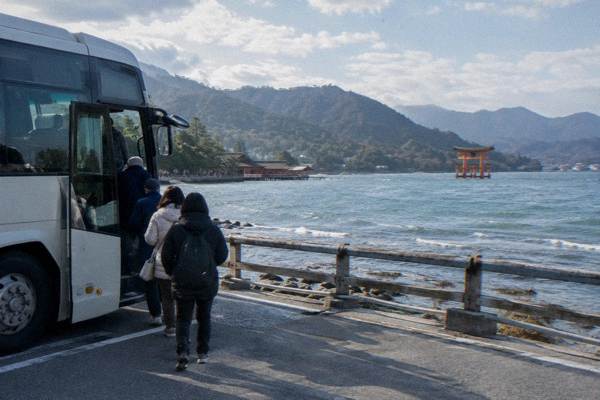
Hiroshima Day Trip From Kyoto
The fastest Nozomi covers the roughly 380 km between Kyoto and Hiroshima in about 1 hour 40 minutes, which makes a one-day visit workable if the timing is planned around fixed hours and fares.
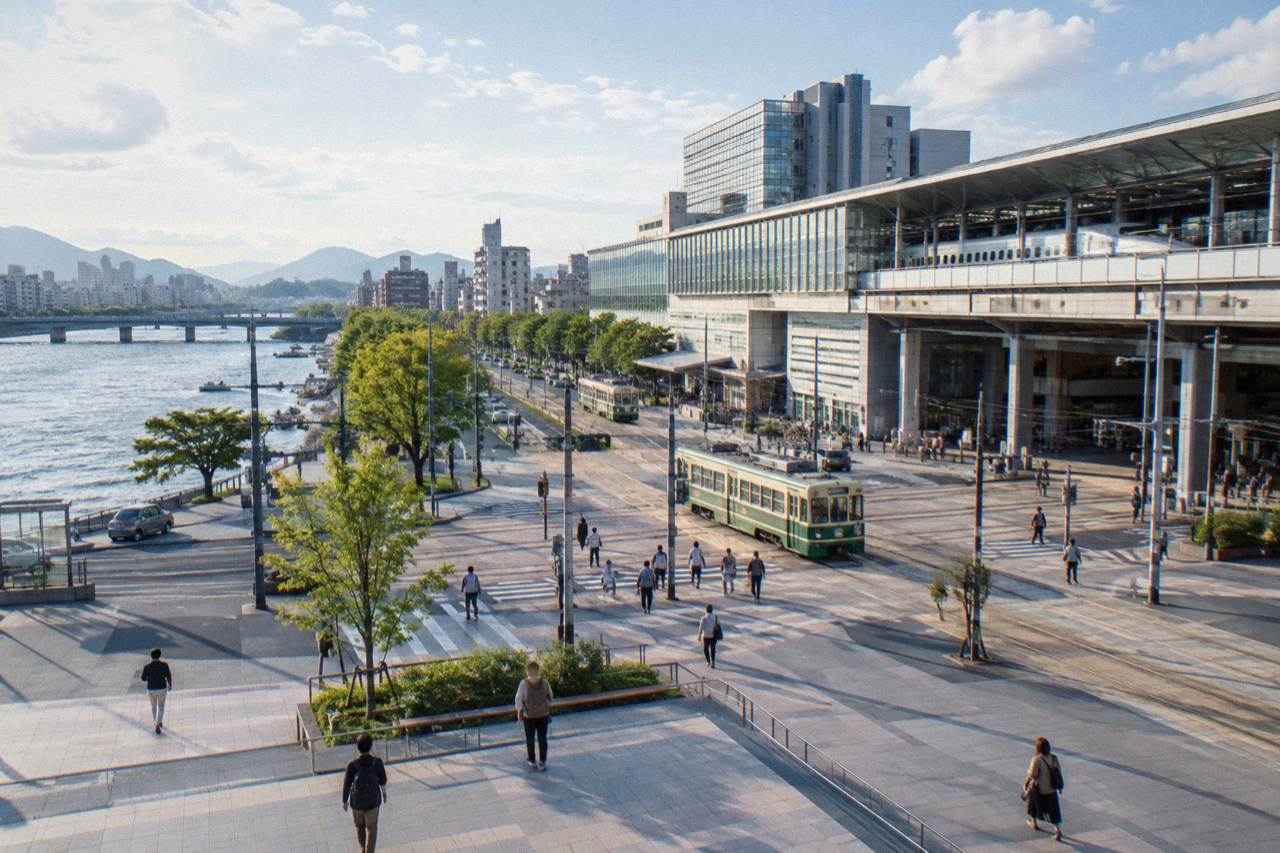
A Kyoto to Hiroshima day trip works because the fastest Nozomi takes about 1 hour 40 minutes each way; plan around the Peace Memorial Museum's 7:30 opening, its 200 yen admission, and, if time allows, the 10-minute JR ferry to Miyajima.
The fastest Nozomi Shinkansen runs from Kyoto to Hiroshima in about 1 hour 40 minutes, on a route of roughly 380 km, so a Kyoto to Hiroshima day trip is a real option rather than a stretch. What decides whether the day works is not the train but the fixed numbers at the other end: the Peace Memorial Museum opens at 7:30 and closes between 18:00 and 20:00 depending on the season, admission is 200 yen, and Miyajima, if it is on the list, needs a 27 to 30 minute JR train plus a 10-minute ferry each way. The fares, the hours and a timed shape for the day come from the train operators, the museum and the shrine's own pages. For the wider picture of the city, start with things to do in Hiroshima, and for the reverse direction by rail see the companion guide to Kyoto to Hiroshima trains.
Is A Day Trip From Kyoto To Hiroshima Realistic?
Yes, a day trip from Kyoto to Hiroshima is realistic, because the fastest Nozomi Shinkansen covers the roughly 380 km between the two cities in about 1 hour 40 minutes, and Nozomi trains run roughly every 20 to 30 minutes, so the day is limited by opening hours in Hiroshima rather than by the rail journey itself. The catch is that "day trip" here means a long day.
The museum's own practical-information page sets the shape of the day. It opens at 7:30 year-round, which pairs well with an early train out of Kyoto, and closes at 19:00 from March to July and September to November, 20:00 in August (21:00 on August 5 and 6), and 18:00 from December to February. The museum closes on December 30 and 31 and in mid-February for exhibit changes, and those are the dates on which the day trip collapses entirely, since the museum is the anchor of most one-day plans.
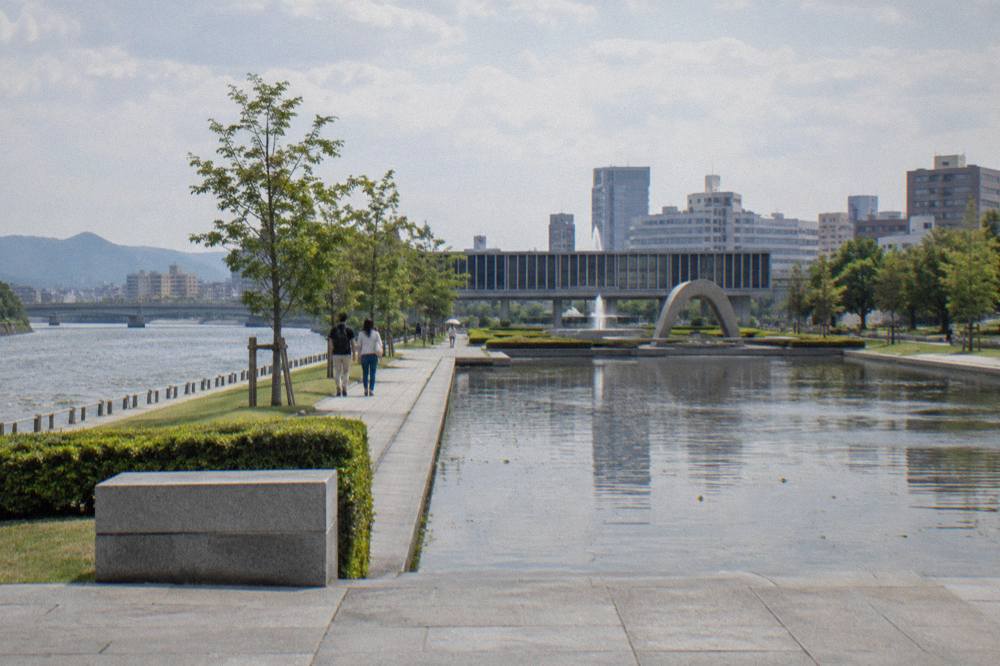
Some early-morning slots between 7:30 and 8:30, and some late-afternoon and evening slots, require a prior online reservation, so it is worth checking the museum's reservation rules against the intended arrival time before the train tickets are bought. Photography without flash is allowed for personal use, with tripods and selfie sticks excluded.
If the whole question is "one day or more", the fuller comparison lives in how many days in Hiroshima is enough, and the shape of a single day spent only in the city is laid out in Hiroshima in one day.
What Does The Train From Kyoto To Hiroshima Cost And Take?
The regular one-way fare from Kyoto to Hiroshima on the Nozomi is 10,770 yen for an unreserved seat, 11,940 yen for a reserved ordinary seat, and 15,600 yen for a Green car, with the fastest trains taking about 1 hour 40 minutes and departures spaced roughly every 20 to 30 minutes across the day. Those are the regular fares, and the rail leg is the single biggest line in the day's budget: it is the number that decides whether the trip is worth it compared with an overnight stay, because everything inside Hiroshima itself costs a few hundred yen at a time.
| Seat type | One-way fare, Kyoto to Hiroshima |
|---|---|
| Unreserved ordinary seat | 10,770 yen |
| Reserved ordinary seat | 11,940 yen |
| Green car | 15,600 yen |
Two practical notes follow from those figures. First, the gap between unreserved and reserved seating is small, and reserved seats remove the risk of standing for close to two hours on a busy departure. Second, because Nozomi trains run frequently, the return leg can be left open and booked on the day without locking in a specific evening train, which suits a day trip whose end time is uncertain.
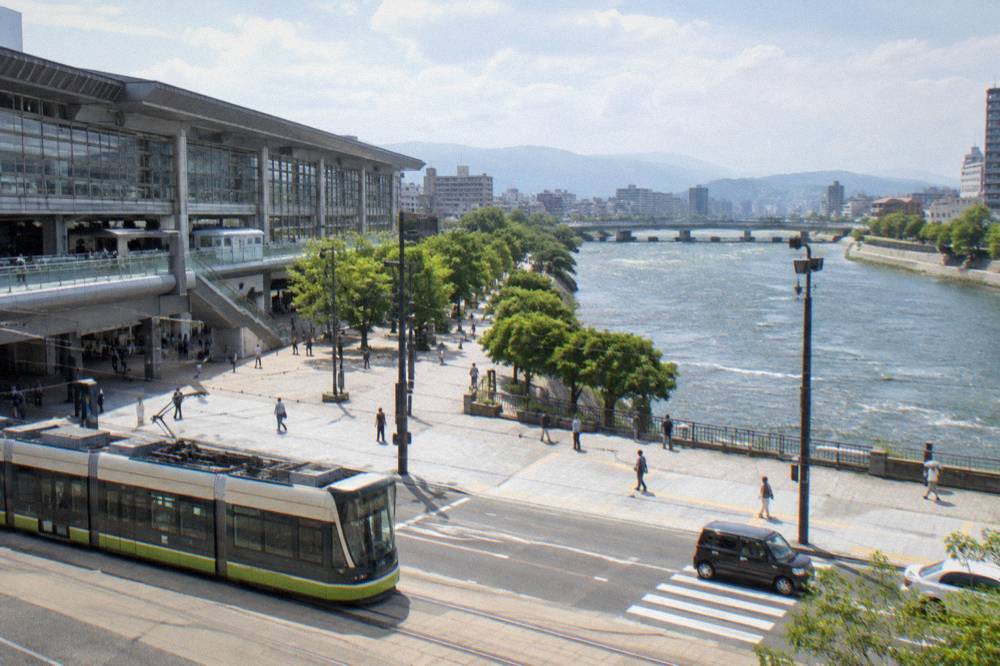
The 380 km figure is the route distance as published for the Kyoto to Hiroshima section. For a comparison of the same city reached from the other Kansai hub, the Hiroshima day trip from Osaka page works through the equivalent Osaka fares, and the last bullet train from Hiroshima to Kyoto question covers the return leg in detail.
How Do You Get From Hiroshima Station To The Peace Memorial Park?
From Hiroshima Station the practical choices to the Peace Memorial Park area are the Hiroden streetcar at a flat 240 yen for adults and 120 yen for children on every line, or a 700 yen one-day streetcar pass if three or more rides are planned, with the tram network now reported to enter the station building itself since August 2025. The flat fare applies to all Hiroden lines including the Miyajima line out to Miyajimaguchi, so the same 240 yen covers both a short hop to the park area and, later, the long ride toward the island if the day is shaped that way.
The streetcar pass pays for itself on the third ride of the day. A day trip that goes station to park, park to Miyajimaguchi, and back again makes three paid rides, and at 240 yen each the singles total 720 yen, so the 700 yen pass already edges ahead by 20 yen. IC cards are reported to be accepted on the Hiroden, which simplifies things for anyone already carrying one.
One fixed constraint worth planning around: Peace Memorial Park has no public parking, and the city directs drivers to nearby paid facilities. That is another point in favour of arriving by train and using the streetcar, since a rental car adds a parking search to a day that has none to spare. The wider transport picture, including the station itself, is covered in getting around Hiroshima.
What Can You See In Hiroshima In A Few Hours?
The Peace Memorial Park is free and open around the clock year-round, the Peace Memorial Museum costs 200 yen for adults, and the A-Bomb Dome can be viewed from outside its fence at no charge; together these sit close together and form the standard short visit.
To take the park in with a guide, book a peace park walking tour here.
The museum's hours and prices, from its own information page, set the schedule:
| Period | Hours |
|---|---|
| March to July | 7:30 to 19:00 |
| August | 7:30 to 20:00 (21:00 on Aug 5 and 6) |
| September to November | 7:30 to 19:00 |
| December to February | 7:30 to 18:00 |
Admission is 200 yen for adults, defined as college students and up, 100 yen for high school students, free for junior high school students and younger, and 100 yen for visitors aged 65 and over with a passport. Group rates exist, 160 yen for adults in groups of 30 or more, and some early and late slots need an online reservation. Behaviour in the park and museum is a visitor topic in its own right, covered in the etiquette at the Peace Park guide: quiet, no loud behaviour, respectful photography.
If the day trip runs long and the evening is open, Hiroshima has a night side that a same-day return can clip, covered in Hiroshima at night. And for anyone whose hours in the city are few by design, the question of whether the city can be toured independently at all is answered at can I tour Hiroshima on my own.
Can You Add Miyajima To A Kyoto To Hiroshima Day Trip?
Miyajima can be added to a Kyoto to Hiroshima day trip, but it costs roughly two hours of transport on top of the island time: a JR Sanyo Line train from Hiroshima Station to Miyajimaguchi takes about 27 to 30 minutes and costs 420 yen one way, then the JR ferry crossing takes about 10 minutes at 200 yen one way for adults, plus a separate 100 yen Miyajima visitor tax on entering the island. The Hiroden streetcar is the alternative to the JR train, taking about 66 minutes on Line 2 from Hiroshima Station to Hiroden-miyajima-guchi at the same flat 240 yen, which is cheaper but slower, so the JR line is the sensible choice on a compressed day.
The ferry numbers come from the operator's fare page: adults 200 yen one way, children 100 yen for ages 6 to 12, with the 100 yen visitor tax collected on the inbound trip and preschool children exempt from the tax. Departures from Miyajimaguchi run roughly every 15 minutes through the day, first around 6:25 and last around 22:00, and Great Torii route sailings, which pass in front of the gate, run on departures between 9:10 and 16:10. That 16:10 window matters: a late-afternoon crossing misses the torii-viewing route. More of these guides are collected on Hiroshima Travel Guide.
| Leg | Cost, one way | Time |
|---|---|---|
| JR Sanyo Line, Hiroshima Station to Miyajimaguchi | 420 yen | about 27 to 30 minutes |
| Hiroden Line 2 to Hiroden-miyajima-guchi | 240 yen | about 66 minutes |
| JR Miyajima Ferry, adult | 200 yen | about 10 minutes |
| Miyajima visitor tax, on entry | 100 yen | charged with the ferry ticket |
On the island, Itsukushima Shrine opens at 6:30 and charges 300 yen for adults, 200 yen for high school students and 100 yen for elementary and junior high students, with a combined shrine and Treasure Hall ticket at 500 yen for adults. Closing time varies by season:
| Period | Itsukushima Shrine hours |
|---|---|
| January 4 to end of February | 6:30 to 17:30 |
| March 1 to October 14 | 6:30 to 18:00 |
| October 15 to November 30 | 6:30 to 17:30 |
| December | 6:30 to 17:00 |
Two island facts are worth carrying. The Great Torii's restoration finished in December 2022, and some corridor and pagoda repair is reported to be under way with the shrine open throughout. And the tide decides what the gate looks like: it can be walked out to at low water and appears to float at high water, so the timing of the visit changes the view even though the shrine's hours do not. The full island picture, including the Mount Misen ropeway at 2,000 yen return for adults, is in the Miyajima guide, and the combined city-and-island day is planned hour by hour in Hiroshima and Miyajima in one day.
What Does The Whole Day Cost?
The rail fare dominates a Kyoto to Hiroshima day trip: the Nozomi costs 10,770 yen one way unreserved or 11,940 yen reserved, while everything inside the city is cheap by comparison, from the 240 yen streetcar to the 200 yen museum, and the Miyajima leg adds a 420 yen train, a 200 yen ferry and the 100 yen island tax each way or on entry. The exact mix depends on seat type and whether the island leg uses the JR train or the slower Hiroden line, and the table below shows how the pieces combine so the day's total can be built fare by fare.
| Item | Cost per adult |
|---|---|
| Nozomi unreserved seat, Kyoto to Hiroshima, one way | 10,770 yen |
| Nozomi reserved seat, Kyoto to Hiroshima, one way | 11,940 yen |
| Nozomi Green car, Kyoto to Hiroshima, one way | 15,600 yen |
| Hiroden streetcar, one ride | 240 yen |
| Hiroden one-day pass | 700 yen |
| Peace Memorial Museum | 200 yen |
| JR Sanyo Line to Miyajimaguchi, one way | 420 yen |
| JR Miyajima Ferry, one way | 200 yen |
| Miyajima visitor tax | 100 yen |
| Itsukushima Shrine | 300 yen |
The museum and the park are the cheap part of the day; the train is the expensive part. Choosing unreserved rather than reserved seats saves a little on each leg at the cost of a seat guarantee, and dropping Miyajima removes the island fares and, more importantly, about two hours of transport time. The fuller budget picture for a stay of any length, including the passes that change the arithmetic, is in the Hiroshima trip cost guide.
When Does A Guided Tour Beat The Timetable?
A guided day tour beats the self-planned timetable when the train, ferry and shrine connections feel like too many moving parts for one day, and the Kansai options run from Kyoto or Osaka with transport bundled, against a self-planned day whose cost is driven almost entirely by the Nozomi fare of 10,770 yen or more each way. The trade is control for convenience: a tour fixes the shape of the day and removes the need to watch ferry windows and museum reservation slots, while the self-planned version allows an early museum entry at 7:30 and a later return.
One Kansai departure, the Osaka/Kyoto: Hiroshima Miyajima Bus Tour, is this site's featured pick for exactly this question, and it can be checked through Check availability. Tours that bundle the bullet train from Osaka also exist in the roster and are compared on the Hiroshima day trip from Osaka page. For anyone who would rather convert the long day into a short evening, the guided night walk covered in Hiroshima at night is the other direction to take the same budget.
When Does The Day Trip Stop Making Sense?
The day trip stops making sense on December 30 and 31 and in mid-February when the Peace Memorial Museum is closed, in the depths of the short winter hours when the museum shuts at 18:00 and the island's shrine closes as early as 17:00, and whenever the plan tries to fit the museum, the island and a relaxed meal into a single day, which the fixed transport times do not allow. Three constraints bite hardest: the Miyajima ferry's Great Torii route stops after the 16:10 departures, the shrine's closing hours fall between 17:00 and 18:00 depending on the season, and the return Nozomi still has to be caught.
Weather is a softer version of the same question. The Japan Meteorological Agency (JMA) station normals for 1991-2020 show July rainfall in Hiroshima at 279.8 mm and January rainfall at 46.2 mm, with average daily highs of 32.8 °C in August against 9.9 °C in January. None of that forbids a day trip, but a wet day shrinks the park walk and the island time, which is where the Hiroshima rainy day plan becomes the better page.
| Month | Average daily high | Average daily low | Average rain |
|---|---|---|---|
| January | 9.9 °C | 2.0 °C | 46.2 mm |
| April | 19.8 °C | 10.1 °C | 141.0 mm |
| July | 30.9 °C | 24.1 °C | 279.8 mm |
| August | 32.8 °C | 25.1 °C | 131.4 mm |
| October | 23.7 °C | 14.9 °C | 109.2 mm |
The alternative to squeezing everything into one day is simply not to. Hiroshima in 2 days splits the city and Miyajima into separate days, Hiroshima in 3 days adds the castle grounds and Shukkeien, whose adult admission is 350 yen with school students free, and Hiroshima in a week stretches to the wider prefecture. One castle fact belongs in any longer plan: the keep has been closed to visitors since 22 March 2026, so only the exterior and grounds can be seen. For the full comparison of one-day versus more, see how many days in Hiroshima is enough.
Common Questions About A Hiroshima Day Trip From Kyoto
How Long Is The Train From Kyoto To Hiroshima?
The fastest Nozomi Shinkansen takes about 1 hour 40 minutes on the roughly 380 km route, with departures roughly every 20 to 30 minutes. The fare is 10,770 yen unreserved, 11,940 yen reserved and 15,600 yen in the Green car, one way.
Can You Do Hiroshima And Miyajima In One Day From Kyoto?
Yes, but it is a full day. The city core needs the Peace Memorial Park, the 200 yen museum and the A-Bomb Dome, and Miyajima adds a 420 yen JR train of about 27 to 30 minutes plus a 10-minute ferry at 200 yen, with the 100 yen island tax on entry.
What Time Does The Peace Memorial Museum Open?
It opens at 7:30 year-round. Closing is 19:00 from March to July and September to November, 20:00 in August (21:00 on August 5 and 6), and 18:00 from December to February, with closures on December 30 and 31 and in mid-February.
How Much Is The Hiroden Streetcar In Hiroshima?
The flat fare is 240 yen for adults and 120 yen for children on all lines including the Miyajima line, and a one-day pass costs 700 yen for adults. The pass pays off from the third ride onward.
Do You Need A Ticket For The Peace Memorial Park?
No, the park is free to enter and open around the clock year-round. Only the museum charges admission, 200 yen for adults, and the A-Bomb Dome is viewed from outside the fence at no charge.
Is A Japan Rail Pass Worth It For This Trip?
The JR West Miyajima Ferry accepts the Japan Rail Pass and JR-West rail passes at no extra charge.
The arithmetic of the day is simple once the fixed numbers are on the table: about 3 hours 20 minutes of Nozomi time, a 200 yen museum, a 240 yen streetcar, and, if the island is added, a ferry that stops running its torii route after the 16:10 departures. Plan the day backwards from the museum's opening hour and the ferry's timetable, and the rest of the visit falls into place.