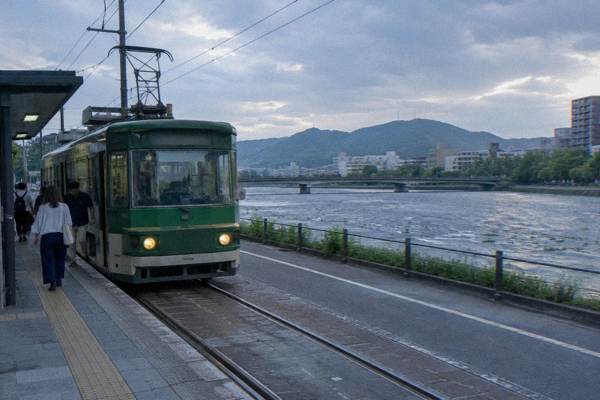
Getting Around Hiroshima: Trams, Loop Bus And IC Cards
Hiroshima runs on its streetcars, a flat 240 yen fare, a day pass structure and a 10-minute ferry to Miyajima. Here is what the operators themselves publish.
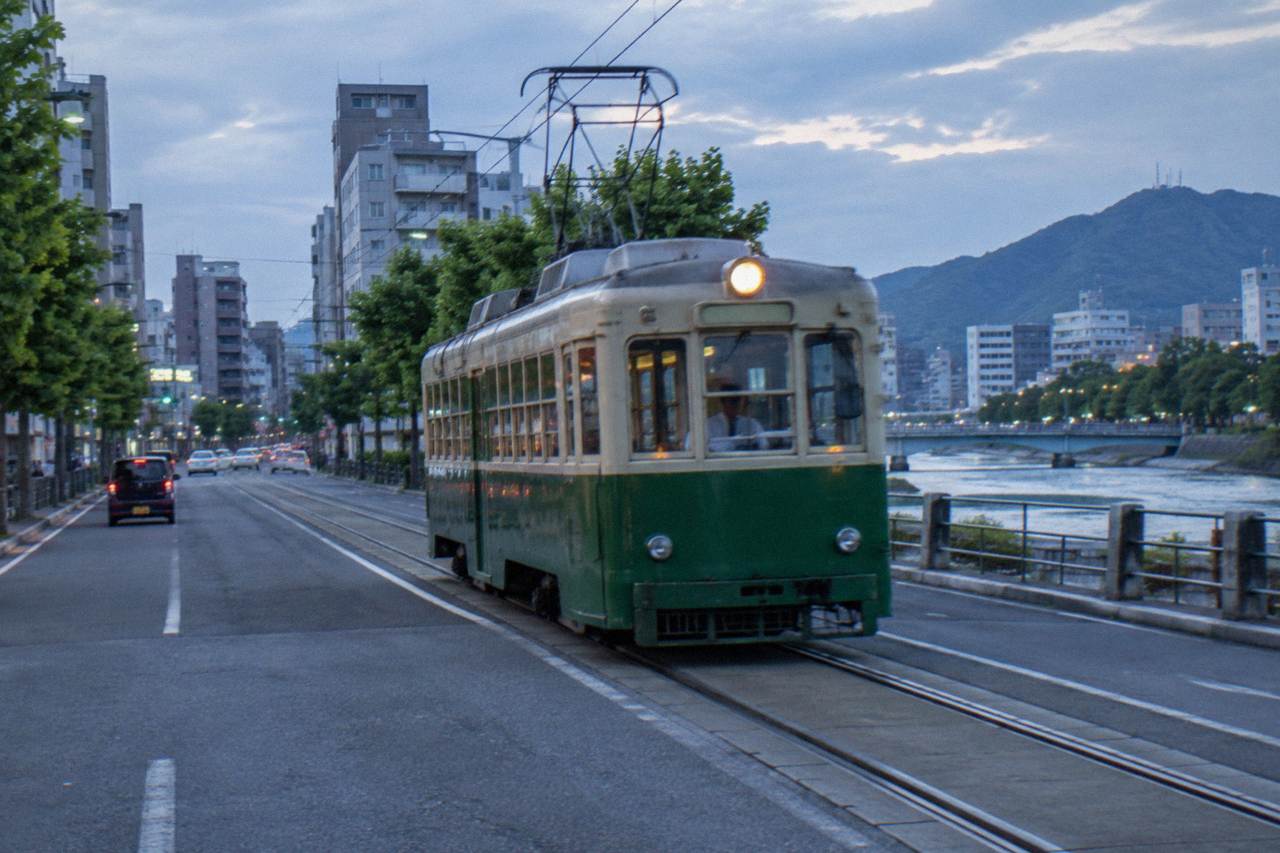
The Hiroden tram is the main way of getting around Hiroshima: a flat 240 yen adult fare on every line including the Miyajima line, IC cards accepted, pay as you get off. A 1,000 yen Visit Hiroshima Tourist Pass covers trams, selected buses, ferries and the loop bus for a day.
Hiroshima moves on rails and water. This page sets out what the operators publish: the fares, the passes, the IC cards that work, the lines that leave Hiroshima Station, and the airport bus, so the transport side of a Hiroshima trip can be planned from primary figures rather than guesswork.
How Do You Get Around Hiroshima Without A Car?
The Hiroden streetcar network is the backbone of getting around Hiroshima: a flat fare of 240 yen for adults and 120 yen for children applies on every line, including the Miyajima line, IC cards are accepted, and you pay when you get off rather than when you board. The network is supplemented by city buses, the HIROSHIMA Sightseeing Loop Bus Meipuru-pu, and the JR ferry to Miyajima. Hiroshima is a compact, walkable city between the station and the Peace Memorial Park, but the tram stitches together the station, the downtown districts, the port and the Miyajima ferry pier on one fare system.
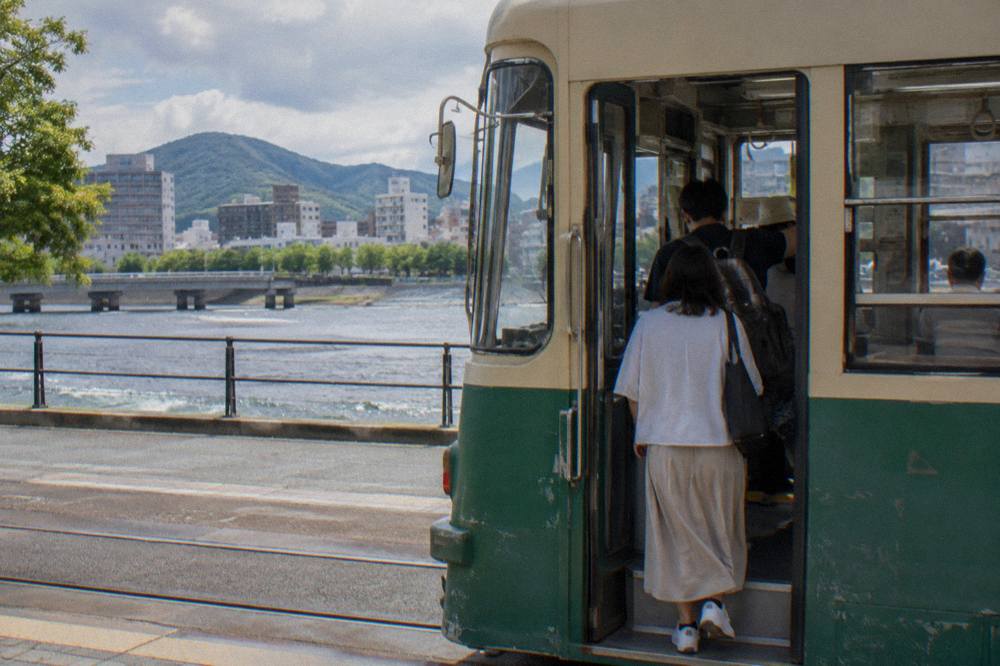
The Hiroden fare page states the mechanics plainly. There is no ticket purchase on board: you enter, ride, and settle the flat fare in cash or by IC card when you alight. Cash needs exact change, because none is given on board. Children aged 6 to 11 pay the child fare, children under 1 travel free, and up to three infants aged 1 to 5 ride free accompanied by an adult.
The station guide at Hiroshima Station, area and transport hub covers the station itself, including the reported change that put the tram inside the station building.
How Much Does The Hiroshima Tram Cost?
A single Hiroden tram ride in Hiroshima costs a flat 240 yen for an adult and 120 yen for a child, on every line, since the 1 February 2025 fare revision, and there is no zonal pricing and no distance charge of any kind. The ride from Hiroshima Station to the Peace Memorial Park area costs the same as the full 66-minute run out to Hiroden-miyajima-guchi at the far end of the network. The two money-saving options the Hiroden ticket page lists are the 1-Day Streetcar Pass at 700 yen adult and 350 yen child, covering all lines, and the 1-Day Trip Card at 1,000 yen adult and 550 yen child, which bundles the streetcar with the Miyajima ferry and includes the 100 yen Miyajima visitor tax.
The arithmetic for a day pass is straightforward, because every ride costs the same flat amount regardless of distance. Once the number of boardings in a day reaches a handful, the 700 yen pass becomes cheaper than paying 240 yen each time, and if the ferry is on the itinerary the 1-Day Trip Card bundles it into one purchase. A round trip to Miyajimaguchi and back, plus any downtown riding, is the classic case for the pass rather than single fares.
The fares at a glance:
| Ticket | Adult | Child | What it covers |
|---|---|---|---|
| Single tram ride | 240 yen | 120 yen | Any distance, any line, including Miyajima line |
| 1-Day Streetcar Pass | 700 yen | 350 yen | All Hiroden lines for one day |
| 1-Day Trip Card | 1,000 yen | 550 yen | All lines plus Miyajima ferry, visitor tax included |
Payment is flexible. The Hiroden fare page confirms cash, nationwide IC cards and digital tickets are all accepted. If a day of riding is planned, the pass decision comes down to counting boardings: a couple of rides, pay per ride; a full day of hopping on and off, buy the pass.
Is There A Tourist Pass For Hiroshima Transport?
Yes, the Visit Hiroshima Tourist Pass covers Hiroden streetcars, selected buses and ferries, plus the HIROSHIMA Sightseeing Loop Bus Meipuru-pu, at 1,000 yen for one day, 1,500 yen for two days and 2,000 yen for three days. The pass prices come from the Hiroden page for the pass, which also confirms loop bus validity. For a single packed day in the city the 1,000 yen day pass is the entry point, and the two and three day versions suit itineraries that add Miyajima and the port across more than one outing.
The pass overlaps with the plain 1-Day Streetcar Pass, so the choice between them is a matter of what else is on the ticket. The Visit Hiroshima Tourist Pass adds buses and ferries to the streetcar coverage; the 700 yen streetcar pass covers rails only. A visitor whose day is tram-only saves 300 yen by taking the cheaper pass; a visitor adding a ferry ride or bus legs gets more on the Tourist Pass. Digital versions exist through the MOBIRY TRAVEL app, which covers streetcars and ferry combinations.
The pass tiers:
| Pass | Price | Validity |
|---|---|---|
| Visit Hiroshima Tourist Pass 1 day | 1,000 yen | Hiroden streetcars, selected buses, ferries, loop bus |
| Visit Hiroshima Tourist Pass 2 days | 1,500 yen | Same coverage, two consecutive days |
| Visit Hiroshima Tourist Pass 3 days | 2,000 yen | Same coverage, three consecutive days |
The Hiroshima trip cost page carries the fuller budget picture.
Those three picks cover the journeys where a booked product beats self-navigation: a bullet train day from Osaka that folds the Shinkansen, the city and the island into one ticket, an all-inclusive Saijo sake brewery street and Kure day that reaches places the trams do not, and a Miyajima rickshaw ride at the island end of the ferry crossing. Each one removes a slice of the route planning this page documents. For travellers who prefer to keep the transport in their own hands, the sections below carry every fare and frequency needed.
Which Hiroden Lines Run From Hiroshima Station?
Four Hiroden lines serve Hiroshima Station directly, and three of them are timed here: Line 2 to Hiroden-miyajima-guchi every 10 minutes with a 66-minute travel time, Line 1 to Hiroshima Port every 12 minutes with a 44-minute travel time, and Line 6 to Eba every 15 minutes with a 34-minute travel time. These figures come from the Hiroden schedule page. Most lines operate from about 6:00 in the morning until between 10:30 and 11:00 at night, so an evening return after dinner downtown or on Miyajima is inside the operating window.
Line 2 is the visitor's line: it is the one that ends at Hiroden-miyajima-guchi, the ferry pier for Miyajima. The reported station change matters here too: since 3 August 2025 the tram has been reported to enter the Hiroshima Station building itself, on the 2nd floor of the new station building that opened in March 2025. For more on the city, see the Hiroshima Travel Guide.
The line picture at the station:
| Line | Destination | Frequency | Travel time |
|---|---|---|---|
| Line 2 | Hiroden-miyajima-guchi | Every 10 minutes | 66 minutes |
| Line 1 | Hiroshima Port | Every 12 minutes | 44 minutes |
| Line 6 | Eba | Every 15 minutes | 34 minutes |
For a day built around the peace sites, the trams toward Miyajimaguchi and the port both pass the downtown stops, so the boarding decision is direction, not line choice, until the far end of a route is the destination.
Do IC Cards Work On Hiroshima Transport?
Yes, nationwide Japanese IC cards including Suica, ICOCA, PASMO, Kitaca, TOICA, manaca, PiTaPa, SUGOCA, nimoka and Hayakaken are accepted on Hiroden trams and buses, per the Hiroden IC card page, and the airport limousine bus accepts them too. A visitor holding a Suica or ICOCA from Tokyo or Osaka arrivals therefore needs nothing else for city transport in Hiroshima.
The practical implication is that cash handling on Hiroshima reduces to exact change for the rare cash ride and whatever small shops prefer. The tram's cash rule is firm: no change is given on board, so coins to the exact 240 or 120 yen figure are needed for a cash fare. Digital tickets through the MOBIRY TRAVEL app extend the same touch-and-ride convenience to the passes described above, including the streetcar plus ferry combination.
One boundary on IC cards: they solve the payment problem, not the pass problem. A card touched repeatedly across a full day of tram rides pays the flat fare every single time, while the 700 yen pass caps the day's rail spending at a fixed price. The two systems sit side by side, and the choice is arithmetic based on how many boardings the day holds.
How Do You Get From Hiroshima To Miyajima?
The standard route from Hiroshima to Miyajima is the JR Sanyo Line from Hiroshima Station to Miyajimaguchi Station in about 30 minutes, then a 10-minute ferry across to the island, with the Hiroden Line 2 tram to Hiroden-miyajima-guchi as the alternative rail leg. Two ferry operators run the crossing: the JR ferry departs roughly every 15 minutes with first departures from about 6:25 and the last sailing at about 22:00, and Matsudai Kisen runs its own timetable at about the same frequency between 7:00 and about 20:00. A separate 100 yen Miyajima visitor tax is charged on entering the island, and preschool children are exempt.
The JR ferry accepts the Japan Rail Pass and JR-West rail passes, which matters for pass holders arriving on the Shinkansen: the ferry leg is inside JR pass coverage where the Miyajima line tram and Matsudai ferry are not. The crossing figures and tax are on the ferry operator's own fare page. Once on the island, transport is on foot, with the ropeway up Mount Misen at 2,000 yen return for adults and 1,000 yen for children, running 9:00 to 16:00 with the last descent at 16:30.
For rail travel across the wider region, book a regional rail pass here.
The crossing essentials:
| Item | Figure |
|---|---|
| JR ferry crossing time | About 10 minutes |
| JR ferry frequency | Roughly every 15 minutes |
| First JR departure from Miyajimaguchi | About 6:25 |
| Last JR departure from Miyajimaguchi | About 22:00 |
| Miyajima visitor tax | 100 yen, charged on entering the island |
| Mount Misen ropeway return | 2,000 yen adult, 1,000 yen child |
The full island logistics, including tide timing at the Great Torii and what is under repair at Itsukushima Shrine, are on the Hiroshima to Miyajima page, and the seasonal side of the island, including the November maple illumination and the ropeway reservation days in autumn 2026, is covered in autumn leaves at Momijidani and around Hiroshima.
How Do You Get From Hiroshima Airport To The City?
The airport limousine bus runs from Hiroshima Airport to Hiroshima Station's Shinkansen exit in about 50 minutes for 1,500 yen adult and 750 yen child from Bus Stop 2, and to the Hiroshima Bus Center in about 55 minutes at the same fares from Stop 1, with IC cards accepted. These figures come from the airport's own timetable page.
The distinction between the two drops is itinerary-driven. A visitor whose first stop is the Peace Memorial Park area is already close to the downtown core at the Bus Center; a visitor connecting onward by Shinkansen, or starting from the station, takes the Stop 2 service. The airport page carries the fuller arrival picture, including what to expect on landing, at Hiroshima Airport arrivals and transfers.
| Route | Bus stop | Time | Adult | Child |
|---|---|---|---|---|
| Airport to Hiroshima Station Shinkansen exit | Stop 2 | About 50 min | 1,500 yen | 730 yen |
| Airport to Hiroshima Bus Center | Stop 1 | About 55 min | 1,500 yen | 730 yen |
IC cards work on the limousine bus, so the card loaded for the trams covers the airport leg too.
Are Hiroshima Trams Free?
No, Hiroshima trams are not free: every ride on the Hiroden network costs a flat 240 yen for adults and 120 yen for children aged 6 to 11, on every line including the Miyajima line, under the fare structure in force since 1 February 2025. The only free travel the fare page provides for is children under 1 year, and up to three infants aged 1 to 5 accompanying a fare-paying adult. Nothing in the published fare structure gives a free ride to any adult category.
The confusion the question reflects usually traces to two things. First, boarding feels free because payment happens at the exit door, not the entrance: you board, ride, and pay on alighting. Second, the 700 yen day pass and the 1,000 yen tourist pass can make individual rides feel bundled away, but both are paid products, not complimentary travel.
Are There Ubers In Hiroshima?
The sources used here do not confirm ride-hailing apps such as Uber in Hiroshima, so visitors should plan around ordinary taxis and the public network, which covers the journeys a visitor is likely to make at published flat fares, including the flat 240 yen tram fare and the 1,000 yen day tourist pass. Taxis are mainly for late-night returns after the trams finish between 10:30 and 11:00 in the evening.
The honest planning answer is that Hiroshima is a city where the documented network does the work. The flat 240 yen tram fare, the 1,000 yen day tourist pass, the airport bus at 1,500 yen and the Miyajima ferry at a 10-minute crossing give a complete, priced itinerary from airport to island without any taxi leg. Where a taxi is preferred, late-night returns after the trams finish between 10:30 and 11:00 in the evening are the case the schedule tables imply, since the published operating window ends there.
For the walking side of the city, the question of how much of central Hiroshima can be done on foot is treated at is Hiroshima walkable, and the safety picture, including getting around at night, is at is Hiroshima safe.
Should You Take A Guided Day Trip Or Do The Routes By Public Transport?
A guided day trip replaces the local route planning entirely: the From Osaka Hiroshima and Miyajima Day Trip by Bullet Train pairs the Shinkansen with both UNESCO-listed sights in one booked day, and the site's tour page for it carries the full itinerary. For a visitor based in Osaka or Kyoto without days to spare, one booked day covers the transport, the island crossing and the guiding in a single product. Check availability beside the full write-up at the bullet train Hiroshima and Miyajima day trip page.
The self-guided alternative is genuinely workable, and this page is the manual for it: Shinkansen to Hiroshima Station, tram to the Peace Memorial Park, tram out to Miyajimaguchi, ferry, and back. The trade is control against certainty. A guided day fixes the sequence and removes the pass arithmetic, the ferry timing and the last-tram calculation; self-guiding keeps the flat 240 yen fares and the freedom to linger, at the cost of doing the planning.
The rail side of the Osaka arrival is documented with the primary fare figures, the 7,900 yen one-way Sanyo Shinkansen ticket and the 17,000 yen Kansai-Hiroshima Area Pass, at Osaka to Hiroshima by Shinkansen, bus or car, and the pass-versus-ticket decision is worked through at the JR pass for Hiroshima.
What Does A Transport Day In Hiroshima Actually Cost?
A transport day in Hiroshima is built from a small set of published figures: single tram rides at 240 yen each, the 1,000 yen 1-Day Trip Card that bundles streetcar and ferry with the visitor tax included, the 100 yen Miyajima visitor tax on island entry, the 2,000 yen adult return ropeway fare on Mount Misen, and 300 yen for Itsukushima Shrine entry. Every component above is printed on an operator's own page, so the day can be priced to the yen before leaving the hotel.
The components, at their published prices:
| Component | Price | Notes |
|---|---|---|
| Tram ride, any distance | 240 yen | Flat fare, adult |
| 1-Day Trip Card | 1,000 yen | Streetcar plus ferry, visitor tax included |
| Miyajima visitor tax | 100 yen | Charged on entering the island |
| Mount Misen ropeway | 2,000 yen | Adult return, child 1,000 yen |
| Itsukushima Shrine | 300 yen | Adult entry |
The pattern that keeps the day cheapest is the bundled card: one 1,000 yen purchase replaces the separate tram fares and the ferry leg's tax in a single ticket. Add the ropeway and the shrine and the priced picture of a transport-heavy Miyajima day is complete, all from the table above. The things to do in Hiroshima overview carries the full activity side, and the wider budget, stays and meals included, is at the Hiroshima trip cost page.
Timing matters as much as price. The trams finish between about 10:30 and 11:00 at night, the last JR ferry back from Miyajima on illumination evenings leaves at 10:14 in the late evening, and the ropeway's last descent is 16:30, so a Miyajima day is built around early crossings and an afternoon ropeway slot rather than an evening one.
Common Questions About Getting Around Hiroshima
Can I Use A Suica Or ICOCA Card On Hiroshima Trams?
Yes. The Hiroden IC card page accepts nationwide cards including Suica, ICOCA, PASMO, Kitaca, TOICA, manaca, PiTaPa, SUGOCA, nimoka and Hayakaken on trams and buses. The flat 240 yen adult fare is charged on alighting, the same as cash.
When Do Hiroshima Trams Stop Running?
Most Hiroden lines operate from about 6:00 in the morning until between 10:30 and 11:00 at night, per the schedule page. Late-evening travel after that window needs another mode, and on Miyajima illumination evenings the last JR ferry back to Miyajimaguchi leaves at 10:14 p.m.
Is The Miyajima Ferry Covered By The Japan Rail Pass?
Yes, the JR West Miyajima Ferry is covered by the Japan Rail Pass, and JR-West rail passes are also valid. The Hiroden tram to Miyajimaguchi is not a JR service, so pass coverage starts at the ferry pier, not the tram.
Do Children Pay On Hiroshima Transport?
On Hiroden trams the child fare of 120 yen applies to ages 6 to 11, children under 1 travel free, and up to three infants aged 1 to 5 ride free with an adult. On the airport limousine bus the child fare is 750 yen, and preschool children are exempt from the Miyajima visitor tax.
How Do I Pay On A Hiroden Tram?
You pay when getting off, not when boarding, and tickets are not sold on board. Cash requires exact change because none is given, and IC cards are touched at the fare box on alighting. The fare is a flat 240 yen regardless of distance.
Is The Loop Bus Covered By A Pass?
Yes, the Visit Hiroshima Tourist Pass is valid on the HIROSHIMA Sightseeing Loop Bus Meipuru-pu, alongside Hiroden streetcars, selected buses and ferries. The pass costs 1,000 yen for one day, 1,500 yen for two and 2,000 yen for three.
Getting around Hiroshima is a solved problem before you arrive: one flat tram fare, one day pass decision, one IC card already in a wallet, and a 10-minute ferry at the end of the line, with every figure above taken from what the operators publish.