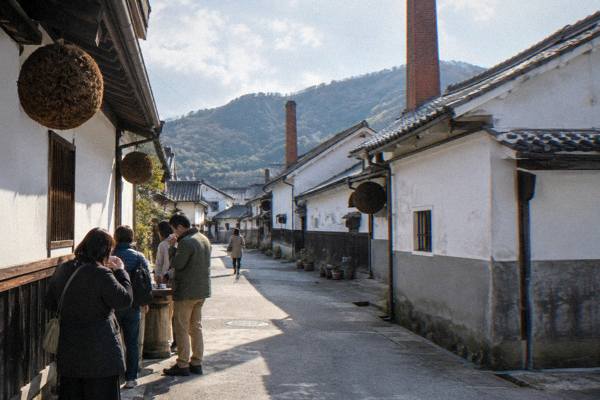
Saijo: The Sake Brewery Street In Higashi-Hiroshima
Saijo, in Higashi-Hiroshima east of the city of Hiroshima, packs seven sake breweries into one walkable street beside JR Saijo Station. This guide covers the breweries, their tasting hours, how to get there, and how to combine the trip with the naval port of Kure.
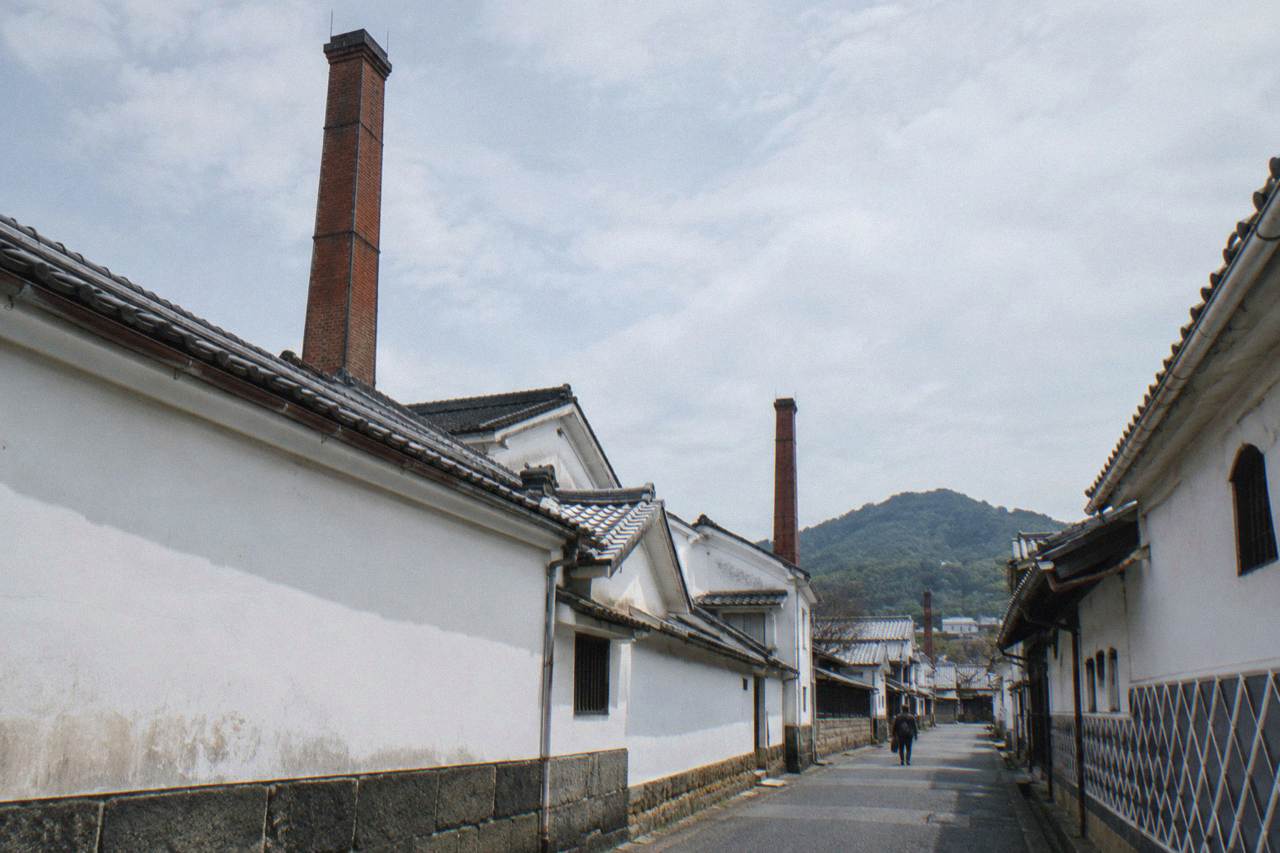
Saijo Sake Brewery Street is a short walk from JR Saijo Station, 35 minutes from Hiroshima Station on the JR Sanyo Main Line. Seven breweries line the street, tastings are available at each, and a typical visit takes 2 to 3 hours.
Sake brewing in the Hiroshima area concentrates in one place: Saijo, a district of Higashi-Hiroshima east of the city of Hiroshima, where seven breweries stand along a single street a short walk from the south exit of JR Saijo Station. The Higashi-Hiroshima tourism pages describe Saijo Sake Brewery Street as a stretch of historic breweries and buildings dating back to the 1800s, selected in 2017 as one of Japan's Top 20 Heritage Sites of the 20th Century. It is one of the easiest day trips from the city: 35 minutes by local train, no transfers, and a visit the official course pages size at 2 to 3 hours.
This page, from the Hiroshima Travel Guide desk, lays out the breweries one by one with their tasting hours, the train and bus connections from Hiroshima and Hiroshima Airport, and a pairing the region is quietly good at: sake in the morning in Saijo, warships and the Yamato Museum in the naval port of Kure in the afternoon.
Where Is Saijo And How Do You Get There From Hiroshima?
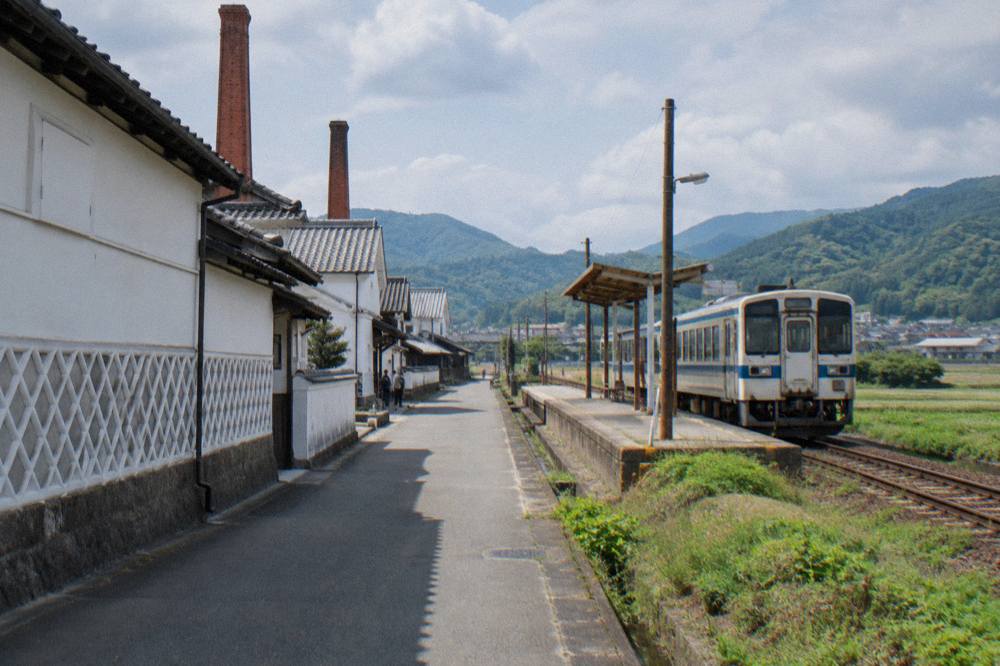
Saijo Sake Brewery Street is in Higashi-Hiroshima, east of the city of Hiroshima, within walking distance of JR Saijo Station. The official Higashi-Hiroshima tourism pages state that JR Saijo Station is 35 minutes from Hiroshima Station on the JR Sanyo Main Line, 70 minutes from Miyajima, and that Hiroshima Airport is 25 minutes from the brewery street by limousine bus, so the district is reachable by train or airport bus without a car.
The street itself begins a short walk from the south exit of the station, which keeps the whole visit flat and simple. Arriving from Hiroshima Station means boarding a JR Sanyo Main Line local train eastbound; the Higashi-Hiroshima pages give the 35-minute journey time for that exact run, so there is no need to plan around a highway bus or a transfer. Travellers coming from Miyajima can ride the same line through without changing, at the 70-minute figure the tourism pages list.
Flying in or out through Hiroshima Airport also works. The limousine bus link the tourism pages describe runs 25 minutes between the airport and the brewery street, which makes Saijo a realistic stop on an arrival or departure day when luggage is light. The table below gathers the three published connections.
| Route | Mode | Time | Source basis |
|---|---|---|---|
| Hiroshima Station to JR Saijo Station | JR Sanyo Main Line | 35 minutes | Higashi-Hiroshima tourism page |
| Miyajima to JR Saijo Station | JR Sanyo Main Line | 70 minutes | Higashi-Hiroshima tourism page |
| Hiroshima Airport to brewery street | Limousine bus | 25 minutes | Higashi-Hiroshima tourism page |
For orientation inside the district, Saijotsuru Sake Brewery sits approximately 5 minutes on foot from the station, and the remaining breweries string out from there along the same street.
Which Sake Breweries Line The Saijo Brewery Street?
Seven sake breweries line Saijo Sake Brewery Street: Kamotsuru, Kamoizumi, Fukubijin, Kirei, Saijotsuru, Hakubotan and Sanyotsuru, each with its own opening hours and tasting arrangement, and all within the walkable stretch the Higashi-Hiroshima tourism pages describe as dating back to the 1800s. Kamotsuru is open daily the longest, 10:00 to 18:00 with last admission 17:45, while Sanyotsuru is open only on weekdays.
The breweries differ enough that the order matters less than the days. Kamoizumi pours at its Shusenkan on weekends and at its head office on weekdays, with a midday closure. Saijotsuru, founded in 1904, offers free admission with brewery tours available for a fee, and its own attraction page gives opening hours of 11:00 a.m. to 4:00 p.m. weekdays and weekends, closed 12:00 to 1:00 p.m. Sanyotsuru closes on weekends entirely, so a Saturday visitor sees six of the seven, not all of them.
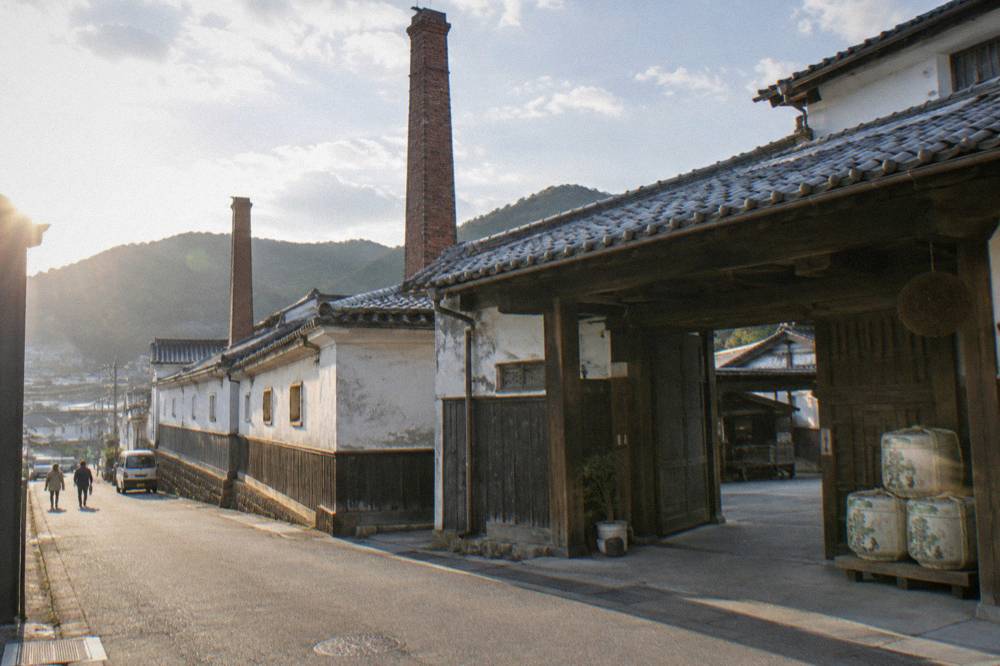
One practical note from the tourism pages themselves: at Saijotsuru, staff may not always be on site, and intercom assistance is available. That is a normal condition of working breweries rather than a discouragement, but it explains why a midweek visit, when head offices are staffed, runs more smoothly than a weekend one for anyone who wants to ask questions.
| Brewery | Days | Hours | Notes |
|---|---|---|---|
| Kamotsuru | Daily | 10:00 to 18:00 | Last admission 17:45, tastings available |
| Kamoizumi | Weekends at Shusenkan | 10:00 to 17:00 | Tastings available |
| Kamoizumi | Weekdays at head office | 8:30 to 17:00 | Closed 12:00 to 13:00, tastings available |
| Fukubijin | Daily | 10:00 to 16:00 | Closed 12:00 to 13:00 on some days, tastings available |
| Kirei | Weekends | 10:30 to 16:00 | Tastings available |
| Kirei | Weekdays | 9:00 to 16:00 | Closed 12:00 to 13:00, tastings available |
| Saijotsuru | Daily | 11:00 to 16:00 | Closed 12:00 to 13:00, founded 1904, free admission, tours for a fee |
| Hakubotan | Weekends | 10:30 to 16:00 | Tastings available |
| Hakubotan | Weekdays | 9:00 to 16:00 | Closed 12:00 to 13:00, tastings available |
| Sanyotsuru | Weekdays only | 10:00 to 15:00 | Closed on weekends, tastings available |
For anyone comparing Saijo with the other famous drinking-and-eating streets of the region, the difference is scale and intent. Hondori in central Hiroshima is a 577-metre covered retail arcade with over 200 stores and a reported 100,000 people a day; Saijo is a working brewery district where the product is made on site, not sold from a shelf. They complement rather than compete.
What Do Brewery Visits And Tastings Cost In Saijo?
Admission at Saijotsuru Sake Brewery is free, with guided brewery tours available for a fee, and the Higashi-Hiroshima tourism pages list tastings as available at all seven breweries without stating a tasting charge, so the honest planning answer is that the street itself costs nothing to walk and the only fixed published fee is Saijotsuru's paid tour. No overall street admission exists, and the breweries operate independently.
Because each brewery sets its own arrangements, the practical approach is to treat tasting as a per-brewery question rather than a district-wide ticket. The tourism pages attach "tastings available" to every brewery individually, and Saijotsuru is the one with a printed structure: free entry, paid tours. For the others, the published facts give hours and availability, and the rest is settled at the counter.
Budgeting the day is therefore mostly rail and time. The 35-minute JR Sanyo Main Line ride from Hiroshima Station, plus whatever is spent at the breweries, is the whole cost base of a self-guided visit.
Saijo also answers a question that central Hiroshima's food districts do not: what to do before the evening. An izakaya evening in Nagarekawa or the station area pairs naturally with a daytime sake district visit, since the breweries close by mid-to-late afternoon and the city's eating streets come alive after dark.
To make that izakaya evening easy, book an izakaya food tour here.
Why Do Breweries Cluster In Saijo At All?
Saijo's brewery cluster exists because of local brewing conditions, and the district's standing is documented: the Higashi-Hiroshima tourism pages state that Saijo Sake Brewery Street was selected as one of Japan's Top 20 Heritage Sites of the 20th Century in 2017, and that the street features historic breweries and buildings dating back to the 1800s, with seven breweries still operating along it today.
The heritage listing is the infogain point worth carrying: this is not a themed shopping street but a recognised concentration of surviving brewery architecture. Saijotsuru alone carries a founding year of 1904 on the official attraction page, and the buildings along the street predate that. What is documented is the built heritage, the count of breweries, and the 2017 selection.
For visitors, the heritage status has a practical edge. The street is compact and coherent, the kind of district where a 2 to 3-hour visit, the figure the official course page gives, is enough to walk it properly, taste at several breweries, and still make an afternoon train elsewhere.
Is Kure Worth Adding To A Saijo Day Trip?
Kure pairs naturally with Saijo because it sits on the same regional rail network and adds a maritime counterpoint to a brewery morning: the Yamato Museum with its 26.3-metre 1/10-scale battleship Yamato model, the free JMSDF Kure Museum across the plaza, and a 35-minute Kure Bay warship cruise, all within walking distance of JR Kure Station.
The Yamato Museum reopened on April 23, 2026, following renovations that began in February 2025, according to the museum's own visitor page. Its exhibition rooms run 9:00 to 18:00 with last admission at 17:30, and it closes on Tuesdays, or the following non-holiday day when Tuesday is a national holiday, with daily opening during the late April to early May, late July to August and year-end periods. Permanent exhibition admission is 1,000 yen for non-resident adults, with reductions for students and free entry for preschool children.
Across the plaza, the JMSDF Kure Museum, also called the Iron Whale Museum, is free to enter, open 10:00 to 18:00 with last admission at 17:30, and closed on the same Tuesday pattern. The Kure Bay Ship Tour departs from Kure Central Pier Terminal a short walk from both museums, with regular departures at 10:00, 11:00, 13:00 and 14:00, plus 12:00 on weekends and holidays, running about 35 minutes at 2,200 yen for adults and 800 yen for elementary school students. It closes on Tuesdays and in bad weather.
| Site in Kure | Admission | Hours | Closure |
|---|---|---|---|
| Yamato Museum permanent exhibition | 1,000 yen adult, 300 yen high school, 200 yen elementary/junior high, preschool free | 9:00 to 18:00, last admission 17:30 | Tuesdays or following non-holiday day |
| JMSDF Kure Museum | Free | 10:00 to 18:00, last admission 17:30 | Tuesdays or following day if a holiday |
| Kure Bay Ship Tour | 2,200 yen adult, 800 yen elementary student | Departures 10:00, 11:00, 13:00, 14:00, plus 12:00 weekends and holidays | Tuesdays and bad weather |
Getting from Hiroshima to Kure is a documented run: JR Kure Line rapid trains cover Hiroshima Station to Kure Station in about 35 minutes for 510 yen one way, locals take about 50 minutes, and trains depart roughly every 20 to 30 minutes. The full Kure day-trip page carries the port's story in depth, including the question of the wreck of the Yamato itself.
Hiroshima makes a convenient base for this itinerary, and it is easy to reach. Nozomi Shinkansen trains cover the run from Shin-Osaka in roughly 80 to 85 minutes, and Tokyo is about four hours away. From the airport, limousine buses reach the Shinkansen exit of Hiroshima Station in about 50 minutes and Hiroshima Bus Center in about 55, at 1,500 yen for adults and 730 yen for children, with IC cards accepted; they leave from Bus Stop 2 and Stop 1 respectively.
In town, Hiroden streetcars charge a flat 240 yen for adults and 120 yen for children, a fare in force since February 1, 2025 on every line, including the Miyajima line. The trams now enter the Hiroshima Station building itself, stopping on its second floor, so the change from streetcar to train stays indoors.
Timing matters for a day built around a boat ride and museum hopping. On Hiroshima's 1991 to 2020 climate normals, July averages 279.8 millimeters of rain, June averages 226.5, and July highs average 30.9 degrees Celsius. April and May, with monthly means of 14.8 and 19.6 degrees and rainfall of 141.0 and 169.8 millimeters, are cooler and less rainy than midsummer.
How Does A Guided Saijo And Kure Tour Compare With Going Independently?
A guided Saijo and Kure day, such as the Hiroshima Saijo Sake Brewery Street Kure Full Day All Inclusive Tour, covers both the brewery street and the naval port in one booked day running 09:00 to 17:00, with transport, guiding and inclusions bundled, while an independent visit uses the published train connections, the 35-minute Hiroshima to Saijo run and the 35-minute rapid to Kure, and pays admissions separately at each site.
The trade is control against convenience. Guided, the same geography is handled as one itinerary, which matters on a Tuesday, when both Kure museums and the cruise close and a guided routing has to work around it. The tour's price, rating and review count render from its listing through the tour page linked above rather than appearing as typed figures here.
One structural point favours doing Kure and Saijo on separate days for slow travellers: Saijo's breweries finish by 16:00 to 18:00 and Kure's museums open until 18:00, so a combined day is feasible but full, while splitting them leaves room for Miyajima or the city's Peace Memorial area on the spare afternoon.
When Is A Good Time Of Year For A Saijo Sake Trip?
The Japan Meteorological Agency (JMA) 1991-2020 station normals for Hiroshima show the brewing-district walk at its most comfortable in spring and autumn: April averages a high of about 19.8 °C against March's 14.5 °C, October about 23.7 °C, and November about 17.7 °C, while July brings 279.8 mm of rain and is among the warmest at a 30.9 °C average high, and August averages 32.8 C.
Saijo's street is walked outdoors between brewery interiors, so the climate normals matter more here than on a museum-only day. Winter is mild rather than harsh, with January averaging a high of about 9.9 °C and a low of about 2.0 °C, and seasonal rainfall is modest, January at 46.2 mm and December at 54.0 mm. Summer heat is real: the normals put August's mean daily high at about 32.8 °C with July's rain at 279.8 mm, the year's peak monthly total.
| Month | Average high °C | Average low °C | Average rain mm |
|---|---|---|---|
| January | 9.9 | 2.0 | 46.2 |
| April | 19.8 | 10.1 | 141.0 |
| July | 30.9 | 24.1 | 279.8 |
| August | 32.8 | 25.1 | 131.4 |
| October | 23.7 | 14.9 | 109.2 |
| November | 17.7 | 8.9 | 69.3 |
Can You Combine Saijo With Miyajima Or Central Hiroshima?
Yes, with the published times on the JR Sanyo Main Line: the Higashi-Hiroshima tourism pages state that JR Saijo Station is 70 minutes from Miyajima and 35 minutes from Hiroshima Station, so a morning in Saijo and an afternoon at Miyajima is a documented same-day pairing, and a Saijo morning followed by the Peace Memorial Park or Hondori in central Hiroshima works on the same 35-minute ride back.
The geography runs in a line: Saijo east of the city, Hiroshima in the middle, Miyajimaguchi and the 10-minute JR ferry to Miyajima to the west. A traveller who finishes the brewery street by early afternoon can ride west, cross to the island, and still see Itsukushima Shrine, whose admission page lists 300 yen for adults and seasonal hours from 6:30 in the morning. The Miyajima Visitor Tax of 100 yen applies on entering the island, charged separately.
Tide shapes a Miyajima add-on: the Great Torii can be walked to at low tide and appears to float at high tide, and the live tide block on the Miyajima pages tracks the Hiroshima Bay prediction rather than a fixed figure. For the shrine itself, the Itsukushima Shrine guide carries admission, hours and the current repair works in detail.
Common Questions About Saijo Sake And Kure
How Do I Get From Hiroshima To Saijo Sake Brewery Street?
Ride the JR Sanyo Main Line from Hiroshima Station to JR Saijo Station, 35 minutes per the Higashi-Hiroshima tourism pages. The brewery street is a short walk from the south exit, and Saijotsuru is approximately 5 minutes on foot from the station.
How Many Sake Breweries Are On Saijo Sake Brewery Street?
Seven breweries line the street: Kamotsuru, Kamoizumi, Fukubijin, Kirei, Saijotsuru, Hakubotan and Sanyotsuru. All offer tastings per the tourism pages, though hours differ and Sanyotsuru closes on weekends.
How Long Does A Visit To Saijo Sake Brewery Street Take?
The official Higashi-Hiroshima course page gives a typical visit of 2 to 3 hours, covering the walk along the street and tastings at several breweries.
Does Saijo Sake Brewery Street Cost Anything To Visit?
The street itself is free to walk. Saijotsuru Brewery admits visitors free with paid brewery tours available; the tourism pages list tastings at all seven breweries without stating a tasting charge.
Can You Visit Saijo And Kure In One Day?
Yes. Saijo sits 35 minutes east of Hiroshima Station and Kure about 35 minutes south by JR Kure Line rapid, so a brewery morning and a museum afternoon in Kure is a documented same-day pairing, and an all-inclusive guided tour covers both.
Is The Yamato Museum In Kure Open?
The Yamato Museum reopened on April 23, 2026 after renovations. Exhibition rooms run 9:00 to 18:00 with last admission at 17:30, closed Tuesdays except during specified holiday periods; adult admission to the permanent exhibition is 1,000 yen.