Can You Visit The Wreck Of The Yamato?
Can you visit the wreck of the Yamato? The battleship lies 340 meters down in the East China Sea and is protected as a war grave, but the Yamato Museum in Kure, near Hiroshima, displays recovered items and a 1/10 scale model.
The wreck itself lies far out in the East China Sea, roughly 290 kilometers southwest of Kyushu near Tokunoshima, at a depth of approximately 340 meters. Japan treats the site as a war grave, and the government prohibits any salvage, disturbance or removal of artifacts from the remains. What Kure offers instead is the Yamato Museum, also called the Kure Maritime Museum, which displays a 26.3-meter, 1/10 scale model of the ship, a preserved Zero fighter and a Kaiten manned torpedo, and items recovered from the wreck site itself. This page answers the question of wreck access plainly, then covers the museum that stands in its place, its tickets, hours and the train that connects it with Hiroshima.
No, the wreck of the Yamato cannot be visited by divers or submersible tourists: it lies at a depth of approximately 340 meters in the East China Sea, roughly 290 kilometers southwest of Kyushu near Tokunoshima, and Japan treats the site as a war grave. The government prohibits any salvage, any disturbance of the remains and any removal of artifacts from the wreck, so no dive operator may take visitors there.
The prohibition is not a practicality dressed up as policy. Japan's position, as summarized by legal commentary on the wreck, is that the remains of those lost with the vessel are to be left undisturbed. That places the Yamato in the same category as other protected war graves at sea: the site may be documented, and it has been, but it may not be entered, worked or stripped.
In 2016 Kure City ran a survey of the wreck that produced about 50 hours of video and 7,000 photographs over 10 days. Those findings were incorporated into the Yamato Museum when it reopened on April 23, 2026 after renovations, so the closest a visitor can now come to the seabed site is the museum's own footage and recovered material, not a boat ride to the coordinates.
For travelers basing themselves in the city, the practical answer is that a day in Kure slots easily into a wider Hiroshima plan. The question of how many days in Hiroshima is enough usually comes down to whether a Kure or Miyajima half-day can be added, and Kure is the closer of the two by rail.
Where Does The Yamato Wreck Lie?
The Yamato wreck lies in the East China Sea at a depth of approximately 340 meters, roughly 290 kilometers southwest of Kyushu near the island of Tokunoshima. The site is a Japanese war grave, and salvage, disturbance of the remains and removal of artifacts are prohibited by the government, which rules out any form of visitor access, commercial or private.
Two figures do most of the work in that answer, and each deserves its own line. The depth, about 340 meters, is far beyond recreational scuba limits and well past the range of anything a tour operator could offer. And the legal status, a war grave under government protection, means that even an expedition with the right hardware would have no permission to operate.
What has been recovered from the site legally, including uniform buttons and ship fragments, is displayed at the Yamato Museum in Kure, according to accounts of the museum's collection. That is the intended destination for interest in the ship: not the seabed, but the city that built her.
What Does The Yamato Museum In Kure Display?
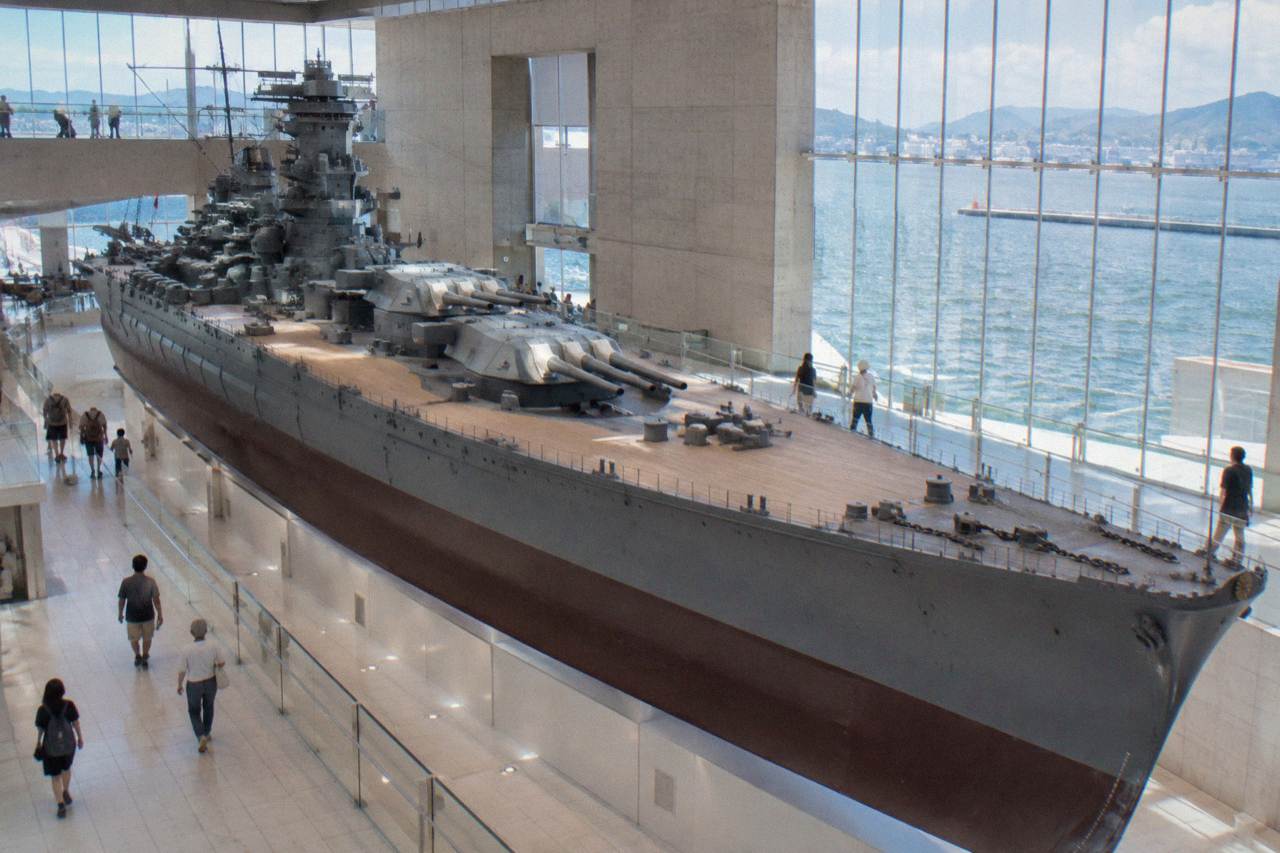
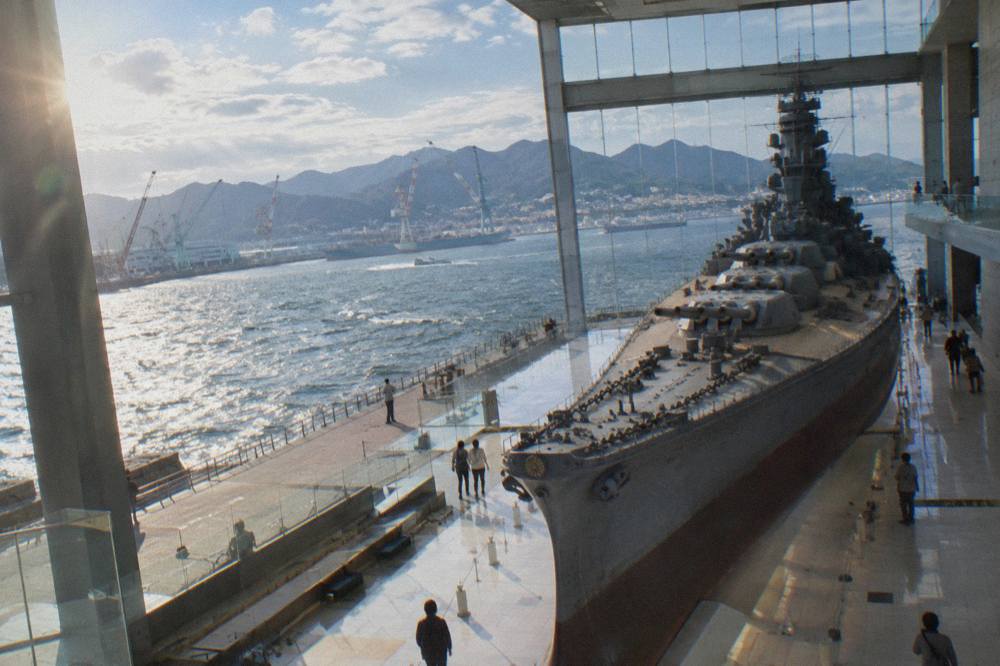
The Yamato Museum's centerpiece is a 26.3-meter, 1/10 scale model of the battleship Yamato in the first-floor Yamato Hiroba atrium. The Large Objects Exhibition Room holds a preserved Type 62 Zero carrier fighter and a Kaiten Type 10 manned torpedo, the third floor shows original materials from the Kure and Hiro Naval Arsenals including aircraft engines and propellers, and recovered wreck-site items are also displayed.
The museum is, in effect, the ship's accessible form. The scale model gives the proportions that photographs struggle to convey; the naval-arsenal material explains the industrial city that produced the fleet; and the recovered objects connect the building to the protected site far to the west. A fourth-floor viewing terrace looks out over Kure Port, the former dock where the Yamato was built, and passing ships or submarines. Outdoor exhibits in Brick Park include the Former Naval Arsenal Large Lathe Unit No. 15299 and salvaged items from the battleship Mutsu.
The fourth floor also holds a library of open-shelf books on ships and history, open 9:00 to 17:00. A full walkthrough of the collection is on the site's Yamato Museum guide page.
Kure itself rewards the trip beyond one building. Visitors weighing the region as a whole often start from what Hiroshima is famous for and then decide whether the Kure branch is worth a day.
How Do You Get From Hiroshima To The Yamato Museum?
JR trains on the Kure Line run from Hiroshima Station to Kure Station in approximately 31 to 41 minutes for a fare of 510 yen, and the Yamato Museum is an 8-minute walk from Kure Station. The museum's address is 5-20 Takaramachi, Kure City, Hiroshima Prefecture, with the shop and ticket counter located outside the main building entrance.
The Hiroden streetcar network does not extend to Kure, so the JR line is the rail option.
For visitors assembling a wider itinerary from the city, the things to do in Hiroshima roundup covers the Peace Memorial Park, Miyajima and the city districts, with Kure listed among the day trips. A common pattern is one full day for the peace memorials and one for Miyajima, with Kure added when a third day exists; the question of whether Hiroshima is worth visiting usually answers itself somewhere in that planning.
Visitors who prefer a guided structure for the Miyajima side can pair an independent Kure morning with the UNESCO bus day tour of Peace Memorial Park and Miyajima: Check availability. The tour covers the two signature sites, leaving the naval-history branch of the region to the Kure Line.
What Are The Yamato Museum Hours, Tickets And Closures?
The Yamato Museum's exhibition rooms are open 9:00 to 18:00 with last admission at 17:30, and the shop keeps the same hours. Permanent exhibition admission is 1,000 yen for non-Kure-resident adults, 300 yen for high school students and 200 yen for elementary and junior high school students, with preschool children free, and the museum is closed on Tuesdays except in set peak periods.
The closure schedule has a seasonal override worth knowing before booking a train. The museum is closed on Tuesdays, or on the following non-holiday day when a Tuesday is a national holiday, but it opens daily from April 29 to May 5, from July 21 to August 31, and from December 29 to January 3. Anyone planning a summer or Golden Week visit therefore avoids the Tuesday trap automatically; a shoulder-season visitor does not.
| Visitor category | Standard admission | Kure resident rate | Group rate (20 or more) |
|---|---|---|---|
| Adult, including college students | 1,000 yen | 500 yen | 800 yen |
| High school student | 300 yen | Free with ID | 200 yen |
| Elementary or junior high student | 200 yen | Free with ID | 100 yen |
| Preschool child | Free | Free | Free |
The library on the fourth floor keeps shorter hours than the exhibition rooms, opening 9:00 to 17:00, and terminals for searching drawings were under adjustment in early 2026, so anyone planning research use should expect the open-shelf books to be the reliable part of that floor. The ticket counter now sits with the Museum Shop Yamato outside the main entrance, a layout change from the 2026 renovations.
For orientation against the region's other headline sites, the admission ladder matters less than the trip shape. The Peace Memorial Museum in Hiroshima charges 200 yen for adults, Itsukushima Shrine on Miyajima charges 300 yen, and the Yamato Museum's 1,000 yen adult fee is the steepest of the three, a reflection of a large naval collection rather than a gate on a single monument. Planning around those three, together with the castle grounds and Shukkeien garden, is the standard first-visit structure.
| Item | Figure | Note |
|---|---|---|
| Wreck depth | About 340 meters | East China Sea site |
| Wreck distance from Kyushu | Roughly 290 kilometers | Near Tokunoshima |
| 2016 survey footage | About 50 hours of video | Over 10 days |
| 2016 survey photographs | About 7,000 | Over 10 days |
| Scale model length | 26.3 meters | 1/10 scale of the Yamato |
| Hiroshima to Kure by JR | Approximately 31 to 41 minutes | 510 yen fare |
| Kure Station to museum walk | 8 minutes | Shop and tickets outside the entrance |
Is The Yamato Museum The Right Day Trip From Hiroshima?
The Yamato Museum suits travelers with an interest in naval engineering, maritime history or the industrial side of Hiroshima Prefecture, and it works as a half-day trip by a 510 yen train ride from Hiroshima Station. It does not replace the Peace Memorial Park or Miyajima, and visitors with only one or two days in the region should see those two first.
The honest framing is a hierarchy. The Peace Memorial Park and Museum carry the city's global significance, and the museum drew 2,580,926 visitors in fiscal 2025, a third straight record, with 945,618 of them from abroad, figures reported by Nippon.com. Miyajima carries the scenic and spiritual weight, from Itsukushima Shrine's Great Torii to Mount Misen. Kure carries machines: the lathe, the engines, the torpedo, the model. A visitor with three days can hold all three; a visitor with two chooses between Kure and a slower second day in the city, and there is no wrong answer, only a matter of taste.
One caution for completeness: the museum is a naval museum in a city still tied to shipbuilding, and the presentation is technical and historical rather than commemorative in the way the Peace Memorial Museum is. Visitors expecting the tone of the peace park should read the Yamato Museum attraction page first to calibrate.
The wider question of the city as a destination, including its safety, its atmosphere and its present-day character, is covered in the site's Hiroshima Travel Guide homepage and its answers section, and none of it depends on the war grave at the bottom of the East China Sea. The wreck stays where it lies, protected and undisturbed, and the museum on the Kure waterfront does the work of explaining why that is right.
Common Questions About The Yamato Wreck And Kure
Can You Visit The Wreck Of The Yamato?
No. The wreck lies at approximately 340 meters depth in the East China Sea, roughly 290 kilometers southwest of Kyushu near Tokunoshima, and Japan treats the site as a war grave where salvage, disturbance and artifact removal are prohibited. No visitor access of any kind is permitted.
Can Divers Reach The Yamato Wreck?
No. The depth of about 340 meters is far beyond diving range, and the site's protected war-grave status prohibits any disturbance of the remains regardless of technical capability.
Where Can You See Items From The Yamato?
The Yamato Museum in Kure, Hiroshima Prefecture, displays items recovered from the wreck site, including uniform buttons and ship fragments, alongside a 26.3-meter 1/10 scale model of the ship.
How Much Does The Yamato Museum Cost?
Permanent exhibition admission is 1,000 yen for non-Kure-resident adults, 300 yen for high school students and 200 yen for elementary and junior high school students, with preschool children free. Kure residents pay 500 yen for adults and nothing for high school students and younger with ID.
When Is The Yamato Museum Closed?
The museum closes on Tuesdays, or the following non-holiday day when Tuesday is a national holiday, but it opens daily from April 29 to May 5, July 21 to August 31, and December 29 to January 3.
How Do You Get To The Yamato Museum From Hiroshima?
Take a JR Kure Line train from Hiroshima Station to Kure Station, approximately 31 to 41 minutes for 510 yen, then walk about 8 minutes to the museum at 5-20 Takaramachi, Kure City.