Yamato Museum: The Battleship Model In Kure
The Yamato Museum in Kure holds aircraft, a manned torpedo and arsenal machinery.
The Yamato Museum in Kure is about 32 to 35 minutes from Hiroshima Station on the JR Kure Line rapid train, costs 1,000 yen for adult non-residents and is open 9:00 to 18:00, closed Tuesdays.
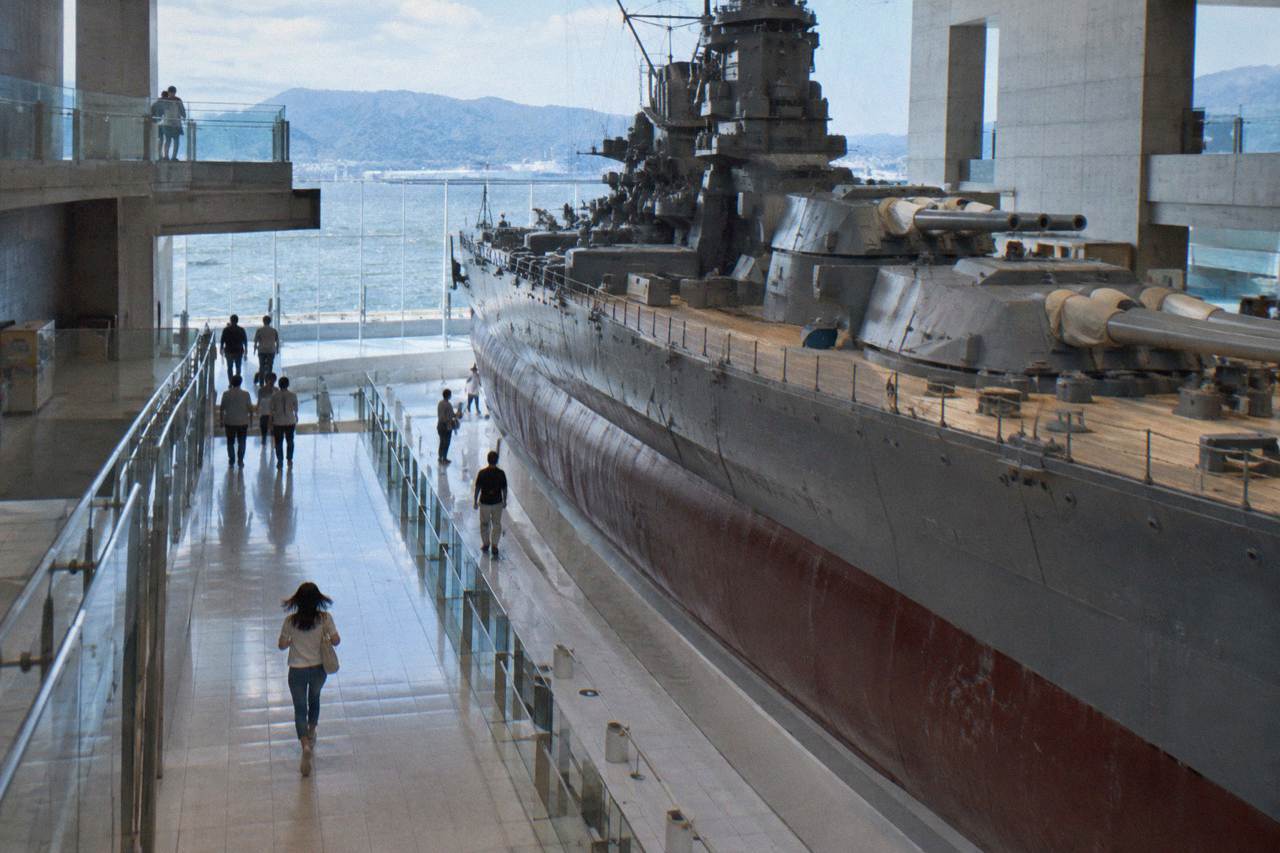
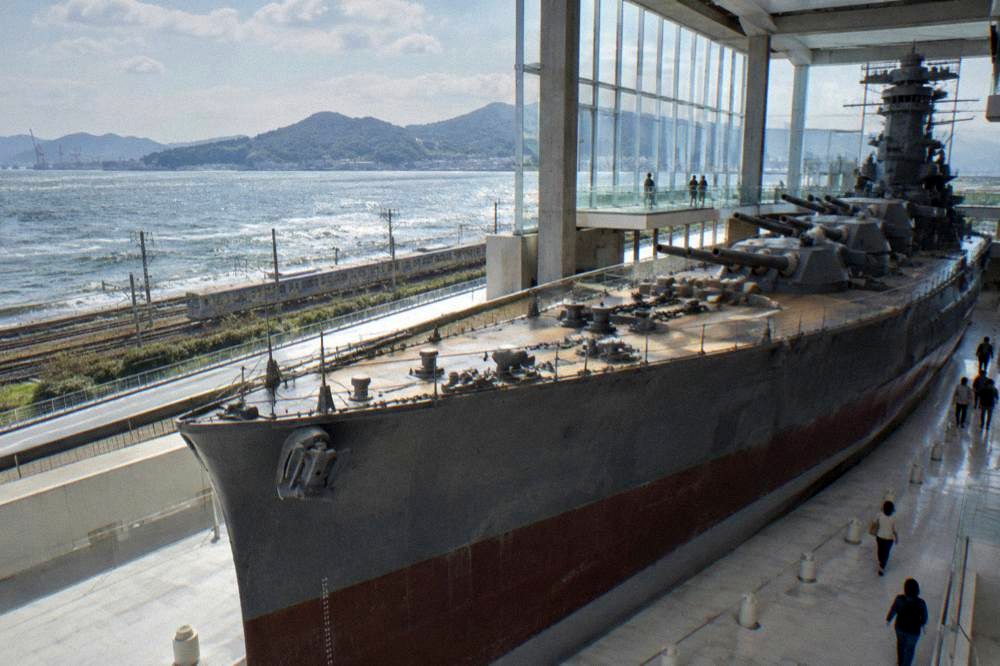
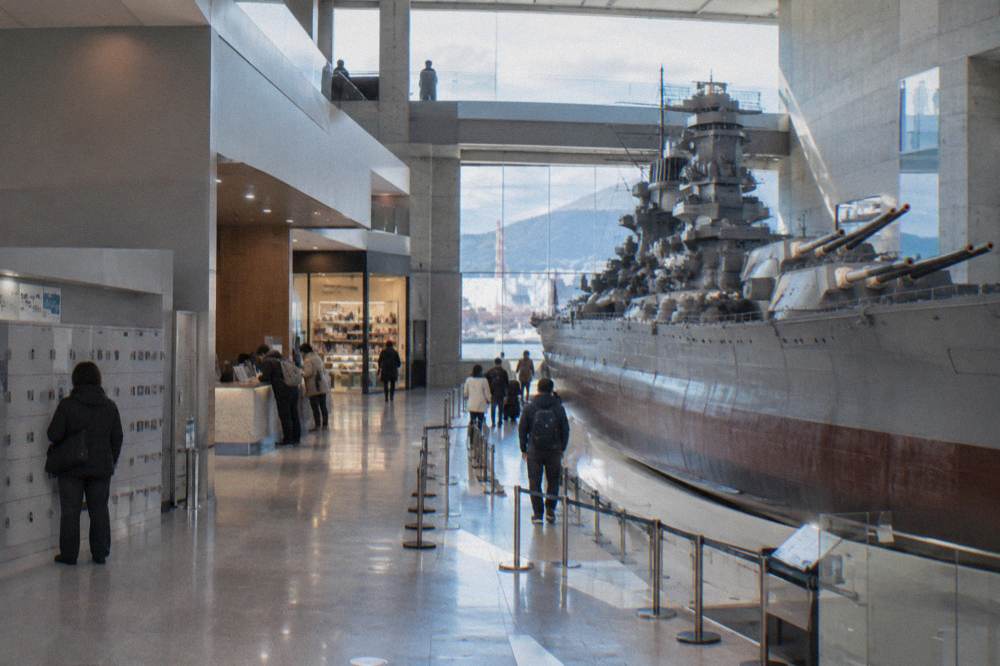
Its centrepiece is a 26.3-meter, 1/10-scale model of the battleship Yamato, built in Kure and displayed in the first-floor Yamato Hiroba atrium. The museum sits about an 8-minute walk from JR Kure Station, and a rapid train from Hiroshima Station reaches Kure in roughly 32 to 35 minutes for a one-way fare of about 510 yen, which makes it one of the easiest half-day rail trips out of the city. This page sets out what the museum's own materials report: admission tiers, opening calendar, room-by-room exhibits, access from Hiroshima and how the visit fits alongside the city's better-known sites. For the wider picture of the region, the Hiroshima Travel Guide covers the Peace Park, Miyajima and the day-trip towns around Hiroshima Bay.
What Is The Yamato Museum In Kure Near Hiroshima?
The Yamato Museum is Kure City's maritime museum at 5-20 Takaramachi, Kure, in Hiroshima Prefecture, dedicated to the shipbuilding and naval history of a port that built the battleship Yamato. Its atrium holds a 26.3-meter, 1/10-scale model of the ship, and the museum is run as the Kure Maritime Museum.
The museum tells that story through ship models, preserved aircraft, a manned torpedo, machinery from the Kure and Hiro Naval Arsenals and outdoor industrial artefacts. The name comes from the battleship Yamato, which was built in Kure's docks and is commemorated in the museum's atrium model rather than by the ship itself. Readers who want the full story of the wreck can read whether the wreck of the Yamato can be visited.
The museum pairs naturally with Hiroshima's other machine-minded site, the Mazda Museum, which covers the city's car industry instead of its naval past. The two make an unusual pairing in one prefecture: one museum documents warship construction, the other postwar manufacturing. Both sit on rail lines out of the city centre, and both reward visitors who plan around their different opening patterns, since the Mazda Museum takes reservations only while Kure welcomes walk-in tickets every day except Tuesday.
How Much Does Yamato Museum Admission Cost From Hiroshima?
Permanent exhibition admission for visitors who are not Kure residents is 1,000 yen for adults including college students, 300 yen for high school students and 200 yen for elementary and junior high school students, with preschool children entering free. Kure City residents with ID pay 500 yen, and high school students and younger who are residents enter free.
The published group rates for parties of 20 or more drop the non-resident adult ticket to 800 yen, high school to 200 yen and elementary and junior high to 100 yen. The ticket counter sits in the Museum Shop Yamato, which is located outside the main building entrance, so tickets are handled before entering the museum itself.
| Visitor category | Individual | Group (20 or more) |
|---|---|---|
| Adult, non-Kure resident (incl. college) | 1,000 yen | 800 yen |
| High school, non-Kure resident | 300 yen | 200 yen |
| Elementary / junior high, non-Kure resident | 200 yen | 100 yen |
| Preschool | Free | Free |
| Adult, Kure resident with ID | 500 yen | 500 yen |
| High school and younger, Kure resident | Free | Free |
For comparison, the Hiroshima Peace Memorial Museum charges 200 yen for adults, so the Yamato Museum is the more expensive of the two, though it also allows re-entry once inside.
How Do You Get From Hiroshima To The Yamato Museum?
From Hiroshima Station, the JR Kure Line rapid train reaches Kure Station in approximately 32 to 35 minutes for a one-way fare of about 510 yen, and the museum is an 8-minute walk from the station, about 5 minutes at a brisk pace.
Travellers holding regional rail passes should check their pass coverage for the Kure Line before travelling, since pass validity on this line depends on the product.
For drivers, paid parking is available near the museum at 100 yen per hour, and the museum has no dedicated on-site lot.
| Route | Approximate time | Fare |
|---|---|---|
| Hiroshima Station to Kure Station, JR Kure Line rapid | 32 to 35 minutes | about 510 yen one way |
| Kure Station to Yamato Museum on foot | 8 minutes | free |
| Parking near the museum | per hour | 100 yen |
Kure also anchors a wider coastal circuit east of Hiroshima, covered in the site's Kure day-trip guide, which also covers the town's other sights. The wider region round the bay is described in things to do in Hiroshima, the site's overview page for the whole destination.
What Can You See Inside The Yamato Museum From Hiroshima?
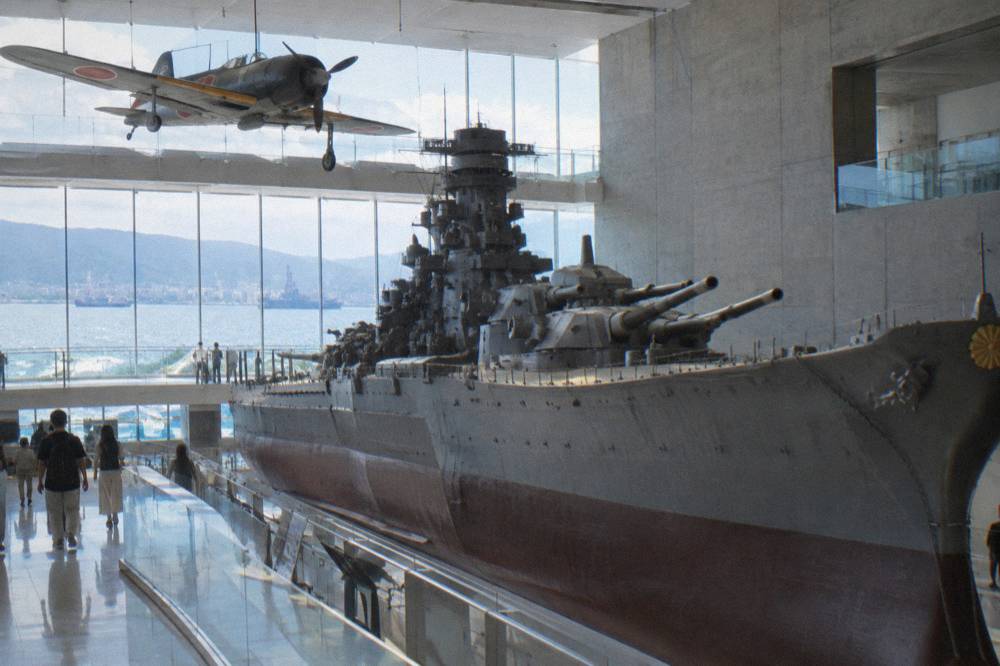
The exhibits include the 26.3-meter 1/10-scale Yamato model in the 1F Yamato Hiroba atrium, a preserved Type 62 Zero Carrier Fighter and a Kaiten Type 10 manned torpedo in the Large Objects Exhibition Room, and original Kure and Hiro Naval Arsenal materials on the 3F.
The building is arranged vertically. The first floor holds the Yamato Hiroba, the atrium space that gives the museum its name, with the model displayed at its centre. The Large Objects Exhibition Room nearby preserves full-size aircraft and the Kaiten manned torpedo, a suicide weapon of the war years presented as an artefact of naval technology.
The 3F Science and Technology Exhibition Room displays original materials from the Kure and Hiro Naval Arsenals, including aircraft engines and propellers, tracing the engineering history of the dockyards. The 4F holds a library with open-shelf books on ships and history, open 9:00 to 17:00, and a viewing terrace with sightlines over Kure Port, the former Yamato dock site and the vessels passing in and out of the harbour. Outdoors, Brick Park displays the Former Naval Arsenal Large Lathe Unit No. 15299 and salvaged items from the battleship Mutsu.
| Space | Floor | What is displayed |
|---|---|---|
| Yamato Hiroba | 1F | 26.3-meter, 1/10-scale battleship Yamato model |
| Large Objects Exhibition Room | 1F | Type 62 Zero Carrier Fighter, Kaiten Type 10 manned torpedo |
| Science and Technology Exhibition Room | 3F | Kure and Hiro Naval Arsenal materials, aircraft engines, propellers |
| Library | 4F | Open-shelf books on ships and history |
| Viewing terrace | 4F | Kure Port, former Yamato dock site, passing ships |
| Brick Park | Outdoors | Large Lathe Unit No. 15299, salvaged battleship Mutsu items |
Photography is permitted except in the temporary exhibits area on the 3F and certain 1F displays, with no tripods, selfie sticks or flash. English-language volunteer guided tours run on Sunday mornings from 9:00 to 12:00.
When Is The Yamato Museum Near Hiroshima Open?
Exhibition rooms are open 9:00 to 18:00 with last admission at 17:30, the museum shop keeps the same hours, and the 4F library is open 9:00 to 17:00. The museum closes on Tuesdays, or the following non-holiday day when a Tuesday is a national holiday.
Three stretches of the calendar run daily without the Tuesday closure: April 29 to May 5, July 21 to August 31, and December 29 to January 3. These published blocks mean summer visitors from Hiroshima can plan a Kure trip on any day of the week in late July and August.
| Period | Opening pattern |
|---|---|
| Normal week | Open daily except Tuesday |
| Tuesday that is a national holiday | Closed the following non-holiday day |
| April 29 to May 5 | Open daily |
| July 21 to August 31 | Open daily |
| December 29 to January 3 | Open daily |
Facility services include free coin lockers in the lobby, free Wi-Fi inside the facility, re-entry permission, full wheelchair accessibility with elevators, and free wheelchair loans at the ticket counter. These are listed by the museum and its visitor guides as standing services.
Weather deserves a place in the planning. The spring stretch with daily opening falls in mild weather, as April in Hiroshima averages a high of 19.8 degrees Celsius against a low of 10.1, and May adds 210.8 hours of sunshine in the official normals. Summer is more demanding: July averages a high of 30.9 degrees together with 279.8 millimeters of rain, June records 226.5 millimeters, and an umbrella earns its space even when the museum opens daily. The turn-of-the-year stretch is cool and dry instead, with January averaging 9.9 degrees by day, 2.0 at night, and 46.2 millimeters of rain across the month.
Is The Yamato Museum Worth The Trip From Hiroshima?
Yes, if the Hiroshima itinerary has room for a third day or a spare afternoon. The Yamato Museum is a strong half-day trip: a 1,000 yen adult ticket, a 26.3-meter battleship model and a working harbor view, in a town where the dockyards still operate. Families get particular value, since the exhibits are concrete objects rather than text panels.
The honest test is what else a Hiroshima itinerary holds. The city's core sites, the Peace Memorial Park, the Peace Memorial Museum and the A-Bomb Dome, sit together in the centre and can fill a full day on their own. Miyajima, with Itsukushima Shrine and Mount Misen, fills another. Kure fits best on a third day, or on an afternoon when the city itinerary is exhausted.
The museum welcomes children with free preschool entry and low student rates. Families planning a wider stay can also read the site's guide to Hiroshima with kids, which places Kure in a child-friendly context alongside the city's parks and tram rides.
By way of contrast within the prefecture, the Hiroshima Museum of Art offers French Impressionists near the castle, and Hiroshima MOCA contemporary works: the Yamato Museum is the region's counterweight, all steel, salt air and shipyard machinery.
What Else Is There To Do In Kure From Hiroshima?
A sensible Kure plan is a half day: the 32 to 35 minute JR Kure Line rapid from Hiroshima, the 8-minute walk to the museum, 90 minutes to 2 hours inside, then time for the waterfront. From the museum's 4F terrace, the former Yamato dock site and the passing ships and submarines are visible, and the port remains a working naval harbor.
The town's identity is bound to the sea. Kure is one of several coastal destinations east and south of Hiroshima covered in this site's day-trip guides, alongside the region's island and inland-sea routes.
The museum's Sunday-morning English volunteer tours, 9:00 to 12:00, give an anchor time for anyone wanting a guided walk through the galleries.
| Plan element | Detail |
|---|---|
| Train from Hiroshima | JR Kure Line rapid, about 32 to 35 minutes, about 510 yen |
| Walk from Kure Station | 8 minutes |
| Time inside the museum | 90 minutes to 2 hours |
| Guided option | English volunteer tours, Sunday mornings 9:00 to 12:00 |
| Parking | 100 yen per hour nearby, no on-site lot |
How Does The Yamato Museum Compare With Hiroshima's Other Museums?
The Yamato Museum charges 1,000 yen for adults and keeps 9:00 to 18:00 hours, while the Hiroshima Peace Memorial Museum charges 200 yen with hours that shift by season from 7:30 openings to closings between 18:00 and 20:00, and both allow a substantive half-day visit.
The two institutions answer different questions. The Peace Memorial Museum documents the atomic bombing of the city and its human consequences; the Yamato Museum documents the naval industry that built the town of Kure. Their subject matter intersects at the war years, but their galleries, tone and audiences are distinct.
| Museum | Adult admission | Hours | Focus |
|---|---|---|---|
| Yamato Museum, Kure | 1,000 yen (non-resident) | 9:00 to 18:00, last entry 17:30 | Maritime and shipbuilding history |
| Hiroshima Peace Memorial Museum | 200 yen | Mar to Jul 7:30-19:00; Aug 7:30-20:00; Sep to Nov 7:30-19:00; Dec to Feb 7:30-18:00 | The atomic bombing and peace education |
| Mazda Museum, Hiroshima | Free, reservation only | Monday to Friday plus selected Saturdays | Car manufacturing, reservation required |
The Mazda Museum adds a third thread: admission is free of charge, visits are reservation-only with no walk-ins, and visitors gather at the Mazda Head Office lobby near JR Mukainada Station before a shuttle bus to the museum. Between the three, a visitor can trace Kure's warships, Hiroshima's car plants and the city's peace memorial in a single long weekend, all on local rail.
Can You Combine The Yamato Museum With A Guided Hiroshima Day Trip?
Yes, but not in one vehicle: organised coach days from the tour roster cover Hiroshima and Miyajima rather than Kure, so the Yamato Museum works best as an independent rail half-day before or after a guided day, using the 32 to 35 minute JR Kure Line rapid from Hiroshima Station.
The guided options that pair Hiroshima with Miyajima run to fixed itineraries built around the Peace Park, the museum district and the island ferry, and one of them is the site's featured pick, the Osaka/Kyoto/Hiroshima Miyajima bus tour, which suits travellers basing themselves in the Kansai region who want the Hiroshima side handled end to end. Its dedicated page on this site describes what the day includes, and you can check availability for current prices and dates.
A sample three-day shape for the wider region: day one for the Peace Memorial Park and museum in central Hiroshima, day two for Miyajima and Itsukushima Shrine, and day three for Kure and the Yamato Museum by rail. Visitors with less time can read the site's guides to Hiroshima in one day for the compressed version. The museums spread across the region, from Kure's battleship model to the art collections near the castle, reward a slow second day as much as a fast first one.
Common Questions About The Yamato Museum Near Hiroshima
How Much Is Yamato Museum Admission?
Adults who are not Kure residents pay 1,000 yen including college students, high school students 300 yen, elementary and junior high students 200 yen, and preschool children enter free. Kure residents pay 500 yen with ID, and groups of 20 or more pay reduced rates.
What Are Yamato Museum Opening Hours?
Exhibition rooms are open 9:00 to 18:00 with last admission at 17:30, the museum shop keeps the same hours, and the 4F library is open 9:00 to 17:00. The museum is closed on Tuesdays, or the following non-holiday day when Tuesday is a national holiday.
How Do I Get To The Yamato Museum From Hiroshima?
Take the JR Kure Line rapid train from Hiroshima Station to Kure Station, about 32 to 35 minutes for roughly 510 yen one way, then walk about 8 minutes to the museum at 5-20 Takaramachi, Kure.
Is The Real Battleship Yamato At The Museum?
No. The museum displays a 26.3-meter, 1/10-scale model of the Yamato in its first-floor atrium, alongside the museum's collection of aircraft, arsenal machinery and dockyard artefacts.
How Long Does A Yamato Museum Visit Take?
A typical visit takes 90 minutes to 2 hours. Re-entry is permitted, free lockers are available in the lobby, and free Wi-Fi is provided inside the facility.
Is The Yamato Museum Accessible?
Yes. The museum is fully wheelchair-accessible with elevators, free wheelchairs are available for loan at the ticket counter, and English-language volunteer guided tours run on Sunday mornings from 9:00 to 12:00.