Kure: The Naval Port Day Trip
Kure, the naval port where the battleship Yamato was built, sits about 35 minutes from Hiroshima Station by rapid train. Its compact waterfront lines up a full day, with the Yamato Museum, the free JMSDF Kure Museum across the plaza, and a 35-minute Kure Bay ship tour past moored warships.
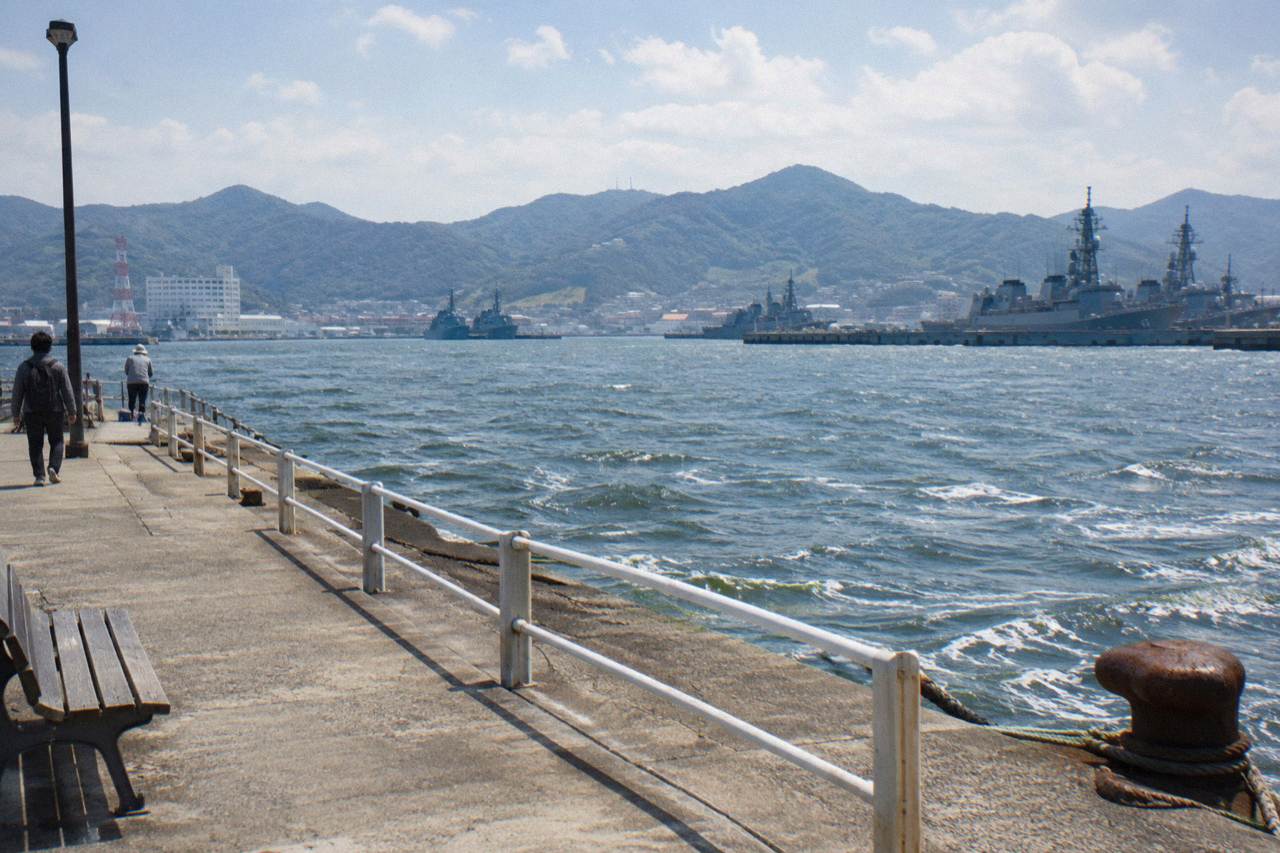
Kure sits on Hiroshima Bay about 35 minutes from Hiroshima Station by JR Kure Line rapid train for 510 yen one way. The Yamato Museum is 1,000 yen for adults, the JMSDF Kure Museum across the plaza is free, and the 35-minute Kure Bay ship tour costs 2,200 yen for adults.
For visitors based in Hiroshima it is one of the easiest half-day or full-day trips on the map, and every fare and opening hour below comes from the operators' own pages. It also answers a question the city itself cannot: what a working naval harbour looks like from the inside, on a boat, rather than from a museum window.
What Is Kure And Why Do Hiroshima Visitors Go There?
Reached from Hiroshima Station in about 35 minutes by rapid train, Kure draws visitors for one concentrated stretch of waterfront: the Yamato Museum, the free JMSDF Kure Museum beside it, and a 35-minute working-harbour cruise past moored warships. The museums sit within a short walk of Kure Station, so the whole day fits on foot. The battleship Yamato was built in Kure's docks, and the Yamato Museum's fourth-floor terrace looks out over the former building dock and the ships in Kure Port today. The Hiroshima Travel Guide covers the museum in detail on its Yamato Museum attraction page.
The town also has a food tradition born of the navy. Between the museums, the harbour cruise and a curry lunch, the day has a natural shape: trains out, two museums, a cruise, curry, trains back.
How Do You Get From Hiroshima To Kure?
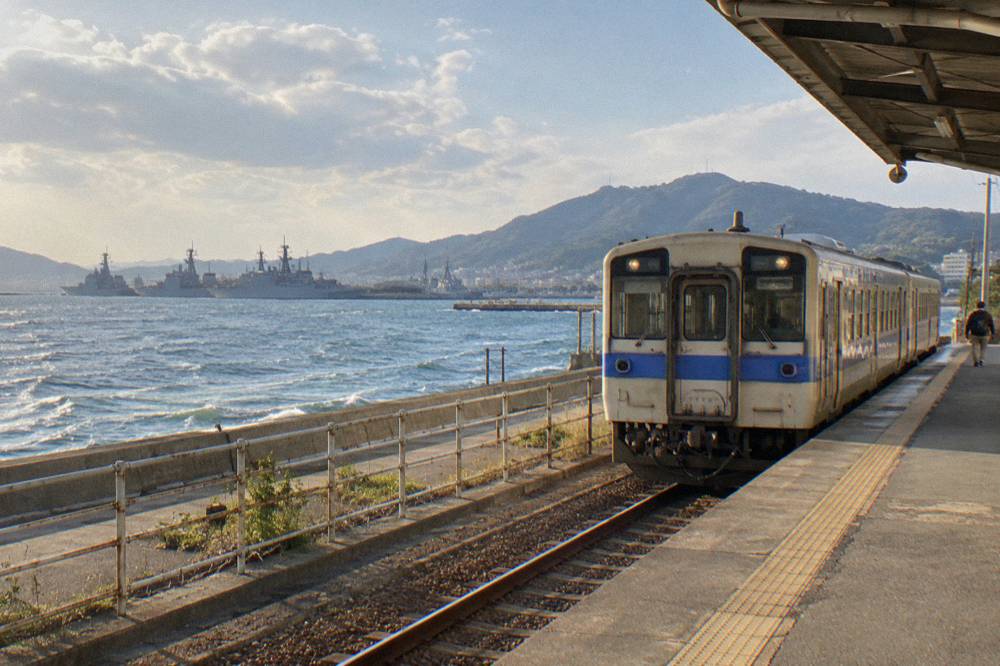
The JR Kure Line runs from Hiroshima Station to Kure Station in about 35 minutes on rapid trains for 510 yen one way, with local trains taking about 50 minutes, and departures leave Hiroshima roughly every 20 to 30 minutes across the day.
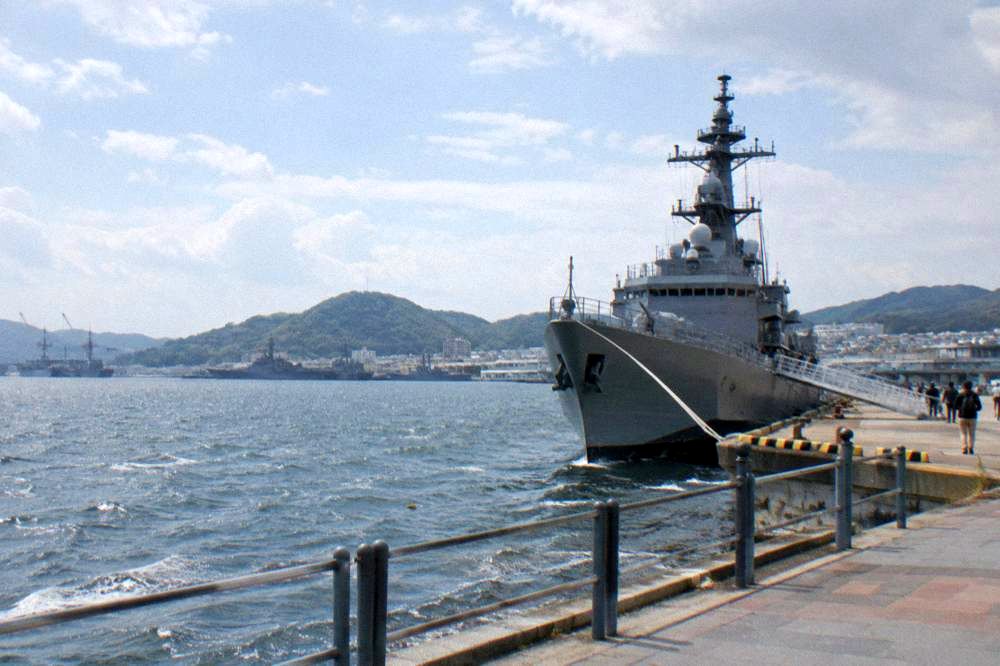
The practical detail that shapes the day is that everything at the far end is close together. Most museums and attractions in central Kure, including the Yamato Museum and the JMSDF Kure Museum, sit within a 5-minute walk of Kure Station, and the Kure Bay cruise terminal is on the same waterfront at 4-44 Takaramachi. A visitor who arrives, walks out of the station, and keeps the water on one side has essentially navigated the destination.
| Option | Time | Fare (one way) | Notes |
|---|---|---|---|
| JR Kure Line rapid | about 35 minutes | 510 yen | Departs about every 20 to 30 minutes |
| JR Kure Line local | about 50 minutes | 510 yen | Same fare, more stops |
| 1Day Kure Pass | n/a | 500 yen adults | Central area buses plus admission discounts at sites including the Yamato Museum |
The 1Day Kure Pass is worth a thought only if the day includes bus stops away from the waterfront; on a museum-and-cruise day on foot, the plain train return is the cheaper arithmetic. The pass does carry one sweetener for museum-goers, since it includes admission discounts at sites including the Yamato Museum, so a day that combines both should check the discount against the 500 yen pass price before buying.
What Does The Yamato Museum In Kure Cost And When Is It Open?
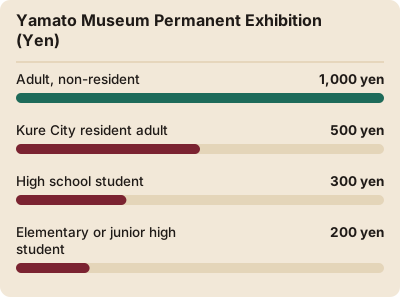
Yamato Museum permanent exhibition admission is 1,000 yen for non-resident adults, 300 yen for high school students and 200 yen for elementary and junior high students, with preschool children free, and the exhibition rooms are open 9:00 to 18:00 with last admission at 17:30. Kure City residents pay 500 yen with proof of address. The museum is closed on Tuesdays, or the following non-holiday day when Tuesday is a national holiday. The museum reopened on 23 April 2026 after renovations that began in February 2025, so the displays are newly rehung.
The closure rule has generous exceptions: the Yamato Museum is open daily during 29 April to 5 May, 21 July to 31 August, and 29 December to 3 January. Those windows matter for summer visitors, when a Tuesday closure would otherwise bite into the one free day of a Hiroshima stay. A typical visit runs 90 minutes to 2 hours, per the Kure travel pages that timed it, so a 9:00 arrival with a cruise booked for the early afternoon leaves comfortable room for lunch in between.
| Visitor | Permanent exhibition |
|---|---|
| Adult (college and up), non-resident | 1,000 yen |
| High school student | 300 yen |
| Elementary or junior high student | 200 yen |
| Preschool child | free |
| Kure City resident adult, with proof of address | 500 yen |
The centrepiece display is the 26.3-metre 1/10-scale Yamato model, and the fourth-floor viewing terrace looks out over the former dock where the real ship was built and the modern vessels in Kure Port beyond it.
Budget the rest of a Hiroshima stay against these rates, because the Yamato ticket costs more than the city's other headline sights. The Peace Memorial Museum charges adults 200 yen, high school students 100 yen, and nothing for junior high children and younger, with a 100 yen rate for visitors aged 65 and over showing a passport. Shukkeien garden costs 350 yen for adults and 150 yen for university students, and has been free for school students since April 14, 2025. One closure reshapes itineraries: the Hiroshima Castle keep closed permanently to visitors on March 22, 2026, leaving the exterior, with a history museum in the Sannomaru planned for 2027.
Hours elsewhere reward early starters. The Peace Memorial Museum opens at 7:30 year-round, closing at 18:00 from December to February, 19:00 from March to July and from September to November, and 20:00 in August, with hours to 21:00 on August 5 and 6; early and evening slots need an online reservation. It shuts on December 30 and 31 and in mid-February for an exhibit change. Shukkeien runs 9:00 to 18:00 from March 16 to September 15 and 9:00 to 17:00 the rest of the year, with last entry 30 minutes before closing.
Transport and island add-ons are easy to predict. Hiroden trams charge a flat 240 yen for adults and 120 yen for children on every line, including the Miyajima line. Miyajima adds a 100 yen visitor tax on arrival, with preschool children exempt, plus 300 yen adult admission at Itsukushima Shrine, 200 yen for high school students and 100 yen for younger children.
What Can You See At The Free JMSDF Kure Museum?
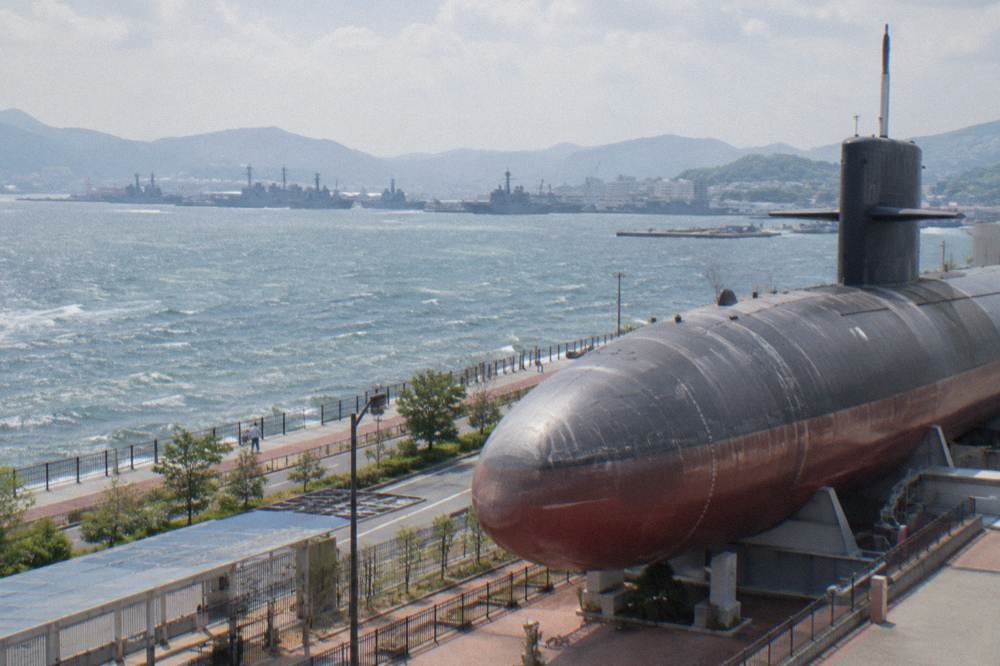
The JMSDF Kure Museum, also called the Iron Whale Museum, is directly across the plaza from the Yamato Museum at 5-32 Takaramachi, is open 10:00 to 18:00 with last admission at 17:30, is closed Tuesdays like its neighbour, and charges no admission at all. For a family day trip this is the value anchor: the second museum of the pair costs nothing, sits a few steps away, and covers the modern Japan Maritime Self-Defense Force rather than the wartime yard.
Because both museums share the Tuesday closure, a Tuesday arrival finds the whole waterfront shut; any other weekday works. Budget the two museums back to back, with the Yamato Museum first while legs are fresh, then the JMSDF museum, then the cruise terminal at 4-44 Takaramachi a short walk along the water. Families with children should note the interactive element: the helmsman's seat is the exhibit kids remember, and it costs nothing to climb into.
What Is The Kure Bay Ship Tour?
The Kure Bay Ship Tour is a roughly 35-minute cruise through the working naval harbour, departing from Kure Central Pier Terminal at 4-44 Takaramachi, with regular departures at 10:00, 11:00, 13:00 and 14:00 plus a 12:00 sailing on weekends and holidays, and fares of 2,200 yen for adults and 800 yen for elementary school students. The cruise is closed on Tuesdays and does not sail in bad weather. It is the one part of the day that puts the visitor on the water among the ships rather than looking at them from a terrace.
The timetable is built around a museum morning: an 11:00 or 13:00 sailing slots cleanly after a Yamato Museum visit of 90 minutes to 2 hours. Note the cruise closure days mirror the museums, so the same Tuesday rule governs the entire waterfront, and weather cancellations are a live possibility on any Hiroshima Bay day with wind or rain, in which case the two museums carry the day on their own. The 14:00 departure is the last regular sailing, so a slow lunch can push the cruise out of reach on a weekday.
| Kure waterfront site | Hours | Tuesday | Admission |
|---|---|---|---|
| Yamato Museum | 9:00 to 18:00, last entry 17:30 | Closed | 1,000 yen adult |
| JMSDF Kure Museum | 10:00 to 18:00, last entry 17:30 | Closed | free |
| Kure Bay Ship Tour | 10:00, 11:00, 13:00, 14:00 (plus 12:00 weekends and holidays) | Closed | 2,200 yen adult, 800 yen elementary |
Flat fares keep the tram leg simple. Since February 1, 2025, every Hiroden line has charged 240 yen for adults and 120 yen for children, a rate that applies on the Miyajima line as well, so the ride to Hiroshima Station costs the same from any starting point. Travelers arriving by air can reach the station's Shinkansen exit by limousine bus in about 50 minutes for 1,500 yen per adult and 750 yen per child from Stop 2, and the same fare covers a roughly 55-minute trip to the Hiroshima Bus Center from Stop 1, with IC cards accepted on both. The rail run from Shin-Osaka takes about 80 to 85 minutes on a Nozomi, and Tokyo to Hiroshima takes roughly 3 hours 45 minutes to 4 hours.
The climate record deserves a look before any date is circled. Rainfall builds through the Hiroshima spring, from 64.0 mm in February and 118.3 mm in March through 141.0 mm in April and 169.8 mm in May to 226.5 mm in June, though May does pair its rain with an average 210.8 hours of sunshine.
Where Do You Eat In Kure On A Day Trip From Hiroshima?
Eat curry. Kure's curry is the port's distinct entry in the Hiroshima food scene, and the curry houses sit on the route everyone already walks between station, museums and pier, within the same few blocks of Takaramachi. The 11:00 and 13:00 cruise sailings bracket a natural lunch window, so a curry lunch between the Yamato Museum and the afternoon cruise needs no advance planning.
The practical timing works in the visitor's favour. The cruise sailings at 11:00 and 13:00 bracket a natural lunch window, and the museum cluster keeps every option within the same few blocks of Takaramachi. There is no need to plan a restaurant in advance or travel for food; the curry houses sit on the route everyone already walks between station, museums and pier. For a taste of what the wider region puts on the table, the Hiroshima food scene is covered across this site's eating guides, and Kure's curry is the port's distinct entry in it.
For travellers who would rather fold the food into the transport, the all-inclusive Kure and Saijo option below covers a full day of eating and drinking on one ticket. Its sake brewery leg is covered separately on the Saijo sake district guide.
How Much Does A Kure Day Trip From Hiroshima Cost?
The adult spend at the destination itself is 1,000 yen for the Yamato Museum plus 2,200 yen for the harbour cruise, since the JMSDF museum is free, and the trains add 510 yen each way on the JR Kure Line, so the cruise is the single biggest line and skipping it cuts the day's cost sharply. Children pay less at every step, with elementary school fares of 200 yen into the museum and 800 yen on the boat, so a family day scales down well from the adult total.
| Item | Adult | High school | Elementary or junior high |
|---|---|---|---|
| JR rapid train, one way | 510 yen | fare applies | child fare applies |
| Yamato Museum | 1,000 yen | 300 yen | 200 yen |
| JMSDF Kure Museum | free | free | free |
| Kure Bay Ship Tour | 2,200 yen | fare applies | 800 yen |
Compare that with the wider day-trip budget picture on the Hiroshima trip cost guide. Against Miyajima, where the ferry and shrine stack small fees onto a free island, Kure is a two-big-ticket day: the museum and the cruise, with everything between them free or cheap. The 1Day Kure Pass at 500 yen can trim the museum entry further through its admission discounts, though only a bus-using day justifies it on its own.
Can You Combine Kure With Saijo Or Other Day Trips From Hiroshima?
Kure's museums close at 18:00 and Saijo's brewery street is a daytime place, so you need an early start or a guided all-inclusive itinerary. Onomichi, Iwakuni, and the Shimanami Kaido are separate days in practice, so fit Kure into a longer Hiroshima stay as a half-day museum visit or a full waterfront day with the cruise.
Those are separate days in practice; the distances and the museum hours make a same-day Kure plus Onomichi or Kure plus Iwakuni sprint unappealing. Fit Kure into a longer stay using the Hiroshima in 2 days or Hiroshima in 3 days plans, either as a half-day museum visit or a full waterfront day with the cruise.
| Day trip from Hiroshima | What it is known for | Fits with Kure in one day? |
|---|---|---|
| Saijo sake district | Brewery street, sake tastings | Yes, on a guided all-inclusive day |
| Onomichi | Temple walk, slope town, Shimanami start | Separate day |
| Iwakuni | Kintaikyo bridge | Separate day |
| Shimanami Kaido | Island cycling route | Separate day |
Should You Take A Guided Tour Instead Of Going To Kure Independently?
Going independently is straightforward because the trains run about every 20 to 30 minutes and the whole destination is a 5-minute walk from Kure Station, so a guided day is a comfort choice rather than a necessity; the case for a tour is the all-inclusive Kure and Saijo format, which bundles transport, tastings and a full-day itinerary that would otherwise need careful self-scheduling.
For visitors whose Hiroshima days include Miyajima and the Peace Park as well as Kure, the guided bus day below is the site's featured pick, pairing the two UNESCO sites on a single ticket. Read the full write-up on the UNESCO bus day tour page or Check availability. Private custom days that flex the itinerary are a middle path, set by the hour rather than fixed to a bus route.
What Does A Sensible Kure Day Look Like Hour By Hour?
A workable independent shape is a mid-morning rapid train from Hiroshima Station, the Yamato Museum from opening until lunch, a naval curry near the station, the free JMSDF museum after lunch, the 14:00 harbour cruise, and a late-afternoon train back, giving roughly eight hours door to door with every element on the timetables above. The museum opens at 9:00, the cruise's last regular sailing is 14:00, and both museums take last admission at 17:30, so the day has firm edges at both ends.
The one planning rule that overrides everything: not Tuesday. The Yamato Museum, the JMSDF museum and the cruise all close Tuesdays, which concentrates the entire destination's risk into a single weekday, with the museum's holiday-season exceptions the only relief. Check the weather too, since the cruise does not sail in bad weather and the day's centrepiece views from the museum terrace lose their ships in rain, the situation covered on the Hiroshima rainy day guide.
Common Questions About The Kure Day Trip From Hiroshima
How Do I Get From Hiroshima To Kure?
Take the JR Kure Line from Hiroshima Station. Rapid trains take about 35 minutes and locals about 50 minutes, both 510 yen one way, with departures roughly every 20 to 30 minutes.
How Much Is The Yamato Museum?
Permanent exhibition admission is 1,000 yen for non-resident adults, 300 yen for high school students, 200 yen for elementary and junior high students, and free for preschool children. Kure City residents pay 500 yen with proof of address.
What Is The JMSDF Kure Museum?
The JMSDF Kure Museum is a free naval museum across the plaza from the Yamato Museum. Its centerpiece is a submarine whose helmsman's seat visitors can sit in.
How Long Is The Kure Bay Ship Tour?
About 35 minutes, departing at 10:00, 11:00, 13:00 and 14:00, plus 12:00 on weekends and holidays, from Kure Central Pier Terminal. Adults pay 2,200 yen and elementary school students 800 yen.
Is Kure Closed On Tuesdays?
Effectively, yes. The Yamato Museum, the JMSDF Kure Museum and the Kure Bay ship tour all close on Tuesdays, except that the Yamato Museum opens daily during 29 April to 5 May, 21 July to 31 August and 29 December to 3 January.
What Food Is Kure Known For?
Naval curry. The city's local dish comes from a food tradition born of the navy, and a curry lunch slots in naturally between the museums and the harbour cruise.
Kure rewards a narrow, well-timed plan: one train line, one cluster of museums and a pier, one dish for lunch. The things to do in Hiroshima overview places the port among the city's own sights for anyone fitting it into a wider Hiroshima stay.