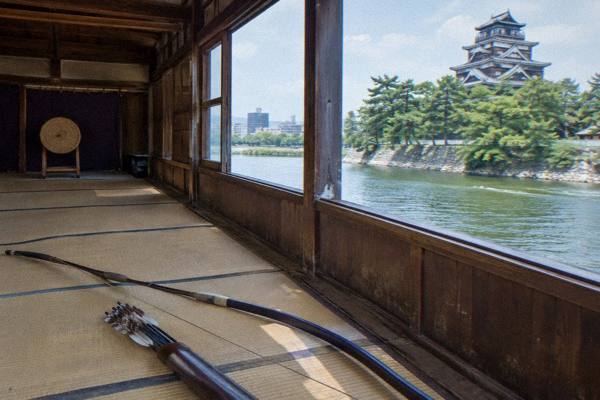
Hiroshima Castle: The Carp Castle And Its Moat
Hiroshima Castle, known as Rijo or Carp Castle, was begun by Mori Terumoto in 1589 on the Ota River delta. Its keep has been closed since 22 March 2026, but the grounds, moat, Ninomaru buildings and a weekend moat cruise remain open, and most of it costs nothing.
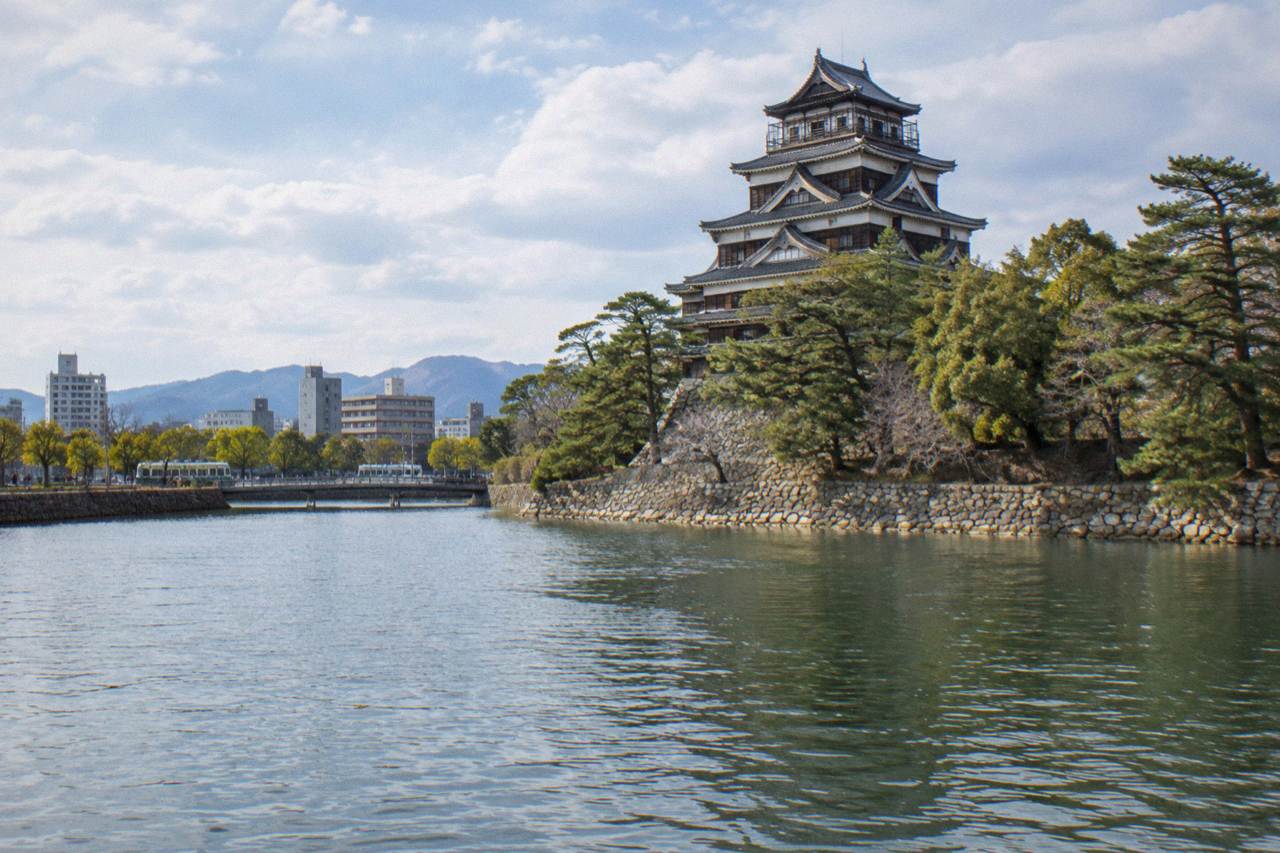
Hiroshima Castle is a flatland castle in central Hiroshima, begun in 1589 and nicknamed the Carp Castle. The keep closed permanently on 22 March 2026, but the grounds are open 24 hours free, the Ninomaru reconstructed buildings are free to enter, and a weekend moat boat cruise runs 20 minutes for 1,000 yen.
Hiroshima Castle stands on a delta at the mouth of the Ota River in the centre of Hiroshima, a flatland castle begun in 1589 by the warlord Mori Terumoto and nicknamed Rijo, the Carp Castle, after the carp that live in its moats. The stone walls and waterways that survive from the original structure still define the site today, and the castle's story now runs in two directions at once: the 1958 concrete keep, which served as a museum for 68 years, closed to the public on 22 March 2026, while the free grounds, the reconstructed Ninomaru buildings and a weekend boat cruise around the inner moat keep the castle very much part of a day in the city. It sits alongside the wider Hiroshima Travel Guide coverage of the Peace Memorial Park, Shukkeien and Miyajima.
What Is Hiroshima Castle And Why Is It Called The Carp Castle?
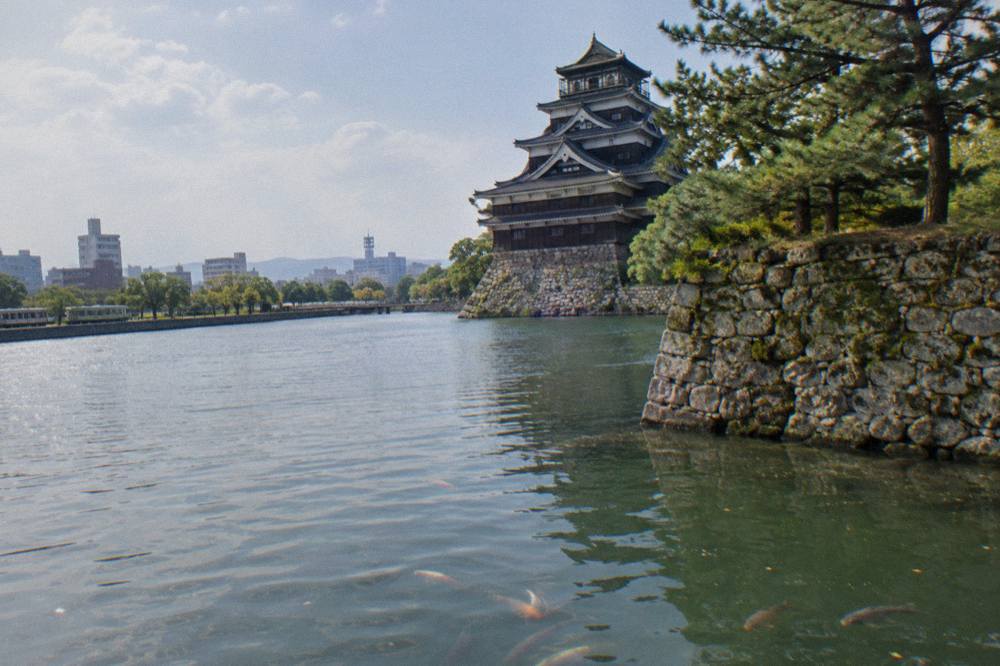
Hiroshima Castle is a flatland castle in Hiroshima, constructed starting in 1589 (Tensho 17) by Mori Terumoto on a delta at the mouth of the Ota River, and it is also known as Rijo, meaning Carp Castle, because of the carp in its moat. The castle's own site gives these facts on its history page, and the surviving stone walls and moats are from the original structure.
The keep was a 1958 concrete reconstruction, which the city says operated as a museum for 68 years until its closure in March 2026.
The Carp Castle name has a second life well beyond the moat. Hiroshima's professional baseball team took the carp as its symbol, a story traced in full on the Hiroshima Carp name explained page, and the team's home ground is covered separately at Mazda Stadium. The mascot even appears on manhole covers and car licence plates in Hiroshima Prefecture, so the fish in the moat connects the castle to the city's everyday streetscape.
Is The Hiroshima Castle Keep Open To Visitors?
The Hiroshima Castle keep (tenshu) closed to the public on 22 March 2026, due to concrete deterioration and ageing equipment, and the closure is permanent for the keep as a museum. Exterior viewing of the keep remains possible, and the Ninomaru restored buildings, the museum shop and the Sannomaru area all remain open, so the castle site itself is still fully visitable.
The city's own pages report the closure and the reason: the 1958 concrete structure had reached the end of its usable life as a museum. Detailed surveys for a restoration or reconstruction of the keep are expected to continue until around fiscal 2030, so no reopening of the keep should be assumed for a trip planned in the next few years. What replaces the keep's museum function is a new Sannomaru History Museum, planned to open on 1 June 2027, which the city says will inherit the collections from the closed keep.
For a visitor, the practical effect is simple. You walk the grounds, you view the keep from outside, you enter the reconstructed Ninomaru buildings free of charge, and you can ride the moat cruise boat on the days it runs. The fuller story of the closure, including the keep's 68 years as a museum, is on the Is Hiroshima Castle open? page.
What Are The Opening Hours And Admission Fees At Hiroshima Castle?
The Hiroshima Castle grounds and moat areas are accessible 24 hours with no entry fee, the exterior of the keep can be viewed at any time with no admission charge, and the Ninomaru reconstructed buildings are also free, open 9:00 to 17:30 from April to September and 9:00 to 16:30 from October to March, with last entry 30 minutes before closing in both seasons.
Free access is the castle's defining practical fact. The Ninomaru buildings close on 8 December and 29 to 31 December each year, and the museum shop inside the Ninomaru runs slightly shorter hours than the buildings themselves: 9:30 to 17:00 in the April to September season and 9:30 to 16:00 from October to March. Nothing in the published hours suggests the grounds themselves ever close, and the castle's own site states the 24-hour access plainly.
| Area | Hours | Admission |
|---|---|---|
| Grounds and moat areas | 24 hours | Free |
| Keep exterior viewing | Any time | Free |
| Ninomaru reconstructed buildings, April to September | 9:00 to 17:30, last entry 17:00 | Free |
| Ninomaru reconstructed buildings, October to March | 9:00 to 16:30, last entry 16:00 | Free |
| Ninomaru museum shop, April to September | 9:30 to 17:00 | Free entry |
| Ninomaru museum shop, October to March | 9:30 to 16:00 | Free entry |
The Ninomaru closures to note for planning are 8 December and the 29 to 31 December period. On all other days the buildings keep the seasonal schedule above, and because entry is free there is no ticketing step at all for the castle's indoor spaces, only the moat cruise carries a fare.
What Is The Hiroshima Castle Moat Cruise And What Does It Cost?
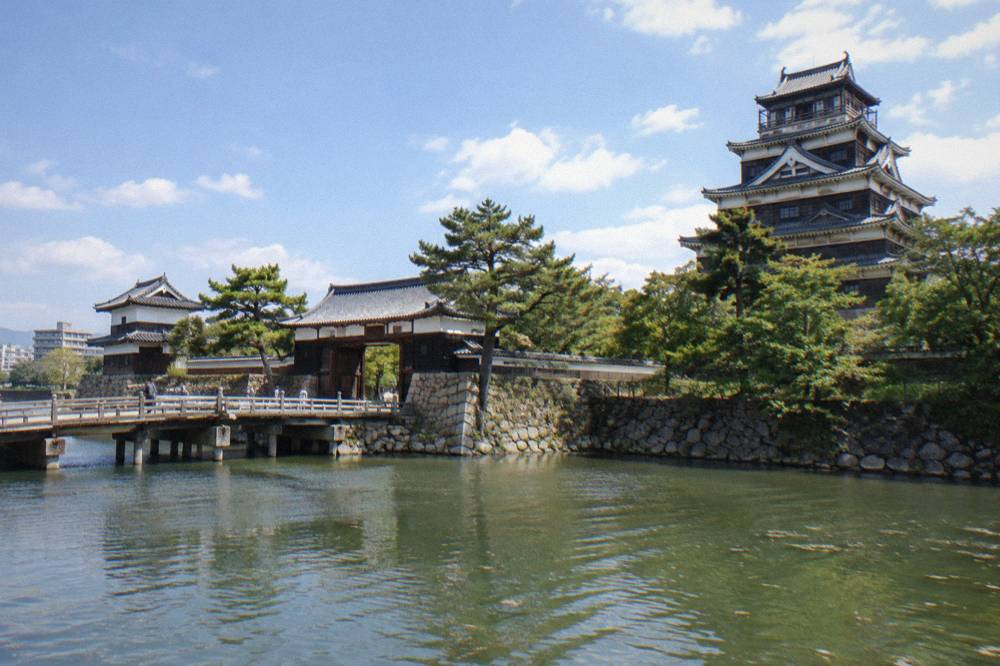
The Hiroshima Castle sightseeing boat operates on weekends, holidays, spring break and select other days, with departures between roughly 9:50 and 15:40, about 10 to 11 sailings daily, for approximately 20 minutes around the inner moat. The adult fare is 1,000 yen, rising to 1,300 yen in peak periods, elementary and junior high students pay 500 yen, or 600 yen in peak periods, and preschool children ride free, one per adult.
The cruise is the one part of the castle that carries a fare, and the peak-period pricing is the detail worth catching: the same trip costs 300 yen more per adult at peak times than at the standard fare. Additional preschool children beyond one per adult are charged at the child rate. The castle's own page gives the boarding point as the west side of the inner moat, a 2-minute walk north from the Sannomaru parking lot, and the route circles the inner moat past the surviving stone walls.
| Passenger | Standard fare | Peak-period fare |
|---|---|---|
| High school age and older | 1,000 yen | 1,300 yen |
| Elementary and junior high students | 500 yen | 600 yen |
| Preschool child, first per adult | Free | Free |
| Preschool child, additional | Child rate | Child rate |
Because the boat runs only on weekends, holidays, spring break and selected other days, a weekday visitor should treat the cruise as a bonus rather than the plan.
How Do You Get To Hiroshima Castle From Hiroshima Station?
From JR Hiroshima Station, the published access route is the Hiroden tram on lines 1, 2 or 6 to Kamiyacho-higashi or Kamiyacho-nishi stop, then a walk of approximately 15 minutes north to Hiroshima Castle. The Hiroden flat fare is 240 yen for adults and 120 yen for children on all lines, a fare set on 1 February 2025, and the tram has been reported to enter the Hiroshima Station building itself since August 2025.
For drivers, the castle's Sannomaru parking lot has 67 spaces at 210 yen per 30 minutes. The castle's listed address is 21-1 Motomachi, Naka-ku, Hiroshima City, and its listed phone number is 082-221-7512.
| Access option | Details | Fare |
|---|---|---|
| Hiroden tram, lines 1, 2 or 6 | Hiroshima Station to Kamiyacho-higashi or Kamiyacho-nishi, then about 15 minutes on foot north | 240 yen adult, 120 yen child |
| Sannomaru parking lot | 67 spaces at the castle | 210 yen per 30 minutes |
| Castle address | 21-1 Motomachi, Naka-ku, Hiroshima City | |
| Castle phone | 082-221-7512 |
What Can You Still See At Hiroshima Castle After The Keep Closed?
What remains visible at Hiroshima Castle is substantial: the keep's exterior, viewable at any time with no admission fee, the surviving stone walls and moats from the original 1589 structure, the reconstructed Ninomaru buildings entered free of charge, the museum shop, and the Sannomaru area, whose Phase 1 commercial facilities opened on 29 March 2025 according to the castle's own pages.
The Ninomaru reconstruction is the indoor highlight now that the keep is shut. The moats do quiet work as the castle's oldest feature: their stone walls predate everything else on the site, and the carp that gave the castle its name still live in the water that surrounds them.
The Sannomaru History Museum planned for 1 June 2027 will inherit the collections of the closed keep. Until then, the castle's offer is outdoor and Ninomaru-based, and it slots neatly into a free-things itinerary alongside the A-Bomb Dome, which is viewable from outside its fence at no charge, and the Peace Memorial Park, both covered on the Hiroshima Peace Memorial Park and Atomic Bomb Dome pages.
What Is The Sannomaru History Museum And When Does It Open?
The Sannomaru History Museum at Hiroshima Castle is scheduled to open on 1 June 2027, and the city says the new museum will inherit the collections from the closed 1958 keep, which had operated as a museum for 68 years. Detailed surveys on the future of the keep itself, whether restoration or reconstruction, are expected to continue until around fiscal 2030, so the museum date is the only firm one published.
Two projects are running in parallel and they should not be confused. The museum is a new building programme with a stated opening date, reported by the castle's own site as scheduled. The keep's future is a separate, slower question, with survey work the city expects to run for several more years. A visitor planning around either should treat the museum date as planned and the keep question as open.
This makes the years from 2027 an interesting moment for the castle: a purpose-built history museum inside the castle precinct, with the keep standing as an exterior presence above the moat. For now, the Ninomaru buildings carry the castle's interior story, and the free grounds carry everything else.
How Does Hiroshima Castle Fit Into A Day In Hiroshima?
Hiroshima Castle sits between Hiroshima Station and the Peace Memorial Park, reachable by the Hiroden tram at a flat 240 yen adult fare, with Shukkeien garden nearby at 350 yen for adults, 150 yen for university students and free for school students since 14 April 2025, making a castle-and-garden-and-park circuit the natural shape of a first day in the city.
Shukkeien keeps seasonal hours, 9:00 to 18:00 from 16 March to 15 September and 9:00 to 17:00 for the rest of the year, with last entry 30 minutes before closing. West of the centre, the Peace Memorial Museum charges 200 yen for adults, 100 yen for high school students and nothing for junior high and younger, with hours that shift by season. The full comparison of how to spend limited time is on the root things to do in Hiroshima page.
To add the island as a guided half day, book a small group Miyajima tour here.
| Central Hiroshima sight | Admission | Hours basis |
|---|---|---|
| Hiroshima Castle grounds | Free | 24 hours |
| Hiroshima Castle Ninomaru buildings | Free | Seasonal, 9:00 start |
| Hiroshima Castle moat cruise | 1,000 yen adult standard | Weekends, holidays, selected days |
| Shukkeien | 350 yen adult, 150 yen university, school students free | Seasonal, 9:00 start |
| Peace Memorial Museum | 200 yen adult, 100 yen high school, junior high and younger free | Seasonal, 7:30 start |
When Is The Best Time Of Year To Visit Hiroshima Castle?
Hiroshima's climate normals from the Japan Meteorological Agency for 1991-2020 show the month with the lowest average rain total is January at about 46.2 mm and the month with the highest is July at about 279.8 mm, so the castle's free 24-hour grounds are pleasant across a wide range of months and only the summer heat and the July rain total call for planning.
Because the castle's core experience, walking the grounds and moats, is outdoors and free, the season mainly changes what the walk feels like rather than whether it is possible. The Ninomaru buildings offer an indoor stop in any weather, and the moat cruise runs only on weekends and selected days regardless of season. The monthly figures below are the JMA station normals for Hiroshima, stated as averages.
| Month | Average daily high | Average daily low | Average rain |
|---|---|---|---|
| January | 9.9 °C | 2.0 °C | 46.2 mm |
| April | 19.8 °C | 10.1 °C | 141.0 mm |
| July | 30.9 °C | 24.1 °C | 279.8 mm |
| August | 32.8 °C | 25.1 °C | 131.4 mm |
| October | 23.7 °C | 14.9 °C | 109.2 mm |
| December | 12.1 °C | 4.0 °C | 54.0 mm |
Winters in Hiroshima are mild rather than harsh, and the year's rain total of about 1,572.2 mm is heavily weighted toward the June and July period.
Common Questions About Hiroshima Castle
Is Hiroshima Castle Open?
The grounds and moat areas are open 24 hours with no entry fee, and the Ninomaru reconstructed buildings are open daily except 8 December and 29 to 31 December. The keep itself closed permanently to visitors on 22 March 2026 and can be viewed from outside only. Full details are on the Is Hiroshima Castle open page.
How Much Does Hiroshima Castle Cost?
Entry to the castle grounds, the keep exterior viewing and the Ninomaru reconstructed buildings is free. The only paid element is the moat cruise, at 1,000 yen for adults standard, 1,300 yen in peak periods, and 500 yen for elementary and junior high students, 600 yen at peak.
Can You Go Inside Hiroshima Castle Keep?
No. The 1958 concrete keep closed to the public on 22 March 2026 due to concrete deterioration and ageing equipment, and surveys on its restoration or reconstruction are expected to continue until around fiscal 2030. A Sannomaru History Museum is planned to open on 1 June 2027 and will inherit the keep's collections.
Why Is Hiroshima Castle Called The Carp Castle?
The castle is also known as Rijo, meaning Carp Castle, because of the carp in its moat, as the castle's own site states. Hiroshima's baseball team later took the carp as its symbol for the same reason, a story covered on the Hiroshima Carp name page.
How Do I Get To Hiroshima Castle From Hiroshima Station?
Take the Hiroden tram on line 1, 2 or 6 from Hiroshima Station to Kamiyacho-higashi or Kamiyacho-nishi, then walk about 15 minutes north. The flat fare is 240 yen for adults and 120 yen for children on all Hiroden lines.
When Was Hiroshima Castle Built?
Construction started in 1589 (Tensho 17) under Mori Terumoto, as a typical flatland castle on a delta at the mouth of the Ota River. The surviving stone walls and moats date from the original structure, while the keep that closed in 2026 was a 1958 concrete reconstruction.
What Else Should You Know Before You Go?
Hiroshima Castle rewards a visit built around its free layers: the 24-hour grounds, the surviving 1589 stone walls and moats, and the free Ninomaru buildings, with the 1,000 yen moat cruise as the optional extra on weekends and holidays, and the biggest planning fact being that the keep has been closed since 22 March 2026 and the replacement Sannomaru History Museum is only planned for 1 June 2027.
Practical points worth holding onto: the Ninomaru buildings shut on 8 December and 29 to 31 December, the museum shop closes 30 minutes before the buildings in each season, and the moat cruise boards on the west side of the inner moat, a 2-minute walk north of the Sannomaru parking lot, which itself charges 210 yen per 30 minutes across its 67 spaces. From the Kamiyacho tram stops the castle is about a 15-minute walk north, at a flat Hiroden fare of 240 yen.
The Carp Castle name lives on in the city's baseball team, the surviving walls carry the 1589 origins, and the site now points forward to 2027. Whether you spend an hour on the free grounds or half a day adding Shukkeien and the Peace Memorial Park, Hiroshima Castle remains one of the city's central landmarks, and one of the few whose best features cost nothing at all.