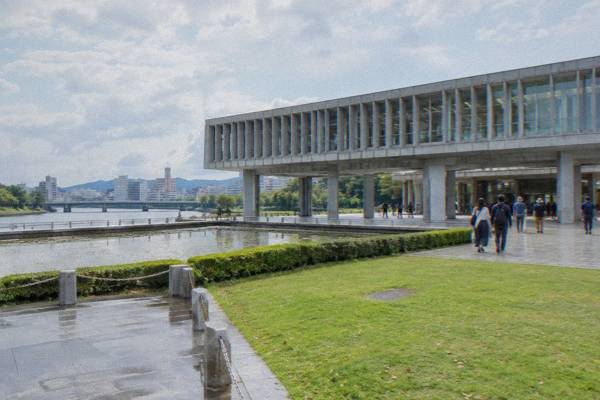
Atomic Bomb Dome: The Genbaku Dome Left Standing
The Atomic Bomb Dome in Hiroshima is preserved as a memorial and viewable from outside the fence with no admission fee.
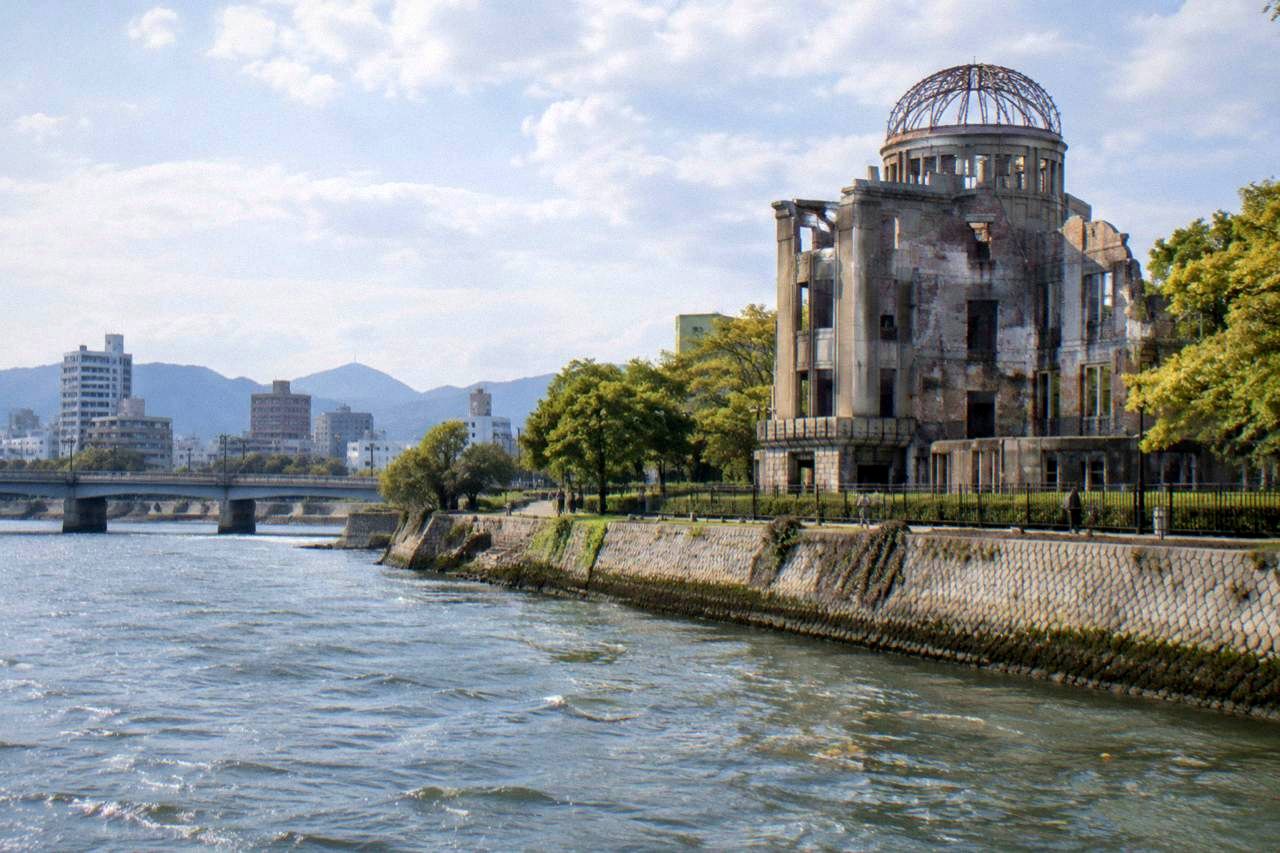
The Atomic Bomb Dome in Hiroshima is open to view 24 hours a day, 365 days a year, from outside its perimeter fence, with no admission fee. Take Hiroden Line 2 or Line 6 from Hiroshima Station to Genbaku Dome-mae, about 20 minutes.
The city of Hiroshima decided to preserve the dome in 1966, and it now stands inside the Peace Memorial Park area, viewable 24 hours a day, 365 days a year, from outside its perimeter fence, with no admission fee and no entry inside. This page on the Hiroshima Travel Guide sets out what the dome is, how to reach it by tram, what a visit involves, and how it fits with the Peace Memorial Museum and the wider park.
What Is The Atomic Bomb Dome In Hiroshima?
The Atomic Bomb Dome is the surviving skeleton of a building constructed in 1915 as the Hiroshima Prefectural Product Exhibition Hall and designed by Czech architect Jan Letzel, which stood close to where the atomic bomb detonated over Hiroshima on 6 August 1945. The city of Hiroshima decided to preserve the ruins in 1966, the first round of preservation work was completed in 1967, and five rounds of preservation work have been carried out to date.
The building's address is 1-10 Otemachi, Naka-ku, Hiroshima City, 730-0051.
The name Genbaku Dome is also used, and the site is listed under that name in Japanese sources. The ruin stands within Hiroshima Peace Memorial Park, a park of 122,100 square meters completed around August 1955 under the Hiroshima Peace Memorial City Construction Law, established on the former delta area near ground zero to commemorate victims and pray for lasting peace.
| Fact | Detail |
|---|---|
| Address | 1-10 Otemachi, Naka-ku, Hiroshima City, 730-0051 |
| Built | 1915, as the Hiroshima Prefectural Product Exhibition Hall |
| Architect | Jan Letzel, Czech architect |
| Preservation decision | 1966, by Hiroshima City |
| Preservation works | Five rounds to date, first completed 1967 |
| Viewing | Exterior only, 24 hours a day, 365 days a year |
| Admission | No fee |
Can You Go Inside The Atomic Bomb Dome?
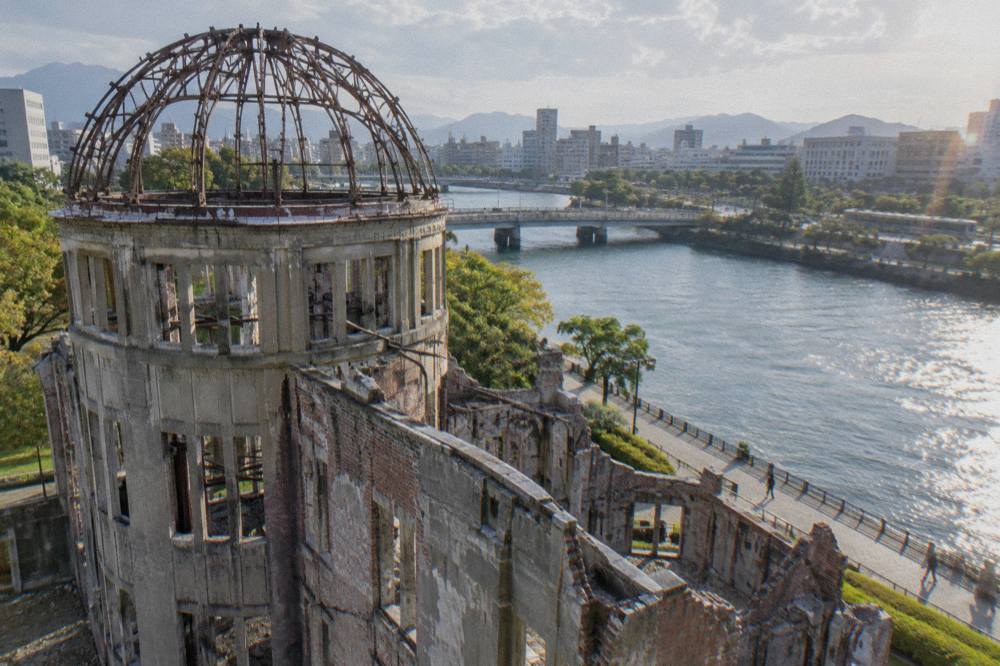
No, entry inside the Atomic Bomb Dome is not permitted: the city of Hiroshima's own page for the site states that the exterior is viewable 24 hours a day, 365 days a year, with no admission fee and no entry permitted inside the structure. Visitors view the dome only from outside its perimeter fence, and access beyond the fence is not allowed. Photography is permitted from outside the fence, and the site is viewed quietly and respectfully.
This is a permanent arrangement rather than a temporary closure. The ruin is a preserved memorial structure, not a museum building, and there are no interior spaces open to the public. The fence line marks the boundary of the preserved structure, and everything a visitor can see is visible from the outside.
A visit focused on the dome exterior typically takes 20 to 30 minutes, which pairs naturally with the monuments of the surrounding Peace Memorial Park, open 24 hours with no entry fee, and the Hiroshima Peace Memorial Museum a short walk away within the park.
How Do You Get To The Atomic Bomb Dome From Hiroshima Station?
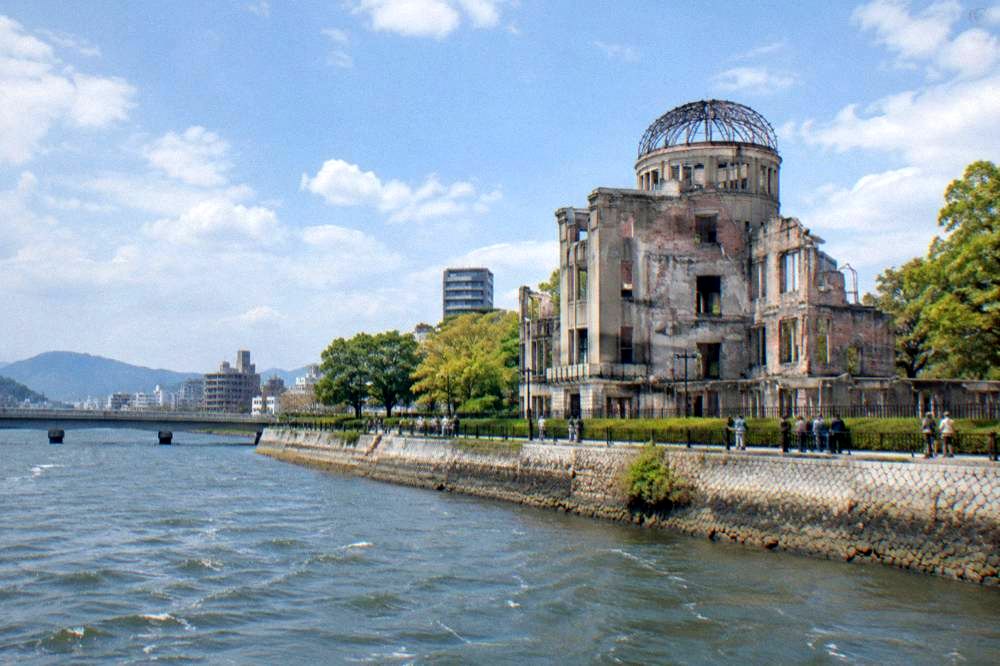
From JR Hiroshima Station South Exit, take the Hiroden streetcar Line 2, bound for Miyajimaguchi or Nishi-Hiroshima, or Line 6, bound for Eba, and alight at the Genbaku Dome-mae stop, a ride of about 20 minutes, after which the stop is directly beside the site and about a 1-minute walk reaches the viewing area.
The Hiroden network runs on a flat fare across all lines, including the Miyajima line: 240 yen for adults and 120 yen for children, in effect since 1 February 2025. The tram now enters the Hiroshima Station building itself, a change reported since 3 August 2025 following the opening of the new station building in March 2025.
There is no general parking at the Atomic Bomb Dome or Peace Memorial Park; the city directs drivers to nearby paid parking or tour bus facilities. The park and dome area are wheelchair accessible via paved paths and tram stops.
| Route | Line or service | Alight | Journey |
|---|---|---|---|
| Hiroshima Station South Exit to dome | Hiroden Line 2 (Miyajimaguchi or Nishi-Hiroshima) | Genbaku Dome-mae | About 20 minutes |
| Hiroshima Station South Exit to dome | Hiroden Line 6 (Eba) | Genbaku Dome-mae | About 20 minutes |
| Hiroden flat fare, all lines | Adult | 240 yen | |
| Hiroden flat fare, all lines | Child | 120 yen |
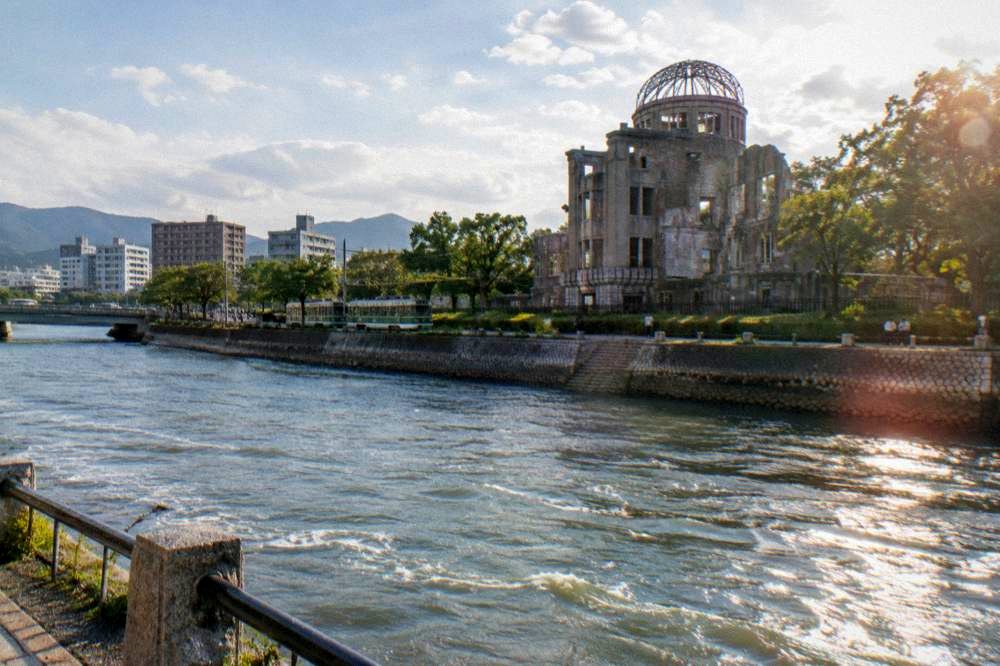
The dome itself is viewed from outside the surrounding fence and carries no admission fee. Because Hiroden Line 2 continues to Miyajimaguchi, the same streetcar that stops at Genbaku Dome-mae can anchor a combined day trip.
When Is The Atomic Bomb Dome Illuminated?
The Atomic Bomb Dome is illuminated nightly from sunset until around midnight, according to the site's visitor information, and because the exterior can be viewed 24 hours a day with no fee, an evening visit needs no ticket, no reservation and no particular time slot. The illumination gives the ruin a distinct character after dark, and the viewing rules do not change between day and night.
Daylight and evening visits differ mainly in what surrounds the dome. During the day, the Peace Memorial Museum anchors a visit to the area, and its own hours set the schedule. At night, the park remains open, and the museum does not.
| Season | Hiroshima Peace Memorial Museum hours |
|---|---|
| March to July | 7:30 to 19:00 |
| August | 7:30 to 20:00, to 21:00 on 5 and 6 August |
| September to November | 7:30 to 19:00 |
| December to February | 7:30 to 18:00 |
What Surrounds The Atomic Bomb Dome In The Peace Memorial Park?
Hiroshima Peace Memorial Park, a 122,100-square-meter park completed around August 1955, contains the Cenotaph for the A-bomb Victims, established on 6 August 1952 and designed by Kenzo Tange, and the Peace Flame, lit on 1 August 1964 and designed to burn until all nuclear weapons are abolished. The park is open 24 hours a day with free admission and no holidays.
The Peace Flame sits north of the Cenotaph. The National Hiroshima Peace Memorial Hall for the Atomic Bomb Victims, adjacent in the park, is free and opens 8:30 to 18:00 from March to July, with seasonal variations. Visitors typically allow 1 to 2 hours for the park monuments and memorials, separate from a museum visit.
The Children's Peace Monument stands within the same park, and Orizuru Tower sits close by beyond the park's edge. A walk through the park connects all of these with the dome at one end and the museum at the other.
| Park feature | Detail |
|---|---|
| Cenotaph for the A-bomb Victims | Established 6 August 1952, designed by Kenzo Tange |
| Peace Flame | Lit 1 August 1964, north of the Cenotaph, to burn until nuclear weapons are abolished |
| Park size | 122,100 square meters, completed around August 1955 |
| National Peace Memorial Hall | Free, 8:30 to 18:00 March to July, seasonal variations |
| Typical time for monuments | 1 to 2 hours |
How Much Time Should You Allow For The Atomic Bomb Dome?
A visit focused on the Atomic Bomb Dome exterior takes 20 to 30 minutes, according to the site's visitor guidance, and the surrounding Peace Memorial Park monuments and memorials typically take 1 to 2 hours on top of that, while the Hiroshima Peace Memorial Museum is a separate visit with its own admission and hours. Together these three layers, dome, park and museum, form the core of a visit to this part of Hiroshima.
The timing works because the three components run on different clocks. The museum opens at 7:30 every morning and closes between 18:00 and 21:00 depending on the season, which makes it the fixed point around which a day is planned. In practice this means a morning arrival by tram can carry a visitor through the dome, the riverside monuments and the museum before mid-afternoon, while a late arrival still leaves the dome and the whole park open after dark under the nightly illumination.
Visitors who want the history explained rather than read can join a guided walk. The Hiroshima Peace Park, Museum and Atomic Bomb Dome group tour covers all three in one outing, and you can Check availability before committing. For a fuller plan across the city, see things to do in Hiroshima.
How Has The Atomic Bomb Dome Been Preserved?
Hiroshima City decided to preserve the dome in 1966, the first round of preservation work was completed in 1967, and five rounds of preservation work have been conducted to date, according to the city's own history pages for the site.
The preservation decision was a civic one. The building had been the Hiroshima Prefectural Product Exhibition Hall from 1915, designed by Jan Letzel, and after the bombing its ruined frame remained standing near the hypocentre. The city's decision to keep it, taken more than twenty years after the war, turned a ruin into a deliberately maintained memorial.
The dome is today part of the same memorial landscape as the park's monuments and the museum's exhibitions. The museum's East Building presents the history: the second floor holds the Hiroshima History section, and the third floor holds sections on Hiroshima before the bombing, a lost way of life, the dangers of nuclear weapons, and video testimony from A-bomb survivors. The building's first floor holds the ticket counter, the audio guide rental desk, a special exhibition room, a video theater and a visitor's lounge, so the museum visit begins and ends on a floor built around visitor services.
| Preservation milestone | Year |
|---|---|
| Building completed as Product Exhibition Hall | 1915 |
| City decision to preserve the ruin | 1966 |
| First preservation work completed | 1967 |
| Preservation work rounds to date | 5 |
How Does The Atomic Bomb Dome Fit Into A Hiroshima Day?
The standard pattern is to visit the Atomic Bomb Dome and the memorials in one block, either in the morning from 7:30 when the museum opens, or in the late afternoon with the dome illuminated after sunset. The dome and park cost nothing, and the museum costs 200 yen for an adult. The Hiroden tram links the block to Hiroshima Station in about 20 minutes.
From there the day branches. For visitors pairing the city with the island, the Itsukushima Shrine and Mount Misen are the island's anchors, and the tide governs the Great Torii, which can be walked to at low tide and appears to float at high tide. The live tide block on this site carries the current Hiroshima Bay predictions.
What Should You Know About Visiting Respectfully?
The dome is viewed quietly and respectfully, with photography permitted from outside the fence, and the park around it is a memorial site established to commemorate victims and pray for lasting peace, as the city's own description of the park states. There is no admission fee, no ticket and no dress code attached to the dome itself, but the character of the place asks for the same conduct as any memorial.
The bombing history on this site is presented neutrally and from primary sources: the bomb detonated approximately 600 meters above the city at 8:15 a.m. on 6 August 1945, and the museum's exhibitions present the city before and after, the dangers of nuclear weapons, and survivor testimony. For a comparison of the two bombs used in 1945, see which bomb was bigger, Hiroshima or Nagasaki.
The annual Peace Memorial Ceremony takes place in Peace Memorial Park on 6 August from 8:00 to 8:50, with about 7,000 seats plus about 2,200 indoor seats at the International Conference Center Hiroshima. The museum extends its August hours that week, opening until 21:00 on 5 and 6 August. Early morning entry to the museum between 7:30 and 8:30 during those days works the same way as the rest of the year: it needs an online reservation, so a ceremony-day plan should account for that before setting out.
Common Questions About The Atomic Bomb Dome
Can You Go Inside The Atomic Bomb Dome?
No. The city of Hiroshima states that no entry is permitted inside the structure and that visitors view the dome only from outside its perimeter fence. The exterior is viewable 24 hours a day, 365 days a year, with no admission fee, and a visit focused on the exterior takes 20 to 30 minutes.
How Much Does It Cost To See The Atomic Bomb Dome?
Nothing. The Hiroshima Peace Memorial Museum nearby charges 200 yen for adults, 100 yen for high school students, and admits junior high school students and younger free.
Which Tram Stop Serves The Atomic Bomb Dome?
Genbaku Dome-mae, reached on Hiroden Line 2, bound for Miyajimaguchi or Nishi-Hiroshima, or Line 6, bound for Eba, in about 20 minutes from Hiroshima Station South Exit. The stop is directly beside the site, about a 1-minute walk from the viewing area.
Is The Atomic Bomb Dome Lit At Night?
Yes. The dome is illuminated nightly from sunset until around midnight, and an evening visit requires no ticket or reservation.
How Long Should A Visit Take?
About 20 to 30 minutes for the dome exterior, plus 1 to 2 hours for the park monuments and memorials. The Peace Memorial Museum is a separate visit with its own seasonal hours, opening at 7:30 every morning and closing between 18:00 and 21:00.
Is The Atomic Bomb Dome Part Of The Peace Memorial Park?
The dome stands within the Peace Memorial Park area on the former delta near ground zero. The park was completed around August 1955, covers 122,100 square meters, and holds the Cenotaph for the A-bomb Victims, the Peace Flame and the National Hiroshima Peace Memorial Hall alongside the dome and the museum.
The Atomic Bomb Dome is the fixed point of any visit to Hiroshima: free to view, open around the clock, and connected to the station, the park and the museum by a short tram ride and a riverside walk.