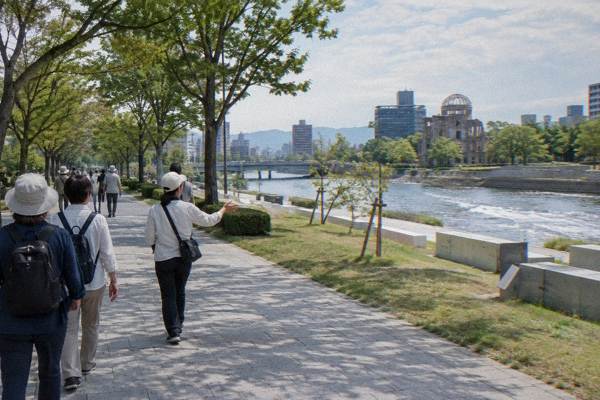
Children's Peace Monument: The Paper Cranes
The Children's Peace Monument depicts a bronze figure of a girl holding a golden paper crane above a pedestal and is visited year round.
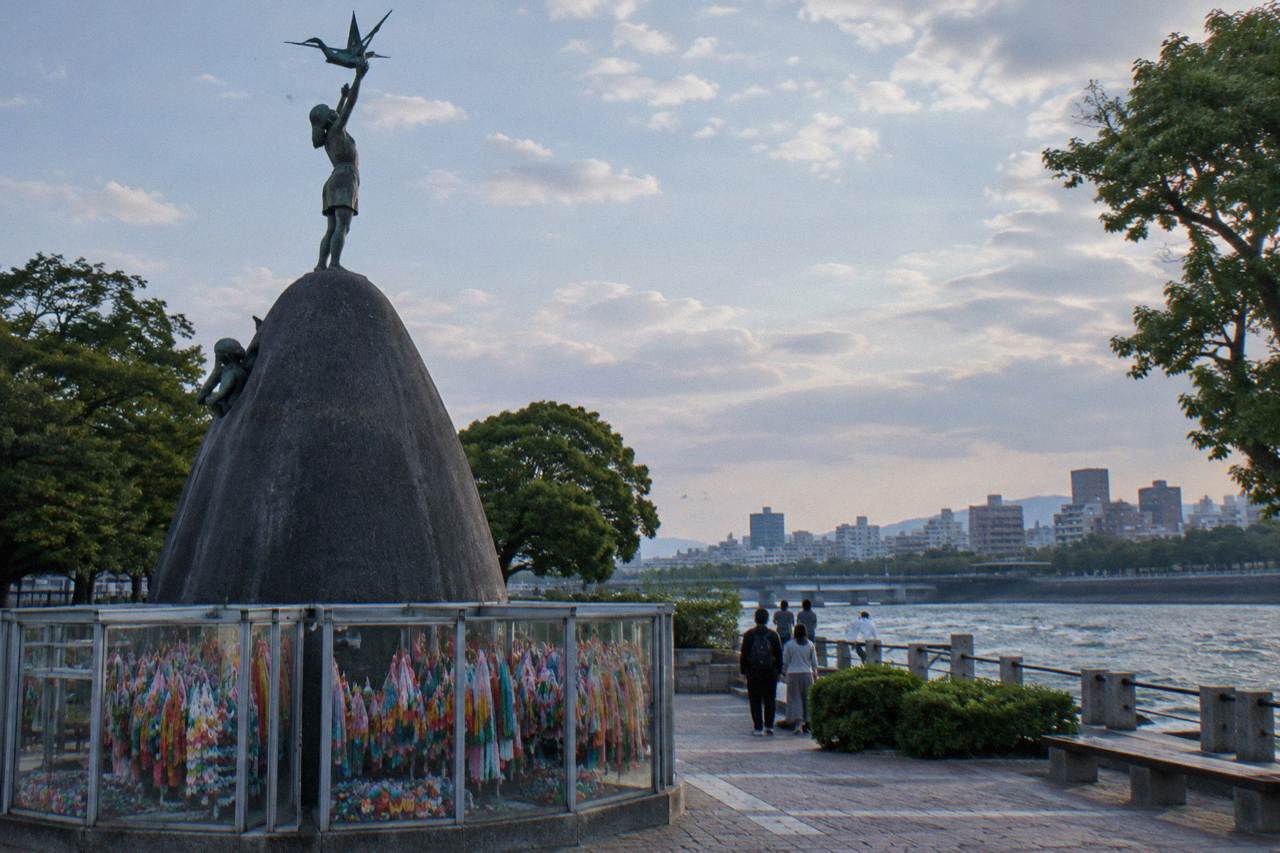
The Children's Peace Monument is in Hiroshima Peace Memorial Park, unveiled on 5 May 1958, free to visit, and honors the roughly 10 million paper cranes offered there each year.
This page covers the monument's story, its design, its hours, how to reach it by tram, and what to see around it inside the park. For the wider picture, start with the things to do in Hiroshima overview and the Hiroshima Peace Memorial Park guide.
What Is The Children's Peace Monument In Hiroshima?
The Children's Peace Monument was unveiled on 5 May 1958. It stands 9 meters tall, with a 3-meter bronze statue of a girl holding a golden paper crane atop a 6-meter pedestal, and it is open all year round with no admission fee.
The monument was designed by Kazuo Kikuchi, then a professor at Tokyo University of the Arts. Side statues of a boy and a girl symbolize a bright future and hope, and the inscription on the monument reads: "This is our cry. This is our prayer. For building peace in this world."Visitors come to it on foot as part of a circuit of the park's memorials, which also include the Cenotaph for the A-bomb Victims and the Peace Flame.
Who Was Sadako Sasaki And Why Paper Cranes?
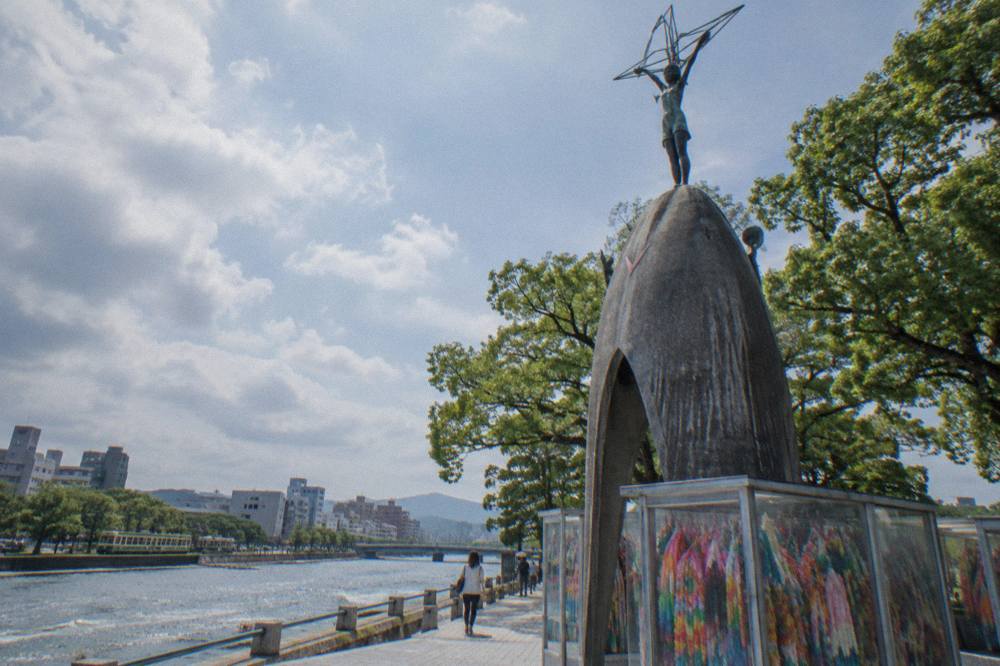
Sadako Sasaki survived the atomic bombing at two years old and died on 25 October 1955, at age 12, after developing leukemia linked to radiation exposure. The bronze figure at the top of the monument shows her holding a golden paper crane, and roughly 10 million paper cranes are now offered at the monument each year.
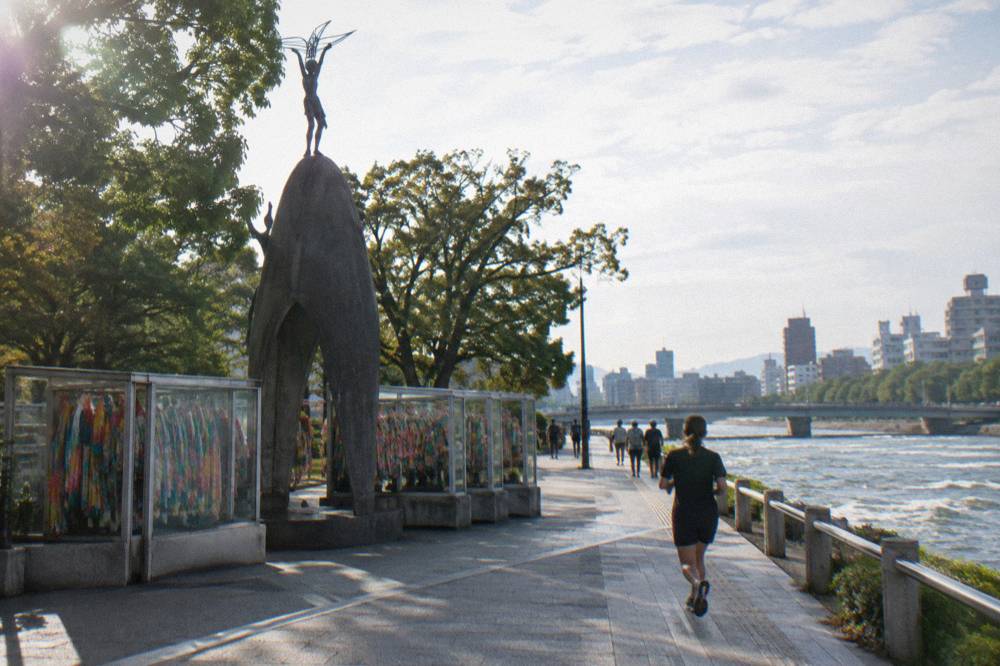
The story of the cranes travels well beyond Hiroshima. Within the park, the monument is the point where the individual story of one child meets the wider commemoration carried by the Hiroshima Peace Memorial Museum and the Atomic Bomb Dome.
What Do The Design And The Inscription Mean?
The monument pairs a 3-meter bronze girl holding a golden crane with side statues of a boy and a girl that symbolize hope and a bright future, and its inscription reads "This is our cry. This is our prayer. For building peace in this world."
Kazuo Kikuchi's design places the single child with the crane at the top, lifted above the viewer, while the paired figures below turn the memorial from one girl's story into a statement about all children.
| Element | Figure or text |
|---|---|
| Location | 1 Nakajima-cho, Naka-ku, Hiroshima City, inside Peace Memorial Park |
| Unveiled | 5 May 1958 |
| Total height | 9 meters |
| Pedestal height | 6 meters |
| Bronze statue height | 3 meters |
| Designer | Kazuo Kikuchi, then a professor at Tokyo University of the Arts |
| Cranes offered per year | Approximately 10 million |
| Admission | Free, outdoor park feature |
| Opening | All year round, park open 24 hours |
What Are The Opening Hours And Admission?
The Children's Peace Monument is free to visit and open all year round, because it is an outdoor feature of Hiroshima Peace Memorial Park, which is open 24 hours a day with no admission fee and no holidays. The paid indoor site in the park, the Hiroshima Peace Memorial Museum, charges 200 yen for adults and closes only on 30 and 31 December and for several days in mid-February.
For visitors planning a visit around the monument itself, no ticket, reservation or time slot exists. The practical limits come from daylight and from the opening hours of the indoor sites in and around the park. The museum next to the park's main axis sets its hours by season, and its extended early-morning and late-evening slots require an online reservation, so a visit that includes the museum should be timed against the table below. Whether a ticket is needed at all for the wider park area is answered in full at do you need tickets for Hiroshima Peace Memorial Park.
| Season | Museum opening hours |
|---|---|
| March to July | 7:30 to 19:00 |
| August | 7:30 to 20:00, until 21:00 on 5 and 6 August |
| September to November | 7:30 to 19:00 |
| December to February | 7:30 to 18:00 |
The museum's closure days are 30 and 31 December and a mid-February period for exhibition change, with a temporary closure scheduled for 15 to 20 February 2027. The National Hiroshima Peace Memorial Hall for the Atomic Bomb Victims, adjacent in the park, is free and opens 8:30 to 18:00 in the March to July season, with seasonal variations. Admission prices for the museum follow.
| Visitor category | Museum admission |
|---|---|
| Adults, college students and up | 200 yen |
| Groups of 30 or more adults | 160 yen |
| High school students | 100 yen |
| High school groups of 20 or more | Free |
| Junior high school students and younger | Free |
| Visitors 65 and older with passport | 100 yen |
How Do You Get To The Children's Peace Monument From Hiroshima Station?
From JR Hiroshima Station, the Hiroden tram on Line 2 or Line 6 reaches the Genbaku Dome-mae stop in about 15 to 20 minutes, and the Children's Peace Monument is a short walk inside the park from there. The flat Hiroden fare is 240 yen for adults and 120 yen for children on every line, including the Miyajima line, since February 2025.
The monument sits northwest of the park's Rest House, in the same flat river delta as the dome, the cenotaph and the museum, so one stop serves the whole circuit. The park grounds around the monument area are mostly flat and wheelchair accessible. Full route detail for the journey from the station, including the stop order, is covered at how do I get from Hiroshima Station to the Peace Park.
| Route | Detail |
|---|---|
| Hiroden Line 2 | Hiroshima Station to Genbaku Dome-mae, about 15 to 20 minutes |
| Hiroden Line 6 | Hiroshima Station to Genbaku Dome-mae, about 15 to 20 minutes |
| Adult fare | 240 yen flat, all lines |
| Child fare | 120 yen flat, all lines |
| From the stop | The monument is inside the park, northwest of the Rest House |
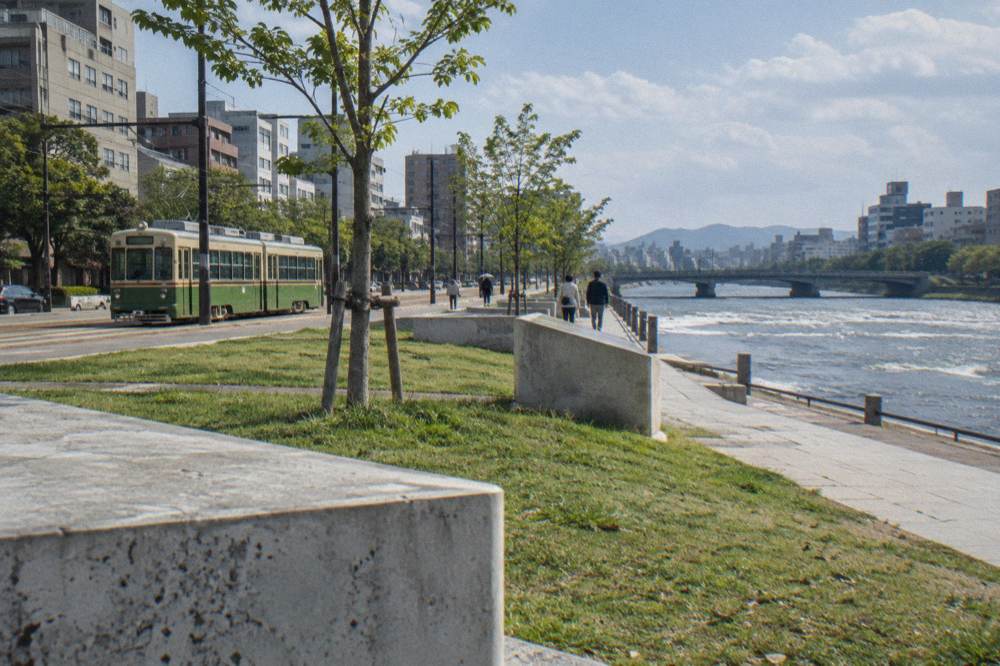
The Hiroden network also connects the park to the city's other districts, and the tram now serves the station building itself, entering its 2nd floor since August 2025. Visitors combining the park with Miyajima can stay on the tram network toward Miyajimaguchi, where the JR ferry crosses to the island in about 10 minutes. More of these guides are collected on Hiroshima Travel Guide.
Most long-distance visitors reach the monument through Hiroshima Station, and the journey to the station itself is quick from the major gateways. The Nozomi Shinkansen covers the run from Shin-Osaka in about 80 to 85 minutes, while the trip from Tokyo takes roughly 3 hours 45 minutes to 4 hours. Travelers flying into Hiroshima Airport can take the limousine bus from Bus Stop 2 to the Shinkansen exit of the station in about 45 to 50 minutes; the adult fare is 1,500 yen and the child fare 750 yen. The same service runs from Stop 1 to the Hiroshima Bus Center in about 55 minutes at identical fares, and IC cards are accepted on it, so no paper ticket needs to be arranged in advance. The Shinkansen exit sits inside the station building that opened in March 2025, so travelers arriving by bullet train or airport bus find the tram connection without leaving the complex.
Once off the tram, timing shapes the visit, because the Peace Memorial Museum shifts its hours with the seasons. Doors are open 7:30 to 19:00 from March through July and again from September through November, stretch to 20:00 in August and to 21:00 on 5 and 6 August, and close at 18:00 from December through February. The museum shuts entirely on 30 and 31 December and for an exhibit change in mid-February. Admission is 200 yen for adults, meaning college students and above, 100 yen for high school students, and free for junior high school and younger, with a 100 yen rate for visitors 65 and older who show a passport. The early 7:30 to 8:30 entry slot and the evening slots require an online reservation, worth arranging for anyone hoping to dodge the heaviest flow. That flow is substantial, with a reported 2,580,926 visitors in fiscal 2025, the third straight record, including 945,618 from overseas. The A-Bomb Dome can be viewed from outside its fence at no charge. On 6 August 2026 the Peace Memorial Ceremony ran from 8:00 to 8:50 in the park, which offered about 7,000 seats plus about 2,200 indoor seats at the International Conference Center, so an anniversary visit calls for an early start.
What Should You Know About Behavior At The Monument?
The Children's Peace Monument is a memorial, and the behavior expected there is the quiet, respectful conduct that the city's peace sites ask for everywhere: no loud behavior, unhurried movement, and respectful photography. The fuller set of expectations for the park and the museum, including photography, is set out in the Hiroshima etiquette at the Peace Park guide.
What Else Stands Around The Monument In The Park?
Around the Children's Peace Monument, Hiroshima Peace Memorial Park holds the Cenotaph for the A-bomb Victims from 1952, the Peace Flame lit in August 1964, the Hiroshima Peace Memorial Museum, and the National Peace Memorial Hall, all within one flat 122,100 square meter site.
The cenotaph, formally the Hiroshima Peace City Memorial Monument, was established on 6 August 1952 and designed by Kenzo Tange. The Peace Flame, north of the cenotaph, was lit on 1 August 1964 and is designed to burn until all nuclear weapons are abolished. The park itself was completed around August 1955 under the Hiroshima Peace Memorial City Construction Law, on the former delta area near ground zero. A typical circuit of the outdoor memorials takes one to two hours.
| Site in or beside the park | Key facts |
|---|---|
| Cenotaph for the A-bomb Victims | Established 6 August 1952, designed by Kenzo Tange |
| Peace Flame | Lit 1 August 1964, north of the cenotaph |
| Hiroshima Peace Memorial Museum | Adults 200 yen, hours by season |
| National Peace Memorial Hall | Free, adjacent in the park |
| Atomic Bomb Dome | Across the Motoyasu River, viewable from outside the fence |
| Park itself | 122,100 square meters, open 24 hours, free |
The wider area around the park, including the north bank of the Motoyasu River and the streets east toward Hacchobori, is covered in the Peace Park and Nakajima area guide. For fitting the park into a single day alongside the castle and Shukkeien, see Hiroshima in one day, and for quieter corners of the city, the Hiroshima hidden gems itinerary.
When Was The Monument Built And By Whom?
The 1958 unveiling predates the Peace Flame by six years and follows the cenotaph by six. Its message, carried by the inscription, has remained unchanged since 1958, and the roughly 10 million cranes that arrive each year form the living part of the memorial rather than the bronze.
The monument was designed by Kazuo Kikuchi, then a professor at Tokyo University of the Arts, and was completed and unveiled on 5 May 1958.
How Does The Monument Fit Into 6 August In Hiroshima?
The Peace Memorial Ceremony is held in the park on 6 August; in 2026 it ran from 8:00 to 8:50, with about 7,000 seats in the main venue and about 2,200 indoor seats at the International Conference Center Hiroshima for a simultaneous broadcast. Entry to the ceremony venue begins at 6:00 am, and no tickets or advance registration are required.
Park entry is restricted between 5:00 and 9:00 am on the day, and no parking is available at the park, so the Hiroden tram is the practical route. The full day is covered in the August 6 peace ceremony guide.
Can A Guided Walk Include The Monument?
The Children's Peace Monument stands in Hiroshima's Peace Memorial Park alongside the cenotaph, the Peace Flame, the museum and the Atomic Bomb Dome. A guided walk gives the historical context for each memorial in sequence, and independent visitors can cover the same ground on foot at no cost.
One established option is the Walking through History: Hiroshima's path to peace walk, a peace walk in the peace-and-history-walks category. The related Hiroshima Peace Park walking tour page describes what a guided circuit of the park covers.
Common Questions About The Children's Peace Monument
Is The Children's Peace Monument Free To Visit?
Yes. The monument is an outdoor feature of Hiroshima Peace Memorial Park, which is open 24 hours a day with no admission fee and no holidays. Only the indoor sites in the park, chiefly the Hiroshima Peace Memorial Museum at 200 yen for adults, charge admission.
Where Is The Children's Peace Monument Located?
It stands in Hiroshima Peace Memorial Park at 1 Nakajima-cho, Naka-ku, Hiroshima City, northwest of the park's Rest House. The nearest Hiroden stop is Genbaku Dome-mae, about 15 to 20 minutes from Hiroshima Station on Line 2 or Line 6.
Who Designed The Children's Peace Monument?
The monument was designed by Kazuo Kikuchi, then a professor at Tokyo University of the Arts. The central figure is a 3-meter bronze statue of a girl holding a golden paper crane atop a 6-meter pedestal, with side statues of a boy and a girl symbolizing hope and a bright future.
Is The Monument Open All Year Round?
Yes. The monument itself is open all year round. The park around it is open 24 hours a day with no holidays.