Hacchobori And Kamiyacho: Downtown Hiroshima
Hacchobori and Kamiyacho form the downtown shopping and business heart of Hiroshima, where the Hiroden streetcars cross, department stores cluster and the Shareo underground mall links everything together.
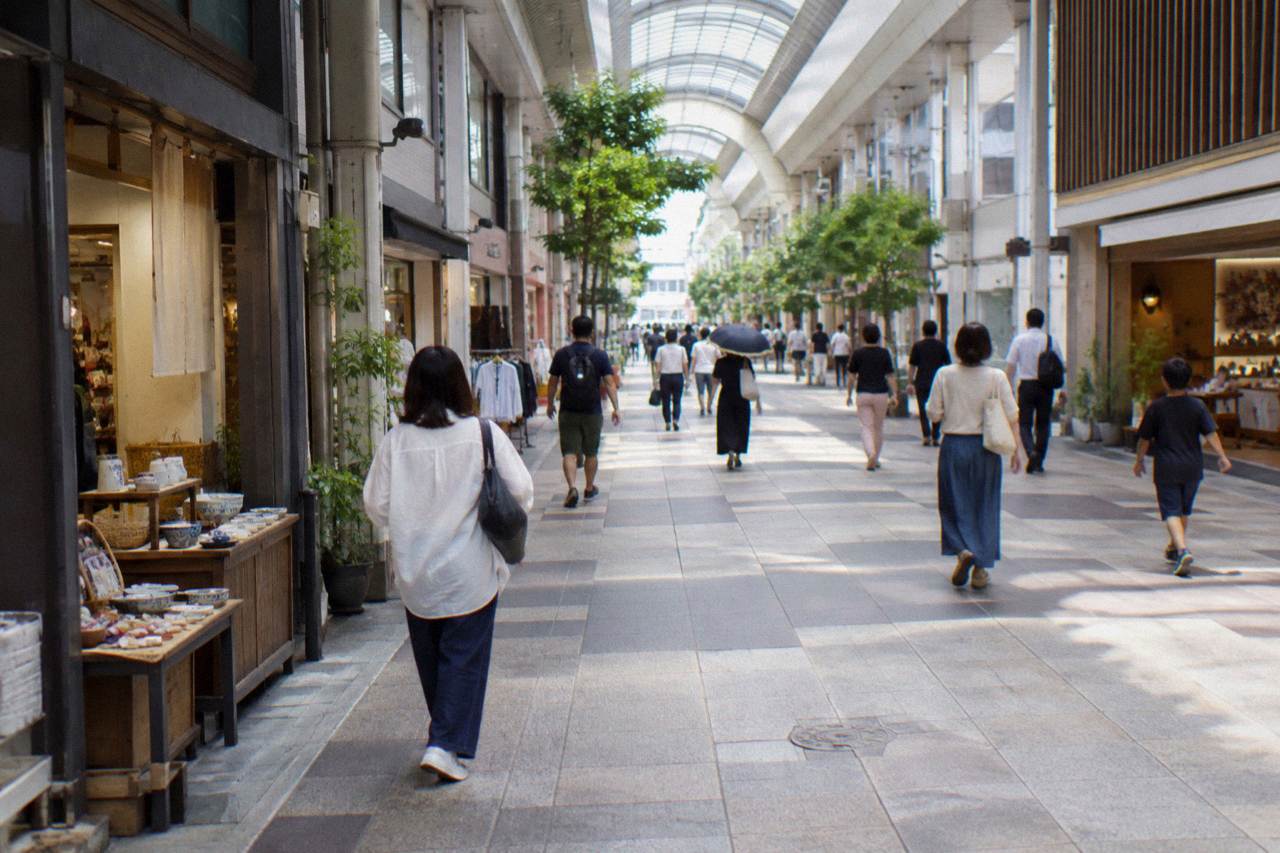
Hacchobori and Kamiyacho are Hiroshima's downtown core, one streetcar stop apart on the Hiroden network, about 15 minutes from Hiroshima Station, with department stores, the covered Hondori arcade and the Shareo underground mall all linked together.
The two areas sit side by side on the Hiroden streetcar network, Hacchobori being one stop east of Kamiyacho, and between them they hold the department stores, the covered Hondori shopping arcade and the Shareo underground mall that anchor everyday city life. The Hiroshima Travel Guide covers this district alongside the Peace Park, the castle and Miyajima because downtown is where nearly every visitor ends up between sights, whether for lunch, shopping or an evening walk.
What Are Hacchobori And Kamiyacho In Hiroshima?
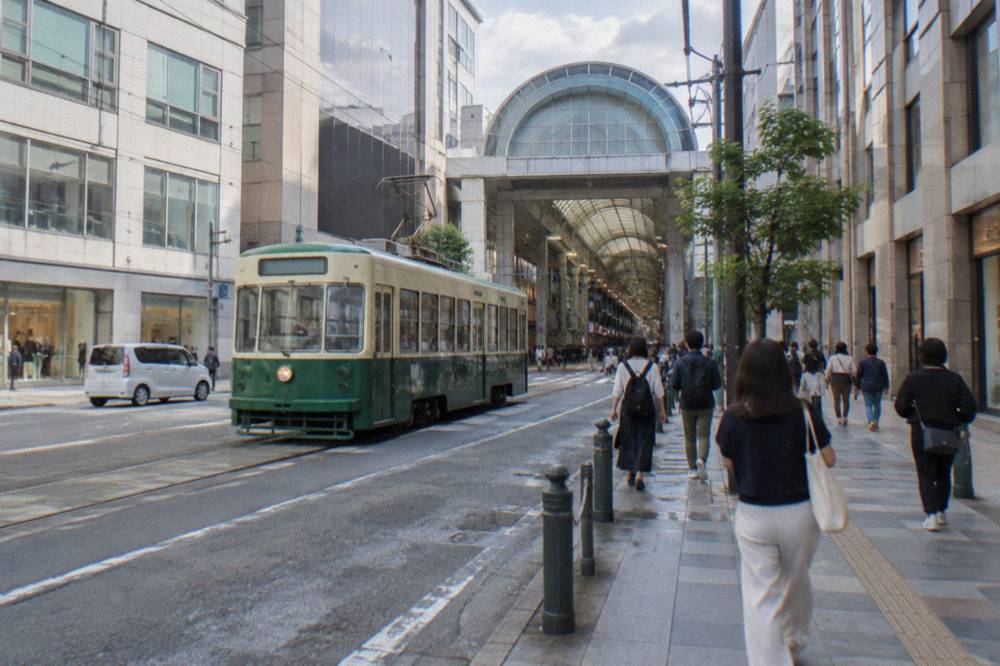
Hacchobori and Kamiyacho are the paired downtown districts of central Hiroshima, and they work as one unit: Kamiyacho is the intersection where the streetcar lines cross and the department stores stand, Hacchobori is the next stop east, and the covered Hondori arcade runs east-west through the middle of it all, closed to cars. Kamiyacho and Hacchobori form the main downtown shopping and business district of Hiroshima, featuring department stores including Sogo, Fukuya and Parco, fashion buildings and underground connections via the Shareo mall. The whole area sits within a short walk or a one-stop streetcar ride of Hiroshima Castle.
The layout rewards a simple mental map. The Kamiyacho intersection is the crossing point of the streetcar lines; from there the Hondori arcade runs east as a covered, car-free shopping street, and Hacchobori wraps around its eastern end. The Shareo underground mall runs beneath the district and connects directly to the Astram Line, the city trams and the Hiroshima Bus Center.
That underground layer is the practical detail that changes how the district feels. On a rainy afternoon or in the summer heat, the covered arcades and underground connections keep the whole walkable core usable without an umbrella, which is a real consideration given the city's climate. The Japan Meteorological Agency (JMA) 1991-2020 normals for Hiroshima show about 279.8 mm of rain in July, the highest monthly figure of the year.
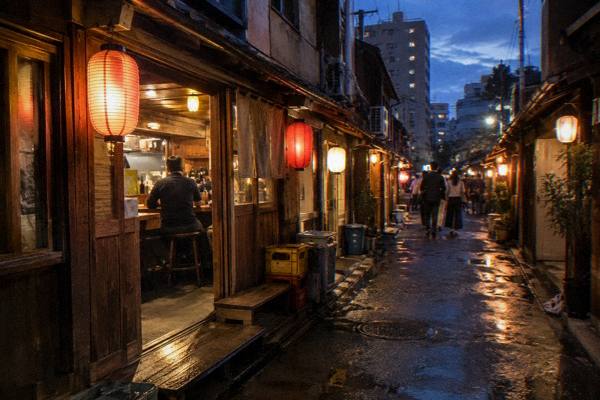
The district also carries the city's evening life on its upper floors. The area around Hacchobori includes bars, izakaya and restaurants in buildings near Horikawacho and Yagenbori, serving as a key evening and nightlife zone, a thread picked up in more detail in the Nagarekawa and Yagenbori area guide.
How Do You Get To Hacchobori And Kamiyacho From Hiroshima Station?
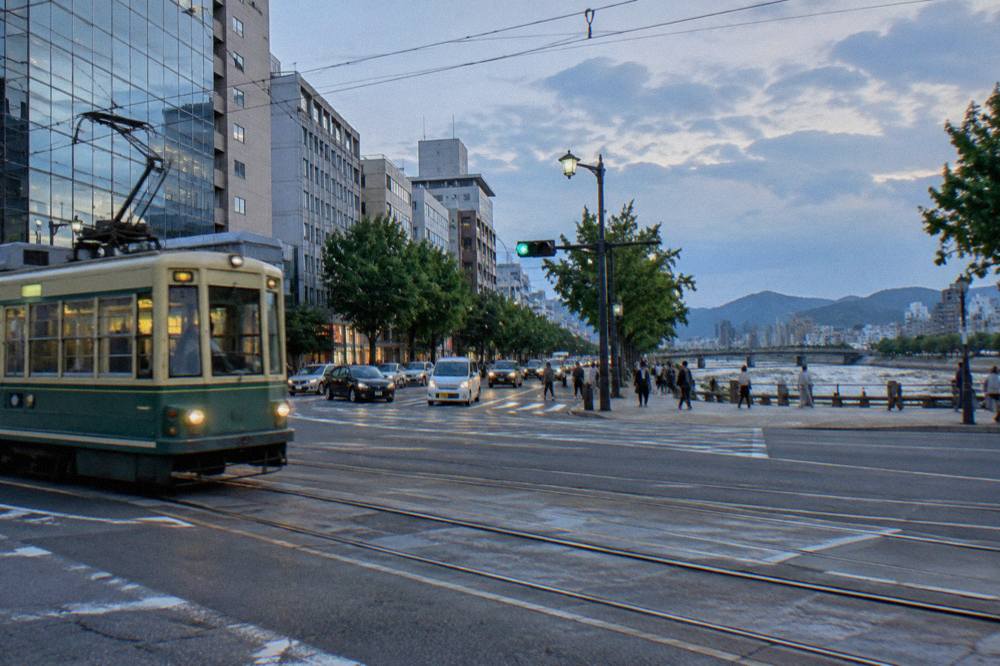
From the south exit of Hiroshima Station, Hiroden streetcar Line 2 to Hiroden Miyajimaguchi or Line 6 to Eba reaches the Kamiyacho or Hondori stop in about 15 minutes, and the flat fare is 240 yen for adults and 120 yen for children, a price that has applied to all Hiroden lines including the Miyajima line since 1 February 2025. From there it is a 3-minute walk down into the Kamiyacho Shareo mall and the tourist information center inside it. Streetcar services in the Kamiyacho and Hacchobori area typically run from approximately 5:30 to 6:00 in the morning until around 22:00 to 23:00 depending on the line.
The stops to know by name are Kamiyacho-higashi, Kamiyacho-nishi, Hondori and Hacchobori. All of them serve the same walkable core, so there is little penalty for stepping off one stop early or late. The Hiroden tram has also been reported to enter the Hiroshima Station building's 2nd floor since 3 August 2025, following the new station building's opening in March 2025, which shortens the transfer between rail and streetcar.
Two fares matter for a downtown day. The single flat ride is 240 yen adult, 120 yen child, and a 1-Day Streetcar Pass for unlimited rides on all Hiroden lines costs 700 yen for adults and 350 yen for children. Three single rides across a day already add up past the pass price, so a day built around tram hopping between downtown, the Peace Park and the station area is the natural case for it.
| Hiroden fare (from 1 Feb 2025) | Adult | Child |
|---|---|---|
| Single flat ride, all lines including Miyajima line | 240 yen | 120 yen |
| 1-Day Streetcar Pass, all Hiroden lines | 700 yen | 350 yen |
For orientation once arrived, the Hiroshima City Tourist Information Center inside Kamiyacho Shareo operates 11:00 to 17:00 daily, with English-speaking staff and free public Wi-Fi available, and it is certified as a Category 2 Foreigner Tourist Information Center by JNTO. The wider transport picture, including the airport limousine bus and the Shinkansen, is covered in the Hiroshima Station area guide.
What Can You Do Around Hacchobori And Kamiyacho?
The short answer for Hacchobori and Kamiyacho is shop, eat and use the district as your base: the covered Hondori arcade runs through the middle, Sogo, Fukuya and Parco anchor the department-store cluster, the Shareo underground mall links roughly 82 shops and restaurants below street level, and Hiroshima Castle, the Peace Memorial Park and the Atomic Bomb Dome all sit within an easy streetcar hop of the Kamiyacho stops. The district is the connective tissue of a Hiroshima day rather than a single attraction, and it holds up well as the place to return to between sights.
Shopping here splits into three layers. The Hondori arcade is the covered, car-free street level, closed to cars and lined with small storefronts. Shareo, which opened in 2001 as Hiroshima's first underground mall, is the lower level, with about 82 shops and restaurants and general business hours of 10:00 to 20:00, while the Nishi-dori Gourmet Street section runs 11:00 to 21:00, with some stores such as convenience stores varying. The department stores form the third layer, and their information desks are themselves useful: the Sogo Hiroshima desk on the 1st floor of the main building operates 10:00 to 20:00 and is JNTO-certified as a Category 2 Foreigner Tourist Information Center, with a foreign currency exchange and tax refund counter on the same floor.
From downtown the sightseeing spread is straightforward. The Genbaku Dome-mae stop, serving the Peace Memorial Park and the Atomic Bomb Dome, is a short streetcar ride from Kamiyacho, and the museum details, hours and etiquette for that side of the city are covered in the Hiroshima Peace Memorial Museum guide. Hiroshima Castle stands within a short walk or one-stop streetcar ride of the Kamiyacho and Hacchobori stops; note that the castle keep itself has been closed to visitors since 22 March 2026, so the exterior and grounds are what a visit now means there, with more in the Hiroshima Castle guide.
One comfortable way to see the downtown grid plus the Peace Park side is a guided bike ride. The Peace Cycling Tour with Local Guide covers the city with a local guide, and Check availability to see the current dates and meeting point.
| Downtown layer | What it is | Hours (as listed) |
|---|---|---|
| Hondori arcade | Covered, car-free shopping street running east-west through central Hiroshima | Store hours vary |
| Shareo underground mall | About 82 shops and restaurants, opened 2001, links trams, Astram Line and Bus Center | Generally 10:00 to 20:00 |
| Shareo Nishi-dori Gourmet Street | Food-focused section of the underground mall | 11:00 to 21:00 |
| Department stores (Sogo, Fukuya, Parco) | Fashion, dining floors, tax refund counters | Sogo desk 10:00 to 20:00 |
Families get practical infrastructure here too. Baby rooms with breastfeeding space and diaper-changing tables are available at several locations in the Kamiyacho area, including Sogo Hiroshima on the 6th floor, Pacela on the 4th floor and inside Shareo.
Where Should You Eat Around Hacchobori And Kamiyacho?
In Hacchobori and Kamiyacho, Okonomiyaki is never far away, with the dedicated Okonomimura building a short walk from the arcade's western end. The district's food geography is vertical: ground floors hold chain cafes and bakeries, while higher floors hold the small counters where the evening trade happens, and the Hiroshima Izakaya Food and Drink Night Tour decodes the bar-and-counter world for travelers on a first night.
The wider food list, from anago-meshi to oysters, is in the what to eat overview on the main things to do page.
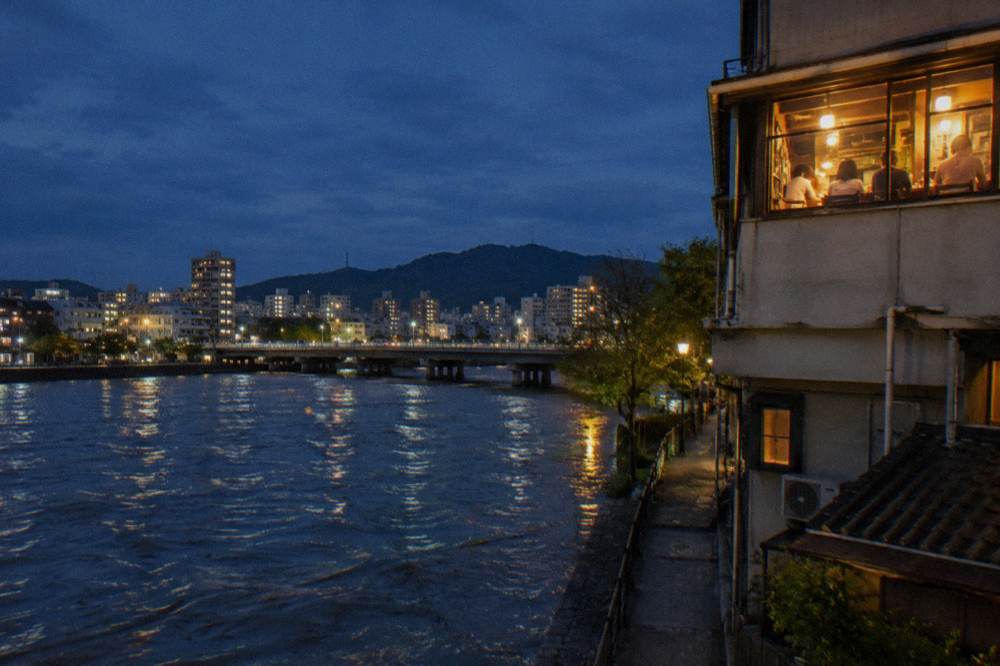
For a guided version of the evening side of the district, the Hiroshima Izakaya Food and Drink Night Tour moves through the bar-and-counter world with a guide, which suits travellers who want the upper-floor places decoded on a first night.
Is Hacchobori A Good Place To Stay In Hiroshima?
Hacchobori and Kamiyacho work as a central base because every Hiroden line fare is a flat 240 yen, the streetcar runs until around 22:00 to 23:00, and the underground mall, the arcades and the department stores put food and shopping below and around you, while the Peace Park side, the castle and the station are all short tram hops away.
The district's future also points up. The KAMIHACHI X redevelopment in the Motomachi and Aioi Dori area between Hiroshima Station and Kamiyacho and Hacchobori is scheduled for completion in fiscal 2027, and it includes a luxury lifestyle hotel, an Andaz, described as the first in the Chugoku region, plus public spaces. Until then the existing hotel stock clusters around the station and the Peace Park side; the where to stay in Hiroshima guide breaks the neighbourhoods down.
For neighbourhood context beyond downtown, the Hiroshima neighborhoods overview places Hacchobori and Kamiyacho against the Peace Park side, the station area and the port districts.
What Does A Day In Downtown Hiroshima Cost?
A day based on Hacchobori and Kamiyacho costs very little to move around, since the Hiroden flat fare is 240 yen per adult ride or 700 yen for a 1-day pass covering all lines, the major free sights such as the Peace Memorial Park are open 24 hours with free entry year-round, and the paid anchors are modest by big-city standards: the Hiroshima Peace Memorial Museum is 200 yen for adults and free for junior high school students and younger. Downtown itself adds only food and shopping.
The table below pulls the fixed local costs a downtown-based day is likely to touch. Bookable tours are excluded because their prices render from live listings rather than fixed yen tariffs.
| Item | Adult price | Notes |
|---|---|---|
| Hiroden single ride | 240 yen | Flat fare, all lines, since 1 Feb 2025 |
| Hiroden child single ride | 120 yen | Same flat fare system |
| 1-Day Streetcar Pass | 700 yen | Unlimited all Hiroden lines |
| Peace Memorial Museum | 200 yen | High school 100 yen; junior high and younger free |
| Peace Memorial Park | Free | Open 24 hours, free entry year-round |
| Shukkeien garden | 350 yen | School students free since 14 April 2025 |
Two more figures complete the picture. The Hiroshima National Peace Memorial Hall for the Atomic Bomb Victims, adjacent to the park, is free to enter, and the airport limousine bus from Hiroshima Airport to Hiroshima Station costs 1,500 yen for adults, about 50 minutes, which matters on arrival and departure days.
What About Rain, Heat And The Seasons Downtown?
Downtown Hiroshima's Hacchobori and Kamiyacho core is threaded with covered and underground routes: the Hondori arcade is covered end to end, Shareo runs beneath the district, and the department stores interconnect, so a wet or hot day costs you little ground. The climate normals tell you when that matters most. The Japan Meteorological Agency (JMA) 1991-2020 station data for Hiroshima show about 279.8 mm of rain in July and about 226.5 mm in June, while August has the highest mean daily high at about 32.8 C.
| Month | Mean high °C | Mean low °C | Rain mm |
|---|---|---|---|
| Jan | 9.9 | 2.0 | 46.2 |
| Feb | 10.9 | 2.4 | 64.0 |
| Mar | 14.5 | 5.1 | 118.3 |
| Apr | 19.8 | 10.1 | 141.0 |
| May | 24.4 | 15.1 | 169.8 |
| Jun | 27.2 | 19.8 | 226.5 |
| Jul | 30.9 | 24.1 | 279.8 |
| Aug | 32.8 | 25.1 | 131.4 |
| Sep | 29.1 | 21.1 | 162.7 |
| Oct | 23.7 | 14.9 | 109.2 |
| Nov | 17.7 | 8.9 | 69.3 |
| Dec | 12.1 | 4.0 | 54.0 |
Winter is mild rather than harsh, with January lows averaging about 2.0 °C and highs about 9.9 °C, so downtown walking stays comfortable year-round in ordinary layers. The seasonal planning detail, month by month, lives in the best time to visit Hiroshima guide, and the wet-day options that are not shopping are gathered in the Hiroshima rainy day guide.
Can You Visit Hacchobori And Kamiyacho On A Day Trip From Osaka Or Kyoto?
Yes, and the district is well suited to it, because a Shinkansen day trip from Osaka or Kyoto lands you at Hiroshima Station, and from the south exit the Hiroden tram covers the roughly 15 minutes to Kamiyacho for a flat 240 yen, putting the downtown core, the Peace Park and the castle all within one compact afternoon radius. Reported Shinkansen timings put Shin-Osaka to Hiroshima at about 80 to 85 minutes on a Nozomi service, and Tokyo to Hiroshima at about 3 hours 45 minutes to 4 hours.
For travellers who would rather have the whole city-plus-island circuit arranged, the Hiroshima and Miyajima Day Trip by Bullet Train pairs the round-trip rail with both UNESCO-listed sides of the destination, downtown Hiroshima and Miyajima. The Osaka and Kyoto versions of the same logic are laid out in the Hiroshima day trip from Osaka and Hiroshima day trip from Kyoto guides.
How Does Downtown Connect To Miyajima And The Rest Of The Region?
From Kamiyacho, Hiroden Line 2 runs toward Hiroden Miyajimaguchi, the mainland ferry pier for Miyajima, where the JR ferry crosses to the island in about 10 minutes with departures roughly every 15 minutes from 8:00 to 18:00 and beyond, and the same flat 240 yen fare applies on the Miyajima line as everywhere else on the Hiroden network. On entering the island a separate Miyajima Visitor Tax of 100 yen applies, with preschool children exempt, and the Japan Rail Pass and JR-West rail passes are valid on the JR ferry.
The island side of that crossing, the shrine, the Great Torii and the tide behaviour around it, is covered in the Miyajima guide and the Itsukushima Shrine guide. The pier-side mainland district has its own page in the Miyajimaguchi area guide.
Common Questions About Hacchobori And Kamiyacho
How Far Is Hacchobori From Hiroshima Station?
From the south exit of Hiroshima Station, Hiroden streetcar Line 2 or Line 6 reaches the Kamiyacho or Hondori stop in about 15 minutes, and Hacchobori is one stop further east on the same network. The flat fare is 240 yen for adults and 120 yen for children.
What Is Shareo In Hiroshima?
Shareo is Hiroshima's underground shopping mall beneath the Kamiyacho area, opened in 2001 as the city's first underground mall, with about 82 shops and restaurants. It connects directly to the Astram Line, the city trams and the Hiroshima Bus Center, and generally operates 10:00 to 20:00, with the Nishi-dori Gourmet Street section running 11:00 to 21:00.
Is There A Tourist Information Center In Downtown Hiroshima?
Yes. The Hiroshima City Tourist Information Center inside Kamiyacho Shareo operates 11:00 to 17:00 daily with English-speaking staff and free public Wi-Fi, and is JNTO-certified as a Category 2 Foreigner Tourist Information Center. The Sogo Hiroshima desk on the 1st floor of the main building, open 10:00 to 20:00, carries the same certification and has a currency exchange and tax refund counter on the same floor.
How Much Does The Streetcar Cost In Hiroshima?
A single Hiroden ride is a flat 240 yen for adults and 120 yen for children on all lines, including the Miyajima line, a fare in force since 1 February 2025. A 1-Day Streetcar Pass for unlimited rides on all Hiroden lines costs 700 yen for adults and 350 yen for children.
Is Downtown Hiroshima Walkable?
The Kamiyacho and Hacchobori core is compact and layered: the covered Hondori arcade is closed to cars, the Shareo mall runs underground, and Hiroshima Castle is within a short walk or a one-stop streetcar ride. The covered and underground routes also make the district usable in rain and summer heat.
Where Is Hiroshima Nightlife Near Hacchobori?
The Nagarekawa district, just to the south, is covered in its own area guide.
Downtown Hiroshima is the part of the city that needs the least planning and gives the most back: a flat 240 yen fare, a covered arcade, an underground mall and a castle at the end of the street, all folded into one walkable core.