Hiroshima Neighborhoods: Where Each District Fits
Each district of Hiroshima has a clear job: the Peace Park and Nakajima carry the memory, the station area handles arrivals, Hacchobori and Kamiyacho do business and shopping, Nagarekawa and Yagenbori do the night. This page maps which district fits which part of a trip.
Central Hiroshima splits into a handful of walkable districts: Peace Park and Nakajima for the memorials and museum, the Hiroshima Station area for arrivals and food, Hacchobori and Kamiyacho for shopping and business hotels, Nagarekawa and Yagenbori for bars, and Hondori for the covered arcade. Miyajimaguchi and Miyajima Omotesando sit on the island side reached by a 10-minute JR ferry.
The city's flat fare is 240 yen for adults and 120 yen for children on every line, including the Miyajima line, which makes district-hopping cheap and simple. This guide walks through each neighborhood in turn: what it is for, what the admission fees and hours are, and how the pieces fit a first visit. For the full sight list across all of them, start with things to do in Hiroshima.
What Are The Main Hiroshima Neighborhoods?
The main central districts of Hiroshima are Peace Park and Nakajima around the memorial park, the Hiroshima Station area in Minami-ku, Hacchobori and Kamiyacho in the business and shopping core, Nagarekawa and Yagenbori for nightlife, and the Hondori and Shintenchi arcade quarter. Each is distinct in character and all are tied together by the Hiroden streetcar network.
The city's own tourism materials treat these as separate walking zones rather than one blur of downtown. The city also publishes Peace Tourism routes: self-guided walks to A-bombed buildings scattered through the central districts, a reminder that the neighborhoods are not just entertainment zones but a mapped historical landscape.
The table below is the short version.
| District | Character | Nearest tram stops (per local guides) |
|---|---|---|
| Peace Park and Nakajima | Memorials, museum, riverside | Genbaku Dome-mae |
| Hacchobori and Kamiyacho | Business, shopping, hotels | Hacchobori, Kamiyacho |
| Hondori and Shintenchi | Covered arcade, food | Hondori |
| Nagarekawa and Yagenbori | Bars, late-night food | Hacchobori, Kamiyacho-higashi, Ebisucho |
| Hiroshima Station area | Arrivals, Shinkansen, station malls | Hiroshima Station |
| Miyajimaguchi | Ferry gateway to Miyajima | Hiroden-miyajima-guchi |
| Miyajima Omotesando | Island approach street, snacks | Reached on foot from the ferry pier |
Each district has its own page with more depth: Peace Park and Nakajima, Hacchobori and Kamiyacho, Nagarekawa and Yagenbori, the Hiroshima Station area, Miyajimaguchi and Miyajima Omotesando.
Hiroden trams charge a flat fare of 240 yen for adults and 120 yen for children on every line, including the Miyajima line. Trams now run directly into the Hiroshima Station building, so Shinkansen arrivals step straight onto a city car.
To bundle rides and attractions across the districts, book a Have Fun in Hiroshima Pass here.
The Peace Memorial Museum opens at 7:30 a.m. year round, closing at 7:00 p.m. from March to July and September to November, 8:00 p.m. in August, and 6:00 p.m. in winter; it also closes on December 30 and 31 and in mid-February. Admission is 200 yen for adults, 100 yen for high school students, free for younger children, and 100 yen for visitors 65 and over with a passport.
At Miyajimaguchi, the JR ferry crosses to the island in about 10 minutes, sailing roughly every 15 minutes from about 6:25 a.m. to about 10:42 p.m., and Japan Rail Pass and JR-West rail passes are valid on board. The island charges a separate 100 yen visitor tax on arrival, with preschool children exempt. Itsukushima Shrine costs 300 yen to enter, or 500 yen combined with the Treasure Hall, and its corridor floorboards have gaps, so comfortable shoes help.
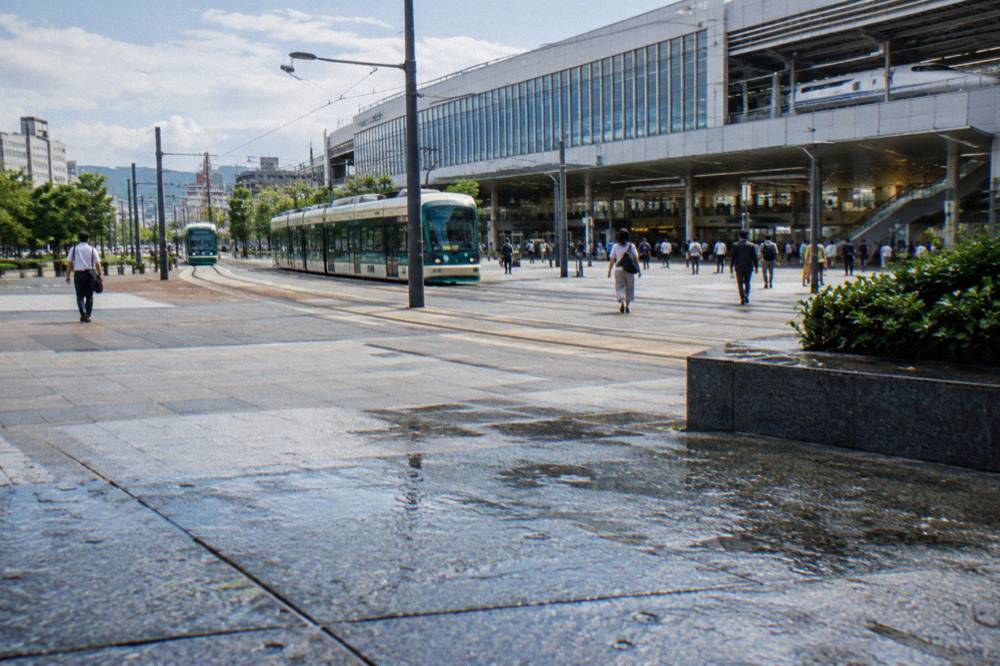
A few transport details make the district map easier to use. Since August 2025, Hiroden streetcars have run directly into the Hiroshima Station building, stopping on its second floor, which puts the streetcar transfer inside the station complex. Travelers arriving by air can take the airport limousine bus, about 50 minutes to the Shinkansen exit of Hiroshima Station and about 55 minutes to the Hiroshima Bus Center; either ride costs 1,500 yen for adults and 750 yen for children, and IC cards are accepted.
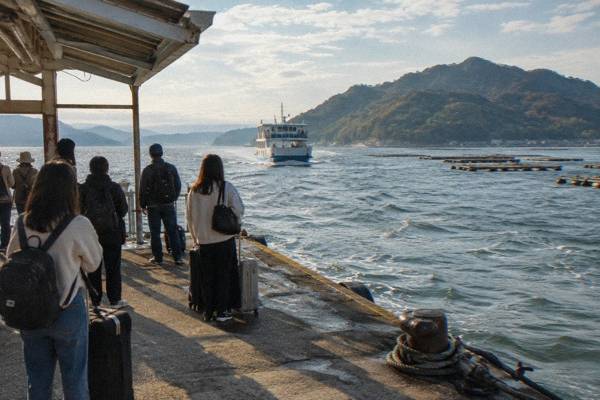
Miyajimaguchi, at the end of the Miyajima tram line, is the island gateway. The JR ferry crosses in about 10 minutes and sails roughly every 15 minutes, the first departure around 6:25 and the last about 22:00, with sailings past the Great Torii running from 9:10 to 16:10. Matsudai Kisen runs a second ferry on a similar 15-minute rhythm from 7:00 until about 20:00. Japan Rail Pass and JR-West Rail Pass holders ride the JR ferry at no extra charge. The Miyajima visitor tax of 100 yen is charged separately on entering the island, with preschool children exempt.
What Sits In The Peace Park And Nakajima District?
The park grounds are free and open 24 hours year-round with no closing days, the museum charges 200 yen for adults and the memorial hall is free. This is the district visitors come to first, and it deserves the most time.
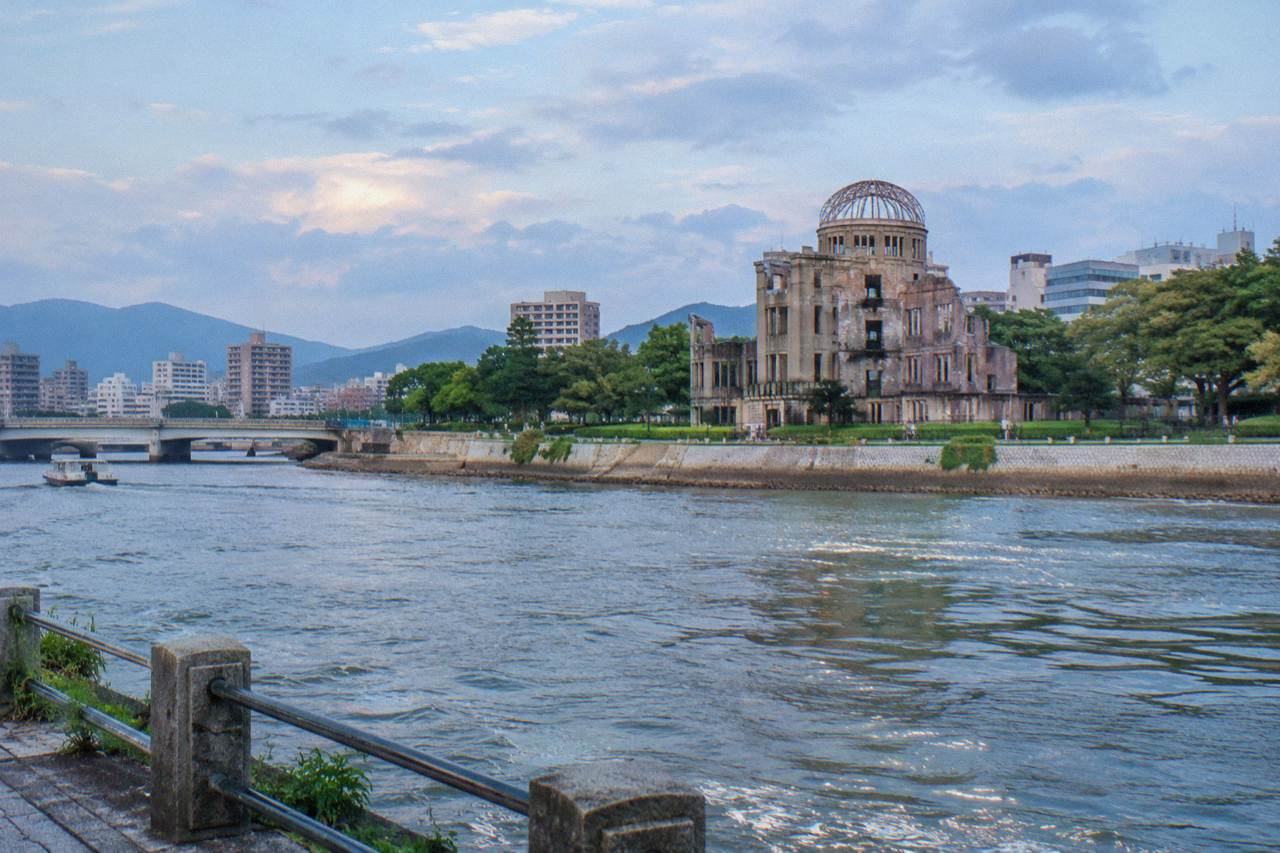
The Hiroshima Peace Memorial Park occupies the tip of the delta, and the Atomic Bomb Dome, a UNESCO World Heritage Site in Naka-ku, stands on the far bank. The city's official page for the dome records that it stands 160 meters from the hypocenter.
The fee and hour structure is simple and worth knowing before arrival.
| Site | Admission | Hours (per official pages) |
|---|---|---|
| Peace Memorial Park grounds | Free | Open 24 hours, no closing days |
| Hiroshima Peace Memorial Museum | 200 yen adult, 100 yen high school, junior high and younger free | 7:30 a.m. to 7:00 p.m. March to July and September to November; to 8:00 p.m. in August, until 9:00 p.m. on August 5 and 6; to 6:00 p.m. December to February |
| National Peace Memorial Hall | Free | 8:30 a.m. to 6:00 p.m. March to July; closed December 30 and 31 |
| A-Bomb Dome exterior | No fee | Viewable from outside the fence |
The museum closes 30 and 31 December and for a mid-February exhibit change, and last entry is 30 minutes before closing. Extended morning and evening slots require an online reservation. The Hiroshima Peace Memorial Museum page on this site carries the full detail, including the etiquette that applies across the whole district.
What Is In The Hiroshima Station Area?
The Hiroshima Station area in Minami-ku is the arrival district: the Shinkansen side with its long-distance gates, the Hiroden streetcar platforms now inside the station building, a tourist information center open 6:00 to 24:00, and two station malls, ekie and the new minamoa building that opened on March 24, 2025. It is a practical district for first and last hours in the city, and a food district in its own right.
The station sits at 2-37 Matsubara-cho, Minami-ku, and the Hiroshima Station area page on this site covers it in depth. Ticket services run long hours: the Midori no Madoguchi green ticket office operates 5:30 to 22:00, the Shinkansen transfer gate office 5:30 to 23:15 and the central-gate ticket machines 5:30 to 23:40. The Tourist Information Center on the 2nd floor of the Shinkansen exit offers free "Hiroshima Free Wi-Fi", useful on arrival before a local SIM or eSIM is sorted.
The shopping and eating hours are the district's practical core.
| Facility | Hours (per operator pages) |
|---|---|
| ekie souvenir floor (2F) | 8:00 to 21:00 |
| ekie dining floor (1F) | 11:00 to 22:00, some outlets to 23:00 |
| minamoa shopping floors (B1F, 2F, 3F to 5F) | 10:00 to 20:00 |
| minamoa restaurant floor (6F) | 11:00 to 22:00 |
| Station Tourist Information Center | 6:00 to 24:00 daily |
The redevelopment also added a rooftop plaza, Soramoa, on the 9th floor of the minamoa building, and the Hiroden tram now enters the station building on its 2nd floor, a change reported since August 2025. Coin lockers on the 1st and 2nd floors handle luggage between arrival and check-in. The Hiroshima & Miyajima Full Day Bus Tour from Hiroshima starts from the station side of the city, which makes this district a convenient base for a day trip.
What Are Hacchobori And Kamiyacho For?
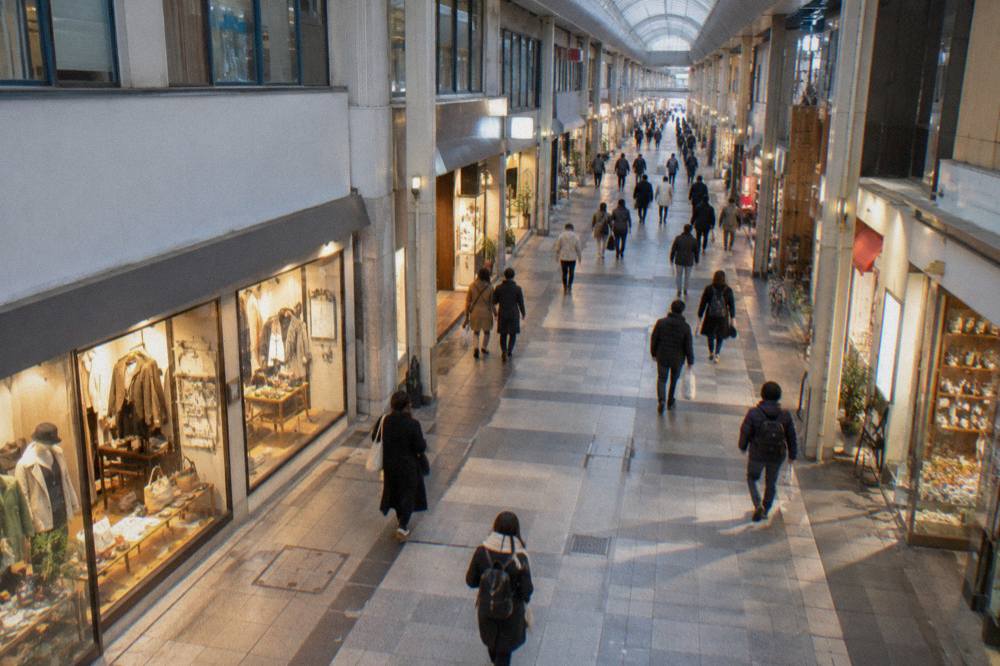
Hondori Shopping Street, the covered arcade at its heart, runs with typical individual store hours of 10:00 a.m. to 8:00 p.m., reached by Hiroden streetcar, city bus or the Astram Line at the Hondori stop. It is the district for shopping, chain dining and most city-center hotels.
The Hacchobori and Kamiyacho page breaks the district down street by street.
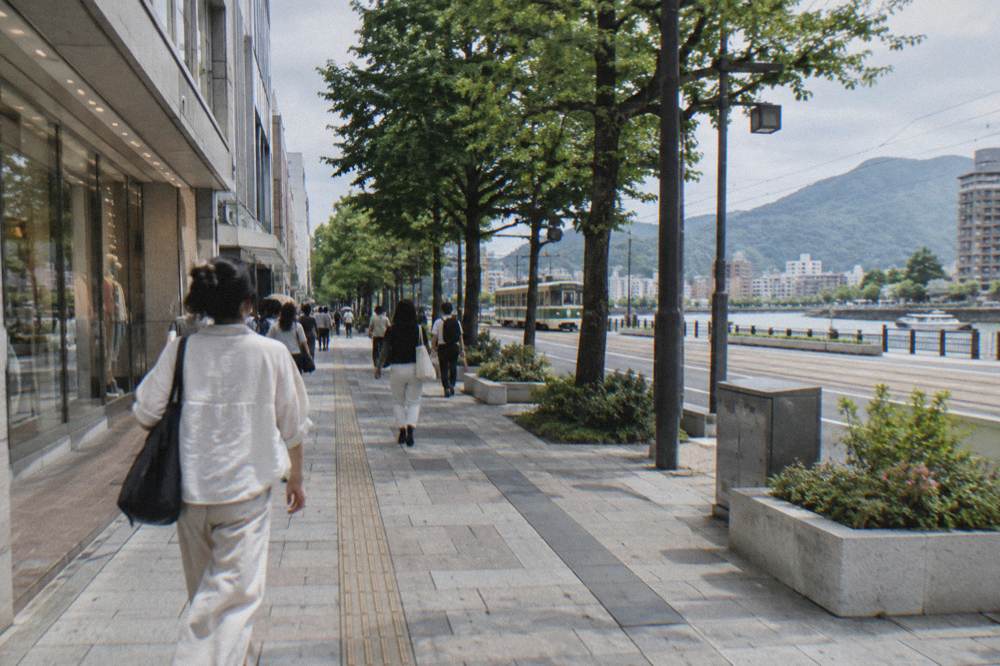
Hondori is best understood as the district's covered high street, with Shintenchi and Hondori covered elsewhere on this site in dining terms. For eating, the district's signature destination is Okonomimura, the okonomiyaki building a short walk from the arcade. One castle note applies to this district's edge: Hiroshima Castle stands in the Motomachi area of Naka-ku near Central Park, its keep closed to the public since March 22, 2026, while the grounds, moat and stone walls remain free to access and the Ninomaru area is open 9:00 a.m. to 5:30 p.m. from April to September and 9:00 a.m. to 4:30 p.m. from October to March with free admission.
Where Do Nagarekawa And Yagenbori Fit?
Nagarekawa-dori runs roughly north-south between Kamiyacho and Yagenbori, a 3-minute walk from the Hacchobori or Kamiyacho-higashi tram stops, and Yagenbori, one block east, is the quieter, older counterpart, about a 5-minute walk from the Ebisucho or Hacchobori stops.
The two halves of the district have different personalities, and the local guides describe the split plainly: Yagenbori is a lower-key, older atmosphere compared with the neon strip of Nagarekawa. Many of the good bars sit on the third, fourth or fifth floors of thin multi-tenant buildings, reached by small elevators or stairs, with hand-written signs and signage running up the facades from street level. Bar Upstairs in Yagenbori opens at 14:00 as a half-cafe, half-bar until evening. The wider set of guides lives on Hiroshima Travel Guide.
The money facts of a night out here are documented by the local bar guides.
| Cost item | Figure (per local guides) |
|---|---|
| Otoshi table charge, most sit-down bars | About 500 to 1,000 yen |
| Koba standing whiskey bar, whisky pour from | 1,200 JPY |
| Koba hours | 18:00 to 01:00, closed Wednesdays, no otoshi |
| Hachiya izakaya, per person with drinks | 4,000 to 6,000 JPY |
| Typical closing time, cocktail bars | Around 2 a.m. |
| Late izakaya around Yagenbori | Until 4 or 5 a.m. |
The full lowdown, including specific bar picks, is on Nagarekawa and Yagenbori. A guided option for this side of the city is the izakaya night walk among the food tours listed on the things to do in Hiroshima page.
Which Hiroshima Neighborhood Should You Stay In?
For a first visit, Hacchobori and Kamiyacho is the district that puts the Peace Park, Hondori and the bar zone all within streetcar or walking range, while the Hiroshima Station area suits travelers arriving and leaving by Shinkansen who want mall dining and simple logistics. Staying near the Peace Park itself buys quiet mornings in the memorial district, and Miyajima Omotesando suits an island overnight instead of a city base. There is no wrong answer among these four, only different trade-offs.
The trade-offs come down to what the district is for. A station-area base puts the tourist information center, the lockers, the ekie and minamoa food floors and the Miyajima line all at the door. A Peace Park area base is the quietest and most commemorative setting, closest to the museum's early opening at 7:30 a.m.
| If a trip prioritizes | The district that fits | Why |
|---|---|---|
| The museum and memorials at opening time | Peace Park and Nakajima | The museum opens 7:30 a.m. and the park grounds never close |
| Shopping, food arcades, nightlife | Hacchobori and Kamiyacho | Hondori stores run 10:00 to 20:00 and Nagarekawa bars sit just south |
| Shinkansen arrivals and departures | Hiroshima Station area | Gates, lockers, information center 6:00 to 24:00, station malls |
| The shrine and the island at dawn or dusk | Miyajima side | The JR ferry crossing takes about 10 minutes from Miyajimaguchi |
How Do The City Districts Connect To The Miyajima Side?
The Miyajima side is reached from the city districts by Hiroden streetcar to Miyajimaguchi and then a JR ferry crossing of about 10 minutes to the island, with a 100 yen Miyajima visitor tax per person collected on the inbound trip and preschool children exempt. JR West Miyajima Ferry departures from Miyajimaguchi run roughly every 15 minutes from about 6:25 a.m., and Matsudai Kisen runs its own boats about every 15 minutes from 7:00 a.m.
Line 2 of the Hiroden runs from Hiroshima Station toward Hiroden-miyajima-guchi, with streetcars running approximately every 10 to 15 minutes on main routes and a scheduled travel time of 66 minutes for the full run. The flat fare, 240 yen adult and 120 yen child, applies on the Miyajima line like every other line, so the whole city-to-ferry journey costs a handful of coins plus the island tax. The Miyajimaguchi page covers the gateway district and its ferry piers. Great Torii route sailings on the JR ferry run between 9:10 a.m. and 4:10 p.m.
The shrine charges 300 yen for adults, 200 yen for high school students and 100 yen for elementary and junior high students, and opens at 6:30 a.m. except on 1 January, plus closing hours that shift by season. The Miyajima Omotesando page and the Mount Misen page cover the island districts beyond the shrine, including the ropeway at 2,000 yen return for adults, running 9:00 to 16:00 with last descent at 16:30.
Can You Cover Several Districts In One Morning?
Guided bike rides cover the Peace Park district, the river and the central neighborhoods in one outing. A guided ride also solves the orientation problem, since a local guide places each district in the city's history as the route moves through it.
The alternative is self-guided. A reasonable self-guided day pairs the Peace Park district in the morning, Hondori and the castle grounds around lunch, and Nagarekawa or Yagenbori after dark. For the guided version, the morning bike ride is the related pick on this page: Check availability to see the operator's live dates.
Two other picks fit this district-mapping job well. The full-day bus tour covers both the city memorials and Miyajima in one loop for travelers who want the island without planning the ferry themselves.
And for a stop inside the castle district, the archery session at Hiroshima Castle fits a culture hour between the arcade and the Peace Park.
How Does The Weather Shape Which District You Use?
The Japan Meteorological Agency (JMA) 1991-2020 station normals for Hiroshima show hot, humid summers and mild winters: August's average daily high is about 32.8 °C, January's average high is about 9.9 °C with an average low of about 2.0 °C, July averages about 279.8 mm of rain, and January about 46.2 mm. In practice, hot months push activity toward morning district visits and the arcades, and wet months toward the museum and malls.
| Month | Average high °C | Average low °C | Average rain mm |
|---|---|---|---|
| January | 9.9 | 2.0 | 46.2 |
| April | 19.8 | 10.1 | 141.0 |
| July | 30.9 | 24.1 | 279.8 |
| August | 32.8 | 25.1 | 131.4 |
| October | 23.7 | 14.9 | 109.2 |
The districts themselves absorb weather differently. The covered Hondori arcade and the station malls keep rain off a shopping day, the Peace Park district is fully outdoors apart from the museum and memorial hall, and the Miyajima side adds a ferry crossing and open approach street to the equation. August also changes the memorial district's rhythm: the museum stays open to 8:00 p.m., and until 9:00 p.m. on August 5 and 6, the days around the annual Peace Memorial Ceremony held from 8:00 to 8:50 on the morning of August 6 in the park.
Common Questions About Hiroshima Neighborhoods
What Are The Main Hiroshima Neighborhoods?
The main central districts are Peace Park and Nakajima, the Hiroshima Station area, Hacchobori and Kamiyacho, Nagarekawa and Yagenbori, and the Hondori and Shintenchi arcade quarter, plus Miyajimaguchi and Miyajima Omotesando on the island side.
Is The Peace Park District Free To Visit?
The Peace Memorial Park grounds are free and open 24 hours year-round with no closing days, the National Peace Memorial Hall is free, and the Hiroshima Peace Memorial Museum charges 200 yen for adults, 100 yen for high school students and nothing for junior high students and younger.
Which Hiroshima Neighborhood Is Best For Nightlife?
Nagarekawa and Yagenbori, a 3-minute walk from the Hacchobori or Kamiyacho-higashi tram stops, with cocktail bars closing around 2 a.m. and some Yagenbori izakaya running until 4 or 5 a.m.
How Much Is The Streetcar Between Districts?
The Hiroden flat fare is 240 yen for adults and 120 yen for children on all lines including the Miyajima line, in effect since February 1, 2025.
Is Hiroshima Castle In One Of These Districts?
Yes, it stands in the Motomachi area of Naka-ku near Central Park, on the edge of the central districts. The keep has been closed to visitors since March 22, 2026, but the grounds, moat and stone walls remain free to access and the Ninomaru area is open daily with free admission.
Which District Is Closest To Miyajima?
Miyajimaguchi, the mainland ferry gateway reached by Hiroden streetcar, with the JR ferry crossing to the island taking about 10 minutes plus a 100 yen Miyajima visitor tax collected on entering the island.
Put simply, Hiroshima rewards a district plan: memorials first thing in the west, shopping and food through the middle, bars after dark in the south, and the island set aside for its own day, all stitched together by a flat-fare streetcar and a 10-minute ferry.