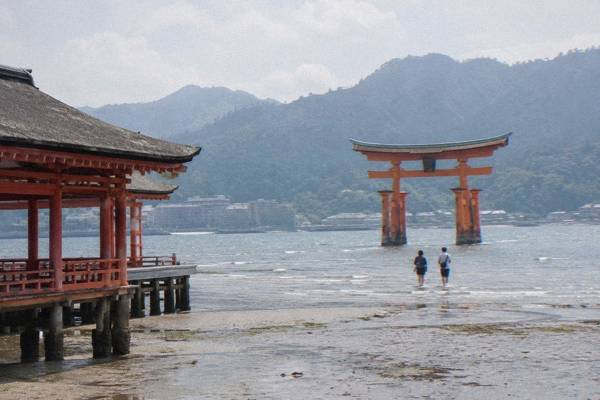
Omotesando Shopping Street And Machiya-Dori On Miyajima
Omotesando is the covered 350-metre approach to Itsukushima Shrine on Miyajima, the island in Hiroshima Bay reached by a 10-minute ferry, and Machiya-dori runs one block uphill as its quieter historic twin.
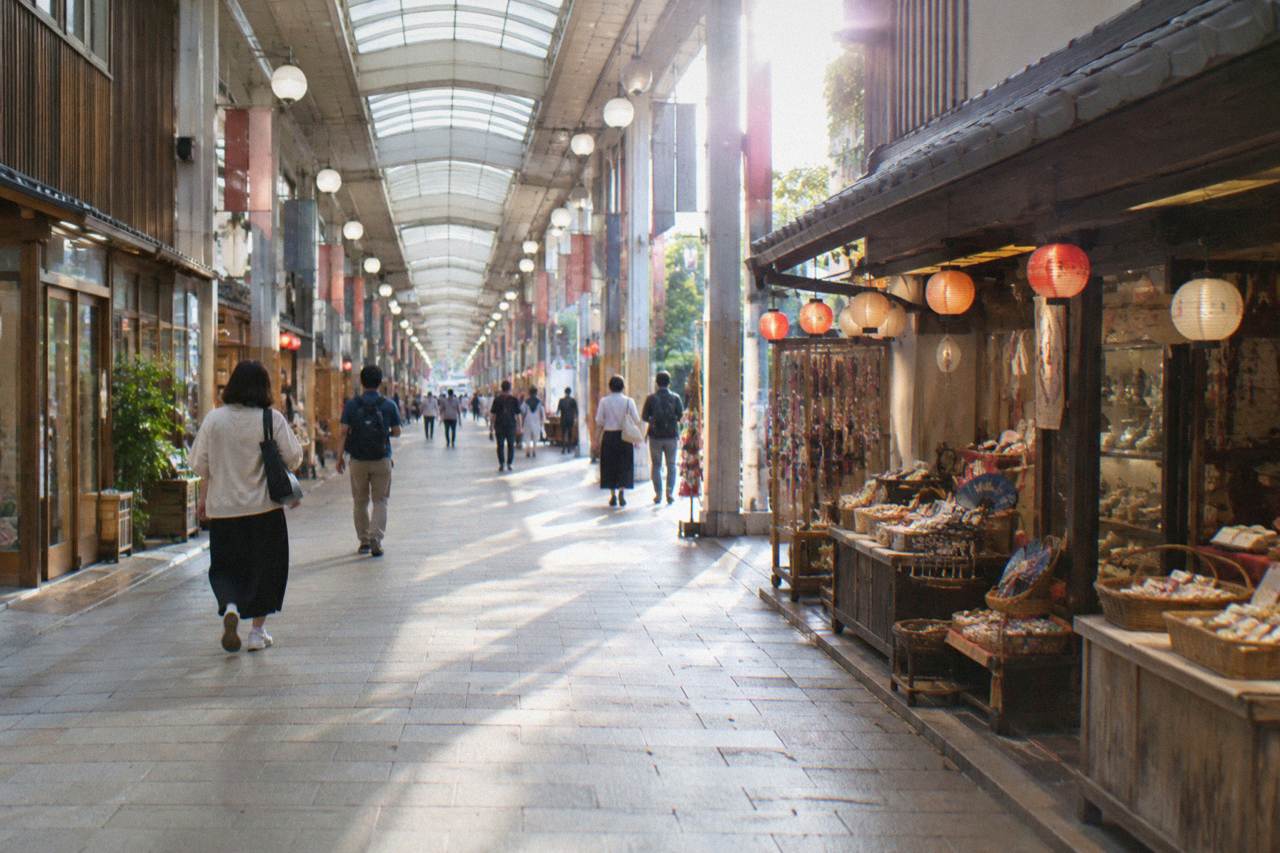
Omotesando is a 350-metre covered arcade from Miyajima Pier toward Itsukushima Shrine, lined with momiji manju vendors, grilled oyster stalls and souvenir shops. Machiya-dori, one block uphill, is the older street of machiya townhouses. Both are free to walk, and most Omotesando shops open around 10:00 and close around 17:00.
Omotesando shopping street is the covered 350-metre arcade that runs from Miyajima Pier toward Itsukushima Shrine on Miyajima, the island in Hiroshima Bay, near the city of Hiroshima in Hiroshima Prefecture. One block uphill, Machiya-dori, also called Machiya Street or Honmachi-suji, runs parallel as the older of the two streets, lined with townhouse architecture from the Edo through Showa periods. This page sets out what each street is, what to know about fares, hours, food and crafts, and how the two streets fit into a day on the island, with the practical numbers a planner needs before boarding the ferry at Miyajimaguchi.
What Is Omotesando Shopping Street On Miyajima In Hiroshima Bay?
Omotesando shopping street is a 350-metre covered arcade on Miyajima, the island in Hiroshima Bay, running from Miyajima Pier toward Itsukushima Shrine and lined with souvenir shops, momiji manju vendors, grilled oyster stalls and restaurants. The street formed from land reclaimed at the end of the Edo period and became the island's main street during the Showa period.
The Dive Hiroshima guide to the street describes it as the covered artery of the island: a roof runs its full 350 metres, which matters in a region where the Japan Meteorological Agency station normals for Hiroshima show July averaging 279.8 mm of rain. The same source notes the roof makes the street usable in rain and with a stroller. The street is free to enter and open to walk at all times, though the individual shops keep their own hours, which cluster around a 10:00 opening and a 17:00 close, with popular food items often selling out earlier in the day.
Machiya Street, one block uphill, was the main street of Miyajima during the island's most prosperous period and retains its Edo through Showa machiya buildings. Omotesando only took over as the front door once the reclaimed land at the pier was built up. For how the island as a whole fits a visit, see the Miyajima island day guide.
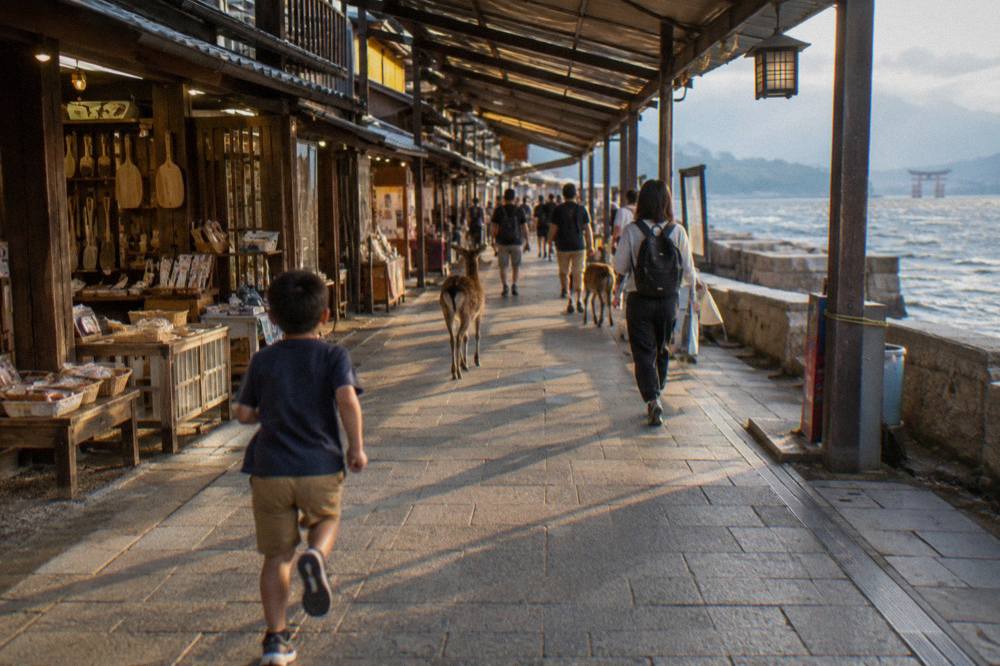
How Do You Get To Omotesando From Hiroshima?
From Hiroshima Station, the JR Sanyo Line reaches Miyajimaguchi in about 28 to 30 minutes for 420 yen, then the JR ferry crosses to Miyajima in about 10 minutes for 200 yen adult one way, plus the separate 100-yen Miyajima visitor tax, and Omotesando begins about a 5-minute walk from Miyajima Pier. The Hiroden streetcar also runs to Miyajimaguchi on a flat 240-yen adult fare on all lines including the Miyajima line.
That is the whole chain: train, ferry, walk. The Japan Stroll guide to the island gives the JR leg at about 30 minutes and 420 yen, and the ferry crossing at about 10 minutes. The JR West Miyajima Ferry page lists the adult one-way fare as 200 yen, with 100 yen for children aged 6 to 12, and confirms the 100-yen visitor tax is charged separately on entering the island, with preschool children exempt. The tax is described in more detail on the page how much is the Miyajima visitor tax.
The Hiroden streetcar costs a flat 240 yen for adults and 120 yen for children on every line since 1 February 2025, including the Miyajima line to Miyajimaguchi, and IC cards such as ICOCA and Suica are accepted both on the streetcar and, with the tax added automatically at the gates, on the ferry. Two operators run the crossing from Miyajimaguchi, JR West Miyajima Ferry and Miyajima Matsudai Kisen, and the Japan Rail Pass is valid on the JR ferry only, with the visitor tax still payable. The full route from the city is broken down in how to get from Hiroshima to Miyajima.
| Leg | Operator | Adult fare | Notes |
|---|---|---|---|
| Hiroshima Station to Miyajimaguchi | JR Sanyo Line | 420 yen | About 28 to 30 minutes |
| Hiroshima to Miyajimaguchi | Hiroden streetcar | 240 yen flat | Child 120 yen, all lines |
| Miyajimaguchi to Miyajima | JR West Miyajima Ferry | 200 yen one way | Child 100 yen, about 10 minutes |
| Miyajimaguchi to Miyajima | Miyajima Matsudai Kisen | 200 yen one way | Child 100 yen, about 10 minutes |
| Island entry tax | Charged with ferry ticket | 100 yen | Preschool children exempt |
A day trip that handles the ferry crossing for you is an alternative to self-managing the connections. The Day Trip to Hiroshima and Miyajima with Ferry Ride pairs the city and the island in one booked day: Check availability.
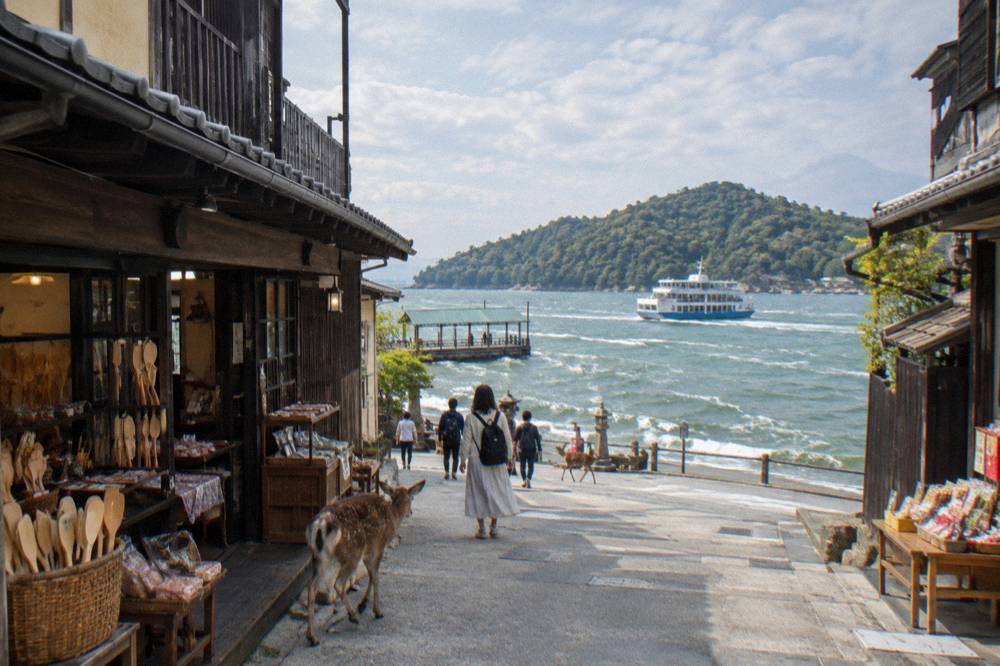
What Can You Eat Along Omotesando Miyajima?
Most shops along Omotesando open around 10:00 and close around 17:00, making dinner largely off the table; the Japan Stroll guide flags the midday window from noon to 14:00 as the arcade's busier stretch, and popular food items often sell out earlier in the day, so an earlier ferry buys more of the food range.
Two practical points shape an eating plan. First, the 17:00 close means dinner on Omotesando is largely off the table, and the Japan Stroll guide flags the midday window from noon to 14:00 as the busier stretch of the arcade. Second, selling out earlier is a documented pattern for popular items, so an earlier ferry buys more of the food range. Visitors staying past the day-trip window should read the site's page on staying overnight on Miyajima, which covers the evening illumination of the torii after dark.
What Is Machiya-Dori And How Does It Differ From Omotesando?
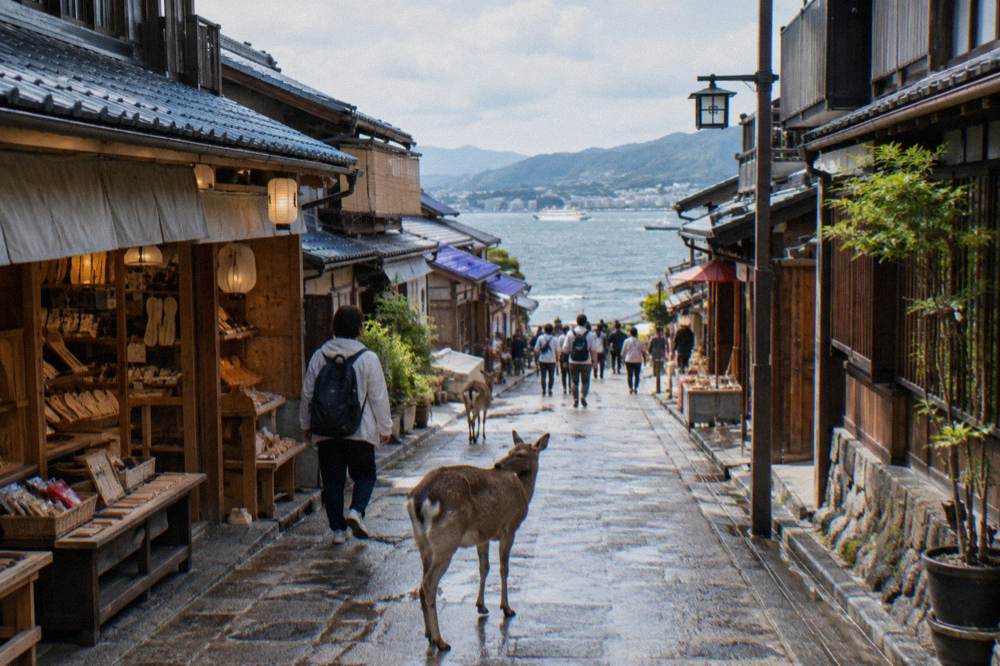
Machiya-dori, also called Machiya Street or Honmachi-suji, is the street one block uphill and parallel to Omotesando, lined with retro-modern inns, shops and galleries in traditional machiya townhouse architecture, and it was the main street of Miyajima during the island's most prosperous period, retaining Edo through Showa period buildings that the newer covered arcade does not have.
The Dive Hiroshima guide to the street frames it as the quieter, more historic walking route to Itsukushima Shrine, with views of the five-storey pagoda ahead along the way. Where Omotesando is covered, food-first and flat-out busy, Machiya-dori is open-air, slower, and built around the island's craft and lodging traditions rather than its snack stalls.
For a planner, the two streets are not an either-or. They run parallel a block apart, both ending within reach of the shrine approach, so the standard pattern is one street out and the other back. The temple side of the island, including Daisho-in Temple at the foot of Mount Misen, connects to this same uphill side of the village.
| Omotesando | Machiya-dori | |
|---|---|---|
| Position | Pier to shrine approach, covered | One block uphill, parallel |
| Length | About 350 metres | Runs parallel to Omotesando |
| Character | Souvenir shops, food stalls, restaurants | Machiya townhouses, inns, galleries |
| Period | Reclaimed land, main street in Showa period | Main street in the island's prosperous period, Edo through Showa buildings |
| Cover | Covered arcade, usable in rain | Open-air street |
| Entry | Free, walk at any time | Free, walk at any time |
What Souvenirs Is Miyajima Known For?
The traditional Miyajima crafts sold on Omotesando and Machiya-dori are Miyajima-bori wood carving, which dates from the late Edo period, wood turnery from the late 19th century, and shakushi rice scoops, the island's signature wooden household item, and the most famous object of all is the giant rice scoop completed in 1983 after 2 years and 10 months of work, described as the world's largest, which stands on Omotesando as a symbol of Miyajima zaiku craft.
The rice scoop connection is the one worth knowing before arriving. The Miyajima Visitor Guide, the island's official tourism site, attributes the scoop tradition to the island's zaiku woodworking and credits the 1983 giant scoop as its monument. Everything else covered here is indexed on Hiroshima Travel Guide.
The craft shops sit on both streets, but the tone differs: Omotesando carries the volume shops and the giant scoop landmark, while Machiya-dori's galleries and workshops hold more of the woodworking tradition in its historic setting. Shoppers with a list should treat the 17:00 close as the deadline and the noon-to-14:00 window as the busy stretch, per the Japan Stroll guide's notes on the arcade. For souvenir shopping back in the city, the site's page on Hiroshima shopping and souvenirs covers the urban side.
What Are The Opening Hours On Omotesando Miyajima?
Omotesando and Machiya-dori themselves are free and open to walk at all times, but most individual shops on Omotesando open around 10:00 and close around 17:00, with popular food items often selling out earlier in the day, and the anchor sights at either end keep their own clocks: Itsukushima Shrine opens at 6:30 except on 1 January, and closes between 17:00 and 18:00 depending on the season.
The shrine's own admission page gives the seasonal pattern: 6:30 to 18:00 from 1 March to 14 October, 6:30 to 17:30 from 15 October to 30 November, 6:30 to 17:30 from 4 January to the end of February, and 6:30 to 17:00 in December. Shrine admission is 300 yen for adults, 200 yen for high school students and 100 yen for elementary and junior high students, with a combined ticket covering the Treasure Hall at 500 yen for adults.
| Sight or service | Hours | Admission or fare |
|---|---|---|
| Omotesando street | Open to walk at all times | Free |
| Individual shops on Omotesando | Around 10:00 to around 17:00 | Varies by shop |
| Itsukushima Shrine, 1 Mar to 14 Oct | 6:30 to 18:00 | 300 yen adult |
| Itsukushima Shrine, 15 Oct to 30 Nov | 6:30 to 17:30 | 300 yen adult |
| Itsukushima Shrine, December | 6:30 to 17:00 | 300 yen adult |
| Treasure Hall | 8:00 to 17:00 | 300 yen adult, combined 500 yen |
| Senjokaku | 8:30 to 16:30 | 100 yen adult, separate from the combined ticket |
| JR ferry, first from Miyajimaguchi | About 6:25 | 200 yen adult one way |
| JR ferry, last from Miyajima | 22:14 | 200 yen adult one way |
The gap between the shops closing and the last ferry leaving defines Miyajima's evening. The Miyajima Tourist Association reports that the Great Torii and Itsukushima Shrine are illuminated every night from 30 minutes after sunset until 23:00, viewable free from the shore, so a post-17:00 stay turns the shopping streets into a quiet walk past the lit gate. The site's page on whether the torii is lit at night covers the practicalities.
How Does Omotesando Fit With Itsukushima Shrine And Mount Misen?
Itsukushima Shrine sits at the end of the Omotesando approach, about a 10 to 15 minute walk from Miyajima ferry pier along the arcade, the shrine was established in 593 and given its present form in 1168 by Taira no Kiyomori, and the shrine, the torii and the surrounding area including Mount Misen were registered together as a UNESCO World Heritage Site in 1996, with the Mount Misen ropeway costing 2,000 yen return for adults and running 9:00 to 16:00 with a last descent at 16:30.
The geography is simple: pier, Omotesando, shrine, and the mountain behind. The ropeway fares from the Miyajima Ropeway site are 2,000 yen adult return or 1,100 one way, and 1,000 return or 550 one way for children. The shrine's admission page adds a practical note for the walk through the corridors: the floorboards have deliberate gaps that allow pressure to pass at high tide, so comfortable shoes are the better choice.
The tide is the other clock on the island. Guide figures report that the shrine and Great Torii appear to float when the tide is at 250 cm or higher, and that the seabed is exposed enough to walk out to the torii when the tide is at 100 cm or lower. No tide height for a given date belongs on a planning page: the site keeps a live tide block for Hiroshima Bay, and the questions why is the Miyajima torii gate in the water and when is low tide at Miyajima explain how the two states shape a visit.
| Island item | Figure | Source basis |
|---|---|---|
| Itsukushima Shrine adult admission | 300 yen | Shrine admission page |
| Combined shrine and Treasure Hall ticket | 500 yen adult | Shrine admission page |
| Mount Misen ropeway, adult return | 2,000 yen | Ropeway fare page |
| Mount Misen ropeway, adult one way | 1,100 yen | Ropeway fare page |
| Mount Misen ropeway, child return | 1,000 yen | Ropeway fare page |
| Ropeway operating hours | 9:00 to 16:00, last descent 16:30 | Ropeway fare page |
| Walk from pier to shrine via Omotesando | 10 to 15 minutes | Japan Stroll guide |
| Stroll of Omotesando at sampling pace | 30 to 60 minutes | Japan Stroll guide |
Should You Visit Omotesando On A Guided Miyajima Day Or On Your Own?
An independent visit is entirely workable using the JR Sanyo Line, the ferry and the arcade itself, while a guided day trip makes sense when the ferry crossing, the Peace Park in Hiroshima and Miyajima need to fit one booked itinerary, and the site's roster includes a ferry-ride day trip, a bus tour with lunch, and private guided pairings across the city and the island.
The choice is mostly about how much of the day the island occupies. The stroll itself, 30 to 60 minutes on Omotesando plus whatever Machiya-dori adds, sits inside even a half-day island visit, and the rest of the day can run to the shrine, the ropeway or the city. A reader planning the combined city-and-island day can follow the timed version in Hiroshima and Miyajima in one day, or widen to Hiroshima in 2 days and Hiroshima in 3 days. A deeper comparison of the two halves of the destination sits in which is better to visit, Hiroshima or Miyajima.
To ride the streets instead of walking them, book a Miyajima rickshaw ride here.
Guided options change what the day costs in money and in control. The bus day with lunch handles the group logistics, the private guided pairing sets the pace for a family or a small group, and the ferry-ride day trip anchors the island half around the crossing itself. For a self-planned day that skips guides entirely, the site's Miyajima tour options page lists what a booked day can add against a fully independent walk.
What Else Should You Know Before Walking The Streets Of Miyajima?
The Great Torii's restoration finished in December 2022 while corridor and pagoda repairs continue with the shrine open, the Hiroshima climate normals show August averaging a mean daily high of 32.8 degrees and January a mean daily low of 2.0 degrees, and no luggage storage or ticket is needed to walk the streets, since they are public streets open at all times.
Season and weather shape the walk more than on a city street, because Machiya-dori is open-air even though Omotesando is roofed. The Japan Meteorological Agency 1991-2020 station normals for Hiroshima show July at 279.8 mm of rain, June at 226.5 mm, and August as the warmest at a 32.8-degree mean daily high, while January sits at a 2.0-degree mean daily low. The seasonal colour pages for cherry blossom and Miyajima autumn leaves track the two periods when the island's trees change the look of these streets.
| Month | Mean daily high °C | Mean daily low °C | Rain mm |
|---|---|---|---|
| January | 9.9 | 2.0 | 46.2 |
| April | 19.8 | 10.1 | 141.0 |
| July | 30.9 | 24.1 | 279.8 |
| August | 32.8 | 25.1 | 131.4 |
| October | 23.7 | 14.9 | 109.2 |
| November | 17.7 | 8.9 | 69.3 |
One repair note rounds out the picture: the East Corridor reinforcement at Itsukushima Shrine runs to December 2026 and the five-storey pagoda repair to 2027, with the shrine open throughout, and the full status is tracked on is the Miyajima torii gate still under renovation. No major closures specific to Omotesando or Machiya-dori are reported for 2025-2026, and both streets remain fully accessible.
Common Questions About Omotesando And Machiya-Dori On Miyajima
Is Omotesando Free To Enter?
Yes. Both Omotesando and Machiya-dori are public streets with free entry, open to walk at all times. Individual shops, the shrine and the ropeway each carry their own fees.
How Long Is Omotesando Shopping Street On Miyajima?
The arcade is about 350 metres long, running from Miyajima Pier toward Itsukushima Shrine, and a stroll with food sampling and shopping takes roughly 30 to 60 minutes.
What Time Do Shops On Omotesando Open And Close?
Most shops open around 10:00 and close around 17:00, and popular food items often sell out earlier in the day. The streets themselves stay open at all times.
How Do I Get From Hiroshima To Omotesando On Miyajima?
Take the JR Sanyo Line from Hiroshima Station to Miyajimaguchi, about 28 to 30 minutes for 420 yen, or the Hiroden streetcar at a flat 240 yen, then the 10-minute ferry for 200 yen adult one way plus the 100-yen visitor tax. The arcade starts about a 5-minute walk from Miyajima Pier.
Is Machiya-Dori Worth Walking If I Have Already Seen Omotesando?
Yes. Machiya-dori is the historic main street of Miyajima with Edo through Showa period machiya buildings, a quieter route toward the shrine with views of the five-storey pagoda, and it runs one block uphill and parallel to the arcade.
Can I Visit Omotesando In The Evening?
The streets are walkable, but most shops shut around 17:00. The Great Torii and Itsukushima Shrine are illuminated every night from 30 minutes after sunset until 23:00, viewable free from the shore, and the last JR ferry from Miyajima leaves at 22:14.
Whether the plan is a momiji manju crawl between ferry and shrine or a full island day with the ropeway above the village, Omotesando and Machiya-dori carry the walk between them, so the day can be budgeted before the ferry leaves Miyajimaguchi.