Daisho-In Temple: Miyajima's Oldest Temple And Its Rakan
Daisho-In Temple sits at the foot of Mount Misen on Miyajima, the island in Hiroshima Bay reached by a 10-minute ferry from Miyajimaguchi. This page gathers what the temple's own listings and the Miyajima tourism association report: its founding, its halls and cave, its free admission, its hiking trail to the summit, and how it fits into a day on the island.
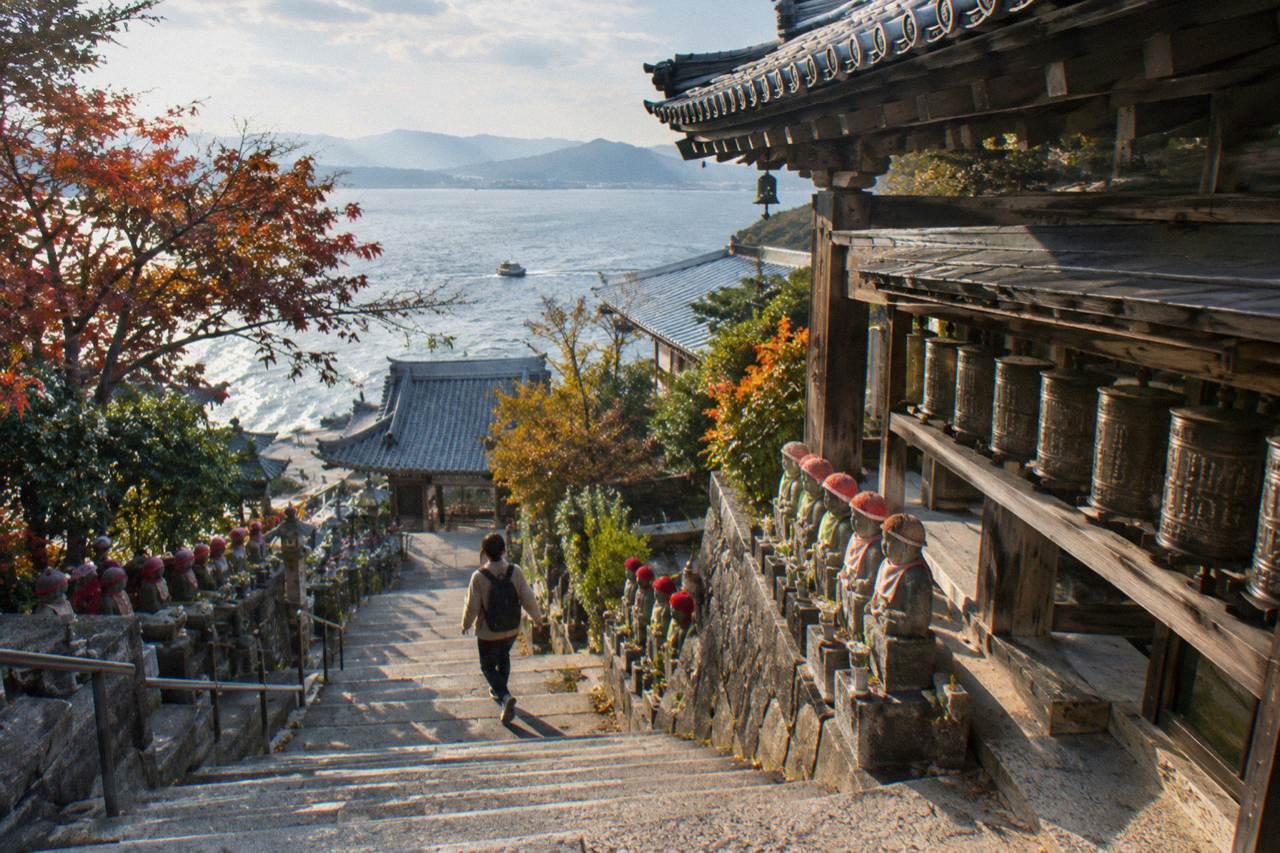
Daisho-In Temple is on Miyajima near Hiroshima, a 5-minute walk from Itsukushima Shrine or 15 to 25 minutes from the ferry pier. Grounds are open daily 8:00 to 17:00 and admission is free.
The Miyajima tourism association's English page describes it as the oldest temple on the island and one of the most prestigious Shingon temples in western Japan, the head temple of the Omuro branch. For visitors planning a Hiroshima and Miyajima day, it is the quieter counterpart to the shrine on the waterfront: free to enter, open every day, and stacked along a hillside of stone steps, halls and caves rather than a single building. This guide sets out what the temple's own listings report, from its founding tradition to its fire-walking ceremonies, and how to fold it into an island itinerary.
What Is Daisho-In Temple On Miyajima?
Daisho-In Temple is a Shingon Buddhist temple on Miyajima island in Hiroshima Bay, traditionally founded in 806 by Kobo Daishi, also known as Kukai, after his ascetic training on Mount Misen. The Miyajima tourism association's page describes it as the oldest temple on the island and the head temple of the Omuro branch of Shingon Buddhism, counted among Japan's three great temples for warding off evil and bringing good fortune.
That founding story ties the temple directly to the mountain above it. The temple's history is also entwined with the imperial family: the official page records that Emperor Toba founded a prayer hall there in the 12th century, and that Emperor Meiji stayed at the temple in 1885. Toyotomi Hideyoshi is recorded as having prayed there to Haki Fudo Myo-o for maritime safety and victory.
For a visitor arriving from Hiroshima, the practical picture matters more than the lineage. The temple is not one hall but a spread of buildings, gates and cave shrines connected by stone steps on the slopes below Mount Misen. The oldest structure on the grounds, according to the temple's listing, is the Daishi-do Hall, which enshrines Kobo Daishi himself.
A first day on the island usually starts with the shrine, and there is a full Miyajima itinerary guide on this site that sequences the waterfront sights. Daisho-in works best as either the mid-morning climb before lunch or the afternoon stop after the torii and the shrine corridors, depending on the tide.
How Do You Get To Daisho-In Temple From Hiroshima?
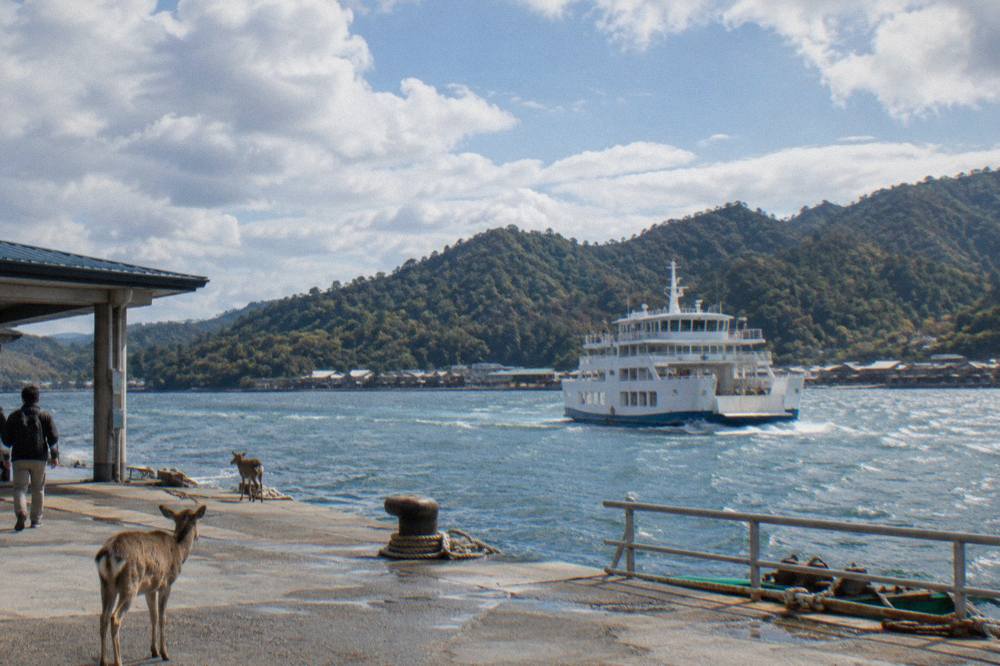
From Hiroshima, the reported route to Daisho-In Temple is a JR Sanyo Line train of about 25 to 30 minutes from Hiroshima Station to Miyajimaguchi, then a 10-minute JR ferry to Miyajima pier, then a 15- to 25-minute walk to the temple, or a 5-minute walk if you are already at Itsukushima Shrine. The Hiroden streetcar also runs to Miyajimaguchi on a flat fare of 240 yen for adults.
The JR West Miyajima Ferry crosses in about 10 minutes, departing roughly every 15 minutes from 8:00 in the morning, with the first sailing about 6:25 and the last about 22:00. A second operator, Matsudai Kisen, runs its own timetable at roughly 15-minute intervals from 7:00 into the evening. Two costs attach to the crossing: the Miyajima Visitor Tax of 100 yen, charged separately on entering the island and waived for preschool children, and the fare itself, 200 yen one way for adults and 100 yen for children on the JR ferry; the 160 yen figure is the group rate for parties of eight or more. The Japan Rail Pass and JR-West Rail Pass are valid on the JR ferry. The site's Hiroshima to Miyajima guide breaks down every option in detail.
| Leg | Mode | Time And Fare |
|---|---|---|
| Hiroshima Station to Miyajimaguchi | JR Sanyo Line | about 25 to 30 minutes (reported) |
| Hiroshima to Miyajimaguchi | Hiroden streetcar | flat fare 240 yen adult, 120 yen child |
| Miyajimaguchi to Miyajima pier | JR ferry | about 10 minutes, roughly every 15 minutes from 8:00 |
| Miyajima pier to Daisho-in | On foot | 15 to 25 minutes |
| Itsukushima Shrine to Daisho-in | On foot | 5 minutes |
Visitors planning the whole crossing from the city should read when is low tide at Miyajima before fixing a schedule, since the tide decides whether the Great Torii can be walked to.
What Are The Opening Hours And Admission At Daisho-In Temple?
The temple grounds at Daisho-In are open daily from 8:00 to 17:00 with no closing days, and admission to the grounds is free, according to the temple's own listings. Optional extras carry small fees: goshuin temple stamps typically run 300 to 500 yen depending on the design, and sutra copying is offered at 1,000 yen.
Free admission sets Daisho-in apart on an island where the main sights charge. Itsukushima Shrine charges 300 yen for adults, 200 yen for high school students and 100 yen for elementary and junior high students, with a combined ticket covering the shrine and Treasure Hall at 500, 300 and 150 yen. The Mount Misen ropeway, further up the same mountain, charges 2,000 yen return for adults. Daisho-in's grounds cost nothing, which makes it an easy add-on even on a tight day, and its 8:00 opening means it is accessible from the first ferries of the morning.
| Sight On Miyajima | Hours | Admission |
|---|---|---|
| Daisho-in Temple grounds | Daily 8:00 to 17:00 | Free |
| Itsukushima Shrine (1 Mar to 14 Oct) | 6:30 to 18:00 | 300 yen |
| Itsukushima Shrine (15 Oct to 30 Nov) | 6:30 to 17:30 | 300 yen |
| Itsukushima Shrine (December) | 6:30 to 17:00 | 300 yen |
| Mount Misen ropeway | 9:00 to 16:00, last descent 16:30 | 2,000 yen return |
| Miyajima Public Aquarium | Daily 9:00 to 17:00, last admission 16:00; closed for repairs 1 Dec 2026 to 31 Mar 2027 | Under 4s free |
The goshuin, a calligraphic stamp pressed into a dedicated book, has become a collection hobby across Japanese temples and shrines, and Daisho-in issues them at the usual range for the region. Sutra copying, shakyo, is the other participatory option: a seated session of tracing a Buddhist sutra, offered at the temple for 1,000 yen.
What Can You See On The Grounds Of Daisho-In Temple?
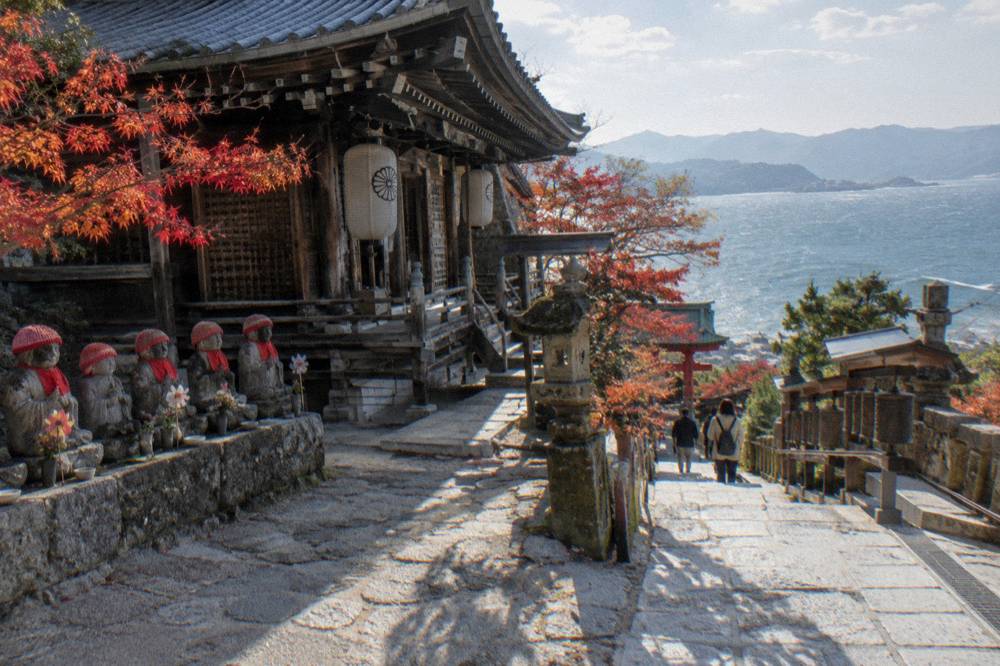
The grounds hold a Niomon gate, the Maniden main hall, and the Daishi-do Hall, the oldest structure on the site, along a climb of stone steps whose most famous feature is a row of metal prayer wheels that visitors can spin, each inscribed with a sutra, an act believed to confer the same blessings as reading the sutras. Below, the Henjokutsu cave holds 88 icons representing the temples of the Shikoku Pilgrimage.
The prayer wheels are the temple's signature interaction. Rows of rotating metal cylinders line the approach, and the temple's tradition holds that turning each one transfers the merit of the sutra inscribed on it. It is a walking meditation in effect: hand to wheel, wheel to wheel, up the steps. The Henjokutsu cave extends the same idea underground. The Shikoku Pilgrimage is a circuit of 88 temples on the island of Shikoku, and Daisho-in's cave gathers icons standing for all 88, so that a walk through the dim passage stands in for the whole circuit. The listing also records a sand mandala made by visiting Tibetan monks and a Kannon-do Hall dedicated to the bodhisattva of compassion.
| Feature | What The Listing Describes |
|---|---|
| Niomon gate | Guardian gate at the entrance to the grounds |
| Maniden Hall | Main worship hall |
| Daishi-do Hall | Oldest structure on the grounds, enshrining Kobo Daishi |
| Prayer wheels | Metal wheels inscribed with sutras, spun by visitors along the steps |
| Henjokutsu cave | Cave with 88 icons representing the temples of the Shikoku Pilgrimage |
| Sand mandala | Made by visiting Tibetan monks |
| Kannon-do Hall | Hall dedicated to Kannon |
None of this needs a guide to appreciate, but the layers of meaning reward one. Travellers who want that context in English can join a guided tour that pairs the island with the city.
Can You Hike To Mount Misen From Daisho-In Temple?
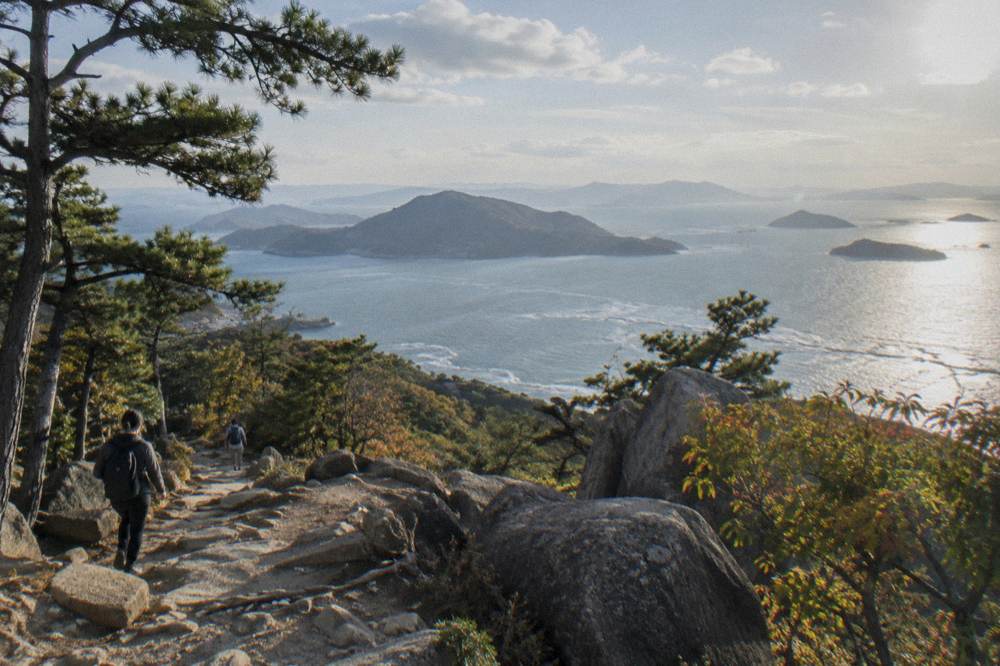
Yes, a hiking trail leads from the Daisho-In Temple grounds to the summit of Mount Misen. The alternative is the ropeway, which runs 9:00 to 16:00 with a last descent at 16:30 and charges 2,000 yen for an adult return ticket, with the summit area adding about an hour of walking on top.
The two routes up the mountain suit different days. The ropeway handles the elevation in stages and leaves a walk at the top. Hikers should note the last descent time of 16:30, because missing it converts a ropeway descent into a long walk down, and the temple grounds themselves close at 17:00, so a late start squeezes both.
Weather shapes the choice more than fitness does. The Japan Meteorological Agency station normals for Hiroshima, 1991 to 2020, put July as the month with 279.8 mm of average rain and August as the month with an average daily high of 32.8 °C, while January averages a high of 9.9 °C and a low of 2.0 C.
| Month | Average High °C | Average Low °C | Average Rain Mm |
|---|---|---|---|
| January | 9.9 | 2.0 | 46.2 |
| April | 19.8 | 10.1 | 141.0 |
| July | 30.9 | 24.1 | 279.8 |
| October | 23.7 | 14.9 | 109.2 |
When Are The Fire-Walking Ceremonies At Daisho-In Temple?
Daisho-In Temple holds fire-walking ceremonies, shiwatari, on April 15 and November 15 each year, according to the Miyajima tourism association's event page. Shiwatari is exactly what the name says: participants walk across a bed of embers, a ritual of purification in the Shingon tradition. The two dates give visitors a rare fixed point in a Miyajima calendar otherwise organised around tides and ferry timetables. Neither date requires any special planning beyond an early ferry: the grounds are open as normal from 8:00, and admission is free.
How Does Daisho-In Temple Fit Into A Miyajima Day?
The efficient sequence is Itsukushima Shrine first from 6:30 opening, then the 5-minute walk to Daisho-in for the halls, prayer wheels and cave, then either the 1.5- to 2-hour hike or the ropeway up Mount Misen, keeping the ropeway's 16:30 last descent in mind, with the return ferry running until about 22:00 from Miyajima pier.
The island's geography makes the order almost self-organising. A visitor who does the shrine at opening, the temple by mid-morning and the mountain after lunch will have the evening free for the illuminated torii, which the Miyajima tourism association's page says is lit every day from 30 minutes after sunset to 11:00 p.m.; the site's page on whether the Miyajima torii gate is lit up at night has the details.
Families weighing the schedule should know the Miyajima Public Aquarium sits about 25 minutes on foot from the pier, open 9:00 to 17:00 with last admission at 16:00 and free entry for children under 4, but closed for facility repairs from 1 December 2026 to 31 March 2027, so a day with children usually trades the Misen hike for the aquarium. Staying overnight changes the arithmetic again, and the site's Miyajima overnight guide explains what the island is like after the day-trippers' ferries thin out.
| Stop | Opening | Adult Cost | Planning Notes |
|---|---|---|---|
| Itsukushima Shrine | 6:30 daily, 1 Jan from 0:00 | 300 yen | Combined shrine and Treasure Hall ticket 500 yen |
| Daisho-in Temple | 8:00 to 17:00 | Free | Sutra copying 1,000 yen, goshuin 300 to 500 yen |
| Mount Misen ropeway | 9:00 to 16:00 | 2,000 yen return | Last descent 16:30 |
| Miyajima Public Aquarium | 9:00 to 17:00 | Under 4s free | Last admission 16:00 |
| Return ferry | First about 6:25, last about 22:00 | Visitor tax 100 yen on entry | Crossing about 10 minutes |
Two operators share the Miyajima crossing, so waits stay short. JR boats leave Miyajimaguchi roughly every 15 minutes from 8:00 onward, and the sailings that loop past the Great Torii for deck views run between 9:10 and 16:10. Matsudai Kisen runs its own boats at about the same frequency from around 7:00 into the evening. Japan Rail Pass and JR-West Rail Pass holders can ride the JR ferry at no extra charge, and preschool children are exempt from the island's visitor tax.
On the mountain, the ropeway's one-way fare is 1,100 yen for adults and 550 yen for children, with a child return at 1,000 yen, useful for anyone riding up and walking down. The ropeway's planning figures allow about an hour for the round trip including sightseeing at the upper station, and the trails to the summit add roughly another hour.
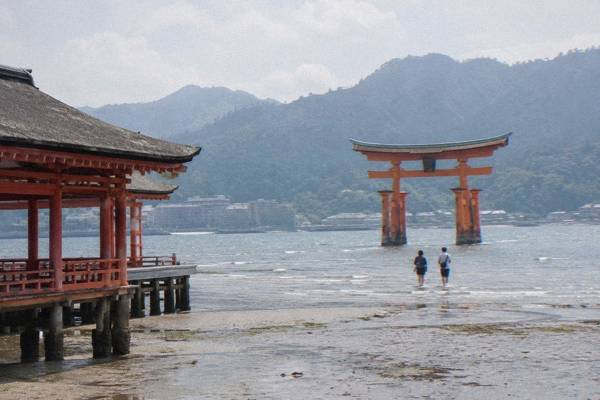
Itsukushima Shrine keeps seasonal hours, closing at 18:00 from 1 March to 14 October, at 17:30 from mid-October through November and from early January through February, and at 17:00 in December, with a midnight opening on 1 January. The Treasure Hall admits visitors from 8:00 to 17:00, and Senjokaku Hall from 8:30 to 16:30. Inside the corridors, floorboards are set with gaps that let high-tide pressure pass beneath them, so comfortable shoes are the practical choice. Tide height decides the classic photo, since visitors can walk out to the torii when the water falls below roughly 100 centimeters, while above about 250 centimeters the gate appears to float. Some scaffolding stays in the frame, with East Corridor reinforcement reported into December 2026 and five-story pagoda repairs into 2027, but the shrine remains open throughout.
What Should You Know Before Visiting Daisho-In Temple?
Bring cash in yen for the optional extras, since goshuin stamps run 300 to 500 yen and sutra copying 1,000 yen, pay the 100 yen Miyajima Visitor Tax separately on island entry, wear shoes that handle stone steps, and plan the last ferry at about 22:00 if you stay for the illuminations, which run from 30 minutes after sunset to 11:00 p.m. daily.
The main footwear note for the island concerns the shrine, whose corridor floorboards have deliberate gaps that let high-tide pressure through, so comfortable shoes serve the whole day.
Time-keeping is the other practical layer. The JR ferry's last departure from Miyajima is about 22:00, with the last sailing from the island listed at 22:14 on the operator's timetable.
For travellers assembling a longer route through the region, the Hiroshima in 3 days itinerary places Miyajima alongside the Peace Memorial Park, the castle district and a day trip further afield, and the question of how to pronounce Miyajima is answered separately for anyone rehearsing before the trip.
Why Does Daisho-In Temple Matter Beyond The Sights?
Daisho-In Temple carries the religious history of Miyajima in one site: a founding attributed to Kukai in 806, imperial patronage from a 12th-century prayer hall to Emperor Meiji's 1885 stay, a place among Japan's three great temples for warding off evil, and a living practice of ceremonies, sutra copying and pilgrimage icons that continues alongside the island's better-known shrine.
The island's World Heritage fame rests on Itsukushima Shrine, but the shrine and the temple are two halves of the same sacred mountain. The Shinto shrine faces the sea and the torii; the Buddhist temple climbs the slope toward the summit where its founder trained. A visitor who sees only the waterfront gets half the story, and the half that is free to enter at that.
There is also a plain travel logic. On a two-day Hiroshima plan it is the natural anchor for the island half of day two, after the Peace Memorial Park and the castle grounds have filled day one; the Hiroshima in 2 days itinerary sets out that split.
Common Questions About Daisho-In Temple
Is Daisho-In Temple Free To Visit?
Yes. Admission to the temple grounds is free, according to the temple's listings. Optional activities carry fees: goshuin stamps typically 300 to 500 yen and sutra copying 1,000 yen.
What Are Daisho-In Temple's Opening Hours?
The grounds are open daily from 8:00 to 17:00 with no closing days. That schedule holds year-round, unlike Itsukushima Shrine, whose closing time shifts with the seasons.
How Far Is Daisho-In Temple From Itsukushima Shrine?
The temple is a 5-minute walk from Itsukushima Shrine, or a 15- to 25-minute walk from the Miyajima ferry pier, according to the temple's listing.
Can You Hike From Daisho-In Temple To Mount Misen?
Yes. A hiking trail leads from the temple grounds to the summit of Mount Misen and takes about 1.5 to 2 hours. The ropeway alternative runs 9:00 to 16:00 with a last descent at 16:30.
When Are The Fire-Walking Ceremonies At Daisho-In Temple?
The Miyajima tourism association's event page lists shiwatari fire-walking ceremonies on April 15 and November 15 each year.
Who Founded Daisho-In Temple?
The temple is traditionally founded in 806 by Kobo Daishi, also known as Kukai, after his ascetic training on Mount Misen. The site is the head temple of the Omuro branch of Shingon Buddhism.
The temple's address is 210 Miyajimacho, Hatsukaichi City, Hiroshima Prefecture, with telephone 0829-44-0111, and the Hiroshima Travel Guide covers the rest of the city and island for travellers building a fuller route.