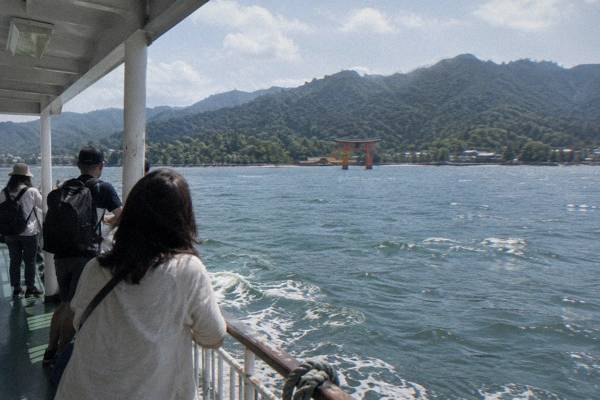
How Do You Pronounce Miyajima?
How to say Miyajima, the island in Hiroshima Bay, syllable by syllable, plus how to pronounce Itsukushima, Miyajimaguchi, momiji manju and other names you will meet on the ferry from Hiroshima.
Miyajima, the island in Hiroshima Bay reached by a short ferry from the mainland, is pronounced mee-yah-jee-mah: four syllables, said evenly, with no stressed beat anywhere in the word. Japanese does not lean on one syllable the way English does, so keeping all four beats level is the single habit that makes the name sound right. The romanisation hides nothing: every letter is spoken, and the j carries the sound of the j in jam, never the French soft g.
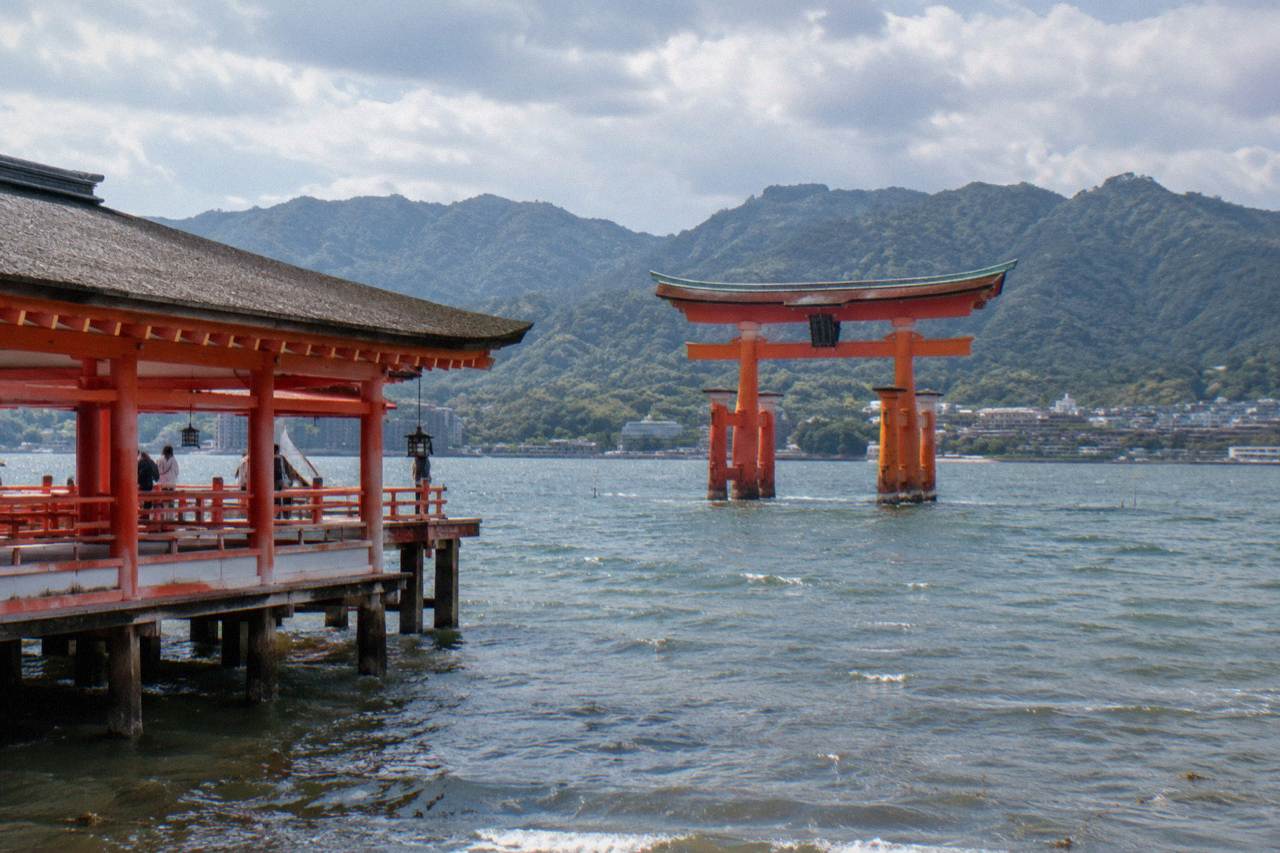
Miyajima is pronounced mee-yah-jee-mah. It splits into four even syllables, mi-ya-ji-ma, each rhyming loosely with the English sounds mee, yah, jee and mah, and no single syllable is stressed. The site is an island in Hiroshima Bay, about ten minutes by ferry from Miyajimaguchi on the mainland, and the name is written in standard Hepburn romanisation, in which every letter shown is meant to be heard.
The reason the word trips English speakers up is that the eye wants to read it as three beats, something like "my-ah-jim-a" or "mee-YA-jima". Hepburn romanisation does not work that way. The letters ya after mi form their own syllable, and the final a is not silent, so the word runs as four clean beats of nearly equal length. Clap four times at a steady pace and say one syllable per clap, that is the rhythm.
There is also a small typographical trap. The island's own tourism association writes Miyajima in plain Hepburn, and that is the spelling used across the whole of this site, from the Hiroshima to Miyajima ferry guide to the tide tables. Say the four beats and the spelling and the sound line up perfectly.
What Does Miyajima Mean In Japanese?
Miyajima means shrine island. The word miya is the Japanese word for a shrine, and jima, also read shima, means island, so the name is a plain description of what the place is: the island of the shrine. Itsukushima is the shrine itself and, formally, the island, founded in 593 and rebuilt in its present form in 1168 by Taira no Kiyomori, per the shrine's own admission page. Both names point at the same ten-minute crossing from Miyajimaguchi.
The naming logic repeats all over Japan. Place names that begin with miya almost always mark shrine land, and jima or shima endings mark islands. So once the two elements are known, the word stops being a memorised string and becomes a small sentence: shrine island. That is also why the island's deer are called shinroku, divine messengers, on the association's nature page: the whole island has been treated as sacred ground, and the name records it.
| Syllable | Sounds like | Note |
|---|---|---|
| mi | mee | as in meet |
| ya | yah | its own full syllable, never merged into mi |
| ji | jee | j as in jam, not the g of beige |
| ma | mah | final a is fully pronounced |
How Do You Say Itsukushima And Miyajimaguchi?
Itsukushima is said ee-tsoo-koo-shee-mah, five even syllables: i-tsu-ku-shi-ma, with the tsu pronounced like the ts at the end of cats. Miyajimaguchi is said mee-yah-jee-mah-goo-chee, six syllables, where guchi means mouth or entrance and marks the mainland ferry port where the boats leave from. Both names follow the same flat, even rhythm as Miyajima itself, with no stressed syllable anywhere.
These two names are the practical pair for the journey. Miyajimaguchi is where the JR ferry leaves from, on roughly quarter-hourly departures with a first sailing at about 6:25 and a last departure back from the island at about 22:00, per the ferry operator's timetable. Getting there from Hiroshima itself means either the JR Sanyo Line train from Hiroshima Station to Miyajimaguchi, about 28 to 30 minutes at 420 yen, or the Hiroden tram, about 66 to 80 minutes at the flat 240 yen adult fare that has applied on all Hiroden lines since 1 February 2025.
The shrine name rewards one extra beat of care. English speakers tend to swallow the first i and start on tsu, which turns Itsukushima into Tsukushima. Keep the opening ee. The shi is the same sound as the she in she, and the final ma is the same ending as Miyajima's.
Which Other Hiroshima Words Are Easy To Get Wrong?
The names that most often come out wrong are Hiroshima itself, said hee-roh-shee-mah with a soft r tap, Itsukushima with its opening ee, and the food words okonomiyaki, oh-koh-noh-mee-yah-kee, and momiji manju, moh-mee-jee mahn-joo. All of them follow the same rule as Miyajima: every vowel is spoken, every syllable is even, and no beat is stressed.
Okonomiyaki deserves the pause, because it is the dish Hiroshima is famous for and it appears on every menu in the city, layered rather than mixed, with cabbage, noodles and egg built on a batter base. Momiji manju is the maple-leaf-shaped cake sold in every shop on the island's shopping street, filled most often with sweet red bean. Both names are long strings of simple vowels, and both become easy once they are broken into beats rather than read as one solid English word. The full index of guides sits on Hiroshima Travel Guide.
The torii, the great gate standing in the water, is said toh-ree-ee, three beats, not "tory". The gate itself is 16.6 meters tall and weighs about 60 tons, per the Miyajima Tourist Association's page on it, and the current structure is the ninth, erected in 1875. Anago-meshi, conger eel over rice, is ah-nah-goh-meh-shee. None of these words carries a sound English lacks; the only real work is resisting the urge to stress one syllable and blur the rest.
Does The Spelling Of Miyajima Change On Signs?
The same island characters are sometimes read Itsukushima in formal contexts, and the tram stop and port names build on the same root: Miyajimaguchi for the mainland port. The letters do not change to trick visitors, they stack, because Japanese place names are compounds.
Reading the signs this way turns a confusing board into a puzzle that solves itself. Guchi means mouth or entrance, so anything ending in guchi is a gateway. Sanjo means an approach or a hill foot. Dori, as in the shopping streets of Hiroshima's Hondori, means street. Once the pieces are known, Miyajimaguchi announces itself as the entrance to Miyajima, which is exactly what it is: the pier where the roughly ten-minute ferry runs, on which the Japan Rail Pass is valid, with the separate 100 yen Miyajima visitor tax still payable by every arriving visitor except preschool children.
The same stacking explains the shrine's full name. Itsukushima Shrine sits on the island, its buildings about 160 meters behind the great gate, per the association's sightseeing page, and its corridors are built with floorboard gaps that let high tide pass through, which is why the shrine's own admission page asks for comfortable shoes. The name, the gate and the building are one system, and the words in that system all follow the flat four- and five-beat rhythm that Miyajima itself sets.
| Word | Syllables | What it means |
|---|---|---|
| Miyajima | mi-ya-ji-ma | shrine island |
| Miyajimaguchi | mi-ya-ji-ma-gu-chi | Miyajima entrance, the mainland ferry port |
| Itsukushima | i-tsu-ku-shi-ma | the shrine's formal name, also the island's |
| okonomiyaki | o-ko-no-mi-ya-ki | the layered Hiroshima savoury pancake |
| momiji manju | mo-mi-ji man-ju | maple-leaf-shaped filled cake |
| anago-meshi | a-na-go-me-shi | conger eel over rice |
Why Does Saying The Name Right Matter On The Island?
Saying Miyajima as four even syllables matters less as etiquette than as utility: tickets, tram stops, ferry announcements and shop signs all use the name, and pronouncing it the way it is written, mee-yah-jee-mah, makes each of those moments simpler, from buying the 100 yen visitor tax ticket on the inbound ferry to asking for the Miyajimaguchi train at Hiroshima Station. The name is also the island's history in two words, shrine island, and saying it plainly is part of reading the place.
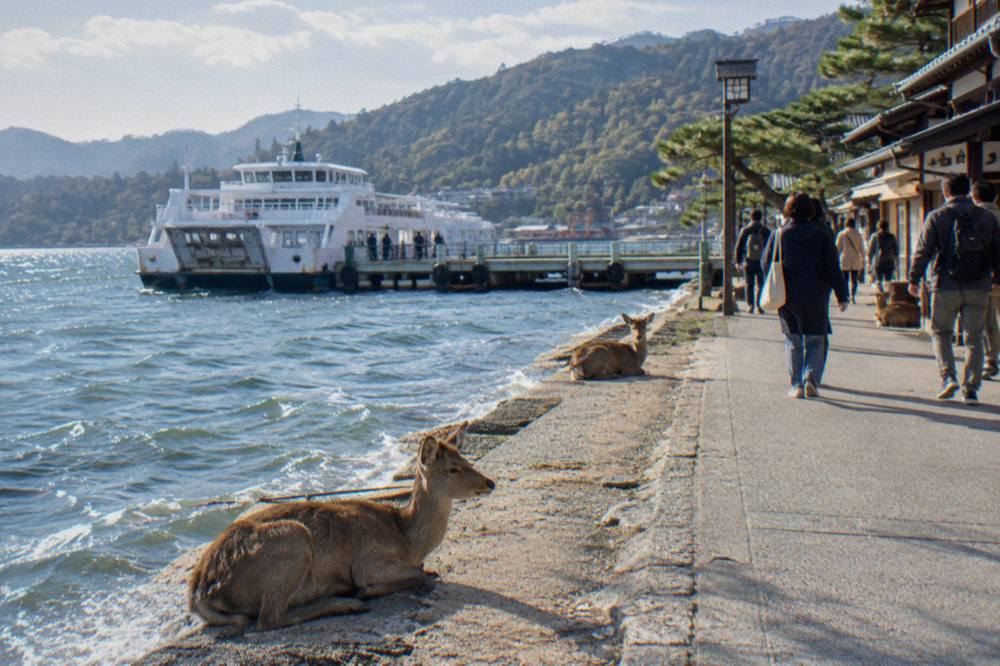
The island's own association frames it that way in its English material. Its nature pages describe the roughly five hundred deer as shinroku, divine messengers, recorded as cherished in a poem by the priest Saigyohoshi about eight hundred years ago, and the sale of deer crackers was banned in 2007, with feeding prohibited since, so the animals now live alongside visitors without handouts. The sacred reading of the island, the shrine in the water, the gate that appears to float when the tide passes about 250 cm and can be walked to when it falls below about 100 cm, is all in the name. The low tide question at Miyajima has its own page with the live tide logic.
For the practical side of a visit, the pairing questions are already answered elsewhere on this site: which is better, Hiroshima or Miyajima, whether you can swim at Miyajima, and what to wear on the island. The archery session at Hiroshima Castle that this page features can be checked via Check availability, and the castle grounds it sits in are worth a look even though the keep itself has been closed to visitors since 22 March 2026, with the exterior and grounds open as usual.
Common Questions About Pronouncing Miyajima
How Do You Pronounce Miyajima?
Miyajima is pronounced mee-yah-jee-mah, four even syllables with no stressed beat: mi as in meadow, ya as its own syllable, ji as the j in jam, and a fully pronounced final ma. The name belongs to the island in Hiroshima Bay reached by the roughly ten-minute ferry from Miyajimaguchi.
Is Miyajima Pronounced With A Stress On One Syllable?
No. Japanese does not use English-style word stress, and Miyajima is said as four level beats of roughly equal length. Keeping the rhythm flat is what makes the name sound right, rather than leaning on any one syllable.
What Does Miyajima Mean?
Miyajima means shrine island: miya is the word for shrine and jima, also read shima, means island. The island's formal name is Itsukushima, the name of the shrine founded in 593 and rebuilt in its present form in 1168.
How Do You Pronounce Itsukushima?
Itsukushima is said ee-tsoo-koo-shee-mah, five syllables, with the tsu sounding like the ts at the end of cats and the opening i fully pronounced. Adult admission to the shrine is 300 yen.
How Do You Say Miyajimaguchi?
Miyajimaguchi is said mee-yah-jee-mah-goo-chee, six syllables. Guchi means mouth or entrance, and the name marks the mainland port where the JR ferry to the island leaves from, with trains from Hiroshima Station taking about 28 to 30 minutes.
Is Miyajima The Same Island As Itsukushima?
Yes. Miyajima is the everyday name and Itsukushima is the formal one, drawn from the shrine. Both refer to the same island in Hiroshima Bay, and the Miyajima day trip guide covers the crossing and the sights in full.
Said as four flat beats, mee-yah-jee-mah, the name of Hiroshima's shrine island stops being a mouthful and becomes what it has been all along: a short, plain description of a sacred island in Hiroshima Bay.