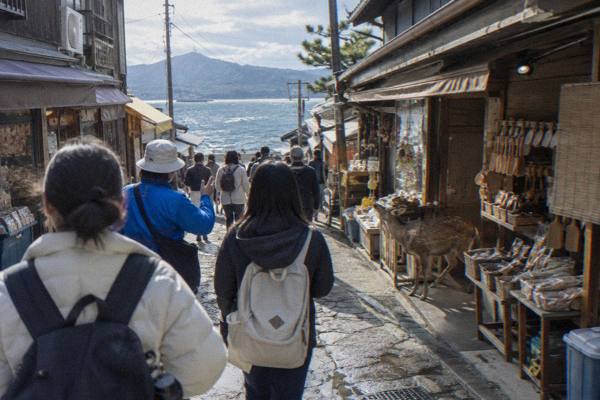
Can You Swim At Miyajima?
Yes, but not at the shrine. Swimming at Miyajima means Tsutsumigaura beach on the island's northeast coast, with camping, barbecues and a roped summer swimming area in the Seto Inland Sea.
Miyajima, the island in Hiroshima Bay reached by a roughly 10-minute ferry from Miyajimaguchi on the edge of Hiroshima, is famous for the Great Torii standing in the sea, and most of the questions this Hiroshima Travel Guide receives about the island concern tides, deer and the shrine. Swimming comes up too, and the answer is yes, with one large qualification: the swimming is not at the shrine. The island's beach sits on its northeast coast, well away from the torii, at Tsutsumigaura Nature Park, a corner of Setonaikai National Park with shallow, calm Seto Inland Sea water. This page sets out what the official island pages say about that beach, how to reach it, what it costs and why the shoreline in front of Itsukushima Shrine is for viewing, not swimming.
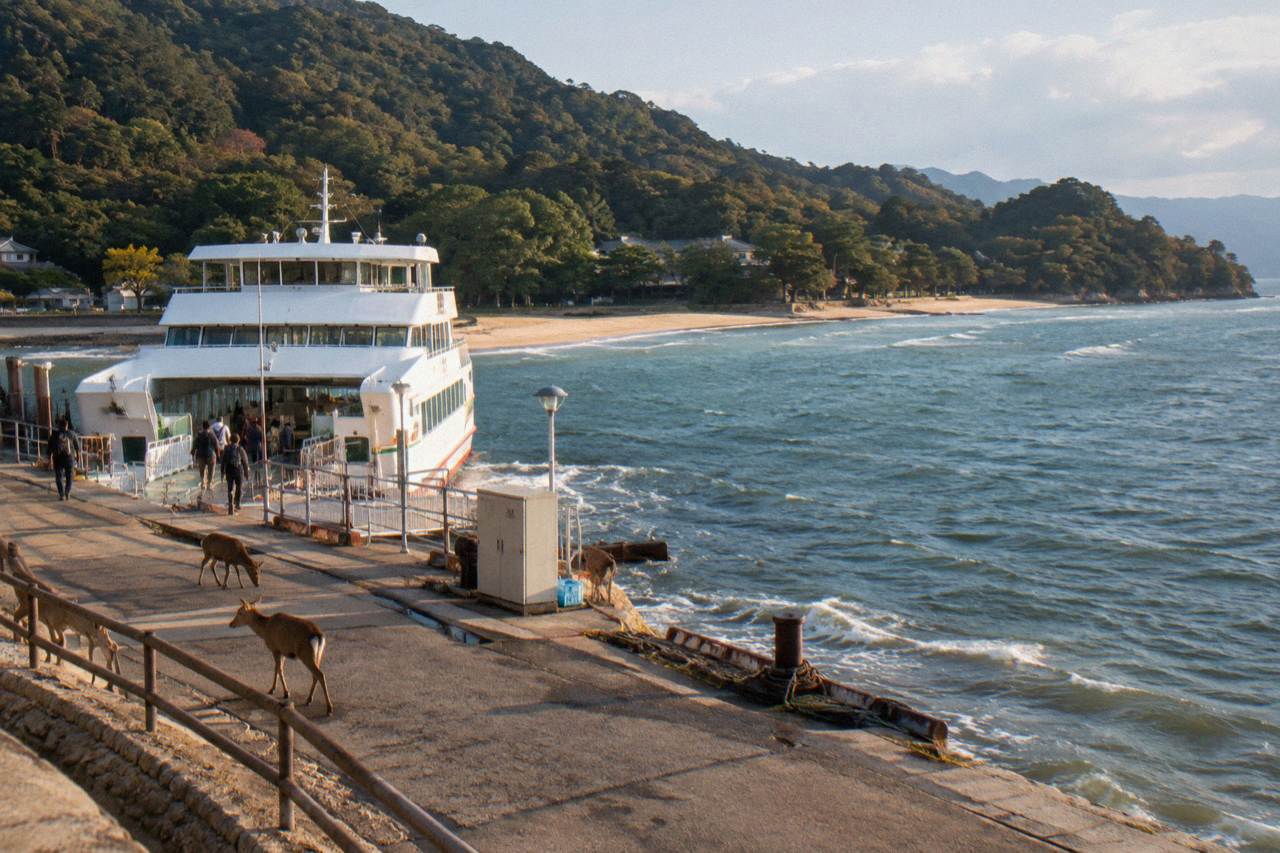
Yes, Miyajima has a designated swimming beach, but it is not in front of Itsukushima Shrine. The island's official tourism pages place swimming at Tsutsumigaura Nature Park on the northeast coast, a 700-meter sandy beach with shallow, calm Seto Inland Sea water, part of Setonaikai National Park, while the shoreline at the shrine is a sacred tidal flat with no swimming facilities and strong tidal fluctuations that make the water unsuitable.
The distinction matters because the two shores could hardly be more different. Tsutsumigaura, according to the island's tourism pages, offers a long sandy stretch where the water stays shallow and gentle, which is why it is described as family-friendly with a mild entry. The Mikasahama tidal flat in front of the shrine, by contrast, exists for watching the tide pour in and out around the Great Torii, and the local guidance is blunt that no designated swimming facilities exist there. Hiroshima Bay's tide swings are large enough to transform that flat twice a day, which is precisely the spectacle visitors come for, and precisely why the water there is not a place to swim.
So the short planning answer is: pack a swimsuit only if Tsutsumigaura is on the itinerary, and treat the shrine shoreline as a viewing terrace. The rest of this page covers the beach in detail, including how to get there and what else the park offers.
Where Is The Swimming Beach On Miyajima?
Tsutsumigaura Nature Park sits on Miyajima's northeast coast, away from the shrine and the main ferry terminal area that day visitors see, and the park's beach is a 700-meter sandy stretch of which a 200-meter section is noted for ideal swimming conditions in the shallow bay waters of the Seto Inland Sea.
The island's official tourism material describes Tsutsumigaura as the destination's natural beach, located at 1195 Miyajimacho, Hatsukaichi-shi, in Hiroshima. The Ministry of Land, Infrastructure, Transport and Tourism's multilingual database, which carries the park's details, lists a 200-meter sandy section noted for ideal swimming conditions within the longer 700-meter beach.
Being on the far side of the island changes the character of a visit. Anyone planning a full day that pairs the shrine in the morning with the beach in the afternoon is essentially planning the wider Miyajima itinerary, and an overnight stay makes the combination far more relaxed.
How Do You Get To Tsutsumigaura Beach?
From Miyajima's ferry terminal, Tsutsumigaura is reported at about 40 minutes on foot or 10 minutes by car, and a shared minibus called the Maple Liner runs from the pier and the aquarium to the beach for 300 yen cash only, with about 7 trips per day, which makes timing the bus a real constraint on a day trip.
Those figures come from the official Miyajima brochure and the island's tourism pages. The 40-minute walking figure appears in the Miyajima Visitor Guide brochure published by the Miyajima Tourist Association, and the same distance is given as roughly 10 minutes by car in Japanese route guides.
For context, reaching Miyajima itself is straightforward: the JR ferry from Miyajimaguchi takes about 10 minutes and departs roughly every 15 minutes across the day, and Matsudai Kisen runs a parallel service on its own timetable. A Hiroden 1-Day Streetcar and Ferry Pass covers the streetcar from Hiroshima city plus the Matsudai Kisen ferry, which is covered in the guide to getting from Hiroshima to Miyajima. Note that the Miyajima visitor tax of 100 yen is charged separately on entering the island, with preschool children exempt.
| Leg | Reported Time Or Fare | Notes |
|---|---|---|
| JR ferry, Miyajimaguchi to Miyajima | About 10 minutes | Roughly every 15 minutes through the day |
| Miyajima visitor tax | 100 yen | Charged separately on entering the island, preschool children exempt |
| Ferry terminal to Tsutsumigaura on foot | About 40 minutes | Figure from the official Miyajima brochure |
| Ferry terminal to Tsutsumigaura by car | About 10 minutes | Reported by Japanese route guides |
| Maple Liner minibus to the beach | 300 yen | Cash only, about 7 trips per day |
The bus frequency is the planning hinge. With about 7 trips a day, a missed connection can strand a swim at the wrong hour, so checking the day's timetable on the island before committing is the sensible move. Anyone who would rather not manage bus timings at all can fold Miyajima into a guided day instead: the small-group two-UNESCO-sites tour pairs the island with the city's peace memorials, Check availability if that shape suits the trip better.
Why Can You Not Swim At Itsukushima Shrine?
The shoreline at Itsukushima Shrine is a sacred tidal flat with no swimming facilities, and the strong tidal fluctuations around the shrine make the water unsuitable for swimming, so no official swimming beach exists directly in front of the shrine, while the Mikasahama flats are expressly for viewing the tides rather than entering the water.
That is not a rule invented by guidebooks; it follows from what the shoreline is. The flats in front of the shrine drain and refill twice a day as the tide swings between the levels at which the Great Torii can be walked to and the levels at which the shrine appears to float, a range the island's tide pages track in centimeters. Water that moves through that range daily is not gentle shallow bathing water, and the shrine's own admission page notes practical details of a different kind: the corridor floorboards have gaps that let high-tide pressure through, and visitors are advised to wear comfortable shoes. The whole shoreline is built around viewing, from the illuminated torii after dark to the tide windows explained in when low tide happens at Miyajima.
The deer that roam the island, covered separately in whether you can touch the Miyajima deer, also congregate around the shrine approach, which is one more reason the swimming belongs on the far coast.
What Facilities Does Tsutsumigaura Nature Park Have?
Tsutsumigaura Nature Park is a full outdoor recreation site rather than a bare beach: the park's management center offers campsites, cabins, barbecue facilities, fishing equipment rental and portable barbecue rentals, and during the peak summer season a roped-off swimming area separates swimmers from other water activities in the bay.
The facility list comes from the national government's multilingual database entry for the park, which is the most complete official description available. The mix matters for planning: a family can camp overnight, rent a portable barbecue and fish from the shore without carrying gear across the island, and the cabins mean a Miyajima stay does not have to mean a ryokan budget. The roped swimming area, reported during the peak summer season, is the clearest official signal that this is a managed swimming beach rather than an incidental stretch of sand.
The park also makes an overnight island visit more interesting. Staying on Miyajima is the standard advice for anyone who wants the shrine at dawn or the illumination after dark without racing the last ferry, and the Miyajima overnight guide covers that in detail. Adding a beach afternoon to such a stay is exactly the kind of combination day-trippers cannot manage, since the Maple Liner's roughly 7 daily trips and the 40-minute walk both eat into a half-day window.
When Is The Water Warm Enough For Swimming On Miyajima?
Japan Meteorological Agency station normals for Hiroshima, 1991 to 2020, show July averaging a high of 30.9 °C and August 32.8 °C, with June at 27.2 °C and September at 29.1 °C, so the peak summer window of late June through September is when air temperatures suit swimming, while April at a 19.8 °C average high and October at 23.7 °C sit well outside it.
The station normals describe the air, not the sea, and no sea-temperature figure is published in the source data, so the honest planning statement is about air temperature and season. Hiroshima summers are hot and humid, and the same normals that put July's rainfall at 279.8 mm, the highest monthly total of the year, also show the warmth that makes a shallow, calm bay genuinely swimmable. August is notably drier than July at 131.4 mm while being the warmest month on average, which is why the roped summer swimming area makes sense where it does.
| Month | Average High °C | Average Low °C | Average Rain Mm |
|---|---|---|---|
| June | 27.2 | 19.8 | 226.5 |
| July | 30.9 | 24.1 | 279.8 |
| August | 32.8 | 25.1 | 131.4 |
| September | 29.1 | 21.1 | 162.7 |
| October | 23.7 | 14.9 | 109.2 |
Figures: Japan Meteorological Agency station data, 1991 to 2020, Hiroshima.
What to bring is covered in the what to wear on Miyajima page, and the choice between a beach day and a shrine day is one strand of the broader question of which is better, Hiroshima or Miyajima. In practice the two are not in competition: the beach is a summer add-on to the island, not a replacement for its shrine, and the full things to do in Hiroshima roundup places both in context.
Common Questions About Swimming At Miyajima
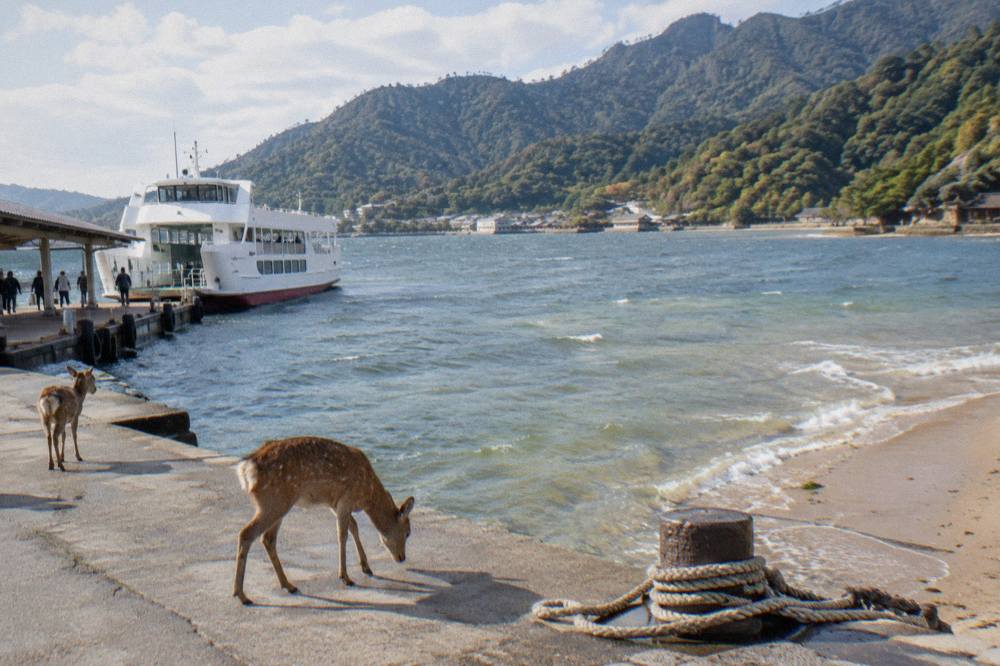
Swimming at Miyajima comes down to one beach on the northeast coast, reached by a cash-only minibus or a long walk, with facilities for camping and barbecues beside the sand, while the shrine shoreline stays a viewing area; the questions below repeat the answers in one-line form.
Can You Swim At Miyajima?
Yes, at Tsutsumigaura Nature Park on the island's northeast coast, a 700-meter sandy beach with shallow, calm Seto Inland Sea water. You cannot swim in front of Itsukushima Shrine.
How Far Is The Beach From The Miyajima Ferry Terminal?
About 40 minutes on foot or 10 minutes by car, per the official Miyajima brochure and Japanese route guides. The Maple Liner minibus covers the run for 300 yen cash only, about 7 trips per day.
Can You Swim In Front Of The Great Torii?
No. The Mikasahama tidal flat is a viewing area for the tides, the water near the shrine has strong tidal fluctuations, and no swimming facilities exist there.
Can You Camp At Tsutsumigaura?
Yes. The park's management center offers campsites, cabins, barbecue facilities, fishing equipment rental and portable barbecue rentals.
When Is The Swimming Season?
The roped-off swimming area operates during the peak summer season. JMA station normals for Hiroshima put July and August average highs at 30.9 °C and 32.8 °C respectively, with June and September close behind.
Miyajima rewards exactly this kind of split plan: the shrine and the torii at the tide hours that suit them, and the beach on the far coast when the summer heat argues for shallow, calm water and a rented barbecue on the sand.