Can You Touch The Deer On Miyajima?
The deer on Miyajima near Hiroshima are wild animals and feeding them has been banned since 2007. Here is what the Miyajima Tourist Association says about touching, feeding and safety.
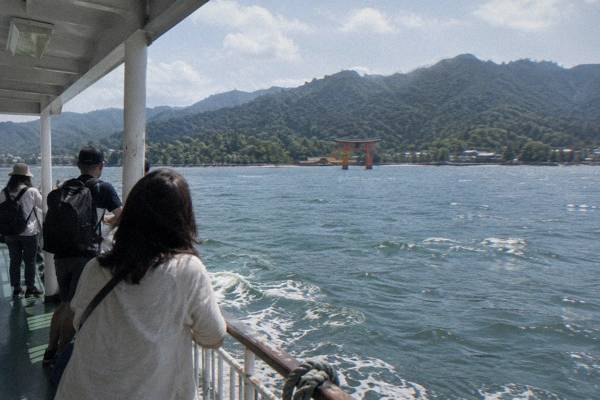
Miyajima, the island in Hiroshima Bay a short ferry ride from Miyajimaguchi on the edge of Hiroshima city, is home to about five hundred deer according to the Miyajima Tourist Association, and they wander the town streets near the pier as freely as the visitors do. They are wild animals, not a petting zoo, and the island's rules reflect that. Feeding them has been prohibited since 2007, the sale of deer crackers ended the same year, and the official guidance is blunt: do not feed the deer and do not let them reach into bags. This page sets out what the sources actually say about touching them, why the feeding ban exists, and how to keep your maps, tickets and lunch out of reach.
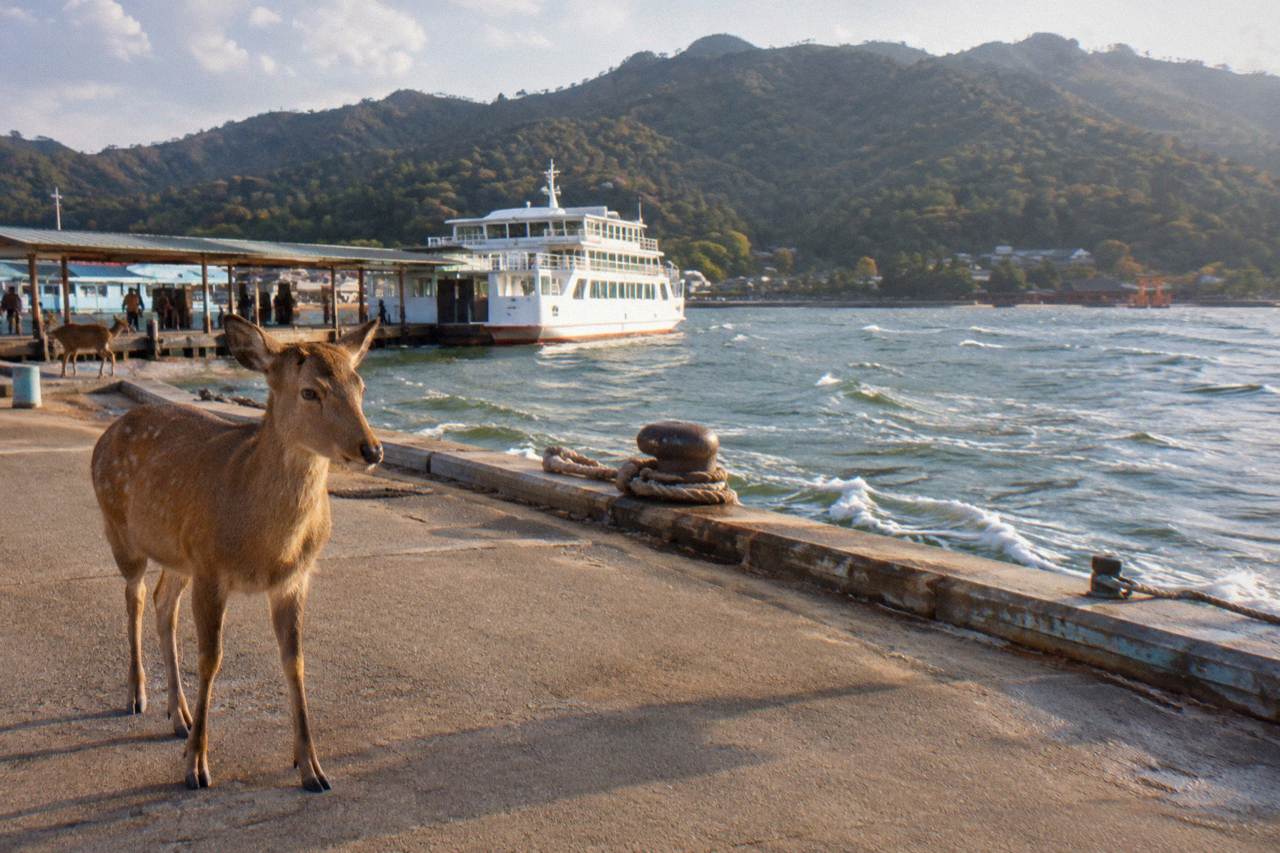
No rule on the island forbids a brief touch if a deer walks up to you, but the deer on Miyajima are wild animals that nobody is allowed to feed, and the guidance from the island's own sources is to keep distance, keep food and paper secured, and never let a deer reach into a bag. The Miyajima Tourist Association, which counts about five hundred deer on the island, describes them as wild, not tame, and advises against feeding them outright.
That distinction, wild rather than tame, is the whole frame for the question. The deer are not kept, owned or handled by anyone. They are Nihonjika, Japanese deer, a species the Miyajima Tourist Association notes ranged from China to Vietnam, and on this island they have lived alongside people for centuries. The same association records that deer were cherished here as "Shinroku", sacred messengers, and were mentioned in the Senjusho by the priest Saigyohoshi about eight hundred years ago. Sacred status did not mean domestication then and it does not now.
What changed is the feeding. Deer crackers were once sold to visitors, and that ended in 2007. Since then the deer forage for themselves, and the behaviour visitors see, deer approaching people, nudging bags, sniffing at clothing, is food-seeking behaviour from wild animals that have learned humans carry edible things. Human food causes health problems and aggressive behaviour in the Miyajima deer, which is the stated reason the feeding prohibition exists at all.
Nothing on the official pages makes it an offence to let a deer brush past you or stand close, and a deer that chooses to approach you may make contact on its own. The guide to getting from Hiroshima to Miyajima covers the ferry crossing, and the visitor tax explained page covers the 100 yen island entry charge.
Why Feeding The Miyajima Deer Is Prohibited
Feeding the deer on Miyajima has been prohibited since 2007, the same year the island stopped selling deer crackers, because human food causes health problems and aggressive behaviour in the deer, and because deer on the island will eat paper maps, tickets and plastic if given the chance. The ban applies to all visitors and there is no sanctioned feeding activity anywhere on the island.
The health case is documented plainly. A deer's stomach is divided into four rooms like cattle, the Miyajima Tourist Association explains, which lets the animals digest dead leaves and other coarse forage. Food and packaging from visitors are not part of that system. Paper and plastic can block it, and the animals cannot tell the difference between a map held in a hand and a leaf on the ground.
The behaviour case matters just as much. Deer that associate people with food seek people out, and a wild animal the size of a deer nudging, bumping or head-butting for food is the "aggressive behaviour" the safety guidance names. The animals have keen senses of hearing and smell and can move their ears at will, the association notes, so a visitor holding food is detected quickly across a crowded street near the pier.
There is a management side too. Hatsukaichi City established the Miyajima Area Deer Countermeasures Council in 2008, the year after the cracker ban, and antler removal on the island is conducted privately by city officials rather than as a public event. The deer population itself is healthy: the reproduction rate on Miyajima remains over 80 percent with healthy fawns born every year. The rules are not about a fragile population, they are about keeping wild deer wild.
| Rule or fact | What the sources say |
|---|---|
| Feeding the deer | Prohibited since 2007 |
| Deer crackers | Sale banned in 2007 |
| Letting deer reach into bags | Advised against in safety guidance |
| Paper maps and tickets | Deer will eat them, causing health issues |
| Antler removal | Conducted privately by city officials, not a public event |
| Deer population | About 500 on the island |
A guided walk is one way to see the island with someone who knows these rules in practice. The Miyajima Island Half-Day Tour with Guide runs four hours with a local guide, and its Check availability link sits beside the site's own half-day overview.
How To Keep Your Map, Tickets And Food Safe
Keep all food, paper and plastic inside a closed bag while walking the streets of Miyajima, because deer on the island eat paper maps, tickets and plastic, and the official guidance is to let them reach nothing. The deer spend nights in dens in the woods or the town and go out for food at dawn, so they are actively foraging in the town area through the day.
The practical failure mode is the map. Visitors arrive at the pier with a paper map in hand, walk through the town toward Itsukushima Shrine, and a deer takes the map. Tickets are the second casualty, including ferry return tickets.
Bags hanging from strollers and bike handles are the classic target, and a deer that gets a strap will pull until something gives. Clothing pockets that close are safer than bags that do not. Children's snacks deserve special attention, since the animals have a keen sense of smell and a snack held at child height is easy for a deer to find.
None of this is a reason to be afraid of the deer. They are not attacking anyone; they are foraging. The Miyajima Tourist Association's own nature pages describe them spending nights in dens, some in the woods and some in the town area, and heading out for food at dawn. A visitor who carries nothing edible-looking simply becomes uninteresting to them.
Where The Miyajima Deer Live And When You See Them
About five hundred deer live on Miyajima according to the Miyajima Tourist Association, and about two hundred of them, live in the town area near the pier and Itsukushima Shrine, at a density of roughly one hundred deer per square kilometre in the residential parts. Bucks battle with antlers during courtship from September to January, and fawns are born between May and July.
The animals are not herded or managed into the tourist streets; they den there, the association says, with some deer setting their dens in the town itself in addition to the woods.
The calendar shapes what you meet. Fawns are born between May and July after a gestation averaging 31 weeks, and fawns hide in bushes for their first month, so early-summer visitors may glimpse one from a distance and should leave it alone. From September to January the bucks battle with antlers during courtship, which is the one season when keeping extra distance from a large male is simple sense. The deer mate mainly in autumn. Everything else covered here is indexed on Hiroshima Travel Guide.
| Season | Deer behaviour on Miyajima |
|---|---|
| May to July | Fawns born, hiding in bushes for the first month |
| September to January | Bucks battle with antlers during courtship |
| Autumn | Main mating season |
| Dawn | Deer leave dens to forage |
| Night | Deer return to dens in woods and town |
Do The Deer Follow People Around Miyajima?
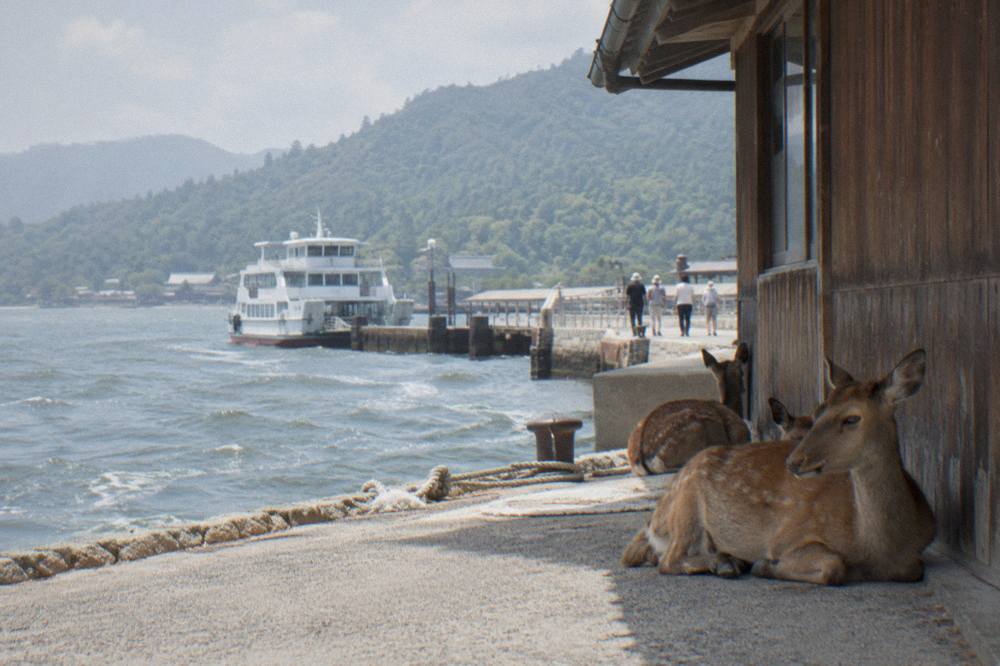
Deer on Miyajima approach people who carry food or paper, not people in general, because since the 2007 feeding ban they have learned that visitors' bags hold edible things and the official safety guidance is to keep food secured and let them reach nothing. A visitor carrying nothing edible is usually ignored, while a paper map or a snack in an open bag draws attention quickly.
The animals' senses drive this. The Miyajima Tourist Association describes deer with keen hearing and smell, able to move their ears at will, and a species whose four-chambered stomach lets them digest coarse plant food, including dead leaves, that people cannot. Nothing in their diet requires anything a visitor carries. The interest in bags is learned behaviour, and it fades the moment the bag proves empty.
The habit has a long memory. Deer crackers were sold on the island until 2007, and nearly two decades of the feeding ban have not fully erased the association between human hands and food. That is why the rule is stated so firmly, and why deer that nudge or nose at clothing are not being friendly in any trained sense, they are checking whether food is present. Standing still, moving the bag out of reach and walking on ends the encounter.
Visitors planning the wider island day can pair this with the tide question, since the torii can be walked to at low tide, and the site's low tide at Miyajima page covers how that is timed. For the shrine's own entrance fee and seasonal hours, the Itsukushima Shrine guide on this site carries the details.
What A Guided Miyajima Tour Adds To The Deer Question
A guided tour of Miyajima adds local knowledge of the deer rules, the tide timing and the island layout, and the half-day guided option on this site runs four hours with a guide who handles the practical questions visitors usually get wrong, including what the deer may and may not be given. It does not change the rules themselves: no tour may feed the deer, and the 2007 prohibition applies to guides and visitors equally.
The value of a guide on this island is context. The deer, the shrine's tidal corridors, the 6:30 opening time on every day except 1 January and the ferry logistics stack into a short visit, and a guided half-day or a combined Hiroshima and Miyajima day trip moves through them in a planned order.
The trio below shows the guided and full-day options side by side, with prices and ratings rendered live from each operator's own data.
Independent visitors manage the island perfectly well too, and the one-day Hiroshima and Miyajima itinerary times the whole route, ferry crossing and shrine hours included.
Common Questions About The Deer On Miyajima
Can You Touch The Deer On Miyajima?
No rule forbids a deer making contact with you, but the animals are wild, feeding them is prohibited and the official guidance says do not let them reach into bags. Treat any touch as the deer's choice, not an invitation to pet.
Can You Feed The Deer On Miyajima?
No. Feeding has been prohibited since 2007, when the sale of deer crackers ended. Human food causes health problems and aggressive behaviour in the deer.
How Many Deer Live On Miyajima?
About five hundred, according to the Miyajima Tourist Association, with roughly two hundred in the town area near the pier and Itsukushima Shrine.
Why Do The Deer Try To Eat Maps And Tickets?
Deer on Miyajima will eat paper maps, tickets or plastic if they can reach them, and doing so causes health issues. Keep all paper inside a closed bag.
When Are Fawns Born On Miyajima?
Fawns are born between May and July, after a gestation period averaging 31 weeks, and they hide in bushes for their first month.
Are The Miyajima Deer Sacred?
The deer were historically cherished as "Shinroku" and were mentioned in the Senjusho by the priest Saigyohoshi about eight hundred years ago, according to the Miyajima Tourist Association. They remain wild animals regardless of that history.
The Miyajima deer are one of the island's genuine pleasures, and the rules that protect them are short: feed nothing, secure everything paper or edible, and let a wild animal keep its distance.