Miyajima Island: A Day On Itsukushima
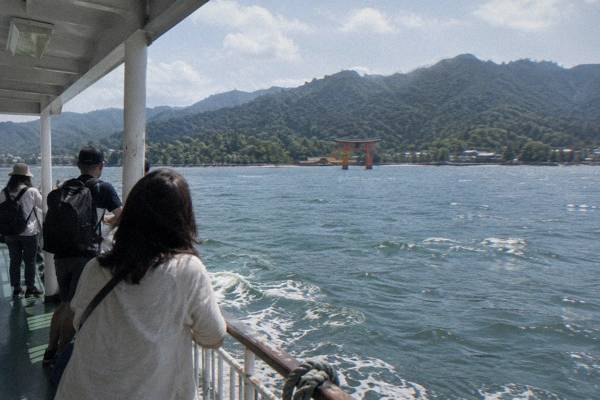
Miyajima, the island in Hiroshima Bay whose Great Torii appears to float at high tide, is a 10-minute ferry ride from Miyajimaguchi on the Hiroshima city side. Here is what the shrine, the ferry operators and the city's own climate normals say about planning a day on Itsukushima.
Miyajima is a small island in Hiroshima Bay, about 10 minutes by ferry from Miyajimaguchi, reached from Hiroshima Station in about 30 minutes by JR train. Itsukushima Shrine, a UNESCO World Heritage Site since 1996, charges 300 yen for adults, the visitor tax is 100 yen, and a half day covers the shrine and town while a full day adds Mount Misen.
The shrine's own admission page records that it was established in 593 and took its present form in 1168 under Taira no Kiyomori. The island is reached by a ferry of roughly 10 minutes from Miyajimaguchi, and the crossing alone is one of the reasons a Miyajima day trip anchors so many Hiroshima itineraries, including the one-day Hiroshima and Miyajima plan this site publishes separately.
This page is the practical day-trip guide: what the island is famous for, how the ferries and the 100 yen visitor tax work, what the shrine costs and when it opens, how the tide changes the Great Torii, and how to fold Mount Misen into a single day. The Hiroshima Travel Guide covers the city side of the water, from the Peace Memorial Park to Hiroshima Castle, and the dedicated shrine page goes deeper on Itsukushima itself.
What Is Miyajima Famous For?
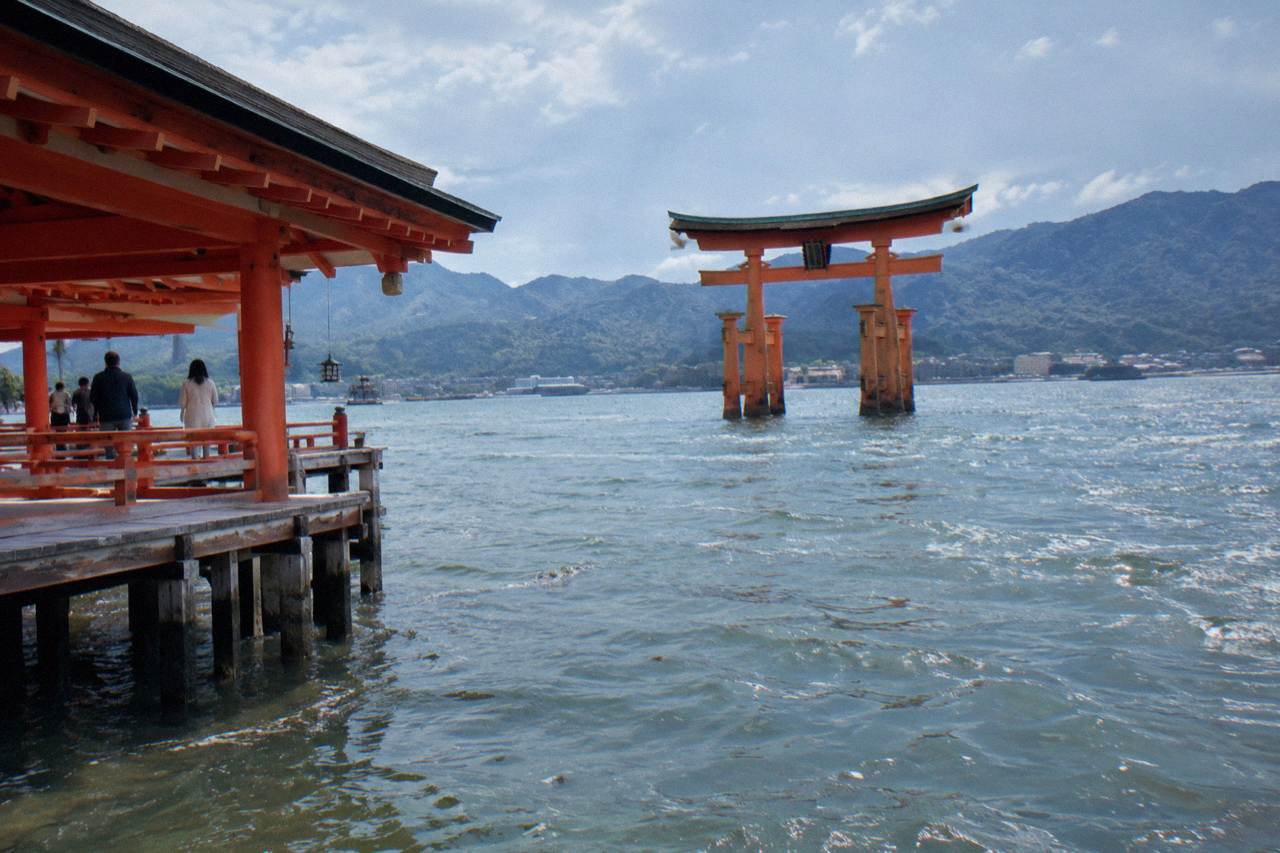
Miyajima is famous for the Great Torii of Itsukushima Shrine, a vermillion gate that stands in the shallows of Hiroshima Bay and appears to float at high tide, sitting at the edge of a shrine complex built over the water that has held UNESCO World Heritage status since 1996. The shrine was established in 593 and rebuilt in its present form in 1168 by Taira no Kiyomori, and the island's free-roaming deer, momiji manju sweets and Mount Misen complete a day that most guidebooks treat as essential Hiroshima.
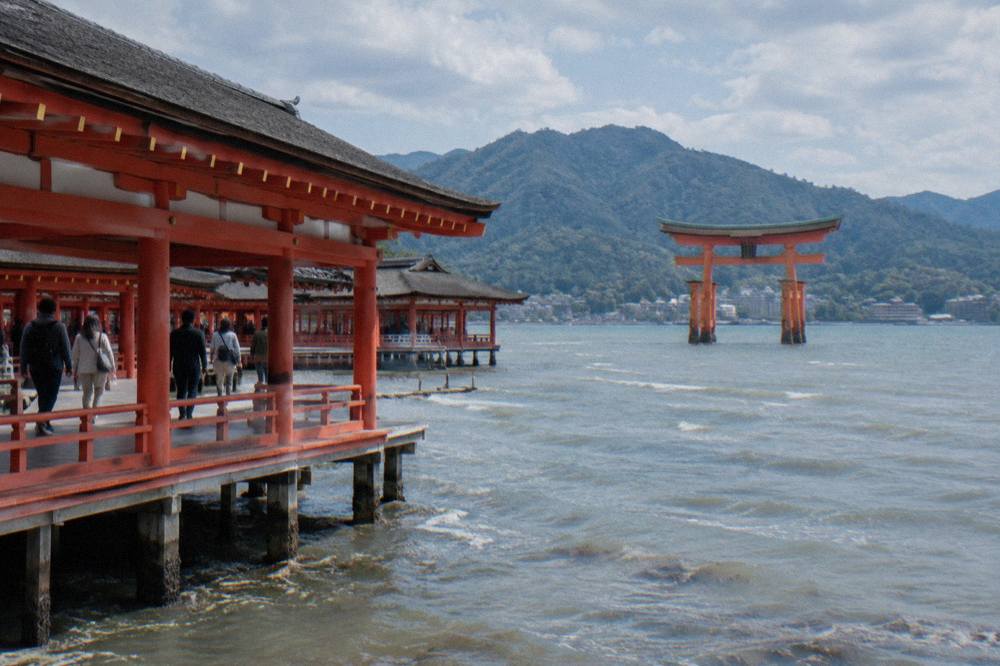
The shrine's admission page is the source for the dates: established 593, present form 1168, and the whole surrounding area including Mount Misen inscribed by UNESCO in 1996. The architecture is the point. The shrine's corridors and halls are built over the water on piers, so the building rises and sits in the tide rather than beside it. The floorboards of the corridors have gaps between them that the shrine attributes to pressure at high tide, and the same page advises comfortable shoes for walking them.
The Great Torii stands offshore. At high tide, when the water level reaches roughly 250 cm or higher, the gate appears to float; at low tide, below about 100 cm, the water recedes far enough that visitors walk out to its base across the seabed. These are guide figures rather than a timetable: the actual state of the tide on any given day is a live calculation, and this site carries the tide question on a separate page, when low tide falls at Miyajima, alongside why the Miyajima torii gate stands in the water.
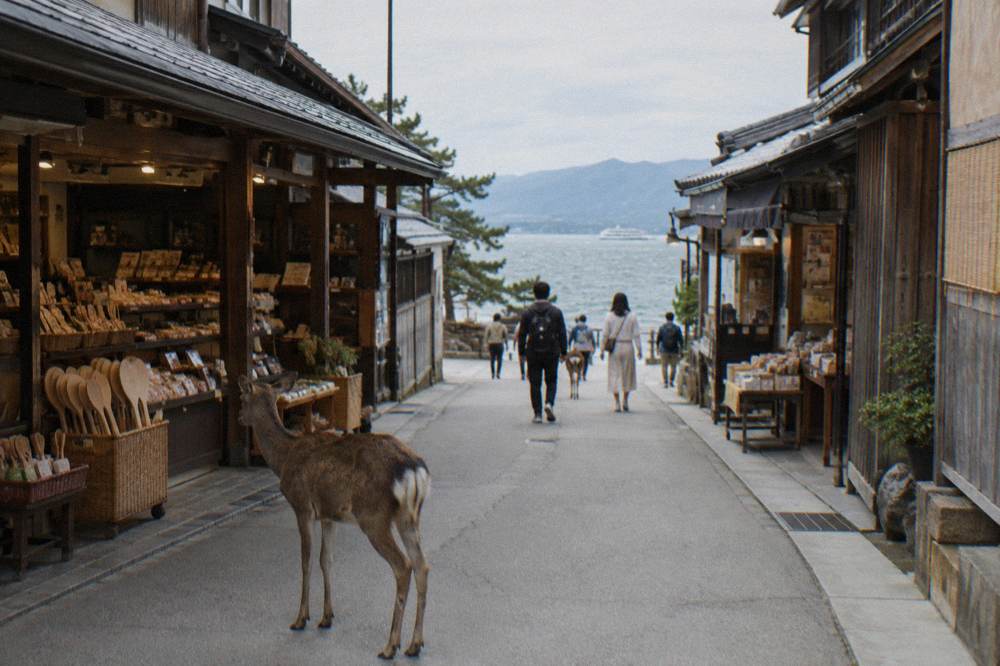
Beyond the shrine, the island's fame runs through its deer, which roam free and which visitors are asked not to feed, and its food: grilled oysters, anago-meshi and the maple-leaf-shaped momiji manju sold all along the Omotesando shopping street. The Torii's big restoration finished in December 2022, and some corridor and pagoda repair work continued after that with the shrine open throughout, so the gate itself is in its finished state.
How Do You Get From Hiroshima To Miyajima?
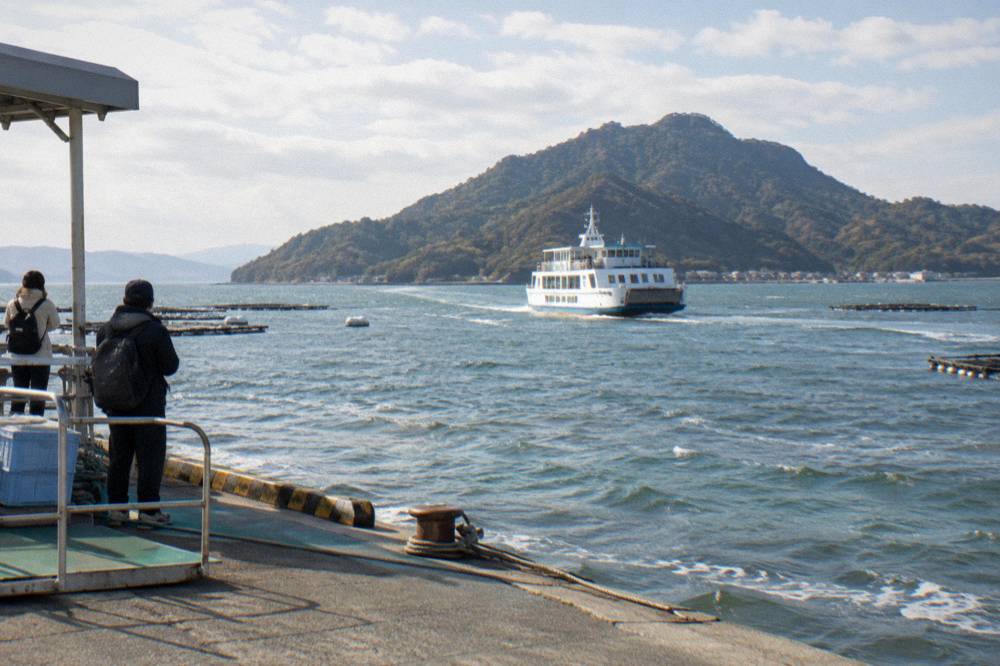
The standard route from Hiroshima to Miyajima is the JR Sanyo Line from Hiroshima Station to Miyajimaguchi, about 28 to 30 minutes and 420 yen, then a ferry of about 10 minutes across to the island, with two operators, JR West Miyajima Ferry and Miyajima Matsudai Kisen, both charging an adult one-way fare plus the separate 100 yen Miyajima Visitor Tax collected on the outbound crossing. The Hiroden streetcar also reaches Miyajimaguchi on its Miyajima line at a flat 240 yen adult fare.
The train leg is simple. The JR Sanyo Line runs from Hiroshima Station to Miyajimaguchi Station in about 28 to 30 minutes at a fare of 420 yen, and from Miyajimaguchi the ferry crossing takes about 10 minutes. Two ferry companies run the crossing. JR West Miyajima Ferry departs roughly every 15 minutes from 8:00 into the evening, with a first sailing at about 6:25 and a last at about 22:00, and its Great Torii route, which sails past the gate, operates on departures from Miyajimaguchi between 9:10 and 16:10. Miyajima Matsudai Kisen runs its own timetable, also about every 15 minutes, from 7:00 into the evening.
The Japan Rail Pass and JR-West rail passes are valid on the JR ferry, though the 100 yen Miyajima Visitor Tax still applies. Matsudai Kisen accepts transportation IC cards, cash and credit card touch payment for both fare and tax, and IC cards such as ICOCA and Suica are accepted on Hiroden streetcars including Line 2 to Miyajimaguchi. On the JR ferry, the visitor tax is charged automatically with the fare when IC cards are used at the automatic gates.
| Leg | Operator | Fare (adult) | Time |
|---|---|---|---|
| Hiroshima Station to Miyajimaguchi | JR Sanyo Line | 420 yen | about 28-30 minutes |
| Miyajimaguchi to Miyajima | JR West Miyajima Ferry | fare plus 100 yen visitor tax | about 10 minutes |
| Miyajimaguchi to Miyajima | Miyajima Matsudai Kisen | 200 yen one way plus 100 yen tax | about 10 minutes |
| Hiroshima city to Miyajimaguchi | Hiroden Line 2 | 240 yen flat | streetcar route |
| Hiroshima Airport to Hiroshima Station | limousine bus | 1,500 yen | 50-55 minutes |
For the fuller comparison of train, tram and pass options, see the site's Hiroshima to Miyajima transport guide. For travellers pairing the island with the city in a single day, a guided option removes the timing risk: the Hiroshima & Miyajima Guided Tour with Itsukushima Shrine and Ferry covers both sides of the bay with the ferry crossing included, and Check availability shows the current dates and pricing.
What Does The Miyajima Visitor Tax Cost?
The Miyajima Visitor Tax is 100 yen per person, charged separately when entering the island, with preschool children exempt, and it funds the preservation of the island's natural and cultural sites according to the official visitor-tax page. On both ferry operators it is collected together with the fare, and with a transportation IC card on the JR ferry it is charged automatically at the gate.
The tax is not a ticket and not optional. The official page for the tax states that it helps preserve the island's natural beauty and cultural landmarks, and that it applies per entry, so a traveller who leaves and returns pays again. Preschool children are exempt. Anyone holding a Japan Rail Pass or JR-West pass still pays the 100 yen, because the pass covers the ferry fare and not the island's own levy.
Practically, this means the mental arithmetic for a day trip is: fare one way, plus 100 yen inbound, plus fare back. With an IC card the whole inbound transaction happens at the automatic gates, so there is no separate counter to find.
How Much Time Do You Need On Miyajima?
A half day covers the shrine and the town around the Omotesando, and a full day adds Mount Misen, either by the ropeway or on foot, according to the typical visit lengths reported for the island. The shrine's own corridors and main halls take about 45 to 60 minutes, the ropeway round trip with sightseeing takes about an hour with the summit walk adding roughly another hour, and the ferries run about every 15 minutes so the return crossing is flexible.
For a half day, the shape is the walk from the ferry pier, which the shrine's access page puts at 10 to 15 minutes along the shore, then the shrine itself, then the Omotesando and the town. Senjokaku (Hokoku Shrine) is open 8:30 a.m. to 4:30 p.m. year-round at 100 yen adult admission, and the Treasure Hall at the shrine is open 8:00 a.m. to 5:00 p.m. year-round at 300 yen, or 500 yen combined with the shrine for adults.
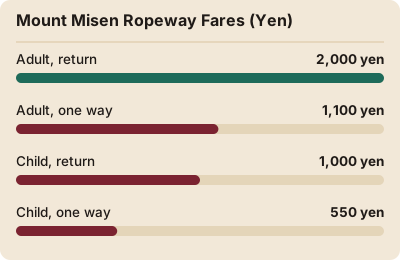
For a full day, Mount Misen fills the afternoon. The ropeway runs 9:00 to 16:00 with last descent at 16:30, and its fare page lists 2,000 yen return for adults, 1,100 yen one way, with child fares of 1,000 and 550 yen. Travellers who want more island time can read the site's page on staying overnight on Miyajima, and those splitting days differently can compare the two-day Hiroshima plan or the three-day version.
| Itinerary shape | What fits | Sights |
|---|---|---|
| Half day | Shrine and town | Itsukushima Shrine, Omotesando, Senjokaku |
| Full day | Shrine, town and mountain | Shrine plus ropeway or hike on Mount Misen |
| Full day plus evening | Shrine, town and night view | Great Torii illumination after sunset |
What Are Itsukushima Shrine's Hours And Admission?
Itsukushima Shrine opens at 6:30 a.m. every day apart from 1 January, when it opens at midnight, and closes at 6:00 p.m. from 1 March to 14 October, at 5:30 p.m. from 15 October to 30 November and from 4 January to the end of February, and at 5:00 p.m. in December, with adult admission at 300 yen, high school students 200 yen, elementary and junior high students 100 yen, and a 500 yen combined adult ticket with the Treasure Hall.
The shrine is open year-round with no closure days. The exceptions to the standard hours are the New Year window: on 1 January it opens at midnight and closes at 6:30 p.m., and on 2 and 3 January it runs 6:30 a.m. to 6:30 p.m.
| Period | Hours | Adult admission |
|---|---|---|
| 1 January | midnight to 6:30 p.m. | 300 yen |
| 2 to 3 January | 6:30 a.m. to 6:30 p.m. | 300 yen |
| 4 January to end of February | 6:30 a.m. to 5:30 p.m. | 300 yen |
| 1 March to 14 October | 6:30 a.m. to 6:00 p.m. | 300 yen |
| 15 October to 30 November | 6:30 a.m. to 5:30 p.m. | 300 yen |
| December | 6:30 a.m. to 5:00 p.m. | 300 yen |
The combined ticket prices run 500 yen for adults, 300 yen for high school students and 150 yen for elementary and junior high students, covering the shrine and the Treasure Hall. The Treasure Hall alone is 300 yen for adults and opens 8:00 a.m. to 5:00 p.m. year-round. Senjokaku, up the hill from the shrine, is 100 yen for adults and open 8:30 a.m. to 4:30 p.m. year-round.
The practical note the shrine itself makes is footwear: the corridor floorboards have deliberate gaps, described as allowing for pressure at high tide, so the surface is uneven and flat shoes are the better choice.
When Can You Walk To The Great Torii?
The Great Torii can be walked to when the tide falls below about 100 cm, and it appears to float when the tide rises above about 250 cm, according to guide figures for the site, so the same gate offers two completely different sights on the same day depending on the tide cycle. No fixed daily time applies, because the tide shifts through the month, and the live prediction for the day is the only reliable guide.
This site does not print tide heights or times for a given date in prose, because they change with every tide cycle. What is stable is the mechanism.
The gate's condition is good news for photographers. The major restoration of the Great Torii finished in December 2022, and while East Corridor reinforcement work at the shrine runs to December 2026 and five-storey pagoda repair to 2027, both are reported with the shrine open throughout. The illumination adds a third face to the gate: the torii is lit from about 30 minutes after sunset until around 23:00, visible free from the shore, which is the quiet argument for the overnight plan.
For the questions readers most often ask in these terms, see why the Miyajima torii gate is in the water and how to pronounce Miyajima.
Is The Mount Misen Ropeway Worth It?
The Mount Misen ropeway costs 2,000 yen for an adult return ticket, 1,100 yen one way, with child fares of 1,000 and 550 yen, and it runs 9:00 to 16:00 with a last descent at 16:30. The ropeway's own fare page puts the round trip with sightseeing at about an hour, with the summit walk adding roughly one more hour, and the summit view over the Seto Inland Sea is the island's payoff.
The alternative is the walking trail up Mount Misen. What the numbers do support is the budget picture: for two adults, the ropeway return is a meaningful line item against a day whose other costs, the 420 yen train, the ferry fares, the 100 yen tax and the 300 yen shrine admission, are all small.
The last descent at 16:30 is the hard constraint. A late start to the mountain turns into a decision about the one-way ticket and a walk down, so the ropeway fits best as a midday block after the shrine rather than an end-of-day add-on. On a rainy Hiroshima day the island still works, and this site's rainy-day itinerary places Miyajima in that context.
| Mount Misen ropeway | Adult | Child |
|---|---|---|
| Return | 2,000 yen | 1,000 yen |
| One way | 1,100 yen | 550 yen |
| Operating hours | 9:00 to 16:00 | 9:00 to 16:00 |
| Last descent | 16:30 | 16:30 |
What Is Life Like On Miyajima?
Miyajima is home to free-roaming deer that are not domesticated and are asked by local guidance not to be fed, which is why the island's rhythm is shaped as much by ferry timetables and tides as by any resident service economy. The day-trip scale of the island, a shrine, a town street and one mountain, is the scale of a village, not a city.
The deer roam the town and the approach to the shrine, they are wild animals, and the local guidance is simply not to feed them. The site carries the full etiquette question at can you touch the deer on Miyajima.
What Does A Day On Miyajima Cost?
A self-guided day on Miyajima from Hiroshima is built from small, separately charged pieces: the 420 yen JR fare each way, two ferry crossings plus the 100 yen visitor tax on entry, 300 yen shrine admission, and, if the mountain is included, 2,000 yen for the ropeway return. Senjokaku adds 100 yen and the combined shrine and Treasure Hall ticket 500 yen. Every figure in that list comes from an operator or venue page.
For another paid stop on the island, book a Miyajima aquarium ticket here.
The breakdown matters because the components are charged separately and none is bundled. The visitor tax is per entry, the shrine and the Treasure Hall are separate unless the 500 yen combined ticket is bought, and the ropeway is its own purchase entirely. Cash is still useful on the island even though IC cards cover the ferries and the Hiroden.
| Item | Adult cost |
|---|---|
| JR Sanyo Line, Hiroshima to Miyajimaguchi, each way | 420 yen |
| Ferry crossing, each way | fare per operator |
| Miyajima Visitor Tax, on entry | 100 yen |
| Itsukushima Shrine | 300 yen |
| Shrine plus Treasure Hall combined | 500 yen |
| Senjokaku | 100 yen |
| Mount Misen ropeway, return | 2,000 yen |
For comparison, guided products render their own live prices through the picks below, and the city-side alternatives, from the Peace Memorial Park to the castle grounds and Shukkeien garden at 350 yen adult admission, are laid out in the site's one-day Hiroshima itinerary and the root things to do in Hiroshima page.
When Is The Best Season For Miyajima?
No single month is the best for Miyajima as a matter of fact, but the Japan Meteorological Agency 1991-2020 station normals for Hiroshima show the pattern: July is the wettest month at 279.8 mm of rain, January the driest at 46.2 mm, August has the highest average daily high at 32.8 °C and January the lowest average daily low at 2.0 °C, so the choice is between warm, humid, wet summers and mild, dry winters.
The tide, not the weather, is the island's real variable, and it cycles independently of season. That said, the seasonal reads matter for planning. Spring and autumn sit between the extremes: April averages a high of 19.8 °C with 141.0 mm of rain, October 23.7 °C with 109.2 mm. The site carries dedicated season pages for cherry blossom in Hiroshima and autumn leaves on Miyajima.
| Month | Average high °C | Average low °C | Average rain mm |
|---|---|---|---|
| January | 9.9 | 2.0 | 46.2 |
| April | 19.8 | 10.1 | 141.0 |
| July | 30.9 | 24.1 | 279.8 |
| August | 32.8 | 25.1 | 131.4 |
| October | 23.7 | 14.9 | 109.2 |
| December | 12.1 | 4.0 | 54.0 |
Common Questions About Miyajima Island
What Is Miyajima Famous For?
Miyajima is famous for the Great Torii of Itsukushima Shrine, which appears to float at high tide and can be walked to at low tide. The shrine, established in 593 and rebuilt in its present form in 1168, was registered with its surroundings as a UNESCO World Heritage Site in 1996. The island is also known for free-roaming deer, momiji manju and Mount Misen.
How Much Time Do You Need On Miyajima?
A half day covers the shrine and the town, and a full day adds Mount Misen by ropeway or on foot. The shrine's corridors and halls take about 45 to 60 minutes, and the ropeway round trip with sightseeing takes about an hour, with the summit walk adding roughly another hour. Ferries run about every 15 minutes, so the return is flexible.
What Is Life Like On Miyajima?
Miyajima remains on a village scale: one main shrine, one shopping street and one mountain. The island's rhythm follows the ferry timetable and the tide rather than a city schedule, and sights close in the late afternoon, with the shrine closing between 5:00 p.m. and 6:00 p.m. depending on the season.
Do You Need Tickets For Itsukushima Shrine?
Yes, the shrine's corridor and halls charge 300 yen for adults, 200 yen for high school students and 100 yen for elementary and junior high students, with a 500 yen combined adult ticket that adds the Treasure Hall. At low tide, visitors can walk out to the gate.
Can You Stay Overnight On Miyajima?
Yes, staying overnight is the way to see the island after the day-trippers leave, and the illuminated torii, lit from about 30 minutes after sunset until around 23:00, is visible free from the shore. This site covers the overnight option in detail on its Miyajima overnight page.
A day on Miyajima comes down to three numbers and one moving target: the 100 yen visitor tax, the 300 yen shrine admission, the 2,000 yen ropeway return, and a tide that decides whether the Great Torii stands in the water or on the sand. The ferries run about every 15 minutes, the shrine opens at 6:30 a.m. every day except 1 January, when it opens at midnight, and the JR Sanyo Line has you back in Hiroshima in under an hour, which is why the island fits so neatly beside the Peace Memorial Park in every itinerary this site publishes.