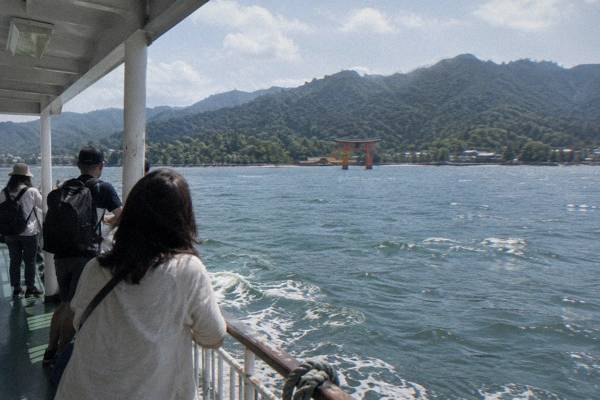
Hiroshima In 2 Days: The City Plus A Full Miyajima Day
The destination pairs the Peace Memorial Park, the museum and the city streets with Miyajima and Itsukushima Shrine across Hiroshima Bay.
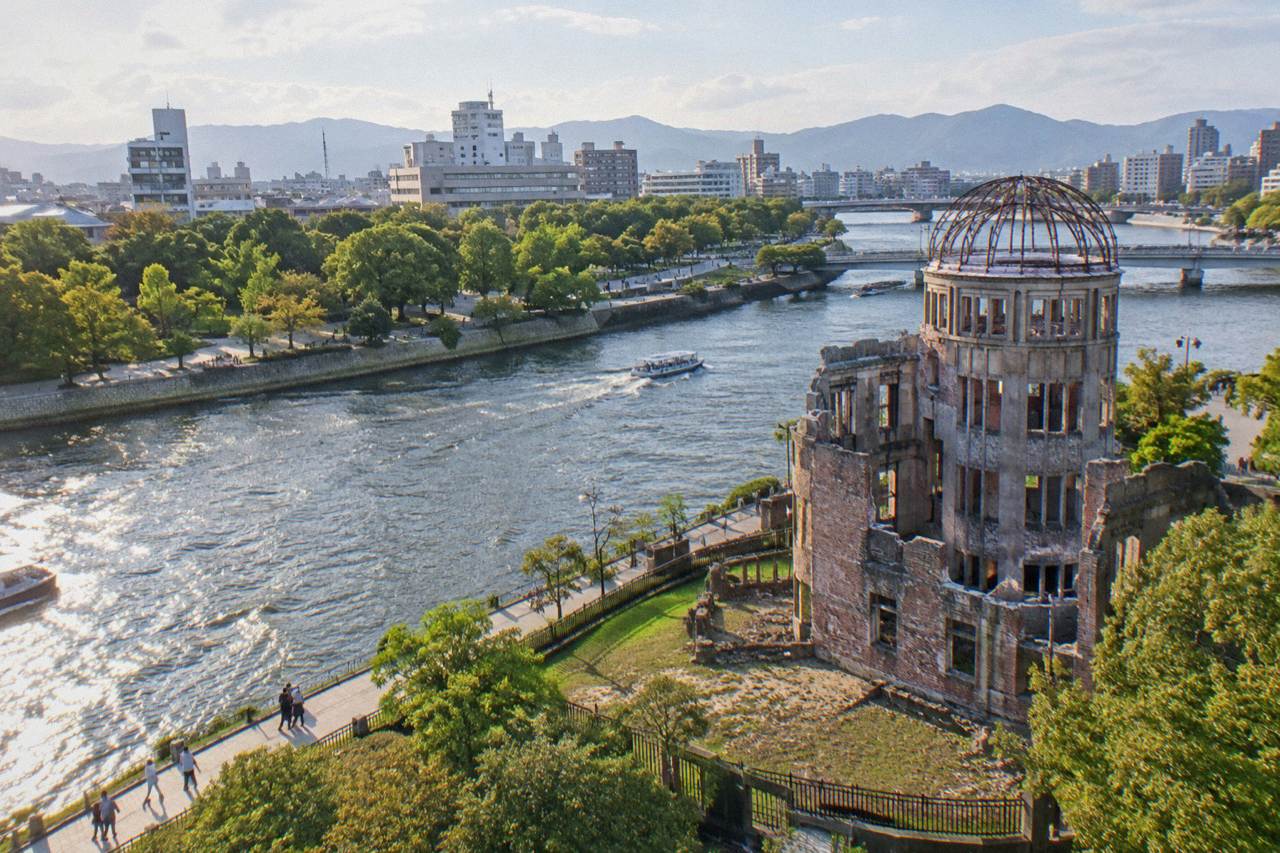
Spend day one in Hiroshima city around the Peace Memorial Park and museum, and day two on Miyajima. The JR train to Miyajimaguchi takes about 25 to 30 minutes, the ferry about 10 minutes more, and every admission fee and fare on this plan is listed below.
The museum's own practical-information page sets the rhythm for day one, opening at 7:30am, and the ferry timetable sets the rhythm for day two, with crossings roughly every 15 minutes through the day. With fares, hours and admission fees in hand, the planning for both days becomes arithmetic rather than guesswork. For a wider view of the destination first, the site's Hiroshima overview page collects the full sight list.
What Can You Realistically See In Hiroshima In 2 Days?
The itinerary covers the Peace Memorial Park, the Hiroshima Peace Memorial Museum, the A-Bomb Dome from outside, Shukkeien garden, one food street such as Okonomimura, and a full day on Miyajima with Itsukushima Shrine and, if the legs allow, the Mount Misen ropeway. The split is roughly one city day and one island day, joined by a 25 to 30 minute JR train ride and a ferry crossing of about 10 minutes.
That is a full but not frantic pace. The Peace Memorial Museum opens at 7:30am every day, and closing time runs to 7:00pm from March to July and September to November, 8:00pm in August and 6:00pm from December to February, so the museum anchor of day one can start early or absorb a slow morning. Shukkeien keeps seasonal hours too: 9:00 to 18:00 from 16 March to 15 September and 9:00 to 17:00 the rest of the year, with last entry 30 minutes before closing.
One dated fact shapes the castle stop: the Hiroshima Castle keep has been closed to visitors since 22 March 2026, so the castle appears on this plan as an exterior and grounds visit only. A Sannomaru history museum is planned for 1 June 2027, reported by the city, but until then the keep is out of scope. The Hiroshima Castle guide covers what the site offers in its current state.
If the question is really "how many days is enough", the two-day answer is the most common fit: one day for peace history and the city, one for the island. Travellers with three days can add a further trip, and the Hiroshima In 3 Days itinerary extends this same plan.
How Do You Get From Hiroshima To Miyajima?
The standard route is the JR Sanyo Line from Hiroshima Station to Miyajimaguchi, about 25 to 30 minutes for 420 yen one way, then the JR West Miyajima Ferry to Miyajima, about 10 minutes for 200 yen adult one way plus a separate 100 yen Miyajima visitor tax charged on entering the island. Ferries run roughly every 15 minutes, from a first departure at about 6:25 to a last at about 22:42.
The Hiroden streetcar is the alternative. Line 2 runs from Hiroshima Station to Hiroden-miyajima-guchi in about 66 minutes at the flat fare of 240 yen for adults and 120 yen for children, a figure that has applied on all lines, including the Miyajima Line, since 1 February 2025. The tram is slower but runs through the city streets and is covered by the Hiroden day passes below. IC cards such as ICOCA and Suica are accepted on Hiroden streetcars including Line 2.
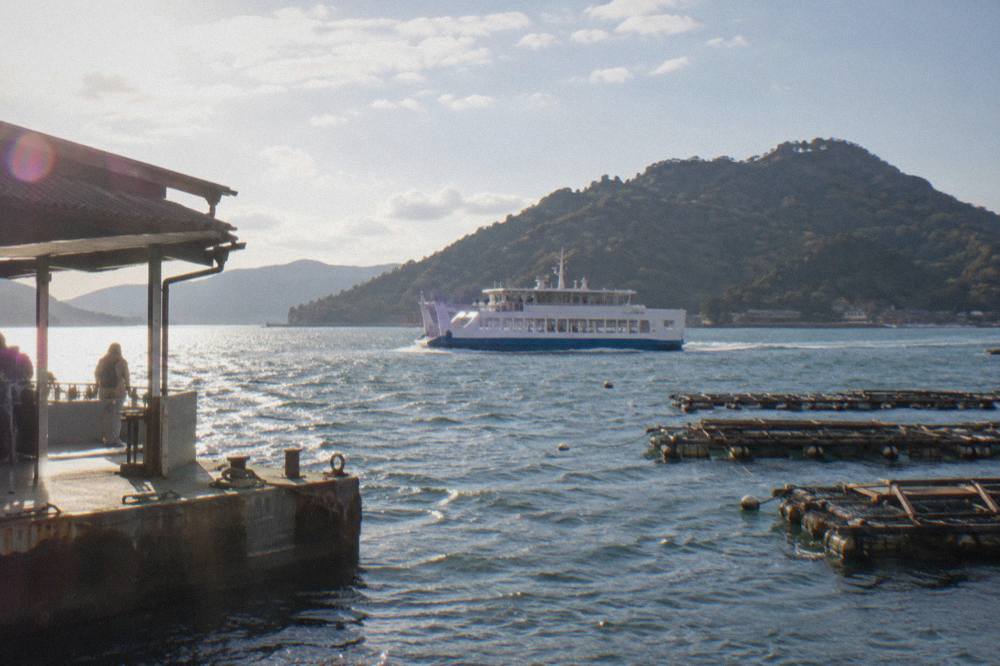
Two ferry companies serve the island. The JR West ferry's Great Torii route, the crossing that sails past the gate, operates on departures from Miyajimaguchi between 9:10am and 4:10pm. Matsudai Kisen runs its own timetable, also about every 15 minutes, from 7:00 into the evening, and its one-way adult fare is 200 yen plus the same 100 yen visitor tax on the outbound trip. The Japan Rail Pass and JR-West rail passes are valid on the JR ferry but not on the Matsudai ferry.
| Route | Time | Adult fare |
|---|---|---|
| JR Sanyo Line, Hiroshima Station to Miyajimaguchi | about 25 to 30 minutes | 420 yen one way |
| Hiroden Line 2, Hiroshima Station to Hiroden-miyajima-guchi | about 66 minutes | 240 yen flat |
| JR West Miyajima Ferry, Miyajimaguchi to Miyajima | about 10 minutes | 200 yen one way |
| Matsudai Kisen ferry, Miyajimaguchi to Miyajima | about 10 minutes | 200 yen one way |
| Miyajima visitor tax | charged on entry | 100 yen, preschool children exempt |
Day passes change the arithmetic. The Hiroden 1-Day Streetcar Pass costs 700 yen and covers all lines; the 1-Day Streetcar and Ferry Pass costs 1,000 yen and adds the Matsudai ferry including the visitor tax; the Hiroden 2-Day Pass costs 1,500 yen and includes streetcars plus the JR West Miyajima Ferry, which makes it a natural fit for exactly this two-day plan. The Visit Hiroshima Tourist Pass, 24 hours, also costs 1,000 yen and covers all Hiroden streetcars plus both Miyajima ferries. The getting to Miyajima guide compares them in detail.
How Should You Plan Day One In Hiroshima City?
Start at the Hiroshima Peace Memorial Museum, where the entry fee is 200 yen for adults, 100 yen for high school students and free for junior high school students and younger, then walk the Peace Memorial Park and the A-Bomb Dome from outside the fence, and finish the day at Shukkeien garden before its 17:00 or 18:00 closing, with dinner at a food street such as Okonomimura.
The museum's own page sets the hours: 7:30am to 7:00pm from March to July and September to November, 7:00pm changing to 8:00pm in August (to 9:00pm on 5 and 6 August), and 6:00pm from December to February. It closes on 30 and 31 December and for several days in mid-February for exhibit changes. Seniors 65 and over pay 100 yen with a passport. Photography without flash is permitted inside for personal use; tripods and selfie sticks are not. The museum counted 2,580,926 visitors in FY2025, its third straight record year, with 945,618 foreign visitors, figures reported by Nippon.com, which is one reason an early start on day one pays off.
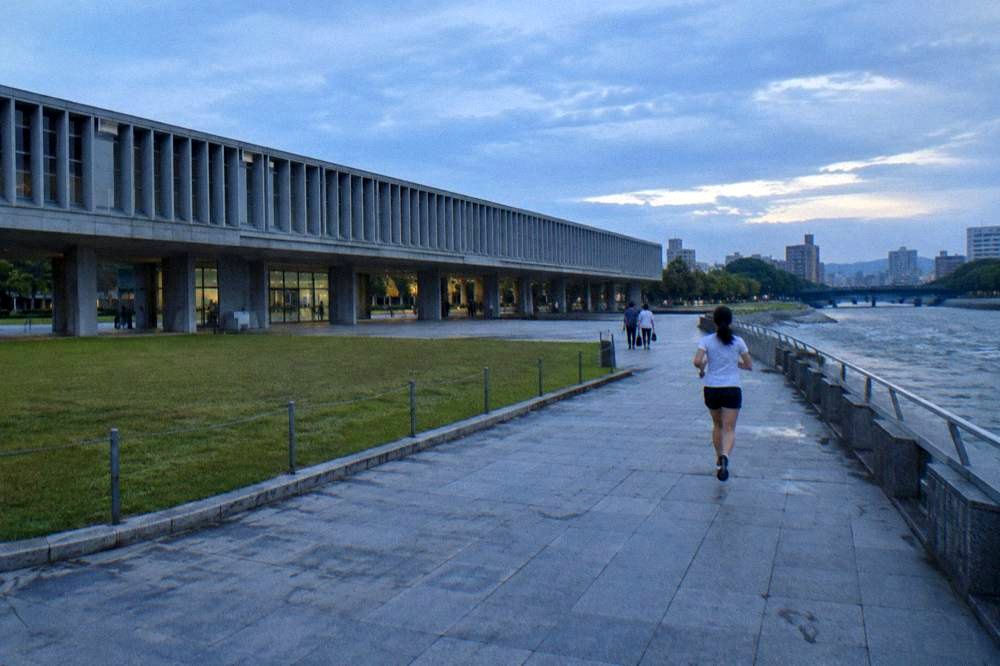
The park has no public parking, per the museum's access page, so visitors arrive on the Hiroden streetcar, whose flat 240 yen fare applies citywide. Etiquette here is a visitor topic in itself: the site's peace park etiquette page states what official pages state, quiet behaviour and respectful photography among them. The Peace Memorial Park guide maps the monuments, including the Children's Peace Monument.
Afternoon options split by interest. Hiroshima Castle's grounds are open but the keep is not, as covered above. The Shukkeien garden guide and the rainy day itinerary carry indoor alternates if the weather turns, and the Japan Meteorological Agency station normals below say when that is likely.
| Time of day | Day one plan | Anchor fact |
|---|---|---|
| Early morning | Hiroshima Peace Memorial Museum | opens 7:30am, adults 200 yen |
| Midday | Peace Memorial Park on foot | no entry fee |
| Afternoon | A-Bomb Dome viewing, then Shukkeien | dome viewable free; garden 350 yen |
| Late afternoon | Shukkeien last entry | 30 minutes before closing |
| Evening | Okonomimura or a food street | see the okonomiyaki guide |
Evening is okonomiyaki time. The Okonomimura guide covers the food building's floors, and the Hiroshima at night page extends the evening. A guided food walk is another way into the same streets, and a history walk is another way into the morning: the tours section below lists both.
For a guided version of the museum's story, book a historical walking tour here.
What Does A Full Miyajima Day Look Like?
Take an early ferry, walk the 10 to 15 minutes from the pier to Itsukushima Shrine, where admission is 300 yen for adults, then decide between the Mount Misen ropeway at 2,000 yen return with last upward departure at 16:00, or the Omotesando shopping street and the Great Torii at the tide's edge.
The shrine's hours come from its own admission page: open at 6:30am except on 1 January, when it opens at midnight, closing at 6:00pm from 1 March to 14 October, 5:30pm from 15 October to 30 November and from 4 January to the end of February, and 5:00pm in December. Admission is 300 yen adult, 200 yen high school, 100 yen elementary and junior high, with a combined ticket including the Treasure Hall at 500 yen for adults. The shrine's corridor floors have gaps left for seawater pressure at high tide, so flat shoes are the practical choice and strollers are difficult.
The tide decides the signature view. At a water level of about 250 cm or higher the torii and the shrine appear to float; at about 100 cm or lower the gate can be walked to across the sand. No tide time belongs in a plan, because it changes daily: the low tide question explains how to read the live tide block, and the why the torii stands in the water page covers the mechanics. After sunset the Great Torii is illuminated from about 30 minutes after sunset until around 23:00, viewable from shore for free, which is the argument for a late ferry back.
The ropeway runs 9:00 to 16:00 with last descent at 16:30, at 2,000 yen adult return or 1,100 one way, children 1,000 and 550. The site allows about 1 hour for the ropeway return including sightseeing, plus about 1 hour for the summit walk. Repair work is under way at the shrine complex, the East Corridor reinforcement to December 2026 and five-storey pagoda repair to 2027, and the shrine remains open throughout, per its construction page. The Mount Misen guide, the Daisho-in temple page and the Miyajima Omotesando area guide fill out the island day, and the full Miyajima day trip page is the island's deep dive.
| Island stop | Key figure | Note |
|---|---|---|
| JR ferry crossing | about 10 minutes | roughly every 15 minutes |
| Pier to Itsukushima Shrine | 10 to 15 minutes on foot | flat shoes advised |
| Itsukushima Shrine | 300 yen adult | opens 6:30am most days, 1 January from 0:00 |
| Mount Misen ropeway | 2,000 yen adult return | 9:00 to 16:00, last descent 16:30 |
| Great Torii illumination | from about 30 minutes after sunset | until around 23:00, free from shore |
Staying over is the other way to see the island, and the Miyajima overnight itinerary argues the case. For a two-day trip without a night on the island, the last ferries near 22:00 on the JR side give the illuminated torii view room in the schedule.
What Does 2 Days In Hiroshima Cost In Admissions And Fares?
Counting only the paid entries and rides on this plan, day one needs 200 yen for the Peace Memorial Museum plus 350 yen for Shukkeien, and day two needs the 420 yen JR train and 200 yen ferry each way, the 100 yen visitor tax and 300 yen for Itsukushima Shrine, before any ropeway or pass purchase.
The museum fee structure carries discounts worth knowing: high school students pay 100 yen, junior high and younger enter free, and seniors 65 and over pay 100 yen with a passport. On Miyajima, the visitor tax applies per person per entry, preschool children exempt, and is collected by the ferry operator, automatically when IC cards are used at the automatic gates on either ferry company. Everything else covered here is indexed on Hiroshima Travel Guide.
| Item | Adult | Child or discount |
|---|---|---|
| Hiroshima Peace Memorial Museum | 200 yen | high school 100 yen, junior high and younger free, 65+ 100 yen with passport |
| Shukkeien | 350 yen | university 150 yen, school students free |
| Itsukushima Shrine | 300 yen | high school 200 yen, elementary and junior high 100 yen |
| Itsukushima combined ticket with Treasure Hall | 500 yen | 300 yen and 150 yen tiers |
| Mount Misen ropeway | 2,000 yen return | child 1,000 yen return |
| Hiroden streetcar, any ride | 240 yen | child 120 yen |
Passes sit against those single fares. A traveller making one round trip to Miyajima plus a few city tram rides spends close to the Hiroden 2-Day Pass price of 1,500 yen, which includes the JR ferry; the 1,000 yen streetcar-and-ferry versions fit one heavy tram day instead. The Hiroshima trip cost guide builds the fuller budget including stays and meals.
Cash still matters at specific points. Itsukushima Shrine's admission is cash only, so the island day needs coins even in an IC-card routine, and the visitor tax is collected with the ferry fare. The do you need cash in Hiroshima answer lists where cards are accepted and where they are not.
When Is The Best Weather For 2 Days In Hiroshima?
The Japan Meteorological Agency 1991-2020 station normals for Hiroshima show the driest planning window is January at 46.2 mm of rain and the wettest is July at 279.8 mm, with August the warmest month at an average daily high of 32.8 °C and January the coolest at an average daily low of 2.0 °C, so summer days are hot and humid, winters are mild, and no single month is a factually best choice.
What the normals do support is packing arithmetic. July's 279.8 mm and June's 226.5 mm of rain make an indoor anchor wise in those months, and the Peace Memorial Museum's long hours, 7:00pm or later closing from March through November, give a rain-proof block of the day. August's average high of 32.8 °C argues for the 7:30am museum opening and the island morning, with the shrine opening at 6:30am available to early risers.
| Month | Average high °C | Average low °C | Rain mm |
|---|---|---|---|
| January | 9.9 | 2.0 | 46.2 |
| April | 19.8 | 10.1 | 141.0 |
| July | 30.9 | 24.1 | 279.8 |
| August | 32.8 | 25.1 | 131.4 |
| October | 23.7 | 14.9 | 109.2 |
| December | 12.1 | 4.0 | 54.0 |
Seasonal colour shifts the island day rather than the city day. The Hiroshima cherry blossom guide and the Miyajima autumn leaves guide time those windows, and the best time to visit Hiroshima page weighs them against the rainfall table. For this two-day plan the practical reading is simple: the plan works in every month, and the rain column says which day to keep flexible.
Should You Take A Guided Tour Or Explore Hiroshima Independently?
Independent travel covers this whole plan using the JR train, the ferry and the flat-fare Hiroden network, all of which run without booking, but a guided day adds a licensed guide's context at the Peace Memorial Park and on Miyajima, and the Hiroshima and Miyajima UNESCO Sites 1-Day Tour pairs both UNESCO-listed sides of the destination in one 8-hour itinerary from about $120.30 per person.
The independent case rests on the numbers above: a 420 yen train, a 200 yen ferry and a 300 yen shrine ticket are small frictions, and the site's can I tour Hiroshima on my own answer says yes with the same arithmetic. The guided case rests on interpretation. The peace history walks run 2 to 3 hours and stay inside the city; the full-day combinations add the ferry, the shrine and sometimes lunch. The Miyajima tour page compares the island options, and the one-day version of this exact plan is the Hiroshima and Miyajima in one day itinerary.
The related tour for this page is the UNESCO Sites 1-Day Tour, whose own page carries the current price, rating and review figures, and travellers covering the region by rail can weigh it against a regional pass before committing to either.
Where Should You Stay For A 2-Day Hiroshima Trip?
Day one's sights are walkable or one flat 240 yen tram ride away, and day two's Miyajima train and ferry both start from points the tram serves, with Hiroshima Station's tram stop reported to enter the station building itself since August 2025.
The station-area case is about the morning departure: the JR Sanyo Line platform to Miyajimaguchi is in the same building the traveller sleeps beside, and the Hiroden network, flat 240 yen since 1 February 2025, ties the station to the park, Shukkeien and the food streets. The downtown case puts the Peace Memorial Park within walking distance for the early 7:30am museum opening. The where to stay in Hiroshima guide compares the districts properly, and the Hiroshima station area page covers the station surrounds.
Arrivals shape the first evening. The airport limousine bus runs to Hiroshima Station in about 50 minutes and to the Hiroshima Bus Center in about 55 minutes, fares of 1,500 yen per the airport timetable page, with IC cards accepted. Travellers arriving from Osaka or Kyoto can check the day trip from Osaka and day trip from Kyoto pages to see whether a day visit or an overnight two-day plan suits their rail route better.
What If You Have More Or Less Than 2 Days In Hiroshima?
With one day, the Hiroshima in one day plan compresses the museum, the park and a short Miyajima crossing into a single long day; with three, the Hiroshima In 3 Days itinerary adds one further trip such as Iwakuni at about 50 minutes and 770 yen one way by JR, or Kure at about 35 minutes and 510 yen, and with a week the Hiroshima in a week plan spreads the whole region out.
The rail timings make those extensions concrete. None of those trips belongs in a two-day plan; all of them are the reason two days is the floor for the destination rather than the ceiling. Cruise passengers with a single port day have their own compressed Hiroshima cruise port day plan.
For travellers who would rather hand the logistics to a guided day on either half of the trip, the options below cover both the city-and-island combination and a licensed private version of the same route.
Common Questions About 2 Days In Hiroshima
Is 2 Days In Hiroshima Enough?
Two days cover the Peace Memorial Park and museum, Shukkeien, one food street, and a full day on Miyajima with Itsukushima Shrine. A third day is needed for further trips such as Iwakuni, Kure or Onomichi.
What Is The Cheapest Way To Get From Hiroshima To Miyajima?
The Hiroden Line 2 tram costs a flat 240 yen to Hiroden-miyajima-guchi and takes about 66 minutes. The JR Sanyo Line train costs 420 yen and takes about 25 to 30 minutes, then either ferry costs 200 yen one way plus the 100 yen visitor tax.
Can You Do Hiroshima And Miyajima In One Day?
Yes, and the site's one-day itinerary does exactly that, but it compresses the island. Two days let the museum morning keep its pace and give Miyajima the ropeway and the illuminated torii after sunset.
Do I Need Cash For 2 Days In Hiroshima?
IC cards such as ICOCA and Suica work on the Hiroden trams and on the ferries with the visitor tax charged automatically at the gates, but Itsukushima Shrine admission is cash only, so carry coins for the island day.
What Time Does The Hiroshima Peace Memorial Museum Open?
It opens at 7:30am daily. Closing is 7:00pm from March to July and September to November, 8:00pm in August, and 6:00pm from December to February, with closures on 30 and 31 December and in mid-February.
Is The Hiroshima Castle Keep Open?
No. The keep has been closed to visitors since 22 March 2026 and is viewable from the exterior and grounds only. A Sannomaru history museum is planned for 1 June 2027.