Shukkeien Garden: A Lord's Landscape In Miniature
Shukkeien Garden in Hiroshima is a strolling garden laid out in 1620 a short walk from Hiroshima Station, with ponds, bridges, teahouses and 350 yen adult admission.
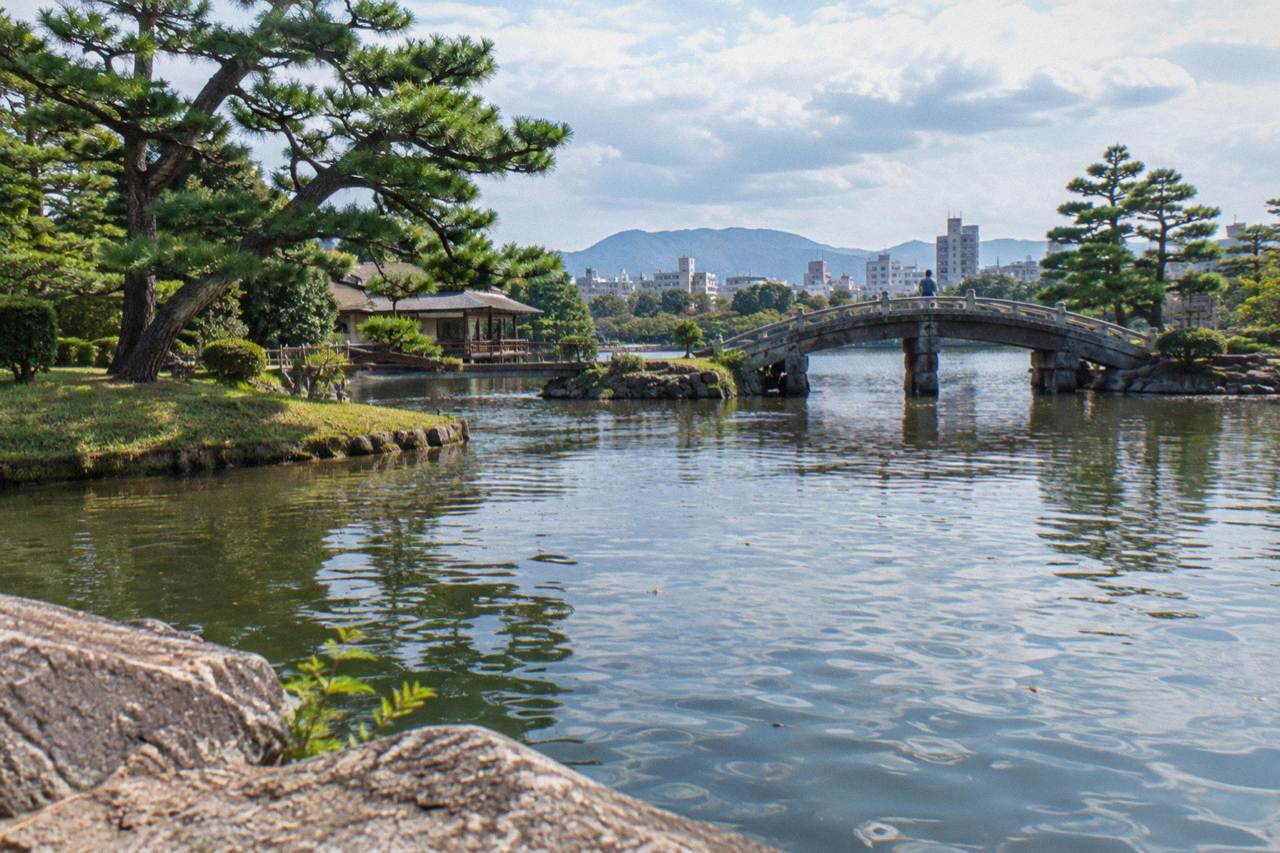
Shukkeien Garden is at 2-11 Kaminobori-cho, Naka-ku, Hiroshima, a short walk from JR Hiroshima Station. Adult admission is 350 yen, university students 150 yen, and elementary to high school students free. It is open 9:00-18:00 from 16 March to 15 September and 9:00-17:00 the rest of the year.
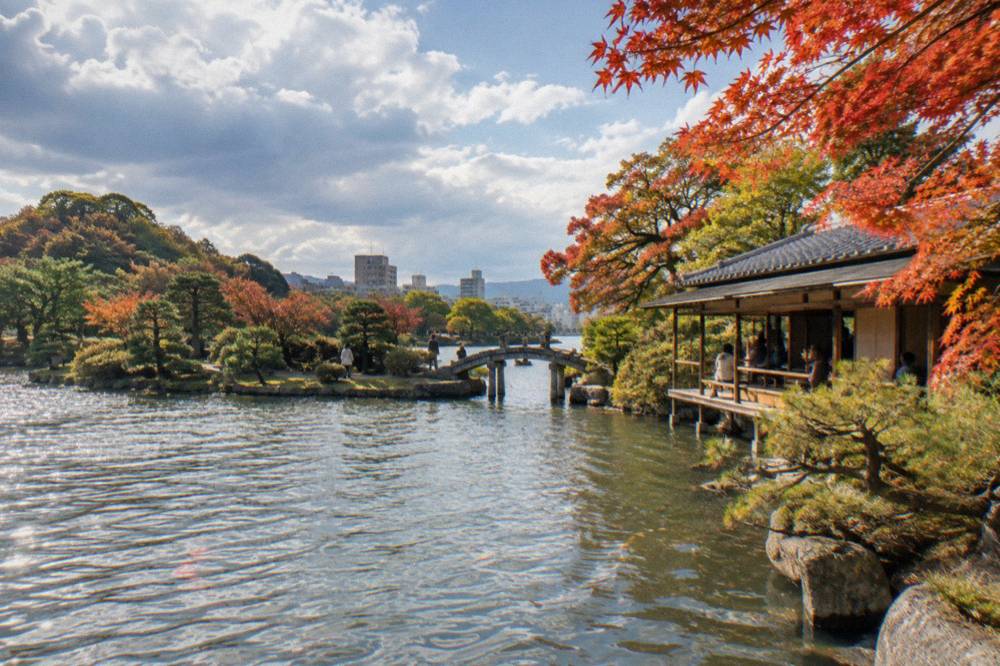
Its name means "shrunken scenery garden": valleys, islands, bridges and teahouses are arranged around Takuei Pond as a miniature of famous landscapes, modeled after scenic views including West Lake in China. The garden stands at 2-11 Kaminobori-cho, Naka-ku, within walking distance of JR Hiroshima Station, which makes it one of the easiest major sights in the city to reach. This page gathers what the garden's own site and the local guides report: admission, hours, history, transport, and how a visit fits with the rest of Hiroshima Travel Guide's coverage of the city.
What Is Shukkeien Garden And Why Was It Built?
Shukkeien Garden is a kaiyushiki strolling garden in central Hiroshima, created in 1620 by Ueda Soko for Asano Nagaakira, the daimyo of the Hiroshima domain, with its scenery arranged as a miniature landscape modeled after views including West Lake in China. The name translates as "shrunken scenery garden", and the whole composition is centred on Takuei Pond with multiple islands, valleys, bridges and teahouses.
The garden belongs to a specific Japanese tradition. A kaiyushiki garden is designed to be walked around, with the path revealing a sequence of composed views rather than a single framed picture from one veranda.
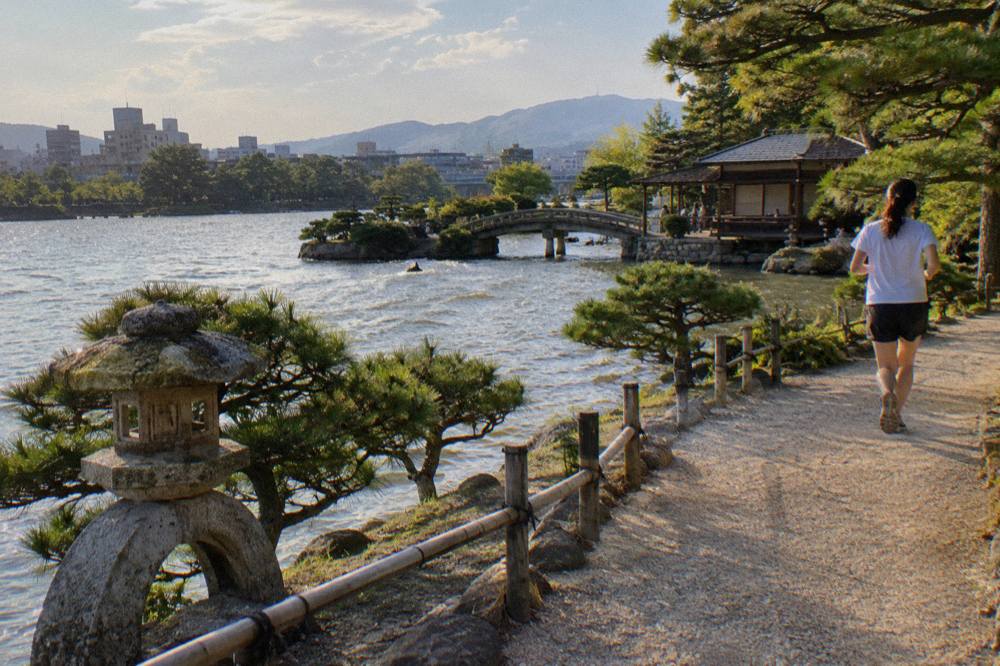
The scale is deliberately deceptive. Islands in the pond stand in for larger landforms, and borrowed scenery compresses a whole landscape ideal into a compact city block. The local guide pages describe the garden as a landscape in miniature, which is exactly what the name promises.
The garden's later history matters as much as its origins. It was almost completely destroyed by the atomic bomb in 1945, and it stands about 1,220 to 1,460 meters from the hypocenter, a distance recorded by peace-tourism sources in Hiroshima. Visitors who want the full picture of that history can pair the garden with the Hiroshima Peace Memorial Park and the Hiroshima Peace Memorial Museum, a short tram ride away.
Is Shukkeien Garden Free?
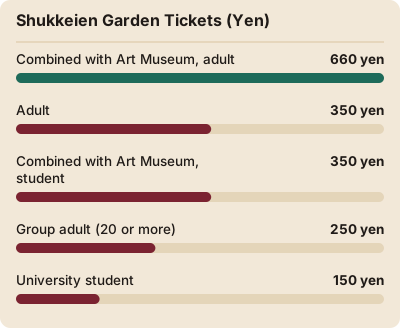
No, Shukkeien Garden is not free for adults: admission is 350 yen for adults and 150 yen for university students, while elementary, middle and high school students enter free under the fee revision that took effect on 14 April 2025. The garden does, however, open its gates to everyone on set free-admission days, including Greenery Day on 4 May and Culture Day on 3 November.
That fee scale replaced an older one in April 2025, and the figures above are the current printed rates. Groups of 20 or more pay less: 250 yen per adult and 100 yen per university student. There is also a combined ticket with the adjacent Hiroshima Prefectural Art Museum at 660 yen for adults and 350 yen for university students, which suits anyone planning both in one visit.
| Ticket | Price |
|---|---|
| Adult | 350 yen |
| University student | 150 yen |
| Elementary, middle and high school student | Free |
| Group adult (20 or more) | 250 yen |
| Group university student (20 or more) | 100 yen |
| Combined with Prefectural Art Museum, adult | 660 yen |
| Combined with Prefectural Art Museum, university student | 350 yen |
| Free admission days | 4 May and 3 November |
A family with school-age children pays only the adult fares at the garden, since elementary to high school students enter free.
The garden is a separate attraction from the free public spaces in Hiroshima. The Peace Memorial Park, by contrast, is open 24 hours a day with no admission fee, and the Children's Peace Monument within it is free as an outdoor monument, so a budget day can mix paid and unpaid sights easily. The A-Bomb Dome can be viewed from outside its fence at no charge, as the city's own page states. A zero-yen walking day is therefore entirely possible in Hiroshima, with Shukkeien standing as one of the modest paid stops alongside it.
What Are The Opening Hours At Shukkeien Garden?
Shukkeien Garden is open 9:00 to 18:00 from 16 March to 15 September and 9:00 to 17:00 from 16 September to 15 March, with last admission 30 minutes before closing in both seasons. The garden has no regular weekly closing day and operates year-round except 29 to 31 December.
The two-season split is simple to plan around. From mid-March the garden stays open into the early evening, which suits a visit after a day at the Hiroshima Castle grounds or the museum district. In the colder half of the year the gates close an hour earlier, so an afternoon arrival should check the last-entry cutoff before planning a visit.
| Period | Hours | Last Admission |
|---|---|---|
| 16 March to 15 September | 9:00-18:00 | 17:30 |
| 16 September to 15 March | 9:00-17:00 | 16:30 |
| Annual closure | 29-31 December | none |
Volunteer guides are available on site to share information on the garden's history and nature, according to the local guide pages, and a typical walk of the main loop path runs 60 to 90 minutes. Parking exists for 29 vehicles at 400 yen for the first hour plus 200 yen per additional 30 minutes, which matters mostly to drivers arriving from elsewhere in the prefecture.
The end-of-year closure is the only fixed one. Beyond 29 to 31 December, the garden has no scheduled holiday, so a winter visit around the New Year period simply needs to avoid those three days. The midday hours are unchanged across seasons, and the morning opening at 9:00 holds all year.
How Do You Get To Shukkeien Garden From Hiroshima Station?
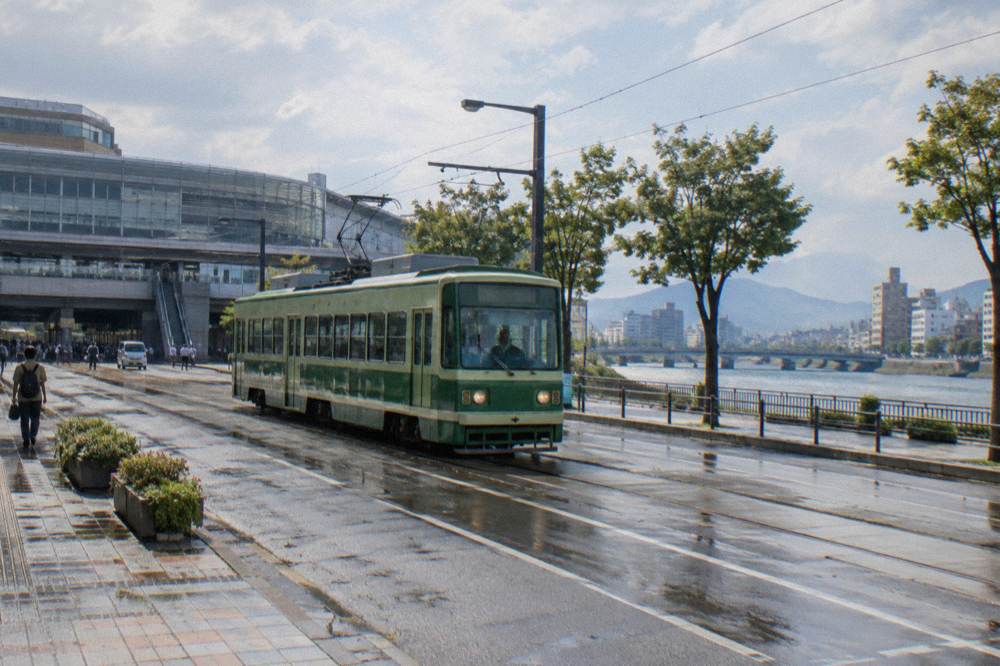
There are several ways to travel from JR Hiroshima Station to Shukkeien Garden. By Hiroden tram, take line 1, 2 or 6 from Hiroshima Station to Hacchobori, transfer to the Hakushima line, and get off at Shukkeien-mae for a 2-minute walk. The Hiroshima sightseeing loop bus also stops at the Prefectural Art Museum stop by the garden.
The tram alternative is useful when coming from elsewhere in the city center: the Hiroden network runs a flat fare of 240 yen for adults and 120 yen for children on all lines, including the Miyajima line, since 1 February 2025.
| Method | Route | Notes |
|---|---|---|
| On foot | JR Hiroshima Station to garden | About 10 minutes |
| Hiroden tram | Line 1, 2 or 6 to Hacchobori, transfer to Hakushima line, alight Shukkeien-mae | 2-minute walk from stop |
| Sightseeing loop bus | Hiroshima Station to Prefectural Art Museum stop | About 4 minutes, 3-minute walk |
| Car | On-site parking, 29 vehicles | 400 yen first hour, 200 yen per 30 minutes after |
The tram connection links the garden to the rest of a Hiroshima day. The same network reaches the Genbaku Dome-mae stop for the Atomic Bomb Dome and the Peace Memorial Park, and the station building itself, into which the Hiroden tram is reported to have entered since 3 August 2025, connects to the Shinkansen for arrivals from Osaka or Kyoto.
Entry at the gate costs 350 yen for adults and 150 yen for university students, while elementary, junior high and high school students have been admitted free since 14 April 2025, which makes the garden an easy add-on for families. The gate opens at 9:00 year round. Closing is at 18:00 from 16 March to 15 September and at 17:00 from 16 September to 15 March, with the last entry 30 minutes before closing in either season, so anyone arriving late in the day should watch that final admission time rather than the closing hour.
Season shapes the visit. June averages 226.5 millimeters of rain and July 279.8 millimeters, and July days average a high of 30.9 degrees Celsius, so a morning start is the cooler choice in midsummer. April is gentler, averaging a high of 19.8 degrees with 191.9 hours of sunshine, while January brings a mean of 5.4 degrees against only 46.2 millimeters of rain, conditions that suit a brisk off-season circuit of the grounds.
What Do You See On The Garden Loop?
The core of a Shukkeien visit is the walking loop around Takuei Pond, which takes in the garden's islands, valleys, bridges and the restored teahouses Seifukan and Meigetsu-tei, and a typical circuit of the main loop path runs 60 to 90 minutes. The path layout is that of a kaiyushiki strolling garden: each bend is composed to open a new miniature view across the water.
Access on the path is worth a note. The local guides report that the main loop is generally accessible while secondary paths and some bridges may not suit wheelchairs, and that some stretches are gravel or stone, so footwear should be chosen with that in mind. The garden is otherwise flat and compact, which is why an hour and a half covers it comfortably.
Volunteer guides on site can add detail on history and nature as reported by the local pages, and the adjacent Hiroshima Prefectural Art Museum extends the visit through the combined ticket. The museum pairing is the most natural extension of a garden stop, and it fits neatly into a day that also includes the Hiroshima Museum of Art or a meal at Okonomimura.
A useful way to think about the loop is as a sequence of composed viewpoints rather than a checklist of objects. The garden's design logic, a shrunken landscape walked rather than viewed, rewards a slow pace: the same pond appears differently from each bridge and teahouse threshold, and the miniature valleys between the islands are meant to read as mountain scenery in reduced form. That is also why the estimate from the local guides is a realistic allowance for planning rather than a rushed minimum, and why visitors with a special interest in garden history could spend longer with a volunteer guide.
What Flowers And Scenery Mark Each Season At Shukkeien Garden?
Shukkeien Garden shows seasonal flowers and foliage year-round: plum blossoms appear from January to early March, and further blooms and colour changes follow across spring, summer, autumn and winter, so there is no month when the garden is without planted interest. The seasonal calendar below draws on a regional tourism listing.
The plum season is the earliest marker, running January into early March. Spring then brings the main flowering period, summer holds the garden in full green, and autumn delivers the foliage colour that the Chugoku regional tourism listing highlights among the garden's year-round attractions. Winter keeps the garden open, with reduced hours from 16 September to 15 March.
| Season | Months | Garden Highlight |
|---|---|---|
| Winter | January to early March | Plum blossoms |
| Spring | March to May | Spring blooms on the pond loop |
| Summer | June to August | Full-green pond and valley scenery |
| Autumn | September to November | Foliage colour across the islands |
The Japan Meteorological Agency station normals for Hiroshima give some planning context, and the monthly picture is more varied than a simple four-season summary suggests.
| Month | Average High °C | Average Low °C | Average Rain mm |
|---|---|---|---|
| January | 9.9 | 2.0 | 46.2 |
| April | 19.8 | 10.1 | 141.0 |
| July | 30.9 | 24.1 | 279.8 |
| August | 32.8 | 25.1 | 131.4 |
| October | 23.7 | 14.9 | 109.2 |
| December | 12.1 | 4.0 | 54.0 |
July carries the highest monthly rainfall total at 279.8 mm on average and January the lowest at 46.2 mm, while August has the highest average daily high at 32.8 °C and January the lowest average low at 2.0 C. What that means for the garden is practical: a summer loop is a hot, humid walk best taken near the 9:00 opening, a winter loop is a mild one by northern-Japanese standards, and the shoulder months combine moderate temperatures with mid-range rainfall. No single month is the "best" one as a matter of fact; the choice depends on which scenery a visitor wants.
How Does Shukkeien Fit Into A Hiroshima Day?
Shukkeien anchors the morning half of a classic Hiroshima day. The garden sits beside the Prefectural Art Museum, with Hiroshima Castle's grounds nearby, so the morning covers garden, museum and castle exterior before a tram ride to the Peace Memorial Park for the afternoon. Because it is a short walk from Hiroshima Station, it also suits Shinkansen arrival or departure mornings.
Note that the Hiroshima Castle keep itself has been closed to visitors since 22 March 2026, so the castle portion of that morning is an exterior and grounds visit, with a Sannomaru history museum planned for 1 June 2027.
Admission to the Peace Memorial Museum is 200 yen for adults, 100 yen for high school students and free for junior high and younger. A garden-plus-memorial day therefore costs a solo adult 550 yen in admissions, a figure worth knowing when budgeting a Hiroshima itinerary.
Guided options also exist that combine the city with Miyajima, which suits travellers with only one full day in Hiroshima.
The garden also rewards a stop on arrival or departure days specifically. Because it is a short walk from Hiroshima Station, a Shinkansen arrival from Tokyo or Osaka leaves time for the loop before a hotel check-in, and a departure morning can absorb it just as easily. The practical information line for inquiries is 082-221-3620.
Common Questions About Shukkeien Garden
Is Shukkeien Garden Free?
No. Adult admission is 350 yen and university students pay 150 yen, while elementary, middle and high school students enter free since the 14 April 2025 revision. The garden does open free to all on Greenery Day, 4 May, and Culture Day, 3 November.
How Far Is Shukkeien Garden From Hiroshima Station?
The garden is about a 10-minute walk from JR Hiroshima Station. By tram, lines 1, 2 and 6 run to Hacchobori, where a transfer to the Hakushima line reaches Shukkeien-mae for a 2-minute walk.
How Long Does A Visit To Shukkeien Garden Take?
A circuit of the main loop path typically takes 60 to 90 minutes. The loop circles Takuei Pond past the islands, bridges and the restored teahouses Seifukan and Meigetsu-tei.
Who Built Shukkeien Garden?
The garden was built in 1620 as a villa garden for Asano Nagaakira, daimyo of the Hiroshima domain. The design models itself on scenic views including West Lake in China.
Was Shukkeien Garden Damaged By The Atomic Bomb?
Yes, the garden was almost completely destroyed by the atomic bomb in 1945, standing about 1,220 to 1,460 meters from the hypocenter. What visitors walk today is a postwar reconstruction of the original layout.
Can You Buy A Combined Ticket For Shukkeien And The Art Museum?
Yes. A combined ticket with the adjacent Hiroshima Prefectural Art Museum costs 660 yen for adults and 350 yen for university students, which suits a visit to both in one stop.
Shukkeien Garden compresses four centuries of Hiroshima history into a single pond circuit, from a daimyo's villa to a reconstructed postwar landscape, and its position beside Hiroshima Station makes it one of the simplest sights in the city to include on any itinerary.