Hiroshima Souvenirs And Where To Shop
The city publishes an English booklet covering more than a hundred products, from momiji manju to oyster senbei.
Buy certified Hiroshima Brand products such as momiji manju, oyster senbei and Lemosco lemon sauce, plus Tree of Peace woodcraft from A-bomb survivor trees; shop at ekie and Minamoa at Hiroshima Station, the Hondori arcade department stores, and Miyajima Omotesando.
Hiroshima runs its own certification system for local products, the Hiroshima Brand, and the city's official leaflet counted 123 certified specialty products. This guide sets out what is certified, where each kind of shop sits in the city, and what the woodcraft from the A-bomb survivor trees costs.
What Can I Buy In Hiroshima?
The main souvenirs in Hiroshima are certified Hiroshima Brand products: foods such as momiji manju, oyster products, Hiroshima na pickles and Amabito no Moshio seaweed salt, alongside crafts including Aiko beads and Tree of Peace woodcraft accessories made from pruned branches of trees that survived the 1945 atomic bombing. The city certified its first products in 2007 and the official leaflet counts 123 items.
The Hiroshima Brand is not a marketing label applied loosely. The city's own criteria page states that a certified product must have significant production in Hiroshima City and must meet standards for quality, story and brand promotion potential. Reported figures say the system had certified 118 products, 93 food items and 25 crafts, as of 1 March 2025, and the official leaflet shows 123.
The city also publishes an English booklet introducing the certified products, available as a downloadable PDF from the city website and in printed form at main tourism facilities in Hiroshima City. The Hiroshima Brand English Leaflet was updated and made available as of 6 April 2026.
For the full spread of the city beyond shopping, the site's things to do in Hiroshima page covers the Peace Memorial Park, Miyajima and the day trips.
Which Certified Foods Should Go In Your Suitcase?
Hiroshima's food souvenirs span sweet and savory: momiji manju soft filled cakes, whole oyster senbei rice crackers, Hiroshima Oyster Concentrate, Amabito no Moshio seaweed salt, Hiroshima Karinto, Kombu Tea Series and Hiroshima na pickles, each on the certified product list or the city's recommended-souvenir guidance. Senbei, karinto, tea and tinned oyster products travel without refrigeration, while fresh boxed momiji manju suit the first days home.
The sweet-to-savoury split matters for packing. Momiji manju are soft filled cakes and are sold fresh and boxed, which makes them a gift for the first days home rather than a shelf-stable purchase. Senbei crackers, karinto snacks, tea and the oyster products in jars and tins travel much longer without refrigeration.
The city's certification FAQ recommends certified products including oysters, Hiroshima-style okonomiyaki, momiji manju and Hiroshima na pickles as souvenirs.
| Product | Type | Where To Find It |
|---|---|---|
| Momiji manju | Sweet filled cakes | Station kiosks, ekie, Miyajima shops |
| Whole oyster senbei (Maruichi Shoten) | Rice crackers | JR Hiroshima Station souvenir shops, department stores |
| Hiroshima Oyster Concentrate | Oyster product | Certified Hiroshima Brand product |
| Oyster soy sauce | Oyster product | Portable processed-oyster souvenir |
| Tinned smoked oysters | Oyster product | Portable processed-oyster souvenir |
| Amabito no Moshio | Seaweed salt | Certified Hiroshima Brand product |
| Hiroshima Karinto | Sugar-glazed snack | Certified Hiroshima Brand product |
| Kombu Tea Series | Tea | Certified Hiroshima Brand product |
| Lemosco | Lemon chili sauce | Grocery and souvenir stores |
| Hiroshima na pickles | Pickles | City-recommended certified souvenir |
For eaters planning around the trip rather than after it, the what to eat in Hiroshima guide covers the dishes themselves, including anago-meshi and tsukemen alongside the oyster kitchens.
Where Are The Main Shopping Areas In Hiroshima?
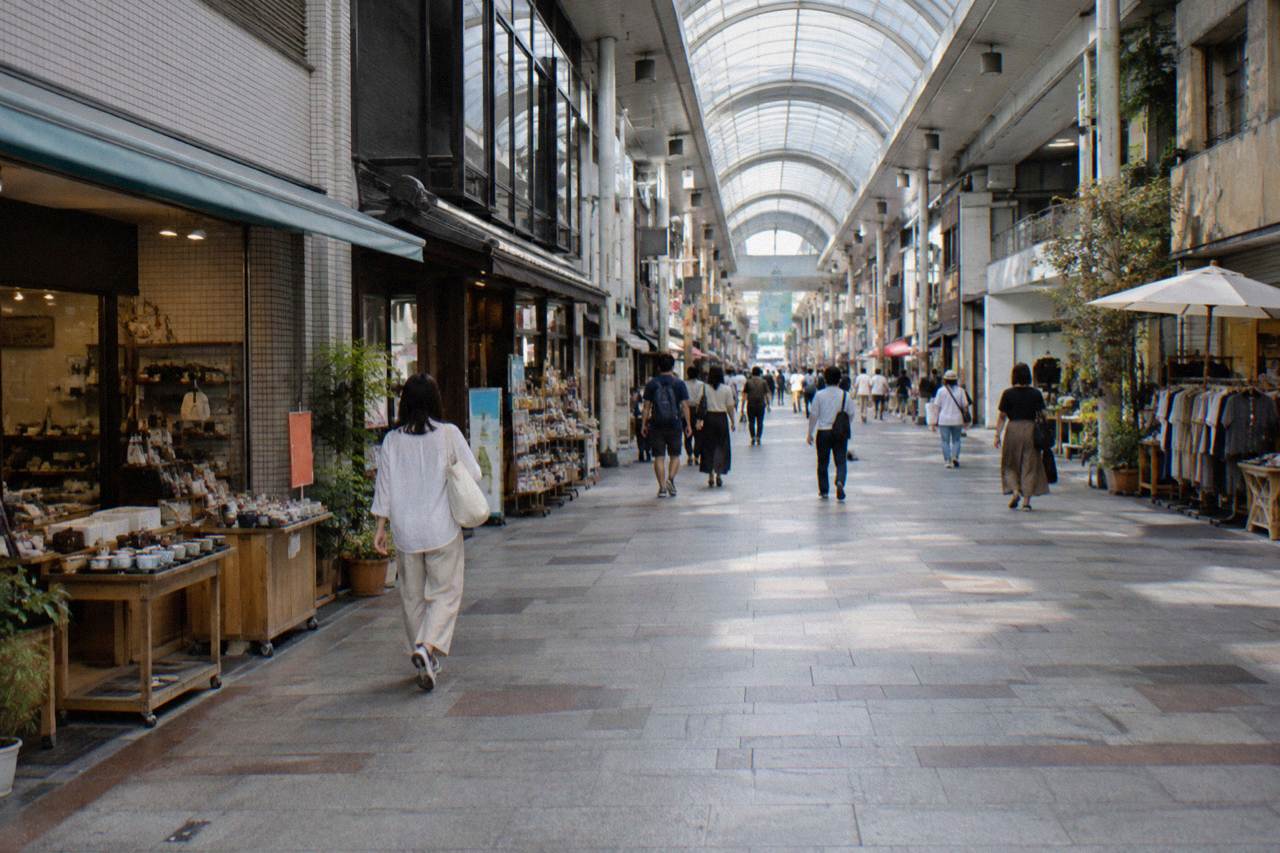
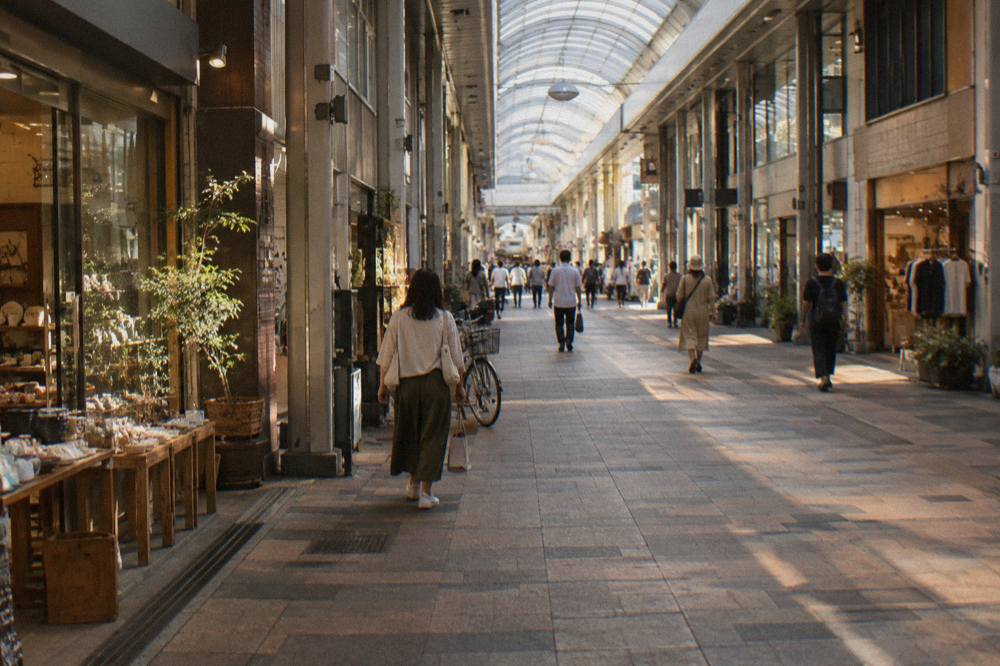
The main shopping areas in Hiroshima are the Hondori covered arcade with its department stores, the Kamiyacho Shareo underground mall and Sogo Hiroshima, the station-side ekie complex and the new Minamoa building that opened in March 2025, plus Aeon Mall Hiroshima Fuchu, the region's largest mall at about 98,000 square meters of retail space. Hondori is the spine of central shopping.
From Hiroshima Station the eastern end of Hondori near Hacchobori stop is a 15 to 20 minute walk or a 5 minute tram ride on lines 1, 2 or 6. The station side has changed most recently. Minamoa opened in March 2025 and connects directly to ekie, the rail-side complex that holds souvenir floors and local food shops. Nishikido, a major producer of momiji manju, keeps a main store near Hiroshima Station and outlets inside ekie. The Hiroshima Station guide covers the building itself, and the getting around Hiroshima page explains the Hiroden flat fare of 240 yen for adults that connects all of these districts.
| Area | What it is | Notes |
|---|---|---|
| Hondori arcade | Covered pedestrian street, about 577 meters | Runs eastward from near Peace Memorial Park |
| Fukuya Hacchobori Main Store | Department store | Reached via the Hondori arcade |
| Mitsukoshi Hiroshima | Department store | Reached via the Hondori arcade |
| Sogo Hiroshima | Department store | At 6-27 Motomachi, near Kamiyacho |
| Kamiyacho Shareo | Underground shopping area | Fureai Plaza holds about 1,000 products from about 60 welfare workshops |
| ekie | Station complex | Nishikido outlets, local foods |
| Minamoa | Shopping complex at Hiroshima Station | Opened March 2025, connects directly to ekie |
| Aeon Mall Hiroshima Fuchu | Regional mall | About 98,000 square meters of retail space |
| Miyajima Omotesando | Island souvenir street | Momiji manju shops on the way to Itsukushima Shrine |
A guided morning buys an afternoon of shopping, or the reverse. The site's Hiroshima to Miyajima page has the ferry details, including the 10 minute JR crossing and the 100 yen Miyajima Visitor Tax charged on entering the island.
What Are Tree Of Peace Woodcraft Souvenirs?
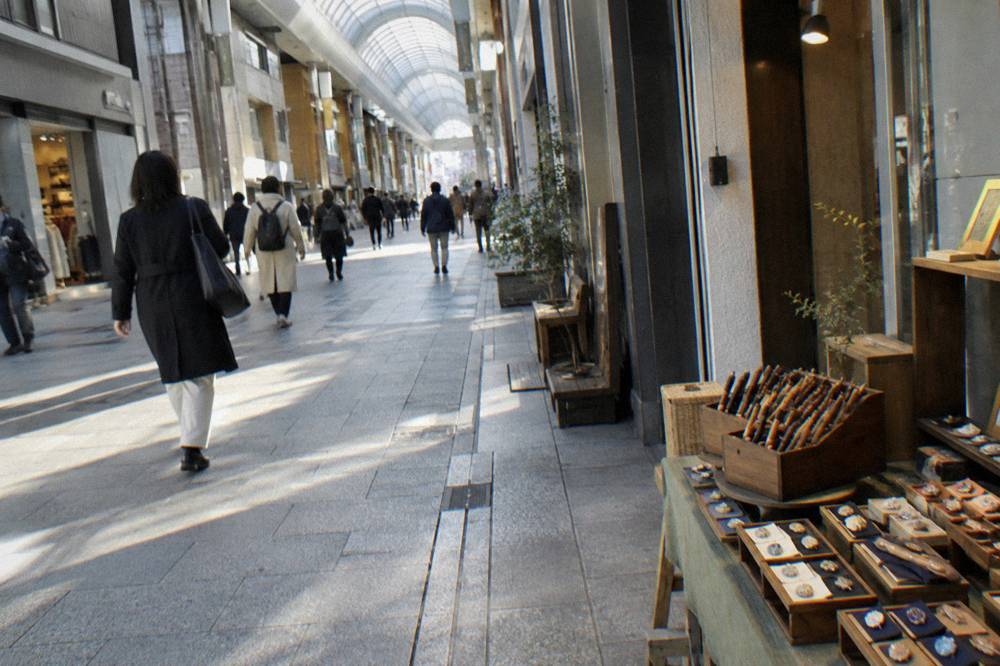
Tree of Peace products are woodcraft accessories made from pruned branches of trees that survived the 1945 atomic bombing, and the city's price list gives, tax included, ballpoint pens at 16,500 yen, brooches at 5,720 yen, key holders at 5,720 yen and tie pins at 5,500 yen. Reported sale points are the Peace Park Rest House, the Hiroshima Peace Memorial Museum Museum Shop and the Hiroshima Prefectural Art Museum Museum Shop.
The Peace Memorial Park guide covers the park itself, including the more than 120,000 square meters of grounds between the Motoyasu and Hon rivers where the A-Bomb Dome stands viewable from outside the fence at no fee. The museum beside it charges 200 yen for adults, college age and up, free for junior high and younger, as its current fee.
Where Do You Buy Momiji Manju?
Momiji manju, the maple-leaf-shaped cakes that are the signature Hiroshima souvenir, are sold at station kiosks, in the ekie complex at Hiroshima Station and in the shops of Miyajima, and Nishikido, a major producer, keeps a main store near Hiroshima Station plus outlets in ekie. Fresh boxes are the standard buy, and the cakes are also the city's own recommended certified souvenir.
The station copies carry the same product for travellers leaving by rail, and ekie's souvenir floors hold the main producers' outlets, Nishikido among them.
Because the fresh cakes are soft, they are best eaten within days, which is worth weighing against the senbei, karinto and jarred goods that keep for weeks.
Is Shopping On Miyajima Different From The City?
Yes, shopping on Miyajima centers on Omotesando, quite unlike city shopping. Bakeries sell fresh-grilled momiji manju, the signature island souvenir, counters serve grilled oysters from the Hiroshima oyster region, and shops offer Miyajima woodwork from the island craft tradition. The Itsukushima combined ticket costs 500 yen for adults and includes the Treasure Hall at the shrine entrance. Wear comfortable shoes, since corridor floorboards have gaps that let high-tide pressure through.
The shrine's own admission page notes that the corridor floorboards have gaps that let high-tide pressure through, so comfortable shoes are the practical choice for a day that mixes shrine corridors and shopping.
The Great Torii's restoration finished in December 2022, and the shrine remains open while East Corridor reinforcement runs to December 2026 and five-storey pagoda repair continues to 2027, per the shrine's construction page.
| Buy | Where on Miyajima | Notes |
|---|---|---|
| Momiji manju, fresh-grilled | Omotesando bakeries | Signature island souvenir |
| Grilled oysters | Omotesando counters | Hiroshima oyster region |
| Miyajima woodwork | Omotesando shops | Island craft tradition |
| Itsukushima combined ticket | Shrine entrance | 500 yen adult with Treasure Hall |
What Do The Tourist Information Centers Sell And When Are They Open?
Hiroshima runs three convenient tourist information centers: the Peace Memorial Park center, open year-round from 8:30 am to 6:00 pm from March to November and 8:30 am to 5:00 pm from December to February with extended August hours, the Hiroshima Station center open 6:00 am to 12:00 am year-round, and the Kamiyacho Shareo underground center open 11:00 am to 5:00 pm year-round, and the Peace Park center sells Hiroshima Brand booklets.
These desks are where the English booklet of certified products becomes a shopping tool.
| Center | Hours | Seasonal note |
|---|---|---|
| Peace Memorial Park | 8:30 am to 6:00 pm | March 1 to November 30 |
| Peace Memorial Park | 8:30 am to 5:00 pm | December 1 to end of February |
| Peace Memorial Park | Extended hours | August |
| Hiroshima Station | 6:00 am to 12:00 am | Year-round |
| Kamiyacho Shareo | 11:00 am to 5:00 pm | Year-round |
The Hiroshima Travel Guide site covers the ceremony day in detail on its August 6 Peace Ceremony page, including the lantern floating on the Motoyasu River from 6:00 pm to 9:00 pm, with lanterns at 1,000 yen cash only.
How Do You Fit Shopping Around The Rest Of A Hiroshima Trip?
Miyajima's Omotesando is the walking route to the shrine. A one-day Hiroden streetcar pass costs 700 yen for adults, a one-day streetcar and ferry pass including Miyajima is 1,000 yen, and the flat 240 yen adult fare connects the station, Kamiyacho and the Miyajima line.
A one-day Hiroden streetcar pass costs 700 yen for adults, and a one-day streetcar and ferry pass including Miyajima costs 1,000 yen, both useful when a plan pairs downtown department stores with an island afternoon. The trams run at 10 to 15 minute intervals on main lines such as line 2 from Hiroshima Station toward Miyajimaguchi, with last departures from the station area typically around 22:00 to 23:00 depending on line and direction, per the operator's schedule pages.
Where to sleep shapes the shopping day as much as the tram does. The where to stay in Hiroshima guide weighs the station district against downtown and the Peace Park side, including hotels a 4 to 5 minute walk from the park. Pair it with the best time to visit Hiroshima when planning around sales seasons or the summer ceremony.
What Do Hiroshima Oyster Souvenirs Look Like?
Hiroshima oyster souvenirs include whole oyster senbei crackers from Maruichi Shoten made with Hiroshima oysters, Hiroshima Oyster Concentrate as a certified product, oyster soy sauce and tinned smoked oysters, all sold at JR Hiroshima Station souvenir shops, department stores and grocery or souvenir stores.
The oyster is the region's signature seafood, and the certified and packaged versions solve the obvious travel problem. A tin or a jar goes into checked luggage without a second thought; the senbei boxes are lighter still and double as gifts.
Fresh oysters are a different errand, eaten on the island or in the city's restaurants rather than carried home. The site's Hiroshima oysters coverage and the eating guides treat the kitchens; this page sticks to what leaves in a bag.
Are There Crafts And Non-Food Souvenirs?
Yes: the certified craft side of the Hiroshima Brand includes Aiko beads, sold at TOHOBEADS STYLE STORE Hiroshima on the 4th floor of the Tegi Maki Hiroshima main store in Higashi-ku, alongside Tree of Peace woodcraft and the roughly 1,000 products from about 60 welfare workshops sold at Fureai Plaza in the Kamiyacho underground area, spanning crafts and foods.
The bead store gives the craft shopper a specific address rather than a vague hunt, per the city's ethical-shopping page. Fureai Plaza works the other way, a fixed marketplace inside the Shareo underground mall where workshop products, crafts and foods, are gathered in one place under the arcade.
Between the two sits the woodcraft described earlier, the Tree of Peace line.
Should You Shop At The Airport Or In The City?
The airport limousine bus reaches Hiroshima Station's Shinkansen exit in about 50 minutes and the Hiroshima Bus Center in about 55 minutes at 1,500 yen for adults, so ekie's souvenir floors and the Bus Center's department-store neighbors remain reachable even on a departure day.
The logic is selection. The certified list, the department stores, the ekie outlets and the workshop plaza are all city-side, and the booklet that explains them is handed out at the city's tourism facilities. The station center is open until midnight, which covers late packers.
The practical order that follows from the facts: collect the booklet at the Peace Park or station desk, buy shelf-stable foods and crafts as they are encountered, keep fresh momiji manju for the last day, and carry the lot on the limousine bus, which accepts IC cards.
A guided walk pairs naturally with the last souvenir stop, because the Peace Park Rest House, one of the reported Tree of Peace sale points, sits inside the park the walks cover. The related walk, Walking through History: Hiroshima's path to peace, covers the same park.
Common Questions About Hiroshima Souvenirs And Shopping
What Can I Buy In Hiroshima?
Certified Hiroshima Brand products include foods such as momiji manju, oyster senbei, Hiroshima Oyster Concentrate, Amabito no Moshio seaweed salt and Hiroshima Karinto snacks, plus crafts including Aiko beads and Tree of Peace woodcraft. The official leaflet counts 123 certified products, and the English booklet introducing them is available at main tourism facilities.
Where Can I Buy The Hiroshima Brand English Booklet?
English booklets introducing the certified products are available at main tourism facilities in Hiroshima City. The Peace Memorial Park Tourist Information Center sells Hiroshima Brand booklets, and the leaflet is also downloadable as a PDF from the city website.
How Much Do Tree Of Peace Souvenirs Cost?
The city's tax-included prices are 16,500 yen for ballpoint pens, 5,720 yen for brooches, 5,720 yen for key holders and 5,500 yen for tie pins. Reported sale points are the Peace Park Rest House, the Hiroshima Peace Memorial Museum Museum Shop and the Hiroshima Prefectural Art Museum Museum Shop.
Which Food Souvenirs Last The Longest?
Shelf-stable picks include whole oyster senbei crackers, Hiroshima Karinto snacks, Kombu Tea Series products, oyster soy sauce, tinned smoked oysters and Lemosco lemon chili sauce. Fresh momiji manju are soft filled cakes and are best eaten within days of purchase.
Is There A Souvenir Shop At Hiroshima Station?
Yes, several. The ekie complex holds souvenir floors and local food shops plus Nishikido momiji manju outlets, the new Minamoa complex connects directly to it, and JR Hiroshima Station souvenir shops sell oyster senbei. The station's tourist information center is open from 6:00 am to 12:00 am year-round.
Do You Pay To Shop On Miyajima?
The island charges a 100 yen Miyajima Visitor Tax, collected separately on entering the island, with preschool children exempt. Itsukushima Shrine admission is 300 yen for adults if the walk continues to the shrine.