Hiroshima Hidden Gems: Beyond The Peace Park
Hiroshima's sights are reachable by public transit.
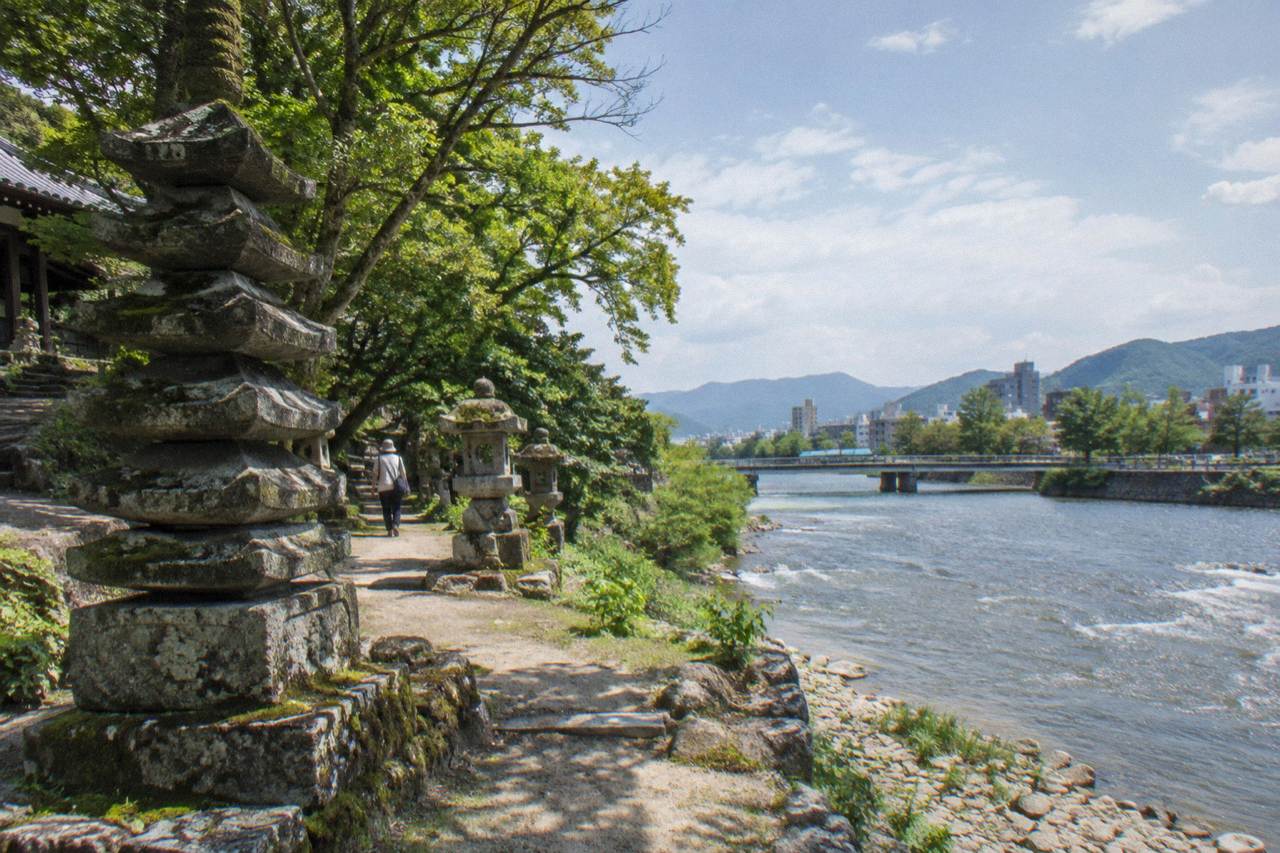
The best hidden gems in Hiroshima are Mitaki-dera temple and Shukkeien garden in the city, plus Sandankyo Gorge, Abuto Kannon, Buttsuji, Mount Fudekage, Mitsujo Kofun and Okunoshima across Hiroshima Prefecture, all reached by Hiroden streetcar, JR lines and short ferries.
The hidden gems of Hiroshima city come first, then the prefecture-wide escapes, with the fares and hours the official sources publish. For the classic core, start with the things to do in Hiroshima overview and come back here for the quiet half of the destination.
What Are The Hidden Gems In Hiroshima Beyond The Peace Park?
Beyond the Peace Memorial Park, Hiroshima's hidden gems include Mitaki-dera near JR Mitaki Station, the strolling garden Shukkeien in the city center, Sandankyo Gorge and its 16 km trail in Akiota Town, and Okunoshima, better known as Rabbit Island, reached by ferry from Tadanoumi Port, where rabbits mix with war ruins, all reachable by train, streetcar or ferry without a car.
Mitaki-dera sits near JR Mitaki Station and asks a voluntary 200 yen donation, with opening hours of roughly 8:00 to 17:00 daily. Shukkeien, a compact strolling garden in the city centre, charges 350 yen for adults, 150 yen for university students and nothing at all for school students, a free-child policy that has applied since 14 April 2025 per the garden's own site. The prefecture-wide list stretches further: Sandankyo Gorge in Akiota Town has a 16 km trail, and Okunoshima, better known as Rabbit Island, is reached by ferry from Tadanoumi Port and mixes rabbits with war ruins.
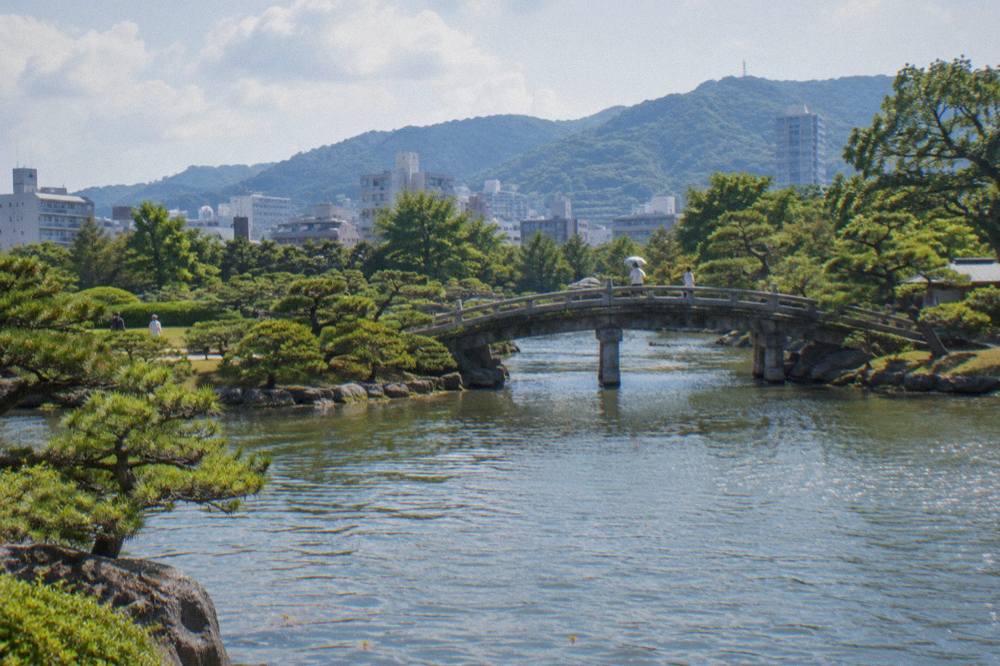
The point of this list is not that the famous sites should be skipped. The Hiroshima Peace Memorial Park is open 24 hours with free admission and no closure days, and it rewards a slow visit. The point is that a Hiroshima trip has room for both, because the city is compact and the prefecture's rail and ferry network is dense. The table below sets out the city gems at a glance.
| Place | Area | Entry Cost | Hours |
|---|---|---|---|
| Mitaki-dera | Near JR Mitaki Station | 200 yen voluntary donation | About 8:00 to 17:00 daily |
| Shukkeien | Central Hiroshima | 350 yen adult, 150 yen university, school students free | 9:00 to 18:00 from 16 March to 15 September; 9:00 to 17:00 from 16 September to 15 March |
| Peace Memorial Park | Nakajima-cho | Free, open 24 hours | No closure days |
Shukkeien's last entry is 30 minutes before closing. The garden's seasonal hours split on 15/16 March and 15/16 September, so a spring visit and an autumn visit run on different clocks.
Where Are The Quietest Corners Of The Peace Park Itself?
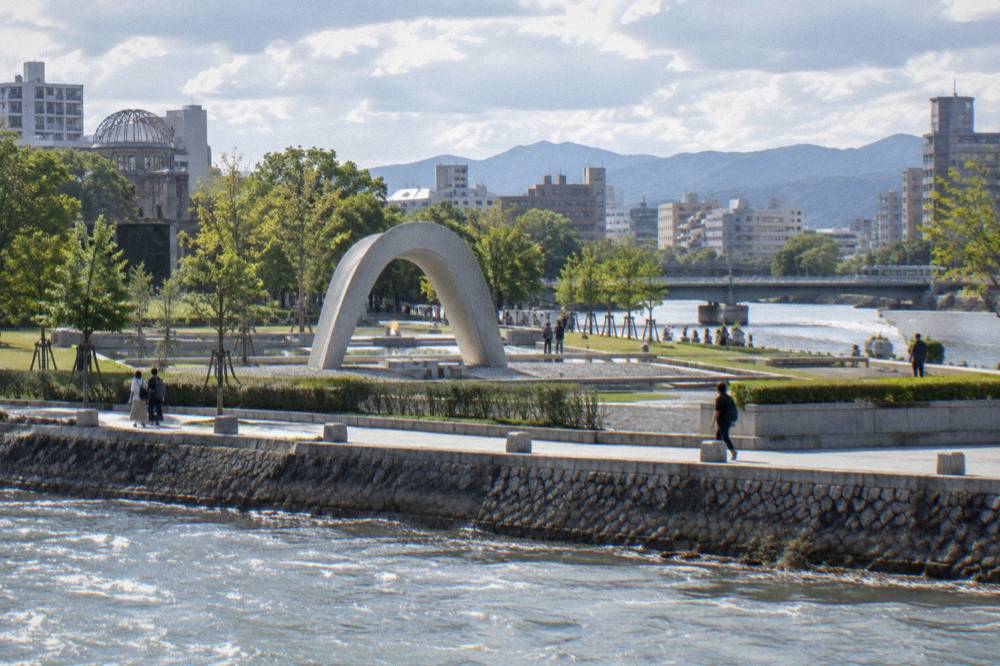
The quiet corners of Hiroshima Peace Memorial Park are the park's own open ground beyond the museum queue: the 122,100 square metre park is open 24 hours a day with free admission, the Cenotaph for the A-bomb Victims dates from 6 August 1952, and the Peace Flame, lit on 1 August 1964, stands north of the Cenotaph.
The park was established on the former delta area near ground zero, with construction starting in 1950 and opening for use in 1956. The Cenotaph, formally the Hiroshima Peace City Memorial Monument, was designed by Kenzo Tange. The Flame of Peace is designed to burn until all nuclear weapons are abolished, as the city's material describes it. These are facts you can read in a few seconds on the spot, and they carry the park's meaning as much as the museum halls do.
The museum is the part with a fee and a queue. Admission is 200 yen for adults, 100 yen for high school students, free for junior high school students and younger, and 100 yen for visitors aged 65 and older with proof of age. It opens 7:30am to 7:00pm from March to July and September to November, 7:30am to 8:00pm in August, and 7:30am to 6:00pm from December to February, closing 30 and 31 December and for several days in mid-February for exhibition changes. Early-morning and some evening slots need an online reservation. The Children's Peace Monument and the National Peace Memorial Hall, which is free and opens 8:30am to 6:00pm from March to July with seasonal variation, sit inside the same walk. If you are weighing a guided version, the Peace Park walking tour page lays out what a guide adds, and the question do you need tickets for Hiroshima Peace Memorial Park is answered plainly: the park is public and needs nothing.
The A-Bomb Dome, a UNESCO World Heritage Site since 1996, stands on the north side of the park and is viewable from outside the fence at no fee. For conduct, the etiquette guide for the Peace Park covers what official pages state: quiet, no loud behaviour, respectful photography.
How Do You Reach Mitaki-Dera And Shukkeien Without A Car?
Go car-free on Hiroshima's Hiroden streetcars. Shukkeien sits in central Hiroshima on the network, where every ride costs a flat 240 yen for adults and 120 yen for children. Three rides exceed the 700 yen 1 Day Streetcar Pass, while the 1,000 yen Visit Hiroshima Tourist Pass adds buses and Miyajima ferries, excluding JR trains. The streetcars reportedly enter Hiroshima Station directly on its 2nd floor, easing train connections.
The Hiroden flat fare matters for a hidden-gems day because it caps every streetcar hop at a single known price. The Hiroden network also sells day passes: a 1 Day Streetcar Pass at 700 yen for adults and 350 yen for children, valid on all streetcar lines, and a 1 Day Streetcar and Ferry Pass at 1,000 yen for adults and 550 yen for children, which adds the Miyajima Matsudai Kisen ferry and includes the Miyajima visitor tax. There is also the Visit Hiroshima Tourist Pass, at 1,000 yen for one day or 2,000 yen for three days, valid on Hiroden streetcars, buses and Miyajima ferries, excluding JR trains.
| Pass | Adult Price | Child Price | Valid On |
|---|---|---|---|
| Hiroden single fare | 240 yen | 120 yen | All streetcar lines, including Miyajima line |
| 1 Day Streetcar Pass | 700 yen | 350 yen | All streetcar lines |
| 1 Day Streetcar and Ferry Pass | 1,000 yen | 550 yen | All streetcar lines plus Miyajima Matsudai Kisen ferry, visitor tax included |
| Visit Hiroshima Tourist Pass, 1 day | 1,000 yen | Child rates on the pass page | Hiroden streetcars, buses, Miyajima ferries |
| Visit Hiroshima Tourist Pass, 3 day | 2,000 yen | Child rates on the pass page | Hiroden streetcars, buses, Miyajima ferries |
The decision is simple arithmetic. Three streetcar rides at 240 yen already exceed the 700 yen day pass, so a day that strings Shukkeien, the castle grounds and the harbour area pays for the pass. Add Miyajima and the 1,000 yen streetcar-and-ferry version carries the 100 yen Miyajima visitor tax inside its price, which the ferry operator otherwise charges separately on entering the island. The streetcar network was reported in August 2025 to enter the Hiroshima Station building directly on its 2nd floor, which tightens the connection between JR and Hiroden for anyone arriving by train; treat that as reported. The route question how to get from Hiroshima Station to the Peace Park covers the Lines 2 and 6 ride to Genbaku Dome-mae, 240 yen adult fare.
Air travelers can start the car-free itinerary on landing. The airport limousine bus reaches the Hiroshima Station Shinkansen exit in about 50 minutes; the adult fare is 1,500 yen, the same as the roughly 55-minute run to the Hiroshima Bus Center, and IC cards are accepted on both. The fastest trains from Shin-Osaka take roughly 80 to 85 minutes, and from Tokyo roughly three hours 45 minutes to four hours.
Once in the city, timing matters. Shukkeien keeps hours of 9:00 to 18:00 from March 16 to September 15 and 9:00 to 17:00 from September 16 to March 15, with last entry 30 minutes before closing; admission is 350 yen for adults, 150 yen for university students, and free for children from elementary through high school, a policy in place since April 14, 2025. The castle keep closed permanently to visitors on March 22, 2026, leaving the exterior and grounds, and a history museum is planned in the Sannomaru area for 2027. The Peace Memorial Museum costs 200 yen for adults, 100 yen for high school students and for visitors 65 and older with a passport, and nothing for junior high school students and younger. It opens at 7:30 daily, closes at 18:00 from December to February, at 19:00 for much of the year, and 20:00 in August, with closures on December 30 and 31 and a mid-February exhibit change.
On Miyajima, the Matsudai Kisen ferry sails about every 15 minutes from 7:00, and the JR ferry offers a parallel crossing of about 10 minutes that accepts Japan Rail Pass and JR-West rail passes. Itsukushima Shrine charges 300 yen for adults and 100 yen for elementary and junior high students, and the combined ticket with the Treasure Hall is 500 yen. The ropeway costs 2,000 yen round trip for adults, runs 9:00 to 16:00 with a last descent at 16:30, and takes about an hour with sightseeing, plus an hour more for the summit walk.
What Hidden Gems Lie Across Hiroshima Prefecture?
The prefecture-wide hidden gems of Hiroshima are Sandankyo Gorge in Akiota Town with its 16 km trail, Abuto Kannon (Bandai-ji Temple) in Fukuyama, a National Important Cultural Property with a vermilion hall cantilevered over a cliff, Buttsuji Temple with its cedar grove in Mihara, Mount Fudekage at 311 meters with Seto Inland Sea island views, and Mitsujo Kofun, a restored keyhole-shaped burial mound about 92 meters long in Higashihiroshima.
Sandankyo's trail carries a national Special Place of Scenic Beauty designation, which is the legal category Japan uses for protected landscapes. Buttsuji is a Zen temple in the hills of Mihara, and Mount Fudekage, also in Mihara, reaches 311 meters and looks out across the Seto Inland Sea islands. Mitsujo Kofun, about 92 meters long, is the closest thing Hiroshima Prefecture has to an open archaeology lesson. The wider set of guides lives on Hiroshima Travel Guide.
| Gem | Location | What It Is | Key Figure |
|---|---|---|---|
| Sandankyo Gorge | Akiota Town | Gorge trail, national Special Place of Scenic Beauty | 16 km trail |
| Abuto Kannon (Bandai-ji) | Fukuyama | Vermilion hall over a cliff, National Important Cultural Property | Cantilevered hall |
| Buttsuji | Mihara | Zen temple with cedar grove | Cedar grove setting |
| Mount Fudekage | Mihara City | Hilltop viewpoint over the Seto Inland Sea | 311 meters |
| Mitsujo Kofun | Higashihiroshima | Restored keyhole-shaped burial mound | About 92 meters long |
| Sankeien Garden | Near Hiroshima Airport | Strolling garden | About 6 hectares |
These places sit at the edges of a prefecture that stretches well beyond the city, so a hidden-gems itinerary that mixes, say, Sandankyo in the northwest with Abuto Kannon in the east is really two separate days. Pair them by geography instead: Mihara's Buttsuji and Mount Fudekage form one eastern day, while the nearby island of Okunoshima belongs to Takehara and is reached by ferry from Tadanoumi Port, and Sandankyo stands alone to the northwest. The Hiroshima in 3 days itinerary has the frame for spreading days like this.
What About Okunoshima, Onomichi And The Shimanami Kaido?
Okunoshima, or Rabbit Island, is reached by ferry from Tadanoumi Port and features rabbits and war ruins; Onomichi's Senkoji Park is reachable by ropeway in about 3 minutes from near JR Onomichi Station, and the Shimanami Kaido cycling route spans approximately 60 km from Onomichi to Imabari, crossing the Seto Inland Sea island chain.
The ropeway lifts you to Senkoji Park in about three minutes. The Shimanami Kaido is a separate cycling route: roughly 60 km from Onomichi, crossing a series of bridges to Imabari on Shikoku. The route, the staging and where to sleep are covered in the Shimanami Kaido guide.
Okunoshima is different again: a small island in the Seto Inland Sea with free-roaming rabbits and the remains of war-era facilities, reached by ferry from Tadanoumi Port. The island's full history and practicalities are in the Okunoshima guide. Combine it with Mihara's Mount Fudekage for a single eastern-prefecture day, or treat it as a stop on the way toward Onomichi.
When Is The Best Weather For Hiroshima's Outdoor Hidden Gems?
The Japan Meteorological Agency (JMA) station normals for Hiroshima for 1991 to 2020 show July has the highest monthly rainfall at 279.8 mm and January the lowest at 46.2 mm, August has the highest average daily high at 32.8 °C and January the lowest average daily low at 2.0 °C, so gorge trails and long walks run hardest in the summer heat and the July rain.
These are station normals, averages over three decades, not forecasts. Read as planning ranges, they say the outdoor gems, Sandankyo's 16 km trail above all, sit best outside the June-to-August block, when rain peaks in July and daily highs average above 30 C. Spring and autumn carry moderate rainfall, about 141 mm in April and 69.3 mm in November, with comfortable average highs of 19.8 °C and 17.7 °C respectively.
| Month | Average High °C | Average Low °C | Average Rain mm |
|---|---|---|---|
| January | 9.9 | 2.0 | 46.2 |
| April | 19.8 | 10.1 | 141.0 |
| July | 30.9 | 24.1 | 279.8 |
| August | 32.8 | 25.1 | 131.4 |
| October | 23.7 | 14.9 | 109.2 |
| November | 17.7 | 8.9 | 69.3 |
The full monthly table and what it means for cherry blossom, autumn leaves and the 6 August ceremony are in the best time to visit Hiroshima guide.
How Do You Fit Hidden Gems Into A Hiroshima Itinerary?
A workable frame is one city day pairing Shukkeien and Mitaki-dera on the 700 yen Hiroden day pass, one Peace Park morning at the 200-yen museum followed by the free park ground, and one or two prefecture days, east to Mihara, Okunoshima and Onomichi, or northwest to Sandankyo Gorge, booked around the flat 240 yen streetcar fare and JR local lines.
For a prefecture day with food and drink built in, book a sake brewery day tour here.
The mistake to avoid is geography-hopping. Hiroshima city, the eastern prefecture and the northwest gorge are three separate clusters, and each rewards a full block of time rather than a fragment. The Hiroshima in one day itinerary covers the compressed version; Hiroshima in 2 days adds the second cluster; and Hiroshima and Miyajima in one day is the right page if the island is fixed and the gems have to fit around it. First-time visitors should also read the first time in Hiroshima primer before committing a day to the far corners.
| Day | Cluster | Core Sights | Transport Basis |
|---|---|---|---|
| 1 | City centre | Shukkeien, castle grounds, Peace Park and museum | Hiroden day pass, 700 yen adult |
| 2 | City west | Mitaki-dera, harbour side | JR local to Mitaki, streetcar return |
| 3 | East prefecture | Mihara, Mount Fudekage, Okunoshima, Onomichi | JR lines plus Tadanoumi ferry |
| 4 | Northwest | Sandankyo Gorge trail | JR and local bus to Akiota Town |
One caution to repeat: the Hiroshima Castle keep has been closed to visitors since 22 March 2026, and the exterior and grounds are what remain open, with a Sannomaru history museum planned for 1 June 2027. Do not build a day around going up the keep. Where to sleep between these clusters is covered in the where to stay in Hiroshima guide, and families weighing which of these gems suit children have a full breakdown in Hiroshima with kids.
For the Peace Park half of any itinerary, a guided walk is the one bookable product that pairs naturally with a hidden-gems plan, because it front-loads the history in a single fixed block and frees the rest of the day. The flexible walk option, the Peace Memorial Park Historical Walking Tour, runs with a local guide; the Peace Park, Museum and Dome group tour bundles the ticketed parts; and the longer Peace and History tour spends more time on the why. If one of them fits your dates, Check availability while your itinerary is still flexible.
Common Questions About Hiroshima Hidden Gems
What Are The Hidden Gems In Hiroshima?
Mitaki-dera temple and Shukkeien garden inside the city, Sankeien Garden near Hiroshima Airport, and, across Hiroshima Prefecture, Sandankyo Gorge, Abuto Kannon in Fukuyama, Buttsuji in Mihara, Mount Fudekage, Mitsujo Kofun in Higashihiroshima and Okunoshima island.
How Much Does Shukkeien Garden Cost?
Admission is 350 yen for adults, 150 yen for university students, and free for elementary to high school students. The garden is open 9:00 to 18:00 from 16 March to 15 September and 9:00 to 17:00 from 16 September to 15 March.
Is Mitaki-Dera Free To Enter?
Mitaki-dera, near JR Mitaki Station, recommends a voluntary 200 yen donation rather than a set admission fee, and is open approximately 8:00 to 17:00 daily.
Can You Visit Hiroshima Castle As A Hidden Gem?
The castle keep has been closed to visitors since 22 March 2026, so the exterior and grounds are what you can see; a Sannomaru history museum is planned for 1 June 2027.
How Long Is The Sandankyo Gorge Trail?
The Sandankyo Gorge trail in Akiota Town is about 16 km long, making it a substantial hike through the gorge.
Does A Hiroden Day Pass Cover Miyajima?
The 1,000 yen Streetcar and Ferry Pass covers all streetcar lines plus the Miyajima Matsudai Kisen ferry and includes the 100 yen Miyajima visitor tax; the 700 yen version covers streetcars only.
From Mitaki-dera to Abuto Kannon, Hiroshima Prefecture rewards the extra day, and the streetcar, JR and ferry fares above are all you need to price it out before you go.