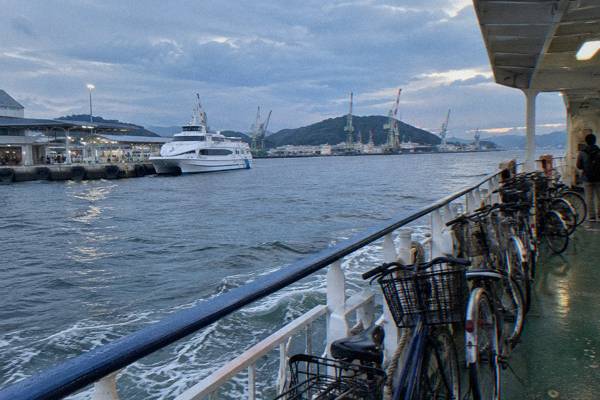
Shimanami Kaido: Cycling Onomichi To Imabari
The Shimanami Kaido is the approximately 70 km cycling road from Onomichi to Imabari that crosses six islands and seven bridges, and it is the first bicycle road in Japan to cross a sea strait. This guide covers the route, rental costs, terminals, tides of planning and where to sleep along the way.
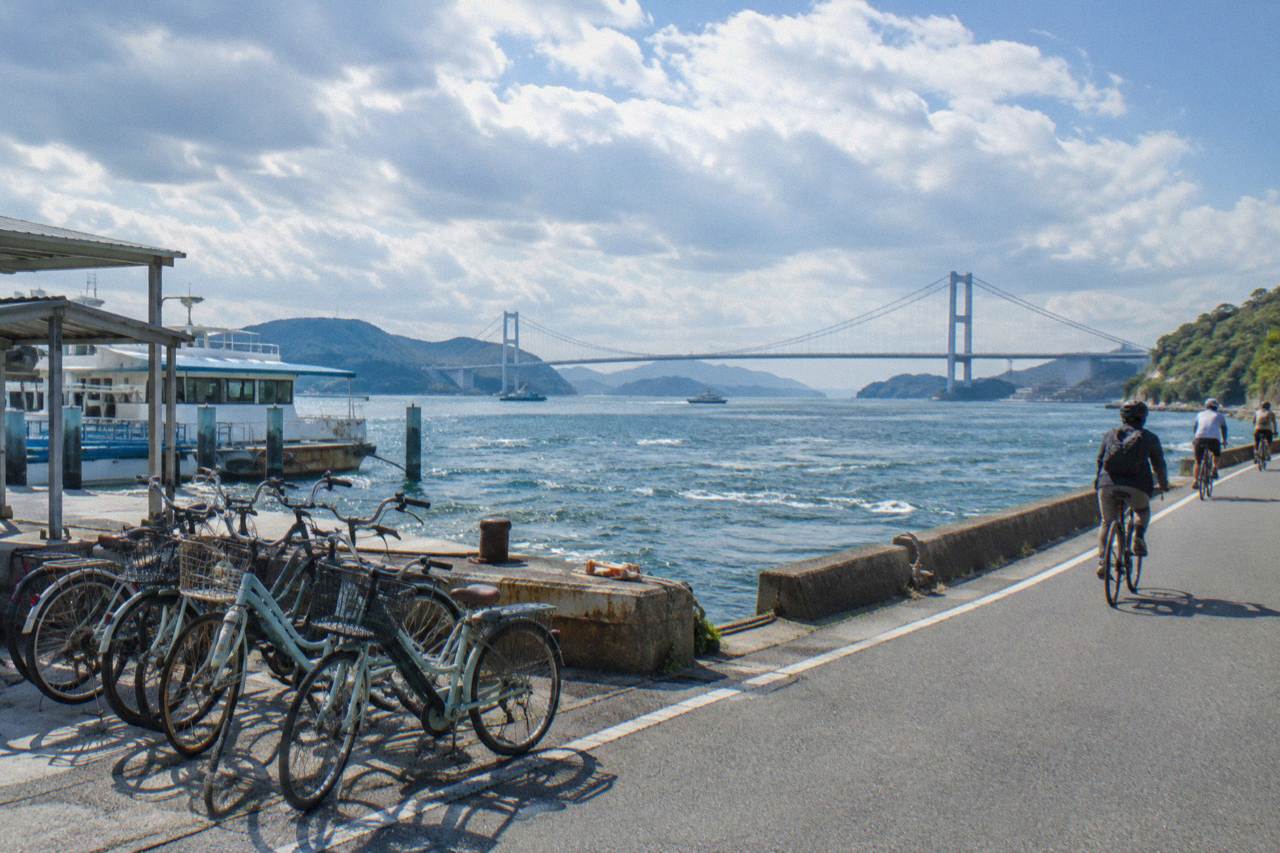
The Shimanami Kaido runs about 70 km one-way from Onomichi Port to Imabari Port through six islands and seven bridges. Standard rental bikes cost 3,000 yen per adult per calendar day with drop-off at any of the terminals, and the full ride takes around 6 to 10 hours of steady cycling, with 2 to 3 days recommended for sightseeing.
The Shimanami Kaido is the approximately 70 km cycling road that runs from Onomichi Port to Imabari Port, crossing six islands and seven bridges across the Seto Inland Sea, the same body of water on which Hiroshima itself sits at the head of Hiroshima Bay. According to the official Shimanami cycling pages, it is the first bicycle road in Japan that crosses a sea strait.
What Is The Shimanami Kaido Near Hiroshima?
The Shimanami Kaido is an approximately 70 km one-way cycling road between Onomichi Port and Imabari Port that crosses six islands and seven bridges, and the official Shimanami cycling site describes it as the first bicycle road in Japan to cross a sea strait. A blue line painted on the ground marks the recommended cycling path from JR Onomichi Station to JR Imabari Station, so route-finding on the ground is built into the road itself.
The route starts in Onomichi, a hillside port town in Hiroshima Prefecture that is itself a worthwhile stop, covered in the Onomichi temple walk and ropeway guide. The far end is Imabari in Ehime Prefecture, on Shikoku.
The islands along the way are not empty staging posts. The official cycling site notes that the road links islands filled with history and culture, and the network of more than 150 cyclist-friendly cycle oases, rest areas with air pumps, bicycle stands, benches, drinking water and toilets, means the ride is supported end to end. A reported count puts the signed Cycle Oasis stops at over 200, marked by blue and white signs.
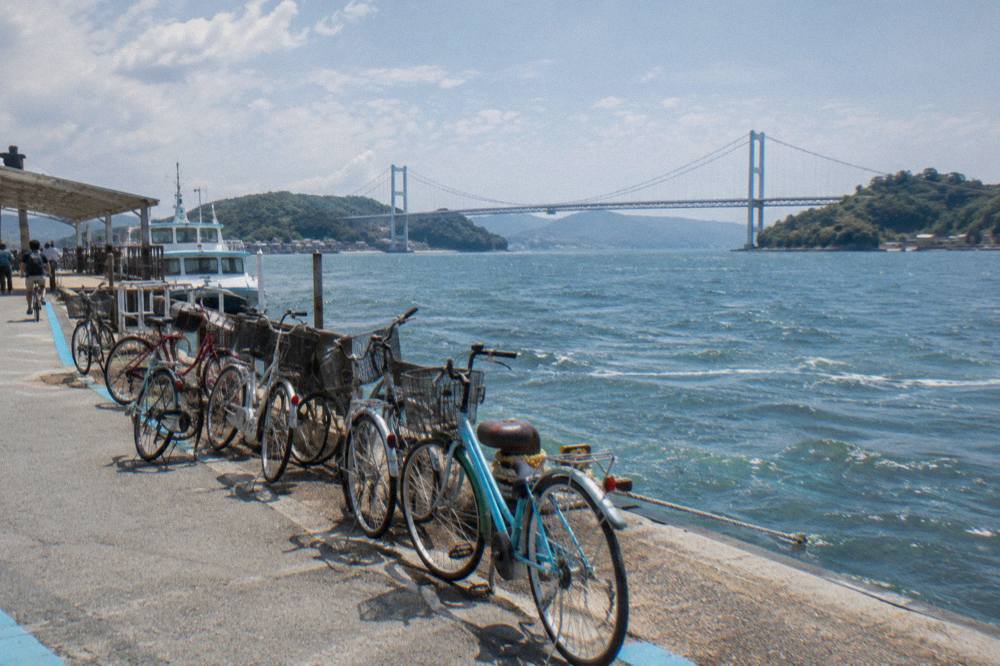
The Shimanami Kaido is one of the day trips in the Seto Inland Sea island chain, usually paired with a night somewhere along the route rather than squeezed into a single day out and back.
| Route element | Figure |
|---|---|
| Total distance, one way | About 70 km |
| Start point | Onomichi Port |
| End point | Imabari Port |
| Islands crossed | 6 |
| Bridges crossed | 7 |
| Cycle oases (rest stops) | Over 150 |
| Waymarking | Blue line from JR Onomichi Station to JR Imabari Station |
How Long Does It Take To Cycle The Shimanami Kaido?
The full one-way route takes around 6 to 10 hours of steady cycling on a standard bike, according to the Shimanami bike-rental pages, and the same source recommends 2 to 3 days if you want to sightsee along the way rather than simply cover the distance. A single-day one-way ride is realistic for fit riders, but a same-day return to Hiroshima is not what the route is built for.
The distinction matters. Six to ten hours of pedalling is the riding time alone, without temple stops, café stops or the time spent waiting at terminal counters. Riders who treat the Shimanami Kaido as a touring route, overnighting at Setoda or Omishima, spread the distance over two comfortable halves. Riders chasing the full crossing in one push start early and treat the islands as scenery.
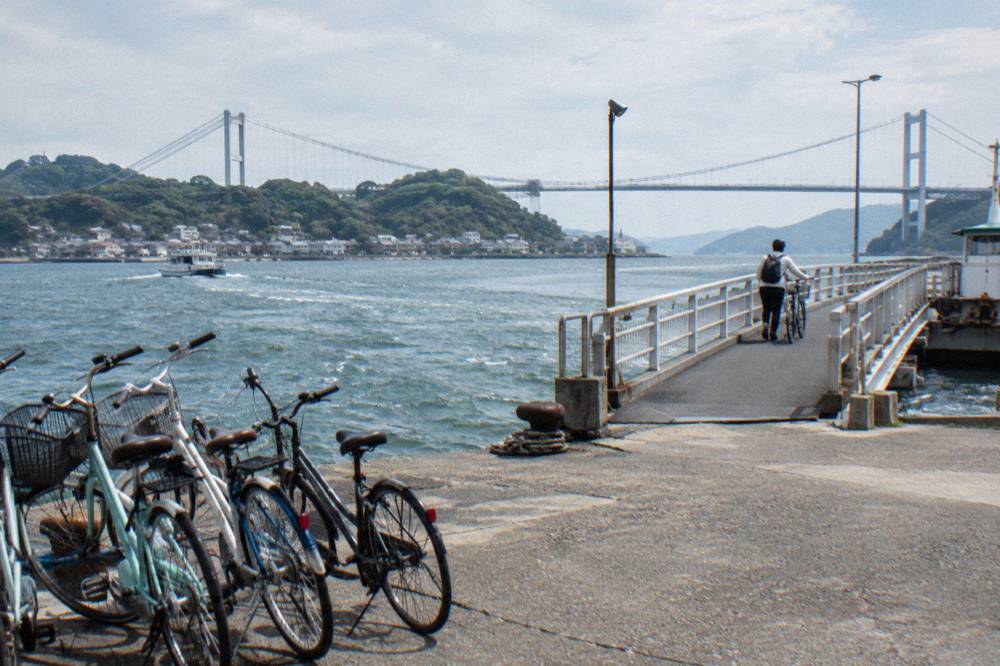
The weather plays a part in planning. The Japan Meteorological Agency (JMA) station data for Hiroshima, 1991-2020 normals, show July rainfall in the region at 279.8 mm and August with a mean daily high of 32.8 C. Those figures are for the Hiroshima station itself, but they frame what a summer crossing of nearby inland-sea islands feels like: hot, humid, and wet at short notice.
| Riding plan | Time on the bike | Notes from the rental pages |
|---|---|---|
| Full one-way crossing | Around 6 to 10 hours | Steady cycling on a standard bike |
| Two-day tour with overnight | About half the route per day | 2 to 3 days recommended for sightseeing |
| Three-day tour | Short daily stages | Leaves time for island sightseeing |
| Onomichi to Setoda only | Part of the route | Setoda is about halfway along |
One structural fact simplifies the whole decision: rental bikes can be dropped off at a different terminal from where they were picked up, at any of the 10 terminals, for the standard bike categories. That single rule is what makes the one-way, multi-day tour possible without backtracking.
How Much Do Shimanami Kaido Rental Bikes Cost?
Adult rental cross bikes and city cycles cost 3,000 yen per calendar day, children 12 and under pay 1,000 yen, battery-assisted bicycles rent for 4,000 yen per adult per day at select terminals, and e-bikes cost 8,000 yen per adult per day at Onomichi Station, Imabari Itoyama and Imabari Station, according to the Shimanami bike-rental pages. Drop-off at any of the 10 terminals is included for the standard and battery-assisted categories.
The price ladder is steep between categories, and the differences are real. The 8,000 yen e-bike tier exists only at the two mainland-end terminal groups, and it is limited to one-day rentals, though drop-off at all terminals is still allowed.
Two further rules shape the budget. Tandem bicycles rent for 4,000 yen per day at limited terminals, Setoda Sunset Beach, Omishima and Imabari Itoyama, and must be returned to the same terminal.
| Bike category | Adult price per calendar day | Child price | Drop-off |
|---|---|---|---|
| Cross bike / city cycle | 3,000 yen | 1,000 yen (12 and under) | Any of the 10 terminals |
| Battery-assisted bicycle | 4,000 yen | Not listed in this tier | Any of the 10 terminals |
| E-bike | 8,000 yen | Not listed in this tier | All terminals, same-day, one-day rentals |
| Tandem bicycle | 4,000 yen | Not applicable | Same terminal only |
Helmets are mandatory and provided free with all rentals from the Shimanami Japan terminals, so there is nothing extra to budget for on that count. Reservations are highly recommended during peak seasons: spring, autumn, Golden Week and Obon, though walk-up rental is possible on a first-come basis.
Where Are The Rental Terminals And When Are They Open?
The Onomichi Station terminal operates 8:00 to 19:00 from March to November and 8:00 to 18:00 from December to February, Imabari Itoyama and Imabari Station follow the same seasonal hours, and the island terminals such as Mukaishima, Innoshima, Setoda, Omishima, Hakatajima and Oshima run 9:00 to 17:00 year-round, per the Shimanami rental pages.
The gap between the two schedules is the thing to plan around. A rider aiming to drop a bike on an island needs to arrive before five in the afternoon, full stop.
The reported detail about the Onomichi Harbor terminal is a useful one for early starters: approximately 40 rental bikes are available there first-come first-served daily from 7am.
| Terminal | Hours March to November | Hours December to February |
|---|---|---|
| Onomichi Station | 8:00 to 19:00 | 8:00 to 18:00 |
| Imabari Itoyama | 8:00 to 19:00 | 8:00 to 18:00 |
| Imabari Station | 8:00 to 19:00 | 8:00 to 18:00 |
| Mukaishima, Innoshima, Setoda, Omishima, Hakatajima, Oshima | 9:00 to 17:00 | 9:00 to 17:00 |
Battery-assisted bicycles are available at select terminals including Onomichi Station, Setoda, Omishima and Imabari, with multi-day rentals allowed in that category. That matters for the two-day plan: an assisted bike picked up in Onomichi can legally sleep at Setoda and finish in Imabari.
Where To Stay When Cycling The Shimanami Kaido?
The two most popular overnight stops along the Shimanami Kaido are Setoda on Ikuchijima Island and Omishima Island, both located about halfway along the route, according to the official Shimanami experience pages, and many lodging facilities along the route allow cyclists to bring their bicycles into the room. The same pages note that public rental bikes can be dropped off at some hotels and ryokan in Imabari City.
Halfway is the logic. Onomichi to Setoda and Setoda to Imabari are roughly equal halves of the 70 km, which is why the harbour town of Setoda and the island of Omishima anchor almost every two-day itinerary. The full question of where to sleep, including luggage logistics, is unpacked in where to stay when cycling the Shimanami Kaido.
Luggage is the hidden variable on any multi-day ride. A same-day luggage delivery service is reported to run between affiliated accommodation facilities along the route, with bags usually deposited by 10am and collected after 6pm. Riding 70 km with panniers is a different sport from riding it with a daypack, and the delivery network exists so that most riders can choose the daypack. The rest of the planning pages sit on Hiroshima Travel Guide.
The cycling infrastructure extends to the transport layer: cycle buses, cycle trains and cycle ships operate along the Shimanami Kaido to support cyclists, and the blue line plus the Cycle Oasis signs mean that a rider is never far from water, a bench or a pump. For a wider look at island-hopping options around the region, the Seto Inland Sea islands guide covers the neighbouring chains.
Is The Shimanami Kaido Worth It?
Yes, for riders who want a supported long-distance cycling route: it is the first bicycle road in Japan to cross a sea strait, it spans about 70 km through six islands and seven bridges with over 150 cycle oases along the way, rental bikes start at 3,000 yen per adult per day with one-way drop-off included, and helmets are provided free. It is not worth it for a traveller who wants a two-hour loop: the minimum honest commitment is a one-day, one-way crossing.
The value case rests on what the route removes. Navigation is solved by the painted blue line. Support is solved by the oasis network. Logistics are solved by one-way drop-off and the reported luggage delivery between affiliated lodgings. What remains is the ride itself, bridges, straits and island towns, which no other cycle route in the country combines in quite this way, and the official cycling site records its standing with a monument commemorating a sister cycling road agreement with the Sun Moon Lake Cycling Course, signed on 25 October 2014, and the first Cycling Shimanami event on 26 October 2014.
The honest caveat is scale. A rider based in Hiroshima who has one free day and no appetite for 70 km should ride something shorter and keep the Shimanami Kaido for a trip with an overnight. The Hiroshima day trip overview lists the alternatives that stay inside the city or closer to it, including Miyajima and its own short crossings.
How Do You Get To The Shimanami Kaido From Hiroshima?
Onomichi, the route's western start, is a town in Hiroshima Prefecture east of Hiroshima city, reached by rail along the Sanyo corridor, and the Onomichi Station rental terminal sits at the rail station itself, so the transfer from train to bike is a single location change; at the far end, the highway bus Shimanami Liner connects Imabari to Fukuyama in about 1.5 hours for about 2,800 yen, from where local trains run back toward Onomichi and Hiroshima.
The shape of the trip is a lasso. Out from Hiroshima to Onomichi, across the islands to Imabari, then back via the Shimanami Liner to Fukuyama and the rail line home. The bus leg is the piece many riders discover late, and it is the reason a one-way crossing does not strand anyone in Ehime.
Onomichi repays the arrival day regardless. The town's own attractions, the 2.5 km Temple Walk connecting 25 Buddhist temples, Cat Alley with its stone cat art installed from 1998, and the Mt. Senkoji Ropeway running daily 09:00 to 17:15 at roughly 15-minute intervals with a 700 yen adult round trip, are covered in the Onomichi guide. Senkoji Temple itself was founded in 806 AD, and its vermilion main hall dates from 1686, so the start line of Japan's first sea-crossing bicycle road is also one of its older temple towns.
What Should You Know Before Riding From Hiroshima?
Helmets are mandatory and provided free with every Shimanami Japan rental, reservations are highly recommended for spring, autumn, Golden Week and Obon even though walk-up rental is possible first-come, island terminals close at 17:00 year-round while the mainland terminals run to 19:00 in season, and electric bikes must come back to their pickup terminal the same day. Those four rules cover most of the planning mistakes on this route.
Peak seasons deserve the emphasis the official pages give them. Spring and autumn are the recommended reservation windows, and Golden Week in early May and Obon in mid-August are called out on the experience pages as weekends-and-holidays-level demand for the rental fleet. The reported 7am first-come counter at Onomichi Harbor exists as the pressure valve.
Weather planning should use the Hiroshima station normals as the regional baseline, labelled as such: the Japan Meteorological Agency (JMA) 1991-2020 normals for Hiroshima show January with the lowest monthly rain total at 46.2 mm and July with the highest at 279.8 mm. The same table shows mean daily highs from 9.9 °C in January to 32.8 °C in August, so a winter crossing is cool and dry and a summer one is hot and wet.
| Month | Mean daily high °C | Mean daily low °C | Rain mm |
|---|---|---|---|
| Jan | 9.9 | 2.0 | 46.2 |
| Apr | 19.8 | 10.1 | 141.0 |
| Jul | 30.9 | 24.1 | 279.8 |
| Aug | 32.8 | 25.1 | 131.4 |
| Oct | 23.7 | 14.9 | 109.2 |
| Nov | 17.7 | 8.9 | 69.3 |
Riders pairing the crossing with time in Hiroshima itself can hand the city portion to a licensed guide, and the licensed guide day tour pairs Hiroshima and Miyajima in a single guided day, a sensible way to cover the city before heading east for the bridges. Check availability if that ordering suits your dates.
Common Questions About Cycling The Shimanami Kaido From Hiroshima
Is The Shimanami Kaido Worth It?
For riders who want a supported long-distance route, yes. It is the first bicycle road in Japan to cross a sea strait, it spans about 70 km through six islands and seven bridges, rentals start at 3,000 yen per adult per day with one-way drop-off, and helmets are free with every rental. It is the wrong tool for a short two-hour ride, since the minimum honest version is a full one-way day.
How Far Is The Shimanami Kaido?
The cycling road runs approximately 70 km one-way from Onomichi Port to Imabari Port. It crosses six islands and seven bridges, and a blue line painted on the ground marks the recommended path between JR Onomichi Station and JR Imabari Station.
Can You Do The Shimanami Kaido In One Day?
Yes. The official rental pages state the full one-way route can be completed in around 6 to 10 hours of steady cycling on a standard bike. They recommend 2 to 3 days if you want to sightsee rather than simply cross, and the one-way drop-off rule means a single-day crossing ends in Imabari without backtracking.
Do You Need To Reserve A Rental Bike?
Reservations are highly recommended during peak seasons: spring, autumn, Golden Week and Obon. Walk-up rental is still possible on a first-come basis, and a reported 40 bikes are available daily from 7am at the Onomichi Harbor terminal for early starters.
Where Do People Stay Overnight On The Route?
The two most popular overnight stops are Setoda on Ikuchijima Island and Omishima Island, both about halfway along the route. Many lodging facilities along the Shimanami Kaido allow cyclists to bring bicycles into the room, and same-day luggage delivery between affiliated accommodations is reported to run with bags deposited by 10am and collected after 6pm.
What Happens At The Imabari End?
Imabari is the eastern terminus, with rental terminals at Imabari Itoyama and Imabari Station open 8:00 to 19:00 from March to November. Public rental bikes can be dropped off at some hotels and ryokan in Imabari City, and the highway bus Shimanami Liner connects Imabari to Fukuyama in about 1.5 hours for about 2,800 yen for the return leg.
The Shimanami Kaido rewards a rider who plans around three numbers: 70 km of distance, a 17:00 closing time on the island terminals, and 3,000 yen for the standard adult bike with one-way drop-off included. Get those three right, book ahead in spring or autumn, and the crossing from Onomichi to Imabari runs exactly as the route was designed to, bridge after bridge across the Seto Inland Sea.