Which Bomb Was Bigger?
The Nagasaki bomb, Fat Man, released more energy than the Hiroshima bomb, Little Boy. A plain comparison of the two August 1945 atomic bombs, with figures from the Atomic Heritage Foundation and the Hiroshima Peace Memorial Museum.
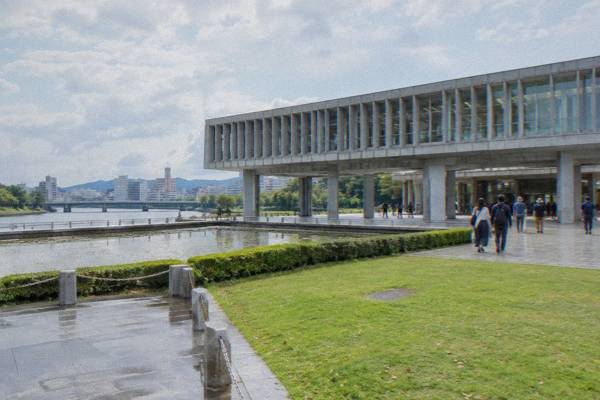
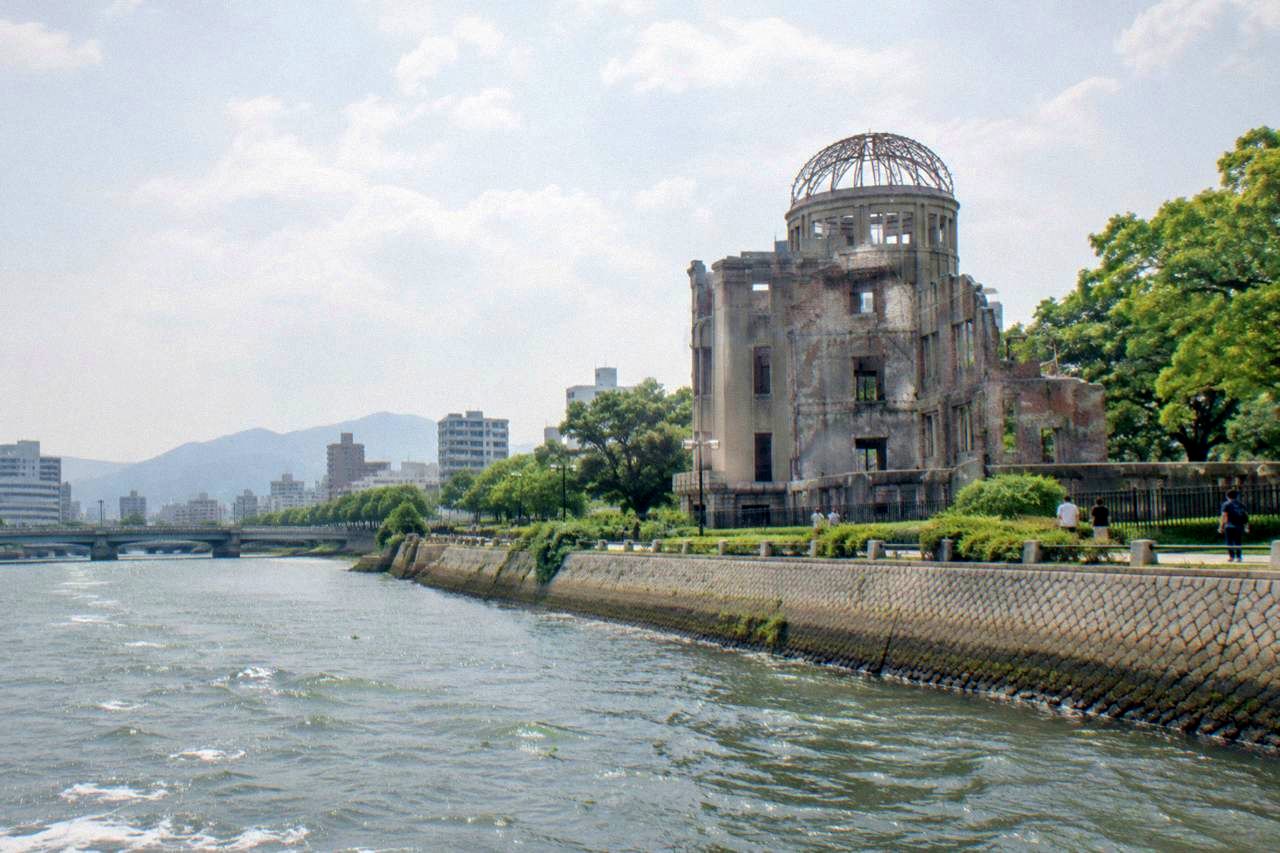
The bomb dropped on Nagasaki on 9 August 1945 was larger than the one dropped on Hiroshima three days earlier. The Atomic Heritage Foundation records the Hiroshima bomb, Little Boy, as exploding with about thirteen kilotons of force, while Fat Man over Nagasaki released over 21 kilotons. Yet the two cities' histories diverge in ways that raw explosive figures do not capture, and visitors to Hiroshima's Peace Memorial Park often arrive with exactly this question. This page sets out the documented comparison, design by design, and then shows where that history can still be read in the city today, from the A-Bomb Dome standing about 160 meters from the hypocenter to the museum that explains the whole mission in its permanent exhibition.
The Nagasaki bomb, Fat Man, was bigger in explosive force than the Hiroshima bomb, Little Boy. The Atomic Heritage Foundation lists Fat Man at over 21 kilotons of TNT equivalent against about thirteen kilotons for Little Boy, while a US National Archives account puts the Hiroshima figure at an estimated fifteen kilotons. The two figures for Little Boy, thirteen and fifteen kilotons, are both published estimates, and the Atomic Heritage Foundation and the US National Archives blog each carry one of them.
That spread is worth knowing about before quoting a single number in conversation. Fat Man's figure of over 21 kilotons appears in the same Atomic Heritage Foundation material as the Hiroshima figure, so the comparison holds whichever Hiroshima estimate is used. Force was not the only difference.
How Did The Hiroshima And Nagasaki Bombs Differ In Design?
The Hiroshima and Nagasaki bombs differed fundamentally in design: Little Boy was a uranium gun-type fission weapon, while Fat Man used plutonium compressed to a critical state by implosion. Little Boy carried about 50 kilograms of uranium-235, weighed 9,700 pounds and measured 10 feet long.
Little Boy carried about 50 kilograms of uranium-235, of which less than one kilogram actually fissioned, releasing energy equivalent to 16,000 tons of high-performance explosive in the figure given by the Google Arts and Culture account of the mission. The bomb measured about three meters long and weighed four tons in that same account. The National Archives blog adds the precise assembly figures: 10 feet long, 28 inches across, 9,700 pounds.
Fat Man used plutonium rather than uranium, compressed to a critical state by implosion. The Nagasaki Atomic Bomb Museum displays a full-size model of it, which gives visitors to that city a direct sense of the weapon's scale. The naming is documented too: the Hiroshima bomb was dubbed Little Boy because the final assembled bomb came out shorter than the initial design.
| Feature | Little Boy (Hiroshima) | Fat Man (Nagasaki) |
|---|---|---|
| Detonation date | 6 August 1945 | 9 August 1945 |
| Force | About thirteen kilotons (AHF); fifteen kilotons estimated (US National Archives) | Over 21 kilotons |
| Design | Uranium gun-type fission | Plutonium implosion |
| Tested before use | No | Implosion type proved in July 1945 test |
| Length | 10 feet | Full-size model displayed at Nagasaki museum |
| Weight | 9,700 pounds | Not stated here |
Where Did Each Bomb Explode?
Little Boy exploded over Hiroshima on 6 August 1945, and its hypocenter sits roughly 160 meters southeast of the building now known as the Atomic Bomb Dome. Fat Man exploded at 11:02 a.m. on 9 August 1945 above the Urakami district of Nagasaki, and destroyed the Mitsubishi Steel and Arms Works and the Mitsubishi-Urakami Ordnance Works.
The Hiroshima hypocenter sits roughly 160 meters southeast of the building now known as the Atomic Bomb Dome, according to a Nippon.com article on the structure.
Nagasaki's geography and the one-mile miss shaped a different outcome, and the two cities' postwar memorials reflect their separate experiences. The Nagasaki Atomic Bomb Museum stands next to the Nagasaki National Peace Memorial Hall for the Atomic Bomb Victims, built in 2003. For the fuller story of why Hiroshima was on the target list at all, with the Target Committee's May 1945 criteria and its ranking of the city, the documented answer is on why Hiroshima was chosen as a target.
Can You Still See The Bombs' History In Hiroshima Today?
Yes: the Atomic Bomb Dome stands about 160 meters from the hypocenter and is viewable from outside the fence at no fee, and the Hiroshima Peace Memorial Museum presents the bombing and its aftermath with an adult admission of 200 yen. The museum's permanent exhibition can be explored in about 30 minutes according to its visitor guide, with free guided tours by Hiroshima Peace Volunteers also available.
The museum keeps long hours: 7:30 to 19:00 from March to July and September to November, 7:30 to 20:00 in August with hours to 21:00 on 5 and 6 August, and 7:30 to 18:00 from December to February. High school students pay 100 yen, junior high school students and younger enter free, and visitors aged 65 and over pay 100 yen with a passport. Early morning and evening slots require an online reservation. The museum closes on 30 and 31 December and in mid-February for an exhibit change. The Atomic Bomb Dome itself needs no ticket at all.
A guided walk puts these places in order and in context: the Hiroshima Historical Walking Tour: Why the A-Bomb Was Dropped covers the park's main memorials with a guide explaining the decision history, and Check availability before committing to a date.
Is The Larger Bomb The Reason People Ask About Radiation In Hiroshima?
No: explosive force and lingering radioactivity are separate questions, and the larger Nagasaki bomb did not leave a longer-lived radiation problem in either city. The city of Hiroshima states that radiation in Hiroshima and Nagasaki today is on a par with the extremely low levels of background radiation present anywhere on Earth, and that it has no effect on human bodies.
The documented physics explains why. Of the energy the bomb emitted, about 5 percent was initial radiation released the instant of the explosion and 10 percent was residual radiation, in the figures published by the city. Roughly 80 percent of all residual radiation was emitted within 24 hours, and a week after the bombing the quantity a person would receive at the hypocenter was one millionth of the quantity immediately following the explosion. Most of those exposed to direct radiation within a one-kilometer radius died, the city's English page records.
So the radiation question, which many visitors quietly hold, has a short documented answer, and the longer one sits on how long Hiroshima was radioactive. Neither answer depends on which bomb carried more kilotons, and neither figure changes what a walk through the park feels like on the ground.
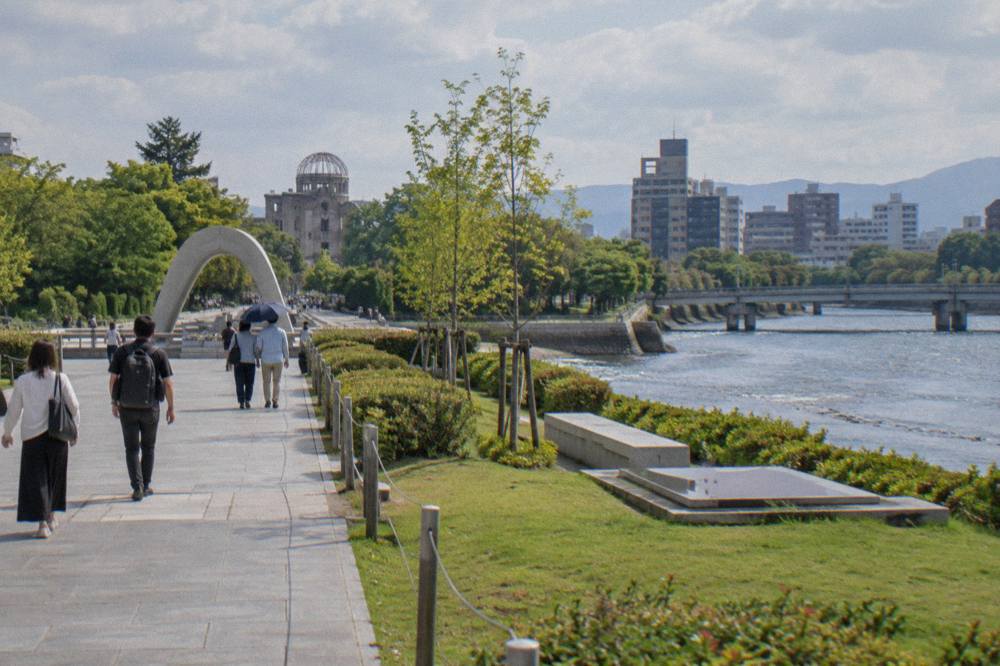
The A-Bomb Dome can be viewed from outside its fence at no charge, which makes it an easy landmark to visit on any schedule. On August 6, 2026, the Peace Memorial Ceremony is scheduled to run from 8:00 to 8:50 in the park, with about 7,000 seats set out alongside roughly 2,200 indoor seats at the International Conference Center; anyone wanting a seat should arrive well before the start. Crowds have grown in recent years: news reports put the museum's fiscal 2025 attendance at 2,580,926, a third consecutive record, with 945,618 visitors from abroad. Another report, from May 2026, described a plan to make museum entry reservation-only from August 8 to 16.
Hiroden streetcars have run on a flat fare of 240 yen for adults and 120 yen for children since February 2025, on every line including the Miyajima line, and since August 2025 the trams have entered the Hiroshima Station building directly, stopping on its second floor.
How Should A Visitor Bring This Question To Hiroshima Respectfully?
Read the documented comparison before arriving, then let the park and the museum carry the weight of it: quiet visiting, no loud behavior, and photography treated as it would be at any memorial. The annual Peace Memorial Ceremony on 6 August runs 8:00 to 8:50 in the park, with about 7,000 seats plus about 2,200 indoor seats at the International Conference Center.
A practical reading order helps. The annual Peace Memorial Ceremony on 6 August runs 8:00 to 8:50 in the park, with about 7,000 seats plus about 2,200 indoor seats at the International Conference Center. Planning a full day around the district is covered in how many days in Hiroshima is enough, and broader orientation is on the Hiroshima Travel Guide homepage.
Common Questions About The Hiroshima And Nagasaki Bombs
Which Bomb Was Bigger?
Fat Man, dropped on Nagasaki on 9 August 1945, was bigger in explosive force, at over 21 kilotons, than Little Boy, which exploded over Hiroshima with about thirteen kilotons, or an estimated fifteen kilotons in the US National Archives figure. The two weapons differed.
Was The Hiroshima Bomb Tested Before It Was Used?
No. The Atomic Heritage Foundation records that Little Boy was a uranium gun-type fission bomb developed at Los Alamos and not tested before its use on Hiroshima on 6 August 1945.
Why Was The Hiroshima Bomb Called Little Boy?
The bomb was dubbed Little Boy because the final assembled bomb was shorter than the initial design, according to the Google Arts and Culture account of the mission.
How High Above Hiroshima Did The Bomb Explode?
The bomb detonated approximately 600 meters above the city center at 8:15 a.m. on 6 August 1945. The US National Archives blog gives the altitude as approximately 1,900 feet.
Is Nagasaki's Bomb Displayed Anywhere?
Yes. The Nagasaki Atomic Bomb Museum displays a full-size model of the Fat Man atomic bomb. The museum stands next to the Nagasaki National Peace Memorial Hall for the Atomic Bomb Victims, built in 2003.
Does Either City Still Have Dangerous Radiation?
No. The city of Hiroshima states that radiation in Hiroshima and Nagasaki today is on a par with the extremely low levels of background radiation present anywhere on Earth and has no effect on human bodies.
The comparison, then, has a clean answer and a human context. Both cities preserve that history in museums and memorial parks, and Hiroshima's are open to any visitor who arrives with the question.