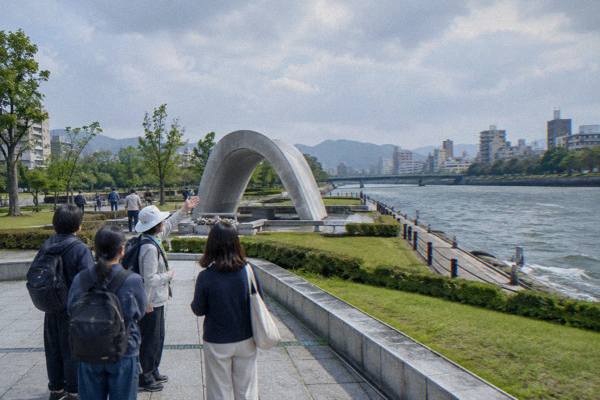
Why Was Hiroshima Chosen As A Target?
The Target Committee of April and May 1945 selected Hiroshima as a target for its military role, its size and its geography, and the full recommendation record explains each reason.
The committee described the city as an important army depot and port of embarkation in an urban industrial area, noted that its size would allow extensive damage to a large part of the city, and recorded that adjacent hills were expected to produce a focusing effect increasing blast damage. The recommendation record survives, and it shows the choice was made against explicit written criteria rather than at random.
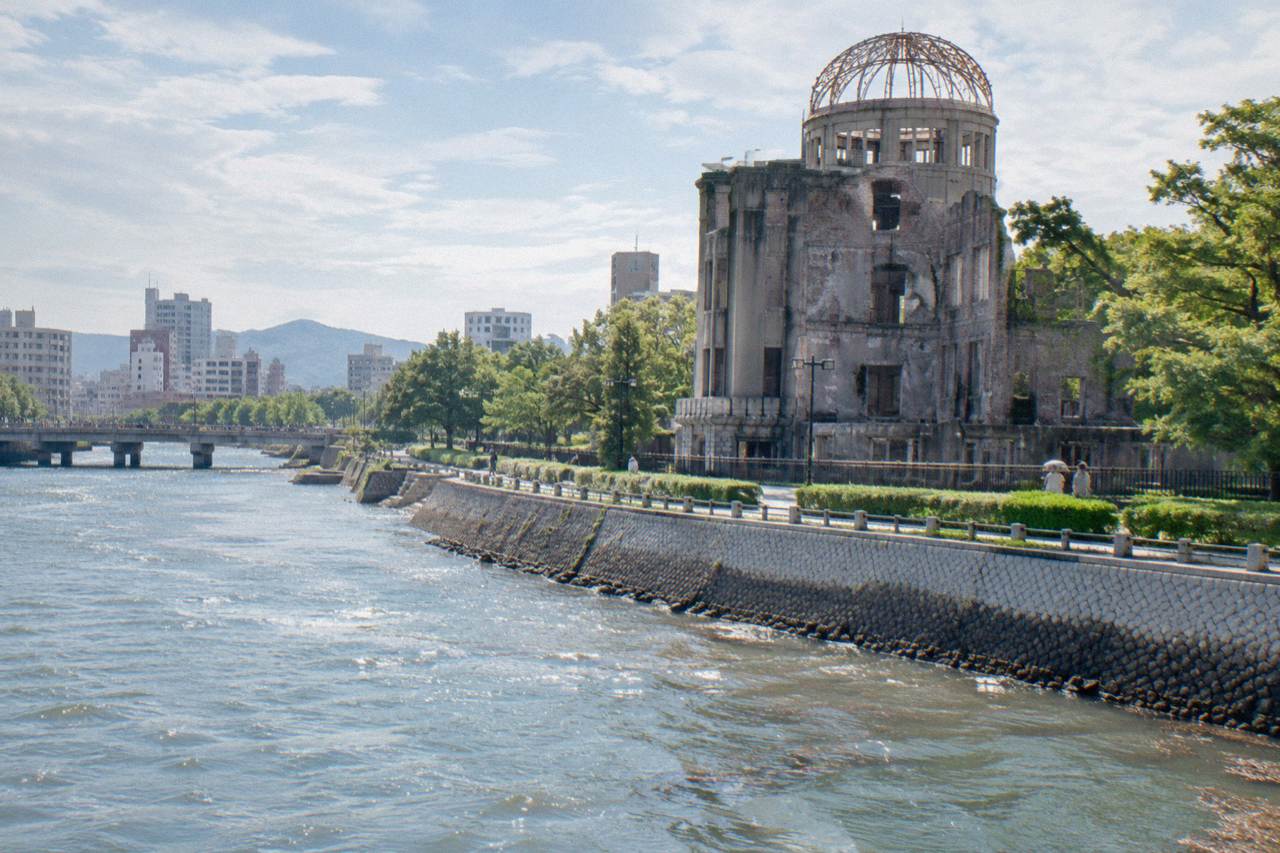
Hiroshima was chosen because a United States Target Committee, meeting in April and May 1945, classified the city as an AA target: it housed an important army depot and port of embarkation inside a large urban area more than three miles across, it was a good radar target whose size allowed extensive damage to a large part of the city, and adjacent hills were expected to focus the blast and increase damage. The city was also likely to remain unattacked by August 1945.
Each element of that answer comes from the committee's own recommendations, which the Atomic Heritage Foundation publishes in summary form and which the Hiroshima Peace Memorial Museum also references through a May 12, 1945 summary citing the United States National Archives. The committee was working from a set of standing criteria for target selection, and it recorded Hiroshima as meeting every one of them.
The committee noted that Hiroshima was not considered a good incendiary target because of the rivers of its delta, among them the Motoyasu River, which removed it from the running for firebombing campaigns and left it intact, and therefore still available, when the atomic target list was drawn up. What the record actually says is set out in the neutral terms the museum itself uses.
When And Where Did The Target Committee Meet?
The Target Committee was established on April 27, 1945, to determine targets in Japan, and its second meeting took place on May 10 and 11, 1945, at Los Alamos. Those two May days produced the recommendations that named Hiroshima, Kyoto, Yokohama and Kokura Arsenal as the first four target choices, with Niigata classified as a B target. The dates and the meeting place are part of the published record.
Its job was to rank cities by how effectively a new weapon could damage them, and its May 1945 criteria included producing the greatest military effect on the Japanese people. That phrase appears in the committee recommendations themselves. The Hiroshima Peace Memorial Museum's own exhibition documents reference the May 12, 1945 summary of the meeting through the United States National Archives, which is how the city of Hiroshima presents this history to visitors today.
The outcome of that ranking, the four-city list, is summarised in the table below.
| City or site | Classification | What the committee recorded |
|---|---|---|
| Kyoto | AA target | Urban industrial area, population 1,000,000, former capital, an intellectual center |
| Hiroshima | AA target | Important army depot and port of embarkation, good radar target, hills expected to focus blast |
| Yokohama | A target | Large urban area meeting the size criterion |
| Kokura Arsenal | A target | Dimensions recorded as 4,100 by 2,000 feet |
| Niigata | B target | Lower-ranked in the May 1945 recommendations |
The order in that table follows the committee's own first four recommended choices: Kyoto, Hiroshima, Yokohama and Kokura Arsenal. Kyoto stood first, and Hiroshima second, on the May list.
What Criteria Did The Target Committee Apply?
The May 1945 criteria required a target to be important in a large urban area of more than three miles in diameter, capable of being damaged effectively by blast, and likely to remain unattacked by the following August. The committee also weighed the greatest military effect on the Japanese people. Hiroshima met the size test, the blast test and the unattacked test simultaneously, which is why it was rated an AA target rather than an A or B target.
Reading the criteria side by side with the city's profile shows how each one bore on Hiroshima. The blast criterion mattered because the committee was selecting for a weapon whose destructive force was expected to be concentrated, and an urban area with a diameter over three miles gave room for that force to act across a wide footprint. The unattacked criterion is the one that most reshaped the list: cities already burned in the conventional campaign had less value as a demonstration of a new weapon. Other pages covering the same trip are gathered on Hiroshima Travel Guide.
| Committee criterion | What it demanded | How Hiroshima stood |
|---|---|---|
| Urban area size | More than three miles in diameter | Large urban area on the river delta |
| Damage mechanism | Capable of being damaged effectively by blast | Flat, densely built area, hills adjacent |
| Attack status | Likely unattacked by August 1945 | Not a good incendiary target because of its rivers, so largely intact |
| Military value | Greatest military effect | Army depot and port of embarkation |
| Radar | A good radar target | Described as a good radar target |
The AA classification itself carries meaning in the committee's scheme. Yokohama and Kokura Arsenal were A targets, one step below, and Niigata a B target below them. The full story of the weapon's effects and the city today is covered in How Long Was Hiroshima Radioactive?.
Planning to move between the city, Miyajima and the wider prefecture while you read this history on the ground? A regional rail pass can be checked before you commit: Check availability.
Why Did The Hills Around Hiroshima Matter?
The committee recorded that hills adjacent to Hiroshima were expected to produce a focusing effect that would increase blast damage across the city. Geography, in other words, was part of the military assessment, not a footnote to it. The judgment appears in the May 10 and 11 recommendations, alongside the note that rivers made Hiroshima a poor incendiary target.
The record states the expectation plainly and does not qualify it, which is how the recommendation survives in the published summary.
Was Kyoto On The List?
Kyoto was the first of the four recommended target choices in May 1945, classified as an AA target and described as an urban industrial area with a population of 1,000,000, a former capital and an intellectual center. Hiroshima was second on that same list, which named Kyoto, Hiroshima, Yokohama and Kokura Arsenal in order, with Kyoto and Hiroshima standing as the two AA targets.
The possibility of bombing the Emperor's palace was also discussed at the May 1945 meeting and was not recommended, which gives a sense of the boundaries the committee worked within. Yokohama and Kokura Arsenal followed the two AA targets, and Niigata sat below them as a B target. The historical weight of the final choice falls on Hiroshima, and the city has spent the eight decades since turning the site of that decision's outcome into a record for visitors. The Peace Memorial Museum, which admits adults for 200 yen, presents the documentation, including the May 12, 1945 summary referenced through the United States National Archives, as part of its permanent exhibition.
How Does The City Present This History Today?
The city presents this history factually and in public. The committee record is reported alongside the human consequences, and nothing in the official presentation assigns a motive beyond the written record. Visitors to the Peace Memorial Park walk through the outcome of the committee's arithmetic, and the annual Peace Memorial Ceremony on August 6, the park and the museum are public.
Visitors who come to the Peace Memorial Park walk through the outcome of the committee's arithmetic. The annual Peace Memorial Ceremony on August 6 runs from 8:00 to 8:50 in the park, with about 7,000 seats plus about 2,200 indoor seats at the International Conference Center.
To see the park, dome and museum with a guide, book a Peace Park group tour here.
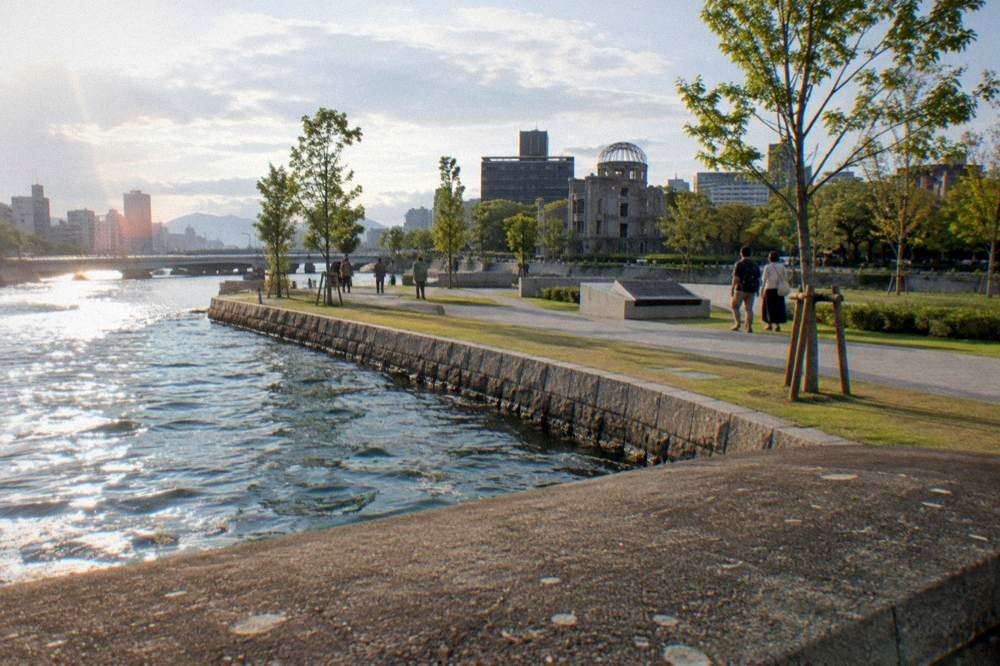
The question of whether the city welcomes foreign visitors, including Americans, is one the city answers itself through its open doors: the park, the museum and the annual ceremony are public, and Is It Okay For Americans To Visit Hiroshima? takes it up directly. The museum counted 2,580,926 visitors in FY2025, its third straight record year, of whom 945,618 were foreign visitors, figures reported by Nippon.com.
What Should A Visitor Take From The Target Committee Record?
A visitor should take three things: the choice of Hiroshima was made by a committee against written criteria, those criteria valued the city for its military role and its physical susceptibility to blast damage, and the full four-city list placed Kyoto first and Hiroshima second. The record is short, factual and publicly available, and the museum in Hiroshima exhibits it as part of explaining how the bombing of August 6, 1945 came to happen.
Standing in the park with the record in mind changes how the geography reads. None of this is editorialising, it is the committee's own language laid over the ground it described.
For travellers planning the practical side of a visit, How Many Days In Hiroshima Is Enough? covers the pacing question, and the wider question of whether the trip is worthwhile is taken up in Is Hiroshima Worth Visiting?.
Common Questions About Why Hiroshima Was Chosen As A Target
Why Was Hiroshima Chosen As A Target?
A United States Target Committee meeting on May 10 and 11, 1945, at Los Alamos classified Hiroshima as an AA target because it held an important army depot and port of embarkation in a large urban area, was a good radar target, and had adjacent hills expected to focus blast damage. It was also likely to remain unattacked by August 1945.
When Was The Target Committee Established?
The Target Committee was established on April 27, 1945, to determine targets in Japan. Its second meeting, held on May 10 and 11, 1945, at Los Alamos, produced the recommendations naming the first four target choices.
Which Cities Were On The May 1945 Target List?
The first four recommended target choices in May 1945 were Kyoto, Hiroshima, Yokohama and Kokura Arsenal. Kyoto and Hiroshima were classified as AA targets, Yokohama and Kokura Arsenal as A targets, and Niigata as a B target.
What Criteria Did The Committee Use?
Targets had to be important in a large urban area of more than three miles in diameter, capable of being damaged effectively by blast, and likely unattacked by August 1945. The criteria also included producing the greatest military effect on the Japanese people.
Was Kyoto Considered Before Hiroshima?
Yes, Kyoto stood first on the May 1945 list, described as an urban industrial area with a population of 1,000,000, a former capital and an intellectual center, classified as an AA target. Hiroshima was second on the same list.
How Does The Hiroshima Peace Memorial Museum Present The Decision?
The museum's exhibition presents the documented record factually alongside the testimony and artefacts of those in the city on August 6, 1945.