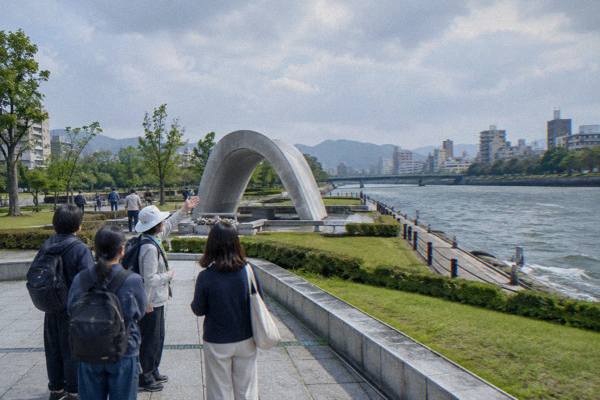
Is It Okay For Americans To Visit Hiroshima?
Americans visit Hiroshima visa-free, and the city welcomes them. Entry rules, costs in yen, Peace Park etiquette and day planning, reported from official pages.
Yes, it is okay, and Hiroshima itself makes that plain. The city of Hiroshima, capital of Hiroshima Prefecture on the Seto Inland Sea, receives visitors from the United States without restriction: US citizens do not require a visa for short-term stays of less than 90 days for tourism or business in Japan, per the Embassy of Japan's visa guidance. The city's own English pages actively welcome foreign travellers, and the Hiroshima Peace Memorial Museum publishes its admission, hours and photography rules in English with foreign visitors in mind.
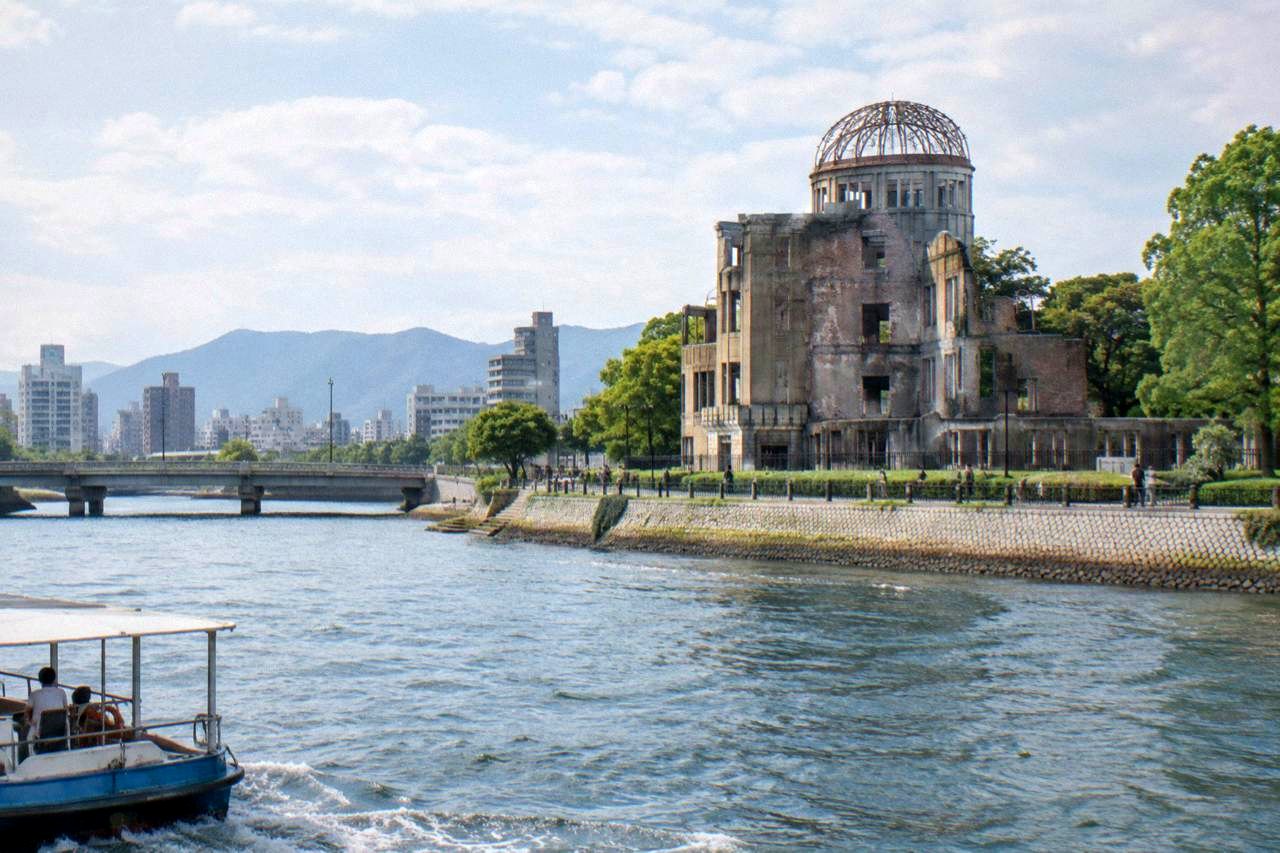
The question is usually asked with a specific worry behind it: whether an American, as a citizen of the country that dropped the atomic bomb on 6 August 1945, is unwelcome at the memorials. The evidence points the other way. The Peace Memorial Museum reported 945,618 foreign visitors in FY2025 out of 2,580,926 total, its third straight record year, and the city's tourism pages are written for exactly this international audience. This page sets out the entry rules, the costs in yen and the conduct expected at the memorials, all from official pages.
Yes, Americans visit Hiroshima routinely and are welcome there. US citizens may stay in Japan visa-free for up to 90 days with a valid passport, per the Embassy of Japan, and the Hiroshima Peace Memorial Museum reported 945,618 foreign visitors in FY2025, part of a record 2,580,926 total. The city's official English pages give practical visitor information without any restriction by nationality.
The history is handled at the memorials as fact, not grievance. The museum's exhibits state what happened on 6 August 1945 and what the city says about it since; nothing in the city's visitor guidance singles out any nationality. The annual Peace Memorial Ceremony on 6 August, held from 8:00 to 8:50 in Peace Memorial Park, is open in spirit to all, with about 7,000 seats plus about 2,200 indoor seats at the adjacent International Conference Center, per the city's English ceremony page.
The visits page on this site, is Hiroshima worth visiting, covers the practical case for the trip, and is Hiroshima still radioactive answers the health question directly: the city states that radiation today is on a par with natural background levels anywhere on Earth and has no effect on human bodies.
Etiquette is the one place where an American visitor should be deliberate. The Peace Memorial Park covers 122,100 square metres, has no entry fee and is open 24 hours year-round, per the city's park page. Conduct expected there is quiet and respectful: no loud behaviour, and respectful photography. Inside the museum, photography without flash is allowed for personal use, while tripods and selfie sticks are prohibited, per the museum's own information page.
How Do Americans Get To Hiroshima?
US citizens fly into Hiroshima Airport or arrive by Shinkansen, and both are straightforward. There is no visa requirement for tourism stays under 90 days with a valid passport, per the Embassy of Japan. The airport limousine bus to Hiroshima Station's Shinkansen gate takes 45 to 50 minutes and costs 1,500 yen one way, per the airport's own timetable page.
Hiroshima Airport has no rail service; all access is by bus or car. Two limousine bus routes serve the city: one to Hiroshima Station Shinkansen Gate, 45 to 50 minutes at 1,500 yen one way, and one to Hiroshima Bus Center, about 55 minutes, where a prefectural information page lists an adult fare of 1,500 yen. IC cards are accepted on the airport buses.
From Tokyo or Osaka the Shinkansen is the usual route, and the Tokyo to Hiroshima question of cost and time is covered elsewhere on this site. Within the city, the Hiroden streetcar network is flat-fare, and a summary table of the figures an American visitor will actually pay looks like this.
| Journey or fare | Figure (JPY) |
|---|---|
| Airport bus, Hiroshima Airport to Hiroshima Station Shinkansen Gate | 1,500 one way |
| Airport bus, Hiroshima Airport to Hiroshima Bus Center | 1,500 adult |
| Hiroden streetcar, flat fare, adult | 240 |
| Hiroden streetcar, flat fare, child | 120 |
| Hiroden one-day streetcar pass | 700 |
| Hiroden one-day streetcar and ferry pass | 1,000 |
The Hiroden flat fare of 240 yen adult and 120 yen child has applied to all lines, including the Miyajima line, since 1 February 2025. The one-day streetcar and ferry pass at 1,000 yen includes the Miyajima visitor tax and covers the Matsudai ferry crossing, which makes it the practical choice on a Miyajima day.
What Does Hiroshima Ask Of Visitors At The Peace Memorials?
Hiroshima asks for quiet, respectful conduct and asks nothing about nationality. The Peace Memorial Museum charges 200 yen for adults, is free for junior high students and younger, and permits personal photography without flash while prohibiting tripods and selfie sticks, all per the museum's information page. The park itself is free and open around the clock.
The A-Bomb Dome is viewable from outside its fence with no fee. No public parking is available in Peace Memorial Park, so arriving by Hiroden streetcar is the standard approach; the museum's hours run 7:30 to 19:00 from March to July, with August until 20:00, and until 21:00 on 5 and 6 August, per the museum page. Extended early-morning and late-afternoon slots require an online reservation. Seniors 65 and older pay 100 yen with passport shown. The wider set of guides lives on Hiroshima Travel Guide.
A guided walk adds context that the plaques alone do not carry, and several licensed options exist. The Hiroshima Peace Memorial Park historical walking tour covers the park, and the Peace Park, Museum and Atomic Bomb Dome group tour bundles all three. For a wider loop of the city by bicycle, the Hiroshima in a Nutshell morning bike adventure is one of the most reviewed options; Check availability if that format suits.
How Much Does A Hiroshima Visit Cost In Yen?
A day in Hiroshima costs remarkably little in entry fees: 200 yen for the Peace Memorial Museum, 350 yen for Shukkeien garden, and 300 yen for Itsukushima Shrine on Miyajima, with children free or nearly free at each. Local transport adds a flat 240 yen per Hiroden streetcar ride, or 700 yen for a day pass.
The full set of figures an American visitor will budget with, all from official pages:
| Site or fare | Adult (JPY) | Child / concession (JPY) |
|---|---|---|
| Hiroshima Peace Memorial Museum | 200 | Free junior high and younger; 100 high school; 100 for 65+ with passport |
| Shukkeien garden | 350 | 150 university; free for school students |
| Itsukushima Shrine, Miyajima | 300 | 200 high school; 100 elementary and junior high |
| Itsukushima combined shrine and Treasure Hall | 500 | 300 high school; 150 elementary and junior high |
| Mount Misen ropeway, return | 2,000 | 1,000 child |
| Miyajima visitor tax | 100 | Preschool children exempt |
Two traps to avoid. The Hiroshima Castle keep has been closed to visitors since 22 March 2026, so the castle is an exterior and grounds visit only; a Sannomaru history museum is planned for 1 June 2027. And Itsukushima Shrine takes cash only for admission, one reason the do you need cash in Hiroshima answer is yes, at least in part.
Do Americans Visit Miyajima On The Same Trip?
Yes, Miyajima is a standard part of an American visitor's Hiroshima itinerary, reached by a 10-minute ferry from Miyajimaguchi. The JR ferry runs roughly every 15 minutes with the first departure about 6:25 and the last about 22:00, and the Japan Rail Pass is valid on it. A 100 yen visitor tax is charged separately on entering the island.
The JR Sanyo Line from Hiroshima Station to Miyajimaguchi takes about 25 minutes, then the ferry crossing itself is about 10 minutes. On the island, the Great Torii can be walked to at tide levels below about 100 cm and appears to float above about 250 cm, per guide figures; the tide question is covered in when is low tide at Miyajima, and why the gate stands in the water in why is the Miyajima torii gate in the water.
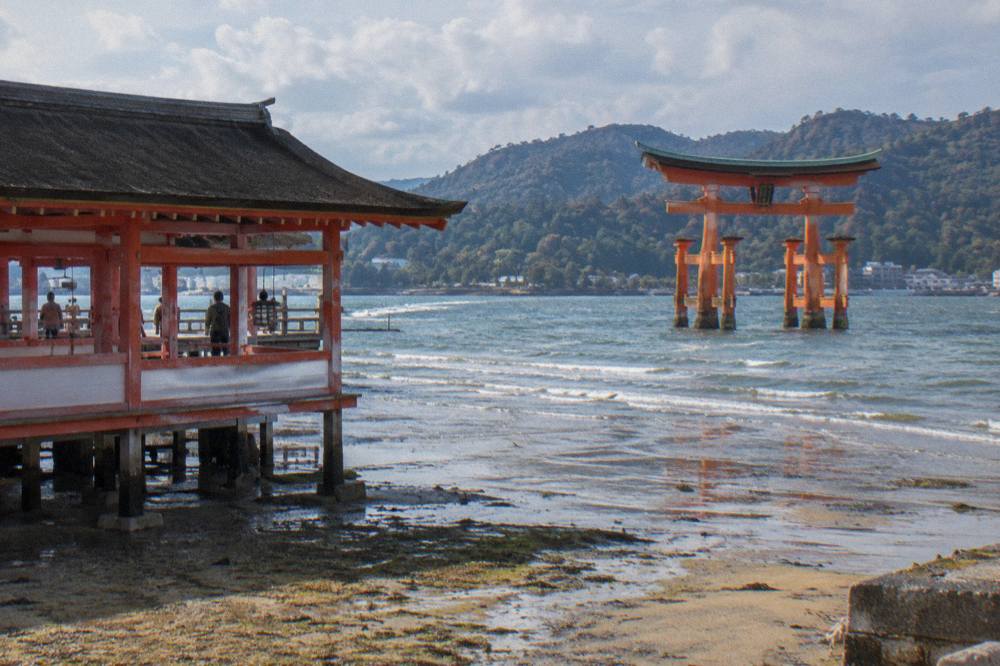
Some corridor and pagoda repair is under way at the shrine and it remains open, per the shrine's construction page. The ropeway to Mount Misen runs 9:00 to 16:00 with last descent at 16:30. For a structured day that pairs the Peace Park with the island, the Hiroshima and Miyajima full day bus tour from Hiroshima is one option among several.
What Should Americans Know About Hiroshima Weather And Timing?
Hiroshima has hot, humid summers and mild winters, with August averaging a high of 32.8 °C and January a low of 2.0 °C, per Japan Meteorological Agency station data for 1991 to 2020. July brings 279.8 mm of rain and January 46.2 mm, so the timing question is about heat and rain rather than access.
| Month | Mean high °C | Mean low °C | Rain mm |
|---|---|---|---|
| January | 9.9 | 2.0 | 46.2 |
| April | 19.8 | 10.1 | 141.0 |
| July | 30.9 | 24.1 | 279.8 |
| August | 32.8 | 25.1 | 131.4 |
| October | 23.7 | 14.9 | 109.2 |
The museum is closed only 30 and 31 December and several days in mid-February for exhibit changes, so the sightseeing year is essentially continuous. How long to stay is its own question, answered in how many days in Hiroshima is enough, and the broader case in what is Hiroshima famous for.
Common Questions About Americans Visiting Hiroshima
Is It Okay For Americans To Visit Hiroshima?
Yes. US citizens enter Japan visa-free for up to 90 days with a valid passport, and Hiroshima's official English pages welcome foreign visitors without restriction. The Peace Memorial Museum reported a record 2,580,926 visitors in FY2025, including 945,618 from abroad.
Do Americans Need A Visa For Hiroshima?
No. US citizens do not require a visa for short-term stays of less than 90 days for tourism or business in Japan, per the Embassy of Japan's visa guidance. A valid passport is the requirement.
Is The Peace Memorial Museum Open To Foreign Visitors?
Yes, with all information published in English. Admission is 200 yen for adults, 100 yen for high school students and free for junior high students and younger. It is open 7:30 to 19:00 from March to July, with extended August hours, and closed only 30 and 31 December plus a mid-February exhibit change.
What Etiquette Applies At The Peace Memorial Park?
Quiet, respectful behaviour and respectful photography, with no loud conduct. The park is free, open 24 hours and has no public parking. Inside the museum, flashless personal photography is allowed and tripods and selfie sticks are prohibited.
How Do Americans Reach Miyajima From Hiroshima?
Take the JR Sanyo Line about 25 minutes from Hiroshima Station to Miyajimaguchi, then a ferry of about 10 minutes. The JR ferry runs roughly every 15 minutes, and the Japan Rail Pass is valid on it. A 100 yen visitor tax is charged on entering the island.
Is Radiation A Concern For Visitors To Hiroshima?
No. The city states that radiation levels today are on a par with natural background levels found anywhere on Earth and have no effect on human bodies, per its official English page on the subject.
In short, an American visitor to Hiroshima faces no barrier beyond a valid passport, a 240 yen streetcar fare and the ordinary courtesy the memorials ask of everyone. The city has spent decades building exactly the welcome the question doubts, and the record visitor numbers show it being used.