Tokyo To Hiroshima: Shinkansen, Flight Or Night Bus
The Tokaido and Sanyo Shinkansen lines connect Tokyo and Hiroshima in under four hours, and the choice between train, plane and night bus comes down to fare, luggage and how you want to spend the hours.
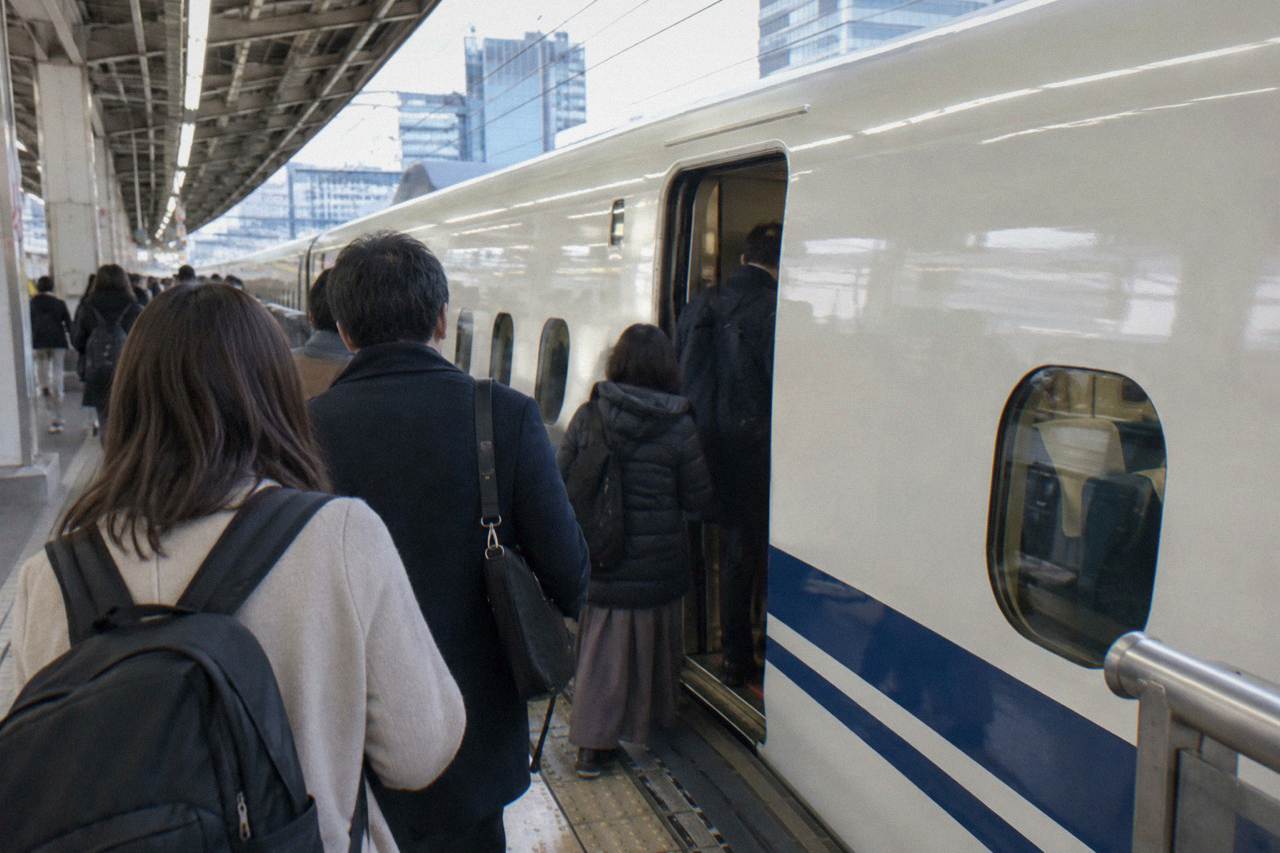
The Nozomi Shinkansen is the standard way from Tokyo to Hiroshima, taking about 3 hours 43 minutes with roughly 46 daily services; flights from Haneda take about 1 hour 20 to 40 minutes but the airport sits outside the city, and the night bus runs about 11 hours.
The train wins on frequency and city-centre to city-centre convenience, the plane wins on raw flying time but lands at an airport with no rail link, and the bus wins on fare while costing a full night of sleep. This page compares all three using the published figures, and covers what happens once you step off at Hiroshima Station or Hiroshima Airport.
How Do You Get From Tokyo To Hiroshima?
The three ways from Tokyo to Hiroshima are the Nozomi Shinkansen (about 3 hours 43 minutes, roughly 46 daily services), a Haneda to Hiroshima Airport flight (about 1 hour 20 to 40 minutes in the air), or a night bus covering the distance in about 11 hours. The train runs between the two city centres directly; the flight requires a 45 to 50 minute limousine bus after landing.
Each option serves a different traveller. The Shinkansen departs Tokyo Station and arrives at Hiroshima Station, both in the middle of their cities, so the door-to-door time is close to the rail time itself. The flight saves time in the air but Hiroshima Airport has no direct rail connection, so the limousine bus is the primary access to the centre, adding both time and a 1,500 yen adult fare per leg. The night bus trades a hotel night for the fare and delivers you to Hiroshima in the morning, which can suit a tight budget if a reclining seat is enough for sleep.
The decision usually comes down to fare and luggage rather than speed. A reserved Nozomi seat is a large outlay at the regular fare, but the train takes big bags without check-in, while the flight involves airport processes at both ends even though the fare structure can undercut the train depending on the day. The bus is the cheapest of the three and the slowest by a wide margin. For what to do once the journey is done, the site's overview page on things to do around Hiroshima picks up from the station.
| Mode | Journey time | Frequency | City-centre access |
|---|---|---|---|
| Nozomi Shinkansen | about 3 h 43 min | about 46 daily services | Direct, station to station |
| Flight (Haneda to HIJ) | 1 h 20 to 40 min in the air | multiple daily ANA and JAL flights | Limousine bus 45 to 50 min, 1,500 yen adult |
| Night bus | about 11 h | overnight departures | Arrives at Hiroshima Bus Centre or Station |
How Long Is The Tokyo To Hiroshima Shinkansen?
The Nozomi Shinkansen covers Tokyo to Hiroshima in approximately 3 hours 43 minutes, according to JR West's published figures, with about 46 daily services and daytime departures roughly every 30 minutes. Slower Hikari services also run the route and take longer, since they make more stops between Tokyo Station and Hiroshima Station.
The roughly half-hourly daytime rhythm on Nozomi services means a missed train rarely derails a plan; the next one is usually not far behind. Reported end-to-end times for the run sit in a band from about 3 hours 45 minutes to 4 hours when slower services are included, so the 3 hour 43 minute figure belongs specifically to the fastest Nozomi pattern.
Direct Nozomi services run through without any change of train, so seat time is the whole journey: there is no transfer at Shin-Osaka on the direct runs. If a Hiroshima-bound visitor is starting from Kyoto instead, the same logic applies on a shorter run, covered in detail on the Kyoto to Hiroshima guide. Coming up from Osaka, the Sanyo Shinkansen leg is shorter again, and the Osaka to Hiroshima guide covers that route separately.
What Does The Tokyo To Hiroshima Bullet Train Cost?
A regular one-way Nozomi fare from Tokyo to Hiroshima depends on seat type and travel date and is set by JR West. A Green car seat costs more, and the Supreme Class cabins cost 60,020 or 86,620 yen depending on the cabin.
The fare ladder is steep at the top. The Supreme Class Cabin in Car 10, sold for one guest, is 60,020 yen in the regular season, while the Car 7 cabin for up to two guests is 86,620 yen, both figures from the Central Japan Railway Company's own Supreme Class pages. Those prices buy private compartments rather than ordinary seats. Below them sit Green car seats, then ordinary reserved and non-reserved cars.
Express and basic fares are charged separately in the ticketing structure, and IC cards are usable for the basic fare portion at the gates. Child fares exist on the same services at roughly half the adult fare, and the same fare mechanics apply to the Osaka entry point, where the Sanyo Shinkansen one-way from Osaka City to Hiroshima City is 7,900 yen for adults plus the express ticket. Planning the whole trip budget, not just the rail leg, is easier with the Hiroshima trip cost guide.
| Ticket type, Tokyo to Hiroshima | Regular-season fare |
|---|---|
| Nozomi non-reserved | Set by JR West, varies by seat type |
| Nozomi reserved | Set by JR West, varies by seat type |
| Supreme Class Cabin, Car 10 (one guest) | 60,020 yen |
| Supreme Class Cabin, Car 7 (up to two guests) | 86,620 yen |
Should You Fly From Tokyo To Hiroshima Instead?
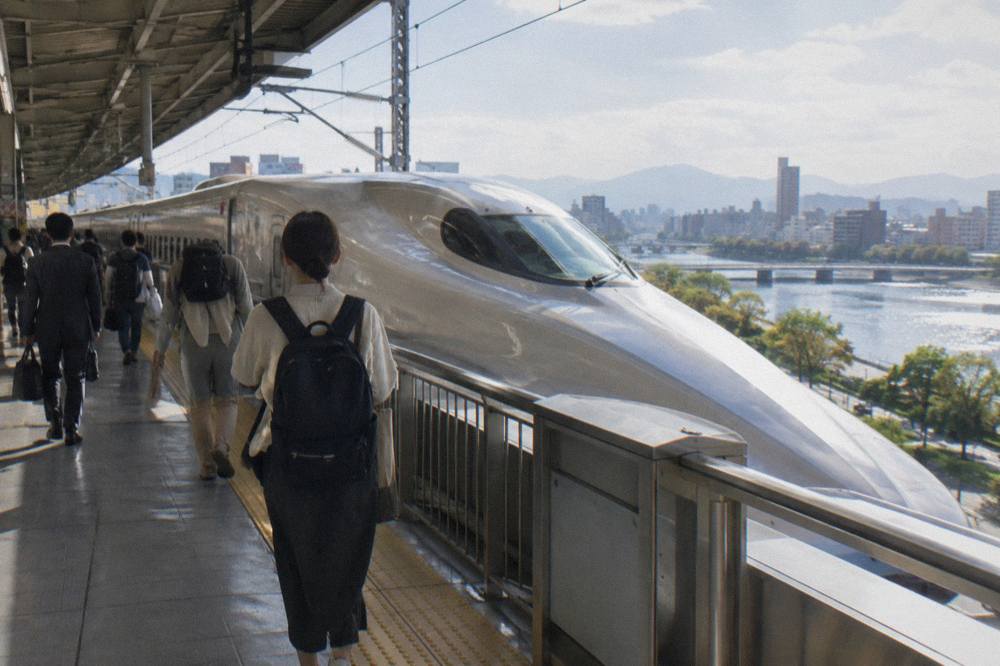
Flying from Tokyo to Hiroshima takes about 1 hour 20 to 40 minutes in the air, with ANA and JAL operating multiple daily direct flights between Haneda and Hiroshima Airport, and Spring Airlines Japan reported as flying the Narita route in about 1 hour 45 minutes. The airport has no rail link, so a 1,500 yen limousine bus of 45 to 50 minutes completes the journey.
To see what the flying option would cost for your dates, book a flight to Hiroshima here.
The flight times are short but the surfaces are long. Hiroshima Airport (HIJ) operates multiple daily direct services to and from Haneda with both ANA and JAL, and the airport's own flight pages give example timings such as ANA671 departing Haneda at 07:10 and arriving at 08:35. JR West's figures put the air journey at about 3 hours 30 minutes total when airport processes are counted, at a regular fare of 43,360 yen including the 340 yen Hiroshima Airport passenger facility fee, which is worth weighing against the train's roughly 3 hours 43 minutes station to station.
The limousine bus is the practical continuation. It runs to the Hiroshima Station Shinkansen exit in about 50 minutes and to the Hiroshima Bus Center in about 55 minutes, at 1,500 yen adult and 750 yen child, with departures timed to flight arrivals and IC cards accepted. The full airport logistics, stop numbers and onward connections are laid out on the Hiroshima Airport guide.
| Flight option | Air time | Notes |
|---|---|---|
| Haneda to HIJ, ANA and JAL | 1 h 20 to 40 min | Multiple daily direct flights |
| Narita to HIJ, Spring Airlines Japan | about 1 h 45 min | Reported duration |
| Airport into the city | 45 to 50 min by bus | Limousine bus, 1,500 yen adult |
What About The Night Bus From Tokyo To Hiroshima?
The night bus from Tokyo to Hiroshima takes about 11 hours, with a reported Grand Dream Express example departing Hiroshima Bus Center at 20:50 and arriving at Tokyo Station at 08:00 in the opposite direction. It is the cheapest of the three modes and the only one that spends the travelling hours overnight rather than the working day.
The bus suits a traveller who values the saved accommodation night and can sleep sitting up. The bus also avoids the security and airport-transfer overhead of flying while accepting the longest journey time of the three by far.
The trade is simple arithmetic. A night on the bus replaces a night in a hotel, and the fare sits well below the Shinkansen fare, but the traveller arrives in Hiroshima having slept in a seat and loses most of a day coming back. For a first visit where the Peace Memorial Park, Miyajima and the food districts each need daylight hours, spending two of those hours asleep on wheels rather than awake on a Nozomi is a real cost. Where to base yourself once you arrive is covered in the where to stay in Hiroshima guide.
Do Rail Passes Cover Tokyo To Hiroshima?
The Japan Rail Pass covers Hikari Shinkansen services between Tokyo and Hiroshima, but the fastest Nozomi trains require a supplement, so pass holders either ride the slower direct services or pay extra for speed. From 1 October 2026 the 7-day pass costs 53,000 yen at agencies, up from 50,000 yen, and the official online site kept 50,000 yen for a limited period.
The coverage rule is the practical point. A pass holder boarding a Hikari reaches Hiroshima without a further charge but with a longer journey than the 3 hours 43 minute Nozomi time, while a Nozomi seat needs a supplement on top of the pass. The Kansai-Hiroshima Area Pass, priced at 17,000 yen for adults over five days, covers reserved seats on the Sanyo Shinkansen between Shin-Osaka and Hiroshima, but it cannot be used on expressway buses or the Tokaido Shinkansen, so it does not serve the Tokyo leg at all. Everything else covered here is indexed on Hiroshima Travel Guide.
For a traveller building a wider route, the regional pass question matters most once west of Osaka. The full comparison of pass value against single tickets on this corridor is worked through on the JR Pass for Hiroshima guide, which treats the pass math separately from the mode choice.
How Do You Get From Hiroshima Airport Or Station Into The City?
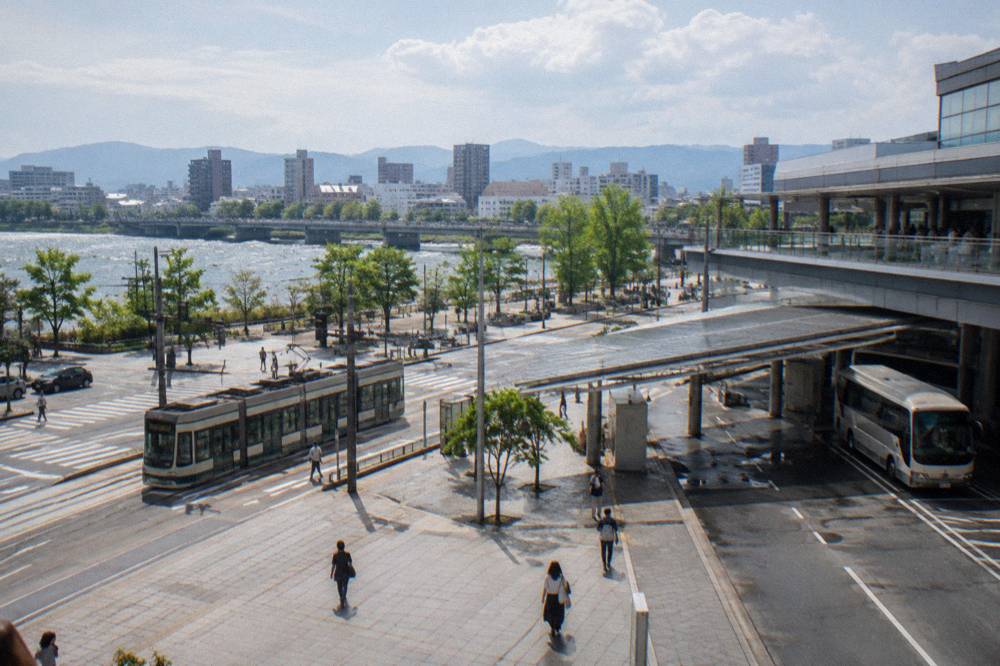
From Hiroshima Airport, the limousine bus reaches the Hiroshima Station Shinkansen exit in about 50 minutes or the Hiroshima Bus Center in about 55 minutes, both at 1,500 yen adult and 750 yen child with IC cards accepted; from Hiroshima Station, Hiroden trams run on a flat 240 yen adult fare, 120 yen child, and the tram now enters the station building itself.
The airport side is bus-only, since the airport has no direct rail connection, and the limousine is timed against flight arrivals, with departures every 15 to 30 minutes in peak periods. The station side has changed recently: the Hiroden tram terminal now sits on the second floor of the south side of the main JR station building, reported since 3 August 2025, so the transfer from Shinkansen gate to tram is inside one structure. Lines 2 and 6 serve the Genbaku Dome-mae stop for the Peace Memorial Park, and Line 2 continues through to Hiroden Miyajimaguchi for the Miyajima ferry connection.
The flat fare applies across all Hiroden lines including the Miyajima line, which makes the tram a simple proposition for a newly arrived visitor: no zone calculation, just 240 yen per adult ride. The full tram, bus and ferry network is broken down on the getting around Hiroshima guide, and the station district itself, with its eating and lodging options, has its own page on the Hiroshima Station area.
| Final leg | Time | Fare |
|---|---|---|
| Hiroshima Airport to Hiroshima Station (Shinkansen exit) | about 50 min | 1,500 yen adult, 750 yen child |
| Hiroshima Airport to Hiroshima Bus Center | about 55 min | 1,500 yen adult, 750 yen child |
| Hiroden tram, any line including Miyajima line | flat fare zone | 240 yen adult, 120 yen child |
When Is The Best Time Of Year To Make The Tokyo To Hiroshima Trip?
Hiroshima's climate normals show August as the warmest month at an average daily high of 32.8 °C and January the coolest at an average daily low of 2.0 °C, while July brings 279.8 mm of rain and January 46.2 mm, per Japan Meteorological Agency station data for 1991-2020. No single month is the correct answer for every traveller.
The seasonal shape matters for the ride more than the destination. Summer days push above 30 °C from July through September with high humidity, spring and autumn sit in comfortable middle bands, and winters are mild rather than harsh, with January highs still averaging 9.9 C. Rain peaks in the June to July rainy period, with June at 226.5 mm and July at 279.8 mm before August drops back to 131.4 mm. The seasonal detail, month by month, sits on the Hiroshima weather guide, and timing pages for specific draws include Hiroshima cherry blossom and Miyajima autumn leaves.
| Month | Average high | Average low | Rainfall |
|---|---|---|---|
| January | 9.9 °C | 2.0 °C | 46.2 mm |
| April | 19.8 °C | 10.1 °C | 141.0 mm |
| July | 30.9 °C | 24.1 °C | 279.8 mm |
| August | 32.8 °C | 25.1 °C | 131.4 mm |
| October | 23.7 °C | 14.9 °C | 109.2 mm |
How Many Days Should You Spend In Hiroshima After The Trip?
A Tokyo to Hiroshima visit works from two full days upward: one for the Peace Memorial Park, museum and A-Bomb Dome area, and one for Miyajima with the Itsukushima Shrine and the ferry crossing, with the museum reporting 2,580,926 visitors in FY2025 including 945,618 from abroad. Adding a third day opens the castle grounds, Shukkeien and the food districts.
The two-day core is a well-trodden shape because the distances are kind. The Peace Memorial Museum charges 200 yen for adults, college age and up, with high school students at 100 yen and junior high and younger free, and it opens from 7:30 in the morning in most seasons. Itsukushima Shrine on Miyajima charges 300 yen adult, and the JR ferry crossing runs about 10 minutes from Miyajimaguchi, with the island also subject to a separate 100 yen Miyajima Visitor Tax on entry. Staying on the island itself is a different rhythm again, covered on the Miyajima overnight itinerary.
A day trip compressed into one long day is possible from Tokyo but thin, and the site's Hiroshima day trip from Tokyo itinerary treats that case directly.
Can You Visit Hiroshima And Miyajima Without Planning Every Detail?
Yes, Hiroshima and Miyajima can be visited with light planning, because the tram network runs a flat 240 yen fare, the JR ferry crosses to Miyajima in about 10 minutes, and the main fees are small and fixed: 200 yen at the Peace Memorial Museum and 300 yen at Itsukushima Shrine for adults. A guided day removes even that planning load.
For a visitor arriving off a long train ride, the organised alternative has real appeal. A guided bus day from the Osaka or Kyoto side bundles the Hiroshima and Miyajima highlights into a single structure, and the operator's live listing carries the current price and dates. If the idea appeals, Check availability. The same logic applies to independent visits: the costs that matter after arrival are small and printed, so the only real planning decisions are the dates and the number of nights.
The food layer needs no booking at all for the signature dish. For the crossing logistics to the island, the Hiroshima to Miyajima guide has the ferry detail.
What Does A Tokyo To Hiroshima Trip Cost Overall?
The transport spine of a Tokyo to Hiroshima trip is the Nozomi fare, and the fixed destination fees are small: 200 yen museum entry, 300 yen Itsukushima Shrine, 350 yen Shukkeien and 240 yen per tram ride, with the 100 yen Miyajima Visitor Tax on island entry.
Reading these numbers together is how a realistic budget forms. The rail fare dominates, the local fees barely register by comparison, and the flight alternative shifts spending from the train to the airport bus at 1,500 yen per leg. A traveller arriving in August should also know the calendar context: the Peace Memorial Ceremony runs on 6 August from 8:00 to 8:50 in the Peace Memorial Park, with about 7,000 seats plus about 2,200 indoor seats at the International Conference Center, and the full context is on the 6 August Peace Ceremony guide. Seasonal timing feeds the same budget, and the best time to visit Hiroshima guide weighs it.
| Item | Figure |
|---|---|
| Airport limousine bus, one way | 1,500 yen adult |
| Peace Memorial Museum, adult | 200 yen |
| Itsukushima Shrine, adult | 300 yen |
| Shukkeien garden, adult | 350 yen |
| Hiroden tram ride | 240 yen adult |
| Miyajima Visitor Tax | 100 yen |
Which Mode Should You Actually Pick From Tokyo To Hiroshima?
Pick the Nozomi Shinkansen for the default Tokyo to Hiroshima run: it is direct, roughly half-hourly in the daytime, about 3 hours 43 minutes, and needs no transfer or check-in. Pick the flight only when the air fare clearly undercuts the train and the airport bus leg is acceptable, and pick the night bus only when the fare saving outweighs the lost night.
The reasoning is structural rather than preferential. The train's station-to-station time is within minutes of the flight's total journey once the surfaces are counted, JR West's own comparison putting the air journey at about 3 hours 30 minutes door to door against the train's 3 hours 43 minutes, so the plane buys almost nothing in time on this specific corridor. The bus is the only mode that changes the shape of the day, converting the travel night into transit. Whatever the choice, every arrival funnels through the same two doors, and the Hiroshima Station guide covers the rail one in detail.
Common Questions About Tokyo To Hiroshima
How Long Is The Shinkansen From Tokyo To Hiroshima?
The Nozomi Shinkansen covers the route in approximately 3 hours 43 minutes, per JR West's published figures, with about 46 daily services and daytime departures roughly every 30 minutes. Slower Hikari services take longer.
How Much Is The Train From Tokyo To Hiroshima?
A regular one-way Nozomi fare depends on seat type and travel date and is set by JR West.
Is It Better To Fly Or Take The Train From Tokyo To Hiroshima?
The flight is about 1 hour 20 to 40 minutes in the air from Haneda, but Hiroshima Airport has no rail link and the limousine bus takes 45 to 50 minutes at 1,500 yen adult, so the total times are close. The train is direct between the city centres.
Does The Japan Rail Pass Cover Tokyo To Hiroshima?
It covers Hikari Shinkansen services on the route, but the fastest Nozomi trains require a supplement. The Kansai-Hiroshima Area Pass covers only the Sanyo Shinkansen between Shin-Osaka and Hiroshima, not the Tokyo leg.
How Do I Get From Hiroshima Airport To The City Centre?
The limousine bus runs to the Hiroshima Station Shinkansen exit in about 50 minutes and the Hiroshima Bus Center in about 55 minutes, at 1,500 yen adult and 750 yen child, with IC cards accepted.
Is There A Night Bus From Tokyo To Hiroshima?
Yes, night buses run the corridor in about 11 hours, with a reported Grand Dream Express service pattern departing Hiroshima Bus Center at 20:50 and reaching Tokyo Station at 08:00 on the return leg.