Hiroshima Weather By Month
Japan Meteorological Agency station normals for Hiroshima show a mild city with hot humid summers, cool winters and a sharp summer rainy peak, and this guide breaks the numbers down month by month.
Hiroshima has an annual average temperature of about 16.5 °C, July averages about 27.2 °C with about 279.8 mm of rain, and January averages about 5.4 °C with about 46.2 mm, per Japan Meteorological Agency 1991-2020 station normals.
The Japan Meteorological Agency (JMA) station normals for 1991 to 2020 put the annual average temperature at about 16.5 °C and total average precipitation at about 1,572.2 mm. This page lays those figures out month by month, so a planner can see at a glance when the heat builds, when the rain peaks and what the shoulder seasons actually feel like in numbers rather than adjectives. For how those numbers translate into a decision about timing, the companion page on the best time to visit Hiroshima works through the trade-offs.
What Is The Average Weather In Hiroshima By Month?
The Japan Meteorological Agency 1991-2020 station normals show Hiroshima with average daily highs rising from about 9.9 °C in January to about 32.8 °C in August, and average nightly lows moving between about 2.0 °C in January and about 25.1 °C in August. Annual precipitation averages about 1,572.2 mm, with monthly rainfall ranging from about 46.2 mm to about 279.8 mm.
Winter nights dip toward freezing on average but rarely far below it, while summer nights stay warm and humid. The table below gives the full monthly set of average highs and lows. Every figure is a 30-year station normal, so it describes the long-run pattern rather than any single year, and individual days will sit above or below these numbers.
| Month | Average High (°C) | Average Low (°C) |
|---|---|---|
| January | 9.9 | 2.0 |
| February | 10.9 | 2.4 |
| March | 14.5 | 5.1 |
| April | 19.8 | 10.1 |
| May | 24.4 | 15.1 |
| June | 27.2 | 19.8 |
| July | 30.9 | 24.1 |
| August | 32.8 | 25.1 |
| September | 29.1 | 21.1 |
| October | 23.7 | 14.9 |
| November | 17.7 | 8.9 |
| December | 12.1 | 4.0 |
Reading the two columns together is more useful than reading either alone. June and September share almost identical average highs, near 27 to 29 °C, but the rainfall column, covered further down this page, is what separates them. Anyone weighing city sightseeing against a Miyajima crossing can also factor in the tide and ferry picture on the Hiroshima to Miyajima page, since a wet afternoon on the island feels very different from a dry one.
How Hot Does A Hiroshima Summer Get?
August is the warmest month in the JMA 1991-2020 normals, with an average daily high of about 32.8 °C and an average overnight low of about 25.1 °C, while July averages about 30.9 °C by day and about 24.1 °C by night. Summer also carries the year's peak rainfall, with July averaging about 279.8 mm.
The heat in Hiroshima is a humid heat. With average August lows around 25 °C, nights give little relief, and the city's riverside parks and covered shopping streets become practical refuges during the middle of the day. August also brings one of the year's fixed calendar moments: the Hiroshima Peace Memorial Ceremony is held on 6 August from 8:00 to about 8:50 in the morning in Peace Memorial Park, an outdoor event that starts before the day's heat builds. The August 6 peace ceremony page covers what the city itself publishes about attending.
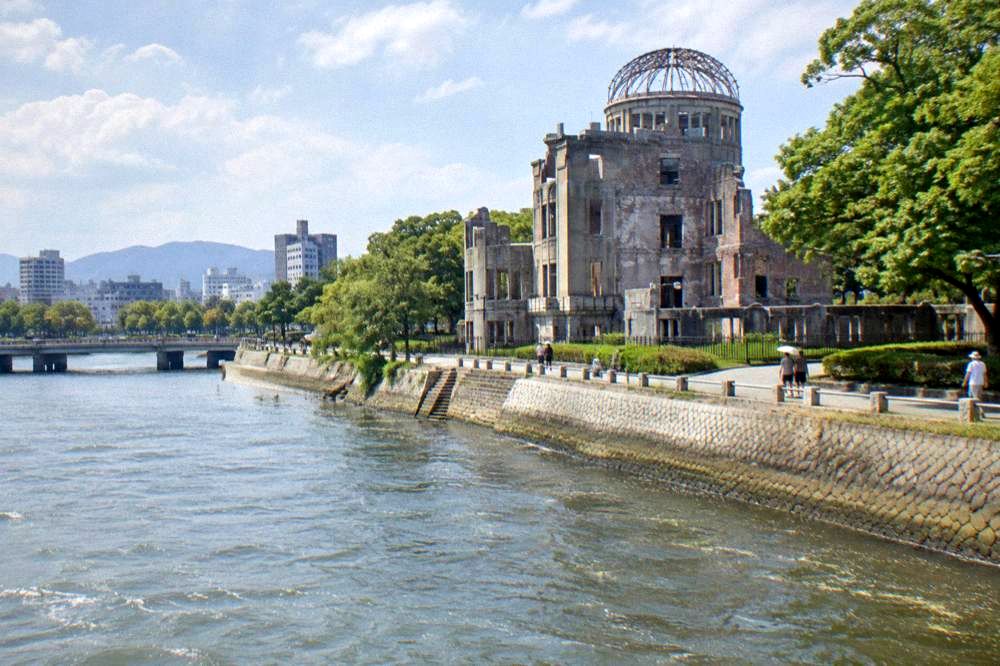
Summer planning in Hiroshima is really about sequencing. Mornings are the comfortable window for outdoor walking, whether that is the Peace Park, Shukkeien's garden paths or the Hiroden ride out toward Miyajimaguchi. Midday shifts naturally to indoor stops such as the Peace Memorial Museum, which keeps long summer hours. Early guided walks make this pattern easy, and the options below all fit a morning slot.
A morning walk around the Peace Memorial Park area works in the height of summer precisely because it starts early, and the flexible guided walk that anchors this site's walking coverage lets the length follow the weather rather than fight it.
How Cold Does A Hiroshima Winter Get?
January is the coolest month in the station normals, with an average daily high of about 9.9 °C, an average overnight low of about 2.0 °C and only about 46.2 mm of rain, the lowest monthly figure of the year. December and February sit close behind, with average highs of about 12.1 °C and 10.9 °C respectively.
Winter in Hiroshima is damp and chilly rather than severe. Average lows sit a shade above freezing, and daytime readings around 10 °C mean a proper coat rather than alpine gear. The compensation is the rainfall column: the three winter months of December, January and February average between about 46.2 and 64.0 mm each.
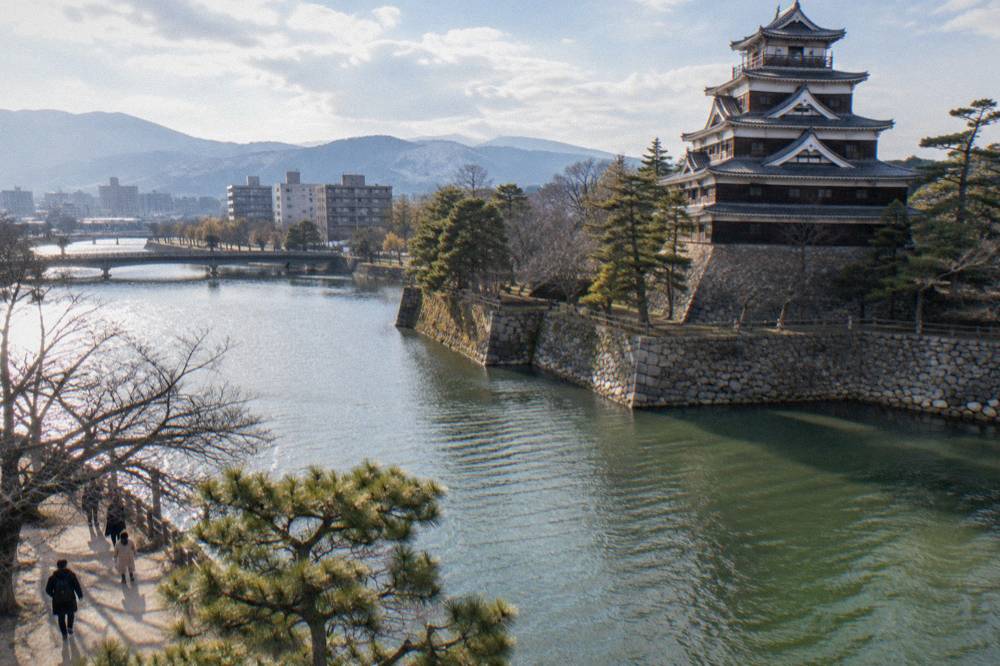
Indoor anchors matter more in winter, and the city has them in depth. The Peace Memorial Museum runs shorter winter hours, 7:30 to 18:00 from December to February, with adult admission at 200 yen. The practical transport picture, including the flat 240 yen Hiroden tram fare that applies on every line, is laid out on the getting around Hiroshima page, and a 700 yen one-day tram pass covers unlimited rides if the cold makes walking between districts less appealing.
Does It Snow In Hiroshima?
Snow in Hiroshima is a rare and short-lived event rather than a feature of the climate, because the JMA 1991-2020 normals put January, the coolest month, at an average daily high of about 9.9 °C and an average overnight low of about 2.0 °C, with daytime temperatures in all three winter months averaging above 9 °C, well past the range that sustains snow lying on the ground.
The numbers do the explaining. Sustained snow cover, of the kind that disrupts travel or requires serious boots, is not what these station normals describe.
Packing for a Hiroshima winter should therefore aim at cold rain and wind rather than snow. A warm layer, a waterproof outer and comfortable walking shoes cover the averages.
Which Months Get The Most Rain In Hiroshima?
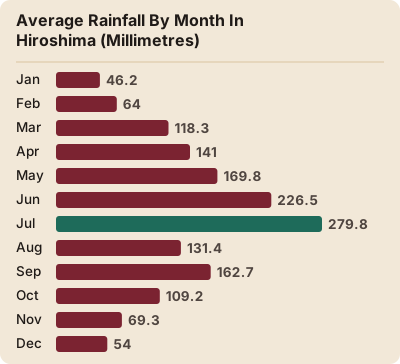
July averages about 279.8 mm of precipitation in the JMA station normals, followed by June at about 226.5 mm and September at about 162.7 mm, while January averages about 46.2 mm and December about 54.0 mm. The year as a whole averages about 1,572.2 mm.
The rainfall year in Hiroshima has a clear shape. A steady climb begins in spring, with April averaging about 141.0 mm and May about 169.8 mm, then the rainy season pushes June and July to the annual peak. From October the totals fall away fast, and the winter half-year is consistently the drier half. Everything else covered here is indexed on Hiroshima Travel Guide.
| Month | Average Rainfall (mm) |
|---|---|
| January | 46.2 |
| February | 64.0 |
| March | 118.3 |
| April | 141.0 |
| May | 169.8 |
| June | 226.5 |
| July | 279.8 |
| August | 131.4 |
| September | 162.7 |
| October | 109.2 |
| November | 69.3 |
| December | 54.0 |
For a trip planner, the useful reading is the ratio between the wet and dry ends. July receives roughly six times the average rainfall of January. A June or July visit is not a reason to cancel, it is a reason to build a wet-day plan alongside the outdoor one, and the city's covered arcades, museums and okonomiyaki floors absorb a rainy afternoon well. The museum-heavy indoor options are collected on the Hiroshima museums page, and the food angle is on the what to eat in Hiroshima page.
Sunshine figures add another layer. May averages 210.8 hours of sunshine and April 191.9, but the rainy season cuts June to 154.6, a loss of more than 50 hours in one month. Winter runs the other way: January delivers 138.6 hours of sunshine and February 140.1, so these winter months are gray rather than bright. Visitors who value daylight as much as dry pavement should look at March through May, when monthly sunshine climbs steadily from 176.7 hours to 210.8.
Wet-day logistics in the city are simple. The Peace Memorial Museum opens at 7:30 daily and closes at 19:00 from March through July and September through November, at 20:00 in August, and at 18:00 from December through February; entry between 7:30 and 8:30, plus evening slots, requires an online reservation. Admission is 200 yen for adults, 100 yen for high school students and for visitors 65 and older with a passport, and free for junior high school students and younger, and the only closures are 30 and 31 December plus an exhibit change in mid-February. One caution: the keep of Hiroshima Castle closed to visitors permanently on 22 March 2026, so the castle is now an exterior-only sight. When rain settles in, Hiroden streetcars charge a flat 240 yen for adults and 120 yen for children on every line, including the Miyajima line, and trams now run into the Hiroshima Station building itself, so transfers happen indoors.
Miyajima holds up in the rain better than most day trips. The JR ferry crosses in about 10 minutes, roughly every 15 minutes between 8:00 and 18:00, and the 100 yen Miyajima Visitor Tax is collected separately on arrival. Itsukushima Shrine charges adults 300 yen, and a combined ticket covering the shrine and the Treasure Hall costs 500 yen; the Treasure Hall opens 8:00 to 17:00 and Senjokaku hall 8:30 to 16:30, two roofed stops for wet hours. If skies clear, the ropeway runs 9:00 to 16:00 with a last descent at 16:30.
How Much Sunshine Does Hiroshima Get?
Hiroshima averages about 2,033.1 hours of sunshine per year in the 1991-2020 normals, with May averaging about 210.8 hours and August about 207.3 hours, while June is dimmer at about 154.6 hours and the winter months each average between roughly 138.6 and 140.6 hours.
The sunshine column tracks the rainfall column with a lag. May is generous with light before the rainy season arrives, August clears once July's rain eases, and the winter months hold a steady, modest five hours or so of daily average sun. The table below gives the full monthly set, useful for photographers and for anyone deciding whether a Miyajima day belongs early or late in an itinerary.
| Month | Average Sunshine (Hours) |
|---|---|
| January | 138.6 |
| February | 140.1 |
| March | 176.7 |
| April | 191.9 |
| May | 210.8 |
| June | 154.6 |
| July | 173.4 |
| August | 207.3 |
| September | 167.3 |
| October | 178.6 |
| November | 153.3 |
| December | 140.6 |
A guided bike loop fits a high-sunshine morning, since the city's flat delta geography makes cycling a realistic way to cover ground between the rivers.
What Should You Pack For Hiroshima By Season?
For Hiroshima, pack light layers and a rain shell for spring, breathable clothing and an umbrella for the June to September heat and rain, a warm coat and waterproof for winter averages near 10 °C by day and 2 °C by night, and a flexible layer for autumn days that run from about 23.7 °C average highs in October down to about 12.1 °C in December.
The table translates the station normals into wardrobe decisions. None of this needs specialist gear; the numbers describe a temperate coastal city, and the two hard cases are summer humidity and the rainy-season downpour.
| Season | Months | Average High / Low (°C) | Packing Focus |
|---|---|---|---|
| Spring | March to May | 14.5 / 5.1 rising to 24.4 / 15.1 | Light layers, jacket for March evenings, compact umbrella |
| Summer | June to August | 27.2 / 19.8 rising to 32.8 / 25.1 | Breathable clothing, sun protection, sturdy umbrella |
| Autumn | September to November | 29.1 / 21.1 falling to 17.7 / 8.9 | Layers, September rain cover, comfortable walking shoes |
| Winter | December to February | 12.1 / 4.0 to 9.9 / 2.0 | Warm coat, waterproof outer, closed shoes |
Footwear deserves its own line. The Itsukushima Shrine corridors on Miyajima are boardwalks over the tide, and the shrine's own admission guidance points out that the floor gaps exist by design, so shoes that can handle damp planking serve better than anything delicate. The general seasonal picture for the island, including tide behaviour at the Great Torii, is covered by this site's Miyajima guide pages, and the weather logic transfers directly.
How Does The Weather Shape Spring And Autumn In Hiroshima?
Spring and autumn are the shoulder seasons the station normals flatter most: April averages about 19.8 °C by day and 10.1 °C by night with about 191.9 sunshine hours, and October averages about 23.7 °C by day and 14.9 °C by night with about 178.6 sunshine hours, both with moderate rainfall compared with the summer peak.
These two windows carry the seasonal events that draw people to the region. In spring the city's parks fill with cherry blossoms, and the cherry blossom in Hiroshima and Miyajima page lists the main viewing spots, from Peace Memorial Park to Hijiyama Park.
The numbers behind both seasons reward planning. April's combination of about 19.8 °C average highs and about 191.9 sunshine hours is close to ideal for long walking days, and November holds at about 17.7 °C by day with rainfall easing to about 69.3 mm. May edges higher, about 24.4 °C by day with the year's peak sunshine at about 210.8 hours, but its rainfall average of about 169.8 mm signals that the rainy season is approaching. The seasonal choice ties into the wider question of where to stay in Hiroshima, since a base near the station or the Peace Park shortens the walk home when a shower arrives.
Does The Weather Change How You Should Plan A Hiroshima Day?
Yes: with July averaging about 279.8 mm of rain and August highs around 32.8 °C, a Hiroshima day benefits from a morning-first structure in summer and an indoor anchor for wet afternoons, while the dry winter months, about 46.2 to 64.0 mm each, suit long outdoor walking days at a slower pace.
The practical template follows the numbers. Start outdoors early, when summer mornings sit below the day's peak and winter light is already up. Return outdoors in the late afternoon, when August's heat eases and winter's early dusk, with December sunshine averaging about 140.6 hours across the month, closes the day sooner. The city overview on the things to do in Hiroshima page maps the full set of stops against this rhythm.
Guided options slot into this rhythm neatly. A history walk in the Peace Park area is a morning activity by design, and the operator's Check availability link shows the live slots for the flexible two-to-four-hour format this site features. For travellers who prefer a fixed narrative route, the tour set below lists fixed-route guided days in the city.
A deeper historical walk is also a weather-proof choice, since much of its route sits close to the museum and park buildings that double as rain shelter.
One structural note for any season: the Hiroden tram network makes weather adjustments cheap. A flat 240 yen adult fare applies on every line including the Miyajima line, a one-day pass costs 700 yen, and trams on main lines run at frequent intervals, so a sudden shower costs a traveller one short ride rather than a soaked afternoon.
Common Questions About Hiroshima Weather
Does It Snow In Hiroshima?
Snow is rare in central Hiroshima. The Japan Meteorological Agency 1991-2020 normals put January, the coolest month, at an average high of about 9.9 °C and an average low of about 2.0 °C, with daytime averages above 9 °C across all three winter months. Any snow that falls meets ground well above freezing on average and does not settle for long, so pack for cold rain rather than snow cover.
How Much Rain Falls In Hiroshima In July?
July, with an average of about 279.8 mm of precipitation in the station normals. June follows at about 226.5 mm, then September at about 162.7 mm. January averages about 46.2 mm of precipitation.
What Is The Warmest Month In Hiroshima?
August, with an average daily high of about 32.8 °C and an average overnight low of about 25.1 C. July is close behind at about 30.9 °C by day but carries the year's peak rainfall, so August, not July, holds the top spot on the temperature column.
What Is The Coolest Month In Hiroshima?
January, with an average daily high of about 9.9 °C and an average low of about 2.0 C. February averages about 10.9 °C by day and 2.4 °C by night, and December about 12.1 °C and 4.0 °C, so the three winter months cluster close together.
Is Hiroshima Humid In Summer?
Yes. Average overnight lows stay near 24.1 °C in July and 25.1 °C in August, which means the air holds its moisture through the night. The practical answer is to front-load outdoor sightseeing into the morning and hold the midday hours for museums, the covered arcades and indoor food stops.
How Much Rain Falls In Hiroshima In Winter?
From December through February, the winter months average between about 46.2 and 64.0 mm of rain each. A winter visit trades warmer temperatures for a much drier rainfall column and steady, modest sunshine of roughly 138.6 to 140.6 hours per month.
The station normals give Hiroshima a readable weather story: a hot, wet peak in June and July, a warm dry-down into autumn, mild bright springs and winter months that are dry and cool. Any of the four seasons can carry a good visit, provided the day plan follows the numbers the Japan Meteorological Agency has already measured.