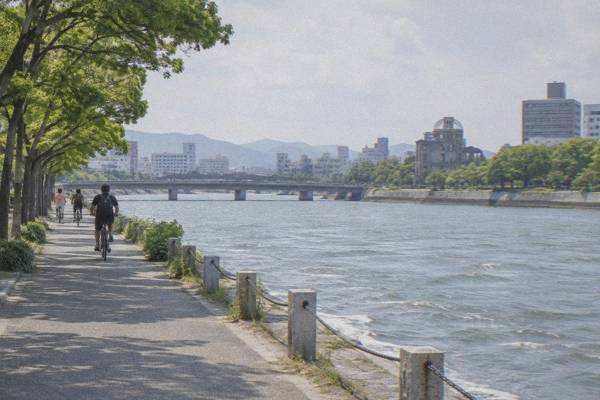
Cherry Blossom In Hiroshima And Miyajima
Hijiyama Park has 1,300 Someiyoshino trees, and Miyajima typically reaches full bloom in early April.
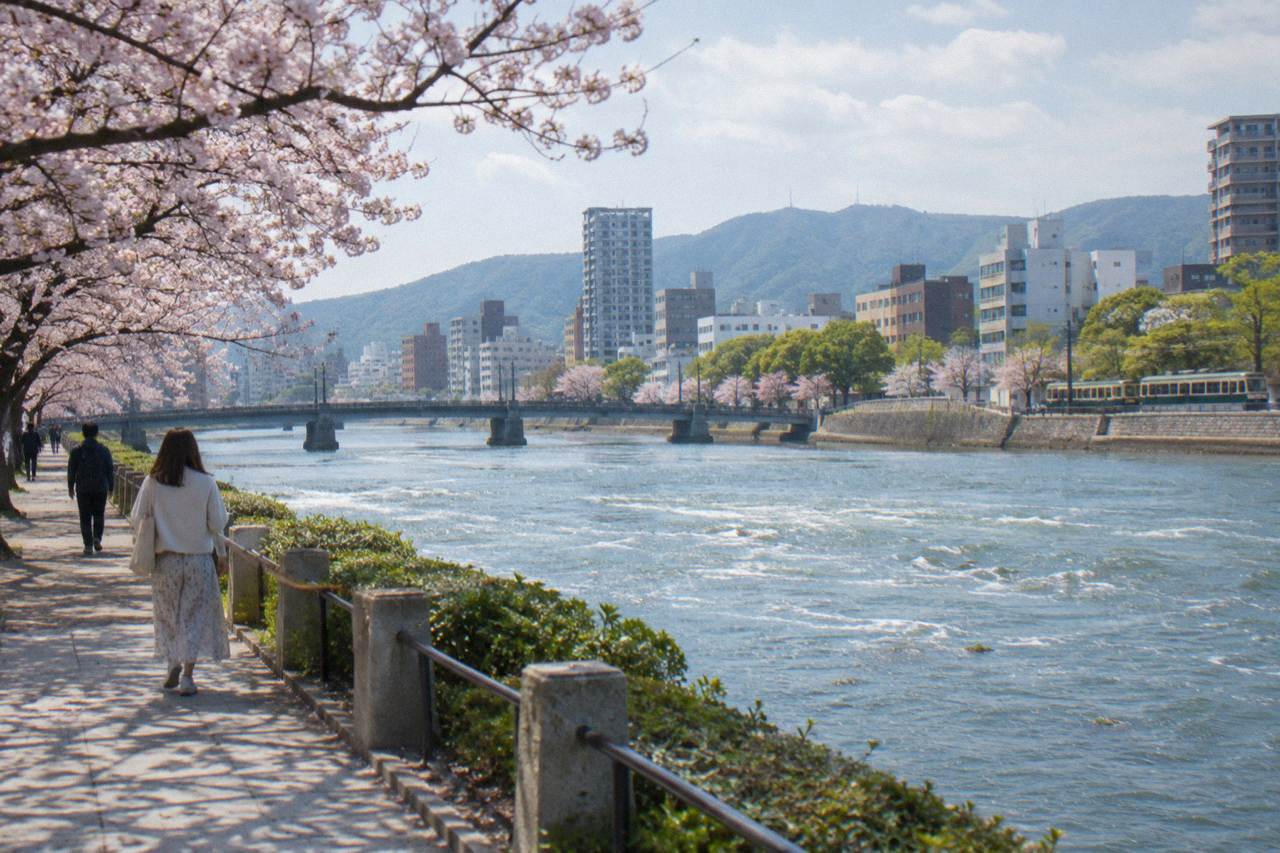
Cherry blossom in Hiroshima peaks from late March to early April. The city's own pages list Hijiyama Park with about 1,300 Someiyoshino trees, Central Park with about 480 and Peace Memorial Park with about 300. Miyajima usually reaches full bloom in early April, roughly one to three days behind the city.
Hijiyama Park alone carries about 1,300 Someiyoshino cherry trees, and Miyajima, the island in Hiroshima Bay reached by a ten-minute ferry, typically reaches full bloom in early April, a few days behind the city. This guide lays out where the trees are, when they open, what the Japan Meteorological Agency (JMA) station normals say about the weather, and what a blossom day costs in yen, using figures from the city, the shrine and the ferry operators' own pages. For a broader seasonal read, the best time to visit Hiroshima page covers the rest of the year.
Where To See Cherry Blossom In Hiroshima?
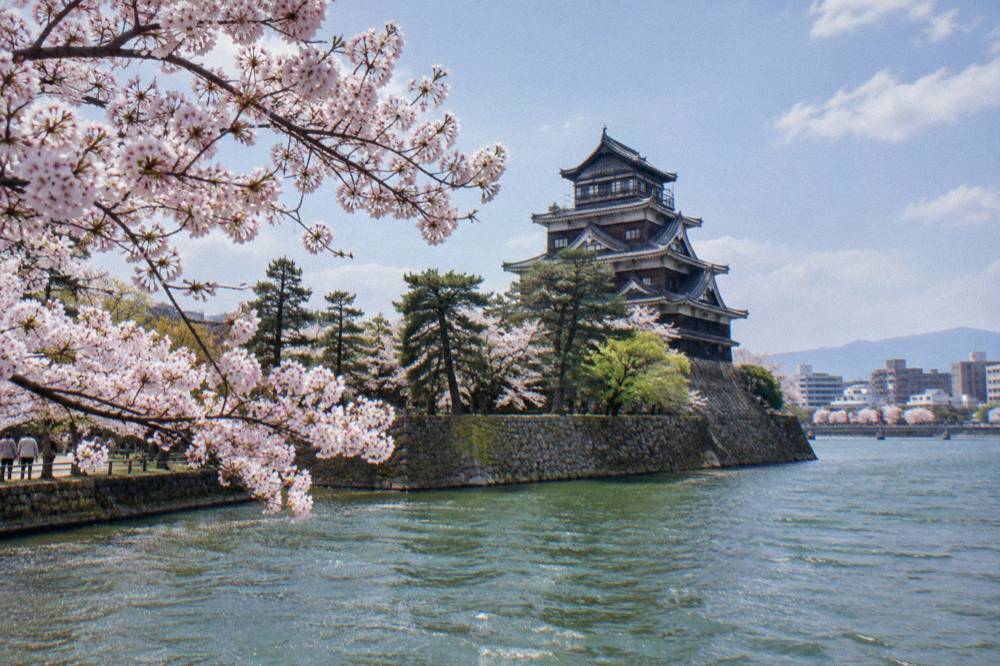
The city of Hiroshima lists nine main cherry blossom sites on its own park pages, led by Hijiyama Park with about 1,300 Someiyoshino trees, Central Park with about 480, and Peace Memorial Park with about 300, all with peak viewing from late March to early April. Hiroshima Castle is also listed for blossom around the tower and moat.
Every figure in the list above comes from the city of Hiroshima's own frequently-asked-questions page on flower viewing and from the local tourism feature pages, so the counts are the city's, not an estimate. For more on visiting, see the Hiroshima Travel Guide.
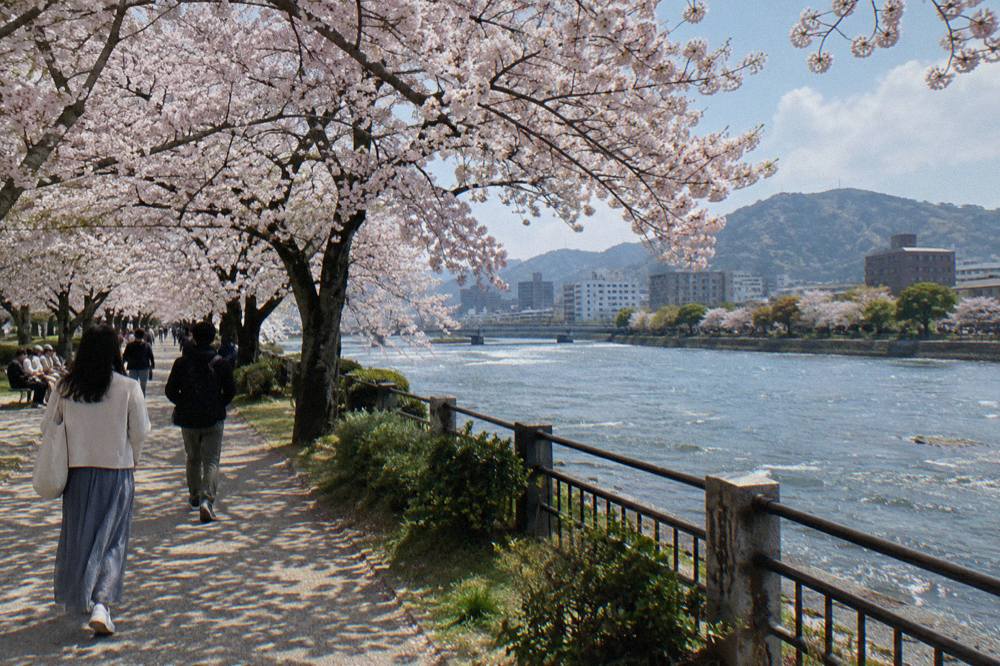
The Hiroshima Peace Memorial Museum guide covers the museum's hours and its 200 yen adult admission if the visit grows beyond the trees.
| Site in Hiroshima | Someiyoshino / tree count | Peak viewing | Notes from the listing |
|---|---|---|---|
| Hijiyama Park | about 1,300 | late March to early April | parking for about 120 cars |
| Kagamiyama Park | about 500, over 30 varieties | spring flowering | varieties listed on the tourism feature page |
| Central Park | about 480 | late March to early April | city park listing |
| Ogonzan (Mt. Ogon) green space | about 480 | late March to early April | city park listing |
| Eastern riverside green space (Kobo Bridge) | about 400 | late March to early April | riverside walking area |
| Western riverside green space (Karasako Bridge) | about 400 | late March to early April | riverside walking area |
| Peace Memorial Park | about 300, Someiyoshino and others | late March to early April | open ground, no admission fee |
| Asa Zoological Park (Asa Zoo) grounds | about 300 | early to mid-April | zoo adult admission 510 yen |
| Ebayama Park | about 150 plus one monument tree | late March to early April | the Hiroshima Ebayama cherry is a city natural monument |
| Ryuo Park | about 100 | late March to early April | parking for about 150 cars |
| Hiroshima Castle | blossom around the tower and moat | late March to early April | grounds viewable; the keep has been closed since 22 March 2026 |
The castle row carries a caveat the city sets itself: the keep closed permanently to visitors on 22 March 2026, so a castle blossom visit is an exterior and moat visit. A Sannomaru history museum is planned for 1 June 2027. The Hiroshima Castle guide keeps the full detail.
When Do Hiroshima Cherry Blossoms Reach Full Bloom?
The 2026 forecasts put first flowering at Hiroshima City Botanical Park on 22 March with full bloom on 30 March, and at Peace Memorial Park on 23 March with full bloom on 29 March, while Miyajima is forecast to flower on 25 March and reach full bloom on 31 March; the city's own listings give late March to early April as the standard peak window. Every date above was a forecast issued ahead of the 2026 season; the Japan Meteorological Agency later recorded first bloom in Hiroshima on 19 March and full bloom on 30 March 2026. Blossom moves with the weather every year, so treat the numbers as a planning window rather than a promise.
The structure of the season is stable even when the dates slide. Kagamiyama Park's 30-plus varieties are the clearest example: different cultivars flower in sequence rather than all at once, which spreads the display over a longer window than a single-variety park can manage. On Miyajima, the island's listing says blossoms include Someiyoshino, weeping cherry and other varieties blooming sequentially over two to three weeks, so an early-April ferry ticket is not a single-day gamble.
The Japan Meteorological Agency (JMA) station normals for Hiroshima explain why March can feel raw even as the trees open: the average daily high in March is 14.5 °C against an average low of 5.1 °C, and the month averages 118.3 mm of rain. April warms to an average high of 19.8 °C and an average low of 10.1 °C, with 141.0 mm of rain on average. A blossom visit sits right on the shoulder of those two months, which is why layers and a rain shell earn their place in the daypack.
| Bloom marker (2026 forecast) | First flowering | Full bloom |
|---|---|---|
| Hiroshima City Botanical Park | 22 March | 30 March |
| Peace Memorial Park | 23 March | 29 March |
| Miyajima | 25 March | 31 March |
For travellers fitting blossom into a longer route, the pairing question between the city and the island is handled on the which is better to visit, Hiroshima or Miyajima page, and a one-day plan that carries both is laid out in Hiroshima and Miyajima in one day.
How Do You Get To Miyajima In Blossom Season?
The JR Sanyo Line runs from Hiroshima Station to Miyajimaguchi Station for 420 yen one way, taking about 28 to 30 minutes, and the ferry from Miyajimaguchi to Miyajima takes about 10 minutes at 200 yen one way, with a separate 100 yen Miyajima Visitor Tax charged on entering the island; the Hiroden tram to Hiroden-Miyajimaguchi is a flat 240 yen. Those are the fares as printed by the rail, ferry and tram operators, and they hold year-round, blossom season included.
The ferry deserves the detail. JR West Miyajima Ferry and Miyajima Matsudai Kisen both cross roughly every 15 minutes in daytime, and departures from Miyajimaguchi between 9:10 and 16:10 run the Great Torii route, which passes closer to the torii gate on the water. The JR ferry's first departure from Miyajimaguchi is at 6:25 and the last at 22:42; from the island the first is at 5:45 and the last at 22:14. The Japan Rail Pass covers the JR train and the JR ferry but not the 100 yen visitor tax, which preschool children do not pay. The full timetable picture, including the Hiroden option and the direct ferry from Peace Memorial Park, is on the Hiroshima to Miyajima page.
The tram is the slow scenic route: Hiroden Line 2 from central Hiroshima to Hiroden-Miyajimaguchi takes about 66 minutes at the flat 240 yen adult fare, and the tram stop sits directly in front of the Miyajimaguchi ferry terminal. A 1 Day Streetcar and Ferry Pass at 1,000 yen covers the streetcars plus the Matsudai Kisen ferry, though not the JR ferry, which can suit a day that begins and ends at different points. The getting around Hiroshima guide sorts the passes in full.
| Leg | Operator | Adult fare | Time |
|---|---|---|---|
| Hiroshima Station to Miyajimaguchi | JR Sanyo Line | 420 yen one way | about 28 to 30 minutes |
| Central Hiroshima to Hiroden-Miyajimaguchi | Hiroden Line 2 | 240 yen flat | about 66 minutes |
| Miyajimaguchi to Miyajima | JR West Miyajima Ferry or Matsudai Kisen | 200 yen one way | about 10 minutes |
| Island entry | Miyajima Visitor Tax | 100 yen | charged on the ferry |
| Streetcars and Matsudai ferry, one day | Hiroden 1 Day Streetcar and Ferry Pass | 1,000 yen | valid one day |
What Does Miyajima Look Like During The Blossom?
Someiyoshino, weeping cherry and other varieties bloom sequentially over two to three weeks, with the trees framing Itsukushima Shrine, the Great Torii and the slopes below Mount Misen. The tide shapes the signature view of blossom against the torii: it appears to float above about 250 cm and can be walked to when the tide is below about 100 cm. The shrine charges 300 yen for adults, 200 yen for high school students and 100 yen for elementary and junior high students, and opens at 6:30 except on 1 January, when it opens at midnight.
The shrine's own admission page sets the closing times by season: 6:00 pm from 1 March to 14 October, 5:30 pm from 15 October to 30 November and from 4 January to the end of February, and 5:00 pm in December. In blossom season that means a 6:30 am to 6:00 pm window, and an early ferry puts a visitor on the island close to opening. The corridor floorboards have deliberate gaps that let high-tide water pass through, so the shrine's own page advises comfortable shoes. The Great Torii's restoration finished in December 2022, and repair work on the East Corridor and the five-storey pagoda is under way with the shrine open, per the shrine's construction page.
Photographing the trees against the torii is the island's signature blossom frame, and the water level decides what the picture looks like: reported guide figures say the torii can be walked to when the tide is below about 100 cm and appears to float above about 250 cm. Rather than guessing a date's tide, use the live Hiroshima Bay tide block on the site, and read when is low tide at Miyajima and why is the Miyajima torii gate in the water for how the tide works. A longer island plan, including an overnight that catches the trees in evening light, is in Miyajima overnight.
What Should A Two Or Three Day Blossom Itinerary Look Like?
A two-day blossom itinerary splits naturally into a Hiroshima city day covering Peace Memorial Park, the castle moat and Shukkeien, and a Miyajima day built around the early April full bloom, with the JR line and ferry connecting the two at 420 yen each way by train, 200 yen each way by ferry and a 100 yen visitor tax; a third day absorbs the weather risk that a March average of 118.3 mm of rain makes real. The arithmetic is simple because the fares are flat and the distances short.
Day two is the island, and the forecast table above sets the timing. The Hiroshima in 2 days and Hiroshima in 3 days itineraries carry the hour-by-hour detail, and the Miyajima tour page covers the guided island options. If blossom is the whole point of the trip, the third day is the insurance policy: one wet day in three is survivable, and the Hiroshima rainy day page lists the indoor set.
To let a guide lead the island day, book a guided Miyajima tour here.
| Itinerary day | Focus | Key costs in yen |
|---|---|---|
| Day 1, city | Peace Memorial Park, museum, castle moat, Shukkeien | museum 200, Shukkeien 350, Hiroden 240 per ride |
| Day 2, Miyajima | Itsukushima Shrine, blossom, torii at tide | train 420 each way, ferry 200 each way, tax 100, shrine 300 |
| Day 3, flex | weather backup, revisit of the best trees | depends on the choice |
What Does A Cherry Blossom Day In Hiroshima Cost?
A full blossom day is built from a small set of printed figures: 420 yen each way for the JR train to Miyajimaguchi, 200 yen each way for the ferry, the 100 yen visitor tax, 300 yen Itsukushima Shrine admission, 200 yen Peace Memorial Museum admission, 350 yen Shukkeien and 240 yen per Hiroden ride, with any real day using a subset of those.
The table below is the honest ledger, line by line, using each operator's printed figure. Bookable tours sit outside it entirely, because their prices render from the operator data on each tour card rather than from this page. Where a choice exists, the pass arithmetic changes with the plan: a day heavy on streetcars and the Matsudai ferry tips toward the 1,000 yen Hiroden pass, while a JR pass holder rides the JR train and JR ferry covered and pays only the visitor tax.
| Item | Adult cost | Notes |
|---|---|---|
| JR train, Hiroshima to Miyajimaguchi | 420 yen each way | covered by the Japan Rail Pass |
| Ferry, Miyajimaguchi to Miyajima | 200 yen each way | JR ferry covered by the Japan Rail Pass |
| Miyajima Visitor Tax | 100 yen | charged once on entry, preschool children exempt |
| Itsukushima Shrine | 300 yen | high school 200, elementary and junior high 100 |
| Peace Memorial Museum | 200 yen | high school 100, junior high and younger free |
| Shukkeien | 350 yen | university 150, school students free |
| Hiroden streetcar | 240 yen flat per ride | child 120, all lines |
| Mount Misen ropeway | 2,000 yen return | one way 1,100, child 1,000 return |
The ropeway is the one expensive line, and in blossom season it trades ground-level trees for the view over the island. It runs 9:00 am to 4:00 pm uphill with the last car down around 4:30 pm. Note for late-season planners: the ropeway requires an advance online reservation on the autumn leaf weekends in November, a reminder that peak-color days on the island can carry reservation rules, so check before any peak-date visit. The autumn side of the island, including Momijidani Park's roughly 700 maples, is covered in Miyajima autumn leaves.
Can A Tour Carry The Blossom Day For You?
Yes, and three formats fit: a full-day bus tour that pairs Hiroshima and Miyajima in one itinerary, a guided peace and history walk in the 2 to 2.5 hour range for the city morning, and a culture experience such as a one-hour Japanese archery session that fills a blossom afternoon between the castle moat and the evening, with prices and ratings rendered on each card from the operator's listing data. Each card carries its own product figures.
The bus day is the natural blossom fit because it solves the one problem a blossom week creates: the trees open on their own schedule, not the visitor's, and a fixed-date plan needs elasticity. The related tour on this page, the Hiroshima and Miyajima Full Day Bus Tour from Hiroshima, covers both ends of the route in a single day, and its card shows the live price. In running prose, Check availability opens the operator's live listing for the date in question.
The guided walks suit a different problem: the Peace Memorial Park's landscape carries meaning that a guide's narrative opens up, and the walks that include the museum and the A-Bomb Dome bundle the entry logistics. The archery experience, held at the castle, turns the castle-moat blossom hour into a booked activity on a day when the keep itself is closed and the grounds are the visit. Blossom weeks are also the weeks when a same-language guide is worth holding early, and every card here carries its own cancellation terms.
What Should You Pack And Wear For Blossom Season?
Pack for an average March-to-April shoulder: the JMA 1991-2020 station normals for Hiroshima show average daily highs of 14.5 °C in March and 19.8 °C in April against average lows of 5.1 °C and 10.1 °C, with 118.3 mm and 141.0 mm of monthly rain respectively, so layers, a rain shell and comfortable shoes for the shrine's gapped corridor boards are the working kit. The normals are averages, and a blossom day can run either side of them.
March and April sit close together in the rain table, and April's 141.0 mm monthly normal works out to about 4.7 mm a day, enough to make a shell non-negotiable, while July records 279.8 mm. The footwear point comes from the shrine itself: the corridor floorboards have gaps for high-tide pressure, so sandals that grip poorly are a poor match. For the island's terrain beyond the shrine, the what to wear to Miyajima Island page goes further, and for the season's cold tail the Hiroshima in winter guide shows what the months before blossom look like.
For what the official pages ask of visitors at the Peace Park, see etiquette at the Peace Park.
Common Questions About Hiroshima Cherry Blossom
When Is Cherry Blossom Season In Hiroshima?
The city's own listings give late March to early April as the peak viewing window at its main sites. The pre-season 2026 forecasts put full bloom at Peace Memorial Park on 29 March and at Miyajima on 31 March; the city's recorded 2026 full bloom came on 30 March, with first bloom on 19 March.
Where Are The Best Cherry Blossom Spots In Hiroshima?
Hijiyama Park with about 1,300 Someiyoshino trees is the largest listed concentration, followed by Kagamiyama Park with about 500 trees of over 30 varieties, Central Park with about 480 and Peace Memorial Park with about 300, with Hiroshima Castle listed for blossom around the tower and moat.
Does Miyajima Have Cherry Blossoms?
Yes. The island's seasonal listing describes Someiyoshino, weeping cherry and other varieties blooming sequentially over two to three weeks, with full bloom typically in early April, a few days behind the city.
How Much Does It Cost To Visit Miyajima In Blossom Season?
The JR train is 420 yen each way from Hiroshima Station, the ferry is 200 yen each way, the Miyajima Visitor Tax is 100 yen on entry and Itsukushima Shrine charges 300 yen for adults, so a day on the island is paid one fare at a time with no bundle or pass required.
Is The Hiroshima Peace Memorial Museum Open During Blossom Season?
Yes. From March to July the museum runs 7:30 am to 7:00 pm, and adult admission is 200 yen, with high school students at 100 yen and junior high school students and younger free.
Can You See Cherry Blossoms At Hiroshima Castle?
Yes, around the tower and moat, with peak viewing from late March to early April. The keep itself has been closed to visitors since 22 March 2026, so the castle blossom visit is an exterior and grounds visit.
The season is short, the forecasts shift with each warm or cold week, and the island runs a few days behind the city, which is exactly why a plan with one city day, one island day and a spare day in between fits the blossom so well. The trees do the rest.