What Is Hiroshima Famous For?
Hiroshima is famous for the Peace Memorial Park and Museum, the A-Bomb Dome, Miyajima's floating torii, and okonomiyaki. Here is what the sources say about each.
The Hiroshima Peace Memorial Museum reported 2,580,926 visitors in FY2025, its third consecutive record year, of which 945,618 were foreign visitors, which shows how strongly the peace memorial alone now draws people to the city. This page sets out what Hiroshima is famous for, sight by sight, with the admission fees, hours and transport figures the primary sources publish.
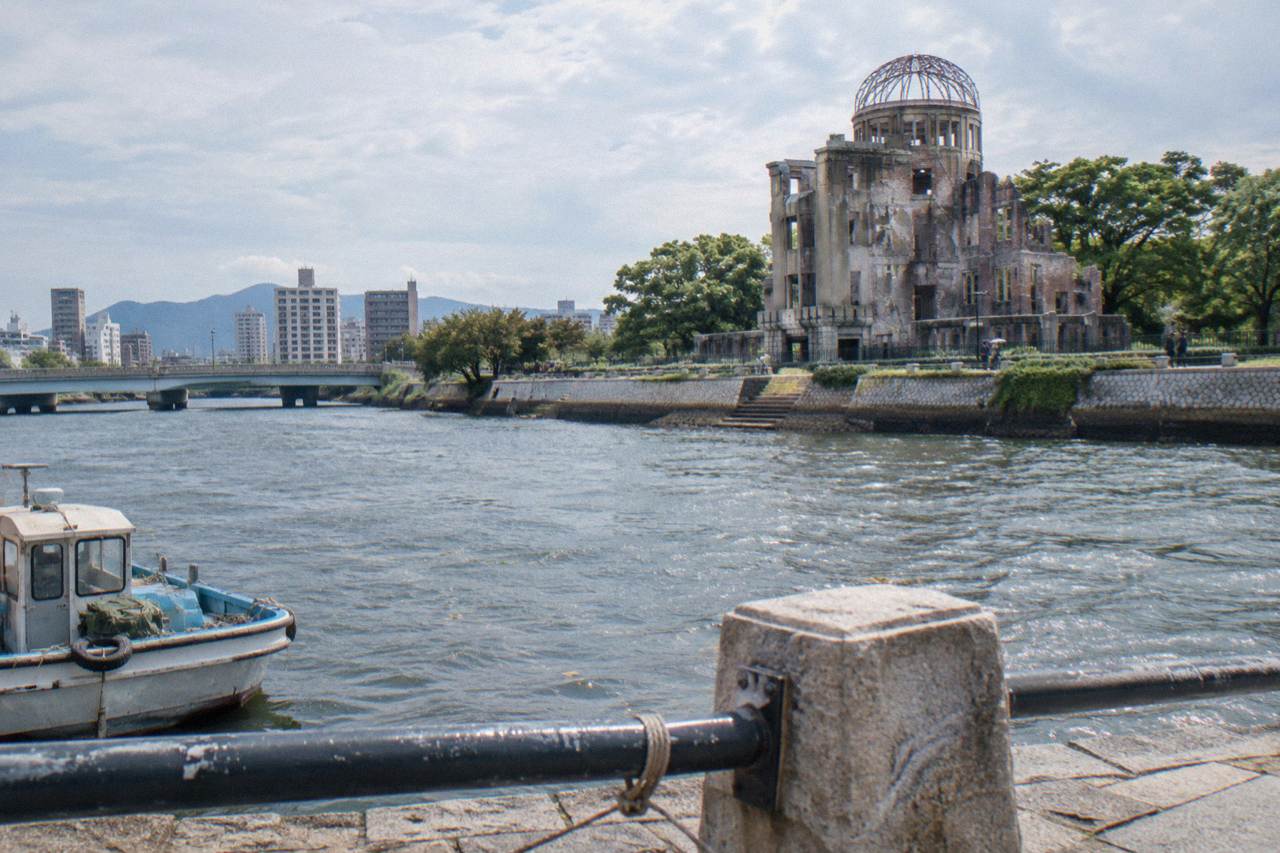
Hiroshima is famous for the Peace Memorial Park, the Peace Memorial Museum and the A-Bomb Dome, which together commemorate the atomic bombing of 6 August; for Miyajima island and the Great Torii of Itsukushima Shrine, which stands in the sea and appears to float at high tide; and for regional food, above all okonomiyaki and Hiroshima Bay oysters. The castle, the garden of Shukkeien and the surrounding Seto Inland Sea complete the picture.
Each of these sits within a compact area. The Hiroden streetcar runs on a flat fare of 240 yen for adults and 120 yen for children on all lines, including the Miyajima line, paid when you get off.
The rest of this page works through the famous sights in order, with the figures for each, and closes with planning questions such as how many days the city needs and how the pieces fit together. For a fuller sight-by-sight rundown, the site's main things to do in Hiroshima page carries the complete list.
Why The Peace Memorial Park And Museum Define Hiroshima
Hiroshima is known worldwide for its memorial sites: the museum records the atomic bombing of 6 August and its human consequences, the park holds the memorial monuments, and the A-Bomb Dome, the ruined building preserved from before the bombing, stands across the river viewable from outside the fence at no charge. Museum admission is 200 yen for adults, 100 yen for high school students, and free for junior high school students and younger.
The museum's own information page sets the hours: 7:30 to 19:00 from March to July and from September to November, 7:30 to 20:00 in August and until 21:00 on 5 and 6 August, and 7:30 to 18:00 from December to February, with closures on 30 and 31 December and in mid-February for exhibit changes. Visitors aged 65 and over pay 100 yen on showing a passport. Some early-morning slots between 7:30 and 8:30 and some evening slots require a prior online reservation for the permanent exhibition. Inside, flash photography, tripods and selfie sticks are prohibited, while non-flash personal photography is allowed.
| Season | Museum hours | Notes |
|---|---|---|
| March to July | 7:30 to 19:00 | Some early and late slots need online reservation |
| August | 7:30 to 20:00 | Until 21:00 on 5 and 6 August |
| September to November | 7:30 to 19:00 | Closed 30 and 31 December follows this season |
| December to February | 7:30 to 18:00 | Mid-February closure for exhibit change |
The annual Peace Memorial Ceremony is held on 6 August from 8:00 to 8:50 in Peace Memorial Park, with about 7,000 seats plus about 2,200 indoor seats at the adjacent International Conference Center, per the city's English page. Behaviour at the park and museum is a visitor topic in itself: quiet, respectful conduct, and photography within the museum's stated rules. The Hiroshima Peace Memorial Park guide on this site covers the monuments in detail, and the question is Hiroshima dark tourism? addresses how the city frames a visit today.
Is Miyajima Part Of What Hiroshima Is Famous For?
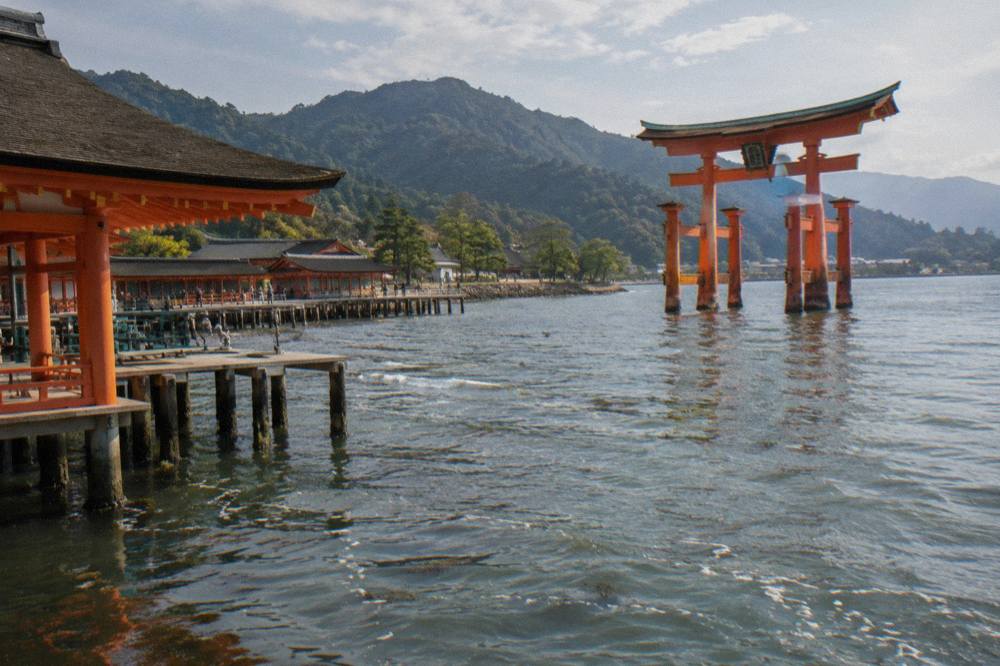
Miyajima, the island in Hiroshima Bay formally called Itsukushima, is a separate island, not part of the city or of the Peace Park. Itsukushima Shrine itself was founded in 593 and rebuilt in its present form in 1168 by Taira no Kiyomori.
Admission to Itsukushima Shrine is 300 yen for adults, 200 yen for high school students and 100 yen for elementary and junior high students, cash only, with a combined shrine and Treasure Hall ticket at 500 yen for adults. The shrine opens at 6:30 except on 1 January (open from 0:00 that day), and closes at 18:00 from 1 March to 14 October, 17:30 from 15 October to 30 November and from 4 January to the end of February, and 17:00 in December. The corridor floorboards have deliberate gaps that let high-tide pressure through, so flat, comfortable shoes are the practical choice the shrine's own page recommends.
The tide is the island's signature phenomenon. The torii can be walked out to when the tide level falls to about 100 centimetres or lower referenced to Hiroshima Port, and the shrine appears to float when the level exceeds about 250 centimetres, per the Miyajima Tourism Association's tide page. Because tides shift later by about 50 minutes each day, the same visit can catch both states; the question when is low tide at Miyajima? explains how to read the tables, and why is the Miyajima torii gate in the water? covers the engineering behind it. The torii and shrine are illuminated from about 30 minutes after sunset until around 23:00. A Miyajima visitor tax of 100 yen per person, exempt for preschool children, is collected with the ferry ticket on the inbound crossing.
Getting there is straightforward. The JR Sanyo Line runs from Hiroshima Station to Miyajimaguchi in about 26 to 30 minutes for 420 yen, and the JR ferry crossing takes about 10 minutes, with departures roughly every 15 minutes across the day. From the island pier, the shrine is a 10 to 15 minute walk along the Omotesando shopping street. The Mount Misen ropeway, at 2,000 yen return for adults, runs from 9:00 with last ascent at 16:00 and last descent at 16:30. About five hundred deer live on the island, and the Miyajima Tourist Association's nature page asks visitors not to feed them; the question can you touch the deer on Miyajima? gives the full rules.
What Food Is Hiroshima Famous For?
Hiroshima is famous for okonomiyaki, a layered savoury pancake built on a wheat crepe with cabbage, noodles and toppings, cooked on a griddle in front of the diner, and for oysters farmed in Hiroshima Bay. Okonomiyaki in Hiroshima is distinct from the Osaka style: the ingredients are stacked rather than mixed, and noodles form a layer.
The etiquette of eating at a counter, the origins of the dish and how it fits a vegetarian diet are each covered elsewhere on this site: see what to eat in Hiroshima, Hiroshima okonomiyaki and is Hiroshima good for vegetarians?. A guided food walk is one way to cover the food districts with someone who knows the counters, and the island itself pairs well with a guided day: the Hiroshima & Miyajima Island Private Guided Tour covers both the peace sites and Miyajima in one private itinerary, Check availability if that shape of day suits your dates.
What Else Is Hiroshima Known For Beyond The Peace Sites?
Beyond the peace memorial and Miyajima, Hiroshima offers Hiroshima Castle, whose keep has been closed to visitors since 22 March 2026 with exterior and grounds viewing only, the circuit garden of Shukkeien at 350 yen adult admission with school students free since 14 April 2025, and the Hiroden streetcar network at a flat 240 yen fare, as well as day trips along the Seto Inland Sea to Iwakuni, Onomichi, the Shimanami Kaido, Kure, Okunoshima, Tomonoura and Takehara.
Hiroshima Castle's grounds, moat and Ninomaru area are free to visit, and the tower is closed for safety reasons since 22 March 2026, with exterior viewing still possible; the question is Hiroshima castle open? holds the current detail. Shukkeien is open 9:00 to 18:00 from 16 March to 15 September and 9:00 to 17:00 from 16 September to 15 March, with last entry 30 minutes before closing. A Sannomaru history museum on the castle site is planned for 1 June 2027.
The climate shapes what these places feel like through the year. The Japan Meteorological Agency (JMA) 1991 to 2020 normals for Hiroshima station show an average daily high of 32.8 °C in August against 9.9 °C in January, with July recording 279.8 mm of rain and January recording 46.2 mm, out of an annual total of 1,572.2 mm. Winters are mild, with average lows of 2.0 °C in January.
| Sight | Adult admission | Opening notes |
|---|---|---|
| Hiroshima Peace Memorial Museum | 200 yen | 7:30 opening year-round; seasonal closing times |
| Itsukushima Shrine, Miyajima | 300 yen | Opens 6:30; closes 17:00 to 18:00 by season |
| Itsukushima Shrine plus Treasure Hall | 500 yen | Combined ticket, adults |
| Shukkeien garden | 350 yen | University students 150 yen, school students free |
| Mount Misen ropeway, Miyajima | 2,000 yen return | 9:00 to 16:00, last descent 16:30 |
| Hiroshima Castle grounds | Free | Keep closed since 22 March 2026 |
Transport costs are equally flat and predictable. The Hiroden streetcar charges 240 yen per adult ride on every line; a 24-hour streetcar pass for the city zone costs 700 yen; and the 1-Day Streetcar and Ferry Pass at 1,000 yen includes the Miyajima Matsudai Kisen ferry plus the 100 yen visitor tax. The airport limousine bus runs about 50 minutes to Hiroshima Station for 1,450 yen.
How Many Days Do You Need For Hiroshima's Famous Sights?
Two to three days cover what Hiroshima is famous for at a normal pace: one full day for the Peace Memorial Park, the museum and the A-Bomb Dome with time in the surrounding downtown, one day for Miyajima timed to the tide tables, and a third day for the castle, Shukkeien, the food districts or a Seto Inland Sea day trip. A single compressed day pairing the museum with Miyajima is possible, and it is the shape most one-day guided tours take.
The practical sequence matters less than the tide: check the Miyajima tide predictions before fixing which day is the island day, because the walkable torii window and the floating window fall at different hours and shift by about 50 minutes daily. The Japan Rail Pass is valid on the JR West Miyajima Ferry, though the separate 100 yen Miyajima visitor tax still applies. The question how many days in Hiroshima is enough? works through the trade-offs, and first time in Hiroshima adds arrival and orientation detail.
Visitors often ask whether the city is safe or welcoming, whether radioactivity is a concern, and what the name means; the answers are is Hiroshima safe?, is Hiroshima still radioactive? and what does Hiroshima mean in Japanese?. Each is short and each is worth a minute before travel.
Common Questions About What Hiroshima Is Famous For
What Is Hiroshima Famous For?
Hiroshima is famous for the Peace Memorial Park, Peace Memorial Museum and A-Bomb Dome commemorating the atomic bombing of 6 August, for Miyajima island and the Great Torii of Itsukushima Shrine standing in the sea, and for okonomiyaki and Hiroshima Bay oysters.
How Much Does The Hiroshima Peace Memorial Museum Cost?
Admission is 200 yen for adults, 100 yen for high school students, free for junior high school students and younger, and 100 yen for visitors aged 65 and over on showing a passport.
Is Miyajima The Same Place As Hiroshima City?
No. Miyajima sits a roughly 10-minute ferry ride from Miyajimaguchi, which is about 26 to 30 minutes from Hiroshima Station on the JR Sanyo Line at 420 yen.
Can You Walk To The Great Torii At Miyajima?
Yes, when the tide level falls to about 100 centimetres or lower referenced to Hiroshima Port. The shrine appears to float when the tide exceeds about 250 centimetres, so both states can occur on the same day.
Is Hiroshima Castle Open?
The castle grounds, moat and Ninomaru area are free to visit, but the keep has been closed to visitors since 22 March 2026 and only exterior viewing is possible. A history museum on the site is planned for 1 June 2027.
What Food Should You Try In Hiroshima?
Okonomiyaki is worth trying. Anago-meshi and momiji manju are also worth trying, and oysters from Hiroshima Bay anchor the regional table.
Hiroshima's fame rests on memory, an island and a griddle, and every figure above comes from the pages the museum, the shrine, the city and the tourism association publish themselves, which is the standard this Hiroshima Travel Guide site holds for all of its pages.