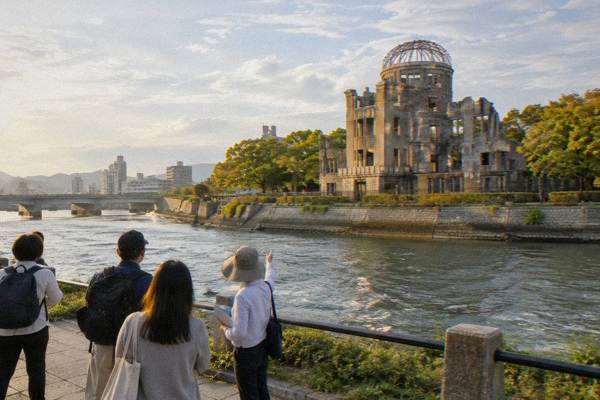
Is Hiroshima Dark Tourism?
Is Hiroshima dark tourism? A clear answer on what the term means, what the Peace Memorial Museum and city of Hiroshima say, and how to visit the park and A-Bomb Dome respectfully.
The dark tourism label is only partly fair, and the museum's own practical pages, the city's site and the shrine and garden on the other side of town all give a fuller picture than the two-word tag suggests.
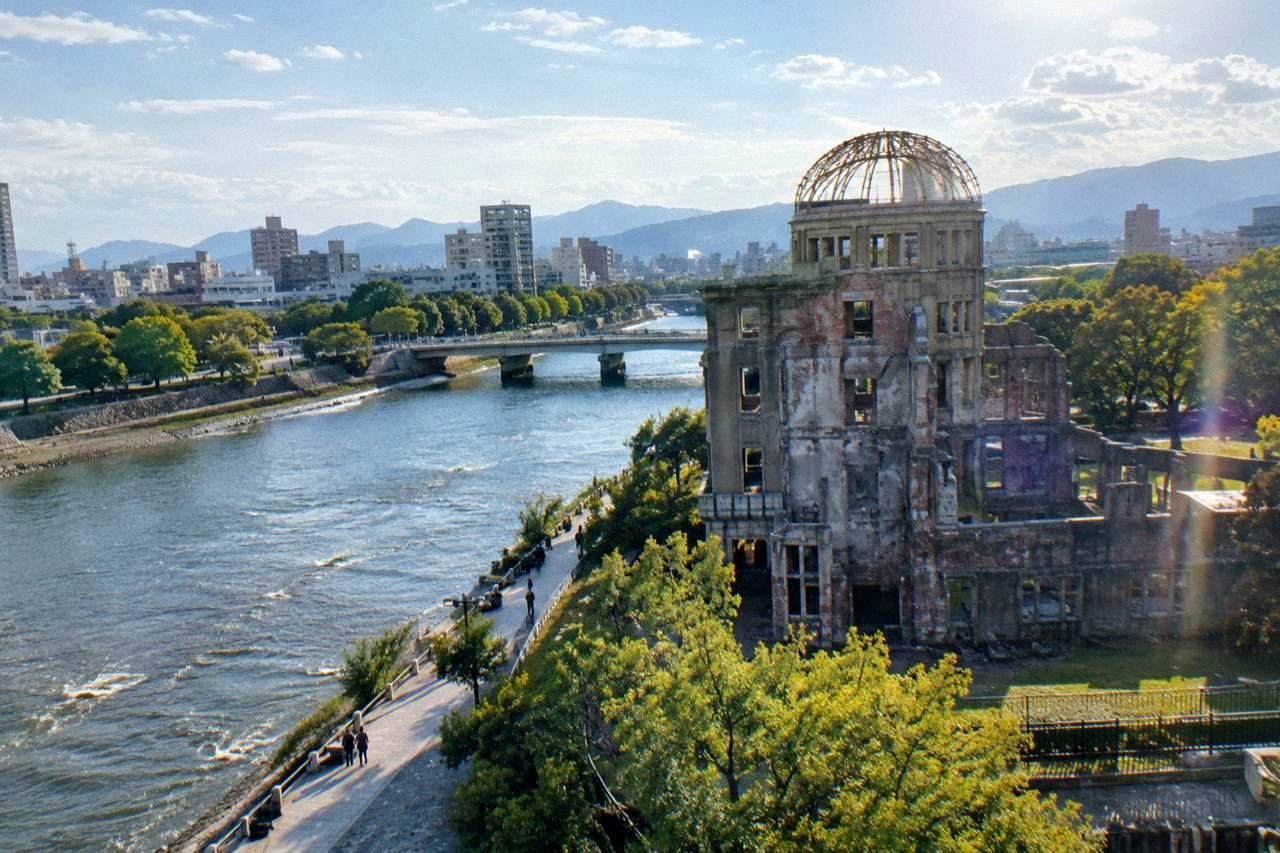
Yes, by the narrow definition. Dark tourism usually covers travel to places tied to death, disaster or suffering, and by that definition the park qualifies, as do battlefields and memorial sites everywhere. Yet the city frames the site as peace education, holding a public ceremony every 6 August from 8:00 to 8:50 with about 7,000 seats plus about 2,200 indoor seats, and welcoming the world.
What the label misses is the framing the city itself chooses. The Peace Memorial Ceremony held every 6 August from 8:00 to 8:50 in the Peace Memorial Park, with about 7,000 seats plus about 2,200 indoor seats at the nearby International Conference Center, is a public event the city organises and invites the world to attend. A place that actively welcomes visitors into an annual ceremony is doing something different from sealing off a tragedy for viewing.
The museum's own visitor numbers point the same way. The Peace Memorial Museum recorded 2,580,926 visitors in FY2025, its third consecutive record year, as reported, with 945,618 foreign visitors. Those are commemoration-scale numbers, closer to a museum of history than to a closed site of grief. The question of respect, and how to behave once there, matters more than the label, and it is covered further down this page.
What Does The Peace Memorial Museum Itself Say?
The Hiroshima Peace Memorial Museum charges 200 yen for adults, 100 yen for high school students and nothing for junior high students and younger, opens from 7:30 a.m., and closes only on 30 and 31 December and for several days in mid-February. Its rules ask visitors to keep quiet, not touch exhibits, and take photographs without flash or tripods. The museum's tone is documentation and testimony.
Those practical details come from the museum's own information page, and they describe an ordinary civic museum: posted hours, a posted fee, group rates, a closing calendar. Groups of 30 or more adults pay 160 yen each, groups of 20 or more high school students enter free, and visitors aged 65 and over pay 100 yen with a passport as proof of age. Some early slots from 7:30 to 8:30 a.m. and certain evening slots require a prior online reservation for the permanent exhibition. Last entry is 30 minutes before closing.
| Visitor category | Permanent exhibition fee | Notes from the museum's page |
|---|---|---|
| Adult (university and above) | 200 yen | Groups of 30 or more pay 160 yen each |
| High school student | 100 yen | Groups of 20 or more enter free |
| Junior high and younger | Free | No ticket needed |
| Visitor aged 65 and over | 100 yen | Passport or proof of age required |
| Extended early or evening slot | Online reservation | Applies to 7:30 to 8:30 a.m. and listed evening slots |
The museum also states its etiquette plainly. Visitors must not touch exhibits or display cases, except hands-on items, must keep quiet, and must not deface artifacts. Personal photography and video are allowed without flash; tripods and selfie sticks are prohibited. None of this reads like a site pushing sensation. It reads like an institution protecting artifacts and the conditions in which people read them.
The Peace Park group tour with museum and dome pairs all three sites in one walk, and availability should be checked on the operator's live listing before travel, since guided numbers are limited.
Is The A-Bomb Dome Treated As An Attraction?
The A-Bomb Dome in Hiroshima is viewed only from outside a perimeter fence, with no public interior access, and no fee is charged to see it. The exterior is illuminated after sunset, and the surrounding Peace Memorial Park, which covers 122,100 square meters, is a public park open 24 hours year-round with no entry ticket.
The city's own page on the dome states the viewing arrangement: outside the fence, no interior access. There is no ticket desk, no queue for a view inside, no commercial framing at the structure itself. The question of whether a ruin should be lit at night is a fair one, but the answer the city has chosen is visibility rather than concealment.
Getting there is ordinary city transport. From JR Hiroshima Station, Hiroden streetcar Line 2 bound for Miyajima or Nishi-Hiroshima, or Line 6 bound for Eba, runs to the Genbaku Dome-mae stop, followed by a short walk. The Hiroden flat fare has been 240 yen for adults and 120 yen for children on all lines, including the Miyajima line, since 1 February 2025, paid on exit by IC card or cash in the fare box.
The Peace Memorial Museum is the indoor half of any visit to the dome, and its schedule has a few wrinkles worth knowing in advance. Entry during the 7:30 to 8:30 morning slot, and during evening slots, is arranged through online reservation, so those hours are not open to whoever simply turns up. On August 5 and 6 the museum stays open until 21:00, an hour later than on other August evenings, which makes the anniversary nights workable for travelers whose daytime hours are committed elsewhere.
August 6 brings the Peace Memorial Ceremony to the park itself, running from 8:00 to 8:50 in the morning. About 7,000 seats are set out for the event, with roughly 2,200 additional indoor seats at the International Conference Center. At fifty minutes from start to finish, the ceremony is brief, and the seat count, not the schedule, is what limits how closely a visitor can follow it. Anyone planning around the date should treat the seating figures as the practical ceiling for the morning.
Getting there has improved on the rail side as well. A new station building opened at Hiroshima Station in March 2025, and since August 2025 the Hiroden streetcar has run directly into it, with the stop on the second floor. Boarding for the ride to Genbaku Dome-mae now happens inside the station, which makes the connection from a JR train simple to find. The change is small but removes the one moment of uncertainty in an otherwise simple journey.
How Do You Visit The Peace Park Respectfully?
The rules the museum publishes are concrete: keep quiet, do not touch exhibits or display cases, take photographs without flash, and leave tripods and selfie sticks at the door. The park asks for the behaviour of any memorial ground, quiet movement and respectful photography. There is no public parking in the park, and the museum directs drivers to nearby paid facilities.
Respect at this site is mostly a matter of ordinary restraint. The museum's etiquette list is short and specific, and the park, being public and open 24 hours, relies on conduct rather than rules. The wider set of guides lives on Hiroshima Travel Guide.
Is The Whole City About The Bombing?
No. The rest of the city does not carry the label at all. Hiroshima Castle's grounds remain open while the keep itself, closed since 22 March 2026, is exterior-only, with a Sannomaru history museum planned for 1 June 2027. A whole page on whether the castle is open covers what that means in practice.
Itsukushima Shrine charges 300 yen for adults, 200 yen for high school students and 100 yen for elementary and junior high students, with a combined shrine and Treasure Hall ticket at 500, 300 and 150 yen. The Miyajima Visitor Tax of 100 yen is charged separately on entering the island, with preschool children exempt.
| Hiroshima site | Entry fee | Opening pattern |
|---|---|---|
| Peace Memorial Park | Free | Public park, 24 hours |
| Peace Memorial Museum | 200 yen adult | 7:30 a.m. opening; hours vary by season |
| National Memorial Hall | Free | 8:30 a.m. to 5:00, 6:00 or 7:00 p.m. by season |
| Shukkeien garden | 350 yen adult | 9:00 to 18:00 or 17:00 by season |
| Itsukushima Shrine (Miyajima) | 300 yen adult | 6:30 a.m. opening; closing varies by season |
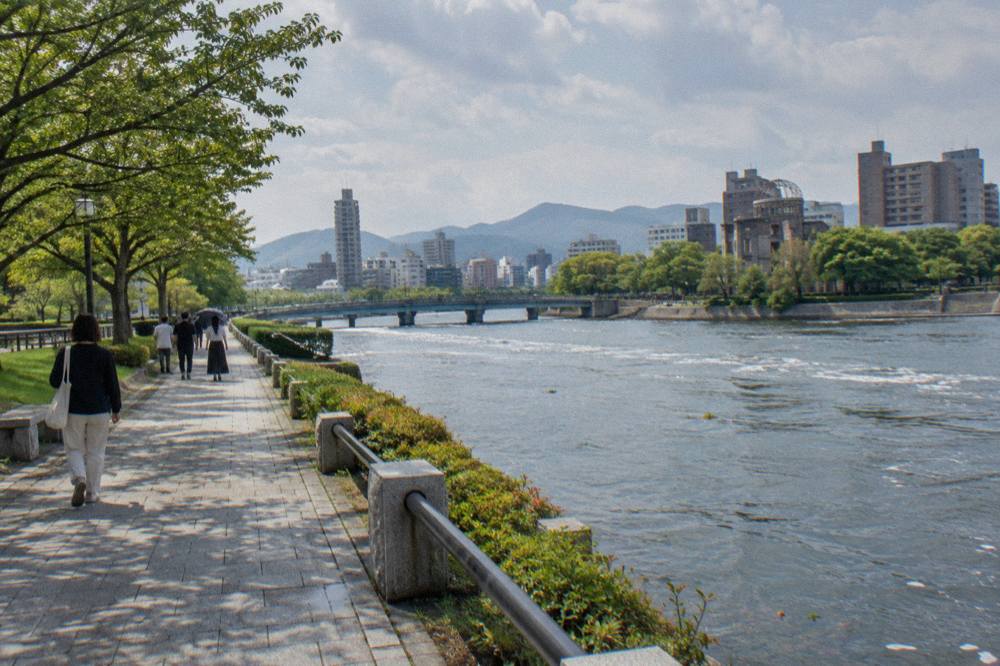
Should The Label Change Your Decision To Go?
The label should not decide the trip. The museum sets a 200 yen adult fee, posts public hours from 7:30 a.m., and publishes etiquette rules like any major history museum; the park is a free public space; and the annual 6 August ceremony is an event the city openly invites visitors to attend. Nothing about the visit is hidden, restricted or framed as spectacle.
If anything, the practical picture argues for going informed. Visitors weighing the trip against time constraints can read how many days in Hiroshima is enough and is Hiroshima worth visiting for the planning arithmetic. For those who want a structured first encounter with the park, the Peace Park, Museum and Atomic Bomb Dome group tour covers all three sites with a guide.
The Hiroshima Travel Guide covers the rest of the destination in depth, from what Hiroshima is famous for to the castle, garden and island days that have nothing to do with the two-word label.
Common Questions About Hiroshima Dark Tourism
Is Hiroshima Dark Tourism?
The city's memorial site commemorates the atomic bombing of 6 August. The city and the Peace Memorial Museum frame the visit as peace education: the park is a free public space open 24 hours, the museum posts ordinary hours and fees, and the annual 6 August ceremony is open to the public.
Do You Need Tickets For The Hiroshima Peace Memorial Park?
No. The Peace Memorial Park is a public park with no entry fee, open 24 hours year-round. Only the Peace Memorial Museum inside it charges admission: 200 yen for adults, 100 yen for high school students, free for junior high students and younger.
Can You Photograph Inside The Hiroshima Peace Memorial Museum?
Yes, personal photography and video without flash are allowed. The museum prohibits tripods and selfie sticks, and asks visitors not to touch exhibits or display cases except hands-on items.
Can You Go Inside The A-Bomb Dome?
No. The A-Bomb Dome is viewed only from outside the perimeter fence, with no public interior access. There is no fee, and the exterior is illuminated after sunset.
Is It Okay For Foreign Visitors To Attend The 6 August Ceremony?
The Peace Memorial Ceremony on 6 August runs 8:00 to 8:50 in the Peace Memorial Park, with about 7,000 seats plus about 2,200 indoor seats at the International Conference Center, and it is a public event organised by the city. Quiet, respectful conduct is the expected standard.
What Else Is There In Hiroshima Besides The Peace Park?
Plenty. Miyajima island with Itsukushima Shrine is a roughly 10-minute ferry crossing from Miyajimaguchi on the JR ferry line.