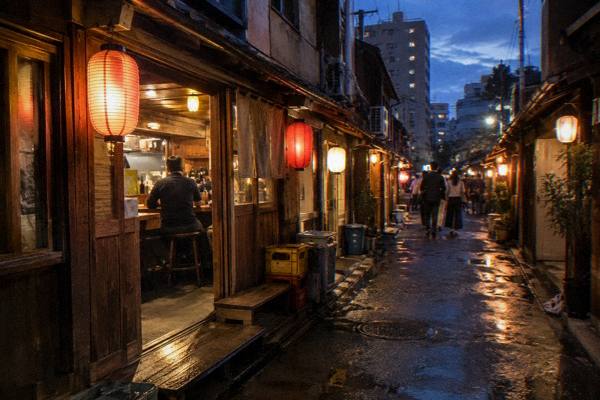
Hiroshima In Winter: Oysters, Dreamination And Quiet Miyajima
Hiroshima in winter falls within the oyster season that runs from October to June, with Miyajima's shrine hours and ferries still running daily.
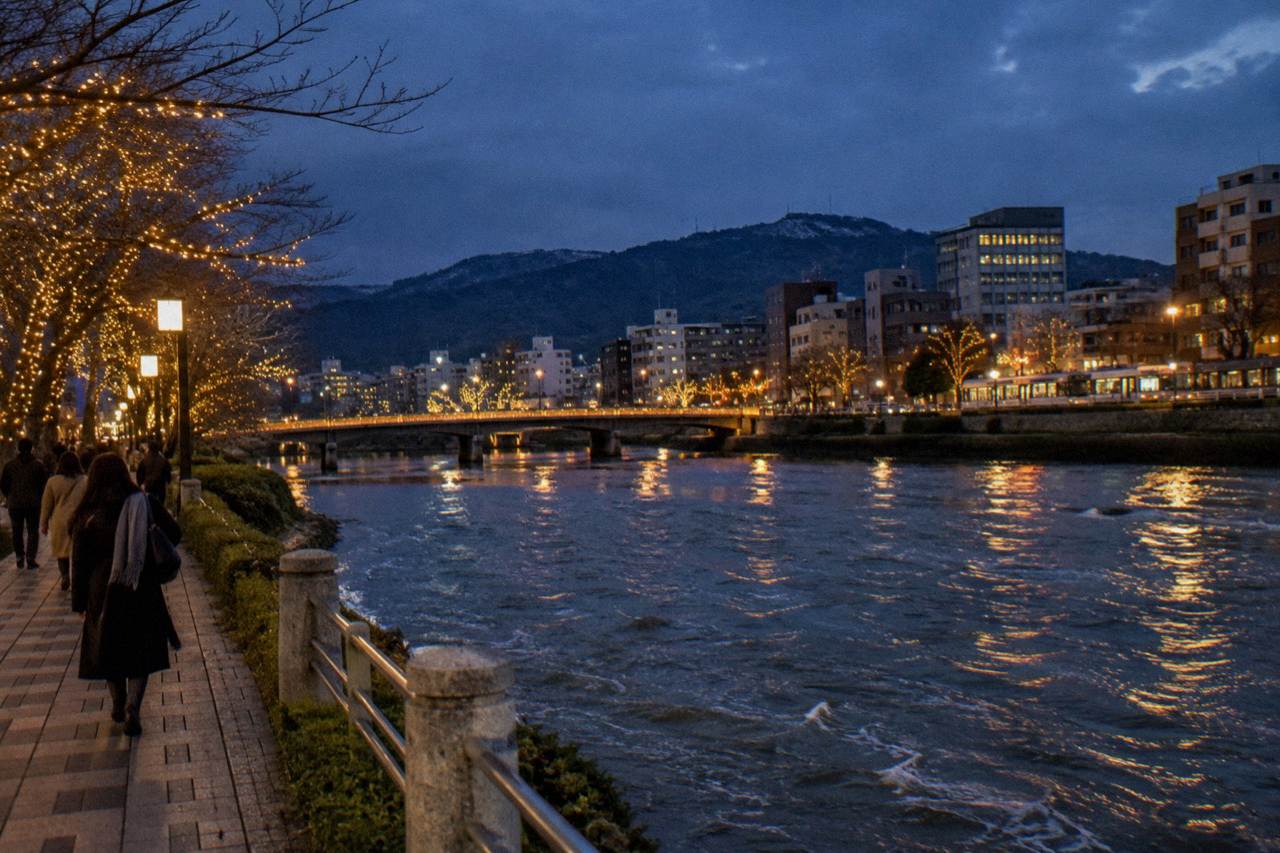
Hiroshima in winter is mild by Japanese standards: average daily highs of about 10 to 12 °C in December, January and February, with about 46 mm of rain in January. Oyster season peaks from November to March, the free Dreamination light-up runs nightly from 17:30 to 22:30, and Miyajima's ferries, shrine and ropeway all keep winter hours.
This guide covers what winter means in practice, from the free Dreamination illumination on Peace Boulevard to oyster season on Miyajima and the winter hours of the Peace Memorial Museum, Itsukushima Shrine and the Mount Misen ropeway.
What Is Hiroshima Like In Winter?
Hiroshima in winter is a mild, low-rain season for a Japanese city: the Japan Meteorological Agency (JMA) 1991-2020 station normals show average daily highs of about 9.9 °C in January, 10.9 °C in February and 12.1 °C in December, with monthly rainfall of about 46 to 64 mm across the three months. January is a dry month in Hiroshima. Oyster season is at its peak, and the city center runs a free nightly illumination called Dreamination.
Winter is the season when the Seto Inland Sea climate does the city the most favors. The same normals that show July soaking up about 279.8 mm of rain show January with about 46.2 mm, the lowest figure on the whole monthly table. Days are short and evenings are cool, which is exactly what the Dreamination illumination is built around: lights from 17:30 to 22:30 along Peace Boulevard, free to attend, with the first day starting around 18:00 because of the opening ceremony.
The seasonal rhythm also favours the food. Hiroshima oyster season runs from October to June, with peak flavor from November to March, so a winter visit lands squarely in the middle of it. For more, see the H
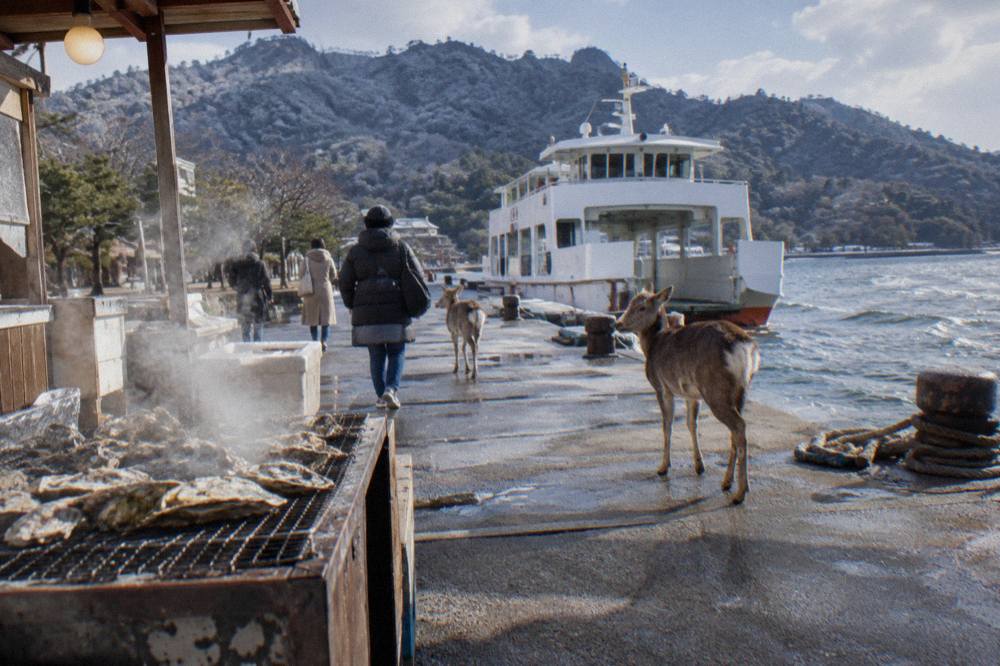
For planning purposes, winter also compresses the daylight. Itsukushima Shrine on Miyajima closes between 17:00 and 18:30 depending on the winter month, and the last JR ferry back from Miyajima runs until 22:14 in winter, so a long evening on the island is possible but the shrine visit itself should come earlier in the day. The seasonal guide to Miyajima autumn leaves shows how quickly the island's schedule shifts as the year closes; winter shifts it again.
How Cold Does Hiroshima Get In Winter?
The Japan Meteorological Agency (JMA) 1991-2020 station normals for Hiroshima put average daily highs at about 12.1 °C in December, 9.9 °C in January and 10.9 °C in February, with average overnight lows of about 4.0, 2.0 and 2.4 °C in the same three months. Monthly rainfall averages about 54.0 mm in December, 46.2 mm in January and 64.0 mm in February.
Those three months are the backbone of the Hiroshima winter, and the numbers tell a consistent story: cool but rarely harsh days, cold nights, and less rain than any other season. July, by comparison, averages about 279.8 mm of rain in the same normals, more than five times January's total. See the Hiroshima Travel Guide for more planning help.
| Month | Average high | Average low | Average rain |
|---|---|---|---|
| December | 12.1 °C | 4.0 °C | 54.0 mm |
| January | 9.9 °C | 2.0 °C | 46.2 mm |
| February | 10.9 °C | 2.4 °C | 64.0 mm |
Average highs around 10 to 12 °C make daytime walking comfortable in layers. The fuller month-by-month picture, including the transition months either side, is in the site's seasonal guides to Hiroshima in spring conditions and the rest of the year.
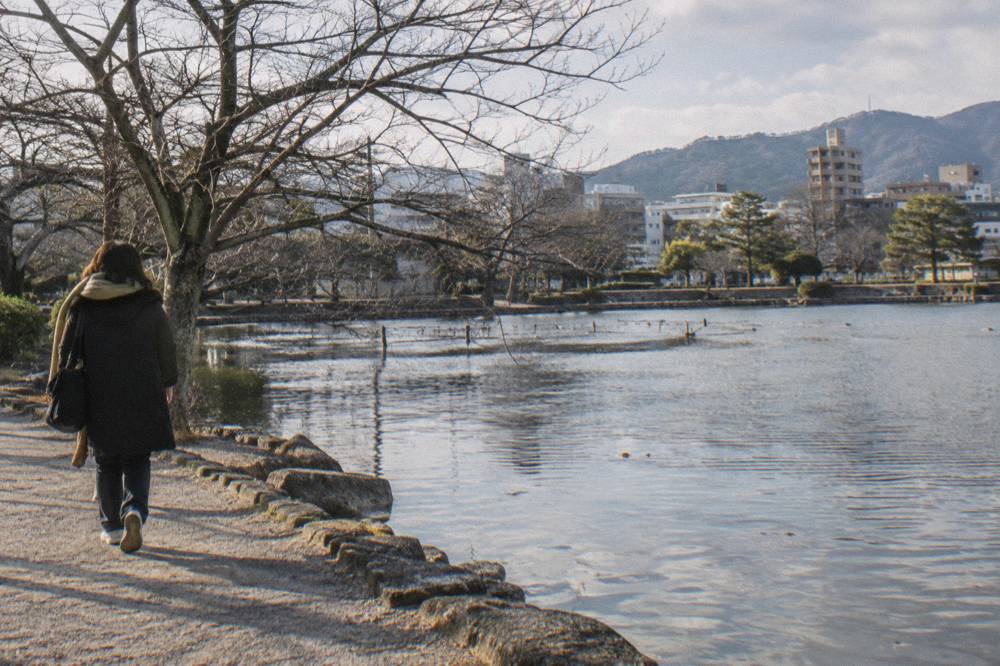
Is Miyajima Worth Visiting In Winter?
Miyajima in winter keeps everything running: the JR ferry makes the roughly 10-minute crossing year-round for 200 yen one way plus the 100 yen Miyajima visitor tax, Itsukushima Shrine opens at 6:30 daily apart from 1 January, when it opens at midnight, with winter closing between 17:00 and 18:30 depending on the month, and the Mount Misen ropeway runs 9:00 to 16:00 with the last descent at 16:30. Oyster season is at its peak from November to March.
The island's winter schedule is well documented by its operators. The JR ferry's first departure from Miyajimaguchi is about 6:25 and the last about 22:00, with sailings roughly every 15 minutes through the daytime, and departures from Miyajimaguchi between 9:10 and 16:10 operate as Great Torii route ferries, which pass closer to the torii gate. The Great Torii itself was restored, with the work finished in December 2022, and it is illuminated from about 30 minutes after sunset until 23:00.
| Miyajima winter item | Figure |
|---|---|
| JR ferry crossing time | About 10 minutes |
| JR ferry adult fare, one way | 200 yen |
| Miyajima visitor tax | 100 yen per entry, preschool children exempt |
| Itsukushima Shrine admission, adult | 300 yen |
| Itsukushima Shrine December hours | 6:30 to 17:00 |
| Itsukushima Shrine January to end of February hours | 6:30 to 17:30 |
| Mount Misen ropeway, adult return | 2,000 yen |
| Mount Misen ropeway hours | 9:00 to 16:00, last descent 16:30 |
| Last JR ferry from Miyajima in winter | 22:14 |
The tide still matters in winter, and the shrine's corridor floorboards have gaps between them that let high-tide water pass through, so the shrine's own admission guidance recommends comfortable shoes. The torii can be walked out to when the tide is below about 100 cm and appears to float when it is above about 250 cm, per guide figures; the site's when is low tide at Miyajima page carries the live tide block rather than a printed time. Getting to the island from the city, by JR train or Hiroden tram and either of the two ferry operators, is covered in full in Hiroshima to Miyajima.
A winter day on the island can be put together several ways. A guided option that includes the shrine and the ferry crossing is the Hiroshima & Miyajima Guided tour with Itsukushima Shrine & Ferry, and staying over is covered in the site's Miyajima overnight itinerary, which pairs well with the island's late-winter ferry timetable.
Ticketing at Itsukushima Shrine runs below the adult rate too: high school students pay 200 yen and elementary and junior high school children 100 yen, and the Treasure Hall charges the same prices. A combined ticket covering the shrine and the Treasure Hall costs 500 yen for adults, 300 yen for high schoolers and 150 yen for children. The Treasure Hall keeps its own hours, 8:00 to 17:00, and Senjokaku opens 8:30 to 16:30. The New Year period brings special hours, with the shrine opening at midnight on 1 January and closing at 18:30, the same 18:30 closing on 2 and 3 January, and regular winter hours resuming on 4 January. Expect some scaffolding as well: reinforcement work on the shrine's East Corridor is reported to continue into late 2026, and repairs to the five-storey pagoda into 2027, with the shrine staying open throughout.
On Mount Misen, the ropeway sells one-way adult tickets for 1,100 yen, and child fares are 1,000 yen return and 550 yen one way; the operator suggests budgeting about an hour for the round trip including sightseeing, plus roughly another hour for anyone walking to the summit. Two ferry details help in winter: Japan Rail Pass and JR-West rail passes are valid on the JR ferry, and groups of eight or more pay a reduced adult fare of 160 yen one way. The island's other operator, Matsudai Kisen, also sails about every 15 minutes, but only from 7:00 until roughly 20:00, so evening departures after that depend on the JR boats.
What Is Hiroshima Dreamination And When Does It Run?
Hiroshima Dreamination is a free winter illumination in central Hiroshima, lit every evening from 17:30 to 22:30, with the first day starting around 18:00 due to the opening ceremony. The main venue covers the Peace Boulevard north and south green zones from Shirojinja-mae to the Tanaka-cho intersection, plus Alice Garden and the city center shopping streets.
The event's own pages give the hours and the free admission, and the location is about 2 minutes on foot from Hiroden Fukuromachi Station, which puts it within the flat 240 yen adult Hiroden fare from anywhere on the tram network. That fare has applied on all lines, including the Miyajima line, since 1 February 2025.
| Dreamination detail | Figure |
|---|---|
| Hours | 17:30 to 22:30 daily |
| First-day start | Around 18:00, opening ceremony |
| Admission | Free |
| Main venue | Peace Boulevard green zones, Shirojinja-mae to Tanaka-cho intersection, Alice Garden, city center shopping streets |
| Nearest Hiroden stop | Fukuromachi, about 2 minutes on foot |
Because the lights run until 22:30, Dreamination pairs naturally with a dinner in the city center.
Where To Eat Oysters In Hiroshima In Winter?
Hiroshima oyster season runs from October to June, and peak flavor is from November to March, so winter is prime time for grilled oysters. As for where to eat, the food stalls on Miyajima serve oysters independently of the Miyajima Oyster Festival, which is traditionally held the second weekend of February but was canceled in 2026 due to oyster supply.
More on the subject is in the site's Hiroshima oysters guide.
What Are The Best Indoor Plans For A Cold Or Wet Hiroshima Day?
The Hiroshima Peace Memorial Museum keeps winter hours of 7:30 to 18:00 from December to February, charges 200 yen for adults and is free for junior high school students and younger, and closes only on 30 and 31 December and mid-February for exhibit change. Shukkeien garden keeps 9:00 to 17:00 winter hours at 350 yen for adults, with school students free.
The museum's own practical-information page gives those hours and that closed schedule, and its extended 7:30 and evening slots require online reservation. The museum's indoor galleries make it the natural anchor of a cold day in the city, and its role in the city's history is covered in the site's dedicated Hiroshima Peace Memorial Museum guide.
| Indoor or covered sight | Winter figure |
|---|---|
| Peace Memorial Museum hours, Dec to Feb | 7:30 to 18:00 |
| Peace Memorial Museum adult admission | 200 yen |
| Peace Memorial Museum closures | 30 and 31 December, mid-February |
| Shukkeien hours, 16 Sep to 15 Mar | 9:00 to 17:00, last entry 30 minutes before |
| Shukkeien adult admission | 350 yen, school students free |
| Itsukushima Treasure Hall hours | 8:00 to 17:00 |
Hiroshima Castle's grounds remain an outdoor stop, with one hard limit: the castle keep has been closed to visitors since 22 March 2026, and only the exterior and grounds can be seen. A Sannomaru history museum is planned for 1 June 2027. Until then the castle is a walking stop, not an interior one, and the details are in the site's Hiroshima Castle guide.
What Should A Hiroshima Winter Budget Look Like?
A Hiroshima winter day can run on local costs alone: the Hiroden tram is a flat 240 yen for adults on every line, the JR Sanyo Line train to Miyajimaguchi is about 30 minutes and 420 yen one way, the Miyajima ferry is 200 yen each way plus the 100 yen visitor tax, Itsukushima Shrine is 300 yen, and the Peace Memorial Museum is 200 yen.
Those are the figures the operators publish, and together they define the shape of a budget day. Adding the ropeway at 2,000 yen return is the single largest optional line, and Shukkeien at 350 yen is a cheap garden stop on a fine winter afternoon.
| Budget line | Figure |
|---|---|
| Hiroden tram, adult, flat fare, all lines | 240 yen |
| JR train Hiroshima Station to Miyajimaguchi | About 30 minutes, 420 yen one way |
| JR ferry to Miyajima, adult one way | 200 yen |
| Miyajima visitor tax | 100 yen |
| Itsukushima Shrine, adult | 300 yen |
| Itsukushima combined ticket, adult | 500 yen |
| Mount Misen ropeway, adult return | 2,000 yen |
| Peace Memorial Museum, adult | 200 yen |
| Shukkeien, adult | 350 yen |
The Japan Rail Pass covers the JR train to Miyajimaguchi and the JR ferry, but not the 100 yen visitor tax. For a fuller costing, including accommodation and food planning figures, see the site's Hiroshima trip cost guide.
Can You See Hiroshima And Miyajima In One Winter Day?
Yes, and winter daylight is the only real constraint: the timed version of the one-day plan starts with the Peace Memorial Museum when it opens at 7:30, uses the roughly 30-minute JR train to Miyajimaguchi and the 10-minute ferry to the island, and fits Itsukushima Shrine before its winter closing of 17:00 or 17:30, with the last ferry back not until 22:14.
The site's timed itinerary, Hiroshima and Miyajima in one day, walks the sequence hour by hour, and the museum's early 7:30 opening is what makes the double visit work: it gives the city's main indoor sight a two-hour head start before the train to the island. In winter, the shrine's earlier closing time moves the island leg forward rather than shortening it.
A guided version handles the timing for you. The Hiroshima and Miyajima Full Day Bus Tour from Hiroshima covers both in a single day, and Check availability for the winter date. If the pace still looks tight, the Hiroshima in 2 days and Hiroshima in 3 days plans split the city and the island across separate days.
What Should You Not Miss In Hiroshima In Winter?
The three winter-specific experiences in Hiroshima are the free Dreamination illumination from 17:30 to 22:30, oysters at peak season from November to March, and the Great Torii lit from about 30 minutes after sunset until 23:00. Everything else in the city, from the Peace Memorial Park to Shukkeien, keeps its normal schedule on winter hours. Everything else in the city, from the Peace Memorial Park to Shukkeien, keeps its normal schedule on winter hours.
The lights and the oysters are the season's own. Dreamination costs nothing and sits 2 minutes from a Hiroden stop, the oyster stalls of Miyajima Omotesando are at the flavorful end of their season, and the illuminated torii gives the island an after-dark reason to stay past sunset, with the last winter ferry at 22:14 to get back. The ropeway in winter is the same ride as in summer, on the same hours, so the choice there is weather, not schedule.
For the rest, the site's overall things to do in Hiroshima page is the full-year index, and the free-admission items, from the Peace Memorial Park itself to the A-Bomb Dome viewed from outside its fence, are collected in the free things to do in Hiroshima guide.
Common Questions About Hiroshima In Winter
Is Hiroshima Cold In Winter?
Hiroshima winters are mild for Japan: the Japan Meteorological Agency (JMA) 1991-2020 station normals show average daily highs of about 9.9 to 12.1 °C from December to February, with average overnight lows of about 2.0 to 4.0 C.
When Is Oyster Season In Hiroshima?
Hiroshima oyster season runs from October to June, with peak flavor from November to March. Grilled oysters on Miyajima's Omotesando are reported to start from around 750 yen for two.
What Are The Winter Hours At Itsukushima Shrine?
Itsukushima Shrine opens at 6:30 except on 1 January (open from 0:00 to 18:30). In winter it closes at 17:00 in December and 17:30 from 4 January to the end of February. Admission is 300 yen for adults.
Does The Miyajima Ropeway Run In Winter?
Yes. The Mount Misen ropeway operates 9:00 to 16:00 year-round, with the last descent at 16:30. An adult return ticket is 2,000 yen.
Is Hiroshima Dreamination Free?
Yes, Dreamination is free to attend, lit from 17:30 to 22:30 daily, with the main venue along Peace Boulevard from Shirojinja-mae to the Tanaka-cho intersection plus Alice Garden and the city center shopping streets.
What Is The Last Ferry Back From Miyajima In Winter?
The last JR ferry from Miyajima runs until 22:14 in winter, with the first departure from the island about 5:45. The crossing to Miyajimaguchi takes about 10 minutes.
Winter in Hiroshima trades summer's heat and July's heavy rain for an illumination that lights the city center until 22:30 and an island in the middle of its oyster season, all on schedules the operators publish and this guide reports. Pack for nights around 2 °C, plan the shrine leg before its 17:00 or 17:30 winter closing, and the season does the rest.