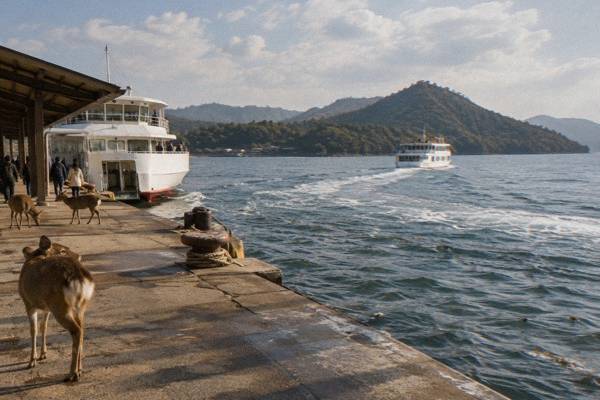
Hiroshima In Spring: March To May
Spring runs March to May in Hiroshima, with cherry blossoms peaking around the first days of April, mild temperatures and a calendar of garden and harbour events.
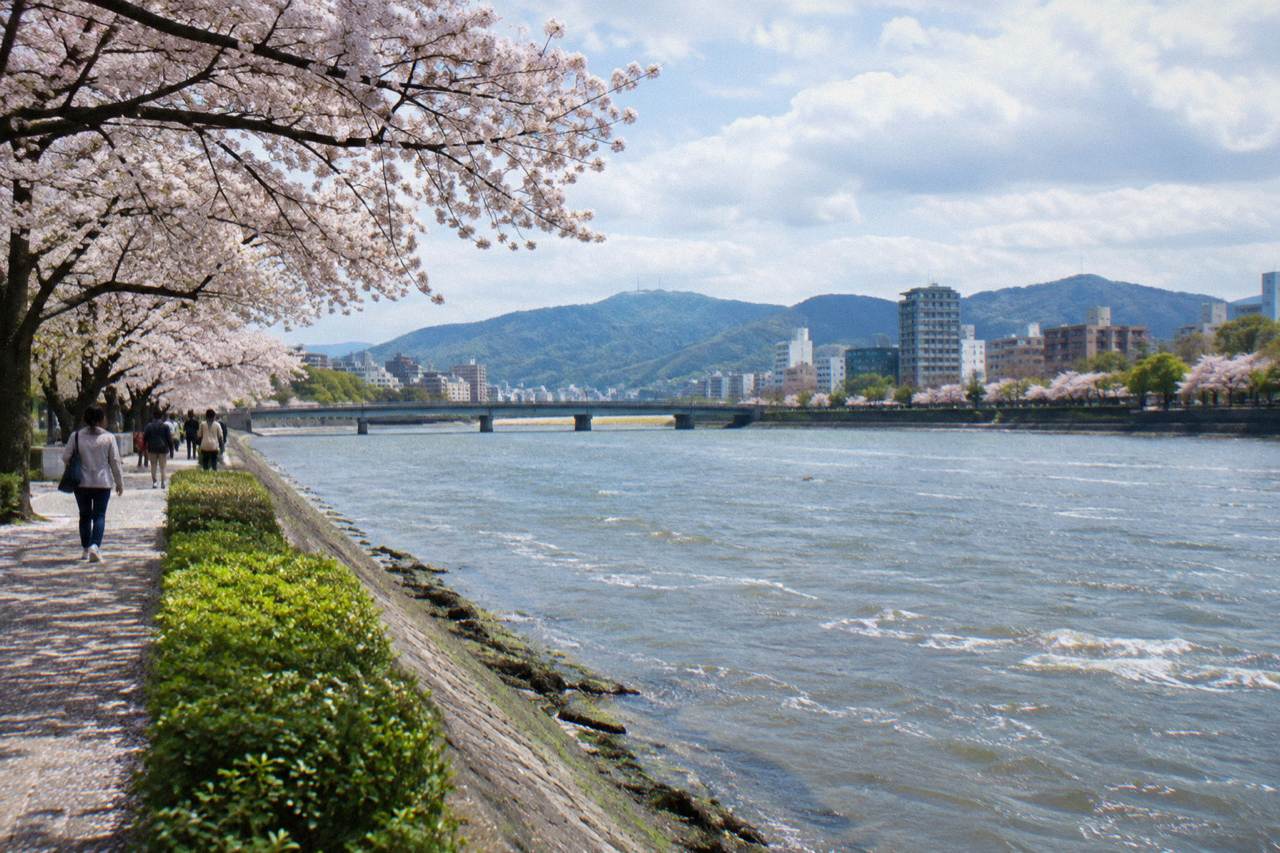
Cherry blossoms in Hiroshima usually reach full bloom around April 3, with best viewing in late March and the first week of April. Spring temperatures climb from a March average low of about 5 °C to a May average high of about 24 C.
This guide covers the blossom spots, the month-by-month weather, the spring event calendar, Miyajima in the same season and what to pack, using figures reported by the official sources that publish them.
What Is Spring Weather Like In Hiroshima?
Spring weather in Hiroshima warms steadily from March to May: average daily highs rise from about 14.5 °C in March to about 19.8 °C in April and about 24.4 °C in May, while average lows climb from about 5.1 °C to about 15.1 °C, according to Japan Meteorological Agency station data for 1991 to 2020. March nights still feel wintry, May days feel early-summer warm, and April sits between the two.
Rain increases across the season too. The same station normals show March averaging about 118.3 mm of rain, April about 141.0 mm and May about 169.8 mm, so a folding umbrella earns its place in a day pack every month of spring, a tip echoed in the Hiroshima Travel Guide. The Japan Meteorological Agency's tourist guidance for the Chugoku region notes that spring migratory cyclones bring large short-term temperature variations to Hiroshima, plus occasional kosa dust, so a warm day can be followed by a cold, hazy one in the same week.
The practical reading is that April, the month the blossoms arrive, is genuinely mild rather than hot: about 191.9 hours of sunshine on average, and rain that tends to fall in spells rather than all month. May is warmer and greener but wetter on paper. Neither month approaches the summer heat, when average highs reach about 32.8 °C in August.
| Month | Average high | Average low | Average rain | Average sunshine |
|---|---|---|---|---|
| March | 14.5 °C | 5.1 °C | 118.3 mm | 176.7 hours |
| April | 19.8 °C | 10.1 °C | 141.0 mm | 191.9 hours |
| May | 24.4 °C | 15.1 °C | 169.8 mm | 210.8 hours |
For how the rest of the year compares, see the site's Hiroshima weather month-by-month guide and the broader best time to visit Hiroshima overview.
When Do Cherry Blossoms Bloom In Hiroshima?
Hiroshima's cherry blossoms usually reach full bloom around April 4, based on historical Japan Meteorological Agency data, and in 2026 first bloom came on 19 March, with full bloom recorded on 30 March. That gives a window of roughly one week at peak each year, with early April the safest planning target and late March already showing flowers in the warmer riverside spots.
The timing is worth planning around because the peak is short. Blossom reports for 2026 placed Shukkeien Garden at peak viewing slightly ahead of Peace Memorial Park in early April, so the season opens in the gardens and spreads through the city's riverbanks over the following days. Anyone booking travel around the blossoms should hold some flexibility in the itinerary, since a single spell of rain or wind can shorten the best-viewing days.
The site's dedicated Hiroshima cherry blossom guide goes deeper on forecast timing and photo spots, and the question of how many days in Hiroshima is enough matters more in blossom week, when the parks fill and timed entries such as the Peace Memorial Museum's early-morning slots need booking.
Where Are The Best Cherry Blossom Spots In Hiroshima?
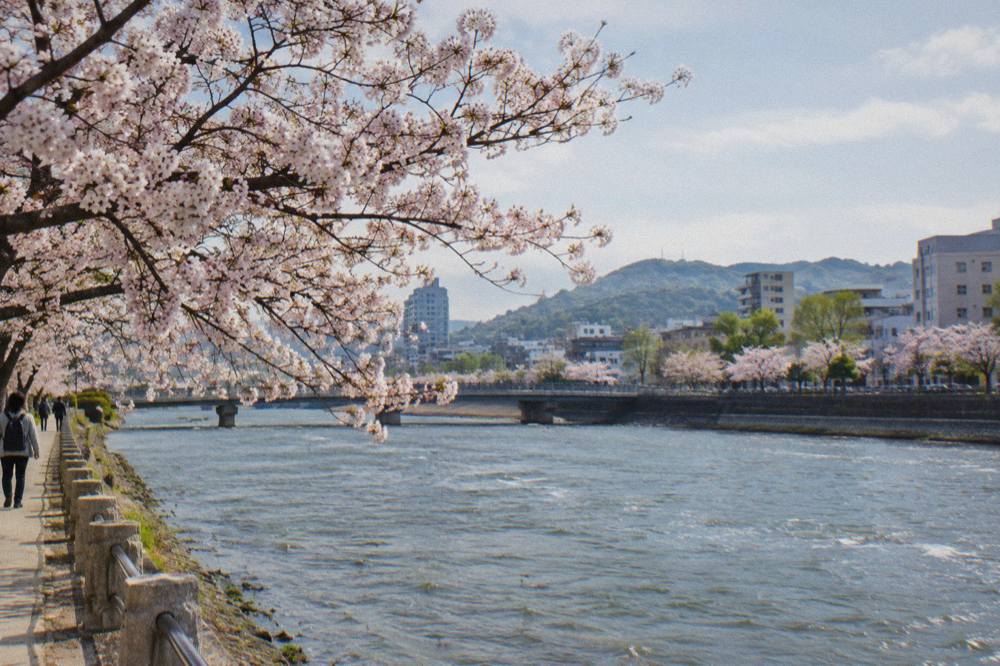
The four principal cherry blossom spots in Hiroshima are Hijiyama Park with about 1,300 cherry trees, Hiroshima Castle grounds with about 450, Peace Memorial Park with about 300 mainly along the Motoyasu River, and Shukkeien Garden with about 200 around its pond, according to the spot-by-spot counts published by japan-guide.com.
The castle grounds hold about 450 trees and are popular for hanami; note that the castle keep itself has been closed to visitors since 22 March 2026, so a visit there is an exterior and grounds experience. Peace Memorial Park's roughly 300 trees line the Motoyasu River, and the riverside paths there are listed as ideal for viewing in early April. Shukkeien Garden, with about 200 trees around its pond, charges 350 yen for adults, 150 yen for university students and nothing for school students, and is open 9:00 to 18:00. A fifth option arrives in the second week of April: the Hiroshima Mint branch holds a cherry blossom viewing event from 9 to 15 April 2026, 10:00 to 20:00, with 65 varieties and 207 trees, a chance to see late-blooming varieties after the city's main trees have shed. The Mint event prohibits smoking, eating and drinking inside, and has no parking.
| Spot | Cherry trees | Admission | Notes |
|---|---|---|---|
| Hijiyama Park | about 1,300 | free | hillside park, museum on the same hill |
| Hiroshima Castle grounds | about 450 | free | keep closed since 22 March 2026, grounds only |
| Peace Memorial Park | about 300 | free | mainly along the Motoyasu River |
| Shukkeien Garden | about 200 | 350 yen adult | 9:00 to 18:00, school students free |
| Hiroshima Mint branch | 207 | free | 9 to 15 April 2026, 65 varieties, no parking |
The Peace Park trees sit beside the park's memorials, and the site's Peace Memorial Park guide covers the walking route past them. For the etiquette that applies around the memorials, quiet and respectful behaviour, the site's dedicated page on etiquette at the Peace Park sets out what the official pages state.
To walk the park's history with a guide, book a Peace Memorial Park walking tour here.
What Is There To Do In Hiroshima In Spring Besides Blossoms?
Spring in Hiroshima is not only blossoms: the season includes the Hiroshima Mint viewing event in April, the Hiroshima Frühlingsfest German beer and food festival from 28 April to 6 May 2026 at Hiroshima Gate Park Plaza, the regular garden and museum circuit including Shukkeien and the Peace Memorial Museum, and the opening of the Miyajima hiking and ferry season in mild weather.
The Frühlingsfest is the calendar's other anchor. It runs 28 April to 6 May 2026 at Hiroshima Gate Park Plaza, featuring German beer and cuisine, and sits inside Japan's Golden Week holiday stretch, which is worth knowing for anyone planning late-April travel.
Indoor options cover the wet spells that spring brings. The Peace Memorial Museum is open 7:30 to 19:00 from March to July, with adult admission at 200 yen, high school students at 100 yen and junior high and younger free. The Hiroshima museums overview and the rainy day guide list the rest of the indoor circuit.
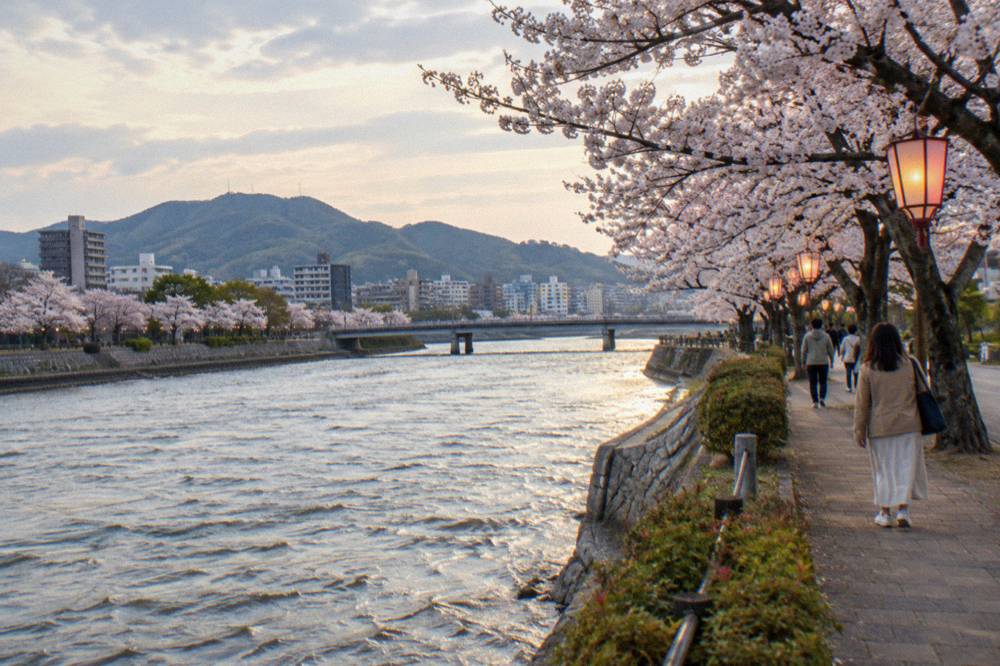
For a fuller inventory across the year, the site's root guide to things to do in Hiroshima remains the starting point, and spring visitors short on time can compress the essentials with the Hiroshima in one day itinerary.
Is Spring A Good Time To Visit Miyajima?
Spring is a strong season for Miyajima: the island's Momijidani Park maples are green rather than red, but Itsukushima Shrine is open from 6:30, the JR ferry from Miyajimaguchi takes about 10 minutes and runs roughly every 15 minutes during the day, and the Miyajima Ropeway operates 9:00 to 16:00 with the last descent at 16:30, all in comfortable temperatures before summer humidity arrives.
Getting there is unchanged by season. The JR Sanyo Line reaches Miyajimaguchi from Hiroshima Station in about 25 to 30 minutes, or the Hiroden streetcar covers the route on its Miyajima line at a flat 240 yen adult fare. The ferry costs 200 yen one way plus the 100 yen Miyajima visitor tax charged on entering the island, with preschool children exempt from the tax. The site's transport page, Hiroshima to Miyajima, compares the two ferry operators and the direct Peace Park boat.
Itsukushima Shrine admission is 300 yen for adults, 200 yen for high school students and 100 yen for elementary and junior high students. The tide still governs the Great Torii in spring exactly as it does the rest of the year: at low water the gate can be walked to, at high water it appears to float. The site's pages on why the torii gate is in the water and low tide at Miyajima explain the mechanics, and autumn visitors can compare the season at the Miyajima autumn leaves guide.
| Miyajima spring item | Figure |
|---|---|
| Ferry crossing time | about 10 minutes |
| Ferry one-way fare (reported) | 200 yen adult |
| Miyajima visitor tax | 100 yen, preschool children exempt |
| Itsukushima Shrine adult admission | 300 yen |
| Ropeway adult return | 2,000 yen |
| Ropeway hours | 9:00 to 16:00, last descent 16:30 |
What Events Happen In Hiroshima In Spring?
The spring events calendar in Hiroshima centres on four dated items: the cherry blossom season itself from late March, the Hiroshima Mint viewing event from 9 to 15 April 2026 with 65 varieties and 207 trees, the Hiroshima Frühlingsfest from 28 April to 6 May 2026 at Hiroshima Gate Park Plaza, and the city's regular Golden Week period in early May. Beyond these, the Hiroshima Flower Festival runs from 3 to 5 May on Peace Boulevard, and the calendar then awaits the summer ceremonies, which begin on 6 August.
The full year's festival list, including the 6 August Peace Memorial Ceremony at Peace Memorial Park from 8:00 to 8:50, is in the site's Hiroshima festivals and events guide, with ceremony detail on the dedicated August 6 peace ceremony page.
| Event | 2026 dates | Location |
|---|---|---|
| Cherry blossom best viewing | 29 March to 4 April | citywide |
| Hiroshima Mint viewing event | 9 to 15 April, 10:00 to 20:00 | Hiroshima Mint branch |
| Frühlingsfest | 28 April to 6 May | Hiroshima Gate Park Plaza |
| Golden Week | late April to early May | nationwide holiday period |
What Should You Pack For Hiroshima In Spring?
Pack for Hiroshima in spring with layers: March needs a proper jacket for average lows of about 5.1 °C, April needs a light jacket or sweater for lows around 10.1 °C, and May can be worn short-sleeved by day with something warm for evenings that still average about 15.1 °C overnight, per Japan Meteorological Agency 1991 to 2020 station normals. A folding umbrella belongs in the bag every month.
The layer logic follows the numbers. March's average high of 14.5 °C sounds mild, but the average low of 5.1 °C means mornings and evenings at riverside blossom spots are cold, and the spring cyclones the JMA notes can drop temperatures sharply for a day or two. April narrows the daily range to 10.1 °C to 19.8 °C, classic light-layer territory. May, with highs about 24.4 °C, is the first genuinely warm month, though its 169.8 mm average rainfall is the season's high-water mark before the June rainy season arrives at about 226.5 mm.
Footwear matters on Miyajima specifically: Itsukushima Shrine's corridor floorboards have deliberate gaps that let high-tide pressure through, and the shrine's own admission page recommends comfortable shoes. Anyone heading up Mount Misen on foot rather than by the ropeway should expect a proper hill walk.
| Month | Daytime clothing | Evening layer | Rain plan |
|---|---|---|---|
| March | warm layers, jacket | heavy jacket | folding umbrella |
| April | long sleeves, light jacket | sweater or jacket | folding umbrella |
| May | short sleeves by day | light layer | folding umbrella |
How Much Does A Hiroshima Spring Trip Cost?
A Hiroshima spring trip's local costs are low and predictable: Peace Memorial Museum entry is 200 yen, Shukkeien Garden is 350 yen, Itsukushima Shrine is 300 yen, the Hiroden streetcar is a flat 240 yen per adult ride, and the Miyajima Ropeway is 2,000 yen return, so a full day of sights and transport in the city runs to well under 2,000 yen per person before food.
The rail passes change the arithmetic for regional travel. The Hiroshima-Yamaguchi Area Pass gives 5 consecutive days of unlimited JR travel for 15,000 yen adult or 7,500 yen child, and includes the JR West Miyajima Ferry, though the 100 yen Miyajima visitor tax is still paid separately. The Kansai-Hiroshima Area Pass covers 5 days including the Sanyo Shinkansen to Hiroshima and the Miyajima ferry for 17,000 yen adult. Within the city, the Hiroden one-day pass at 700 yen pays off after three streetcar rides, and the streetcar-and-ferry version at 1,000 yen adds the Matsudai Kisen ferry crossing.
Accommodation location is the other lever, and the site's where to stay in Hiroshima guide compares the station, downtown and Peace Park districts. For the whole budget picture, the Hiroshima trip cost page breaks the numbers down.
| Item | Cost |
|---|---|
| Peace Memorial Museum, adult | 200 yen |
| Shukkeien Garden, adult | 350 yen |
| Itsukushima Shrine, adult | 300 yen |
| Hiroden streetcar, flat fare | 240 yen adult |
| Hiroden one-day pass | 700 yen adult |
| Miyajima Ropeway, adult return | 2,000 yen |
Should You Take A Tour In Hiroshima In Spring?
A guided tour earns its place in Hiroshima in spring when time is short or the Peace Park's history needs context: the site's featured option is the Hiroshima and Miyajima in 1 Day Private Tour with a Licensed Guide, an 8-hour private day that pairs the city's memorials with the island, and it can be checked live through the operator's listing. In blossom week, a guided day also removes the need to plan tram and ferry connections yourself.
The private licensed-guide format suits travellers who want questions answered on the spot, from the park's monument history to the island's tide schedule. Group alternatives exist for smaller budgets, including a walking tour focused on why the atomic bomb was dropped, and a bus day tour running from Osaka or Kyoto for visitors staying in the Kansai region.
For the featured private tour, Check availability on the operator's live listing, and read the site's tour page for the licensed-guide day first for what it includes.
Where Can You Go Beyond The City In Spring?
Spring day trips from Hiroshima open the whole Seto Inland Sea coast: the Shimanami Kaido cycling route, the Saijo sake district, Sandankyo Gorge, Iwakuni and its Kintaikyo bridge, Onomichi, Kure, Tomonoura, Takehara and Okunoshima are all within the region's reach, and spring's average May highs of about 24.4 °C make cycling and gorge walking comfortable before summer heat sets in.
The rail passes above are built for exactly this. Cyclists get the best of the season on the Shimanami Kaido, where the island crossings sit in mild air and green countryside; the site's Shimanami Kaido guide covers the route.
The site carries dedicated pages for each of these: Iwakuni, Onomichi, Kure, Okunoshima, Tomonoura, Takehara, Sandankyo Gorge and the Saijo sake district, plus the pairing guide for Kurashiki and Okayama and the ferry route to Matsuyama.
Common Questions About Hiroshima In Spring
When Is Cherry Blossom Season In Hiroshima?
Hiroshima's cherry blossoms usually reach full bloom around April 3 based on historical Japan Meteorological Agency data, and the 2026 best viewing period was forecast for March 29 to April 4.
Is April A Good Month To Visit Hiroshima?
April is a mild month in Hiroshima, with an average high of about 19.8 °C and an average low of about 10.1 °C per the 1991 to 2020 station normals, and it carries the cherry blossom peak, the Hiroshima Mint viewing event from 9 to 15 April and the Frühlingsfest from 28 April.
Is Spring Rainy In Hiroshima?
Spring rain in Hiroshima increases month by month: about 118.3 mm on average in March, 141.0 mm in April and 169.8 mm in May, per Japan Meteorological Agency station data, so a folding umbrella is worth carrying through the season.
Where Are The Best Cherry Blossom Spots In Hiroshima?
Hijiyama Park with about 1,300 cherry trees, Hiroshima Castle grounds with about 450, Peace Memorial Park with about 300 along the Motoyasu River, and Shukkeien Garden with about 200 around its pond are the four principal spots, per published spot counts.
Is Miyajima Worth Visiting In Spring?
Yes: the ferry runs about every 15 minutes during the day, the crossing takes about 10 minutes, Itsukushima Shrine opens from 6:30, and the ropeway runs 9:00 to 16:00, all in mild pre-summer temperatures.
What Should I Wear In Hiroshima In March?
March in Hiroshima averages a high of about 14.5 °C and a low of about 5.1 °C, so warm layers with a proper jacket for mornings and evenings are the right call, with an umbrella for the month's average 118.3 mm of rain.
Spring gives Hiroshima blossoms from late March, festivals through April, and green island crossings in May, all within the same two-month stretch and all on the numbers the station data and the event calendars actually publish.