Can You Still See The Hiroshima Shadows?
Whether the human shadows left by the Hiroshima atomic bombing can still be seen today, what the city's own records say survives, and where the traces are preserved.
The atomic bomb was dropped on Hiroshima at 8:15 a.m. on 6 August 1945, and it exploded approximately 600 meters above the city, according to the Hiroshima city page that documents the bombing. Surface temperatures near the hypocenter rose to 3,000 to 4,000°C, and the fireball reached a radius of over 200 meters in one second. In that environment, stone and other hard surfaces exposed directly to the heat were altered, while surfaces shielded by a person or an object were not, and the contrast left dark outlines that came to be called the Hiroshima shadows. This page reports what the city of Hiroshima and the Hiroshima Peace Memorial Museum publish about those traces, what still stands in the city today, and where a visitor can engage with what remains. The Hiroshima Travel Guide covers the whole destination, from Peace Memorial Park to Miyajima in Hiroshima Bay.
No, the human shadows from the atomic bombing of Hiroshima cannot still be seen as outdoor traces in the city today. What survives in public are the bombed buildings and trees the city counts and documents, including 86 bombed buildings within 5 km of the hypocenter as of 1 April 2025, and material preserved by the Hiroshima Peace Memorial Museum in Peace Memorial Park, which reports a record 2,580,926 visitors in fiscal 2025.
The distinction matters. The city of Hiroshima estimates approximately 140,000 people had died by the end of December 1945, and its 1946 survey recorded that 51,787 out of 76,327 buildings were completely destroyed or burnt. Under that scale of destruction, and after eight decades of rebuilding, the surfaces themselves are no longer standing in the streetscape. What a visitor to Hiroshima encounters instead is a documented landscape of surviving structures, and a museum that preserves and exhibits material from the bombing. The question of radiation, which many visitors connect with the shadows, is answered separately on Is Hiroshima Still Radioactive?, where the city states that radiation today is on a par with natural background levels anywhere on Earth.
What Were The Hiroshima Shadows?
The Hiroshima shadows were dark traces left on stone and other hard surfaces when the heat of the explosion altered the exposed surface but left the shielded surface beneath a person or object unchanged. The city of Hiroshima states that surface temperatures near the hypocenter rose to 3,000 to 4,000°C, enough to change stone, and that the bomb detonated 43 seconds after being dropped, approximately 600 meters above the city.
The physics the city describes explains the outlines. Direct heat reached a surface and changed its colour or texture; where a body, a railing or a ladder stood in the way, the surface behind it kept its original state. The result was a light or dark silhouette fixed in place at the instant of exposure. The traces the bomb left on the built city were almost total in extent: the 1946 city survey found 51,787 of 76,327 buildings completely destroyed or burnt, and blast wind pressure at the hypocenter is reported at an estimated 35 tons per square meter. Against those figures, a silhouette on a step was a fragile thing, fixed to a surface that in almost every case did not survive the fire that followed, the demolition that came after, or the decades of reconstruction since. For what the bombing did to the city's people, and how many are still alive, see How Many Hiroshima Survivors Are Still Alive?.
Where Are The Shadows Preserved In Hiroshima Today?
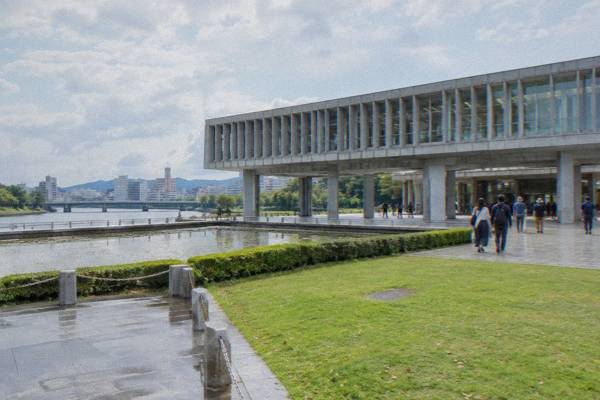
The material traces of the bombing that remain accessible are held in the museums and memorials of Peace Memorial Park in Nakajima-cho, Naka-ku, Hiroshima. The Hiroshima Peace Memorial Museum sits inside the park, and the city's Exhibit Facility for Atomic-Bombed Remnants, also in the park, is free to enter and open 8:30 a.m. to 6:00 p.m. from March to July.
The museum is the institution that collects, conserves and exhibits articles from the bombing, and its own practical-information page sets out the terms of a visit: admission is 200 yen for adults, 100 yen for high school students, and free for junior high school students and younger, with visitors 65 and over paying 100 yen on showing a passport. Photography without flash is permitted for personal use, which the museum states plainly on the same page. The Exhibit Facility for Atomic-Bombed Remnants, run by the city, presents the physical remains of bombed structures, and its admission is free, with a closure on 30 and 31 December, the same closure days the museum lists. A fuller treatment of the museum as a sight, with how it fits a day in the city, is on the Hiroshima Peace Memorial Museum page, and the ticketing question for the park as a whole is answered at Do You Need Tickets For Hiroshima Peace Memorial Park?.
Visitors who want the peace sites explained in context can join a guided cycling route through the memorials and riverside districts: the Peace Cycling Tour with Local Guide is this site's featured pick for the area, and Check availability for a date that suits.
What Can You Still See At The Hypocenter In Hiroshima?
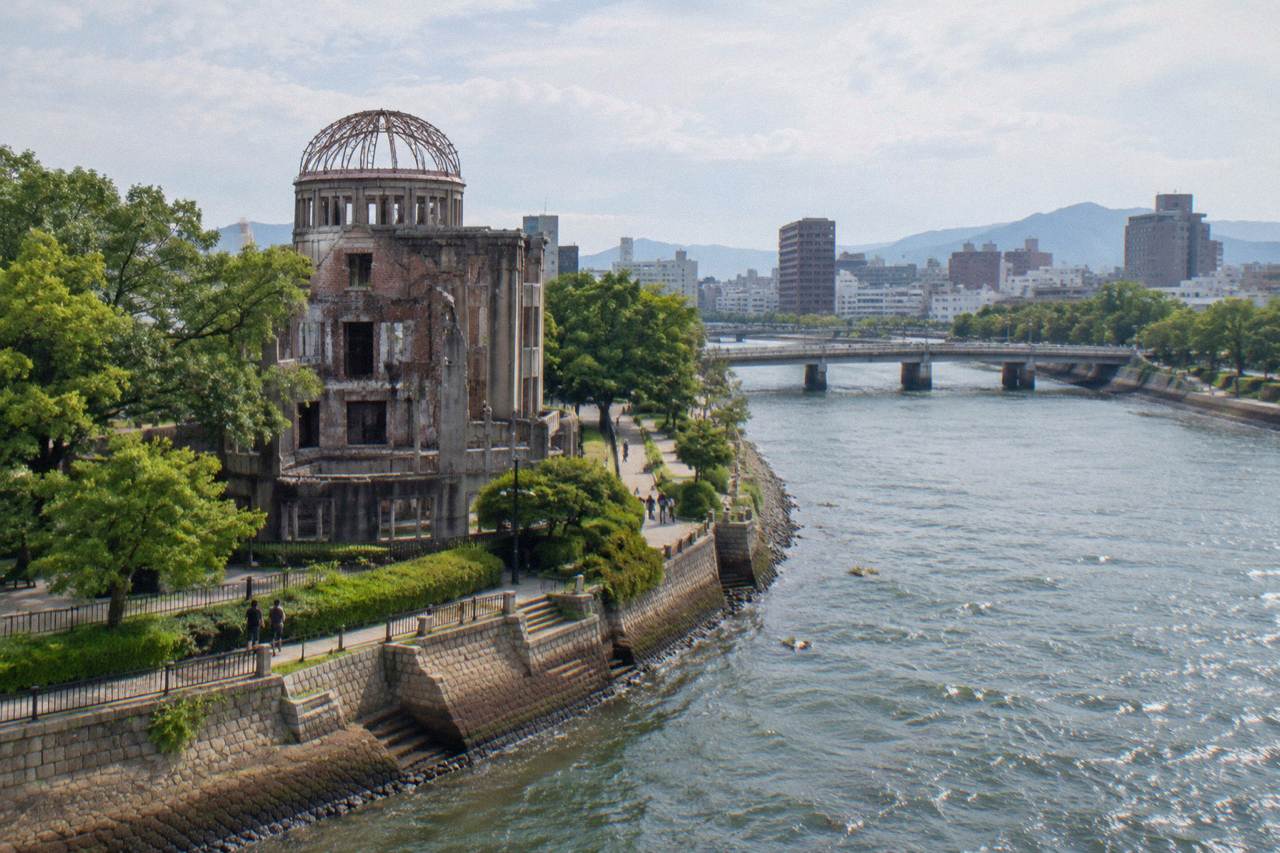
What can still be seen in Hiroshima is the documented landscape of survival: 86 bombed buildings remain within 5 km of the hypocenter as of 1 April 2025, and 159 bombed trees remain within approximately 2 km, both counts reported by the city of Hiroshima, alongside the A-Bomb Dome, viewable from outside its fence with no fee.
These counts reshape what "still seeing" means at street level. The buildings are not exhibits behind glass; they are standing structures the city has surveyed and listed, scattered across the districts within 5 km of the hypocenter, and the trees are living hibaku trees the city tracks within roughly 2 km.
| What remains | Count or access | Source basis |
|---|---|---|
| Bombed buildings within 5 km of the hypocenter | 86 as of 1 April 2025 | Reported by the city of Hiroshima |
| Bombed trees within approximately 2 km | 159 as of 1 April 2025 | Reported by the city of Hiroshima |
| A-Bomb Dome | Viewable from outside the fence, no fee | Reported by the city of Hiroshima |
| Exhibit Facility for Atomic-Bombed Remnants | Free admission, in Peace Memorial Park | City of Hiroshima page |
| Hiroshima Peace Memorial Museum | 200 yen adult admission | Museum's own page |
How Do You Visit The Hiroshima Peace Memorial Museum?
The Hiroshima Peace Memorial Museum is open 7:30 a.m. to 7:00 p.m. from March to July and September to November, 7:30 a.m. to 8:00 p.m. in August, and 7:30 a.m. to 6:00 p.m. from December to February, closing 30 and 31 December and in mid-February for exhibit change, with adult admission of 200 yen as stated on the museum's own page.
The hours reward planning. August runs the latest, to 8:00 p.m., and on 5 and 6 August the museum stays open until 9:00 p.m., hours the museum publishes alongside the summer schedule. Extended morning and evening slots, 7:30 to 8:30 and the late entries, require an online reservation, again per the museum's information page. The fee structure is 200 yen for adults, college age and up, 100 yen for high school students, free for junior high school students and younger, and 100 yen for visitors 65 and over with a passport. Nothing in the published material suggests a different current adult price, and 200 yen is the figure this site prints.
| Period | Museum hours | Notes |
|---|---|---|
| March to July | 7:30 a.m. to 7:00 p.m. | Extended slots need online reservation |
| August | 7:30 a.m. to 8:00 p.m. | Until 9:00 p.m. on 5 and 6 August |
| September to November | 7:30 a.m. to 7:00 p.m. | Extended slots need online reservation |
| December to February | 7:30 a.m. to 6:00 p.m. | Closed 30 and 31 December and mid-February |
Why Do The Shadows Matter Beyond The Objects Themselves?
The shadows matter because they are the physical registration of individual presence at 8:15 a.m. on 6 August 1945, the moment the city of Hiroshima fixes in its published record, a moment the museum reports drew 2,580,926 visitors in fiscal 2025, the third consecutive record year, with 945,618 of those visitors from outside Japan.
That visitor number, reported from the museum's own tally, says something about how the story is carried forward. The city also maintains the register of the dead: as of 6 August 2026 the cenotaph's register listed 353,639 names across 132 volumes, a count the city updates annually. The city likewise tracks the living carriers of the story, with 265 commissioned atomic bomb experience inheritors and 50 family inheritors as of 1 July 2026, roles through which accounts are passed on in the survivors' place. A visitor who asks about the shadows is really asking whether the evidence survived, and the answer is that a shadow survives and can be seen indoors at the museum, since the stone steps of the former Sumitomo Bank Hiroshima branch carrying the Human Shadow Etched in Stone were moved to the Peace Memorial Museum in 1971 and are on display inside it, and the documentation, the buildings, the trees, the museum collections and the inherited testimony all survived as well. Whether that makes Hiroshima a place worth the journey is taken up at Is Hiroshima Worth Visiting?.
Common Questions About The Hiroshima Shadows
Can You Still See The Hiroshima Shadows?
Yes, indoors. The stone steps of the former Sumitomo Bank Hiroshima branch that carry a human shadow, the Human Shadow Etched in Stone, were moved to the Hiroshima Peace Memorial Museum in 1971 and are on display inside it, so a shadow can still be seen there. No shadow remains on any outdoor surface, since the surfaces bearing them did not survive the destruction and rebuilding of the city. What else remains accessible is the free city-run Exhibit Facility for Atomic-Bombed Remnants in Peace Memorial Park and the counted surviving bombed buildings and trees.
What Caused The Hiroshima Shadows?
The city of Hiroshima states that surface temperatures near the hypocenter rose to 3,000 to 4,000°C after the bomb exploded approximately 600 meters above the city. Heat altered exposed stone and other hard surfaces while shielded surfaces kept their original state, leaving the outlines known as shadows.
Where In Hiroshima Is Bomb Material Preserved?
The Hiroshima Peace Memorial Museum in Peace Memorial Park, Nakajima-cho, Naka-ku, is the main collection, and the city's Exhibit Facility for Atomic-Bombed Remnants, also in the park, is free to enter. The A-Bomb Dome stands viewable from outside its fence with no fee.
How Much Does The Hiroshima Peace Memorial Museum Cost?
Admission is 200 yen for adults, 100 yen for high school students, free for junior high school students and younger, and 100 yen for visitors 65 and over with a passport, as listed on the museum's own information page.
How Many Bombed Buildings And Trees Still Stand In Hiroshima?
The city of Hiroshima is reported to count 86 bombed buildings within 5 km of the hypocenter and 159 bombed trees within approximately 2 km, both as of 1 April 2025.
Can You Photograph Inside The Hiroshima Peace Memorial Museum?
Yes, the museum's own page states that visitors may take photographs without flash for personal use.