Did America Ever Apologize For Hiroshima?
No sitting or former American president has issued a formal apology for the atomic bombing of Hiroshima. Here is what the documented record actually says, speech by speech.
On 6 August 1945, at approximately 8:15 a.m. locally, the B-29 bomber Enola Gay dropped the atomic bomb on the city, and by the end of that year about 140,000 lives had been lost, according to the Hiroshima Peace Culture Foundation. No American president, sitting or former, has issued a formal apology for the bombing. What the record contains instead is a sequence of documented statements, condolences and one landmark presidential visit, each of which stopped short of the word apology.
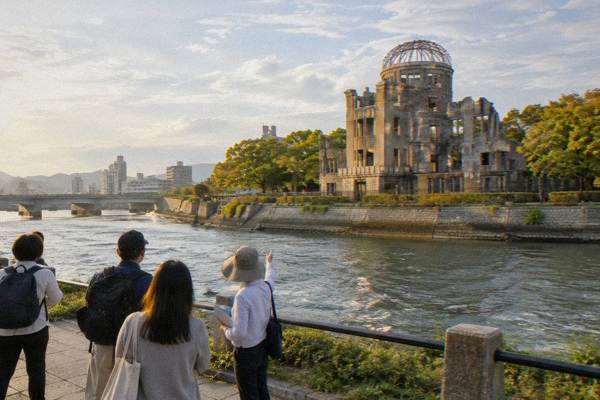
This page sets out that record as the primary sources state it: the bombing itself, what President Truman said at the time, what President Obama said and pointedly did not say in Hiroshima in 2016, and how the city and the museum frame the history today. Nothing here is opinion, and nothing is a comparison the sources do not make. The history is presented neutrally and factually, the way the city's own institutions present it, and visitors who want to see the place where it all stands can start with the Hiroshima Peace Memorial Museum and the Peace Memorial Park.
No, the United States has never issued a formal apology for the atomic bombing of Hiroshima. The closest documented moment came on 27 May 2016, when President Barack Obama became the first sitting American president to visit Hiroshima Peace Memorial, laid a wreath at the Cenotaph, and mourned the dead without using the word apology at any point in his speech.
The National Archives exhibit on the atomic bombings of Hiroshima and Nagasaki records the basic sequence: the Enola Gay dropped the bomb at approximately 8:15 a.m. local time on 6 August 1945, and as many as 70,000 people were killed instantly. President Harry Truman informed the American people the same day, and his statement threatened future bombings if Japan did not surrender unconditionally. It contained the words "a rain of ruin from the air, the like of which has never been seen on this earth." Nothing in that statement, or in any presidential statement since, apologises for the decision.
The 2016 visit is the moment most people mean when they ask this question. The White House record of the remarks, preserved in the Obama presidential archives, shows what was said and what was not. President Obama stated: "We come to mourn the dead, including over 100,000 Japanese men, women and children; thousands of Koreans; a dozen Americans held prisoner." He referenced the hibakusha, the surviving victims of the bombing, and called for "a moral revolution" to accompany scientific progress. The word apology does not appear in the speech, and no apology was issued.
That is the documented answer, and it is worth holding its two halves together: an unprecedented gesture of mourning by a sitting president, and the deliberate absence of an apology in the same speech. Both facts come from the same primary document.
What Did Truman Say When The Bomb Was Dropped On Hiroshima?
President Truman's 6 August 1945 statement announced the bombing, described the weapon and threatened continued attacks unless Japan surrendered unconditionally; it contained no apology and was framed as a military act following the Pacific war. The White House press release that day announced that sixteen hours earlier an American airplane had dropped one bomb on Hiroshima.
Truman's handwritten response on a 30 July 1945 memorandum from Secretary of War Henry Stimson granted permission for the press release on the atomic bomb but specified that release no sooner than 2 August. The release went out on 6 August, and Japan's representatives signed the Instrument of Surrender aboard the USS Missouri on 2 September 1945, approved by President Truman, ending the Second World War.
For the scale of what happened in Hiroshima, the city's own figures are the reference. The Hiroshima Peace Culture Foundation records that the bomb contained around 50 kg of enriched uranium, that only about 1 kg underwent fission in one millionth of a second, releasing 16 kT of destructive power, and that the surface temperature of the ground at the hypocenter rose up to 4,000 degrees Celsius. The City of Hiroshima estimates approximately 140,000 people had died by the end of December 1945, out of roughly 350,000 people who were in the city at the time of the bombing, including residents, military personnel and mobilized workers.
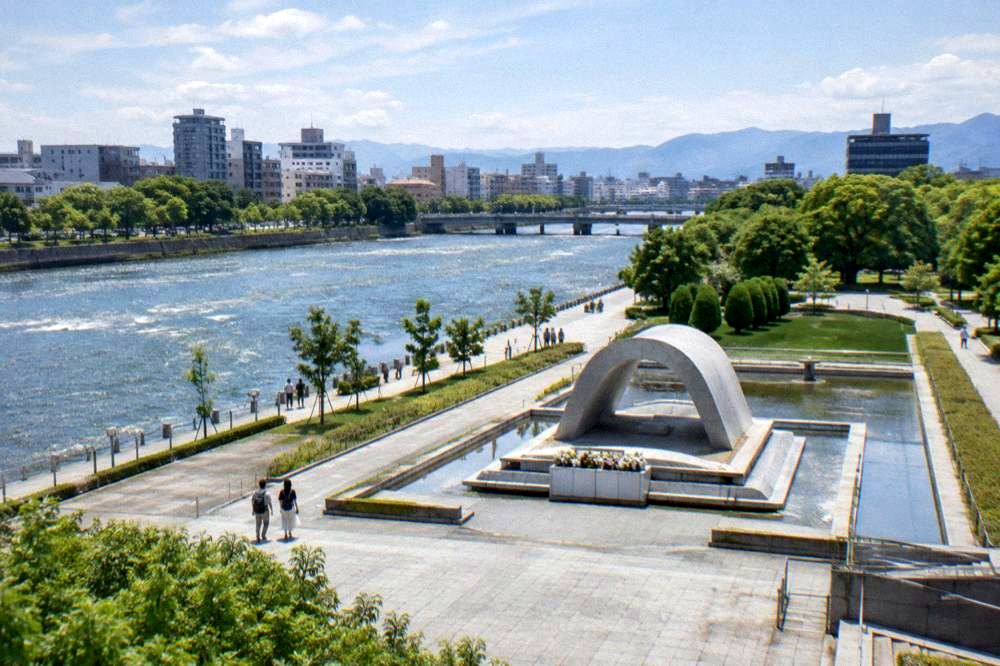
A visitor standing at the Cenotaph for the A-Bomb Victims today is standing at the same point where, each 6 August, the city holds the Peace Memorial Ceremony from 8:00 to 8:50 in the morning. The question of apology is a political one, but the ceremony itself is a civic act of remembrance, and the two should not be conflated.
What Exactly Did President Obama Say In Hiroshima In 2016?
President Obama's 27 May 2016 remarks at Hiroshima Peace Memorial, delivered at 5:45 p.m. JST, mourned the dead, honoured the hibakusha and called for a future without nuclear weapons, while never using the word apology or apologising for the 1945 decision. It was the first visit to the site by a sitting American president.
The full text sits in the Obama White House archives. Beyond the mourning of the dead quoted above, the speech referenced the hibakusha directly and argued that scientific progress must be matched by a moral revolution. Prime Minister Shinzo Abe spoke at the same event. His remarks, preserved in the same record, stated that he and President Obama offered their deepest condolences for all those who lost their lives during the war and by the atomic bombings, described the Japan-U.S. alliance as one of hope, and expressed determination toward a world free of nuclear weapons. He did not call for, or reference, an American apology.
Condolences are not an apology, and the two governments appear to have treated that distinction as deliberate. The 2016 event was jointly staged, jointly spoken at, and jointly framed around reconciliation and nuclear disarmament rather than around blame.
For readers tracing the longer relationship, the companion page did Japan forgive America? carries the same sourcing standard, including Abe's own words at Hiroshima that enemies who fought fiercely had become friends and allies bound in trust and friendship.
What Do The City And The Museum Say About The Bombing?
The City of Hiroshima and the Hiroshima Peace Memorial Museum present the bombing as a documented historical fact with named figures and dates, and they direct their message toward the abolition of nuclear weapons rather than toward demands for apology. The museum's own history and its visitor numbers show how the institution functions today.
The museum opened in 1955. It received a record 2.26 million visitors in fiscal 2024, including about 720,000 from abroad, and reported a further record of 2,580,926 visitors in fiscal 2025, the third straight record year, of whom 945,618 were foreign visitors, as reported by Nippon.com.
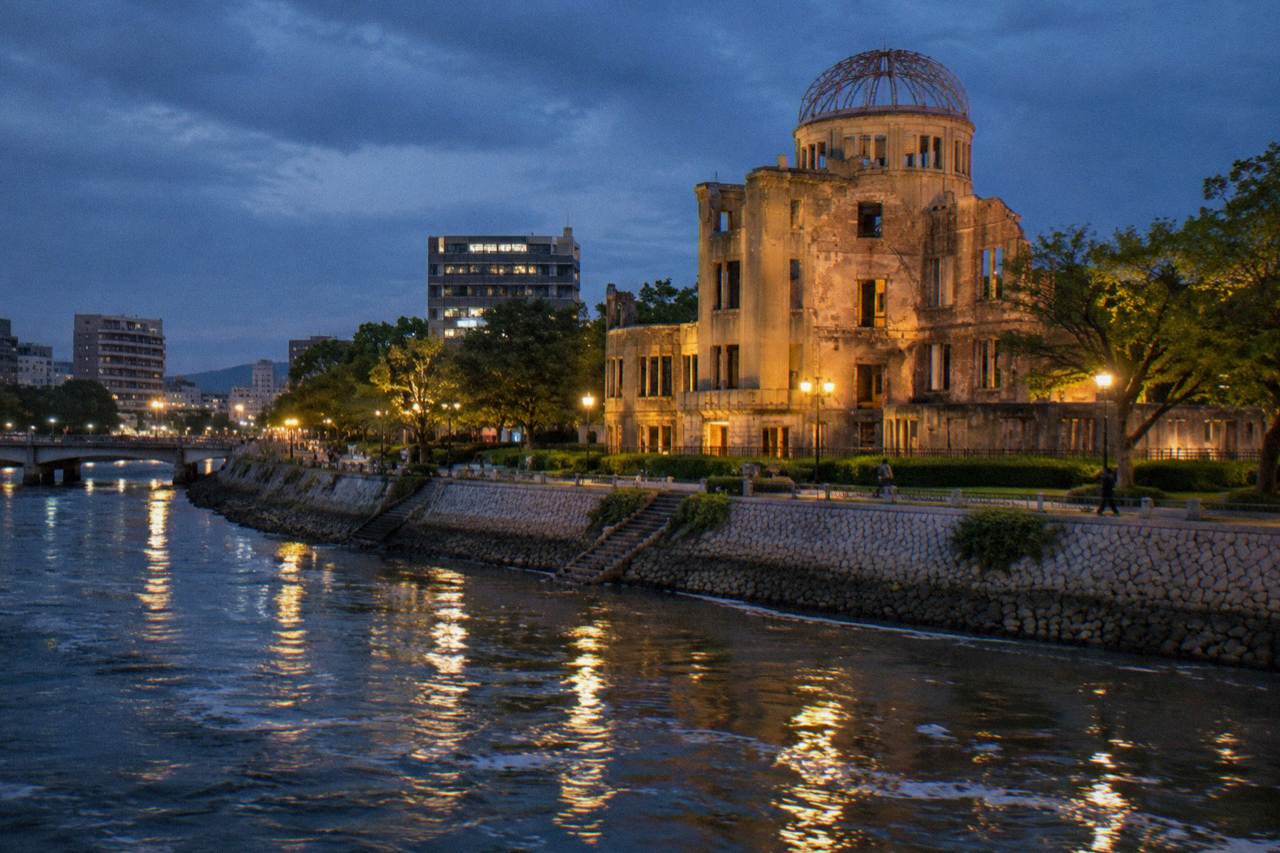
The Hiroshima Peace Culture Foundation's chairperson wrote in 2014 that the Atomic Bomb Dome tells the story of the bombing "without uttering a word," and that the hibakusha have continued to appeal for a peaceful world without nuclear weapons. That is the framing the city's institutions use: remembrance, documentation and disarmament. The Peace Memorial Park, reported to cover 122,100 square meters, was completed around August 1955 and has been open to the public since 1 April 1956.
The practical visitor facts are equally concrete. Museum admission is 200 yen for adults, 100 yen for high school students, free for junior high and younger. The museum is open from 7:30 to 19:00 from March to July and from September to November, from 7:30 to 20:00 in August, until 21:00 on 5 and 6 August, and from 7:30 to 18:00 from December to February, with last entry 30 minutes before closing, though it is closed 30 and 31 December and for several days in mid-February, and online reservation is required for the 7:30 to 8:30 a.m. and 5:30 to 6:30 p.m. slots.
| Documented Moment | Date | What The Source Says |
|---|---|---|
| The bombing of Hiroshima | 6 August 1945, approx. 8:15 a.m. | Enola Gay dropped the bomb; as many as 70,000 killed instantly (National Archives) |
| Truman's statement | 6 August 1945 | Announced the bombing and threatened continued attacks absent unconditional surrender |
| Japanese surrender | 2 September 1945 | Instrument of Surrender signed aboard the USS Missouri |
| First sitting presidential visit | 27 May 2016 | President Obama laid a wreath and mourned the dead; no apology given |
| Joint remarks by Abe | 27 May 2016 | Deepest condolences offered; alliance described as one of hope |
Is An Apology The Same As A Visit Or A Wreath?
No, in diplomatic terms they are different acts, and the Hiroshima record is explicit about the difference: a visit and a wreath express condolence, while an apology would accept and express regret for the act itself, and no American president has done the latter in an official capacity at Hiroshima. The 2016 speech is the clearest illustration, mourning the victims while leaving the 1945 decision unaddressed.
This distinction matters for understanding headlines. When a president visits, mourns and calls for disarmament, that is a documented gesture. When a statement accepts responsibility in the name of the state, that would be an apology. The primary texts of 1945 and 2016 contain the first kind of language and not the second, and both texts are public and quotable, which is why the question has a clean factual answer rather than a disputed one.
The Peace Memorial Park keeps the focus on the victims and the future. The annual ceremony on 6 August, held from 8:00 to 8:50 at the Cenotaph, is organised by the city with about 7,000 seats plus about 2,200 indoor seats at the nearby International Conference Center.
For a workable structure, Hiroshima and Miyajima in one day explains how the museum, the park, the A-Bomb Dome and the ferry to Miyajima fit into a single day with care.
How Should A Visitor Relate To This History Today?
Visitors engage with the bombing history through the museum, the park and the documented record rather than through any live diplomatic dispute, and the institutions themselves model that approach: state the facts, name the dates, mourn the dead and read the primary texts. An American visitor in particular has no obstacle to visiting, a point the city's own welcome makes plain through its English-language materials.
The museum is the anchor. The is it okay for Americans to visit Hiroshima? page takes that question directly, and the answer documented there is yes.
Beyond the museum, the city's story includes its reconstruction, and its food is part of that: okonomiyaki, described by the Ministry of Agriculture, Forestry and Fisheries as the soul food of Hiroshima, was cooked again on iron plates from the burnt ruins using US flour aid in August 1945, as the where did okonomiyaki originate? page records. The rebuilding of the city and the rebuilding of its everyday life are the same history.
| Source | What It Holds | Relevance To The Apology Question |
|---|---|---|
| National Archives exhibit | The bombing timeline and Truman's 6 August 1945 statement | Shows the announcement contained no apology |
| Obama White House archives | Full text of the 27 May 2016 remarks | Shows mourning without the word apology |
| Hiroshima Peace Culture Foundation | The city's casualty figures and the Dome's history | The reference account of what happened |
| City of Hiroshima English pages | The 140,000 estimate and the August 6 ceremony details | The civic frame of remembrance |
For a guided grounding in this history, a private option such as the Hiroshima & Miyajima Private Custom Tour with Local Guide pairs the Peace Memorial Park with Miyajima on one schedule, and Check availability on the operator's live listing before locking a date.
Common Questions About The Hiroshima Apology Question
Did America Ever Apologize For Hiroshima?
No. No American president has issued a formal apology for the atomic bombing of Hiroshima. President Obama's 27 May 2016 visit, the first by a sitting president, mourned the dead but did not use the word apology or apologise for the 1945 decision.
Did President Obama Apologize In Hiroshima?
No. His 27 May 2016 remarks at Hiroshima Peace Memorial mourned the dead, referenced the hibakusha and called for a moral revolution alongside scientific progress, but the speech contained no apology for the bombing.
What Did Prime Minister Abe Say At Hiroshima In 2016?
He stated that he and President Obama offered their deepest condolences for all those who lost their lives during the war and by the atomic bombings, described the Japan-U.S. alliance as one of hope, and expressed determination toward a world free of nuclear weapons.
How Many People Died In Hiroshima?
The National Archives record states that as many as 70,000 people were killed instantly on 6 August 1945, and the City of Hiroshima estimates approximately 140,000 people had died by the end of December 1945.
Was The 2016 Visit The First By A Sitting US President?
Yes. President Obama's visit to Hiroshima Peace Memorial on 27 May 2016 was the first by a sitting American president, according to the White House record of the remarks.
Can Americans Visit The Hiroshima Peace Memorial Museum?
Yes. The museum received 945,618 foreign visitors in fiscal 2025 as reported, and admission is 200 yen for adults, 100 yen for high school students, and free for junior high school students and younger.
The documented record, from Truman's 1945 statement to the 2016 joint remarks, is public, quotable and stable, and Hiroshima Travel Guide keeps the visiting practicalities alongside it.