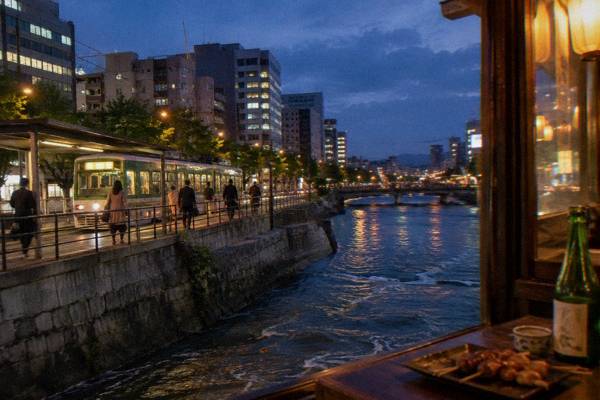
What Are The Etiquette Rules For Eating Okonomiyaki At A Restaurant?
The etiquette rules for eating okonomiyaki at a restaurant in Hiroshima, from the metal spatula and counter seats to the one-per-person rule at small stalls and how to order at Okonomimura.
Hiroshima okonomiyaki comes with its own set of table manners, and they are different from what a first-time visitor to Japan might expect. The city on the Seto Inland Sea layers a thin batter base with cabbage, pork, noodles and a fried egg, and the way it is served shapes the way it is eaten: straight off the hot teppan griddle, with a small metal spatula, at a counter rather than a table.
How Do You Eat Okonomiyaki Properly In Hiroshima?
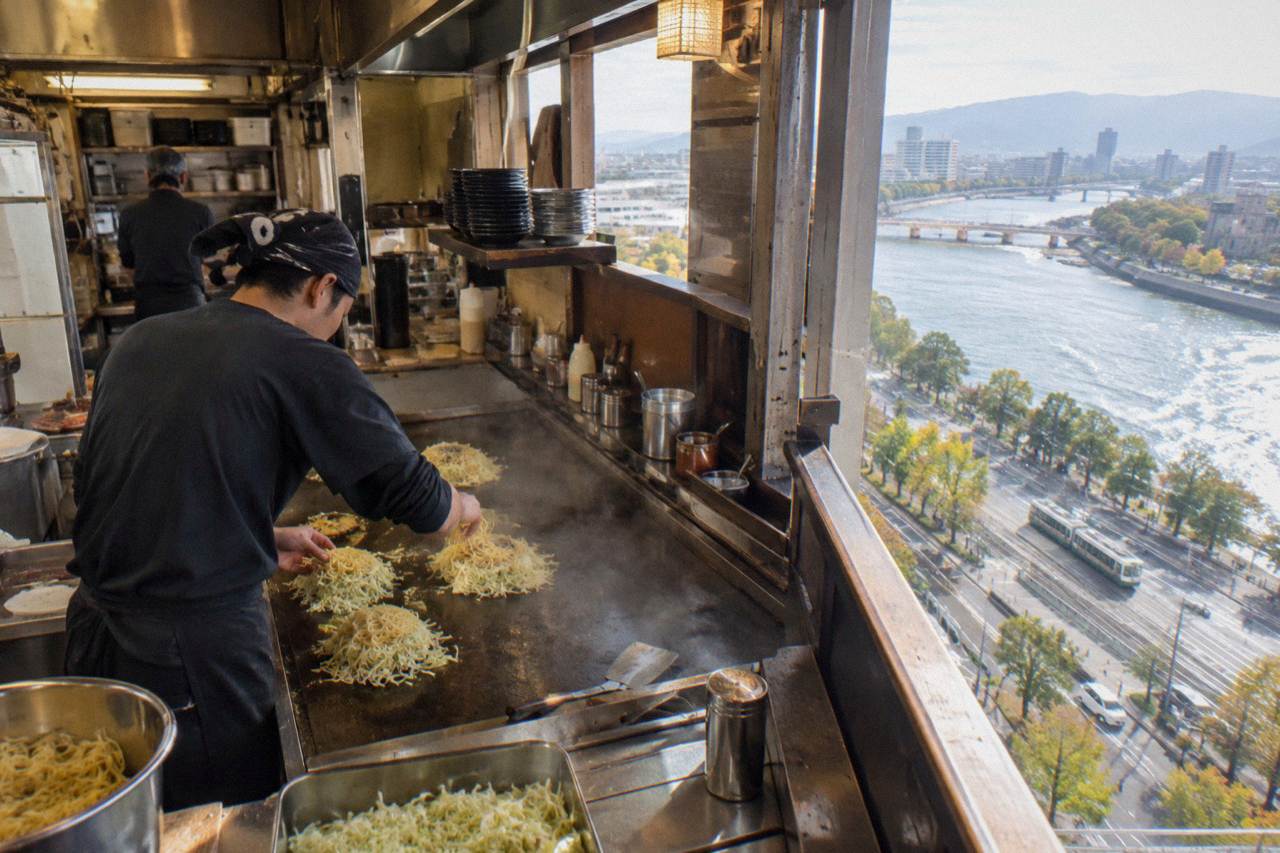
Hiroshima-style okonomiyaki is eaten directly from the hot teppan griddle with a small metal spatula called a hera or kote, without moving it onto a plate first. Counter seats at the griddle are the standard place to eat it, and sauce and mayonnaise are self-serve on the table.
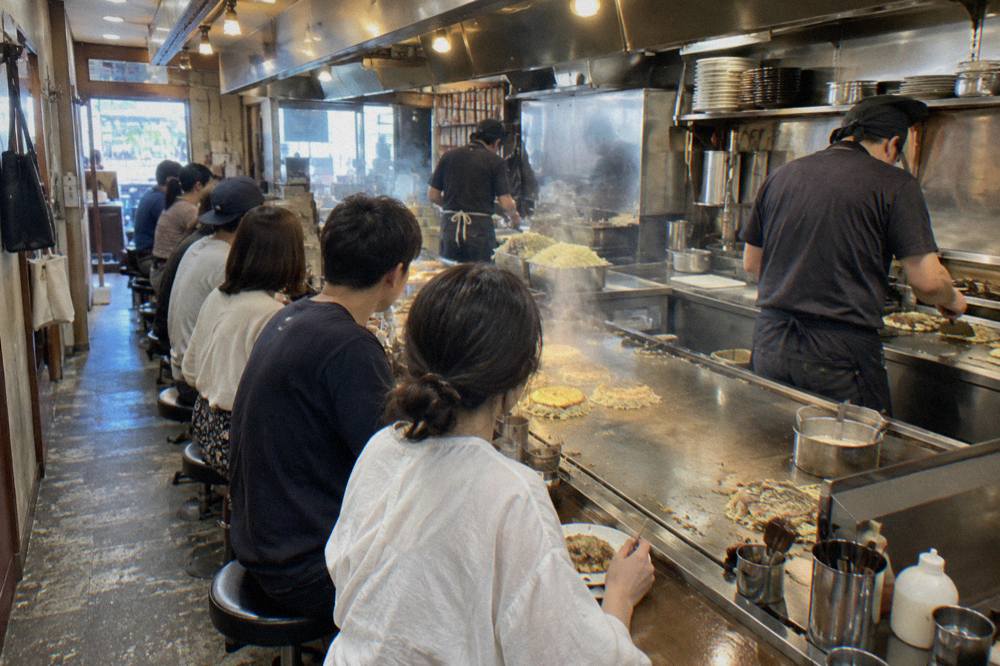
That single sentence covers the three habits that matter most. The spatula is used to cut and lift pieces straight from the iron plate, which keeps the layers intact and the underside crisp. Sitting at the teppan counter rather than a table seat is the way locals eat it, and it also puts you where the cooking happens, since a proper Hiroshima okonomiyaki is built layer by layer in front of you. Sauce and mayonnaise sit in bottles on the counter for you to add yourself.
The basic order at many Hiroshima shops is niku-tama-soba: pork, egg and soba noodles. Hiroshima-style okonomiyaki contains around 150 g of shredded cabbage per serving, and it is the cabbage and noodle layers that distinguish it from the Osaka style, which mixes everything into one batter. The full background on how the two styles diverged, and how the dish grew out of a pre-war snack called issen yoshoku, is on the Where Did Okonomiyaki Originate? page.
One naming point that sits firmly in the etiquette column: call the dish okonomiyaki, not Hiroshimayaki. In Hiroshima the layered version is considered the standard, and the dining guides report that using the invented compound name can annoy chefs. Order by the topping combinations on the menu and let the cook handle the naming.
What Are The Etiquette Rules For Eating Okonomiyaki At A Restaurant?
The main etiquette rules are: take a teppan counter seat, order one okonomiyaki per person at small stalls, eat from the griddle with the hera spatula rather than moving the food to a plate, add sauce and mayonnaise yourself, and call the dish okonomiyaki rather than Hiroshimayaki out of respect for the cooks who consider the layered version the standard.
The one-per-person rule deserves its own explanation. Many small okonomiyaki stalls in Hiroshima enforce it because seating is limited: each griddle-side seat is expected to be matched by an order. At a busy counter this is a practical arrangement, not an upsell. Larger restaurants and the multi-stall floors of Okonomimura have more room, but ordering one each is still the norm, and it is the safest default wherever you sit.
Payment habits are the other practical rule. Some restaurants in Hiroshima city accept IC cards such as Suica or the PayPay app, but many tiny stalls require cash, so carry notes for the smallest counters. Public trash cans are scarce in Hiroshima, so if you buy okonomiyaki to go, be prepared to carry wrappers with you until you find one. These small habits, more than any formal code, are what the city's dining etiquette guides actually ask of visitors.
For a sense of how the dish fits a full day in the city, the Hiroshima In One Day itinerary places an okonomiyaki stop alongside the Peace Memorial Park and Miyajima.
What Should You Not Do At An Okonomiyaki Stall In Hiroshima?
Do not split one okonomiyaki between two people at a small stall, do not ask for it to be called Hiroshimayaki, do not expect to pay by card at the tiniest counters, and do not move the food off the griddle onto a plate before eating it. None of these are formal rules, but all four are habits that the stalls themselves either enforce or quietly expect.
The table below summarises the rules and the reason each one exists, drawn from what the Hiroshima dining and etiquette guides state.
| Rule | Reason | Where It Applies |
|---|---|---|
| Order one okonomiyaki per person | Limited griddle-side seating at small stalls | Small stalls in particular |
| Eat with the hera or kote, off the griddle | Keeps the layers intact, standard local method | Counter seats at any shop |
| Say okonomiyaki, not Hiroshimayaki | The layered version is the local standard and chefs take the name seriously | Everywhere in Hiroshima |
| Carry cash | Many tiny stalls do not take IC cards, though about 70 percent of city restaurants do | Smallest counters |
| Add sauce and mayonnaise yourself | Bottles are self-serve on the table | Table and counter seats |
| Keep your wrappers | Public trash cans are scarce in Hiroshima | Street and takeaway eating |
Timing is the quiet half of stall etiquette. Peak dinner hours for okonomiyaki in Hiroshima run 18:00 to 20:00, and the guides suggest arriving around 17:00 or after 21:00 to avoid lines. Waiting for a counter seat is normal and accepted; what the stalls ask is that each waiting party intends to order properly once seated. The wider etiquette picture for the city, including behaviour at the Peace Memorial Park, is covered in the Peace Park Etiquette Guide.
How Much Does Okonomiyaki Cost At Okonomimura In Hiroshima?
Standard okonomiyaki at the Okonomimura stalls in Shintenchi costs 800 to 1,500 yen, with toppings pushing plates to 1,500 to 2,200 yen, and a full evening including drinks usually lands at 1,500 to 2,500 yen per person. Okonomimura houses 24 stalls across 4 floors, opening 11:00 to 22:00 daily with last orders around 21:30.
Okonomimura is the concentrated version of the city's okonomiyaki culture. Many stalls provide English menus, and the dining guides note Nagata-ya near Peace Park as a tourist-friendly alternative with possible English support, and Hassho in Yagenbori as a purist favourite for a crisp finished plate. Reichan at Hiroshima Station ekie, open 11:00 to 21:30, is the quick station option, while Denko Sekka in the same building runs to 23:00. The rest of the planning pages sit on Hiroshima Travel Guide.
| Place | Style | Listed Hours |
|---|---|---|
| Okonomimura, Shintenchi | 24 stalls, 4 floors, layered Hiroshima style | 11:00 to 22:00, last orders around 21:30 |
| Reichan, ekie 1F Hiroshima Station | Soba-based okonomiyaki | 11:00 to 21:30 |
| Denko Sekka, ekie Hiroshima Station | 3D okonomiyaki | 11:00 to 23:00 |
| Mitchan Sohonten, ekie Hiroshima Station | Hiroshima-style, classic layers | 11:00 to 22:00 |
| Ekimae Hiroba, Full Focus Building 6F | Okonomiyaki theme park | 10:00 to 23:00 |
The building-by-building picture lives on the Okonomimura page, and the full comparison of the Hiroshima and Osaka styles, plus more places to eat, is in the Hiroshima Okonomiyaki Guide.
Is Okonomiyaki In Hiroshima An Everyday Meal Or A Special Occasion?
Okonomiyaki in Hiroshima is an everyday meal and a late-night one, eaten year-round and described by the Ministry of Agriculture's own regional food listing as the soul food of Hiroshima, including as a last meal after drinking parties. Hiroshima Prefecture ranked first in Japan for okonomiyaki shops per 100,000 people in the 2014 Economic Census, and the city has more than 2,000 okonomiyaki restaurants, more than Osaka.
That density explains the etiquette. When a dish is this ordinary, the manners around it are ordinary too: order, eat from the griddle, pay, leave. There is no ceremony and no dress code, and the counter format means conversation with the cook is part of the setup. Hiroshima oysters, a common topping, are in season from October to March, and the guides treat seasonal toppings as a normal reason to return rather than a special occasion.
For visitors who want the calories before committing, the nutrition breakdowns, which put a restaurant portion at roughly 700 to 920 kcal depending on toppings and size, are on the Is Okonomiyaki Healthy? page.
Where Can You Learn To Make Okonomiyaki In Hiroshima?
OKOSTA, the okonomiyaki-making studio run by Otafuku Sauces about two minutes from Hiroshima Station, offers a 1.5-hour okonomiyaki making experience for 2,500 yen, running 10:00 to 18:00, which teaches the layering technique the counter cooks use. A cooking class with a local instructor is the other option and covers the same layered method in a home-style setting.
Learning the build order, batter first, then cabbage, then pork, then noodles, then egg, is the fastest way to understand why the eating etiquette exists: the layers only hold together if they are cut and lifted from the griddle rather than transferred. The details for the Otafuku studio visit are on the OKOSTA Okonomiyaki Museum page, and a guided class option is described on the Okonomiyaki Cooking Class page. For evening plans after the meal, the Hiroshima At Night itinerary covers the Nagarekawa and Yagenbori districts.
If the okonomiyaki stop is one stop on a longer route around the region, the Kansai Hiroshima Area Pass covers five days of regional trains plus the JR ferry to Miyajima, and the pass page explains exactly what it includes: Check availability.
Do You Need A Reservation For Okonomiyaki In Hiroshima?
Seating at okonomiyaki counters in Hiroshima is first come first served at the griddle, and the practical plan is simply to arrive outside the 18:00 to 20:00 peak or after 21:00. The wait itself follows the etiquette of the format. Because each plate is cooked individually on the griddle in front of you, the counter turns over steadily rather than in table-length sittings.
Anyone unsure how to fold an okonomiyaki evening into a first visit can start from the What Is Hiroshima Famous For? overview and the Is Hiroshima Worth Visiting? page.
Common Questions About Okonomiyaki Etiquette In Hiroshima
What Are The Etiquette Rules For Eating Okonomiyaki At A Restaurant?
Take a teppan counter seat, order one okonomiyaki per person at small stalls, eat straight from the griddle with the hera or kote spatula, add sauce and mayonnaise yourself from the table bottles, and call the dish okonomiyaki rather than Hiroshimayaki.
Do I Have To Order One Okonomiyaki Per Person?
At many small stalls, yes, because griddle-side seating is limited and each seat is expected to be matched by an order. Larger restaurants and the Okonomimura stalls have more room, but one per person remains the norm.
Can I Pay By Card At Okonomiyaki Stalls?
Some Hiroshima city restaurants accept IC cards such as Suica or the PayPay app, but many tiny stalls require cash, so carry notes for the smallest counters.
Is It Rude To Call It Hiroshimayaki?
In Hiroshima the layered version is considered the standard okonomiyaki, and the dining guides report that the compound name can annoy chefs. Order by the toppings and the kitchen will know what you mean.
When Is The Best Time To Avoid Lines?
Peak dinner hours run 18:00 to 20:00, so the guides suggest arriving around 17:00 or after 21:00 for a shorter wait at the counter.
Can I Learn To Make It Myself?
Yes. OKOSTA, run by Otafuku Sauces near Hiroshima Station, offers a 1.5-hour making experience for 2,500 yen, and cooking classes with local instructors cover the same layered method.
Eating okonomiyaki in Hiroshima comes down to a handful of habits: sit at the griddle, order one each, use the spatula, season it yourself, and give the dish its proper name. Follow those and the counter format does the rest.