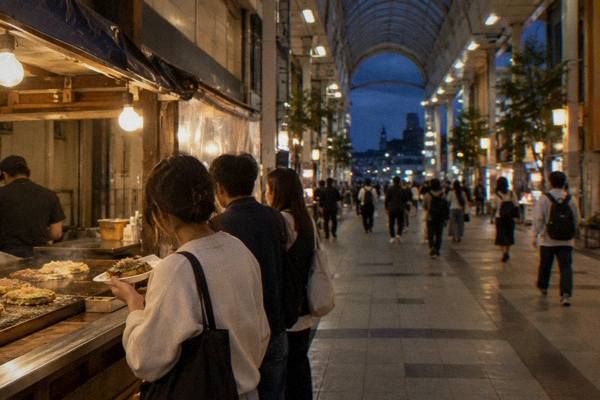
Is Okonomiyaki Healthy?
How healthy is Hiroshima okonomiyaki? Calorie counts, nutrition breakdowns from published analyses, and how the Hiroshima style compares with convenience store versions.
Okonomiyaki is the dish Hiroshima is most known for eating, a layered cabbage, noodle and egg creation cooked on an iron griddle, and the honest answer about its healthiness depends almost entirely on which serving you measure. Published nutrition analyses of Hiroshima style servings range from about 406 kcal to about 919 kcal, a spread wide enough that one okonomiyaki can be a moderate lunch and another can be the largest meal of the day. The figures below come from recipe analyses, shop nutrition pages and convenience store product labels, and they give a fair picture of what actually lands on the griddle in this city. This page gathers them for the Hiroshima Travel Guide food section.
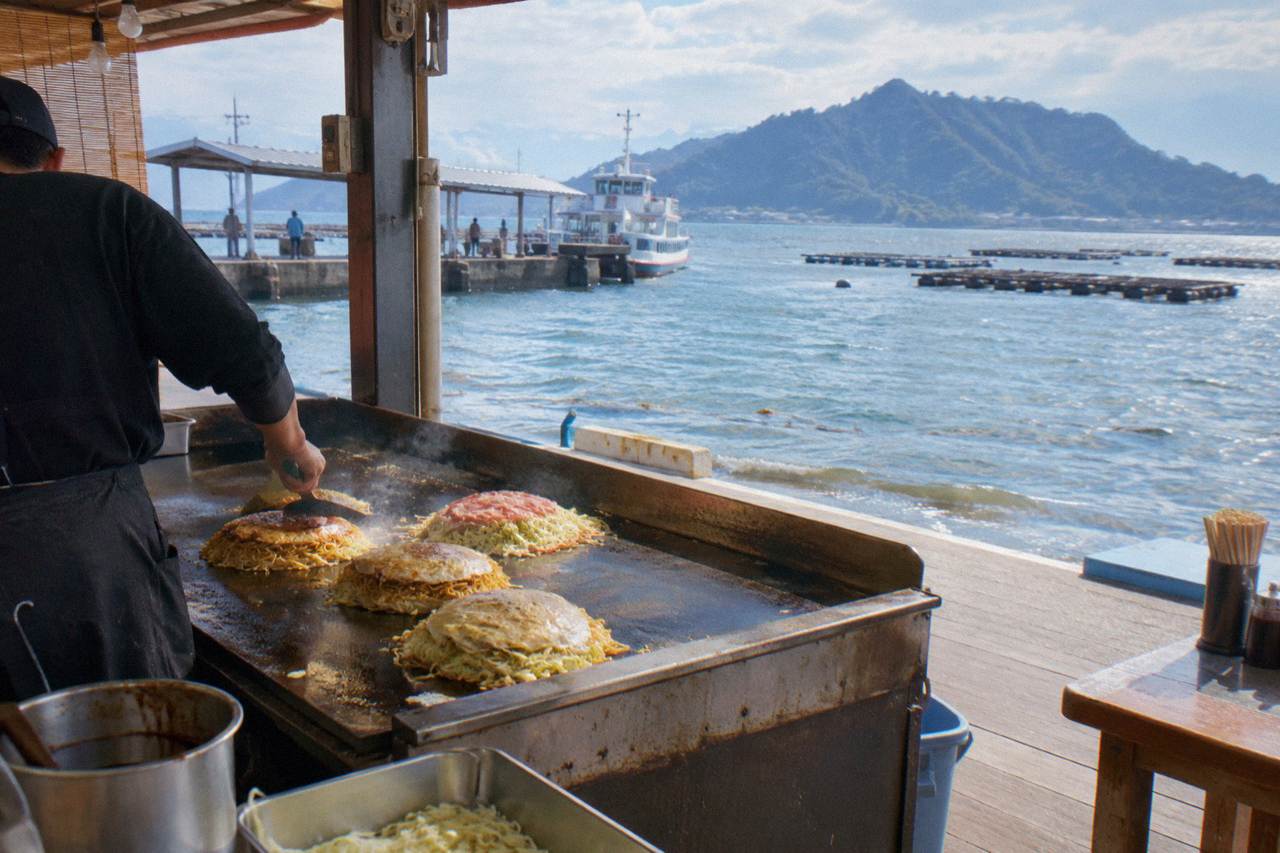
Okonomiyaki is not junk food, but a full Hiroshima style serving is a heavy plate: published analyses put it between roughly 406 and 919 kcal, with 10 to 34 g of protein and fat ranging from 11 g to 48 g per serving, and salt levels that can reach 4.5 g. On the positive side the same servings carry a large amount of cabbage and bean sprouts, which brings fibre and vitamins that most street food lacks.
Whether that counts as healthy depends on what you compare it with and how the serving is built. A standard Hiroshima style okonomiyaki of 498.6 g contains 813 kcal, 26.68 g protein, 45.57 g fat and 80.37 g carbohydrates, according to one calorie database breakdown. That same calculation lists the ingredients as 55 g wheat flour, 75 g steamed Chinese noodles, 40 g pork, 95 g cabbage, 35 g bean sprouts and 15 g salad oil, which shows where the energy comes from: the noodles and oil, not the vegetables.
The vegetable content is the genuine nutritional argument in the dish's favour. One Hiroshima style recipe analysis notes that the dish provides carbohydrates from wheat flour, proteins from pork and oysters, and vitamins from cabbage, bean sprouts and green onions. The recipe analysis from RecipeTin Japan also describes the style as containing plenty of cabbage and bean sprouts but not a lot of meat. Foodinjapan notes that the whole Chinese noodles alone contribute 200 to 250 kcal, with total servings typically landing between 500 and 700 kcal.
For a fuller picture of how the dish is eaten at the counter, see the etiquette rules for eating okonomiyaki at a restaurant.
How Many Calories Are In A Hiroshima Okonomiyaki?
Calorie counts run from 406 kcal for a 255 g home style serving up to 919 kcal for large recipe servings, with a standard 498.6 g restaurant portion calculated at 813 kcal. A Dondontei shop serving is estimated at 840 kcal and an egg and cheese version at 920 kcal, so the realistic band for a full restaurant portion is roughly 700 to 920 kcal.
The table below gathers the published numbers side by side. Each row is a separate analysis or product label, and the differences reflect portion size and toppings more than disagreement between sources.
| Serving analysed | Kcal | Protein | Fat | Carbohydrates |
|---|---|---|---|---|
| RecipeTin Japan, 255 g home serving | 406 | 10 g | 23 g | 40 g |
| Recipe analysis, one serving | 573 | 15.49 g | 26.49 g | 70.27 g |
| Calorie database, 498.6 g standard portion | 813 | 26.68 g | 45.57 g | 80.37 g |
| Dondontei standard shop serving | 840 | 32.0 g | 31.0 g | 106 g |
| New York Times recipe, per serving | 727 | 27 g | 31 g | 85 g |
| Just One Cookbook recipe, per serving | 919 | 31 g | 48 g | 91 g |
| Dondontei egg and cheese version | 920 | 34.5 g | 45.0 g | 95.0 g |
Two patterns stand out. First, protein is consistently decent, between about 10 and 35 g per serving, because the pork, egg and batter all contribute. Second, fat is the most variable number, from 11 g in a small convenience store portion to 48 g in the largest recipe servings, and oil quantity on the griddle is the main reason. The same shop can produce a lighter or heavier plate depending on how much oil goes down before the noodles.
How Does A Restaurant Portion Compare With Convenience Store Okonomiyaki?
Convenience store versions are substantially lighter: a 7-Eleven Hiroshima okonomiyaki lists 694 to 745 kcal, while a Lawson version supervised by a famous local brand contains just 416 kcal, and a Ringer Hut udon plate sits at 766 kcal. The packaged portions are smaller, which is the main reason the numbers fall below the restaurant range of about 800 to 920 kcal.
The Lawson figure is the interesting one. At 416 kcal with 16.6 g protein and 11.0 g fat, it shows how much of a restaurant portion's energy comes from size and griddle oil rather than from the dish's basic construction. The 7-Eleven products, at 694 and 745 kcal with about 25 to 29 g protein each, land much closer to a restaurant serving, though the two labels differ slightly between product lines.
| Packaged product | Kcal | Protein | Fat | Carbohydrates |
|---|---|---|---|---|
| 7-Eleven Hiroshima okonomiyaki, meat, egg, noodles | 694 | 25.5 g | 27.4 g | 89.2 g |
| 7-Eleven Hiroshima okonomiyaki, pork, egg and noodles | 694 | 25.5 g | 27.4 g | 89.2 g |
| 7-Eleven version with yakisoba listing | 745 | 28.8 g | 25.2 g | 104.7 g |
| Lawson, supervised by Micchan, noodles, pork and egg | 416 | 16.6 g | 11.0 g | 66.2 g |
| Ringer Hut okonomiyaki plate with udon, less noodles | 766 | 18.7 g | 41.1 g | 88.2 g |
For a visitor deciding between a sit down portion and a packaged one, the practical difference is less about health and more about the experience. A proper Hiroshima okonomiyaki takes 15 to 20 minutes to prepare at the counter, and the fresh cabbage content, around 150 g of shredded cabbage per serving by one industry count, is part of what you are waiting for. The dish's history as the soul food of postwar Hiroshima, and where it fits in the city's food culture today, is covered in the guide to Hiroshima okonomiyaki.
Can Okonomiyaki Fit Into A Balanced Day Of Eating In Hiroshima?
Yes, if you treat one full okonomiyaki as a main meal rather than a snack: at roughly 700 to 920 kcal with 10 to 35 g of protein and a large vegetable component, a single serving can anchor a day sensibly, provided the salt, at up to 4.5 g per plate, is balanced with lighter meals either side. Sharing is the other lever, though some small stalls enforce a one okonomiyaki per person rule due to limited seating.
The one-per-person rule is worth knowing before you plan to split a plate four ways at a small counter. Ordering decisions aside, the cooking method itself is not the problem: an iron griddle needs oil, but the amount varies, and the layered Hiroshima build keeps the vegetables distinct rather than frying them into the batter.
There are also ways to eat the dish that change the numbers without changing the city. OKOSTA, the okonomiyaki making experience run by Otafuku Sauces a short walk from Hiroshima Station, lets you cook your own serving, which at least makes the oil and sauce quantities visible. The okonomiyaki cooking class in Hiroshima covers the same ground with more instruction.
For travellers fitting the meal into a wider day, the standard budget guidance for eating okonomiyaki in the city is about 1,500 to 2,500 yen per person including drinks, which frames it as a full dinner rather than a between meals bite.
Where Does The Dish Sit In Hiroshima's Food Culture?
Okonomiyaki is described by the Ministry of Agriculture's own food promotion material as the soul food of Hiroshima, eaten year round and historically as the closing meal after drinking parties, and Hiroshima Prefecture ranked first in Japan for okonomiyaki shops per 100,000 people in the 2014 Economic Census. The city is reported to hold over 2,000 okonomiyaki restaurants, more than Osaka.
That density matters for the health question in one quiet way: with that many griddles, portions and styles vary enormously, and the calorie spread in the figures above reflects real differences between shops, not measurement noise. Asking for less oil or skipping the mayonnaise is a normal request, not a strange one, and the sauce is self serve on the table at many shops, so the salt load is partly in the diner's own hands.
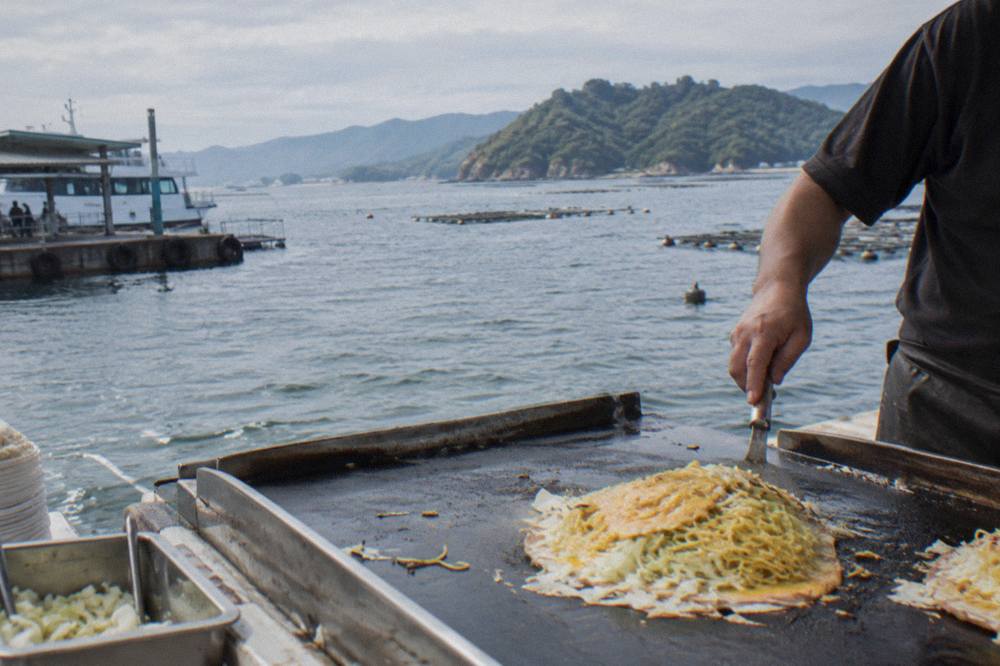
The layered construction is the Hiroshima signature. A thin crepe like batter base is cooked first, then a large amount of cabbage, pork, yakisoba or udon noodles, and often a fried egg goes on top, unlike the Osaka style that mixes everything into a thicker batter. The noodles as a standard layer are what push the calorie count up relative to the Kansai version, and they are also what makes the dish filling enough to be a complete meal on its own. Where the dish came from, including its prewar and postwar history in the city, is covered in the origin story of okonomiyaki.
What Should You Order To Keep The Meal Lighter?
Order the basic pork, egg and soba build, ask for less oil on the griddle, go light on the self serve sauce and skip the mayonnaise, and treat the serving as your main meal of the day: those choices can pull a plate from the top of the 700 to 920 kcal restaurant range toward the middle, without changing what the dish is. The basic menu item at many Hiroshima shops is exactly that: niku-tama-soba, pork, egg and soba.
Toppings are where the numbers climb. The plain Dondontei standard is estimated at 840 kcal, while the egg and cheese version reaches 920 kcal, so each added layer is measurable. Oysters are another classic local topping, adding protein rather than pure fat, and the vegetable base stays constant across versions because the cabbage is structural, not optional.
One more practical note for visitors watching their budget as well as their intake: peak dinner hours at okonomiyaki restaurants in the city run 18:00 to 20:00, and arriving at 17:00 or after 21:00 avoids the queue. With over 2,000 restaurants in the city and 24 stalls at Okonomimura alone, there is no need to wait in line for the first griddle you see, and the Okonomimura building and its stalls are described in detail on the attraction's own page. The experience of making your own plate at OKOSTA near Hiroshima Station is covered there too.
Common Questions About Okonomiyaki Health In Hiroshima
Is Okonomiyaki Healthy?
Partly. A full Hiroshima style serving carries 406 to 919 kcal depending on size and toppings, a solid 10 to 34 g of protein, and a large cabbage and bean sprout content that brings fibre and vitamins, but salt can reach 4.5 g per plate. As a main meal eaten once a day, it fits a normal diet.
How Many Calories Are In One Hiroshima Okonomiyaki?
Published figures range from 406 kcal for a 255 g home serving to 919 or 920 kcal for large recipe and shop servings. A standard 498.6 g portion is calculated at 813 kcal, and a typical Dondontei shop serving is estimated at 840 kcal.
Is Okonomiyaki High In Protein?
Moderately. A small home serving has 10 g, standard restaurant portions have 26 to 32 g, and an egg and cheese version has up to 34.5 g. The pork, egg and batter all contribute.
Why Is Hiroshima Okonomiyaki So Filling?
The noodles. Whole Chinese noodles contribute 200 to 250 kcal on their own, and they sit as a distinct layer in the Hiroshima build, which is why a single serving works as a complete meal.
Is Okonomiyaki Healthier Than Other Street Food?
On vegetables, yes: one serving carries around 150 g of shredded cabbage plus bean sprouts, which most street snacks cannot match. On salt and calories, it is comparable to any fried noodle dish, at up to 840 kcal and 4.5 g of salt per serving.
Can I Make Okonomiyaki Lighter?
Yes. Ask for less oil, use the self serve sauce sparingly, skip the mayonnaise, and order the basic pork, egg and soba build rather than stacked toppings. Cooking your own at OKOSTA near Hiroshima Station makes every quantity visible.
The short version for anyone planning meals in the city: one okonomiyaki is a meal, a well built one carries more vegetables than almost any comparable street food, and the salt is the number worth watching.