Who Was Sadako Sasaki?
Who was the Hiroshima girl behind the Children's Peace Monument and the paper cranes of Peace Memorial Park? Her story, told from what the city's own pages say.
The city of Hiroshima's own English pages carry her story, the National Park Service of the United States retells it, and the monument her classmates built for her still stands at the center of Peace Memorial Park. This page reports what those sources say, in order, without anything added.
Sadako Sasaki was a two-year-old living a little over one mile from the hypocenter when the atomic bomb was dropped on Hiroshima on 6 August 1945. She appeared uninjured and grew into a strong, healthy girl, known as a fast runner popular with her classmates. In February 1955 she was admitted to the Hiroshima Red Cross Hospital with leukemia, and she died on 25 October 1955 at the age of twelve.
That is the outline the primary sources agree on. The city of Hiroshima's English page records that she suddenly became ill in the fall of 1954, when she was in sixth grade, and was hospitalized the following February. The National Park Service's article on her story adds the physical detail the city page keeps brief: she and her family lived a little over one mile from the bomb's hypocenter, and she had no apparent injuries at the time of the bombing.
Two details in those accounts recur in both sources, and they are the ones visitors to Hiroshima usually remember. The first is the legend: Sadako learned the Japanese tradition that folding one thousand cranes grants a wish. The second is what she did with it, folding cranes out of wrapping paper and whatever paper she could find, some as small as a grain of rice, and continuing until her last moments. The National Park Service counts 1,300 origami cranes in her room shortly before her death, a figure past the thousand the legend called for.
| Date | Event in Sadako's life | Source |
|---|---|---|
| 6 August 1945 | Two years old when the atomic bomb was dropped on Hiroshima | City of Hiroshima, NPS |
| Fall 1954 | Suddenly became ill as a sixth grader | City of Hiroshima |
| February 1955 | Admitted to Hiroshima Red Cross Hospital with leukemia | City of Hiroshima |
| 1955, hospital period | Folded 1,300 cranes, some as small as a grain of rice | NPS |
| 25 October 1955 | Died at age twelve after an eight-month struggle | City of Hiroshima |
| 1958 onward | Statue visited by thousands in Peace Memorial Park | NPS |
The table above is the whole documented arc of her life as the sources give it. Nothing else about her is needed for the monument to make sense, and nothing else should be added to it.
Why Do Paper Cranes And Hiroshima Go Together?
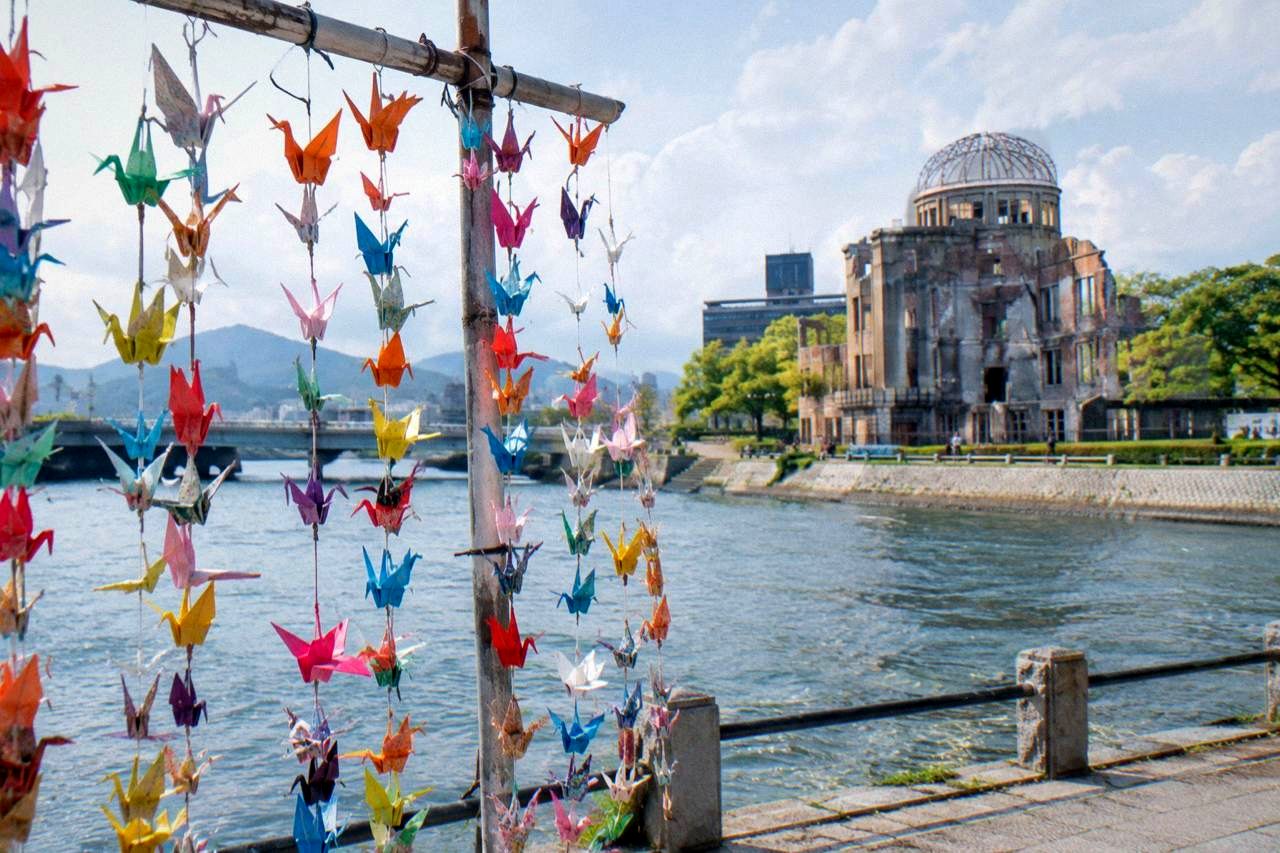
The link between paper cranes and peace traces back to Sadako Sasaki, who kept folding cranes to the end believing it would help her recover, as the city of Hiroshima's pages put it. After her death her classmates campaigned for a peace monument, donations poured in from all over Japan, and cranes began arriving from around the world. Around 10 million cranes folded with the wish for peace reach the Children's Peace Monument each year.
The chain of events is short and well documented on the city's own pages. Sadako's resilient spirit and her cranes inspired her friends and classmates to raise money for a monument. Donations came from across Japan to build it. The Children's Peace Monument was the result, and it stands in the center of Peace Memorial Park, as the city's page describes.
The cranes followed the story rather than preceding it. The city records that the story of Sadako spread to the world, leading to cranes being offered before the monument. Visitors to the park see brightly colored paper cranes as a symbol of peace linked to her story. Ten million a year is the city's own figure, and it is the number that puts her single thousand in perspective: what began as one girl's private wish in a hospital bed became a worldwide act of memorial.
For visitors planning a full day around the park, a private guided option such as the Hiroshima and Miyajima licensed guide day pairs the peace memorials with the island, and the historical walking tours in the band above focus on the park itself. The city's account of Sadako stands on its own, but a guide can place her story inside the wider history of 6 August, which this site covers separately in why Hiroshima was chosen as a target.
What Is The Children's Peace Monument In Hiroshima?
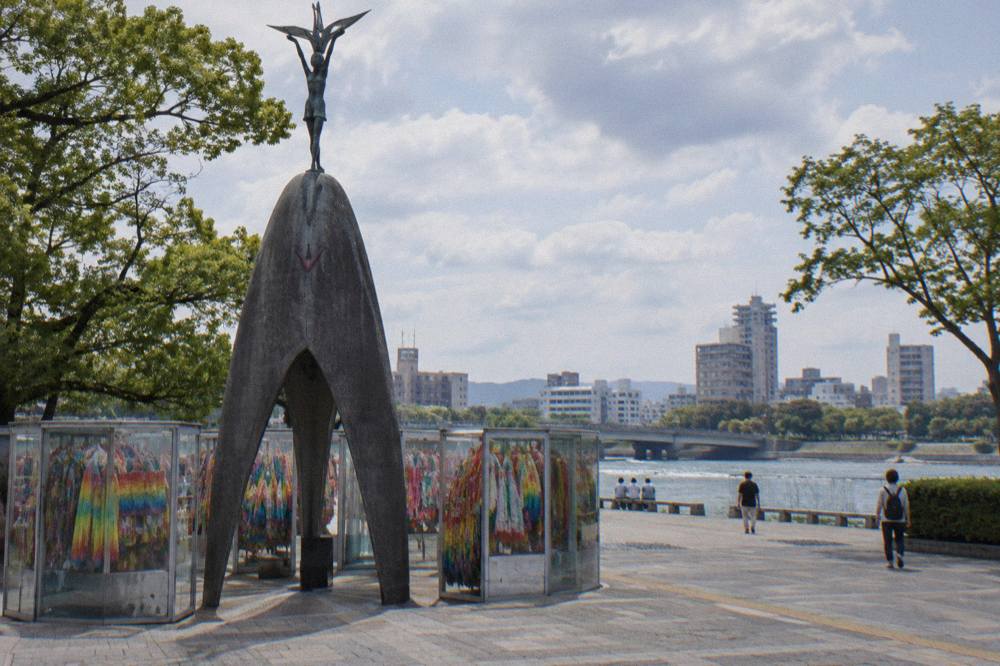
The Children's Peace Monument is a memorial in the center of Hiroshima Peace Memorial Park, built with funds donated from all over Japan after a campaign by Sadako's classmates. The figure of Sadako on the monument lifts a large paper crane overhead, and a plaque at the foot of the statue reads, "This is our cry. This is our prayer. Peace in the world." It has drawn thousands of visitors since 1958.
The monument exists because of the campaign described above, and its design says what the campaign was for. The National Park Service describes the statue's figure lifting the crane and quotes the plaque's inscription directly. The city's page adds the placement: the monument stands in the center of the park, surrounded by the cranes that continue to arrive.
The park around it is part of the story too. Peace Memorial Park is the city's central memorial space, and this site covers the wider ground in its guide to the Peace Memorial Park and its piece on the Children's Peace Monument specifically. The museum nearby charges 200 yen for adults, college age and up, with high school students at 100 yen and junior high and younger free, per the museum's own practical-information page.
How Does Hiroshima Tell Sadako's Story Today?
Hiroshima tells Sadako's story through the monument itself, the cranes displayed around it, and the city's English pages, which report her life plainly from the bombing in 1945 to her death in 1955. The city states that around 10 million cranes folded with the wish for peace arrive each year, and that visitors see brightly colored cranes throughout the park as a symbol linked to her name. The story is told as history, not legend, beyond the one crane legend it contains.
The telling is deliberately factual. The city's account moves from her apparent good health, to her illness in 1954, to the hospital admission in February 1955, to her death on 25 October, in the same flat sequence as the table earlier on this page. The one element of legend, the thousand-crane wish, is named as legend. Everything else is dated.
That restraint matters for how visitors read the park. The paper cranes are not decoration; they are the direct continuation of what her classmates started. The city's page on the monument notes that the story spread to the world and that cranes are offered before it as a result, which is why the displays around the monument keep changing even though the statue has drawn visitors since 1958.
What Can A Visitor Still See Of Sadako's Story In Hiroshima?
A visitor to Hiroshima can see the Children's Peace Monument in Peace Memorial Park, the figure of Sadako lifting a paper crane overhead, the plaque reading "This is our cry. This is our prayer. Peace in the world.", and the paper cranes displayed around it, of which around 10 million arrive each year.
The practical side of a visit is simple and cheap. The park is a public memorial space, the monument stands in its center, and the cranes are visible around it. The museum's fees are those listed above, and its hours run from 7:30 in the morning into the evening, with the latest closing times in August and the earliest in December to February, per the museum's page. It closes 30 and 31 December and for a mid-February exhibit change.
| Sight tied to Sadako's story | Where it is | What the sources say |
|---|---|---|
| Children's Peace Monument | Center of Peace Memorial Park | Built with donations from all over Japan |
| Statue of Sadako | On the monument | Figure lifts a large paper crane overhead |
| Plaque inscription | At the foot of the statue | "This is our cry. This is our prayer. Peace in the world." |
| Paper cranes | Displayed around the monument | About 10 million sent each year |
| Hiroshima Red Cross Hospital | Hiroshima city | Sadako admitted there in February 1955 |
Readers who want the wider frame around her death can follow this site's answer on how long Hiroshima was radioactive, which reports the city's own figures on residual radiation, and the account of Hiroshima's shadows. For the full first day in the city, the Hiroshima Travel Guide homepage is the starting point, and the related tour below covers the park and Miyajima in one organized day if that suits your plans, with Check availability as the next step.
Common Questions About Sadako Sasaki And Hiroshima
Who Was Sadako Sasaki?
A two-year-old survivor of the atomic bombing of Hiroshima on 6 August 1945, living a little over one mile from the hypocenter, who developed leukemia in 1954, was admitted to the Hiroshima Red Cross Hospital in February 1955, and died on 25 October 1955 at the age of twelve after folding some 1,300 paper cranes.
Why Did Sadako Fold Paper Cranes?
She had learned the Japanese legend that folding one thousand cranes grants a wish, and she kept folding them out of wrapping paper and whatever paper she could find, some as small as a grain of rice, believing it would help her recover, until her last moments.
Who Built The Children's Peace Monument?
Her classmates campaigned for a monument for peace to comfort the souls of all the children who died from the atomic bombing, and donations poured in from all over Japan to build it in Peace Memorial Park.
How Many Cranes Does The Monument Receive Each Year?
Around 10 million cranes folded with the wish for peace are sent to the Children's Peace Monument each year, according to the city of Hiroshima's own page on the story.
What Does The Plaque At The Statue Say?
The plaque at the foot of Sadako's statue reads, "This is our cry. This is our prayer. Peace in the world."
Can You See The Monument Today?
Yes. The Children's Peace Monument stands in the center of Peace Memorial Park in Hiroshima, and thousands have visited the statue since 1958, with cranes displayed around it as part of the ongoing memorial.