What Does Hiroshima Mean In Japanese?
The name Hiroshima means wide island in Japanese. Here is what the kanji, the city emblem and the 1589 founding actually say about Hiroshima's name.
Hiroshima, the city in Hiroshima Prefecture on the Seto Inland Sea, takes its name from two kanji characters that read as "wide island". The name is not poetic flourish. It records what the site was when the feudal lord Mori Terumoto chose it in 1589 for a castle: the largest island in the delta where the Ota River splits into branches before reaching Hiroshima Bay. This page unpacks the characters, the pronunciation, the founding and the city emblem, all drawn from what the city and shrine authorities publish.
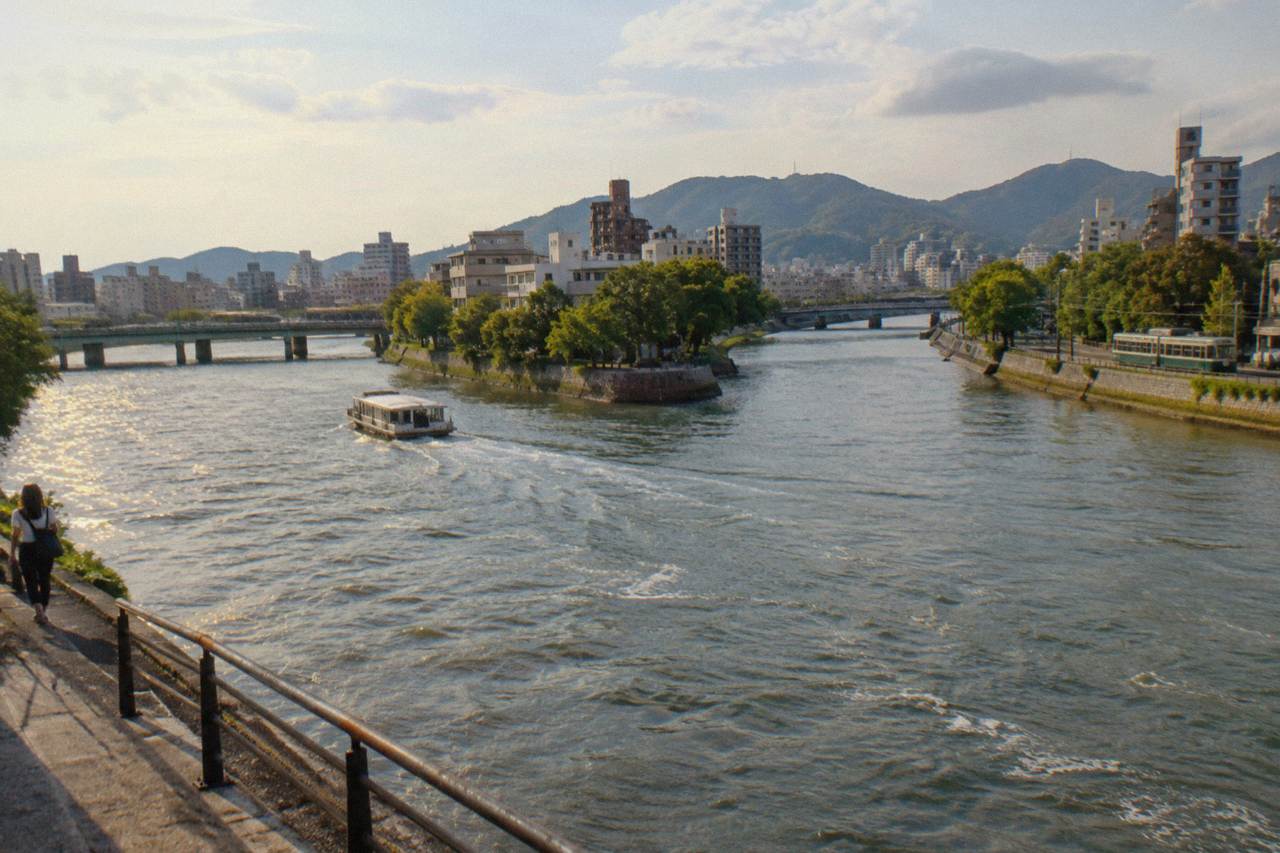
In Japanese, Hiroshima is written with the kanji 広島, and the name means wide island. The first character, hiro, means wide or broad, and the second, shima, means island. The name is literal geography: the city was founded in 1589 on the largest island in the Ota River delta, where the river splits into branches before emptying into Hiroshima Bay on the Seto Inland Sea.
The characters describe land, not ambition. Before Mori Terumoto selected the site, the area was a spread of tidal flats and small islands at the head of the bay, and the delta's principal island was the wide one, the hiro-shima. Construction of Hiroshima Castle began in 1589, and a castle town grew around it. The city's own history pages state plainly that Hiroshima as a city originated in that year with the start of castle construction, so the name and the founding are effectively the same event.
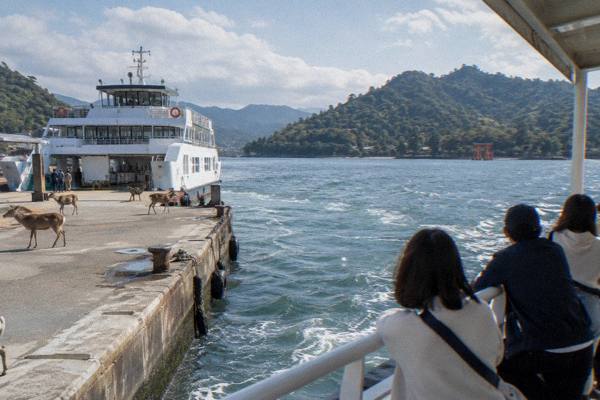
Two points are worth separating, because casual guides blur them. First, the name predates nothing very ancient: it came into use with the 1589 castle site selection, per the city's record. Second, the "island" in the name has nothing to do with Miyajima, the island in Hiroshima Bay reached by a ten-minute JR ferry from Miyajimaguchi. Miyajima is a separate island in the bay. Hiroshima itself is a city on the mainland delta, and it is on the Seto Inland Sea, not the Pacific coast.
For visitors who read none of the script, the romanised form carries the meaning anyway. Hiro is wide, shima is island, and every time the name is spoken the delta geography is restated.
How Do You Write And Pronounce Hiroshima In Japanese?
Hiroshima is written 広島 in kanji, ひろしま in hiragana and ヒロシマ in katakana, and it is pronounced with four beats, roughly hee-roh-shee-mah. Each of the four sounds gets its own length in Japanese, so the name has four morae rather than three run-together syllables. English speakers tend to compress it; the Japanese pronunciation gives every vowel its full value.
The three scripts do different jobs. The kanji carries the meaning, wide island. Hiragana, the rounded everyday syllabary, appears in ordinary writing. Katakana, the angular script used for foreign words and emphasis, shows up for Hiroshima in some peace-related and formal contexts.
Pronunciation matters more than expected. The four-beat rhythm, hee-roh-shee-mah, is how the name is said locally, and the difference from the flattened English "hiro-SHEE-ma" is audible. The city is unambiguous in any form, which is one reason the name travels so well: there is only one Hiroshima in Japan that the world talks about, and the wider story of what the city is known for is covered at what Hiroshima is famous for.
Why Is A City Called Wide Island?
Mori Terumoto picked the widest island in the Ota River delta in 1589 as his castle site, and the name Hiroshima followed the geography. The delta's principal island was broad and flat, ideal for a flatland castle, and the city records that the castle built there was at the time second in size only to Osaka Castle among Japan's flatland castles.
The logic of the choice was military and practical. The castle site has been designated a national historic site since 1953, and the original keep was designated a national treasure under the old system in 1931. The original keep was destroyed by the atomic bomb on 6 August 1945 at 8:15 a.m., leaving only the stone walls, and the postwar reconstruction served visitors until 22 March 2026, when the rebuilt keep closed to the public permanently because of aging. Today the castle is seen from the exterior and grounds; a Sannomaru history museum is planned for 1 June 2027.
The river geography the name records still shapes a visit. Walking the centre means crossing bridges constantly, which surprises first-time visitors who expect the dense grid of a typical Japanese prefectural capital.
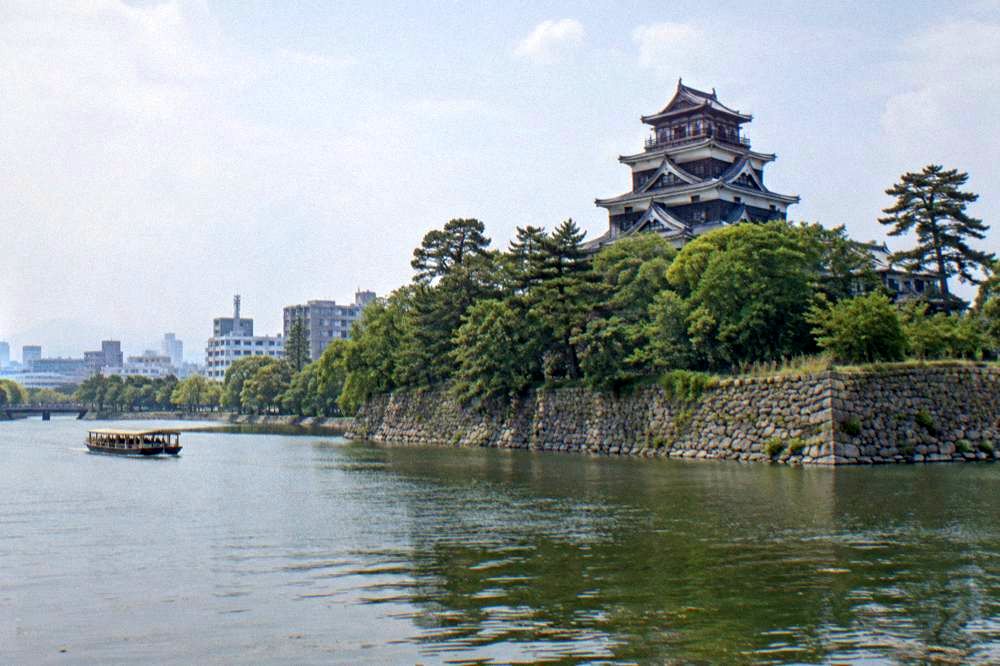
The castle question comes up often enough that it has its own answer page: whether Hiroshima Castle is open. The short version is that the grounds are, the keep is not.
When the bridges wear thin, the streetcars take over. Since 1 February 2025, every Hiroden line has run on a flat fare of 240 yen for adults and 120 yen for children, and that includes the Miyajima line, so the price stays the same however far you ride. Trams now enter the Hiroshima Station building and stop on its second floor, which makes switching between rail and streetcar direct.
Shukkeien keeps seasonal hours: 9:00 to 18:00 from 16 March to 15 September, and 9:00 to 17:00 from 16 September to 15 March, with last entry 30 minutes before closing. Admission is 350 yen for adults, 150 yen for university students, and free for children from elementary through high school, a structure in place since 14 April 2025.
For the island trip, JR ferries leave Miyajimaguchi roughly every 15 minutes from 8:00 to 18:00, with the first boat around 6:25 and the last around 22:00; the crossing takes about 10 minutes, and Great Torii sailings run from 9:10 to 16:10. Itsukushima Shrine charges 300 yen for adults, 200 yen for high school students and 100 yen for elementary and junior high students, while a combined ticket costs 500, 300 and 150 yen. The ropeway is 2,000 yen round trip for adults and 1,000 yen for children, operating 9:00 to 16:00 with the last descent at 16:30.
What Does The Hiroshima City Emblem Mean?
The Hiroshima city emblem, established on 19 May 1896, is a symbol of the City of Water: three curved lines representing flowing rivers, adapted from the banner stripes of the Geishu domain and curved to suggest the delta's waterways. The emblem formalises the same idea the name carries: Hiroshima is a city defined by its rivers.
The city's English page describes the emblem as symbolising the City of Water, with the three lines adapted from the Geishu-han banner and bent into curves that represent flowing rivers. Read together with the kanji, the emblem and the name make one consistent statement. The founding name says wide island; the 1896 emblem says the water around it matters just as much. More of these guides are collected on Hiroshima Travel Guide.
That water identity is not just decoration. Almost every approach to the city, whether by airport bus, Shinkansen or boat, ends up crossing or following water.
The emblem's 1896 date also marks a period when the city was redefining itself as a modern municipality after the Meiji restoration, adopting official symbols alongside the older castle-town identity.
How Old Is The Name Hiroshima?
The name Hiroshima came into use after Mori Terumoto's 1589 castle site selection, so it is a little over four hundred and thirty years old. Before that, the area was tidal flats and small islands without a single unified name. The city itself counts its origin the same way: Hiroshima as a castle town began in 1589 with the start of Hiroshima Castle construction.
Four hundred and thirty years makes Hiroshima a young city by Japanese standards. Itsukushima Shrine on Miyajima was founded in 593 and rebuilt in its present form in 1168 by Taira no Kiyomori, centuries before the delta had a castle. The shrine's own admission page carries those dates. So the religious landscape around Hiroshima Bay is far older than the city that now anchors it, and the name Hiroshima is the latecomer in the region.
A timeline of the name and the city makes the sequence clear:
| Year | Event | Source |
|---|---|---|
| 593 | Itsukushima Shrine founded on Miyajima | Shrine admission page |
| 1168 | Shrine rebuilt in present form by Taira no Kiyomori | Shrine admission page |
| 1589 | Mori Terumoto selects the delta site; Hiroshima Castle construction begins; the name Hiroshima comes into use | City history page |
| 1896 | City emblem of three river lines established on 19 May | City emblem page |
| 1931 | Original keep designated a national treasure under the old system | City history page |
| 1945 | Original keep destroyed by the atomic bomb on 6 August | City record |
| 1953 | Castle site designated a national historic site | City history page |
The table shows the pattern: the name is a 1589 label, the shrine across the water is ancient, and the castle that carried the name has a 1931 treasure designation and a 1945 loss in its file.
Is The Name Connected To The City's Modern Identity?
Yes, the 1589 name still connects to the city's modern identity, since the landscape it described still shapes Hiroshima today. Visitors often arrive with the 1945 history uppermost, and the city addresses it directly through the Peace Memorial Museum and the park. Reported FY2025 museum attendance reached 2,580,926, a third straight record, including 945,618 foreign visitors.
The museum's admission is 200 yen for adults, college and up, 100 yen for high school students, free for junior high and younger.
For anyone weighing the trip itself, whether Hiroshima is worth visiting has its own answer page, and the radiation question is handled at is Hiroshima still radioactive.
Common Questions About The Meaning Of Hiroshima
What Does Hiroshima Mean In Japanese?
Hiroshima means wide island. The first kanji, hiro, means wide, and the second, shima, means island, describing the largest island in the Ota River delta where Mori Terumoto began Hiroshima Castle in 1589.
How Do You Write Hiroshima In Japanese?
Hiroshima is written 広島 in kanji, ひろしま in hiragana and ヒロシマ in katakana. The katakana form appears in some peace-related and formal contexts.
How Old Is The Name Hiroshima?
The name came into use after the 1589 castle site selection by Mori Terumoto. Before that, the area was tidal flats and small islands at the head of Hiroshima Bay.
Does The Island In Hiroshima Refer To Miyajima?
No. The island in the name is the wide island in the Ota River delta, on the mainland. Miyajima is a separate island in Hiroshima Bay reached by a roughly ten-minute JR ferry from Miyajimaguchi.
What Does The Hiroshima City Emblem Show?
Three curved lines representing flowing rivers, adapted from the Geishu-han banner stripes and established on 19 May 1896. The city describes it as a symbol of the City of Water.
The name Hiroshima turns out to be the city's first piece of urban planning documentation: two characters that recorded, in 1589, exactly what the site was. The wide island became a castle town, then a modern city, and every river crossing in the centre still traces the geography the kanji describes.