What Was Okunoshima Used For?
Okunoshima, a small island in Hiroshima Prefecture near Takehara, was the site of a secret Imperial Japanese Army poison gas factory from 1929 to 1945. What remains today, and how to visit.
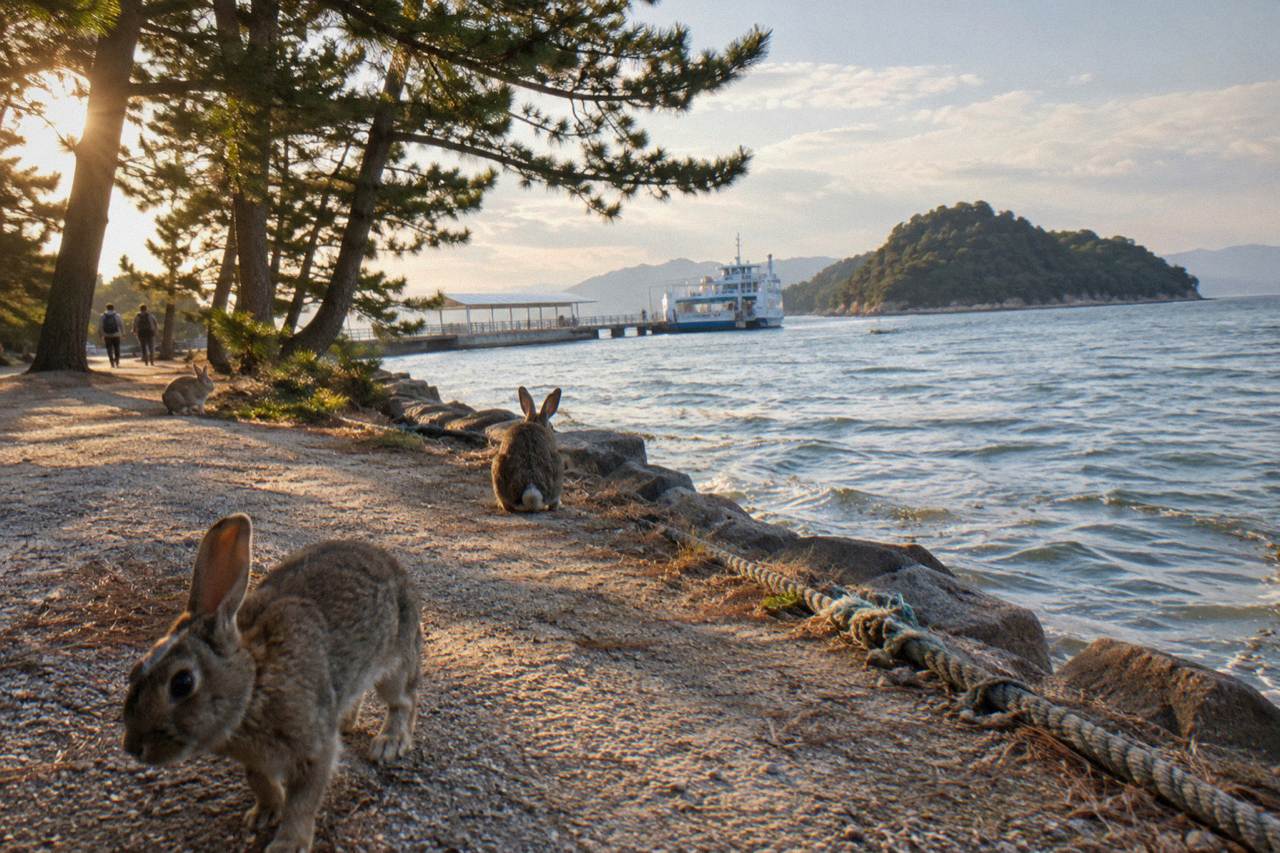
Okunoshima is a small island in Hiroshima Prefecture, in the Seto Inland Sea about 3 kilometres off the coast of Tadanoumi-cho in Takehara City, with a circumference of 4.3 kilometres and an area of 0.7 square kilometres. Today it belongs to Seto Inland Sea National Park, has no civilian vehicles, and is known to many travellers as Rabbit Island for the more than 700 rabbits that live on it. That peaceful present sits on a concealed past: between 1929 and 1945 this island ran one of the largest chemical weapons plants in Japan, and the effort to hide it was so thorough that the island was erased from official Japanese maps during the war. This page explains, from primary and official sources, what Okunoshima was actually used for, what was produced there, and what a visitor finds on the island now.
The full day-trip picture, including how Okunoshima fits alongside Miyajima and the city itself, is covered in the Okunoshima day trip guide, and the rabbit question has its own answer on whether you can pet the rabbits on Rabbit Island.
Okunoshima was used as the site of the Tadanoumi Factory of the Tokyo Second Army Arsenal, a secret Imperial Japanese Army facility that manufactured poison gas from 1929 to 1945. Reported figures say about 6,600 tons of chemical agents, including mustard gas (yperite) and lewisite, were produced there, and at its peak about 6,000 people engaged daily in production work, recruited mainly from the Takehara area.
The plant began operating in 1929, under conditions of strict military secrecy. Hiroshima Prefecture's own account reports the production scale: an estimated 6,600 tons of poison gases between 1929 and 1945, and a workforce that reached about 6,000 people a day at the peak.
Secrecy shaped everything about the place. The Takehara City tourism association's war-heritage page records that the island was erased from official Japanese maps during the war because of the sensitivity of poison gas production. Beyond gas, the Tadanoumi Factory also produced balloon bombs, the paper weapons known as fugo, in the final phase of the war.
The output was not marginal. Reporting on the island states that production on Okunoshima accounted for about 90 percent of Japan's total toxic chemical output from 1929 to 1944, which makes this small island, rather than some mainland arsenal, the centre of the nation's chemical weapons programme.
| Aspect | Figure | Note |
|---|---|---|
| Factory operating years | 1929 to 1945 | Tadanoumi Factory, Tokyo Second Army Arsenal |
| Estimated total gas output | 6,600 tons | Mustard gas (yperite) and lewisite among agents |
| Peak daily workforce | About 6,000 people | Recruited mainly from the Takehara area |
| Share of Japan's toxic chemical output, 1929 to 1944 | About 90 percent | Reported figure |
| Island size | 0.7 square kilometres, 4.3 km circumference | 3 km off Tadanoumi-cho, Takehara City |
Why Was A Poison Gas Factory Put On An Island In Hiroshima Prefecture?
The factory was placed on Okunoshima because isolation was the design principle. The army removed the island from maps entirely, and erasure from official Japanese maps during the war is documented by the Takehara City tourism association. The island's military role predates the gas plant: the North Battery Ruins date to 1897 to 1902, when 22 cannons guarded the approach through the Seto Inland Sea.
The island's military role did not begin with the gas plant. The North Battery Ruins on Okunoshima date to 1897 to 1902, when 22 cannons were installed there as part of Japan's coastal defences, guarding the approach through the Seto Inland Sea. The ruins still stand.
The end came in 1945.
For context on how the wider region's war history connects, the question of why Hiroshima was chosen as a target is answered separately, and so is how long Hiroshima was radioactive.
What Can You See Of The Gas Factory Today?
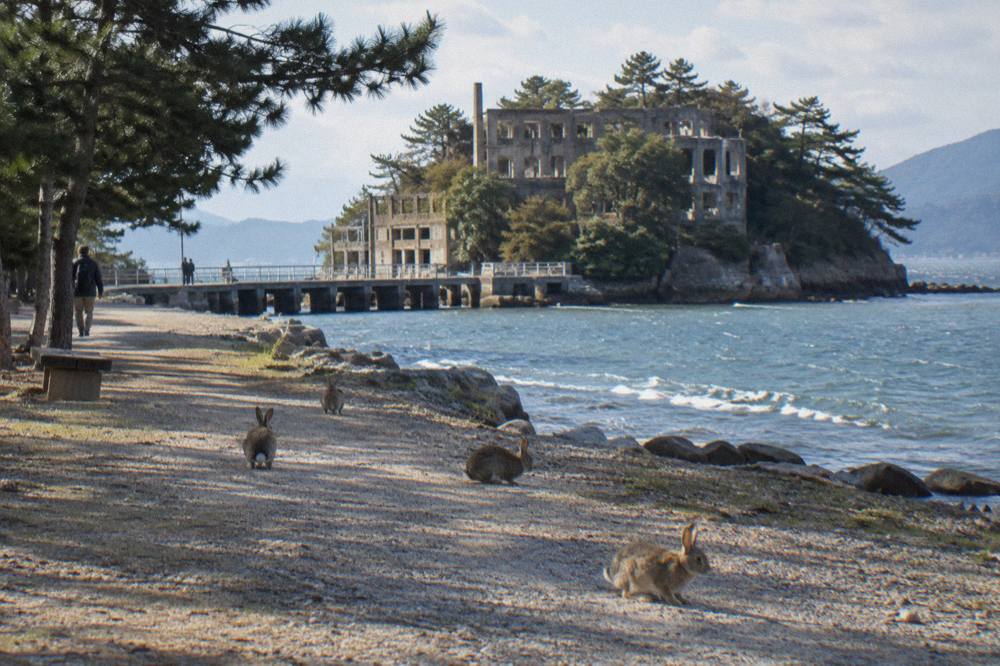
Landmarks on Okunoshima include the former Sankenya Factory Complex at the centre of the manufacturing area, the North Battery Ruins from 1897 to 1902 with their 22 gun emplacements, storage buildings, and the Okunoshima Poison Gas Museum, which tells the production history and is open 9:00 to 16:00 with last entry at 15:40, closed December 29 to January 3.
Okunoshima is designated part of Seto Inland Sea National Park with no civilian vehicles allowed, so everything is reached on foot or by rental bicycle near the port area.
The museum is the interpretive core of a visit. Adult admission for visitors 19 and over is 150 yen, with group discounts to 120 yen, and visitors under 19 and certain certificate holders enter free, per the Takehara City page. It was built with cooperation from affected groups, towns, cities and Hiroshima Prefecture, which means its exhibits were assembled with the involvement of the people the factory harmed, including former workers and the surrounding communities.
A smaller, stranger survivor stands near the Kyukamura lodging site: Okunoshima Shrine was restored and relocated by factory employees during the plant's operating years. It is one of the few places on the island where the workforce's own presence, rather than the army's output, is legible.
How Do You Get To Okunoshima From Hiroshima?
Okunoshima is reached by ferry from Tadanoumi Port in Takehara City, with a crossing of about 15 minutes and an adult one-way fare of 360 yen, 720 yen round trip. The ferry is short enough that the crossing is a non-event, but the island's position, 3 kilometres off the Tadanoumi coast, means the sea crossing is unavoidable.
Everything else covered here is indexed on Hiroshima Travel Guide. The trip starts at Hiroshima Station, where the JR Kure Line runs to Tadanoumi in Takehara City, and the short ferry from Tadanoumi Port then crosses to the island, so plan the visit as a full day.
A private guide arranged from Hiroshima can fold the logistics into a single day; the Hiroshima & Miyajima Private Custom Tour with Local Guide is one such option.
| Visit element | Figure | Note |
|---|---|---|
| Ferry crossing, Tadanoumi Port to Okunoshima | About 15 minutes | One way |
| Adult ferry fare | 360 yen one way, 720 yen return | From Tadanoumi Port |
| Poison Gas Museum, adult admission (19 and over) | 150 yen | Group discount 120 yen |
| Museum opening hours | 9:00 to 16:00 | Last entry 15:40 |
| Museum closed days | December 29 to January 3 | Annual closure |
| Rabbits on the island | More than 700 | Introduced after the war |
Why Are There Rabbits On A Poison Gas Island?
More than 700 rabbits currently inhabit Okunoshima, and Hiroshima Prefecture's own materials state that the rabbits present today were introduced after the war, not used in the factory's testing. Their appeal has reshaped the island's identity, yet the two layers coexist: a national park landscape with a colony of semi-wild rabbits, sitting on the concrete bones of a chemical weapons plant.
The rabbit story and the gas story are often told as one, and the prefecture's page is careful in its wording: the rabbits present today were introduced post-war. Their appeal is real, and it has reshaped the island's identity for a generation of visitors who arrive for the animals and leave having learned the factory history. The etiquette of meeting them, including feeding rules, is covered in the separate answer on whether you can pet the rabbits on Rabbit Island.
What the rabbits do not do is erase the record. The museum, the ruins and the erased maps carry the island's actual purpose, and the two layers coexist: a national park landscape with a colony of semi-wild rabbits, sitting on the concrete bones of a chemical weapons plant. Hiroshima Prefecture presents both without softening either.
The island is one of several places in the prefecture where war history and present-day tourism sit side by side.
Should Okunoshima Be Part Of A Hiroshima Trip?
Okunoshima suits a Hiroshima trip when you have three or more days or a specific interest in war history, because it is a full day out of the city involving travel to Tadanoumi plus the ferry, while Miyajima, the Peace Memorial Park and the city sights fill shorter stays. Travellers deciding between the two island days can weigh a half-day Miyajima tour against a full Okunoshima day by duration and reach alone.
For a first visit of one or two days, the city and Miyajima take priority, and the question of how many days in Hiroshima is enough has its own answer. From three days onward, or for anyone whose interest in the region's wartime history runs deeper than the Peace Park alone, Okunoshima adds a chapter the city cannot: the poison gas programme, its hidden workforce, and the deliberate erasure of an island from a national map.
Travellers who want a structured day without planning the logistics themselves can compare guided options; a Miyajima island half-day tour with guide covers the famous island in four hours, leaving the rest of the day free, while a full day trip to Hiroshima and Miyajima with ferry ride combines both name sights in one escorted outing.
Common Questions About Okunoshima
What Was Okunoshima Used For?
Okunoshima housed the Tadanoumi Factory of the Tokyo Second Army Arsenal, which produced poison gas from 1929 to 1945, including mustard gas and lewisite, an estimated 6,600 tons in total, and balloon bombs in the final war period. The island was erased from official Japanese maps during the war to protect the secret.
How Many People Worked On Okunoshima?
At its peak, about 6,000 people engaged daily in poison gas production work on Okunoshima, recruited mainly from the Takehara area of Hiroshima Prefecture, according to Hiroshima Peace Media Center reporting.
How Much Does The Okunoshima Poison Gas Museum Cost?
Adult admission (19 and over) is 150 yen, with group discounts to 120 yen, and visitors under 19 and certain certificate holders enter free. The museum is open 9:00 to 16:00 with last entry at 15:40 and closed December 29 to January 3.
How Long Is The Ferry To Okunoshima?
The ferry from Tadanoumi Port to Okunoshima takes about 15 minutes, with an adult one-way fare of 360 yen, or 720 yen round trip.
Are The Factory Buildings Still Standing?
Yes, ruins still stand on the island, including the former Sankenya Factory Complex at the centre of the manufacturing area, storage buildings, and the North Battery Ruins from 1897 to 1902 with their 22 gun emplacements.
Why Does Okunoshima Have So Many Rabbits?
Hiroshima Prefecture's materials state that more than 700 rabbits inhabit the island after being introduced post-war. The rabbit population persists on the island.
The island's museum keeps the record in the prefecture's own words, which makes Okunoshima one of the most quietly informative day trips in the Hiroshima region.