Takehara: Little Kyoto Of Aki
Takehara preserves a designated district of Edo-period merchant houses built on salt and sake wealth. This guide sets out what the official sources say about getting there, what to see, and how the townscape guide service works.
Takehara is a preserved merchant town in Hiroshima Prefecture, about 80 minutes from JR Hiroshima Station by the Kaguyahime express bus. Its historic district, nicknamed the Little Kyoto of Aki, is a national Important Preservation District of traditional buildings with active sake breweries, temple views and a 2,000-yen official guide service.
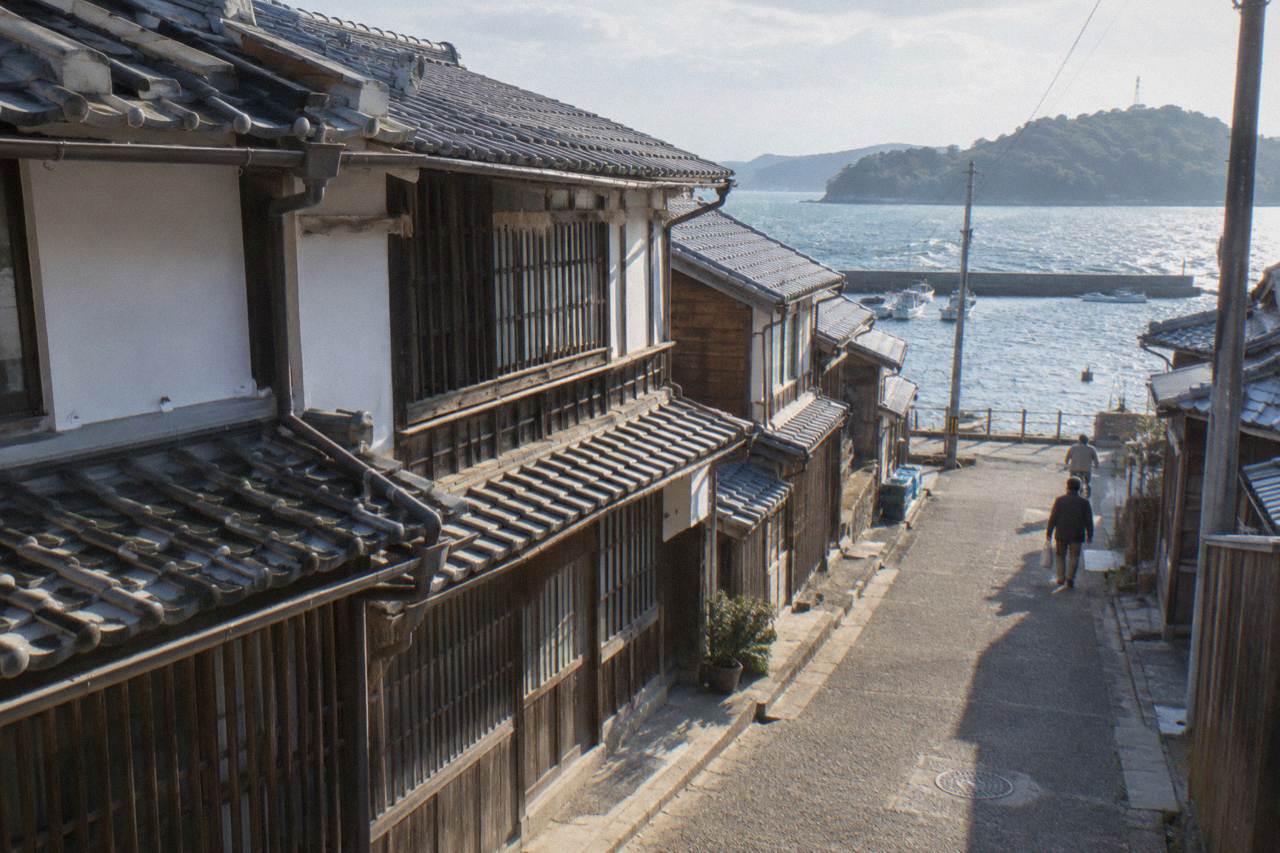
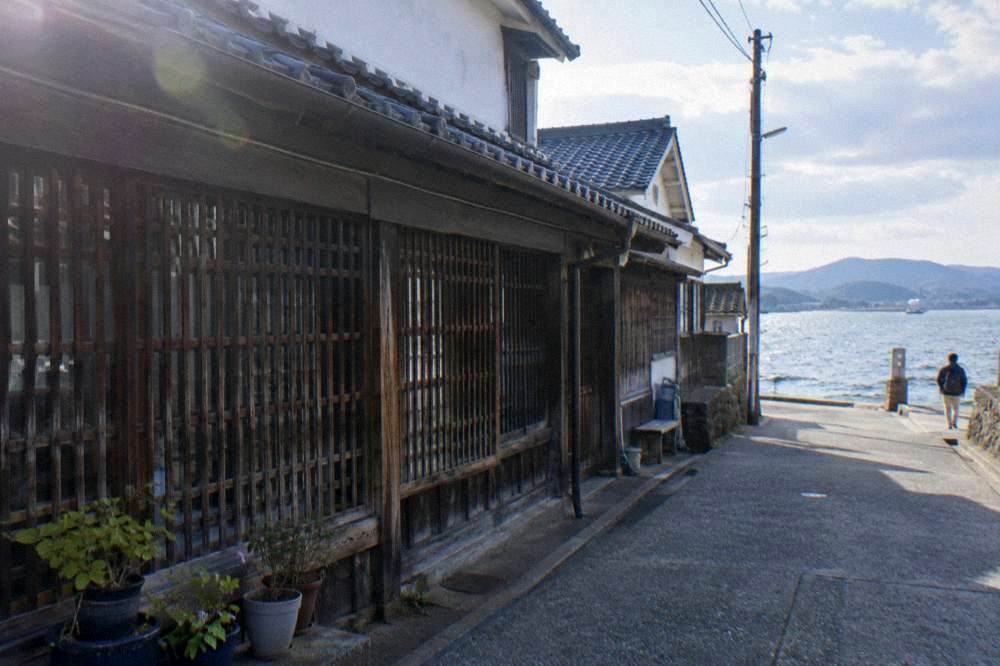
The Japanese government designates the district an Important Preservation District for Groups of Traditional Buildings, and the local tourist association's own pages explain the nickname plainly: because of its preserved Edo-period merchant houses and the salt and sake prosperity behind them, it is known as the Little Kyoto of Aki. This page gathers what the official Takehara sources say about the district, the breweries, the guide service and the journey out from Hiroshima.
What Is Takehara And Why Is It Called The Little Kyoto Of Aki?
Takehara is a city in Hiroshima Prefecture whose historic merchant quarter is designated an Important Preservation District for Groups of Traditional Buildings by the Japanese government, and the official tourist pages say the district carries the nickname Little Kyoto of Aki because of its preserved Edo-period merchant houses and its history of salt and sake prosperity. The designation of the townscape preservation district, covering about 5 hectares around Honmachi, dates from 16 December 1982.
The nickname is not marketing shorthand invented for travellers. The district is also part of a Japan Heritage site recognizing Kitamaebune salt trade history from the Edo period, which places Takehara's salt story inside a national heritage narrative rather than a local one.
What that means in practice is a compact, walkable streetscape rather than a theme-park reconstruction. The houses are privately owned homes, and the official spot pages ask visitors to be considerate of the residents, a point worth holding onto when planning photographs and pacing. The preservation designation covers approximately 5 hectares around Honmachi, so the district is measured in streets, not suburbs, and the tourist information center sits at its entrance inside Michi-no-Eki Takehara, which also serves as a base for exploring.
How Do You Get From Hiroshima To Takehara?
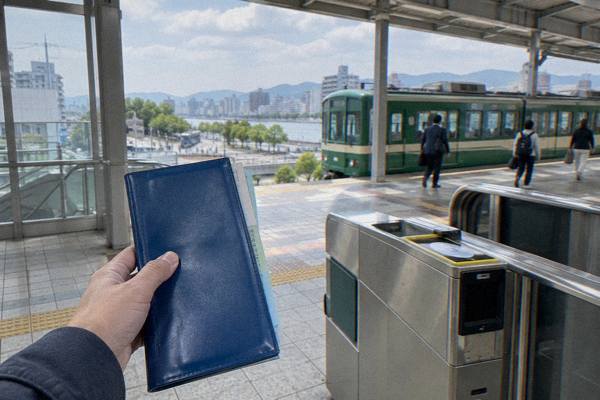
From JR Hiroshima Station, the Kaguyahime express bus reaches Takehara area stops in about 80 minutes, and the official access page lists this as the main public-transport link. JR Takehara Station is the main rail access point, with the historic district entrance about a 15-minute walk away, and from Hiroshima Airport a jumbo taxi to central Takehara takes about 30 to 40 minutes.
The access options divide neatly by starting point. Coming from the city of Hiroshima, the express bus is the direct answer the official source gives, with the journey time printed above. Arriving by air, Hiroshima Airport sits closer to Takehara than the city does, and the official access page lists the jumbo taxi option with its 30 to 40 minute duration to central Takehara.
| Route | Means | Time | Source basis |
|---|---|---|---|
| JR Hiroshima Station to Takehara area | Kaguyahime express bus | About 80 minutes | Official access page |
| JR Takehara Station to historic district entrance | On foot | About 15 minutes | Official access page |
| Hiroshima Airport to central Takehara | Jumbo taxi | About 30 to 40 minutes | Official access page |
Bicycle rentals are available at Michi-no-Eki Takehara for exploring the townscape, which the access page lists as a local option once you have arrived. The same Michi-no-Eki building houses the tourist information center at the entrance to the preservation district, so it works as the first stop for maps and orientation.
For readers building a wider west-Japan itinerary, a Kyoto to Hiroshima rail guide covers the Shinkansen leg into the region, and the Hiroshima day trip from Kyoto itinerary shows how the city's main sights fit a single long day before heading east to places like Takehara.
What Can You See In The Takehara Historic District?
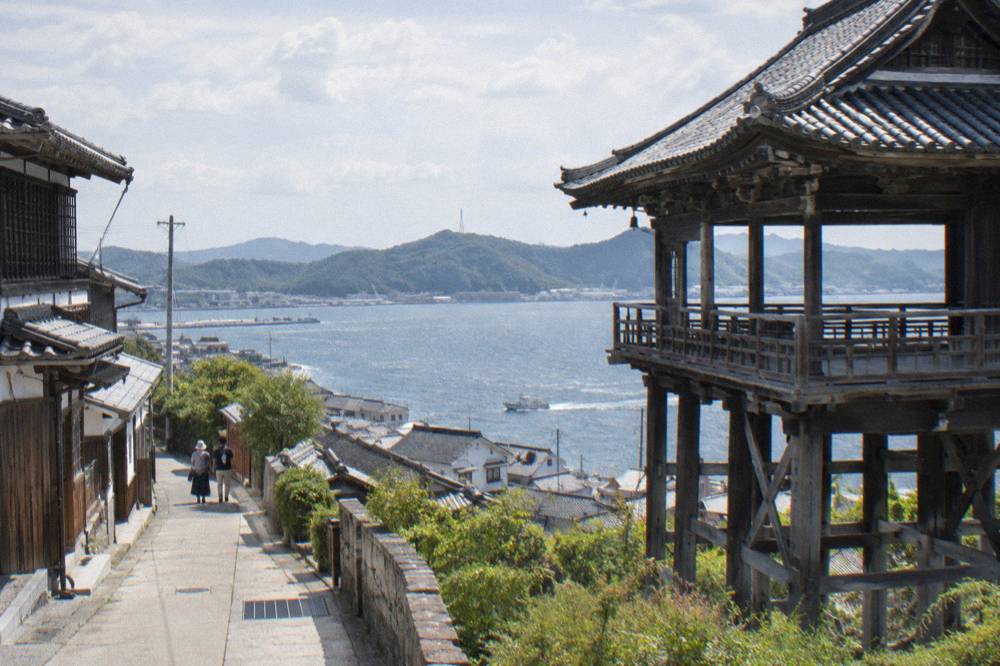
The district's headline sights are the preserved merchant houses around Honmachi, the Saiho-ji Temple pavilion called Fumeikaku with a stage-like structure modeled after Kyoto's Kiyomizu-dera that offers views over the town, and the Former Kasai Residence, built in 1872 as a salt merchant home, which is open for events and shows traditional salt-making artifacts.
Saiho-ji's Fumeikaku is the comparison that lands the Little Kyoto label most literally. The official district page describes a stage-like structure modeled after Kyoto's Kiyomizu-dera, with views over the town from the pavilion.
The Former Kasai Residence adds the salt side of the story. Built in 1872 as a salt merchant home, it is open for events and displays traditional salt-making artifacts, per the official district page. Together with the Japan Heritage listing for the Kitamaebune salt trade, the residence gives the salt economy a physical shape inside the district itself.
| Sight | What the official pages say |
|---|---|
| Townscape Preservation District | About 5 hectares around Honmachi, designated 16 December 1982 |
| Saiho-ji Temple, Fumeikaku pavilion | Stage-like structure modeled after Kyoto's Kiyomizu-dera, views over the town |
| Former Kasai Residence | Built 1872 as a salt merchant home, open for events, salt-making artifacts |
| Michi-no-Eki Takehara | Tourist information center and bicycle rentals at the district entrance |
The district rewards a slow loop rather than a dash, which is worth keeping in mind when planning a guided townscape walk. The houses remain private homes, so the walk is a streetscape experience, with the temple, the residence and the information center as the fixed points around it.
What Do The Sake Breweries Of Takehara Offer Visitors?
Three active sake breweries remain in Takehara according to the official tourist pages: Taketsuru Shuzo founded in 1733, Fujii Shuzo founded in 1863, and Nakao Jozo. Taketsuru is also the birthplace of Masataka Taketsuru, and its hours are 8:00 to 12:00 and 13:30 to 17:00, closed on Saturdays and Sundays.
The Taketsuru name carries weight far beyond the town. The brewery, founded in 1733, is the birthplace of Masataka Taketsuru, and the official brewery spot page lists the visiting hours and the weekend closure. Anyone planning a Sunday visit should note that the brewery's doors are shut then, and that the two-session day, morning and mid-afternoon, shapes when a stop fits an itinerary.
| Brewery | Founded | Notes from the official pages |
|---|---|---|
| Taketsuru Shuzo | 1733 | Birthplace of Masataka Taketsuru; open 8:00 to 12:00 and 13:30 to 17:00, closed Saturdays and Sundays |
| Fujii Shuzo | 1863 | Active brewery |
| Nakao Jozo | Not stated | Active brewery |
Where Saijo is organized around a concentrated brewery street, Takehara spreads its brewing heritage through a preserved residential townscape, and the two make a natural pairing for anyone tracing sake across the prefecture.
What Does The Official Townscape Guide Service Cost And How Does It Work?
The tourist guide service for the historic district costs 2,000 yen per guide, tax included, for a group of up to 20 people, with reservations required at least 2 days in advance. A typical guided townscape walk lasts 90 to 120 minutes, the service is closed during August due to extreme heat, and it also closes on the 3rd Wednesday of every month.
The pricing structure matters: the fee is per guide, not per person, so a group splits 2,000 yen among up to 20 participants. That makes the official guide service one of the better-value structured options in the region for families or small groups, provided the two-day advance reservation is made and the calendar closures are respected. More of these guides are collected on Hiroshima Travel Guide.
| Guide service detail | Figure from the official district page |
|---|---|
| Fee | 2,000 yen per guide, tax included |
| Group size | Up to 20 people per guide |
| Reservation deadline | At least 2 days in advance |
| Typical walk length | 90 to 120 minutes |
| Annual closure | August, due to extreme heat |
| Monthly closure | 3rd Wednesday of every month |
The August closure deserves a line of explanation, because the Japan Meteorological Agency station data for Hiroshima, 1991 to 2020 normals, show what the town is reacting to: average daily highs of about 32.8 °C in August with overnight lows around 25.1 C. Those are Hiroshima station figures, but they describe the regional summer the guide service plans around, and visitors booking elsewhere in summer should read them the same way.
Picking a date gets easier with the rest of those station normals. Spring is a natural fit for a long outdoor walk: average daily highs climb from 14.5 °C in March to 19.8 °C in April and 24.4 °C in May, while overnight lows rise from 5.1 °C to 15.1 C. Rain builds from 118.3 mm in March to 169.8 mm in May, then jumps to 226.5 mm in June and 279.8 mm in July, so an umbrella belongs in the day pack. Winter is workable, with January highs near 9.9 °C and lows around 2.0 °C, and February slightly milder at 10.9 °C by day.
For travelers whose dates land in August, Hiroshima City keeps plenty of sightseeing open. The Peace Memorial Museum runs 7:30 to 20:00 through the month and until 21:00 on 5 and 6 August; admission is 200 yen for adults, 100 yen for high school students and free for junior high school visitors and younger, and the extended early and late entry slots require an online reservation. Shukkeien garden keeps 9:00 to 18:00 hours through 15 September at 350 yen for adults, 150 yen for university students and free entry for school students, with last admission 30 minutes before closing. The keep at Hiroshima Castle has been closed to visitors since 22 March 2026 and is viewable from outside only, with a history museum in the Sannomaru planned for 2027.
Anyone adding Miyajima to the same trip should budget a few small extras. The island collects a separate 100 yen visitor tax on arrival, with preschool children exempt. Itsukushima Shrine charges 300 yen for adults, 200 yen for high school students and 100 yen for elementary and junior high school children, and a combined ticket with the Treasure Hall costs 500, 300 and 150 yen on the same scale. The ropeway up Mount Misen lists 2,000 yen for an adult return and 1,100 yen one way, with child fares of 1,000 and 550 yen, and Japan Rail Pass holders ride the JR ferry over at no extra charge on a crossing of about 10 minutes.
Is Takehara A Good Day Trip To Combine With Cycling?
Bicycle rentals are available at Michi-no-Eki Takehara for exploring the townscape, per the official access page, which makes a two-wheel day practical on arrival. Travellers who want a guided cycling component in the region can start with a guided Hiroshima bike loop, then take the express bus east to walk Takehara's compact district on foot.
The district itself is small enough that walking is the natural mode, but the bicycle extends the day beyond Honmachi: the station approach, the Michi-no-Eki and the surrounding town all sit within easy pedalling range of each other. The official source lists the rental without further detail, so treat it as an on-the-day arrangement made at the Michi-no-Eki counter.
The pairing works in either order. The Best of Hiroshima Guided Bike Tour is the site's featured ride for that first half, and Check availability covers dates before committing to the bus timetable.
How Does Takehara Compare With Other Day Trips From Hiroshima?
Takehara stands out as the low-key option among Hiroshima day trips, offering a nationally designated Edo merchant townscape with salt and sake heritage, the salt merchant's residence and a 1733 brewery. Compared with Miyajima's Great Torii and Itsukushima Shrine, Iwakuni's Kintaikyo bridge, Onomichi's temple slopes and famous cycle route, Tomonoura's historic port and Saijo's sake brewery district, Takehara suits travellers seeking a quiet, walkable main street.
Choosing among them is mostly a question of theme and transport. Takehara's strengths are architectural and industrial-heritage: the preserved houses, the salt merchant's residence, the 1733 brewery. Miyajima, by contrast, delivers the Great Torii and Itsukushima Shrine, and the Miyajima guide covers the ferry, the tides and the Mount Misen ropeway with their fares. Travellers deciding between the two should weigh a walkable quiet streetscape against a major shrine island.
| Day trip from Hiroshima | What the destination is known for |
|---|---|
| Takehara | Preserved Edo merchant townscape, salt and sake heritage |
| Miyajima | Itsukushima Shrine and the Great Torii in Hiroshima Bay |
| Iwakuni | The Kintaikyo bridge |
| Onomichi | Temple slopes and the start of a famous cycle route |
| Tomonoura | Historic port townscape on the Seto Inland Sea |
| Saijo | Concentrated sake brewery district |
The Seto Inland Sea frames several of these, and the Seto Inland Sea islands overview groups the sea-based options, while Tomonoura and Iwakuni each have their own pages. Takehara is the choice when the appeal is a low-key main street with national designation, active commerce and a guide service priced per group rather than per head.
What Should You Know Before Visiting The Takehara Preservation District?
The historic district consists of privately owned homes, and the official spot pages ask visitors to be considerate of residents, which is the single most important behavioural note. The other practical facts are structural: the tourist information center and bicycle rentals sit at the district entrance inside Michi-no-Eki Takehara, the guide service needs two days' notice, and Taketsuru Shuzo is closed on Saturdays and Sundays.
Respect for residents is not a formality here. Because the houses are homes rather than museum stock, the district's everyday life and its heritage are the same thing, and the official pages frame the visit around that. Quiet streets, restrained photography near doorways and an unhurried pace match what the preservation designation assumes.
Seasonal planning can lean on the Japan Meteorological Agency station normals for Hiroshima, 1991 to 2020, which describe the regional climate the town sits in. The monthly picture below uses those averages.
| Month | Average daily high | Average daily low | Average rainfall |
|---|---|---|---|
| January | 9.9 °C | 2.0 °C | 46.2 mm |
| April | 19.8 °C | 10.1 °C | 141.0 mm |
| July | 30.9 °C | 24.1 °C | 279.8 mm |
| October | 23.7 °C | 14.9 °C | 109.2 mm |
The numbers line up with the guide service's own calendar. August, when the service closes due to extreme heat, sits inside the warmest stretch of the normals; the cooler shoulder months carry less rain than the June-to-July wet period, when monthly totals at the Hiroshima station reach about 226.5 mm in June and 279.8 mm in July on average.
Where Does Takehara Fit In A Longer Hiroshima Itinerary?
Takehara slots most naturally into the eastbound half of a Hiroshima itinerary: the city's Peace Memorial Park and museum fill the first day or two, Miyajima takes a second block, and the inland sea coast towns like Takehara, Tomonoura, Onomichi and Saijo reward the remaining days. From Kyoto or Osaka, a Shinkansen arrival into Hiroshima followed by the Kaguyahime bus is the direct sequence.
Readers arriving from the Kansai side can plan the whole chain with existing site pages: things to do in Hiroshima for the city core, the Hiroshima Peace Memorial Museum guide for the museum's hours and its 200-yen adult admission, and what time the last bullet train from Hiroshima to Kyoto leaves for the return leg planning. Takehara then works as a contrast day: merchant houses and breweries after memorials and shrine islands.
The town also rewards a slow last day. With a morning train or bus east, a 90-to-120-minute townscape walk, a brewery stop within Taketsuru's weekday hours, and the Fumeikaku view over the roofs, the day closes itself neatly at JR Takehara Station for the journey back toward Hiroshima.
Common Questions About Takehara
How Far Is Takehara From Hiroshima?
The Kaguyahime express bus reaches Takehara area stops from JR Hiroshima Station in about 80 minutes, and from Hiroshima Airport a jumbo taxi to central Takehara takes about 30 to 40 minutes, per the official access page.
Why Is Takehara Called The Little Kyoto Of Aki?
The official tourist pages attribute the nickname to the district's preserved Edo-period merchant houses and its history of salt and sake prosperity.
How Much Does The Takehara Guide Service Cost?
The townscape guide service costs 2,000 yen per guide, tax included, for up to 20 people, with reservations required at least 2 days in advance. It is closed in August and on the 3rd Wednesday of each month.
Can You Visit Taketsuru Sake Brewery?
The brewery operates 8:00 to 12:00 and 13:30 to 17:00 and is closed on Saturdays and Sundays, per the official spot page for the 1733-founded brewery, the birthplace of Masataka Taketsuru.
How Long Does A Walk Through The Takehara Historic District Take?
The official district page describes a typical guided townscape walk of 90 to 120 minutes; the preservation district covers about 5 hectares around Honmachi.
Can You Rent Bicycles In Takehara?
Bicycle rentals are available at Michi-no-Eki Takehara for exploring the townscape, per the official access page, and the same site houses the tourist information center at the district entrance.
Takehara rewards the traveller who has seen Hiroshima's headline sites and wants the prefecture's quieter register: a designated merchant streetscape, three working breweries with a founding year of 1733 among them, a temple pavilion modeled on Kiyomizu-dera, and a guide fee of 2,000 yen split across the whole group.