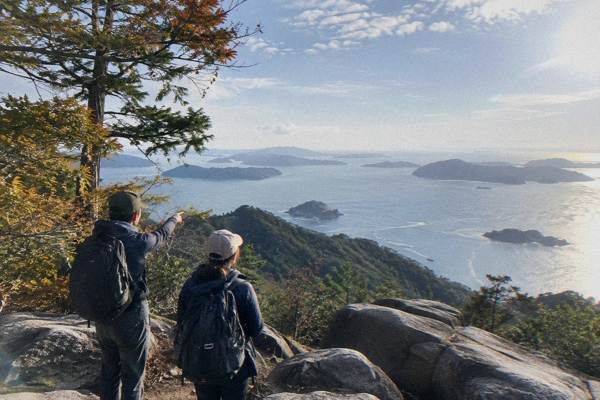
Tomonoura: The Edo Port Town Behind Ponyo
Tomonoura is an Edo-period port town in Fukuyama City, Hiroshima Prefecture, on the Seto Inland Sea, where ships once waited for the tide and where Studio Ghibli found the setting for Ponyo.
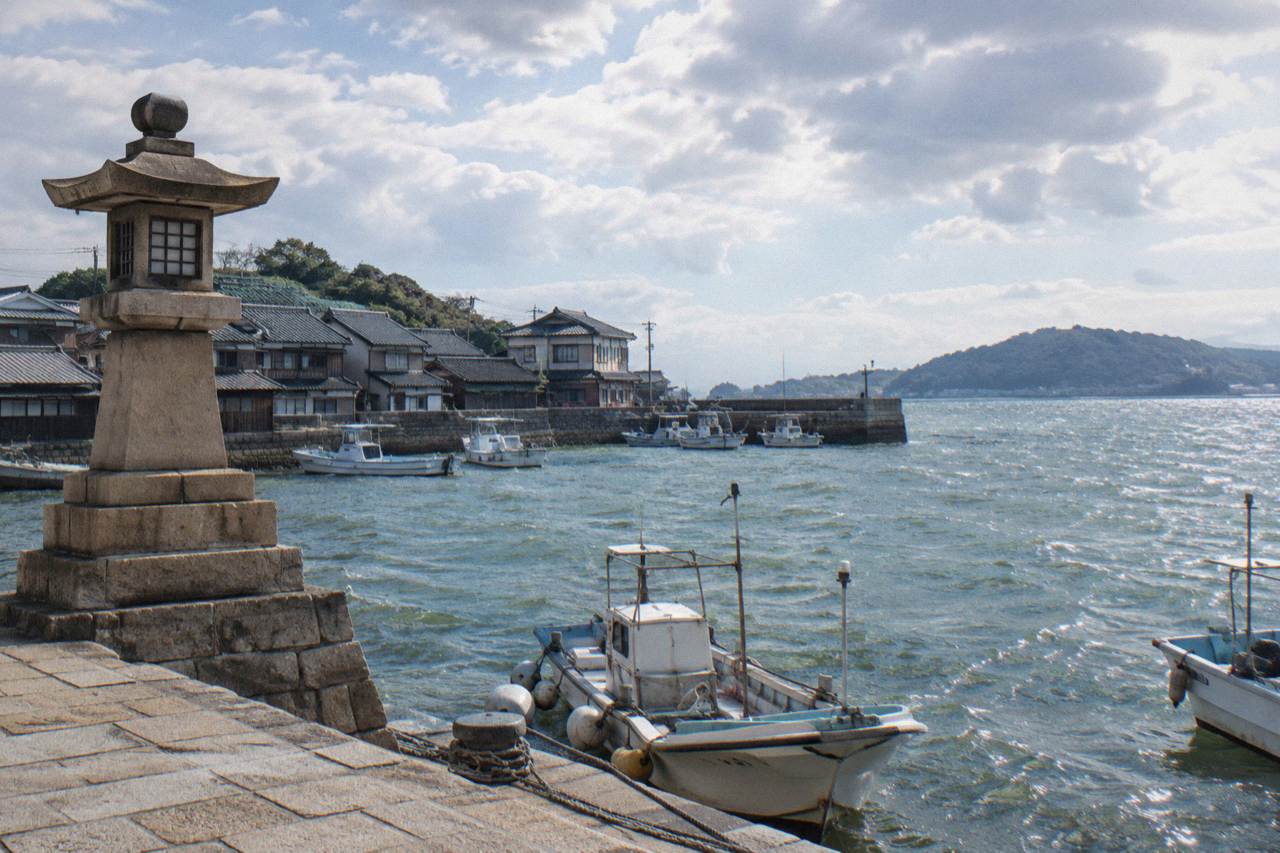
Tomonoura is a historic port town about 30 minutes by bus from JR Fukuyama Station in Hiroshima Prefecture. Its stone lighthouse, temples, merchant houses and sea views can be explored on foot.
Ships in the Edo period called here to wait for favorable tides, which is why the town is described as a tide-waiting port. Its townscape of roughly 280 Edo-period buildings, namako-kabe plaster walls and stone-paved alleys is designated a Japan Heritage site and an Important Preservation District for Traditional Buildings. For travelers based in Hiroshima city, it is a quieter Inland Sea day trip than Miyajima, and it pairs naturally with other Seto Inland Sea islands and port towns covered elsewhere on Hiroshima Travel Guide.
Where Is Tomonoura And What Is It Known For?
Tomonoura faces the islands of the Seto Inland Sea. It is known as an Edo-period tide-waiting port where ships paused for favorable tides, for the Joyato stone lighthouse built in 1859, and as the real-life inspiration for the setting of Studio Ghibli's Ponyo, after Hayao Miyazaki stayed there in 2005.
The town's harbor is small enough that everything clusters around a single waterfront. The Joyato, the stone lighthouse at the port's edge, stands 11 meters tall and is described as the tallest surviving Edo-period port lighthouse in Japan.
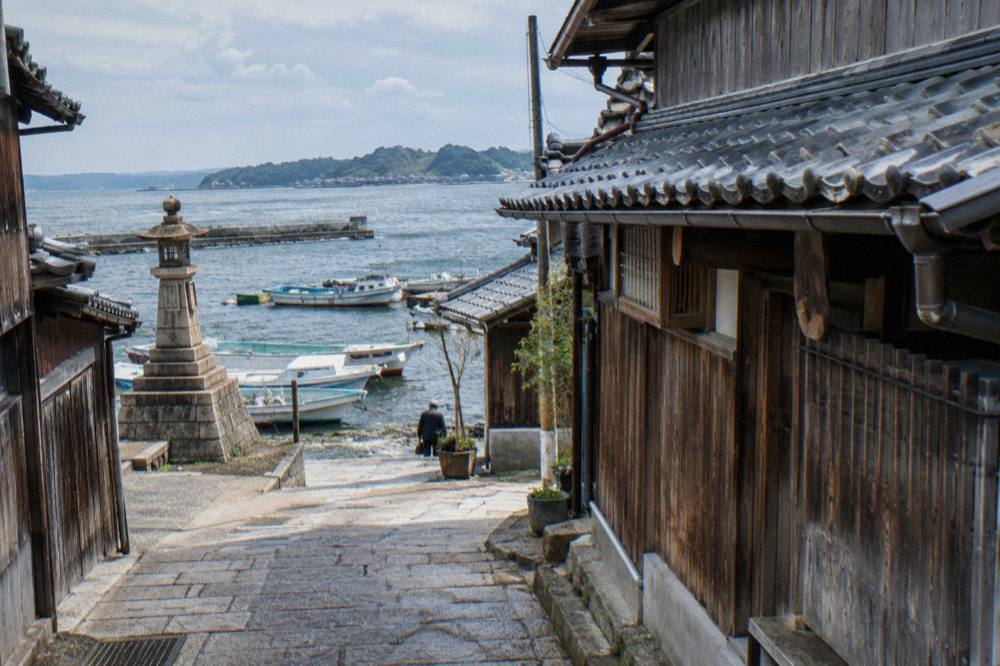
The historic core holds about 280 Edo-period buildings, narrow stone-paved alleys, and merchant houses with namako-kabe walls, the tiled plaster surfaces that protected storehouses from fire and salt wind. Homeishu, a medicinal liquor brewed with 16 herbs, was the local Edo-period specialty, and one former brewery survives as the Ota Residence, a national important cultural property.
Tomonoura is also part of Setonaikai National Park. The compact historic core and waterfront can be explored on foot. Travelers combining several Inland Sea places could pair it with Onomichi or the islands described in the Seto Inland Sea islands overview.
How Do You Get To Tomonoura From Hiroshima?
From JR Hiroshima Station, the route to Tomonoura runs by rail to JR Fukuyama Station, then by Tomotetsu bus from the south exit, bus stop 5, toward Tomo Port. Buses run every 20 to 30 minutes, the ride to the Tomonoura stop takes about 30 minutes, and the fare is 580 yen, with IC cards accepted.
The japan-guide entry for Tomonoura lists the Tomotetsu bus from Fukuyama Station south exit, stop 5, with departures every 20 to 30 minutes, a ride of about 30 minutes to the Tomonoura stop, and a 580 yen fare payable by IC card.
| Leg | Mode | Frequency or Time | Fare |
|---|---|---|---|
| Fukuyama Station south exit, stop 5, to Tomonoura | Tomotetsu bus | every 20 to 30 minutes | 580 yen |
| Ride time, Fukuyama Station to Tomonoura stop | Tomotetsu bus | about 30 minutes | 580 yen |
The attractions in Tomonoura are walkable from the bus stops, and rental bicycles are available near the Sensuijima ferry terminal for 500 yen per day. Cyclists can use the bikes to reach the temples on the hillside above the harbor without retracing the stone lanes on foot, and the daily rate makes the bike a cheap option for anyone planning to cross to the island as well.
For a guided alternative in the region, this site's featured day on the water is the Day Trip to Hiroshima and Miyajima with Ferry Ride, which pairs the city and the island with a guide and a ferry crossing; Check availability. It does not call at Tomonoura, but it covers the Inland Sea crossing that defines the whole coast.
What Can You See In Tomonoura In Half A Day?
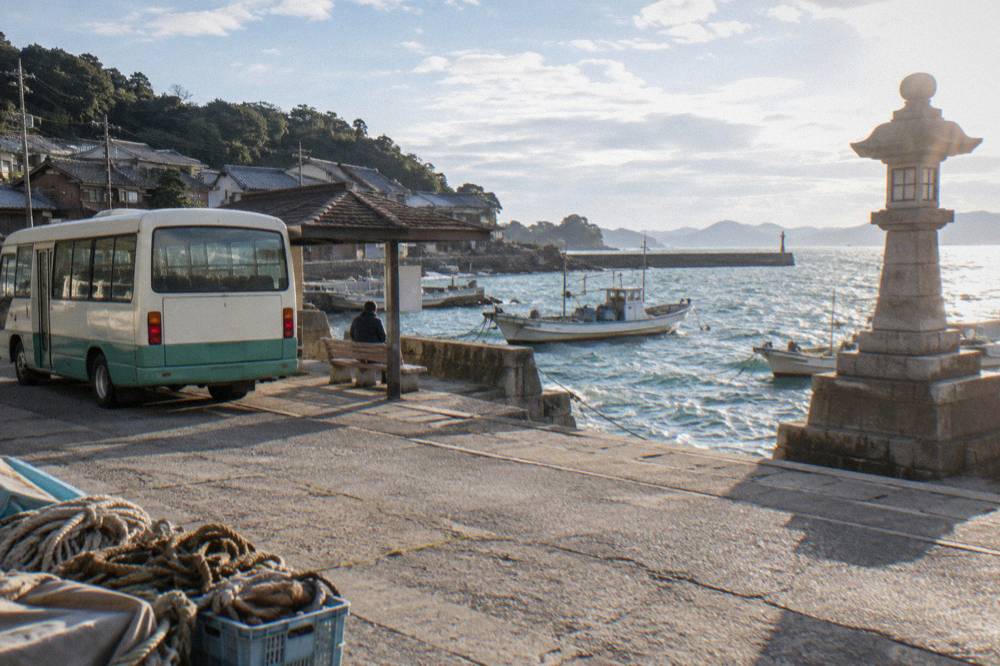
The half-day circuit covers the Joyato stone lighthouse of 1859 on the waterfront, the framed Inland Sea view from Fukuzenji Temple's Taichoro pavilion, the Ota Residence brewery complex, and the Irohamaru Museum and Tomonoura Museum of History and Folklore, all walkable from the bus stops.
The Taichoro pavilion at Fukuzenji Temple was built around 1690 as a reception hall for Korean envoys, and Korean envoys in 1711 praised its framed view of the Inland Sea islands as the most beautiful scenery east of Korea. The hall is open 9:00 to 17:00, opening at 8:00 on weekends and holidays. The same temple site also hosted negotiations after the 1867 Irohamaru incident involving Sakamoto Ryoma, which the Irohamaru Museum covers in its exhibits.
| Sight | Hours | Closed | Admission |
|---|---|---|---|
| Joyato stone lighthouse | viewable from the waterfront | no closing days listed | no fee listed |
| Fukuzenji Temple, Taichoro pavilion | 9:00 to 17:00, 8:00 on weekends and holidays | none listed | - |
| Ota Residence | 10:00 to 17:00, last entry 16:30 | Tuesdays, or next day if holiday; 29 Dec to 3 Jan | 500 yen |
| Irohamaru Museum | 10:00 to 16:30 | Mondays to Thursdays; 28 Dec to 1 Jan | 300 yen |
| Tomonoura Museum of History and Folklore | 9:00 to 17:00, last entry 16:30 | Mondays, or next day if holiday; 28 Dec to 3 Jan | 150 yen |
| Enpukuji Temple and Ioji Temple grounds | always open | none | free |
Ioji Temple offers views of the bay, and a 15-minute climb from its grounds reaches the Taishiden hall for better vistas. The Ota Residence and other sites have English information or labels in places, and the town is accessible on foot with some slopes and stone paths, so comfortable shoes matter more here than on a flat city street.
A sensible walking order starts at the harbor with the Joyato, follows the waterfront lanes past the merchant houses to Fukuzenji Temple for the Taichoro view, then climbs to Ioji Temple before returning downhill to the Ota Residence and the two small museums near the port. The closing-day pattern matters: the Irohamaru Museum is shut Monday to Thursday and the History and Folklore Museum shuts Mondays, so a weekend or Friday visit opens every paid sight at once.
Timing shapes a visit here almost as much as the route does, and the Japan Meteorological Agency's 1991 to 2020 climate normals for Hiroshima sketch the seasonal pattern along this part of the Inland Sea. Winter is cool and comparatively dry: January averages a high of 9.9 degrees Celsius against a low of 2.0, with just 46.2 millimeters of rain, and February runs close behind, with an average high of 10.9, an average low of 2.4, and 64.0 millimeters. Spring warms quickly, from a March mean of 9.5 degrees to an April mean of 14.8 and a May mean of 19.6, while average highs climb from 14.5 to 19.8 and then 24.4; rain rises in step, from 118.3 millimeters in March to 141.0 in April and 169.8 in May. Early summer turns hotter and much wetter. June posts an average high of 27.2 degrees alongside 226.5 millimeters of rain, and July pushes further, with an average high of 30.9 degrees, an average low of 24.1, and 279.8 millimeters.
For the circuit itself, those numbers translate into clear choices. The framed island panorama from the Taichoro pavilion depends on bright, clear air, and spring delivers it, with sunshine climbing from 176.7 hours in March to 191.9 in April and 210.8 in May. May pairs that light with an average high of 24.4 degrees and an average low of 15.1, comfortable conditions for the walking between harbor and hillside. July is the toughest month for the route: an average high of 30.9 degrees makes the climb to the Taishiden hall a real effort, an average low of 24.1 degrees means evenings bring little relief, and the month's 279.8 millimeters of rain can keep the stone paths wet. June sits in between, warm at an average high of 27.2 degrees but dim, with 154.6 sunshine hours, fewer than March records. An umbrella earns its place from June onward, while in January and February, average lows of 2.0 and 2.4 degrees argue for a warm layer when time is spent at the waterfront.
Scheduling completes the planning. Read together, the weekly closing days show that Friday, Saturday and Sunday form the only stretch on which every paid sight on the circuit welcomes visitors, while from Monday to Thursday at least one interior is always dark. That makes a weekend the natural target for the full loop, with the pavilion, the residence, and both museums in play, and it leaves weekdays to travelers willing to miss a sight or two. The year-end period adds a second complication, because the annual closings of the residence and the two museums overlap in late December and the opening days of January, leaving the indoor side of the town largely dark through the New Year holiday. Visitors who do land on a day of shut doors can still fill several hours with the outdoor half of the town, from the waterfront to the temple grounds on the hillside, but anyone set on the framed view, the brewery complex, and both museums should aim for a Friday to Sunday outside that window and move at an unhurried pace, since the loop rewards lingering more than speed.
What Is Homeishu And The Ota Residence?
Homeishu is a medicinal liquor brewed with 16 herbs that was Tomonoura's specialty in the Edo period, and the Ota Residence is the former homeishu brewery complex from the Edo period, now open to visitors as a national important cultural property with 500 yen admission.
The residence preserves the brewery buildings from the period when homeishu was shipped from the port. Visitors enter at 500 yen, between 10:00 and 17:00 with last entry at 16:30, and the site closes on Tuesdays, or the next day when Tuesday is a holiday, plus 29 December to 3 January.
The herb recipe survives as part of the town's identity: sixteen herbs went into the liquor, and the number is still quoted on the city's own tourism page for the town. Combined with the Irohamaru Museum and the History and Folklore Museum, the residence gives the town three paid indoor stops within a few minutes' walk of each other, each covering a different layer of the port's past: trade, politics and everyday life.
What Does A Tomonoura Day Trip Cost?
A day trip to Tomonoura involves 500 yen for the Ota Residence, 300 yen for the Irohamaru Museum and 150 yen for the History and Folklore Museum, and the free sights include the lighthouse viewpoint, both temple grounds and the historic streets themselves, with bus and rail fare to Fukuyama on top.
| Item | Cost |
|---|---|
| Tomotetsu bus, Fukuyama Station to Tomonoura, one way | 580 yen |
| Rental bicycle near Sensuijima ferry terminal, per day | 500 yen |
| Ota Residence | 500 yen |
| Irohamaru Museum | 300 yen |
| Tomonoura Museum of History and Folklore | 150 yen |
| Enpukuji Temple and Ioji Temple grounds | free |
For context on the wider region's paid entries, the Peace Memorial Museum in Hiroshima charges 200 yen for adults, and Itsukushima Shrine on Miyajima charges 300 yen, so Tomonoura's paid sights sit in the same modest range as the destination's major attractions. The trip cost overview covers the wider budget picture for the city itself.
When Is A Good Time Of Year For Tomonoura?
The Japan Meteorological Agency (JMA) 1991-2020 station normals for Hiroshima show summer mean highs of about 31 °C in July and about 33 °C in August against mild winters near 10 °C, and those averages shape how comfortable the walking circuit feels through the year.
Tomonoura is an outdoor town: the streets, the waterfront and the climb at Ioji Temple are the main draw, and the indoor museums are small. That makes the summer rain a factor when choosing a date, since stone-paved alleys and slopes are less pleasant in sustained rain, and the midsummer heat pairs with humidity on the exposed harbor front. The normals below are station data for Hiroshima, the nearest long series available, and they are averages rather than a forecast for any given week. Hiroshima summers are hot and humid and winters are mild, and Tomonoura sits within that same coastal climate.
| Month | Mean high °C | Mean low °C | Rain mm |
|---|---|---|---|
| Jan | 9.9 | 2.0 | 46.2 |
| Feb | 10.9 | 2.4 | 64.0 |
| Mar | 14.5 | 5.1 | 118.3 |
| Apr | 19.8 | 10.1 | 141.0 |
| May | 24.4 | 15.1 | 169.8 |
| Jun | 27.2 | 19.8 | 226.5 |
| Jul | 30.9 | 24.1 | 279.8 |
| Aug | 32.8 | 25.1 | 131.4 |
| Sep | 29.1 | 21.1 | 162.7 |
| Oct | 23.7 | 14.9 | 109.2 |
| Nov | 17.7 | 8.9 | 69.3 |
| Dec | 12.1 | 4.0 | 54.0 |
Two closing quirks in the calendar matter more than the weather. The Ota Residence and the History and Folklore Museum both shut over the year-end holidays, the residence from 29 December and the museums from late December, and the residence also shuts each Tuesday. Anyone planning a visit between Christmas and New Year should check those days against the table above before committing to the rail leg.
Is Tomonoura Worth Visiting?
Tomonoura offers the framed Inland Sea view praised in 1711 and the setting that inspired Ponyo, with modest paid admissions, though it needs a rail leg to Fukuyama plus a 30-minute bus, and two of its four museums close several days a week.
The honest comparison is with Miyajima. Miyajima has the UNESCO-listed Itsukushima Shrine, the Great Torii and Mount Misen, and it is reached by a 10-minute ferry with departures through the day; Tomonoura has none of that scale, but it also has the protected streets, the lighthouse and the homeishu brewery that Miyajima does not. A visitor deciding between them can read the Miyajima day trip guide; a visitor with more than one day can do both, or add the temple town of Onomichi on the same coast, covered in the Onomichi day trip guide.
The town asks little of a visitor: arrival by bus, a walk, a museum or two, and the view from Taichoro or Ioji Temple.
How Does Tomonoura Compare With Other Hiroshima Day Trips?
Tomonoura is one of the slower, history-led options among Hiroshima's day trips, alongside Onomichi, Takehara and the Shimanami Kaido, rather than the high-volume choices such as Miyajima, and it suits a second or third day in the region once the Peace Memorial Park, the museum and Miyajima have been covered.
The Shimanami Kaido is a cycling route across the islands, a different activity altogether, and the Shimanami Kaido guide covers where to stay along it. Miyajima is the headline trip, and the cruise-port itinerary in the Hiroshima shore day guide shows how little time a visitor needs for the city core when a ship is in port.
For the city itself, the overview at things to do in Hiroshima remains the starting page, and Tomonoura is the page for the day after that. A traveler with a full week can chain the whole eastern coast: Miyajima first, then Hiroshima's peace sites, then Onomichi, then Tomonoura, ending at the islands of the Seto Inland Sea.
Common Questions About Tomonoura
Is Tomonoura Worth Visiting?
Yes, for visitors who want an Edo-period port town, the Joyato lighthouse of 1859 and the sea view praised by Korean envoys in 1711, all in a two to three hour walk. It is a half-day destination rather than a full day, and it rewards those already interested in the town's history or its Ponyo connection.
How Do I Get From Fukuyama Station To Tomonoura?
Take a Tomotetsu bus from the south exit, bus stop 5, toward Tomo Port or Tomonoura. Buses run every 20 to 30 minutes, the ride takes about 30 minutes, and the fare is 580 yen with IC cards accepted.
Was Ponyo Really Based On Tomonoura?
Hayao Miyazaki stayed in Tomonoura in 2005, and the Fukuyama City tourism page lists the town as the real-life inspiration for the film's setting. Elements of the town appear in recognizable form in the film.
Do I Need A Ticket For The Sights In Tomonoura?
Some sights are free. The paid sights are the Ota Residence at 500 yen, the Irohamaru Museum at 300 yen and the History and Folklore Museum at 150 yen.
Can You Walk Everywhere In Tomonoura?
Yes, the attractions are walkable from the bus stops, and the compact historic core and waterfront take two to three hours on foot. Some slopes and stone paths exist, and rental bicycles are available near the Sensuijima ferry terminal for 500 yen per day.
What Is Homeishu?
Homeishu is a medicinal liquor brewed with 16 herbs that was Tomonoura's specialty in the Edo period. The Ota Residence preserves the Edo-period brewery complex where it was made, open to visitors as a national important cultural property.
Tomonoura offers the framed islands seen from Taichoro and a brewery residence, all for less than the price of a museum ticket in a major capital.