Can You Pet The Rabbits On Rabbit Island?
Can you pet the rabbits on Rabbit Island near Hiroshima? The feeding and handling rules for Okunoshima, ferry fares, and how to get there from Hiroshima.
Okunoshima, the small island in Hiroshima Prefecture's part of the Seto Inland Sea that visitors call Rabbit Island, is home to several hundred wild European rabbits as of the mid-2020s, per the Kure area tourism guide. The island belongs to Takehara City and sits inside Setonaikai National Park, and its rabbits are semi-wild animals rather than pets. That distinction shapes every rule the island's visitor materials publish, from what the rabbits may eat to whether a visitor may pick one up. The short version: feeding is welcomed under conditions, touching is not.
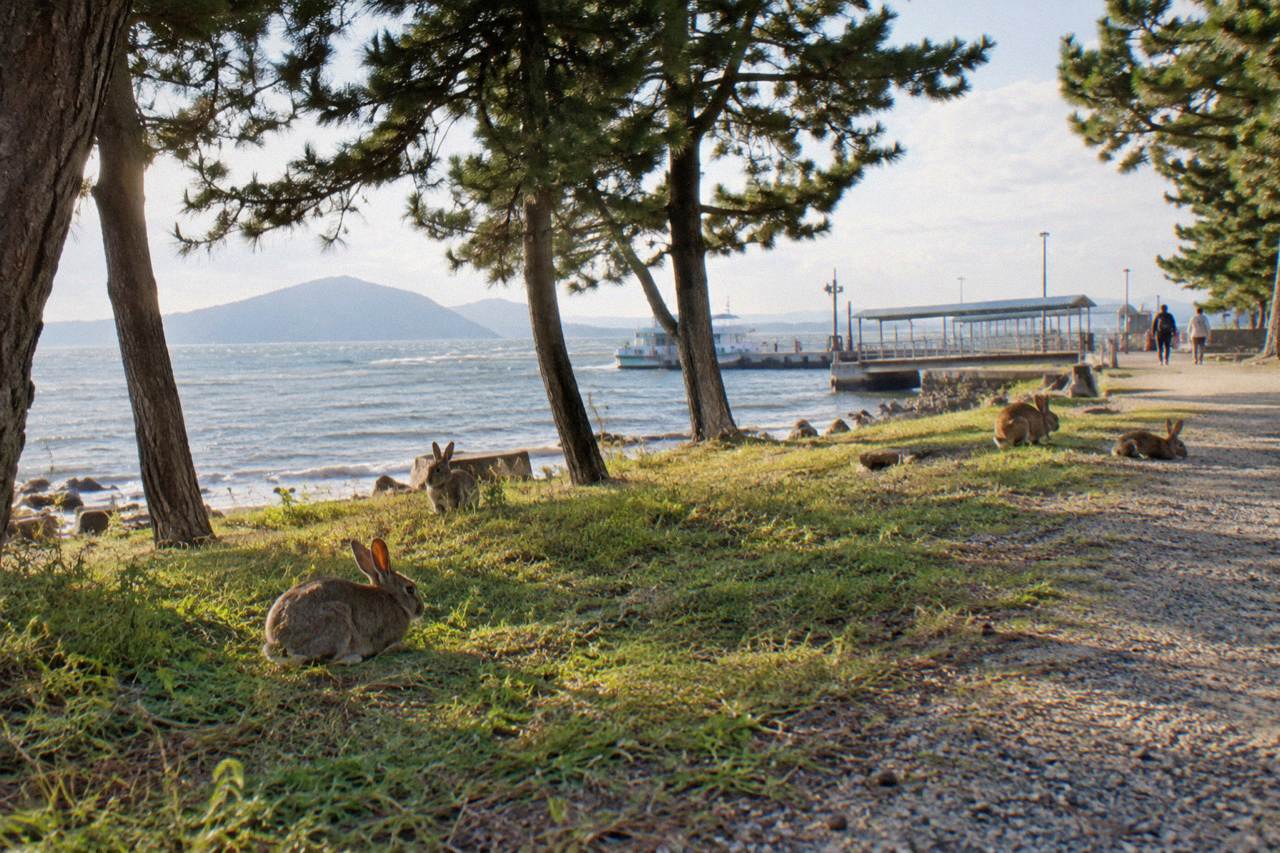
No, visitors should not pet, hug, pick up or hold the rabbits on Okunoshima, the island in Hiroshima Prefecture popularly known as Rabbit Island. The island's visitor guidance states plainly that the rabbits are semi-wild, not pets, and that they can become stressed or injured if handled. Visitors must not chase them either. Feeding is the accepted way to interact, and even that follows specific rules about what to bring and where to put the food.
The guidance published by the Kure tourism site and the local dive-and-nature site agrees on the reasoning. These rabbits survive on the island by their own foraging and breeding, and handling by strangers is a source of stress rather than comfort. A rabbit that is cornered or lifted can injure itself struggling, and the animals' teeth and poor eyesight mean a hand offered too close to the mouth can be bitten. The instruction not to feed rabbits directly from the mouth exists for exactly that reason.
What visitors can do is watch at close range. Place suitable food on the ground, step back, and stay to watch the rabbits eat, then take any leftovers home rather than leaving food waste behind. That routine is the interaction the island supports, and it is a genuinely close one: the rabbits gather in the open around the Kyukamura Okunoshima hotel area, which local guidance names as one of the places to see many of them.
The contrast with Miyajima, the shrine island closer to Hiroshima city, is worth holding in mind for anyone building an island-heavy itinerary. There, the question under debate is the deer, and the answer on can you touch the deer on Miyajima follows the same logic of wild animals and human food.
Where Is Rabbit Island And How Do You Reach It From Hiroshima?
Okunoshima is reached by a ferry of about 15 minutes from Tadanoumi Port, which is a 5-minute walk from JR Tadanoumi Station. From Hiroshima Station, the JR Kure Line local train to Tadanoumi takes about 2 hours and costs 1,320 yen one way. Ferries run roughly 1 to 2 sailings per hour year-round, so the crossing itself is rarely the constraint on a day trip.
The rail leg is the long part. Tadanoumi Port is close enough to the station that the connection is a short walk, and shops near the port and station sell rabbit-related products and suitable rabbit food for visitors who arrive empty-handed.
The ferry fare structure is simple, and preschool children ride free.
| Passenger | One way | Return |
|---|---|---|
| Adult | 360 yen | 720 yen |
| School-age child | 180 yen | 360 yen |
| Preschool child | Free | Free |
A day trip from Hiroshima is workable but consumes much of the day in transit, so many itineraries pair Okunoshima with the wider day trips around Hiroshima rather than treating it as a quick stop. The island's circumference is only about 4 km, so once ashore everything is within an easy walk.
What Can You Feed The Okunoshima Rabbits?
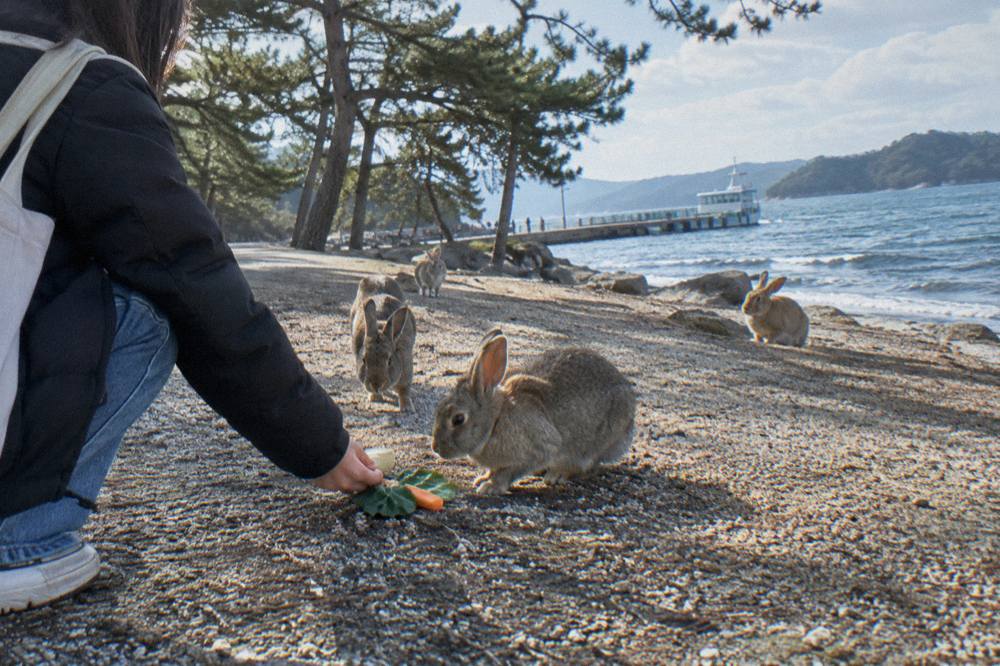
Suitable foods for the Okunoshima rabbits are pellets, cabbage and carrots, bought before boarding at Tadanoumi Port, because rabbit food is not sold on the island itself. Never feed the rabbits sweets, bread, snacks, green onions or any allium vegetables. The island's guidance also asks visitors not to feed rabbits on roads, roadsides or in front of building entrances, because of bicycle and vehicle traffic.
The rule about buying food before boarding catches many visitors out. The island has no shop for rabbit feed, and the stores near Tadanoumi Port and Station are the practical place to buy pellets or vegetables. Once on the island, the correct method is to place the food on the ground and let the rabbits come to it, staying to watch them eat and carrying away anything they leave.
The banned list matters as much as the approved one. Human food causes harm to rabbits, and allium vegetables such as green onions are toxic to them. Bread and sweets are not digestible for the animals and the guidance groups them with snacks as items never to offer.
| Do | Do Not |
|---|---|
| Buy pellets, cabbage or carrots at Tadanoumi Port before boarding | Feed sweets, bread or snacks |
| Place food on the ground for the rabbits | Feed green onions or any allium vegetable |
| Stay and watch them eat | Chase, hug, pick up or hold a rabbit |
| Take leftover food home | Feed rabbits on roads, roadsides or building entrances |
The animals themselves are wild European rabbits, several hundred of them as of the mid-2020s. They are semi-wild rather than pets, and they can become stressed or injured when handled. One further caution applies at feeding time: do not offer food directly from the mouth, because their poor eyesight and teeth mean the rabbits may bite.
Getting from the train to the boat is short. JR Tadanoumi Station sits a five-minute walk from Tadanoumi Port, and the stores around the station and port also carry rabbit-related products, so a small keepsake is easy to pick up along the way.
Okunoshima belongs to Takehara City in Hiroshima Prefecture and lies within Setonaikai National Park. Dogs and cats are not allowed on the island, so travelers with pets need to plan around that rule. Beyond the rabbits, the island offers a beach, a campground, and radium hot springs at the Kyukamura hotel, which gives visitors reasons to stay longer than a few hours.
When And Where Are The Rabbits Most Active?
Rabbits on Okunoshima are most active at dawn and dusk, per the local nature guidance for the island. They spend the middle of the day resting, so a visitor arriving late morning may see fewer rabbits moving about than one who crosses early. The Kyukamura Okunoshima hotel area is named in local guidance as one of the spots where many rabbits gather.
That activity pattern lines up with wild rabbit behaviour generally. A traveller coming from Hiroshima on the first available connections has the best odds of seeing the rabbits moving and feeding, before the midday quiet sets in.
The population itself is substantial for a small island: several hundred wild European rabbits as of the mid-2020s, per the Kure guide. They are described as semi-wild, comfortable around people to the extent that they will approach food placed on the ground, but they are not domesticated animals and the handling rules reflect that.
Placement of food interacts with activity. Because rabbits move toward food on the ground in the open areas, feeding away from roads protects them from bicycle and vehicle traffic, and taking uneaten food home keeps the island clean.
What Else Is On Okunoshima Besides The Rabbits?
Okunoshima offers a beach, a campground and radium hot springs at the Kyukamura resort, all on an island of about 4 km circumference inside Setonaikai National Park. The island belongs to Takehara City in Hiroshima Prefecture, and the surrounding Seto Inland Sea setting is the reason the crossing is short and sheltered.
The Kyukamura Okunoshima hotel is the island's main facility, and its hot springs, beach and campground mean a visit can run from a half-day of rabbit watching to an overnight stay. The hotel area doubles as one of the reliable places to see rabbits, so lodging and wildlife overlap in practice.
The national park setting is the other draw. Setonaikai National Park covers the Inland Sea's island chain, and Okunoshima sits in its Hiroshima Prefecture section, reachable in a 15-minute ferry hop from a port five minutes on foot from a rural JR station. For the history of what the island was used for before the rabbits, see what was Okunoshima used for, and for the wider island-hopping picture the Okunoshima guide page covers the practical details of a visit.
Should You Visit Rabbit Island On A Tour Or On Your Own?
Okunoshima is practical to visit independently: the train fare is 1,320 yen one way from Hiroshima Station, the ferry is 360 yen each way for an adult, and the island is small enough to explore on foot. A guided tour trades that simplicity for interpretation, and the strongest guided options in the destination focus on Hiroshima and Miyajima rather than on Okunoshima itself.
For travellers whose real interest is the destination's headline pair, the city's Peace Memorial area and the island of Miyajima, a private guided day is the format that fits, and the Hiroshima and Miyajima Private Guided Tour is the site's featured pick for that job. Its itinerary covers both sides in one guided day, which leaves Okunoshima as a separate, self-guided excursion on another day. Check availability if that split matches your plan.
Cyclists have a guided option too, in the Best of Hiroshima Guided Bike Tour, which covers the city rather than the islands. Travellers pairing Okunoshima with a Miyajima visit can also consider the Miyajima Aquarium entry ticket for the island's indoor attraction.
Common Questions About Rabbit Island Near Hiroshima
Can You Pet The Rabbits On Rabbit Island?
No. The rabbits on Okunoshima are semi-wild, and the island's guidance says visitors must not chase, hug, pick up or hold them. Feeding them suitable food placed on the ground is the supported way to interact.
Where Do I Buy Food For The Okunoshima Rabbits?
Rabbit food is not sold on the island. Buy pellets, cabbage or carrots before boarding, at the stores near Tadanoumi Port and Station.
What Must You Never Feed The Okunoshima Rabbits?
Never feed the rabbits sweets, bread, snacks, green onions or any allium vegetables. Human food causes the animals harm.
How Much Is The Ferry To Okunoshima?
The adult one-way fare from Tadanoumi Port is 360 yen, or 720 yen return. School-age children pay 180 yen one way and preschool children ride free.
How Long Does It Take To Get To Okunoshima From Hiroshima?
The JR Kure Line local train from Hiroshima Station to Tadanoumi takes about 2 hours and costs 1,320 yen one way, then the port is a 5-minute walk and the ferry crossing takes about 15 minutes.
Are Dogs Allowed On Okunoshima?
No. Dogs and cats are not allowed on the island, so travelers with pets need to plan around that rule.
A visit built on these rules is a rewarding one: buy the right food at the port, place it on the ground well away from the roads, let the rabbits come to you, and leave the handling out of it entirely. The Hiroshima Travel Guide covers the rest of the destination, from the Peace Memorial Park to the Okunoshima day trip, for travellers fitting Rabbit Island into a wider Hiroshima itinerary.